
 Medical Molds
 Packaging Molds
 Personal Care Molds
 Electronic Molds
 Automotive Molds
 Home Appliance Molds
 Special Molds
 Design & Engineering
 Production & Manufacturing
 Global Presence
 Business Scope
 Component Solutions
 Product Assembly
 Quality Management
 Medical Device Manufacturing



Anti-clogging PPS microporous filter nozzle screen for molds
FEATURES
Anti-Clogging PPS Microporous Filter Nozzle Screens
Technical Foundation
The anti-clogging PPS microporous filter nozzle screen is a critical consumable component installed at the interface between the injection molding machine nozzle and the mold sprue bushing. Its fundamental purpose is to intercept and retain particulate contaminants, unmelted polymer particles, and foreign debris before they enter the mold cavity or hot runner system. The operational principle relies on a precisely engineered microporous structure that permits molten polymer to flow through with minimal pressure loss while capturing particles above a defined threshold size.
PPS (Polyphenylene Sulfide) serves as the base material for these filter screens due to its exceptional property balance: outstanding mechanical strength, high temperature resistance (continuous service up to 220°C and short-term exposure to 260°C), excellent dimensional stability, inherent flame resistance, good chemical resistance against solvents and aggressive polymers, and exceptionally high modulus and creep resistance . These characteristics are essential because the filter nozzle operates in an environment of extreme thermal and mechanical stress, with molten polymer forced through at high pressure and shear rates.
The microporous structure is achieved through advanced processing techniques. One established method involves compounding PPS with a water-soluble additive at a concentration of at least 28 weight percent, shaping the article via extrusion or injection molding, and subsequently leaching the additive through immersion in water to create an interconnected pore network . This solvent-free, environmentally friendly process avoids the use of NMP or DMF while producing pore sizes ranging from approximately 0.01 micron to 5.0 microns with porosity up to about 60% . The resulting filter screens combine the thermal and chemical resilience of PPS with the controlled permeability of a microporous membrane.
Design Configuration
Filter nozzle screens are typically engineered as two-piece assemblies: an outer nozzle body that adapts to the injection molding machine’s barrel interface, and an inner filter element that performs the actual filtration function. This modular architecture enables rapid filter replacement without disassembling heating elements or thermocouples, significantly reducing maintenance downtime . The filter element itself may be configured with bore diameters ranging from 0.4 mm to 0.7 mm, with the optimal diameter selected based on the filtration requirements of the specific polymer and application .
-
Mold Description
Product Materials:
pps
Mold Material:
S136ESR
Number of Cavities:
16
Glue Feeding Method:
Hot runner
Cooling Method:
Water cooling
Molding Cycle
42.5s
- The mold manufacturing process and product material selection
The nozzle body is manufactured to match the customer’s machine specifications, ensuring a perfect fit in place of the standard machine nozzle. Standard filter types include Ø14x45, Ø20x45, Ø25x50, and Ø30x90 configurations, with custom dimensions available upon request . The compact design of the filter nozzle eliminates the need for additional heating elements, as the nozzle body itself provides the thermal pathway from the machine barrel.
Functional Performance
The performance of an anti-clogging PPS filter nozzle screen is characterized by several key metrics. Pressure loss across the filter typically ranges from 5 to 10 bar under normal operating conditions; the filter should be replaced when pressure increases beyond 50 bar . The filtration capacity is determined by the pore size distribution and the total filter surface area, with larger surface areas providing both greater contaminant holding capacity and lower pressure drop for a given flow rate. The self-cleaning behavior during color changes is another important operational characteristic, as residual polymer from a previous color tends to be purged through the filter during the next injection cycle rather than accumulating and causing cross-contamination .
-
Manufacturing Process and Production Excellence
Material Selection and Preparation
The production of anti-clogging PPS filter nozzle screens begins with rigorous material selection. Ansix Tech sources PPS resin from qualified suppliers with certified lot traceability, verifying properties including melt flow rate, thermal stability, and purity prior to compounding. For reinforced grades, glass fiber or mineral fillers may be incorporated to enhance mechanical properties and dimensional stability, though the filler content and type must be carefully balanced against flow characteristics and abrasiveness .
The compounding process for microporous PPS articles requires precise control of additive dispersion and thermal history. The water-soluble additive must be homogeneously distributed within the PPS matrix to ensure uniform pore formation upon leaching. Ansix employs twin-screw compounding with gravimetric feeding systems and in-line melt filtration to achieve consistent dispersion and eliminate agglomerates that could create defects in the final pore structure.
Precision Mold Manufacturing
The filter nozzle screen’s performance is directly determined by the precision of its mold tooling. Ansix Tech’s mold manufacturing division has produced over 30,000 mold sets and operates with an automated machining ratio of 70% . For filter nozzle components, the mold design must accommodate the unique challenges of microporous PPS processing: high melt viscosity requiring robust flow channels, abrasive filler particles demanding wear-resistant tooling materials, and tight dimensional tolerances ensuring proper fit and sealing.
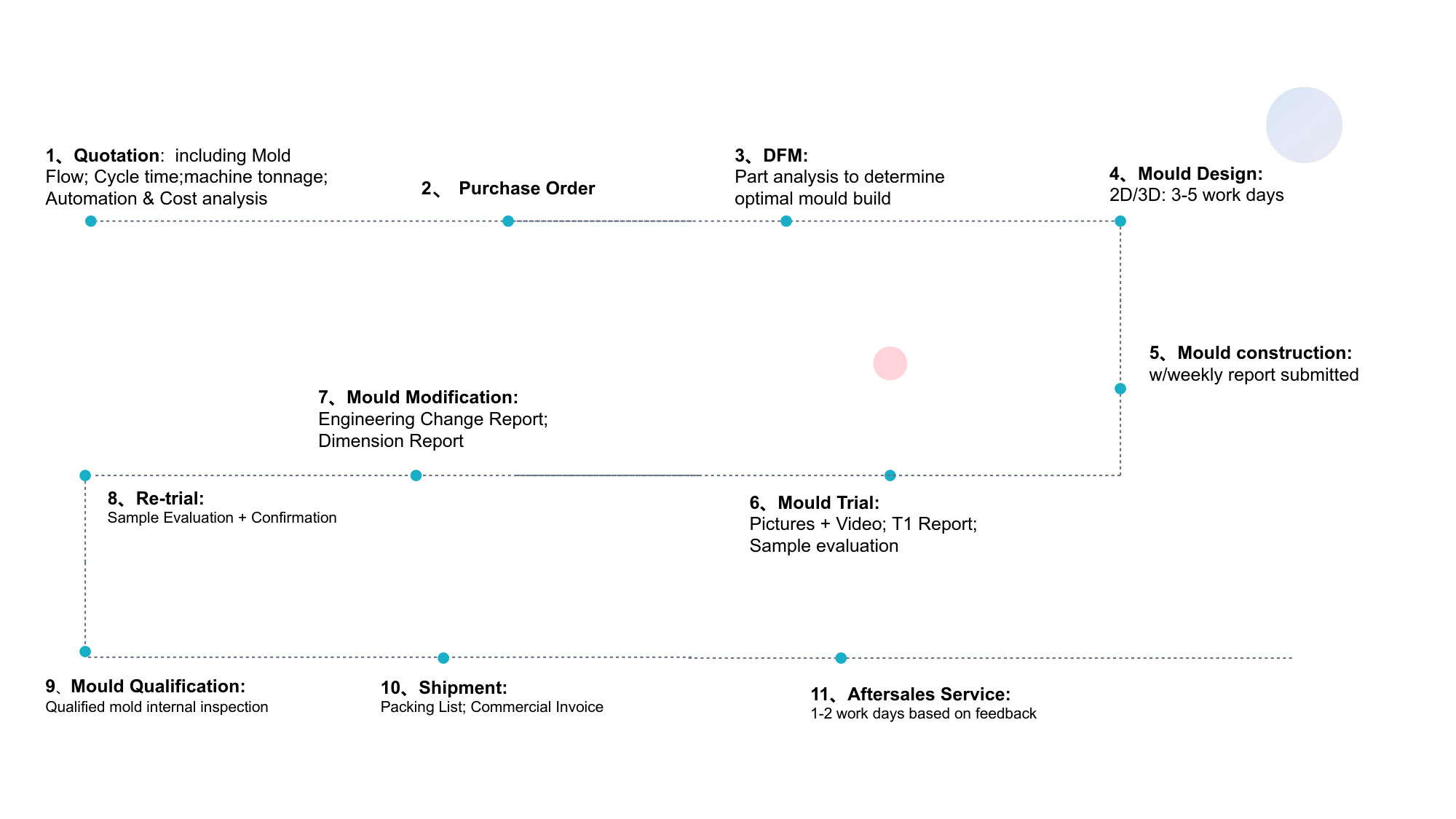
The mold manufacturing workflow at Ansix integrates several advanced capabilities. Design for Manufacturing (DFM) analysis is performed on every component to identify potential molding issues—undercuts, thin walls, weld line locations, and gate placement—before steel is cut. Moldflow simulation predicts filling patterns, pressure distribution, temperature profiles, and shrinkage to optimize gate locations and cooling channel design digitally, eliminating risks before physical tooling is committed . This proactive virtual validation is the first and most important line of defense against costly and time-consuming mold rework.
Mold construction utilizes precision machining centers from Makino, Mikron, and other leading manufacturers, with tolerances maintained within ±0.002 mm . The mold base and core/cavity inserts are fabricated from premium tool steels selected for wear resistance and thermal conductivity. For microporous PPS processing, hardened stainless steels or specialty alloys may be specified to resist the abrasive action of glass-filled grades. Cooling channel design receives particular attention, as effective heat removal directly determines cycle time and dimensional consistency.
Injection Molding Process Control
The injection molding of microporous PPS filter screens demands process mastery that goes far beyond standard thermoplastic molding. Ansix Tech employs a scientific molding approach based on decoupled molding principles: injection velocity is controlled to fill 95-98% of the cavity, followed by a switch to packing pressure to compensate for shrinkage, with all parameters monitored by in-mold sensors . This data-driven method ensures consistency across millions of parts.
PPS presents specific processing challenges that Ansix has systematically addressed. The material’s semi-crystalline nature gives it a sharp melting point and rapid solidification characteristics, requiring precise temperature control throughout the barrel, nozzle, and mold . Mold temperatures are typically maintained between 120°C and 150°C to promote crystallinity and dimensional stability. Injection pressures must be sufficient to overcome the high melt viscosity without creating excessive shear that could degrade the polymer or damage the developing pore structure.
For microporous articles, additional process considerations apply. The additive’s distribution within the molded part must remain homogeneous through the injection and packing phases. Cooling rates influence both crystallinity and the morphology of the additive domains that will become pores. Ansix engineers utilize Design of Experiments (DOE) methodologies to establish robust process windows that consistently produce the target pore size distribution, permeability, and mechanical strength.
Post-Molding Operations and Leaching
After molding, the filter nozzle components undergo the critical leaching operation that creates the microporous structure. The molded parts are immersed in heated deionized water or subjected to multiple immersion cycles until the water-soluble additive is substantially removed, typically achieving greater than 95% extraction. The leaching process parameters—temperature, time, agitation, and water quality—are optimized for each product configuration to ensure complete pore formation without introducing dimensional distortion or surface defects.
Following leaching, parts are dried under controlled conditions to remove residual moisture without causing thermal degradation or dimensional changes. The drying profile is validated to achieve moisture content below 0.02% for PPS components, a critical threshold because residual moisture can cause silver streaks and hydrolytic degradation during subsequent processing .
Assembly and Finishing
Filter elements are assembled into nozzle bodies with precision to ensure proper sealing and alignment. Depending on the design, assembly may involve press-fitting, threading, or mechanical retention features. Each assembled unit undergoes functional testing to verify pressure drop characteristics, sealing integrity, and flow capacity. Surface treatments may be applied to selected components to enhance wear resistance, reduce friction, or improve release properties.
Customer-Centric Service Portfolio
Design and Development Support
Ansix Tech engages with customers from the earliest concept stages of filter nozzle screen development. The company’s DFM (Design for Manufacturing) team, with average experience exceeding 12 years, reviews customer requirements, application parameters, and performance targets to propose optimized designs that balance filtration efficiency, flow characteristics, mechanical durability, and manufacturing cost .
The design process incorporates Moldflow simulation to predict fill patterns, pressure distribution, temperature profiles, and potential defect locations . For filter applications, additional simulations may model flow through the porous structure, pressure drop across the filter element, and particle capture efficiency. These virtual analyses enable design iterations to be evaluated rapidly and cost-effectively before any physical prototypes are produced.
New Product Introduction (NPI) and Validation
Ansix follows a structured NPI process that guides filter nozzle projects from concept through mass production. The company applies rigorous validation protocols following the IQ/OQ/PQ framework: Installation Qualification verifies that tooling, auxiliary equipment, and press configuration meet design specifications; Operational Qualification establishes and documents process parameter ranges that produce conforming parts; and Performance Qualification confirms that the validated process produces conforming parts consistently across multiple production lots under routine manufacturing conditions .
First Article Inspection (FAI) is performed on initial samples from every new mold, with comprehensive dimensional verification using coordinate measuring machines (CMM) capable of tolerances as tight as ±0.002 mm . Functional testing validates filtration performance, pressure drop, and durability under simulated operating conditions. This disciplined validation approach ensures that filter nozzle screens meet customer requirements for performance, reliability, and consistency before full-scale production begins.
Mass Production and Quality Assurance
Ansix Tech’s quality management system is certified to ISO9001, IATF16949, ISO13485, and ISO14001, reflecting the company’s commitment to international standards across quality, automotive, medical device, and environmental domains . In-process quality control integrates automated optical inspection (AOI) systems, coordinate measuring machines, and vision systems that perform real-time quality checks and enable 100% inspection of critical dimensions during production . Data from these systems is uploaded to Manufacturing Execution Systems (MES) for Statistical Process Control (SPC) analysis, enabling rapid identification and correction of process variations.
The quality framework extends beyond dimensional compliance to include material traceability, process documentation, and batch-level records. Every filter nozzle screen can be traced from raw material receipt through compounding, molding, leaching, assembly, and final packaging, supporting full traceability for quality investigations or potential recalls.
Delivery and Logistics
Ansix Tech’s four production bases across China and Vietnam provide strategic geographic positioning and capacity redundancy for global customers . Logistics capabilities include sea freight (FCL and LCL), air freight for urgent orders, and door-to-door delivery with integrated logistics management . For customers requiring just-in-time (JIT) delivery, Ansix maintains safety stock and coordinates production schedules to achieve 99%+ on-time delivery performance .
The company’s integrated ecosystem—encompassing design, engineering, tooling, production, and logistics on a unified platform—eliminates communication gaps and accelerates project timelines . This vertical integration ensures consistent quality and reliable delivery even for high-volume programs with demanding schedules.
After-Sales Support
Ansix provides comprehensive after-sales support for filter nozzle screen products, including technical troubleshooting, replacement filter supply, and process optimization consultation. The company’s engineering team remains available to assist customers with installation, operation, and maintenance questions throughout the product lifecycle. For critical applications, Ansix can provide on-site support and training to ensure optimal filter performance and longevity.
Competitive Advantages
Cost Control Through Engineering Excellence
Ansix Tech approaches cost reduction not through compromise but through intelligent engineering applied across the entire value chain. Material cost optimization involves matching material properties to application requirements—avoiding over-specification while ensuring adequate performance . The company’s bulk purchasing power across multiple customers and projects generates economies of scale that reduce raw material costs. Where application conditions permit, regrind utilization is incorporated to reduce virgin material consumption.
Process cost reduction is achieved through cycle time optimization, with conformal cooling and process refinement reducing cycle times by 15% to 30% compared to conventional approaches . Automated gate cutting and part handling eliminate manual operations, reducing labor content and improving consistency. Energy-efficient all-electric injection molding machines, where appropriate, reduce energy consumption per part by up to 60% compared to traditional hydraulic machines .
Tooling cost reduction leverages optimized mold designs that extend tool life—S136 mold cores, for example, deliver 300,000 to 500,000 shots before refurbishment, amortizing tooling investment over longer production runs . Multi-cavity molds increase output per machine, reducing labor and overhead per part. Standardized mold bases and components reduce tooling costs without compromising performance.
Supply chain cost reduction derives from vertical integration: in-house design, mold making, molding, and secondary operations eliminate vendor markups and reduce lead times. Strategic production locations across China and Vietnam enable optimized logistics and duty management for global customers .
Quality Assurance as a Core Value
Quality at Ansix is not an inspection step at the end of production but a philosophy integrated throughout the product lifecycle. The company’s certified quality management system provides the framework, but the culture of quality is embedded in every engineer, technician, and operator. Statistical process control monitors critical parameters in real time, with sensors creating a digital fingerprint for each injection cycle that enables immediate detection of deviations . This data-driven approach has reduced defect rates to approximately 0.5% in demanding applications .
For filter nozzle screens specifically, quality assurance encompasses material certification, process validation, dimensional verification, functional testing, and traceability. The combination of IATF16949, ISO13485, and ISO9001 certifications ensures that the quality system meets the stringent requirements of automotive, medical device, and general industrial customers .
Manufacturing Intelligence and Automation
With a 70% automated machining ratio, Ansix Tech leverages smart manufacturing to increase productivity and reduce human error . Automated optical inspection systems, coordinate measuring machines, and vision systems perform real-time quality checks, enabling 100% inspection of critical dimensions during the process. Data from these systems feeds into MES for SPC analysis, enabling rapid identification and correction of process variations.
For filter nozzle production, automation extends to part handling, assembly, and packaging. Automated systems ensure consistent assembly force, proper sealing, and reliable packaging while reducing labor costs and eliminating variability associated with manual operations. The combination of automation and digital process control creates a manufacturing environment where quality is built in rather than inspected in.
Industry Leadership: How Ansix Achieves Top-Tier Status
Vertical Integration and Scale
Ansix’s position as an industry leader in filter nozzle screen manufacturing derives from several structural advantages. The company’s 28+ years of experience, four production bases, 260 injection molding machines, and over 1,200 employees provide the scale to serve global customers with demanding volume requirements . Vertical integration from material compounding through mold making, molding, post-processing, assembly, and logistics eliminates the coordination challenges and quality risks associated with managing multiple vendors.
Technical Depth and Specialization
The depth of Ansix’s technical capabilities in microporous PPS processing represents a significant barrier to competition. The company has developed proprietary knowledge in additive selection and compounding, leaching process optimization, and mold design for microporous articles that cannot be easily replicated. This technical depth enables Ansix to solve filtration challenges that other manufacturers cannot address, from ultra-fine pore size requirements to chemically aggressive polymer systems.
Customer Partnership Model
Ansix approaches customer relationships as long-term partnerships rather than transactional engagements. The company invests in understanding each customer’s application requirements, production environment, and business objectives. This partnership model enables Ansix to provide not just products but solutions—filter nozzle configurations optimized for specific polymer systems, production volumes, and maintenance practices. The result is higher customer satisfaction, longer retention, and referrals that sustain growth.
Continuous Improvement Culture
The company’s principle of “marketing as guidance, quality for survival, technology for development, best service and mutual benefit as goals” reflects a culture of continuous improvement . Investment in advanced equipment, employee training, and process optimization ensures that Ansix maintains its competitive position as customer requirements evolve and new challenges emerge.
Conclusion
Ansix Tech’s capabilities in anti-clogging PPS microporous filter nozzle screen manufacturing represent the integration of advanced materials science, precision tooling, scientific molding, and comprehensive quality assurance under a unified platform. From initial design and DFM analysis through mold manufacturing, Moldflow simulation, validation, mass production, and after-sales support, Ansix delivers end-to-end solutions that protect customer molds, reduce downtime, and improve production efficiency.
The company’s competitive advantages—engineering-driven cost control, embedded quality, manufacturing intelligence, and customer partnership—have established Ansix as a trusted partner for filter nozzle applications across automotive, medical, electronics, and industrial markets. As polymer processing continues to demand higher performance and tighter filtration, Ansix Tech is positioned to lead through technical excellence, manufacturing scale, and unwavering commitment to customer success.
Ansix Tech Co Ltd
If you have any plans related to Anti-clogging PPS microporous filter nozzle screen for molds , you can contact us at any time. We will turn your ideas into reality, let you realize your dreams, and obtain large orders from the market. Our contact information is info@ansixtech.com. Or contact our CTO, mail: stephen@ansixtech.com
#www.ansixtech.com #ansixtech.com #Anti-clogging PPS microporous filter nozzle screen for molds #Anti-clogging PPS microporous filter nozzle screen for molds tooling #Anti-clogging PPS microporous filter nozzle screen for molds injection mold companies #Ansix #Ansix moulds #Ansix china #Ansix tech china #Ansix tech company #Ansix facotry #Ansix Tooling #Ansix tool #Anti-clogging PPS microporous filter nozzle screen for molds injection molding #Anti-clogging PPS microporous filter nozzle screen for molds injection tools #Anti-clogging PPS microporous filter nozzle screen for molds injection moulds #Ansix moulding company #Ansix molding #ansix tooling #Anti-clogging PPS microporous filter nozzle screen for molds plastic mould #Anti-clogging PPS microporous filter nozzle screen for molds plastic tools #Ansix Tech #Ansix molds #Ansix injection molding #Ansix mold factory #Anti-clogging PPS microporous filter nozzle screen for molds injection molding Customized #Ansix mold factory #Anti-clogging PPS microporous filter nozzle screen for molds china #Anti-clogging PPS microporous filter nozzle screen for molds molds #injection factory for Anti-clogging PPS microporous filter nozzle screen for molds #Anti-clogging PPS microporous filter nozzle screen for molds injection molding #Anti-clogging PPS microporous filter nozzle screen for molds injection molding factory #injection molding company #Anti-clogging PPS microporous filter nozzle screen for molds injection mold companies #Mold for automotive daytime running light guide strip #Anti-clogging PPS microporous filter nozzle screen for molds mold limited #Ansix mold china #Ansix companies for Anti-clogging PPS microporous filter nozzle screen for molds #Ansix company China #Anti-clogging PPS microporous filter nozzle screen for molds facotry #Ansix Tech #Ansix Tech mould #Anti-clogging PPS microporous filter nozzle screen for molds injection moulding #Anti-clogging PPS microporous filter nozzle screen for molds injection moulding company #Ansix Anti-clogging PPS microporous filter nozzle screen for molds parts injection mold companies #Anti-clogging PPS microporous filter nozzle screen for molds injection molding companies china #Anti-clogging PPS microporous filter nozzle screen for molds china factory #Ansix moulding companies #Ansix molding company #Anti-clogging PPS microporous filter nozzle screen for molds injection moulding facotry #Ansix Tech mold #Anti-clogging PPS microporous filter nozzle screen for molds mould #Anti-clogging PPS microporous filter nozzle screen for molds plastic injection molding #ansix plastic mold #Anti-clogging PPS microporous filter nozzle screen for molds Mold manufacturing #Anti-clogging PPS microporous filter nozzle screen for molds parts manufacturing #Anti-clogging PPS microporous filter nozzle screen for molds plastic parts factory #Anti-clogging PPS microporous filter nozzle screen for molds injection parts mold #Anti-clogging PPS microporous filter nozzle screen for molds PRECISION MANUFACTURING #Anti-clogging PPS microporous filter nozzle screen for molds TOOL #China Anti-clogging PPS microporous filter nozzle screen for molds mold #Anti-clogging PPS microporous filter nozzle screen for molds injection moulding china #Anti-clogging PPS microporous filter nozzle screen for molds mould china #china precision mold #Anti-clogging PPS microporous filter nozzle screen for molds mold in china #Anti-clogging PPS microporous filter nozzle screen for molds mold china #Anti-clogging PPS microporous filter nozzle screen for molds Precision molds #High-precision molds #Anti-clogging PPS microporous filter nozzle screen for molds High-precision tool #Injection molds #Anti-clogging PPS microporous filter nozzle screen for moldsFactory #Anti-clogging PPS microporous filter nozzle screen for moldsCompany #Super Large Injection Mold Factory #Large Tonnage Injection Molding Factory #Anti-clogging PPS microporous filter nozzle screen for molds Company #Anti-clogging PPS microporous filter nozzle screen for molds Factory #2800T Injection Molding Factory #3000 Ton Injection Molding #4500 Ton Injection Molding Factory #Anti-clogging PPS microporous filter nozzle screen for molds Large Mold Injection Molding #Large Plastic Mold Injection Molding Factory #Anti-clogging PPS microporous filter nozzle screen for molds Large Injection Mold Manufacturer #Anti-clogging PPS microporous filter nozzle screen for molds Plastic Mold Factory #Injection Mold #Plastic Mold