
 Medical Molds
 Packaging Molds
 Personal Care Molds
 Electronic Molds
 Automotive Molds
 Home Appliance Molds
 Special Molds
 Design & Engineering
 Production & Manufacturing
 Global Presence
 Business Scope
 Component Solutions
 Product Assembly
 Quality Management
 Medical Device Manufacturing



MT ferrule (12-fiber) injection molding and coating
FEATURES
Ansix Tech Company Overview and Strategic Positioning
1.1 Corporate Foundation and Manufacturing Footprint
Ansix Tech Limited, established in 1998 in Hong Kong, has evolved into a leading one-stop injection molding solutions provider in the Asia-Pacific region. The company operates four production bases across China and Vietnam, with a total building area of approximately 200,000 square meters and a workforce exceeding 1,200 employees, including more than 200 dedicated designers and engineers.
The company’s injection molding fleet comprises 260 machines with tonnage ranging from 30 tons to 2,800 tons, enabling it to serve projects of virtually any scale—from prototype validation batches to high-volume mass production. Ansix has successfully manufactured more than 30,000 mold sets since its founding, achieving machining accuracy of ±0.002mm with a 70% automated machining ratio and an average of only two mold trials before qualification.
1.2 Quality Certifications and Industry Credentials
Ansix Tech maintains a comprehensive quality management system that has earned ISO 9001, ISO 14001, IATF 16949, and ISO 13485 certifications. The company operates ISO 8 cleanroom facilities and GMP-standard workshops, particularly relevant for optical component manufacturing where particulate contamination directly impacts insertion loss and return loss performance. These certifications are not merely credentials—they represent the systematic discipline required to deliver consistent, sub-micron precision across millions of molded components.
-
Mold Description
Product Materials:
pps mop
Mold Material:
S136ESR
Number of Cavities:
2
Glue Feeding Method:
Hot runner
Cooling Method:
Water cooling
Molding Cycle
42.5s
- The mold manufacturing process and product material selection
Strategic Rationale for MT Ferrule Focus
The decision to enter the 12F MT ferrule manufacturing space is grounded in a clear-eyed assessment of market dynamics and technical capability alignment. The MT ferrule market is characterized by high technical barriers, long product lifecycles, and substantial growth potential—precisely the criteria Ansix applies when evaluating new product ventures. The core manufacturing challenges of MT ferrules—precision mold making, injection molding process control, post-processing, dimensional inspection, and client qualification—map directly onto Ansix’s established competencies in high-precision mold engineering and polymer processing.
Part II: Product Introduction and Customer Value Proposition
2.1 What Is a 12-Fiber MT Ferrule?
The MT (Mechanically Transferable) ferrule is a precision-molded plastic component that serves as the interface element in multi-fiber optical connectors. A 12-fiber configuration contains twelve precisely positioned fiber holes arranged in a single row, flanked by two guide pin holes that ensure alignment between mating connector pairs. The fiber holes are spaced at a pitch of 0.25mm, while the guide pin holes are separated by 4.6mm.
For single-mode applications, the positional accuracy of each fiber hole must deviate by no more than approximately 0.7–1.0 μm from the nominal design position. The guide pin holes and fiber holes require clearances of less than 0.3 μm, and the angular tolerance of fiber holes must remain below 0.2°. These tolerances explain why MT ferrule manufacturing represents one of the most demanding precision injection molding applications in the optical communications industry.
The 12-fiber configuration has emerged as the mainstream choice for data center interconnects, balancing fiber density against manufacturing feasibility. As networks transition from 100G/400G toward 800G and 1.6T, the 12F MT ferrule’s role becomes increasingly critical—any deviation in fiber hole position or diameter directly translates into insertion loss, return loss, or channel non-uniformity that degrades overall system performance.
-
Translating Technical Specifications into Customer Value
Technical Capability Customer Problem Solved Quantified Benefit
±0.002mm mold machining accuracy Fiber misalignment causing high insertion loss <0.25dB IL for single-mode 12F
PPS-based engineering polymer selection Thermal expansion mismatches during assembly/operation Dimensional stability across -40°C to +85°C
Moldflow-validated gate and cooling design Residual stress causing post-molding distortion Reduced scrap rate, improved yield
Automated dimensional inspection Field failures from out-of-spec components 100% critical dimension verification
ISO 8 cleanroom production Particulate contamination on end faces Consistent low return loss performance
Part III: Core Manufacturing Capabilities and Value Delivery
3.1 Product Design and Development Services
Ansix engages with customers at the earliest stages of product definition, providing Design for Manufacturability (DFM) analysis that identifies and resolves potential production issues before they become expensive problems. The DFM process examines wall thickness uniformity, gate placement, draft angles, ejector pin locations, and cooling channel routing—all factors that determine whether a design can be molded to the required tolerances at acceptable cycle times and yields.
For MT ferrule applications, DFM analysis focuses on the critical aspects that distinguish this component from conventional injection-molded parts: the fiber hole array must be formed by micro-pins that experience significant injection pressure without deflection; the gate location must ensure balanced filling of the thin-walled guide pin hole regions without over-packing the central fiber array; and the cooling system must extract heat uniformly to prevent differential shrinkage between thick and thin sections.
3.2 Moldflow Simulation and Process Validation
Before any steel is cut, Ansix engineers perform Moldflow simulation to predict filling patterns, pressure distribution, temperature profiles, and shrinkage-induced warpage. For MT ferrules, simulation is particularly critical because the fiber hole pins—each with a diameter on the order of 125 μm—are susceptible to deflection under melt pressure. Simulation identifies the injection pressure limits and fill rates that keep pin deflection within acceptable bounds.
Simulation also informs the cooling circuit design. Research has demonstrated that up to 80% of a molding cycle is dedicated to cooling, and conformal cooling channels that follow the part contour can reduce cooling time by up to 30% while minimizing differential shrinkage. For MT ferrules, uniform cooling is essential to maintaining fiber hole position accuracy; asymmetric cooling produces warpage that shifts hole positions beyond tolerance limits.
3.3 Precision Mold Manufacturing
The mold is the heart of the MT ferrule manufacturing process. Ansix employs a multi-stage mold manufacturing workflow that begins with CNC milling of mold bases and cavity inserts, progresses through EDM (electrical discharge machining) for fine details and sharp corners, and culminates in precision grinding and polishing to achieve surface finishes below Ra 0.4 μm.
For the fiber hole forming pins—the most critical elements of the MT ferrule mold—Ansix sources pins with diameter tolerances of less than 0.1 μm, consistent with industry best practices for high-precision ferrule molds. These pins are held in V-groove locating structures that ensure positional accuracy and facilitate replacement when wear occurs. The mold design incorporates a protrusion on the lower die with through-holes that support the forming pins near their tips, minimizing deflection during injection and thereby preserving fiber hole position accuracy in the molded part.
3.4 Material Selection and Engineering
Material selection is arguably the single most consequential decision in MT ferrule manufacturing. The polymer must simultaneously satisfy multiple demanding requirements: low thermal expansion coefficient (CTE) to match the optical fiber and surrounding materials; low moisture absorption to prevent dimensional changes in humid environments; high mechanical strength and modulus to maintain hole geometry under fiber insertion loads; and sufficient flowability to fill thin-walled sections without excessive injection pressure that could deflect the forming pins.
Polyphenylene sulfide (PPS) has emerged as the industry standard matrix resin for MT ferrules. PPS offers a CTE in the range of 2–3 × 10⁻⁵/°C, low water absorption (typically <0.05%), and excellent dimensional stability across temperature and humidity variations. The resin is typically compounded with fillers—commonly glass fiber or mineral fillers—to further reduce shrinkage and improve mechanical properties. Ansix maintains an extensive material database and works with customers to identify the optimal grade for their specific performance requirements and cost targets.
For applications requiring enhanced optical performance, Ansix can evaluate alternative engineering polymers and filled systems. The company’s experience with medical-grade and automotive-grade materials provides a deep understanding of how filler type, particle size distribution, and loading level affect both processability and final part dimensions.
3.5 Injection Molding Process Development
The transition from transfer molding to injection molding for MT ferrule production was a significant industry milestone. Injection molding reduced cycle times to approximately one-third of those required by transfer molding, dramatically improving productivity while maintaining comparable dimensional accuracy. Modern micro-injection processes for MT ferrules have achieved cycle times as short as 35 seconds.
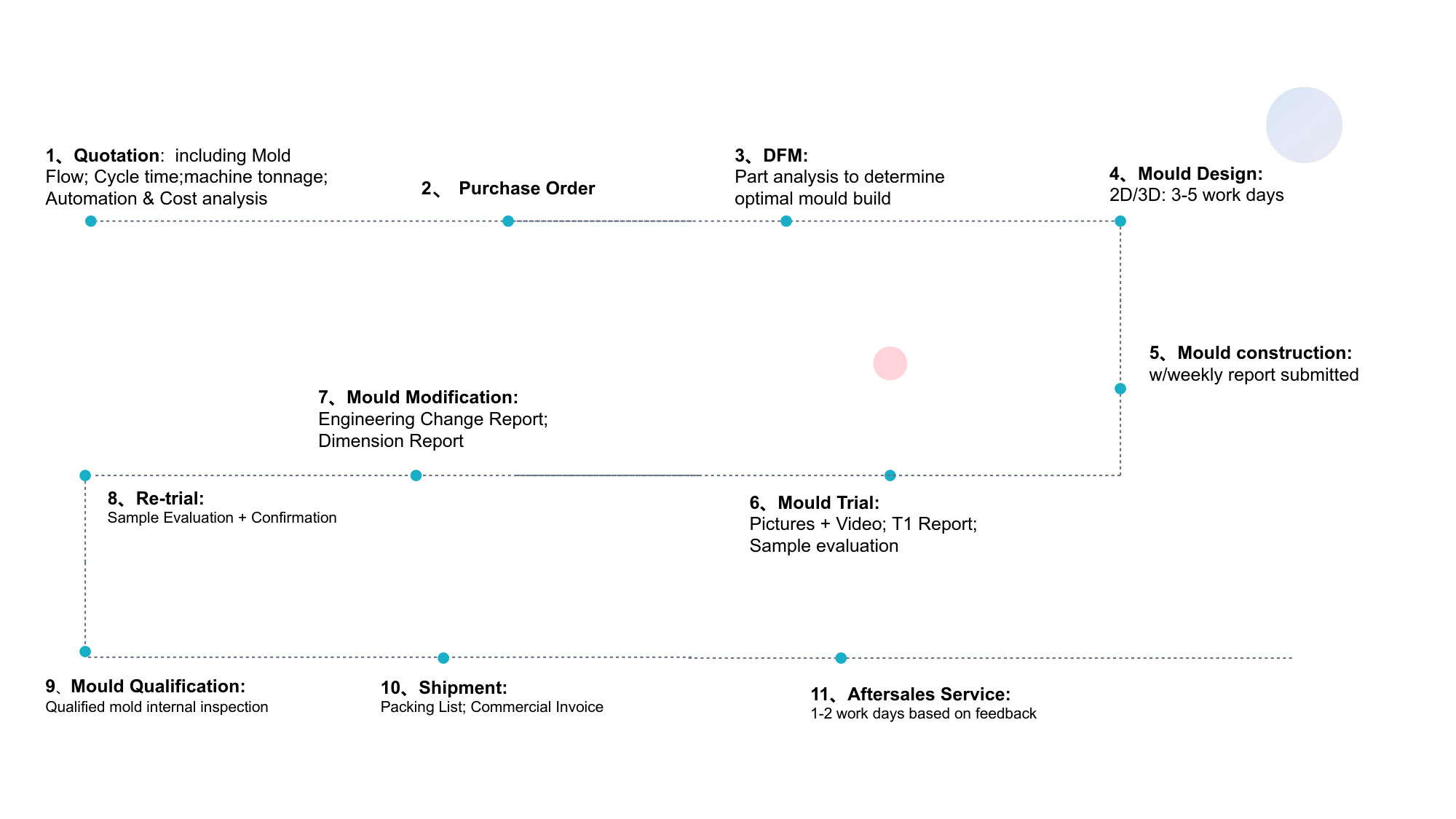
Ansix’s process development methodology for 12F MT ferrules follows a structured approach:
Stage 1: Scientific Molding Characterization. The relationship between injection speed, pressure, and cavity filling is established through a series of short-shot studies. The goal is to identify the velocity-to-pressure transition point and ensure that the mold fills without premature hesitation or over-packing.
Stage 2: Hold Pressure Optimization. Gate freeze-off time is determined through gate seal studies. Optimal hold pressure is identified to minimize shrinkage while avoiding excessive packing that could distort the fiber hole array.
Stage 3: Cooling Optimization. Cooling time is minimized while maintaining dimensional stability. This requires careful attention to mold temperature uniformity, as temperature gradients across the cavity produce differential shrinkage and warp the fiber hole positions.
Stage 4: Pin Deflection Monitoring. For MT ferrules, the most distinctive process challenge is preventing deflection of the micro-pins that form the fiber holes. Ansix employs pressure monitoring and, where appropriate, in-mold sensors to ensure that cavity pressure remains below the threshold at which pin deflection would degrade hole position accuracy.
3.6 Coating and Secondary Operations
While the search results do not provide specific details on Ansix’s coating capabilities for MT ferrules, industry practice for ferrule manufacturing typically includes end-face preparation and, in some cases, application of anti-reflective or protective coatings. Ansix’s experience with precision surface treatment across medical and optical applications positions the company to evaluate and implement coating solutions that meet customer specifications.
Secondary operations for MT ferrules include adhesive injection window preparation, dimensional verification, and packaging in contamination-controlled environments. Ansix’s ISO 8 cleanroom facilities are well-suited for these final-stage operations.
Part IV: Quality Assurance and Delivery Excellence
4.1 In-Process Quality Control
Quality is engineered into the MT ferrule manufacturing process at every stage, not inspected in at the end. Ansix’s quality framework for MT ferrule production includes:
Incoming Material Verification. Every resin lot is tested for melt flow rate, moisture content, and thermal properties to ensure batch-to-batch consistency.
Mold Monitoring. Cavity pressure sensors and mold temperature controllers provide real-time data on the molding process. Any deviation from the validated process window triggers automatic alerts and, in advanced configurations, part segregation.
Dimensional Inspection. Critical dimensions—fiber hole diameter, fiber hole position, guide pin hole diameter and position, and end-face geometry—are measured using high-resolution optical measurement systems. For 12F MT ferrules, fiber hole position measurements are conducted at the end-face where optical coupling occurs, since this is the dimension that directly determines insertion loss.
Functional Testing. Sample parts undergo insertion loss and return loss testing using industry-standard test methods. These tests validate that the molded ferrule meets the optical performance requirements for single-mode or multimode applications.
4.2 NPI Planning and Production Ramp
The New Product Introduction (NPI) process for MT ferrules follows a structured phase-gate model:
Phase 1: Design Freeze. Customer requirements are translated into manufacturing specifications. DFM feedback is incorporated into the final part design.
Phase 2: Mold Qualification. The mold is built, assembled, and tested. First-article inspection verifies that molded parts meet all dimensional and functional requirements.
Phase 3: Process Validation. The injection molding process is characterized and optimized. A process window is established that ensures stable production across the expected range of material and environmental variation.
Phase 4: Pilot Production. A pilot production run validates the complete manufacturing system—mold, process, inspection, packaging, and logistics—at a scale sufficient to identify any remaining issues before full production commitment.
Phase 5: Mass Production. Full production commences with established process controls, inspection protocols, and supply chain arrangements.
4.3 Delivery and Logistics
Ansix’s four production bases across China and Vietnam provide geographic flexibility and supply chain resilience. For MT ferrule customers, this multi-site capability offers several advantages: reduced tariff exposure for exports to different regions, redundancy in case of localized disruptions, and the ability to scale production across facilities as demand grows.
The company’s logistics infrastructure supports both scheduled replenishment programs and expedited deliveries for customers facing unexpected demand surges. With 12-hour response times for customer inquiries and a global customer base that includes automotive, medical, and communications OEMs, Ansix understands the importance of reliable delivery in maintaining production continuity.
Part V: Cost Competitiveness and After-Sales Service
5.1 Cost Engineering Methodology
Ansix approaches cost reduction systematically rather than opportunistically. The company’s cost engineering framework identifies four levers for reducing total cost of ownership:
Material Optimization. Working with resin suppliers to identify grades that meet performance requirements at lower cost, or reformulating compounds to reduce the content of expensive fillers while maintaining dimensional stability.
Cycle Time Reduction. Optimizing cooling, gate design, and part ejection to minimize the time required per molding cycle. For MT ferrules, where cycle times can be measured in tens of seconds, even small reductions in cycle time translate into significant annual capacity gains.
Yield Improvement. Reducing scrap through tighter process control, better mold maintenance, and earlier detection of out-of-spec conditions. For high-precision components like MT ferrules, yield improvements often deliver the most substantial cost savings.
Automation. Deploying robotic part removal, automated inspection, and packaging to reduce labor content and improve consistency.
5.2 After-Sales Support
Ansix’s commitment to customer success extends well beyond the point of sale. The company provides:
Technical Support. Access to engineering resources for troubleshooting, process optimization, and continuous improvement initiatives.
Spare Parts and Mold Maintenance. For customers who purchase tooling from Ansix, the company offers mold maintenance services and replacement parts to ensure long-term production reliability.
Quality Issue Resolution. In the event of a quality excursion, Ansix mobilizes a cross-functional team to identify root cause, contain the issue, and implement corrective actions. The company’s 12-hour response commitment applies to quality concerns as well as commercial inquiries.
Continuous Improvement. Regular business reviews with customers identify opportunities for cost reduction, quality enhancement, and delivery improvement.
Conclusion: The Ansix Advantage in 12F MT Ferrule Manufacturing
The 12F MT ferrule market rewards manufacturers who can deliver sub-micron precision consistently, at scale, and at competitive cost. Ansix Tech brings to this challenge a 28-year heritage in precision injection molding, a comprehensive manufacturing ecosystem spanning design through delivery, and a deep understanding of the material science and process physics that govern ferrule quality.
The company’s vertically integrated approach—encompassing DFM, moldflow simulation, precision mold manufacturing, material engineering, injection molding process development, and rigorous quality assurance—eliminates the communication gaps and finger-pointing that plague fragmented supply chains. When a dimension drifts or a process window narrows, Ansix’s engineers have full visibility from the mold steel to the molded part to the customer’s performance requirement.
For customers evaluating MT ferrule suppliers, Ansix offers a compelling combination: the precision and consistency required for single-mode and low-loss multimode applications, the manufacturing capacity to support volume production, and the cost discipline necessary to compete in an increasingly price-sensitive market. As optical networks evolve toward higher fiber counts and tighter performance specifications, Ansix is positioned to grow with its customers—delivering the ferrule technology that makes high-density optical connectivity possible.
Ansix Tech Co Ltd
If you have any plans related to MT ferrule (12-fiber) injection molding and coating , you can contact us at any time. We will turn your ideas into reality, let you realize your dreams, and obtain large orders from the market. Our contact information is info@ansixtech.com. Or contact our CTO, mail: stephen@ansixtech.com
#www.ansixtech.com #ansixtech.com #MT ferrule (12-fiber) injection molding and coating #MT ferrule (12-fiber) injection molding and coating tooling #MT ferrule (12-fiber) injection molding and coating injection mold companies #Ansix #Ansix moulds #Ansix china #Ansix tech china #Ansix tech company #Ansix facotry #Ansix Tooling #Ansix tool #MT ferrule (12-fiber) injection molding and coating injection molding #MT ferrule (12-fiber) injection molding and coating injection tools #MT ferrule (12-fiber) injection molding and coating injection moulds #Ansix moulding company #Ansix molding #ansix tooling #MT ferrule (12-fiber) injection molding and coating plastic mould #MT ferrule (12-fiber) injection molding and coating plastic tools #Ansix Tech #Ansix molds #Ansix injection molding #Ansix mold factory #MT ferrule (12-fiber) injection molding and coating injection molding Customized #Ansix mold factory #MT ferrule (12-fiber) injection molding and coating china #MT ferrule (12-fiber) injection molding and coating molds #injection factory for MT ferrule (12-fiber) injection molding and coating injection molding #MT ferrule (12-fiber) injection molding and coating injection molding factory #injection molding company #MT ferrule (12-fiber) injection molding and coating injection mold companies #Mold for MT ferrule (12-fiber) injection molding and coating #MT ferrule (12-fiber) injection molding and coating limited #Ansix mold china #Ansix companies for MT ferrule (12-fiber) injection molding and coating #Ansix company China #MT ferrule (12-fiber) injection molding and coating facotry #Ansix Tech #Ansix Tech mould #MT ferrule (12-fiber) injection molding and coating injection moulding #MT ferrule (12-fiber) injection molding and coating injection moulding company #Ansix MT ferrule (12-fiber) injection molding and coating parts injection mold companies #MT ferrule (12-fiber) injection molding and coating injection molding companies china #MT ferrule (12-fiber) injection molding and coating china factory #Ansix moulding companies #Ansix molding company #MT ferrule (12-fiber) injection molding and coating injection moulding facotry #Ansix Tech mold #MT ferrule (12-fiber) injection molding and coating mould #MT ferrule (12-fiber) injection molding and coating plastic injection molding #ansix plastic mold #MT ferrule (12-fiber) injection molding and coating Mold manufacturing #MT ferrule (12-fiber) injection molding and coating parts manufacturing #MT ferrule (12-fiber) injection molding and coating plastic parts factory #MT ferrule (12-fiber) injection molding and coating injection parts mold #MT ferrule (12-fiber) injection molding and coating PRECISION MANUFACTURING #MT ferrule (12-fiber) injection molding and coating TOOL #China MT ferrule (12-fiber) injection molding and coating mold #MT ferrule (12-fiber) injection molding and coating injection moulding china #MT ferrule (12-fiber) injection molding and coating mould china #china precision mold #MT ferrule (12-fiber) injection molding and coating mold in china #MT ferrule (12-fiber) injection molding and coating mold china #MT ferrule (12-fiber) injection molding and coating Precision molds #High-precision molds #MT ferrule (12-fiber) injection molding and coating High-precision tool #Injection molds #MT ferrule (12-fiber) injection molding and coatingFactory #MT ferrule (12-fiber) injection molding and coatingCompany #Super Large Injection Mold Factory #Large Tonnage Injection Molding Factory #MT ferrule (12-fiber) injection molding and coating Company #MT ferrule (12-fiber) injection molding and coating Factory #2800T Injection Molding Factory #3000 Ton Injection Molding #4500 Ton Injection Molding Factory #MT ferrule (12-fiber) injection molding and coating Large Mold Injection Molding #Large Plastic Mold Injection Molding Factory #MT ferrule (12-fiber) injection molding and coating Large Injection Mold Manufacturer #MT ferrule (12-fiber) injection molding and coating Plastic Mold Factory #Injection Mold #Plastic Mold