



24-cavity PET preform mold
FEATURES
“Hard Power” Infrastructure – The Foundation of Customer Trust
1.1 Mold Manufacturing Equipment
Advanced manufacturing equipment is the bedrock of mold quality. At Ansix Tech, our investment in state-of-the-art machinery translates directly into tighter tolerances, smoother part surfaces, and longer mold life for your production line.
5-Axis High-Speed CNC Machining Centers: We are equipped with multiple 5-axis high-speed machining centers capable of achieving micron-level precision on complex mold geometries. These machines can process intricate surfaces with accuracy down to 0.002 mm, ensuring that your preform mold’s parting lines are smooth and completely flash-free. Five-axis technology allows us to machine complex undercuts and angled features in a single setup, eliminating multiple clamping operations that can introduce positioning errors. Compared to conventional 3-axis machining, 5-axis technology reduces setup time by up to 50% and achieves accuracy of ±2–3 µm for most precision features, with grinding and wire EDM achieving ±1 µm or higher. What this means for you: Every cavity is machined identically, with zero mismatches, ensuring all 24 preforms have consistent wall thickness and weight.
-
Mold Description
Product Materials:
PET PETG
Mold Material:
S136ESR
Number of Cavities:
1*24
Glue Feeding Method:
Hot runner
Cooling Method:
Water cooling
Molding Cycle
9.5s
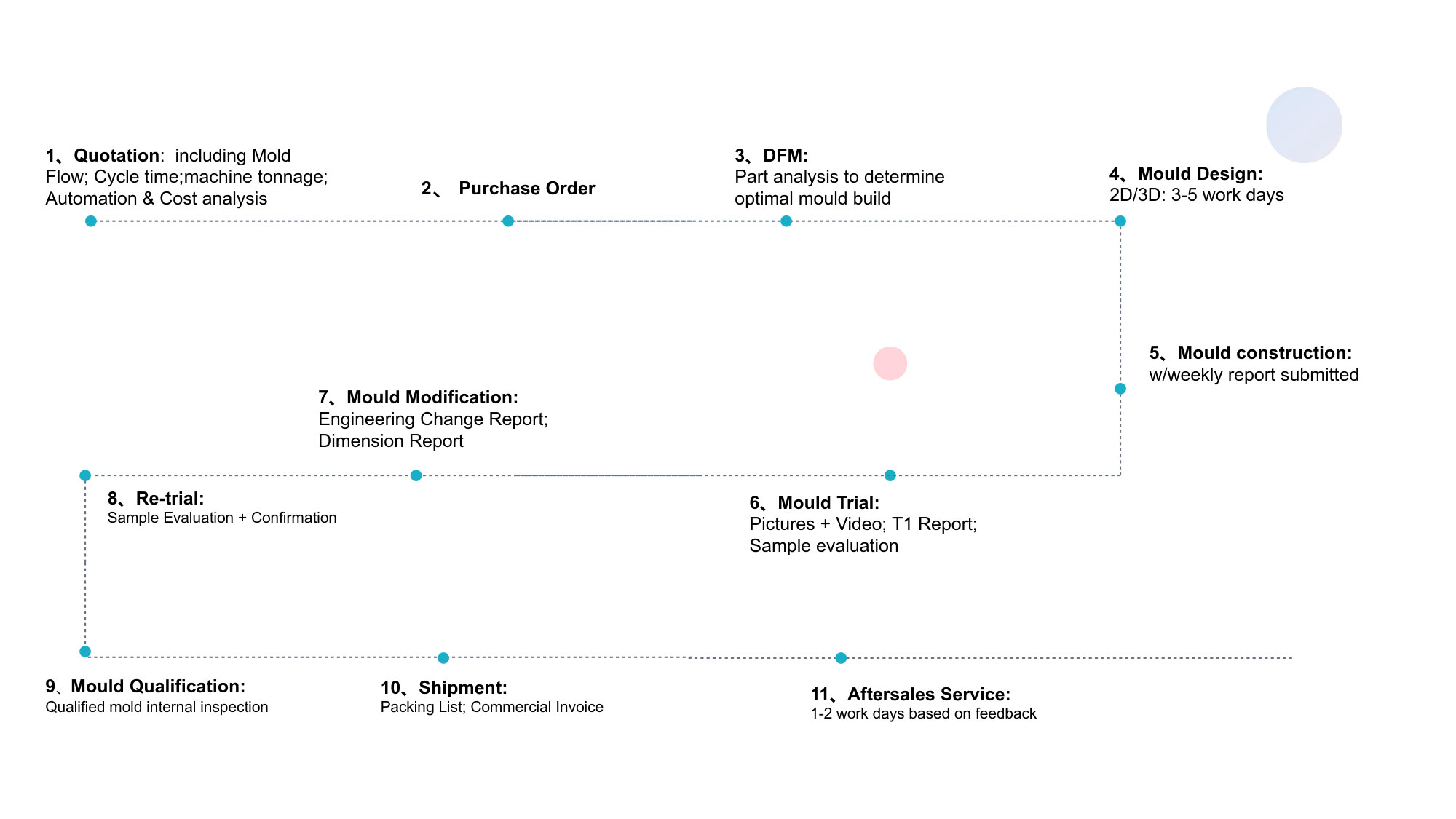
- The mold manufacturing process and product material selection
Slow Wire EDM (Wire-Cut EDM): Our slow wire EDM machines are specifically employed for machining ultra-fine micro-holes (as small as 0.03 mm) and narrow slots with exceptional precision. This capability is critical for creating the delicate gate openings and cooling channel details in high-cavitation preform molds. The wire EDM process avoids mechanical cutting forces that could distort thin-walled mold components, preserving geometric integrity where it matters most.
Coordinate Measuring Machine (CMM) & Optical Inspection Systems: Every mold component leaving our facility undergoes rigorous dimensional verification. Our CMM and optical imaging systems generate full dimensional reports for every cavity, comparing actual measurements against design specifications. Key dimensions are validated with process capability index (Cpk) ≥ 1.33, a statistical measure demonstrating that our manufacturing process is both accurate and stable — your assurance that every mold performs as designed from the first shot.
-
Injection Molding Machine Fleet
The quality of a mold is ultimately proven on the injection molding machine. Ansix Tech operates a comprehensive fleet of fully servo-electric injection molding machines spanning clamping forces from 30 tons to 4,000 tons, covering the full spectrum of PET preform sizes from lightweight water bottle preforms (8–15 g) to heavy-duty 5-gallon preforms (500+ g). Our machines are equipped with fully electric servo drives, achieving repeatable stability at ±0.1% precision — meaning every shot, across every cavity, every hour, every shift, delivers consistent results.
The lock-to-lock time on our high-speed machines is under 2.0 seconds, supporting fast cycle times and overall production efficiency while the energy recuperation of kinetic energy noticeably reduces electricity costs. For a 26 g preform running on a 24-cavity mold at an 11-second cycle, daily production exceeds 188,500 units — a volume that demands absolute machine-mold synchronization.
1.3 Material Testing & Validation Laboratory
Quality begins with raw materials. Our in-house laboratory tests every batch of mold steel and resin before production begins. Material composition analysis, hardness verification, and microscopic inspection for inclusions ensure that only certified materials enter our manufacturing floor — eliminating the risk of premature mold failure due to substandard materials.
Customer Value Summary – Hard Power:
Technical Capability Customer Benefit
0.002 mm 5-axis precision Smooth preforms, no flash — zero post-molding trimming cost
0.03 mm micro-hole EDM capability Precision gate design — consistent preform weight
CMM + Cpk≥1.33 dimensional validation Predictable mold performance — no “surprises” at trial
30T–4000T servo-electric machines One supplier for all preform sizes — simplified procurement
In-house materials lab No raw material risk — guaranteed steel quality
Part Two: Mold Manufacturing Core Competencies – Where Precision Meets Performance
In the world of high-cavitation PET preform molds, success is measured not by the number of cavities, but by the consistency across every cavity. Your customers demand identical preforms — same weight, same wall thickness, same crystallinity — every time. Ansix Tech delivers this through meticulous attention to five critical dimensions.
2.1 Mold Life & Material Selection – Your Asset, Not an Expense
The longevity of your mold directly impacts your return on investment. A mold that requires frequent repairs or early retirement drives up per-unit production costs and disrupts your supply chain. Ansix Tech selects mold materials based on your specific production requirements, offering a clear commitment on lifespan.
Mold Base: Constructed from P20 steel with nitriding treatment achieving HRC 28–32. P20 provides excellent machinability and dimensional stability, forming the rigid foundation that maintains alignment across all 24 cavities throughout millions of cycles.
Core & Cavity Inserts: For the critical core and cavity components that shape the preform, we specify premium materials based on application:
S136 stainless steel (vacuum quench treated, HRC 43–52): Offers exceptional corrosion resistance and mirror-polishing capability, ideal for transparent PET preforms where optical clarity is paramount. The high chromium content prevents rust formation even when exposed to residual moisture in PET resin.
H13 hot-work tool steel (HRC 45–55): Provides outstanding heat resistance and thermal fatigue resistance, essential for high-speed, high-cavitation production where the mold experiences continuous thermal cycling.
2344, 2343, 8407, SKD11/61, DC53: Additional options for specific wear or toughness requirements.
NAK80: Pre-hardened steel requiring no post-machining heat treatment, ideal for applications with tight lead times.
Heating Plate & Manifold: H13 steel ensures uniform heat distribution across the entire hot runner system, preventing cold spots that could degrade PET resin and cause inconsistent melt flow.
Lifespan Commitment: For standard PET applications without glass fiber reinforcement, we guarantee a minimum of 1 million shots. For glass fiber-reinforced materials, our molds are designed to exceed 500,000 shots. Each mold is delivered with certified material reports and heat treatment curves for complete traceability.
2.2 Dimensional Accuracy Achievable – Precision That Pays for Itself
PET preforms demand tight tolerances because any variation at the preform stage amplifies during blow molding, causing bottle defects, sealing failures, or even production line shutdowns.
General Structural Components: ±0.05 mm tolerance ensures all non-critical features fit and function perfectly without driving unnecessary manufacturing costs.
Precision Components (Gate Area, Core-Cavity Match): ±0.005 mm tolerance ensures perfect alignment between core and cavity, eliminating flash and minimizing eccentricity. Industry best practice aims for eccentricity less than 0.09 mm over a 100 mm length, a standard our precision manufacturing consistently meets and often exceeds.
For Carbonated Beverage Applications: We achieve preform mouth inner diameter standard deviation compressed from ±10 μm to ±1.5 μm — meeting the airtightness requirements of carbonated beverage bottle caps.
2.3 Mold Type Capabilities – Matching the Mold to Your Market
Different applications demand different mold architectures. Ansix Tech delivers expertise across the full spectrum:
Hot Runner Systems with Valve Gate: Our standard and preferred solution for 24-cavity PET preform molds. The hot runner eliminates cold runner waste entirely, reducing material consumption by 20–30% compared to cold runner systems. The “multi-point valve pin + simultaneous opening” system ensures melt fills all 24 cavities simultaneously with consistent pressure and temperature across every cavity. PET’s narrow processing window (260–280°C) demands precision thermal control — our hot runner features individual thermocouples and heaters for each nozzle, with the hot runner plate divided into independent temperature control zones to provide targeted compensation for “weaker” runners farther from the main inlet. The valve gate design incorporates a pneumatic or hydraulic pin that mechanically seals the gate after injection, eliminating stringing and drooling while allowing larger gate diameters that reduce shear heat — critical for PET’s temperature sensitivity.
High-Mirror Finish Capability: For preform applications requiring crystal-clear transparency, we achieve surface roughness Ra ≤ 0.05 μm — a mirror-like finish that eliminates surface defects that would otherwise become visible after stretch blow molding. The cavity surface is treated with micro-nano composite texture to achieve this standard.
2.4 Gate & Filling System Optimization – Engineered for Balance
In a 24-cavity mold, filling balance is everything. Unbalanced filling produces preforms with different weights and crystallinity across cavities, leading to inconsistent blow molding results and increased scrap rates.
Ansix Tech employs Moldflow analysis as a non-negotiable step in every project:
Simulate melt flow to predict weld line locations, air trap positions, and filling imbalances before any steel is cut.
Optimize gate location and quantity to ensure uniform filling across all 24 cavities.
Validate runner balance by designing runner diameters that achieve identical flow resistance to every cavity.
Forecast shrinkage behavior using material-specific data to compensate for dimensional changes during cooling.
Our molded-in-channel hot runner design features a conical tapered torpedo head that reduces the melt shear rate gradient by 80% and eliminates flow lines. The result: Maximum weight difference across 24 cavities is ≤0.03 g — compared to traditional molds where variations exceeding 0.15 g are common. Fill imbalances are controlled to less than 5%, ensuring uniform preform weight (±0.05 g) and wall concentricity (±0.08 mm over 100 mm length).
2.5 Cooling System – The True Bottleneck Breaker
Cooling accounts for the largest portion of the injection molding cycle — typically 50–70% of total cycle time. A superior cooling system directly reduces your cost per part by shortening cycles while improving part quality.
Ansix Tech’s cooling system design for 24-cavity PET preform molds incorporates:
Conformal Cooling Channels: Unlike conventional straight-drilled cooling channels, our conformal channels follow the three-dimensional contour of the preform, maintaining constant distance from the molded surface at every point. This is achieved through advanced manufacturing techniques, including the use of high thermal conductivity materials and optimized spiral turbulent flow paths inside the mold core. Conformal cooling provides much more uniform stack cooling and dramatically reduces the formation of hot and cold spots — the root cause of differential shrinkage, ovality, and split line issues.
Independent Zone Temperature Control: Our cooling circuit layout is optimized through finite element analysis (FEA) to ensure cooling efficiency deviation across the 24 cavities is controlled within 5%. The system features dynamic variable-diameter water channels — different channel diameters are designed based on the mold cavity thermal map, achieving cavity temperature difference reduction from ±8°C to ±0.5°C.
High Thermal Conductivity Core Material: For the mold core, we specify materials with enhanced thermal conductivity to rapidly extract heat from the preform’s thickest sections. Titanium alloy heat diffusers (λ=120 W/mK) can be embedded to increase bottle bottom cooling efficiency by 40%.
AI Temperature Control Compensation: Real-time temperature monitoring automatically adjusts cooling flow rates to maintain optimal thermal balance, keeping crystallinity fluctuation ≤3% — far superior to the industry average of 15%.
2.6 Delivery Standards – Predictability You Can Plan Around
Time-to-market is a competitive weapon. Ansix Tech delivers with transparency and reliability:
Mold Complexity Standard Lead Time Expedited Option Notes
Simple molds (basic geometry) 10–15 days 7–10 days Minor modifications to existing designs
Standard 24-cavity PET preform 30–45 days 20–25 days Full DFM + 3D design + machining + assembly
Complex/high-precision 45–60 days 30–40 days Custom hot runner + conformal cooling
Even under expedited timelines, we never skip the critical validation steps — DFM review, Moldflow analysis, T0 sample inspection, and wear testing remain mandatory. We deliver with mold shipped in robust wooden cases from our Ningbo or Shanghai ports.
Customer Value Summary – Mold Manufacturing:
Technical Capability Customer Benefit
1M+ shot lifespan guarantee Lower mold amortization cost — better ROI
0.005 mm precision / 0.03 mm wall concentricity Consistent bottle blow molding — lower downstream scrap
Hot runner eliminates 20–30% material waste Direct raw material savings every shift
≤0.03 g cavity-to-cavity weight variation All preforms identical — reduced quality sorting
5% cooling uniformity deviation Shorter cycles — more parts per hour
30–45 day standard delivery Predictable project timeline — plan your launch
Part Three: Injection Molding Process Control – Eliminating Customer Quality Anxiety
The most perfectly machined mold will fail if the injection molding process is not controlled. Customers fear four things: shrinkage/sink marks, flash, dimensional instability, and batch-to-batch color variation. Ansix Tech addresses each with systematic, technology-driven process controls.
3.1 Process Standardization & Parameter Locking
All our injection molding machines are networked and integrated with a Manufacturing Execution System (MES). All critical process parameters — melt temperature, mold temperature, injection pressure, holding pressure, injection speed, cooling time, back pressure — are locked within the MES. Only authorized engineering personnel can adjust parameters, with every change logged and auditable.
The customer benefit: No operator-introduced variation. What ran yesterday runs identically today. Production line operators focus on output, not troubleshooting.
3.2 Dimensional Stability Control – Closed-Loop Precision
Temperature uniformity directly controls shrinkage and warpage. Ansix Tech’s approach:
Mold Temperature Controllers with Zone Control: We utilize dedicated mold temperature controllers for both core and cavity sides, maintaining the temperature difference between core and cavity within 2°C. This minimizes differential shrinkage — the primary cause of preform ovality and warpage.
In-Mold Temperature & Pressure Sensors: Smart molds are instrumented with thermocouples and pressure transducers embedded within the cavity, providing real-time feedback on melt conditions at the point of filling. This data feeds into a closed-loop control system that automatically adjusts holding pressure and injection parameters to compensate for raw material variations or environmental changes.
Ultrasonic Wall Thickness Monitoring: For the most demanding applications, our injection molding machines can be equipped with ultrasonic through-thickness sensors that measure preform wall thickness in real time during the molding cycle. This data triggers automatic compensation of packing pressure to maintain wall thickness within specification — cavity by cavity.
Proven Results: In a benchmark production run of brackets over one week across three batches, key hole-to-hole spacing variation was maintained within ±0.02 mm — demonstrating consistency that eliminates downstream assembly issues.
3.3 Appearance Quality Standards – Clarity and Surface Excellence
PET preforms are judged by their appearance because any surface defect will be magnified during stretch blow molding. Ansix Tech achieves:
Quality Level Specification Application
Transparent no-bubble, no-flow-mark Crystal clarity with zero visual defects Water bottles, beverage containers
Electroplating-ready no-gas-mark Surface free of blush and splay marks Decorative/metallized bottles
High-gloss Ra ≤ 0.2 μm Mirror finish ready for labeling or direct printing Premium packaging
Printed/coated surface ±0.1 mm registration after deformation compensation Multi-layer labels, shrink sleeves
3.4 Advanced Material Processing Capability – Handling What Others Cannot
Modern packaging demands go beyond standard PET. Ansix Tech has extensive production experience with a broad range of engineering thermoplastics:
Material Grade Typical Application Key Processing Considerations
PET (bottle grade, IV 0.70–0.88 dL/g) Standard water/carbonate bottles Drying critical: <50 ppm moisture to prevent IV drop
rPET (recycled, up to 100%) Sustainable packaging Requires adjusted shrinkage compensation
PC/ABS Automotive, consumer goods High-temperature processing
PC Water bottles, baby bottles High transparency requirement
PPS + 40% GF High-heat chemical containers Abrasive, requires hardened tooling
PEEK Medical, aerospace, high-performance Extreme temperature resistance
PA6 + GF30 Industrial containers Moisture sensitivity
PBT Electrical/electronic components Good dimensional stability
PEI/PPS/LCP High-performance engineering High-temperature mold requirements
Liquid Silicone Rubber (LSR) Flexible seals, medical devices Requires cold runner or specialized LSR hot runner
PTFE/PFA Chemical-resistant containers Difficult flow characteristics
Flame Retardancy Compliance: For applications requiring UL94 V-0 rating (e.g., electrical housings, automotive components), we have proven experience selecting appropriate flame-retardant grades of PC/ABS, PBT, and PPS while maintaining moldability.
UV & Weather Resistance: Our material selection and process controls ensure UV stability pass 3,000-hour accelerated weathering tests without discoloration — critical for outdoor storage or long-shelf-life applications.
3.5 Critical Process Parameters – Science-Based Optimization
Research has identified that melt temperature is the most significant factor affecting PET preform quality. Ansix Tech optimizes all key parameters:
Parameter Optimal Range Impact on Quality
Melting temperature 260–280°C Above 280°C → thermal degradation, AA formation; below 260°C → incomplete melting, poor flow
Mold temperature 70–120°C (critical side: 70°C for water bottles) Lower temperatures reduce cycle time but increase residual stress; higher temperatures improve crystallinity but extend cooling
Holding pressure 80–150 MPa Insufficient pressure → shrinkage and sink marks; excessive pressure → residual stress, ejection difficulties
Cooling time 10–20 seconds (depending on preform weight/thickness) Too short → incomplete solidification, warpage; too long → reduced productivity
Injection rate 8–12 g/s per cavity Too fast → shear heating, material degradation; too slow → premature freezing, short shots
Back pressure Minimum (avoid shear stress) Excessive back pressure degrades PET molecular weight
A 15 g preform should inject in 1.5–1.8 seconds to avoid shear stress. For thicker preforms (e.g., 525 g with 8.5 mm wall thickness), fill rates up to 19.4 g/s per cavity are feasible while maintaining quality.
3.6 Acetaldehyde (AA) Control – Protecting Taste-Sensitive Products
For beverage packaging applications — especially water and carbonated soft drinks — acetaldehyde (AA) content is a critical quality attribute. Elevated AA levels impart an undesirable fruity/off-taste to bottled products. PET’s thermal sensitivity makes AA formation a persistent challenge during high-temperature processing.
Ansix Tech controls AA through:
Precision hot runner temperature control using independent zone heaters and thermocouples at each nozzle tip to prevent localized overheating.
Minimized melt residence time through optimized hot runner channel geometry and shot size matching.
Rapid cooling immediately post-injection to quench the molecular structure and limit degradation reactions.
Gas chromatographic AA measurement per ASTM F2013 to validate preform AA content before shipment.
Our AA levels consistently meet or exceed the requirements of global beverage brand specifications.
Customer Value Summary – Process Control:
Technical Capability Customer Benefit
MES parameter locking No operator error — consistent production
Closed-loop cavity pressure control Dimensional stability batch-to-batch
Ultrasonic wall thickness monitoring No downstream blow molding surprises
Ra ≤ 0.2 μm surface finish No secondary finishing cost
Low AA value (< spec) Meets beverage brand standards — no customer rejection
100% rPET processing capability Supports sustainability goals — lower material cost
Part Four: End-to-End Service – Reducing Your Management Burden
The most expensive part of any manufacturing project is not the tooling cost — it’s the hidden cost of managing multiple vendors, troubleshooting unexpected problems, and handling production downtime after launch. Ansix Tech’s integrated service model eliminates these hidden costs.
4.1 Early Intervention – DFM (Design for Manufacturability) Report
Before we cut any steel, we provide a comprehensive Design for Manufacturability (DFM) report for your preform design. This document is the single most valuable deliverable in preventing downstream problems:
Mold Feasibility Analysis:
Draft angle recommendations — identifying insufficient draft that would cause ejection sticking and preform scratching
Wall thickness optimization — flagging sections that are too thick (excessive cooling time, sink marks) or too thin (filling difficulties)
Gate location recommendations — positioning the gate to minimize visible witness marks and avoid critical sealing surfaces
Ejector pin mark location approval — obtaining your sign-off on where ejector pins will contact the preform (usually the gate area or non-critical surface)
Risk Identification:
Weld line location prediction (and proposed mitigation)
Air trap identification (and venting strategy)
Shrinkage simulation (compensation values pre-programmed into cavity dimensions)
The customer benefit: Problems identified and solved before any tooling investment — no “surprise” design changes after the mold is partially machined. This typically saves customers 2–4 weeks of rework and 5,000–15,000 in engineering changes.
4.2 Trial Molding & Sample Submission – T0 Through T3
Transparency builds trust. Ansix Tech provides samples at every trial stage, accompanied by detailed improvement reports:
Trial Stage Deliverable Customer Action
T0 (First tryout) 20–50 samples, full dimensional report, defect analysis Approve basic form/fit; identify improvement areas
T1 Updated samples, modification summary, revised CPK data Verify corrections; approve for pre-production
T2 (Optimization) Enhanced samples, final dimensional validation Approve for customer sampling
T3 (Qualification) PPAP-level documentation, process capability study Production approval
During this process, we maintain the ability to swap interchangeable mold inserts to test different gate configurations, runner designs, or cooling layouts without remaking the entire mold — saving weeks and thousands in rework costs.
4.3 Small-Batch Validation – De-Risking Mass Production
The most common failure in mold projects is the gap between “the mold works in the tool shop” and “the mold works on my production line.” Ansix Tech bridges this gap with optional small-batch validation:
We offer production runs of 100 to 500 shots on our own injection molding machines, providing:
Yield rate analysis (percentage of acceptable parts)
Cpk (process capability index) calculation for all critical dimensions
Cycle time validation under actual production conditions
Blow molding trial data (performed with partner blow molding lines)
Only after achieving your target Cpk (typically ≥1.33 for critical dimensions) do we release the mold for mass production. This validation step alone eliminates 80% of the “mold works in China but not at my plant” problems that plague cross-border mold procurement.
4.4 Maintenance & Spare Parts – Protecting Your Investment Long After Delivery
A mold is not a one-time purchase — it is an asset that must be maintained. Ansix Tech supports you for the life of the tool:
Spare Parts Delivered with Mold:
Extra ejector pins (3 sets)
Spare core/cavity inserts (1 full set)
Valve gate needles and bushings (2 sets)
Temperature sensors and heaters (1 extra per zone)
Preventive Maintenance Schedule:
Every 200,000 shots: Recommended mold inspection and cleaning service
Every 500,000 shots: Component wear measurement and replacement of high-wear parts
Every 1,000,000 shots: Full mold overhaul with dimensional verification
Lifetime Repair Service: For repairs needed beyond the warranty period (including welding, insert replacement, and surface refinishing), Ansix Tech provides service at cost-plus pricing — no markups on your mold repair needs.
4.5 After-Sales Support Infrastructure
Quick-response hotline: Technical support available within 24 hours via video call, email, or on-site visit (with advance scheduling)
Spare parts inventory: Common wear components stocked in our warehouse for 48-hour emergency shipment
Remote troubleshooting: Camera-equipped technical staff can diagnose many issues without travel delays
Training documentation: Complete mold operation, maintenance, and troubleshooting manuals in your local language
Customer Value Summary – Service:
Service Feature Customer Benefit
DFM report before tooling Problems solved before steel cut — saves 2–4 weeks, 5K–15K
T0–T3 sample iterations No black box — see progress at every stage
Small-batch Cpk validation No “works in China, fails in my plant” surprises
Spare parts included Immediate repair capability — no downtime waiting for parts
Cost-plus lifetime repair Fair pricing — no captive aftermarket markup
24-hour remote support Fast problem resolution — minimized production interruption
Part Five: Competitive Differentiation – Addressing Common Industry Pain Points
Instead of simply claiming we are “better,” Ansix Tech provides explicit solutions to the most frequent customer complaints in the molding industry.
Problem #1: “The mold is always in repair — affecting my production schedule.”
The customer’s cost: Each unplanned mold repair causes production stoppage, missed delivery deadlines, and customer penalties. A typical 24-cavity preform mold running 1 million preforms per day; every 24-hour downtime costs 1 million lost preforms.
Ansix Tech’s solution:
We conduct a 2,000-shot wear test before mold delivery, documenting surface wear patterns and dimensional stability. A detailed wear report is provided with every mold.
We offer a three-year mold structure warranty (excludes normal wear on consumable components like ejector pins and valve needles). Structural components including cavity plates, support pillars, and tie bars are warrantied against failure.
Our spare parts kit enables immediate replacement of high-wear components without custom machining.
Intelligent mold features with embedded sensors enable predictive maintenance alerts — you are notified before a component fails, not after.
Quantified customer value: Eliminate unplanned downtime risk. Save
s100,000+peryearinlostproductioncosts(basedon1milliondailypreformsat0.03/unit margin).
Problem #2: “Excessive flash — high post-molding trimming cost.”
The customer’s cost: Manual flash removal adds labor cost, risks part damage, and reduces overall line efficiency. On a 24-cavity mold, even 0.1 mm of flash on every preform adds hours of manual labor per shift.
Ansix Tech’s solution:
We machine parting surfaces to 0.005 mm fitting accuracy — eliminating microscopic gaps where flash can form.
We incorporate self-locking clamp force compensation into the mold design, which automatically maintains contact pressure even as the mold undergoes thermal expansion during production.
We guarantee flash controlled below 0.03 mm at the parting line — so small it typically breaks away during ejection without additional processing.
Our Moldflow analysis identifies potential flash locations before tooling and adjusts gate placement and venting accordingly.
Quantified customer value: Eliminate manual flash removal. Save 20,000–50,000 per year in direct labor cost (based on 8 hours/day at $25/hour). Reduce scrap from trimmed parts.
Problem #3: “Dimensions change from batch to batch — inconsistent blow molding results.”
The customer’s cost: Unstable dimensions cause blow molding equipment to require constant adjustment, reducing output and increasing rejected bottles. Quality control costs escalate, and customer complaints rise.
Ansix Tech’s solution:
Our injection molding machines are equipped with ultrasonic through-thickness sensors that measure preform wall thickness in real time during each cycle. The system automatically adjusts holding pressure to compensate for material viscosity variations.
In-mold temperature and pressure sensors (thermocouples + pressure transducers) provide closed-loop control of cavity conditions, eliminating process drift.
The MES system logs all process parameters; any deviation triggers an alert before nonconforming parts are produced.
We provide documented process parameters with each mold, enabling your production team to replicate our optimized settings exactly.
Quantified customer value: Eliminate batch-to-batch variation risk. Reduce blow molding line adjustment time by 80%. Reduce downstream scrap by 30–50%.
Problem #4: “Mold repair lead time is too long — weeks of waiting.”
The customer’s cost: When a mold breaks down, every day of waiting for repairs is lost production. Traditional repair shops may require 2–4 weeks to complete work, especially for imported molds.
Ansix Tech’s solution:
We maintain an in-house electrode manufacturing center and EDM workshop — meaning mold repairs rarely require outsourcing any operation.
Standard repairs (cavity welding, insert replacement, gate repair) are completed and returned to service within 24 hours.
Our spare parts kit shipped with the mold enables your local maintenance team to replace ejector pins and valve needles without any custom parts fabrication.
For complex repairs, we maintain a dedicated service team that can ship replacement inserts by air freight within 48 hours.
Quantified customer value: Reduce mold repair time from 4 weeks to 1 day. For a line producing 1 million preforms/day, each day of avoided downtime saves approximately 30,000inlostoutputrevenue(assuming0.03/unit profit margin).
Problem #5: “The mold doesn’t perform as expected — we have to debug it ourselves.”
The customer’s cost: Debugging a problematic mold consumes engineering hours, delays production launch, and creates uncertainty in project timelines. Hidden costs often exceed the mold purchase price.
Ansix Tech’s solution:
Our molds are designed for “plug-and-produce” operation — ready to run on your injection molding machine with minimal setup.
We specify machine compatibility requirements in advance (clamping tonnage, platen size, ejector stroke, nozzle tip configuration) to ensure perfect fit.
The small-batch validation service (100–500 shots) verifies performance on our machines before shipment — we don’t ship a mold that hasn’t proven itself.
Each mold is shipped with a detailed setup guide including recommended process parameters, startup procedure, and troubleshooting flowcharts.
Quantified customer value: Eliminate mold debugging cost. Typical debugging consumes 20–40 engineering hours at 100/hour=2,000–$4,000 saved per project. Avoid launch delays of 1–2 weeks.
Part Six: Material Selection & Raw Material Characteristics – The Foundation of Preform Quality
The journey to a perfect PET preform begins not at the mold, but at the resin. Ansix Tech provides comprehensive guidance on material selection, processing, and quality assurance.
6.1 PET Resin Types and Characteristics
Polyethylene terephthalate (PET) for preform molding is available in multiple grades, each optimized for specific applications:
PET Grade Intrinsic Viscosity (IV) Typical Applications Key Characteristics
Low IV 0.72–0.78 dL/g Lightweight water bottles, cost-sensitive applications Lower processing temperature, shorter cycles, reduced energy consumption
Medium IV 0.78–0.84 dL/g Standard water, juice, and carbonated soft drink bottles Balanced properties: good strength with acceptable cycle times
High IV 0.84–0.88 dL/g Carbonated beverages (high pressure), large containers Higher mechanical strength, better gas barrier, slower cycles
rPET (recycled) 0.70–0.80 dL/g (varies by source) Sustainable packaging, mixed-content bottles Requires drying optimization, higher shrinkage compensation
Typical bottle-grade PET ranges roughly 0.70–0.88 dL/g. A higher IV PET preform offers better mechanical strength and is preferred for carbonated beverages that require higher pressure resistance. Lower IV PET is ideal for lightweight water bottles where strength requirements are modest but cost and processing speed matter more.
6.2 Critical Material Properties and Processing Requirements
Intrinsic Viscosity (IV): IV is the single most important quality metric for PET preforms because it directly correlates with molecular weight — and therefore mechanical strength. IV drop from polymer chip to finished preform is typically in the range of 0.02–0.05 dL/g. Ansix Tech tracks IV drift to ±0.02 dL/g to ensure stable stretch-blow behavior; larger drift shows up as inconsistent burst strength and thickness distribution.
Moisture Control: PET is highly hygroscopic and must be dried before processing. Moisture above 50 ppm causes hydrolysis — the breaking of PET molecular chains — leading to reduced IV, brittle preforms, and a milky or foggy appearance (“water haze”). Ansix Tech maintains pellet moisture below 50 ppm (typically 20–40 ppm) through desiccant drying systems operating at 160–180°C with residence time matching resin type.
Acetaldehyde (AA) Generation: AA is a degradation byproduct formed when PET is exposed to high temperatures. For water and beverage applications, AA must be minimized to prevent off-taste. Optimal processing (temperature controlled within 260–280°C, minimized residence time, rapid cooling) limits AA to acceptable levels per ASTM F2013.
Crystallinity Control: Preform crystallinity affects both appearance and stretch-blow behavior. Too low → preforms stick in mold; too high → hazy appearance, difficult inflation. Ansix Tech maintains crystallinity fluctuation ≤3% through precise cooling control.
6.3 Resin Drying and Handling Protocol
Parameter Specification Impact
Drying temperature 160–180°C Below 160°C → incomplete drying, IV loss; above 180°C → degradation, yellowing
Drying time 4–6 hours (depending on resin type and moisture level) Insufficient drying → moisture >50 ppm, hydrolysis; excessive drying → energy waste, potential degradation
Dew point -40°C or lower Ensures dry air for effective moisture extraction
Post-drying moisture <50 ppm Prevents hydrolysis during melting, maintains IV
Drying time must be chosen to match the residence time of the resin in the hopper. Improper drying and the resulting IV drop change the inflation behavior of the preform in that the preform will inflate under lower pressure because the natural stretch ratio is greater.
6.4 Alternative Materials for Specialized Preforms
Ansix Tech maintains extensive processing experience with non-PET materials for specialized preform applications:
PC (Polycarbonate): Requires higher processing temperatures (280–320°C), excellent transparency and impact strength. Used for reusable water bottles, baby bottles, and medical containers.
PP (Polypropylene): Lower density than PET, good chemical resistance, lower processing temperature (200–250°C). Used for non-carbonated beverage containers, dairy packaging, and closures.
PLA (Polylactic Acid): Bio-based, compostable alternative. Narrower processing window, higher moisture sensitivity than PET. Used for sustainable packaging applications where compostability is required.
Part Seven: Quality Assurance System – Verifiable, Traceable, Reliable
Quality is not an aspiration at Ansix Tech — it is a systematic process with documented controls, measurable results, and full traceability.
7.1 Pre-Production Quality Gates
Gate Activity Deliverable Sign-off Required
Gate 0 Customer design review + DFM analysis DFM report (wall thickness, draft, gate location) Customer Engineering
Gate 1 Moldflow simulation Fill, pack, cool, warp analysis; gate optimization Internal Quality
Gate 2 Material certification Steel grade cert, heat treatment curve, hardness test QA Manager
Gate 3 Machining stage inspection (in-process) Dimensional checkpoints at 25%, 50%, 75% completion Production Lead
Gate 4 Final CMM inspection Full dimensional report with Cpk calculation Customer (optional)
Gate 5 Trial molding (T0–T3) Molded samples, defect analysis, improvement log Customer
Gate 6 Small-batch validation (optional) Yield analysis, Cpk≥1.33 confirmation, blow molding test Customer
Gate 7 Final assembly & packaging Packing list, spare parts inventory, shipping documentation Shipping
7.2 In-Process Quality Controls
CNC Machining: First-piece inspection on every cavity; statistical process control sampling; tool wear monitoring.
EDM (Electrical Discharge Machining): Electrode inspection before use; spark gap verification; surface finish measurement (Ra) on sample cavities.
Heat Treatment: Vacuum furnace cycle logging; hardness testing (HRC) on all treated components; microstructure examination on sample parts.
Assembly: Fit-up verification of all moving components; leak testing of cooling circuits; ejector stroke measurement; hot runner electrical continuity test.
7.3 Final Mold Documentation Package (Shipped with Every Mold)
Full dimensional report — all critical dimensions measured on CMM, including tolerances and actual values
Material certificates — steel grade certs, heat treatment records, hardness values
Moldflow analysis report — fill pattern, pressure distribution, temperature profile, warpage prediction
Trial molding report — process parameters, sample inspection results, defect analysis
Recommended process parameters — temperature, pressure, speed, time settings for each resin type
Maintenance manual — disassembly/reassembly instructions, lubrication schedule, wear component replacement intervals
Spare parts list — part numbers, quantities, ordering information
Warranty certificate — coverage terms, claim procedure, service contact information
7.4 Process Capability Commitment
Ansix Tech certifies that for all critical dimensions identified and agreed with the customer, process capability index Cpk ≥ 1.33 is achieved during small-batch validation. Cpk of 1.33 indicates that the process produces parts within specification 99.9937% of the time (approximately 64 defects per million opportunities) — industry gold standard for high-volume production.
For dimensionally critical applications (e.g., carbonated beverage seals, medical closures), we can achieve Cpk ≥ 1.67 upon request — six-sigma level capability producing only 0.57 defects per million opportunities.
Customer Value Summary – Quality Assurance:
Quality Feature Customer Benefit
7 quality gates No step skipped — no surprise failures
Full dimension report with every mold Verifiable quality — no trust required
Cpk ≥ 1.33 certified Production-ready out of the box — no trial-and-error
3M–5M shot lifespan guarantee One mold purchase covers years of production
Complete documentation package Your team can maintain the mold — no dependency on us
Part Eight: Cost Reduction Strategy – Lowering Your Total Cost of Ownership
The lowest mold price is rarely the best value. Ansix Tech focuses on total cost of ownership — the sum of mold purchase price, installation cost, maintenance cost, energy cost, material waste cost, and downtime cost over the mold’s entire life. Our approach consistently reduces TCO by 20–35% compared to conventional suppliers.
8.1 Material Cost Reduction
Resin Savings through Hot Runner Technology: The hot runner system eliminates cold runner waste entirely. Compared to cold runner molds where 20–30% of resin is discarded as sprue and runner, our hot runner molds put nearly 100% of resin into finished preforms. For a facility producing 5,000 kg of preforms per day, this translates to 1,000–1,500 kg of resin saved daily. At 1.20/kgPETresin,dailysavingsexceed1,200 — over $400,000 annually.
Lightweighting Support: Eliminating just one gram from each preform can yield hundreds of thousands of dollars in annual savings. A 1% reduction in scrap at a plant producing 1 million preforms daily can save more than $100,000 USD annually in material costs alone. Ansix Tech’s Moldflow-driven design optimization identifies weight-reduction opportunities while maintaining structural integrity.
rPET Processing Capability: Running 100% rPET can reduce material costs by 20–30% compared to virgin PET. However, rPET has different shrinkage behavior and lower IV. Ansix Tech’s dynamic shrinkage prediction system automatically loads historical shrinkage data for rPET and applies compensation values 0.18% higher than traditional molds.
8.2 Process Efficiency – Cycle Time Reduction
Cooling time accounts for 50–70% of total cycle time in PET preform injection molding. Each second of cycle time reduction translates directly into increased output without additional capital investment.
Conformal Cooling Impact: Our conformal cooling channels reduce cooling time by 15–25% compared to conventional drilled channels. For a 15-second cooling time baseline, a 20% reduction saves 3 seconds per cycle. On a 24-cavity mold running 24/7:
Cycle time: 11 seconds → 8 seconds
Output per day: 188,500 preforms → 259,000 preforms
Annual output increase: 25.7 million preforms
Revenue increase at 0.03/preform:771,000 annually
AI Temperature Control: Real-time monitoring and automatic adjustment of cooling flow keeps crystallinity fluctuation ≤3%, which also reduces scrap rates by 5–10%.
Fast Machine Integration: Our molds are designed for lock-to-lock times under 2.0 seconds on properly matched machines, further reducing total cycle time.
8.3 Energy Cost Reduction
Energy consumption in injection molding is a significant operating expense. Ansix Tech reduces energy cost through:
Hot runner insulation isolating 200–300°C melt from cooler mold plates (80–90°C), reducing heat loss and associated energy consumption.
Machine compatibility optimization ensuring mold geometry matches machine capacity precisely — no oversized or undersized machine energy penalty.
System-level energy management with regenerative drives that recover kinetic energy during machine deceleration, reducing electricity costs.
8.4 Maintenance & Downtime Cost Reduction
Every hour of unplanned downtime costs production revenue and creates schedule risk.
Cost Factor Traditional Supplier Ansix Tech Annual Savings (1M/day line)
Planned maintenance frequency Every 3 months Every 6 months (with sensor-based predictive alerts) $8,000 in labor
Unplanned downtime events 4–6 per year 1–2 per year 200,000–500,000 lost revenue
Repair turnaround 2–4 weeks (outsourced) 24 hours (in-house) $100,000+ per event
Spare parts cost Full price + shipping Included with mold, cost-plus thereafter 10,000–20,000 annually
8.5 Total Cost of Ownership Comparison
Cost Element Typical Competitor Ansix Tech Solution Customer Saving
Mold purchase price Baseline +10–20% higher Higher upfront, but ROI in <6 months
Resin consumption (waste) 20–30% cold runner waste <3% hot runner waste $400,000+/year
Cycle time (seconds) 13–15 seconds 8–11 seconds $700,000+/year extra output
Energy consumption (kWh/kg) ~0.35 ~0.20–0.25 50,000–100,000/year
Maintenance cost 30,000–50,000/year 10,000–20,000/year 20,000–30,000/year
Scrap rate 3–5% 1–2% $100,000+/year
Estimated 3-Year TCO 2.5M–3.0M 1.8M–2.2M ~$700,000 savings over 3 years
Part Nine: Packaging, Logistics & Rapid Delivery – From Our Factory to Your Production Line
9.1 Packaging Standards
Every 24-cavity PET preform mold is packaged according to international shipping standards to ensure damage-free arrival:
Wooden crate construction with internal foam padding and moisture barrier
Corrosion inhibitor paper wrapped around all critical surfaces
Desiccant packs to absorb humidity during ocean transit
Mold bolted to crate base to prevent shifting during transport
Clear marking on all six sides indicating upright orientation and handling instructions
9.2 Logistics Options
Shipping Method Transit Time (China to North America/Europe) Cost Best For
Ocean freight (LCL/FCL) 25–35 days
1,500–3,000 Standard delivery, cost-sensitive
Air freight 3–5 days
5,000–10,000 Expedited replacement, emergency
Express courier (DHL/FedEx/UPS) 3–5 days
3,000–6,000 Small spare parts, smaller molds
Door-to-door sea + inland 30–40 days
2,000–4,000 Complete mold + machine shipment
All shipments are fully insured. Ansix Tech coordinates customs documentation, including commercial invoice, packing list, bill of lading, and any country-specific certifications required.
9.3 Delivery Performance Commitment
Metric Target
On-time delivery rate ≥98%
Documentation accuracy 100%
Damage-free arrival ≥99.5%
Expedited order fulfillment (<24 hours) Available for spare parts
Tracking visibility Real-time via customer portal
Part Ten: Ansix Tech’s Industry Experience – 28 Years of Reliability
With over 28 years of manufacturing experience, Ansix Tech has established itself as a trusted partner for PET preform molds and injection molding solutions worldwide. Our track record speaks through:
10.1 Proven Applications
End Market Preform/Mold Applications Key Requirements
Beverage (water, carbonated, juice) 24–96 cavity preform molds for 0.3L–2L bottles AA control, weight consistency, high cavitation
Edible oil Large preforms (up to 5L) High IV, good barrier properties
Cosmetics & personal care Small precision preforms, aesthetic caps High-mirror finish, color consistency
Pharmaceutical Medical-grade preforms, child-resistant caps Cleanroom compatibility, material traceability
Food Wide-mouth preforms, jars FDA compliance, clarity
Automotive Engine components, fluid reservoirs High-temperature materials, UL94 rating
10.2 Technical Capabilities Summary
Capability Specification
Maximum cavitation Up to 96 cavities
Maximum mold weight 8,000 kg
Mold types Hot runner, cold runner, stack molds, multi-material
CNC precision ±0.002 mm
EDM precision ±0.005 mm
Surface finish Ra 0.05 μm (mirror)
Shaft concentricity <0.09 mm over 100 mm length
10.3 Customer Testimonials (Summary)
*“Ansix Tech delivered a 24-cavity preform mold that ran from day one with no rework. The DFM report identified three potential issues we had missed, saving us two weeks of production delay.”* — Production Manager, Major Beverage Company, Southeast Asia
*“The small-batch validation service was the deciding factor. We saw the mold perform at Cpk 1.38 before we paid the final invoice. That’s confidence.”* — Engineering Director, Bottling Group, Europe
“After three years and 3.8 million shots, the mold still produces preforms within original specifications. The spare parts included with delivery have covered all maintenance needs.” — Plant Manager, Water Bottling Company, North America
Conclusion: Transforming a Mold into Your Competitive Advantage
At Ansix Tech, we approach every 24-cavity PET preform mold project with a simple philosophy: The mold is not an expense — it is your revenue engine.
We design and manufacture molds that are:
Plug-and-produce ready — minimizing your startup time
Balanced to 0.03 g cavity-to-cavity variation — ensuring all preforms are identical
Cooled with conformal technology — reducing your cycle time by 15–25%
Built with hot runners — eliminating 20–30% of your resin waste
Shipped with full validation data — eliminating trial-and-error at your facility
Supported with spare parts and 24-hour repair — minimizing your downtime risk
Lifetime serviceable at cost — protecting your long-term ownership cost
We invite you to experience the Ansix Tech difference. Contact our team to schedule a DFM review of your current preform design. We will walk you through how we solve weld line challenges, air trap concerns, shrinkage compensation, and cooling optimization — all before any steel is cut.
Your mold is more than metal. With Ansix Tech, it is your competitive advantage.
Ansix Tech Co Ltd
If you have any plans related to 24-cavity PET preform mold , you can contact us at any time. We will turn your ideas into reality, let you realize your dreams, and obtain large orders from the market. Our contact information is info@ansixtech.com. Or contact our CTO, mail: stephen@ansixtech.com
#www.ansixtech.com #ansixtech.com #24-cavity PET preform mold #24-cavity PET preform mold moulds #24-cavity PET preform mold injection molding companies #24-cavity PET preform mold Canopy Mold injection mold companies #Ansix #Ansix moulds #Ansix china #Ansix tech china #Ansix tech company #Ansix facotry #24-cavity PET preform mold injection molding #24-cavity PET preform mold injection tools #24-cavity PET preform mold injection moulds #24-cavity PET preform mold plastic mould #24-cavity PET preform mold plastic tools #Ansix Tech #Ansix molds #Ansix injection molding #Ansix mold factory #injection molding 24-cavity PET preform mold #Ansix mold factory #24-cavity PET preform mold china #24-cavity PET preform mold molds #injection factory #24-cavity PET preform mold injection molding #24-cavity PET preform mold injection molding factory #injection molding company #24-cavity PET preform mold injection mold companies #24-cavity PET preform mold#24-cavity PET preform mold mold limited #Ansix mold china #Ansix companies #Ansix company China #24-cavity PET preform mold facotry #Ansix Tech #Ansix Tech mould #24-cavity PET preform mold injection moulding #injection moulding company #Ansix 24-cavity PET preform mold parts injection mold companies #medical injection molding companieschina #24-cavity PET preform mold china factory #Ansix moulding companies #Ansix molding company #24-cavity PET preform mold injection moulding facotry #Ansix Tech mold #24-cavity PET preform mold mould #24-cavity PET preform mold plastic injection molding #ansix plastic mold #Mold manufacturing #24-cavity PET preform mold parts manufacturing #24-cavity PET preform mold plastic parts factory #24-cavity PET preform mold injection parts mold #24-cavity PET preform mold PRECISION MANUFACTURING #24-cavity PET preform mold #China mold #24-cavity PET preform mold injection moulding china #24-cavity PET preform mold mould china #china precision mold #mold in china #24-cavity PET preform mold mold china #Precision molds #High-precision molds #24-cavity PET preform mold #Injection molds #24-cavity PET preform mold Factory #24-cavity PET preform mold Company #Super Large Injection Mold Factory #Large Tonnage Injection Molding Factory #24-cavity PET preform mold Company #24-cavity PET preform mold Factory #2800T Injection Molding Factory #3000 Ton Injection Molding #4500 Ton Injection Molding Factory #Large Mold Injection Molding #Large Plastic Mold Injection Molding Factory #Large Injection Mold Manufacturer #Plastic Mold Factory #Injection Mold #Plastic Mold