



Laptop Plastic A-Cover (Top Lid)
FEATURES
How Ansix Serves Customers Across the Full Lifecycle
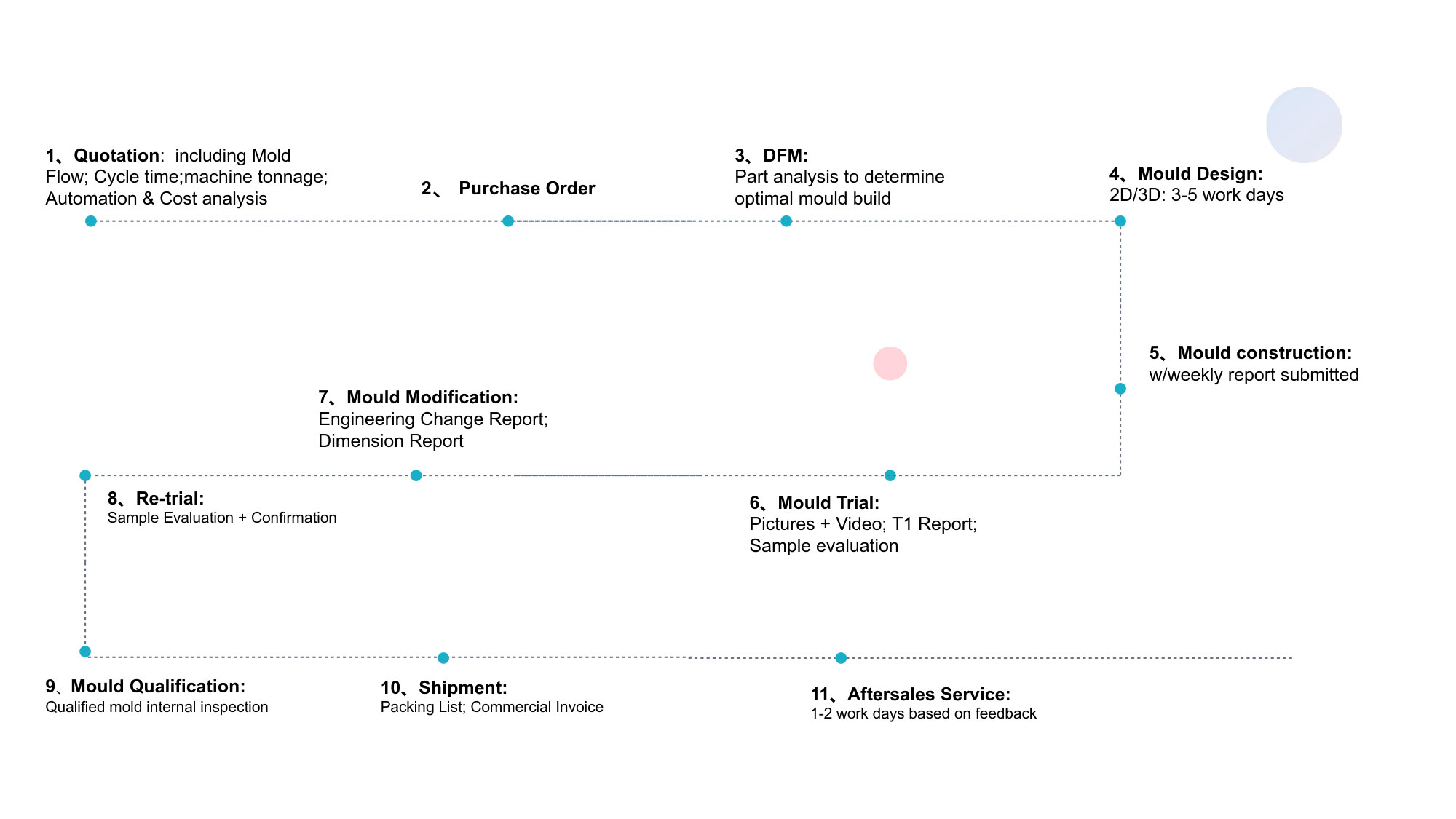
Design and Development: The journey begins long before any metal is cut or plastic is melted. Ansix engages customers at the earliest conceptual stage through comprehensive Design for Manufacturability analysis. This pre-emptive approach examines wall thickness distribution, draft angles, rib configurations, boss placements, parting line selection, gate location optimization, sink mark risk assessment, and warpage prediction—all before any tooling commitment is made. This early intervention is not merely a technical exercise; it is a risk-reduction strategy that prevents costly design iterations after the mold is already in production. By identifying potential molding challenges upfront, Ansix saves customers weeks of development time and prevents thousands of dollars in rework expenses.
-
Mold Description
Product Materials:
ABS/PC
Soft rubber: TPE
Mold Material:
S136ESR
Number of Cavities:
2
Glue Feeding Method:
Hot runner
Cooling Method:
Water cooling
Molding Cycle
22.5s
- The mold manufacturing process and product material selection
Product Validation: Through advanced mold flow simulation using Autodesk Moldflow and Moldex3D, Ansix verifies filling patterns, packing behavior, and cooling performance before physical tooling begins. The company then conducts systematic trial runs from T0 through T3, providing customers with samples at each stage accompanied by detailed improvement reports. This progressive validation approach ensures that when the mold moves to mass production, it performs as predicted, with no hidden surprises. The ability to quickly exchange mold inserts to validate different design variations—without re-tooling the entire mold—gives Ansix customers unprecedented flexibility during the development phase.
Mass Production: Ansix operates 260 injection molding machines with clamping forces ranging from 30 tons to 2,800 tons, a breadth that covers the entire spectrum of laptop A-cover production. This scale is not merely about capacity; it is about having the right machine for every application. Small, single-cavity molds for prototyping and low-volume validation run on 30- to 90-ton machines with high-efficiency servo drives, while high-volume multi-cavity production for mature laptop models operates on larger presses that achieve consistent part-to-part repeatability across multiple cavities simultaneously. Every machine is equipped with fully servo-electric drives delivering stable injection repeatability at ±0.1%, guaranteeing that the 10,000th part is identical to the first.
-
Quality Assurance: Ansix holds ISO9001, IATF16949, ISO13485, and ISO14001 certifications, with quality control integrated into every stage of production. The company’s quality laboratory is equipped with coordinate measuring machines (CMMs) and optical imaging systems capable of sub-micron resolution. Every mold undergoes full dimensional inspection before shipment, with key dimensional CPK ≥1.33—a statistical guarantee that processes are capable, stable, and predictable. This rigorous protocol eliminates the risk of receiving non-conforming tooling and protects production schedules from day one.
Delivery and After-Sales Service: With four production bases spanning China and Vietnam, covering more than 200,000 square meters of factory space and employing over 1,200 people including more than 200 designers, Ansix maintains strategic inventory and redundant production capacity to ensure uninterrupted supply. The company provides spare wear parts (ejector pins, core inserts) delivered with every mold and offers preventive maintenance at every 200,000 molding cycles. Lifetime repair services are available at cost, giving customers confidence that their production will not be disrupted by unexpected mold failures.
Strategic Elements Behind Industry Leadership
Ansix has achieved market recognition through a combination of factors that collectively create an unmatched value proposition. The company has manufactured over 30,000 molds since its founding, achieving machining accuracy of 0.002mm and maintaining an automated machining ratio of 70%, while averaging just two mold trials per project. This efficiency translates directly to faster time-to-market for customers.
The technical team’s deep expertise in laptop A-cover applications, combined with a vertically integrated manufacturing ecosystem, allows Ansix to control quality at every step rather than relying on external suppliers who may introduce variability. The company’s commitment to Industry 4.0 intelligent manufacturing, including digital twin validation, MES-based process locking, and real-time sensor feedback, ensures that the knowledge captured during development is preserved and replicated across every production shift and every manufacturing location.
Perhaps most importantly, Ansix has cultivated a culture of continuous improvement. By actively participating in industry seminars and exhibitions, engaging with peers, and investing in R&D for new materials and processes, the company stays ahead of technological trends rather than merely reacting to them. This forward-looking posture ensures that when laptop OEMs introduce thinner, lighter, more feature-rich designs, Ansix already has the tooling strategies and process parameters ready to support them.
Part Two: Product Introduction, Manufacturing Process, Delivery Efficiency, Quality Assurance, Cost Control, and After-Sales Service
Laptop Plastic A-Cover Product Introduction
The laptop plastic A-cover, also referred to as the top lid or display cover, serves as the outermost protective layer for the LCD panel. Unlike internal structural components that can tolerate minor cosmetic imperfections, the A-cover demands flawless surface finish, precise dimensional control, and consistent mechanical properties across millions of production cycles. It must be rigid enough to protect the display from flexure-induced damage yet thin enough to contribute to the overall slim profile that modern consumers demand.
Typical laptop A-covers are manufactured from engineering-grade thermoplastics including PC/ABS blends, flame-retardant PC meeting UL94 V-0 specifications, and, for premium models, PC with carbon fiber reinforcement. Wall thicknesses commonly range from 1.0mm to 1.5mm, with local variations around mounting bosses, hinge attachment points, and antenna windows. The part frequently incorporates cosmetic textures, logos, and sometimes in-mold decoration (IMD) that eliminates post-molding painting or printing operations.
Manufacturing Process Overview
The manufacturing process for laptop plastic A-covers at Ansix follows a meticulously controlled sequence.
Material Drying and Preparation: Engineering plastics used for laptop A-covers are hygroscopic, meaning they absorb moisture from ambient air. PC/ABS and flame-retardant PC materials are dried in dehumidifying hopper dryers to moisture levels below 0.02% before processing. This step is not optional: insufficient drying leads to splay marks, surface blisters, and degraded mechanical properties that can cause field failures.
Injection Molding: The molding process begins with the injection unit plasticizing the dried material, melting it to a precisely controlled temperature while maintaining consistent viscosity. The molten plastic is injected into the mold cavity under high pressure through a hot runner system that eliminates cold runner waste and maintains uniform melt temperature across all gates. For large A-covers, Ansix employs 2 to 4 hot nozzle points with valve gate sequencing that optimizes filling balance and shifts weld lines to non-critical areas, improving weld line strength by more than 30%.
Cooling and Ejection: Once the cavity is filled, cooling begins. The cooling phase typically accounts for 60% to 80% of the total cycle time, making it the most significant lever for productivity improvement. Ansix’s conformal cooling channel designs, optimized through mold flow analysis, keep cavity temperature variation within ±2℃, dramatically reducing warpage and minimizing cycle times. Uniform cooling is not just about speed; it directly influences dimensional stability and prevents the uneven shrinkage that causes A-covers to bow or twist.
Secondary Operations: Depending on customer requirements, molded A-covers may undergo post-processing including gate removal, surface inspection, packaging, and—for customers who opt for integrated solutions—assembly with hinges, antenna modules, or decorative films.
Delivery Efficiency
Ansix has systematically optimized its production ecosystem to achieve industry-leading delivery performance. The company maintains strategic inventory of mold materials, including standard mold bases and common steel grades, enabling rapid mold manufacturing starts without waiting for material procurement. Standard mold delivery timelines are quoted at 10 days for simple tooling, 25 to 45 days for medium-difficulty projects, and expedited delivery as short as 20 days when required—though the company explicitly notes that expedited timelines do not compromise validation steps.
For production orders, the combination of 260 injection molding machines distributed across four manufacturing locations in China and Vietnam provides inherent production redundancy. If one machine requires maintenance or one facility experiences an unexpected disruption, production can be shifted to alternate capacity without interrupting customer deliveries. This distributed manufacturing footprint also reduces logistics lead times for customers with assembly operations in different geographic regions.
Quality Assurance
Quality at Ansix is not an inspection function performed at the end of the line; it is a system designed to prevent defects from occurring in the first place.
Incoming Material Control: Raw materials are certified with material test reports confirming mechanical properties, melt flow index, heat deflection temperature, and flame retardancy ratings. Only materials meeting customer specifications are released to production.
In-Process Monitoring: Every injection molding machine is connected to an MES (Manufacturing Execution System) that locks molding parameters—temperature, pressure, velocity, and cooling time—once the process is qualified. Only authorized engineers can adjust these parameters, and any deviation triggers an alert. Shot-to-shot consistency is ensured through servo-electric drive systems that maintain ±0.1% repeatability, meaning that the weight, dimensions, and properties of every part are essentially identical to every other part.
Dimensional Inspection: For each production batch, first-article and last-article inspections compare critical dimensions to the approved sample. Calibrated measurement tools, including CMMs and optical comparators, verify dimensions to tolerances as tight as ±0.05mm for standard features and ±0.005mm for precision-critical locations. Process capability indices (Cpk) are calculated and maintained above 1.33 for key dimensions, demonstrating statistical control.
Cosmetic Inspection: Laptop A-covers are visually inspected under controlled lighting conditions to detect sink marks, flow lines, weld lines, bubbles, and color inconsistencies. High-gloss surfaces are checked for clarity and mirror finish, while textured surfaces are verified for consistent grain depth and pattern registration.
Competitive Cost Control
Ansix achieves cost advantages through systematic optimization across three primary dimensions.
Material Cost Optimization: By leveraging purchasing volume across multiple customers and industries, Ansix secures raw material pricing that smaller competitors cannot match. More importantly, the company’s engineering team works proactively with customers to identify material substitutions that maintain or improve performance while reducing cost. For example, switching from a premium specialty compound to a standard engineering resin with targeted additives can reduce material cost by 15% to 25% without compromising UL94 V-0 ratings or mechanical performance.
Process Efficiency Optimization: Each second shaved from the molding cycle directly reduces per-part manufacturing cost. Ansix’s conformal cooling technology typically reduces cooling time by 20% to 30% compared to conventional cooling channel designs. Multi-cavity molds (two-cavity, four-cavity, or even higher) multiply output per machine hour, spreading fixed costs across more parts. Automated part handling and packaging further reduce labor content.
Waste Reduction: The company’s automated machining ratio of 70% and average of just two mold trials per project minimize non-recurring engineering costs. High first-pass yields in production (typically exceeding 95% for mature A-cover programs) reduce scrap costs and rework expenses. Hot runner systems eliminate cold runner waste entirely, and scrap material that does occur is segregated, reground, and reintroduced into non-cosmetic applications where permitted.
After-Sales Service Quality Assurance
Ansix distinguishes itself through after-sales service that extends far beyond the warranty period. Each mold is delivered with a complete set of spare wear parts including ejector pins and core inserts, enabling customers to perform routine maintenance without waiting for replacement components. Every 200,000 molding cycles, Ansix offers preventive mold maintenance at no charge, inspecting wear surfaces, replacing worn components, and verifying dimensional accuracy. For repairs outside the preventive maintenance schedule, Ansix performs lifetime repairs at cost—not at profit—demonstrating a commitment to long-term customer relationships rather than transactional gain.
The company also provides comprehensive documentation including mold drawings, material certificates, dimensional inspection reports, and recommended process settings, enabling customers to replicate the qualified process on their own machines if they choose to move production in-house at a later date. This transparency builds trust and reduces switching costs for customers who may be considering alternative suppliers.
Part Three: Mold Manufacturing, Injection Molding Material Selection, Intelligent Manufacturing, Process Efficiency, and Quality Assurance
Mold Manufacturing Capabilities
The mold is the single most important determinant of A-cover quality, productivity, and cost. Ansix approaches mold manufacturing with the understanding that a well-designed mold is not a cost center but a profit engine—reliably producing defect-free parts at high speed for millions of cycles.
Machining Equipment and Precision: Ansix operates multiple five-axis high-speed machining centers capable of achieving 0.002mm machining accuracy. For the complex curved surfaces that characterize modern laptop A-covers, this precision translates directly to seamless parting lines that produce no flash and require no secondary deburring—a hidden cost that plagues less capable mold makers. Slow-speed wire EDM (Electrical Discharge Machining) produces features as fine as 0.03mm, critical for creating micro-holes, narrow slots, and fine features without inducing deformation in thin-walled structures.
Mold Materials Selection: Ansix selects mold materials based on production volume, cosmetic requirements, and expected molding conditions. For A-cover molds destined for high-volume production (500,000 to 1,000,000 cycles or more), the company uses premium tool steels for the mold core and cavity components. Common grades include S136 for applications requiring exceptional corrosion resistance and mirror-finish polishability, H13 for applications demanding high-temperature strength and thermal fatigue resistance, and NAK80 for applications needing excellent polishability with pre-hardened convenience. Mold bases are typically constructed from P20 steel, which provides adequate strength and wear resistance for the structural components of the mold that do not contact the plastic directly.
For glass-filled materials common in some A-cover applications, Ansix specifies mold steels with enhanced wear resistance such as SKD61 or DC53, which maintain cutting edge sharpness and dimensional stability even as abrasive glass fibers flow across cavity surfaces over millions of cycles. The company provides full material certificates and heat treatment curves with every mold, giving customers confidence in the metallurgical integrity of their tooling.
Mold Manufacturing Process: The mold manufacturing workflow follows a disciplined sequence. After customer approval of the 3D mold design, CNC machining produces the core and cavity geometries to near-net shape. This is followed by heat treatment to achieve the specified hardness (typically HRC48-52 for H13, HRC50-55 for S136), then finish machining and EDM for features that cannot be milled. Surface finishing, including polishing to specified surface roughness, follows. Finally, the mold is assembled, and all moving components—slides, lifters, ejector pins, and return pins—are checked for smooth operation and proper clearance. Every mold undergoes full dimensional inspection before shipment, with CPK ≥1.33 verified for all critical dimensions.
Cooling System Design: The cooling system is arguably the most important subsystem of an A-cover mold. Uneven cooling is the primary cause of warpage and dimensional instability, and cooling time is the dominant determinant of cycle time. Ansix designs cooling channels that run parallel to the product contour, spaced 15-25mm apart and positioned 8-12mm from the cavity wall. For complex curved A-cover surfaces, the company employs conformal cooling channels produced through additive manufacturing or advanced machining techniques, placing cooling exactly where it is needed rather than where conventional straight-line drilling can reach. The goal is cavity temperature variation within ±2℃, a level of uniformity that minimizes shrinkage differences and prevents warpage.
Runner and Gate Systems: Ansix predominantly uses hot runner systems for laptop A-covers to eliminate cold runner waste, maintain consistent melt temperature, and achieve balanced filling across multiple gates. For the A-cover, which demands flawless cosmetic appearance on the visible surface, Ansix employs submarine gates or tunnel gates that enter the part from the non-cosmetic side, leaving no gate vestige on the finished surface. Gate widths typically range from 3-5mm with thickness at 60-80% of the nominal wall thickness, ensuring adequate flow without creating excessive gate shear or post-molding gate removal difficulty.
Ejection System Design: Laptop A-covers are thin and can be easily damaged by ejector pins if force is not distributed properly. Ansix uses a composite ejection system combining ejector pins, ejector blocks, and ejector plates, with ejector pins positioned along edges and reinforcing ribs at 30-50mm spacing. For deep features like mounting bosses, sleeve ejectors (sleeves that surround the boss rather than pushing from its center) distribute ejection force evenly and prevent cracking. All ejector components receive TD treatment to extend wear life and prevent galling.
Injection Molding Process for Laptop A-Covers
Material Selection Strategy: Laptop A-covers are most commonly molded from PC/ABS blends, which offer an optimal balance of mechanical strength, impact resistance, heat deflection temperature (approximately 120℃), and cosmetic appearance. For applications requiring flame retardancy, UL94 V-0-rated PC compounds are used. Premium laptops increasingly employ PC with carbon fiber or glass fiber reinforcement to achieve higher stiffness at thinner wall thicknesses, though these materials impose greater wear on molds and require careful gate design to avoid fiber orientation effects that cause anisotropic shrinkage and warpage.
Mold Flow Analysis as a Strategic Tool: Before the mold design is finalized, Ansix performs mold flow analysis to simulate the filling, packing, and cooling phases of the molding cycle. For thin-walled A-covers with long flow lengths, this analysis is indispensable. It predicts weld line locations, identifies air trap positions, and determines whether balanced filling across all gates can be achieved. The analysis also calculates required injection pressure to ensure that the selected injection molding machine has adequate clamp force and injection capacity. Optimizing gate location and number through mold flow analysis has been shown to reduce deformation by approximately 69% compared to unoptimized designs, a level of improvement that directly translates to higher yields and lower per-part cost.
Injection Parameter Optimization: Once the mold is built, Ansix engineers develop and qualify the injection molding process through systematic experimentation. Key parameters include:
Barrel temperatures are set to achieve melt temperatures between 230℃ and 280℃ for PC/ABS, with the rear zone slightly cooler than the front zone to ensure complete melting without thermal degradation.
Injection velocity is profiled to achieve shear thinning that reduces melt viscosity while avoiding jetting or surface defects. For A-covers, a multi-stage velocity profile is typical: slow initial fill to prevent jetting, fast fill to minimize freeze-off, and reduced speed at the end of fill to prevent flash.
Injection pressure is set just high enough to achieve complete cavity filling without exceeding clamp force. Excessive pressure causes flash and stresses the mold; insufficient pressure causes short shots.
Packing pressure (typically 60-80% of injection pressure) is applied after cavity fill to compensate for material shrinkage as the part cools. Both the magnitude and duration of packing pressure significantly affect dimensional accuracy and cosmetic quality.
Cooling time is determined by part geometry and mold cooling efficiency. With conformal cooling, Ansix achieves cooling times as low as 3.8 seconds for 0.5mm wall thickness sections.
Mold temperature is regulated using temperature control units with independent zones for cavity and core, and sometimes additional zones for thick and thin sections. A-cover molds typically run with cavity temperatures of 70-90℃ and core temperatures of 50-70℃, the temperature differential creating a gradient that encourages the part to stay on the core side of the mold during ejection.
Process Stability and Intelligent Manufacturing: Ansix has implemented a fully integrated Industry 4.0 intelligent manufacturing ecosystem that transforms molding from an art to a science. All machine parameters are locked in the MES system, with changes permitted only by authorized engineers and recorded in an audit trail. Ultrasonic wall thickness sensors mounted on the mold provide real-time feedback on part thickness, automatically compensating packing pressure to maintain dimensional consistency. Mold-mounted temperature and pressure sensors enable closed-loop process control that adjusts injection parameters on the fly to maintain quality despite variations in raw material lot or ambient conditions. This level of automation does more than improve quality; it reduces the labor required for process monitoring and adjustment, lowering operating costs.
Quality Assurance Throughout the Production Lifecycle
First Article Inspection (FAI): When a new mold or a modified process enters production, the first several parts undergo comprehensive dimensional inspection against the approved CAD model. Every dimension on the drawing is measured and compared to tolerance limits. This FAI serves as the baseline against which all future production will be compared.
In-Process Inspection and Statistical Process Control: During production, operators and automated systems inspect parts at specified intervals. Critical dimensions are measured and charted on control charts that signal when a process is drifting toward out-of-control conditions. CPK values above 1.33 indicate processes that are capable and stable; when CPK falls below this threshold, Ansix engineers investigate and correct the root cause before non-conforming parts are produced.
Cosmetic Quality Systems: Laptop A-covers are subject to cosmetic classification systems that specify acceptable limits for surface defects. Common classifications include Class A surfaces (highly visible surfaces that consumers see directly) and Class B surfaces (hidden surfaces visible only during assembly). Defect types include sink marks, flow marks, weld lines, bubbles, black specks (from degraded material), and color variation. Ansix works with each customer to define acceptance criteria that balance cosmetic perfection against practical manufacturing capability, then trains inspectors to apply these criteria consistently.
Traceability and Documentation: Every batch of molded parts is documented with production records including machine number, material lot number, process parameters, inspection results, and quantity produced. This traceability enables rapid root-cause analysis and targeted corrective action if quality issues arise.
Part Four: Customer Value Delivery from Mold and Injection Molding Expertise
What Value Ansix Provides
Risk Reduction: The single greatest value Ansix provides to laptop OEM customers is the systematic reduction of manufacturing risk. Every design flaw caught during the DFM phase, every process instability corrected during mold flow analysis, and every quality issue prevented through SPC is a risk eliminated before it can disrupt a customer’s production schedule or product launch. For customers launching a new laptop model on a tight schedule, this risk reduction is arguably more valuable than any individual technical capability because it provides certainty—the certainty that production will ramp on time, volumes will be achieved, and quality targets will be met.
Time-to-Market Acceleration: The 28 years of accumulated experience captured in Ansix’s design standards and process databases mean that the company does not have to learn lessons from scratch on each new project. Where a less experienced mold maker might require three or four mold trials to achieve a stable process, Ansix averages just two trials per project. Each trial avoided saves days or weeks of schedule time, translating directly to faster product launches and earlier revenue recognition for customers.
Total Cost Reduction: Ansix reduces customer costs through multiple mechanisms: lower initial mold cost through efficient design and manufacturing processes; lower production cost per part through cycle time optimization and automation; lower material cost through strategic purchasing and consumption reduction; lower rework and scrap cost through high first-pass yields; lower maintenance cost through robust mold designs and preventive care; and lower total landed cost through geographically distributed production that minimizes logistics expense.
What Problems Ansix Solves
Thin-Wall Warpage: Laptop A-covers are getting thinner every product generation, and thinner parts warp more easily. Warped A-covers fail to assemble correctly, create gaps that compromise product aesthetics, and can stress LCD panels to the point of failure. Ansix solves this problem through three complementary strategies: optimized gate placement and filling balance that minimizes flow-induced orientation; conformal cooling that ensures uniform temperature distribution and prevents differential shrinkage; and controlled ejection that removes the part without distorting it.
Cosmetic Defects: Sink marks, flow lines, weld lines, and other cosmetic defects are unacceptable on premium laptop A-covers. Ansix solves cosmetic issues through mold flow analysis that predicts defect locations and enables design changes to eliminate them before the mold is built, and through precise process control that maintains cosmetic quality across every shot.
Dimensional Inconsistency: Customers cannot tolerate A-covers that vary in critical dimensions from batch to batch or even shot to shot. Variations in hinge mounting hole positions can make assembly difficult or impossible; variations in overall length or width can create unacceptable gaps when the A-cover is assembled to the display module. Ansix achieves dimensional consistency through mold manufacturing precision (±0.002mm on critical features), process parameter locking that eliminates operator-induced variation, and closed-loop process control that compensates for incoming material variations.
Unpredictable Delivery: For customers operating just-in-time assembly lines, late delivery of A-covers shuts down the entire laptop assembly line. Ansix solves delivery uncertainty through redundant manufacturing capacity across four production facilities, strategic inventory of mold materials, and real-time production tracking that provides visibility into order status and early warning of potential delays.
How Ansix Validates Quality for Customers
Quality validation at Ansix operates across four distinct horizons, each confirming a different aspect of product quality.
Design Validation: Using mold flow analysis before cutting any steel, Ansix validates that the proposed A-cover design can be molded successfully. This virtual validation checks filling patterns, weld line locations, air trap positions, shrinkage predictions, and warpage forecasts. Design changes to improve moldability are recommended and validated through additional simulation before physical tooling begins.
Mold Validation: After the mold is built but before production release, Ansix conducts a series of trial runs (T0 through T3). Each trial produces sample parts that are dimensionally inspected, cosmetically evaluated, and functionally tested. Improvement reports document the results of each trial and the corrective actions taken for the next iteration. Only when the mold produces parts that meet all customer specifications at target cycle times is the mold released for production.
Process Validation: The production process itself is validated through initial process qualification runs. Ansix produces a validation batch (typically 100 to 500 parts for initial qualification, or larger batches for high-volume programs), inspecting every part and calculating CPK values for all critical dimensions. The process is considered validated when CPK ≥1.33 for all critical characteristics and cosmetic quality meets specifications across the entire validation batch.
Ongoing Quality Monitoring: Once production begins, Ansix maintains quality through statistical process control (SPC) charts, periodic full-dimensional inspections, and daily cosmetic audits. Any out-of-control condition triggers a documented corrective action process that identifies root cause, implements corrective action, and verifies effectiveness before production resumes.
How Ansix Reduces Costs
Design Phase Cost Reduction: Ansix’s DFM analysis identifies and eliminates design features that would increase manufacturing cost. Examples include reducing unnecessary wall thickness variations that would slow cycle times, redesigning features that would require complex mold mechanisms, and substituting lower-cost materials that meet performance requirements.
Mold Manufacturing Cost Reduction: By operating an integrated mold shop with 70% automated machining, Ansix reduces the labor content of mold manufacturing. Standardized mold designs based on accumulated best practices reduce engineering time. Long supplier relationships for mold materials and components secure favorable pricing.
Production Cost Reduction: Faster cycle times directly reduce per-part cost. Ansix’s conformal cooling technology typically reduces cooling time by 20-30%, and multi-cavity molds multiply output per machine hour. Automated part handling, inspection, and packaging reduce labor costs. Hot runner systems eliminate cold runner material waste.
Quality Cost Reduction: Every defect that reaches a customer triggers costs that far exceed the cost of preventing that defect—costs of inspection, sorting, rework, scrap, expedited shipping, and potentially line shutdowns. Ansix’s quality systems are designed to prevent defects, with high first-pass yields keeping total quality costs low.
Supply Chain Cost Reduction: Ansix’s four production facilities in China and Vietnam give customers the flexibility to source from the location that minimizes landed cost for their specific market. The company’s logistics partnerships secure competitive shipping rates, and its customs expertise smooths international shipments.
How Ansix Ensures Capacity and Delivery
Capacity Planning: For each customer program, Ansix allocates dedicated machine capacity based on committed volumes. Multi-cavity molds are sized to meet peak demand with buffer capacity for unplanned maintenance or demand surges. The 260-machine fleet, covering 30 tons to 2,800 tons, provides the flexibility to accommodate changes in product mix or volume without capital investment by the customer.
Production Scheduling: Orders are scheduled into the MES system, which tracks progress against plan and provides visibility to both Ansix and customer personnel. Expedited orders can be prioritized by adjusting machine assignments and shift schedules, though the company notes that expedited delivery does not compromise the validation steps required to ensure quality.
Contingency Planning: With four manufacturing locations in two countries, Ansix maintains inherent geographic redundancy. If one facility experiences an unexpected disruption—power outage, labor issue, natural disaster—production can be shifted to another facility without interrupting customer deliveries. This distributed manufacturing footprint also provides resilience against trade disruptions or tariff changes that might affect a single location.
Delivery Performance Metrics: Ansix tracks on-time delivery as a key performance indicator and holds itself accountable for meeting quoted delivery dates. Standard delivery terms are defined at project kickoff, and expedited options are available for customers with urgent requirements.
Reliability and Value from Ansix’s 28 Years of Experience
The most valuable asset Ansix brings to laptop A-cover manufacturing is not equipment or facilities but accumulated experience. Over 28 years of solving injection molding problems, the company has developed a knowledge base that cannot be replicated quickly by competitors. This experience manifests in several ways: design standards that avoid common pitfalls, troubleshooting guidelines that accelerate problem resolution, supplier relationships that secure preferential pricing and priority service, and a network of engineers who have seen and solved essentially every problem that can arise in A-cover molding.
For customers, this experience translates to lower project risk, faster time-to-market, lower total cost, and fewer surprises. Ansix does not need to learn from a customer’s mistakes because the company has already learned those lessons from previous projects and codified that learning into its processes. This is the ultimate source of customer value: the confidence that when a laptop OEM places an A-cover program with Ansix, the outcome is predictable, and that predictability is delivered.
Part Five: Comprehensive Manufacturing Solution for Laptop Plastic A-Cover Production
Project Initiation Framework
When a laptop OEM initiates an A-cover project with Ansix, the company follows a structured five-pillar framework designed to systematically translate technical capabilities into customer-perceived value. Each pillar answers the customer’s fundamental questions: What problems does this solve? How much cost does it save? What risks does it eliminate?
Pillar One: Hard Power Infrastructure – Building Customer Confidence Through Equipment
Before customers can trust promises of quality and delivery, they need evidence that the physical assets enabling those promises exist and are maintained at world-class standards. Ansix’s equipment infrastructure is chosen explicitly to build this confidence.
Mold Processing Equipment: Ansix operates multiple five-axis high-speed machining centers achieving ±0.002mm machining accuracy. For the laptop A-cover, this precision means that complex curved surfaces and critical parting lines are machined with extreme fidelity. The customer value is unmistakable: seamless parting lines mean no flash, no secondary deburring, and no post-molding manual trimming—eliminating a hidden cost that plagues less capable mold makers. Ansix’s slow-speed wire EDM capability produces features as fine as 0.03mm, addressing the thin-wall deformation risk that conventional machining creates when producing delicate features. The customer value is certainty: every micro-hole is dimensionally exact from cavity to cavity, and the mold maintains this precision over millions of cycles.
Injection Molding Machine Fleet: Ansix operates 260 injection molding machines with clamping forces ranging from 30 tons to 2,800 tons. For laptop A-covers, multi-cavity production typically operates on 160- to 500-ton machines, achieving consistent part-to-part repeatability across multiple cavities simultaneously. Every machine is equipped with fully servo-electric drives delivering stable injection repeatability at ±0.1%, guaranteeing batch-to-batch consistency. When a laptop OEM validates an A-cover design, they need to know that the 10,000th part is identical to the first. Servo drive technology and closed-loop control systems make this a reality.
Inspection and Metrology Equipment: Ansix’s quality laboratory is equipped with coordinate measuring machines (CMMs) and optical imaging systems capable of sub-micron resolution. For every A-cover mold, a full dimensional report is generated before shipment, with key dimensional CPK ≥1.33. This rigorous protocol eliminates the risk of receiving non-conforming tooling, protecting customer production schedules from day one.
Pillar Two: Mold Manufacturing Core Competitiveness – Speaking Through Metrics
Laptop OEM customers care most about mold life, achievable tolerances, mold type selection, gate design, and delivery timelines. Ansix addresses each with specific, verifiable metrics.
Mold Life: For mold bases, Ansix uses P20 steel, which provides adequate strength and wear resistance for the structural components of the mold. For core and cavity components that contact the plastic, the company selects from a comprehensive palette of premium tool steels based on application requirements: S136 for applications requiring exceptional corrosion resistance and mirror-finish polishability; H13 for applications demanding high-temperature strength and thermal fatigue resistance; NAK80 for applications needing excellent polishability with pre-hardened convenience; and for glass-reinforced materials, wear-resistant grades such as DC53. Each mold is delivered with material certificates and heat treatment curves. For glass-fiber reinforced A-cover materials, Ansix guarantees 500,000 cycles; for unreinforced materials, 1,000,000 cycles.
Achievable Tolerances: Standard structural features of the A-cover are held to ±0.05mm; critical features such as hinge mounting holes and display alignment surfaces achieve ±0.005mm where required.
Mold Types: Ansix designs and builds a full spectrum of mold types for A-cover applications. Hot runner molds eliminate cold runner waste, reduce injection pressure requirements, and provide superior gate cosmetics. For extremely high-volume programs, the company may employ multi-cavity molds that multiply output per machine hour. When an A-cover integrates multiple materials—for example, a rigid substrate with an overmolded elastomeric seal—Ansix builds two-shot or multi-material molds that produce finished parts in a single machine cycle.
Gate Design: Ansix optimizes gate placement through mold flow analysis that predicts weld line locations and air trap positions, then adjusts gate location and number to minimize cosmetic defects. For the A-cover, submarine gates or tunnel gates enter the part from the non-cosmetic side, leaving no gate vestige on the finished surface. Gate widths typically range from 3-5mm with thickness at 60-80% of the nominal wall thickness, ensuring adequate flow without creating excessive gate shear or post-molding gate removal difficulty.
Delivery Timelines: Ansix quotes standard delivery timelines: 10 days for simple A-cover molds, 25 to 45 days for medium-difficulty projects, and expedited delivery as short as 20 days when required. Critically, expedited timelines do not compromise validation steps; the company has developed parallel workflows and additional resources that accelerate each phase without skipping necessary inspections or trials.
Pillar Three: Injection Molding Process Control – Reducing Customer Quality Anxiety
Customer anxiety centers on four quality risks: sink marks, flash, dimensional instability, and batch-to-batch color variation. Ansix systematically addresses each.
Process Standardization: All injection molding machines are connected to a Manufacturing Execution System (MES) that locks molding parameters—temperature, pressure, velocity, cooling time—once the process is qualified. Only authorized engineers can adjust these parameters, and any deviation triggers an alert. First-article and last-article inspections are performed for every batch, comparing key dimensions to the approved baseline and verifying that the process has remained stable throughout the production run.
Dimensional Stability Control: Ansix employs multiple strategies to maintain dimensional consistency. Cooling channels are designed to keep cavity temperature variation within ±2℃, minimizing shrinkage differences that cause warpage. Multi-zone mold temperature control units allow independent regulation of cavity and core temperatures, and sometimes additional zones for thick and thin sections. Ultrasonic wall thickness sensors mounted on the mold provide real-time feedback, automatically compensating packing pressure to maintain dimensional consistency despite variations in incoming material. For a typical laptop A-cover, key hole-to-hole centerline distances can be held within ±0.02mm across batches separated by weeks of production.
Cosmetic Quality Classification: Ansix works with each customer to define cosmetic acceptance criteria. For visible Class A surfaces, the company specifies achievable surface roughness (Ra ≤0.2μm for standard finishes, Ra ≤0.05μm for high-gloss applications) and defines limits for sink marks, flow lines, weld lines, bubbles, black specks, and color variation. For A-covers requiring post-molding painting or printing, Ansix provides molded parts with controlled deformation compensation that ensures printing registration accuracy within ±0.1mm.
Special Material Capabilities: Ansix has accumulated practical experience molding a comprehensive range of engineering thermoplastics for A-cover applications, including PC/ABS blends, flame-retardant PC meeting UL94 V-0 specifications, PC with carbon fiber or glass fiber reinforcement, and for specialized applications, PPS, PEEK, and other high-performance materials. For each material, the company has documented processing windows, drying requirements, recommended mold steels, and expected shrinkage characteristics. This knowledge base eliminates the learning curve that would otherwise accompany a new material introduction.
Pillar Four: Full-Service Delivery – Reducing Customer Management Costs
Ansix recognizes that total customer cost includes not just mold and part pricing but also the internal resources customers must devote to managing the supplier relationship. The company structures its services to minimize these hidden costs.
Early Engagement through DFM Reports: Before any tooling commitment, Ansix provides a comprehensive Design for Manufacturability report that reviews the customer’s A-cover design and recommends improvements. The report covers draft angle recommendations, wall thickness optimization, rib and boss design, parting line placement, gate location, ejector pin mark allowances, and material selection guidance. By identifying and resolving manufacturability issues before the mold is built, Ansix prevents the costly cycle of building a mold, discovering it cannot be produced as designed, and then reworking both part and mold.
Progressive Trial Runs: From T0 through T3 samples, Ansix provides molded parts at each trial stage accompanied by detailed improvement reports documenting issues identified and corrective actions taken. The ability to quickly exchange mold inserts to validate different design variations—without re-tooling the entire mold—gives customers flexibility during the development phase while controlling costs.
Small-Batch Validation: Before committing to full production, Ansix offers small-batch validation runs of 100 to 500 parts. These validation runs allow customers to confirm assembly fit and function, evaluate cosmetic quality, and verify process stability before volume production begins. Yield and CPK statistics from the validation run provide objective evidence of process capability and serve as the baseline for production quality agreements.
Maintenance and Spare Parts: Every mold is delivered with a complete set of spare wear parts including ejector pins, core inserts, and other components expected to wear during normal operation. At every 200,000 molding cycles, Ansix offers preventive mold maintenance at no charge, inspecting wear surfaces, replacing worn components, and verifying dimensional accuracy. For repairs outside the preventive maintenance schedule, the company performs lifetime repairs at cost, not at profit—demonstrating a commitment to long-term customer relationships rather than transactional gain.
Pillar Five: Differentiated Commitment – Addressing Common Pain Points Directly
Rather than making generic claims of superiority, Ansix addresses specific customer pain points with concrete, verifiable commitments that differentiate the company from competitors.
Problem: Molds frequently require repair, disrupting production schedules. Ansix Solution: Ansix performs 2,000-cycle aging tests before mold delivery, generating wear reports that document expected wear patterns and identify any unexpected issues. The company provides three-year mold structural warranty (excluding normal wear of consumable components such as ejector pins), providing customers with financial protection against premature mold failure.
Problem: Flash requires expensive post-molding manual trimming. Ansix Solution: Ansix machines parting lines to 0.005mm fit accuracy and employs self-locking clamp force compensation that maintains consistent clamp force despite variations in mold temperature. Flash thickness is controlled to under 0.03mm across every batch, eliminating the need for manual flash removal and the labor costs it entails.
Problem: Dimensional variation between batches creates assembly issues. Ansix Solution: Ultrasonic wall thickness sensors mounted on the mold provide real-time feedback, automatically compensating packing pressure to maintain dimensional consistency. Optional in-mold temperature and pressure sensors enable closed-loop control that adjusts injection parameters on the fly. For a laptop A-cover, key hole-to-hole centerline distances can be held within ±0.02mm across batches separated by weeks or months of production.
Problem: Long repair cycles for mold repairs disrupt production. Ansix Solution: Ansix maintains an in-house electrode machining center and EDM workshop, meaning mold repairs are performed without leaving the factory. Routine repairs such as weld repair or insert replacement are completed within 24 hours, restoring mold function and resuming production with minimal downtime.
Ansix’s Holistic Approach to Customer Value
For Ansix, a mold is not a piece of steel; it is a profit engine. The company designs molds with simultaneous consideration of filling behavior, venting paths, and temperature balance, ensuring that when the mold arrives at the customer’s facility, it produces good parts from the first shot with minimal debugging, minimal flash, and maximum tool life.
The company’s integrated ecosystem—encompassing design, engineering, mold manufacturing, injection molding, secondary operations, and logistics—eliminates the communication barriers and coordination failures that occur when customers manage multiple vendors for these services. One partner, one point of contact, one quality system, one logistics chain—this integration reduces customer management overhead and ensures consistent outcomes.
Material Selection and Performance Characteristics
The laptop A-cover material must balance multiple performance requirements including mechanical strength for structural integrity, impact resistance for drop survival, heat deflection temperature for operation in warm environments, flame retardancy for safety certification, dielectric properties for antenna performance, cosmetic characteristics for brand presentation, and cost for commercial viability.
Ansix has extensive experience molding a wide range of engineering thermoplastics for A-cover applications:
PC/ABS (Polycarbonate/Acrylonitrile Butadiene Styrene) blends represent the most common choice for laptop A-covers, offering an optimal balance of mechanical properties, processing characteristics, and cost. PC provides impact resistance, heat deflection temperature (approximately 120℃), and dimensional stability, while ABS provides flowability that fills thin walls and complex geometries. PC/ABS grades are available with UL94 V-0 flame retardancy, essential for safety certification of consumer electronics.
Flame-Retardant PC (Polycarbonate) is used when higher heat resistance or superior optical clarity is required. PC offers better heat deflection temperature than PC/ABS (approximately 140℃ versus 120℃) and can be molded with exceptional clarity for A-covers incorporating display windows. FR-PC grades achieve UL94 V-0 ratings with halogenated or halogen-free flame retardant systems, depending on environmental compliance requirements.
Glass-Fiber Reinforced PC is increasingly specified for ultra-thin A-covers requiring stiffness at minimal thickness. Glass fiber loadings of 10% to 30% increase tensile modulus by 50% to 300%, enabling wall thickness reductions of 20% to 40% while maintaining stiffness. However, glass fibers create anisotropic shrinkage (parts shrink differently in the flow direction than across the flow), increase mold wear, and can create cosmetic issues if glass fibers appear at the part surface.
Carbon-Fiber Reinforced PC is used in premium laptop A-covers where maximum stiffness at minimum weight is required. Carbon fiber provides even greater stiffness-to-weight ratio than glass fiber, with the added advantage of electromagnetic shielding properties that can simplify antenna design. Carbon fiber reinforcement is significantly more expensive than glass fiber and requires careful handling to prevent fiber breakage during processing.
Mold Flow Analysis and DFM
Mold flow analysis is not a luxury for laptop A-covers; it is a necessity. The thin walls, long flow lengths, and complex geometries of modern A-covers push the limits of injection molding capability, and mold flow analysis provides the predictive insight required to avoid molding defects before steel is cut.
Ansix employs Autodesk Moldflow and Moldex3D to simulate filling, packing, and cooling phases. The analysis predicts fill time and pressure requirements, weld line locations where molten plastic fronts converge, air trap positions where trapped gas can cause burn marks, shear heating that can degrade material at gates or thin sections, fiber orientation in reinforced materials, shrinkage distribution across the part, and warpage magnitude and direction.
With this predictive insight, Ansix optimizes gate location and number to shift weld lines to non-critical areas, adjusts wall thickness distribution to balance flow fronts and prevent air traps, modifies rib and boss designs to minimize sink marks, and predicts cooling channel placement to achieve uniform temperature distribution.
The impact of mold flow analysis is substantial. A study of injection mold design for a notebook battery cover—a thin-wall application similar in many respects to an A-cover—demonstrated that optimizing mold design and injection parameters reduced warpage by approximately 69% compared to unoptimized designs. For a laptop A-cover manufacturer, this reduction in warpage translates directly to higher yields, lower scrap rates, and fewer field returns.
Process Efficiency and Productivity
Every second shaved from the injection molding cycle directly increases output per machine hour and reduces per-part cost. Ansix pursues productivity improvements across multiple fronts.
Multi-Cavity Molding: Molding two, four, or more A-covers per cycle multiplies output per machine hour. However, multi-cavity molds require balanced runners to ensure all cavities fill simultaneously, uniform cooling to prevent cavity-to-cavity variation, and increased clamp force to hold the larger projected area closed. Ansix has extensive experience with multi-cavity molds for A-cover applications and achieves cavity-to-cavity part weight variation of less than 0.5% across up to four cavities.
Hot Runner Systems: Hot runner systems maintain the plastic in a molten state from the machine nozzle to the gate, eliminating cold runner scrap and reducing injection pressure requirements by 20% to 40%. For A-cover production, hot runner systems also improve cosmetic quality by maintaining consistent melt temperature and enabling valve gate sequencing that creates weld lines only in designated areas.
Conformal Cooling: Conformal cooling channels that follow the contour of the A-cover provide cooling where it is needed rather than where conventional straight-line drilling can place it. Ansix’s conformal cooling designs typically reduce cooling time by 20% to 30%, with the largest benefits seen on complex curved geometries.
Automated Part Handling: Once the A-cover is ejected from the mold, Ansix employs automated part handling including sprue pickers or robots that remove the part from the mold, conveyors that transport parts to inspection stations, vision systems that perform automated cosmetic inspection, and packaging equipment that places acceptable parts into shipping containers.
Quality Control and Assurance
Quality control at Ansix operates at four levels: incoming material inspection verifying raw material properties, in-process inspection checking dimensions and cosmetic quality at specified intervals, final inspection confirming that every part meets customer specifications before shipping, and statistical process control monitoring process stability and capability.
Incoming Material Inspection: Raw materials are delivered with certificates of analysis from the material supplier confirming mechanical properties, melt flow index, heat deflection temperature, flame retardancy rating, and color coordinates. Ansix performs incoming inspection on each material lot, verifying key properties and retaining samples for traceability.
In-Process Inspection: Operators inspect parts at specified intervals, typically every hour during continuous production. Critical dimensions are measured, cosmetic quality is evaluated under standard lighting, and color is compared to approved standards. Inspection results are recorded on control charts and entered into the MES system for statistical analysis.
Statistical Process Control: The MES system maintains control charts for each critical dimension and cosmetic attribute. When control chart signals indicate the process is drifting toward out-of-control conditions, Ansix engineers investigate and implement corrective action before non-conforming parts are produced. CPK is calculated periodically to verify that processes remain capable.
Continuous Improvement: Quality data is analyzed weekly to identify trends and opportunities for improvement. Root-cause analysis is performed for any quality issue that reaches a customer, and corrective actions are documented and verified. Lessons learned are incorporated into design standards, process specifications, and training programs to prevent recurrence.
Packaging and Delivery
Packaging for laptop A-covers must protect the parts from damage during transit, prevent scratching of cosmetic surfaces, and be cost-effective for both the supplier and the customer. Ansix designs packaging collaboratively with customers, balancing protection against cost and considering how the packaging interfaces with the customer’s receiving and assembly operations.
Typical packaging solutions include molded pulp trays that hold each A-cover in an individual compartment, corrugated cardboard dividers that separate layers of parts, and antistatic bags when electrostatic discharge protection is required. Packaging dimensions are optimized to maximize shipping container density while maintaining part protection.
Delivery is coordinated through Ansix’s logistics department, which selects carriers based on cost, transit time, and reliability for each customer’s location. The company maintains relationships with multiple carriers to provide flexibility and redundancy. Export documentation, customs clearance, and international shipping are managed in-house to minimize delays at borders.
Industry Experience and Proven Reliability
With 28 years of injection molding experience and thousands of molds delivered across automotive, medical, consumer electronics, and industrial applications, Ansix brings a depth of practical knowledge that cannot be replicated quickly. The company’s A-cover customers benefit from this cumulative experience through design recommendations that avoid common pitfalls, processing knowledge that accelerates new product introduction, and problem-solving capability that resolves unexpected issues quickly.
The 30,000 molds manufactured since the company’s founding represent an immense library of design knowledge, process data, and lessons learned. For each new A-cover project, Ansix draws on this repository to provide customers with proven, validated solutions rather than experimental approaches.
Cost Reduction Through Systematic Engineering
Cost reduction at Ansix is not an afterthought applied to a completed design; it is integrated into every phase of the engineering process. The company pursues cost reduction through four systematic pathways.
Material Cost Reduction: Strategic purchasing of raw materials based on consolidated volume across multiple customers and industries secures pricing that smaller competitors cannot match. Proactive material recommendations from Ansix engineers often identify lower-cost alternatives that maintain or improve performance, typically achieving 15% to 25% material cost savings on applicable programs.
Design Cost Reduction: DFM analysis identifies and eliminates design features that would increase manufacturing cost. Reducing unnecessary wall thickness variations shortens cycle times. Redesigning complex features that would require expensive mold mechanisms reduces initial tooling cost. Substituting lower-cost materials that meet performance requirements reduces material expense.
Process Cost Reduction: Optimized mold designs with conformal cooling reduce cycle times, increasing output per machine hour. Multi-cavity molds multiply output per machine cycle, spreading fixed costs across more parts. Automated processes reduce labor content. High first-pass yields minimize scrap and rework.
Scale Cost Reduction: With 260 injection molding machines across four facilities, Ansix can assign production to the location and machine size that minimize total cost for each specific program. The company’s purchasing volume secures favorable pricing for mold materials, molding materials, and consumables.
Conclusion: Why Ansix Is the Trusted Partner for Laptop Plastic A-Cover Manufacturing
Ansix Tech has earned its position as a leading manufacturer of laptop plastic A-covers not through marketing claims but through 28 years of consistently delivering the outcomes that customers value most: predictable quality, reliable delivery, competitive cost, and responsive service.
The company’s systematic approach to translating technical capabilities into customer-perceived value—answering not what a capability is but what problems it solves, how much cost it saves, and what risks it eliminates—has transformed Ansix from a mold supplier into a strategic partner. For laptop OEMs launching new products under tight timelines and aggressive cost targets, that transformation from vendor to partner may be the most valuable outcome of all.
Contact Ansix Tech at info@ansixtech.com to discuss your laptop plastic A-cover requirements, request a DFM analysis for your current design, or schedule a facility tour at one of the company’s four manufacturing locations in China and Vietnam.
Ansix Tech Co Ltd
If you have any plans related to Laptop Plastic A-Cover (Top Lid) , you can contact us at any time. We will turn your ideas into reality, let you realize your dreams, and obtain large orders from the market. Our contact information is info@ansixtech.com. Or contact our CTO, mail: stephen@ansixtech.com
#www.ansixtech.com #ansixtech.com #Laptop Plastic A-Cover (Top Lid) #Laptop Plastic A-Cover (Top Lid) injection molding companies #Laptop Plastic A-Cover (Top Lid) Canopy Mold injection mold companies #Ansix #Ansix moulds #Ansix china #Ansix tech china #Ansix tech company #Ansix facotry #Laptop Plastic A-Cover (Top Lid) injection molding #Laptop Plastic A-Cover (Top Lid) injection tools #Laptop Plastic A-Cover (Top Lid) injection moulds #Laptop Plastic A-Cover (Top Lid) plastic mould #Laptop Plastic A-Cover (Top Lid) plastic tools #Ansix Tech #Ansix molds #Ansix injection molding #Ansix mold factory #injection molding Laptop Plastic A-Cover (Top Lid)#Ansix mold factory #Laptop Plastic A-Cover (Top Lid) china #Laptop Plastic A-Cover (Top Lid) molds #injection factory #Laptop Plastic A-Cover (Top Lid) injection molding #Laptop Plastic A-Cover (Top Lid) injection molding factory #injection molding company #Laptop Plastic A-Cover (Top Lid) injection mold companies #Laptop Plastic A-Cover (Top Lid) Tooling #Laptop Plastic A-Cover (Top Lid) mold limited #Ansix mold china #Ansix companies #Ansix company China #Laptop Plastic A-Cover (Top Lid) facotry #Ansix Tech #Ansix Tech mould #Laptop Plastic A-Cover (Top Lid) injection moulding #injection moulding company #Ansix Laptop Plastic A-Cover (Top Lid) parts injection mold companies #medical injection molding companieschina #Laptop Plastic A-Cover (Top Lid) china factory #Ansix moulding companies #Ansix molding company #Laptop Plastic A-Cover (Top Lid) injection moulding facotry #Ansix Tech mold #Laptop Plastic A-Cover (Top Lid) mould #Laptop Plastic A-Cover (Top Lid) plastic injection molding #ansix plastic mold #Mold manufacturing #Laptop Plastic A-Cover (Top Lid) parts manufacturing #Laptop Plastic A-Cover (Top Lid) plastic parts factory #Laptop Plastic A-Cover (Top Lid) injection parts mold #Laptop Plastic A-Cover (Top Lid) PRECISION MANUFACTURING #Laptop Plastic A-Cover (Top Lid) #China mold #Laptop Plastic A-Cover (Top Lid) injection moulding china #Laptop Plastic A-Cover (Top Lid) mould china #china precision mold #mold in china #Laptop Plastic A-Cover (Top Lid) mold china #Precision molds #High-precision molds #Laptop Plastic A-Cover (Top Lid) #Injection molds #Laptop Plastic A-Cover (Top Lid) Factory #Laptop Plastic A-Cover (Top Lid) Company #Super Large Injection Mold Factory #Large Tonnage Injection Molding Factory #Laptop Plastic A-Cover (Top Lid) Company #Laptop Plastic A-Cover (Top Lid) Factory #2800T Injection Molding Factory #3000 Ton Injection Molding #4500 Ton Injection Molding Factory #Large Mold Injection Molding #Large Plastic Mold Injection Molding Factory #Large Injection Mold Manufacturer #Plastic Mold Factory #Injection Mold #Plastic Mold