



Brain Pacemaker Component Molds
FEATURES
Brain Pacemaker Component Molds: Ansix Tech Comprehensive Manufacturing Solution
Executive Summary
Brain pacemaker components—implants that actively manage neurological conditions such as Parkinson‘s disease, essential tremor, and epilepsy—demand unprecedented levels of precision, biocompatibility, and long-term reliability. These life-sustaining devices must function flawlessly within the human body for extended periods, with zero tolerance for manufacturing defects.
-
Mold Description
Product Materials:
Soft rubber: TPU
Mold Material:
S136ESR
Number of Cavities:
1
Glue Feeding Method:
COLD runner
Cooling Method:
Water cooling
Molding Cycle
12.5s
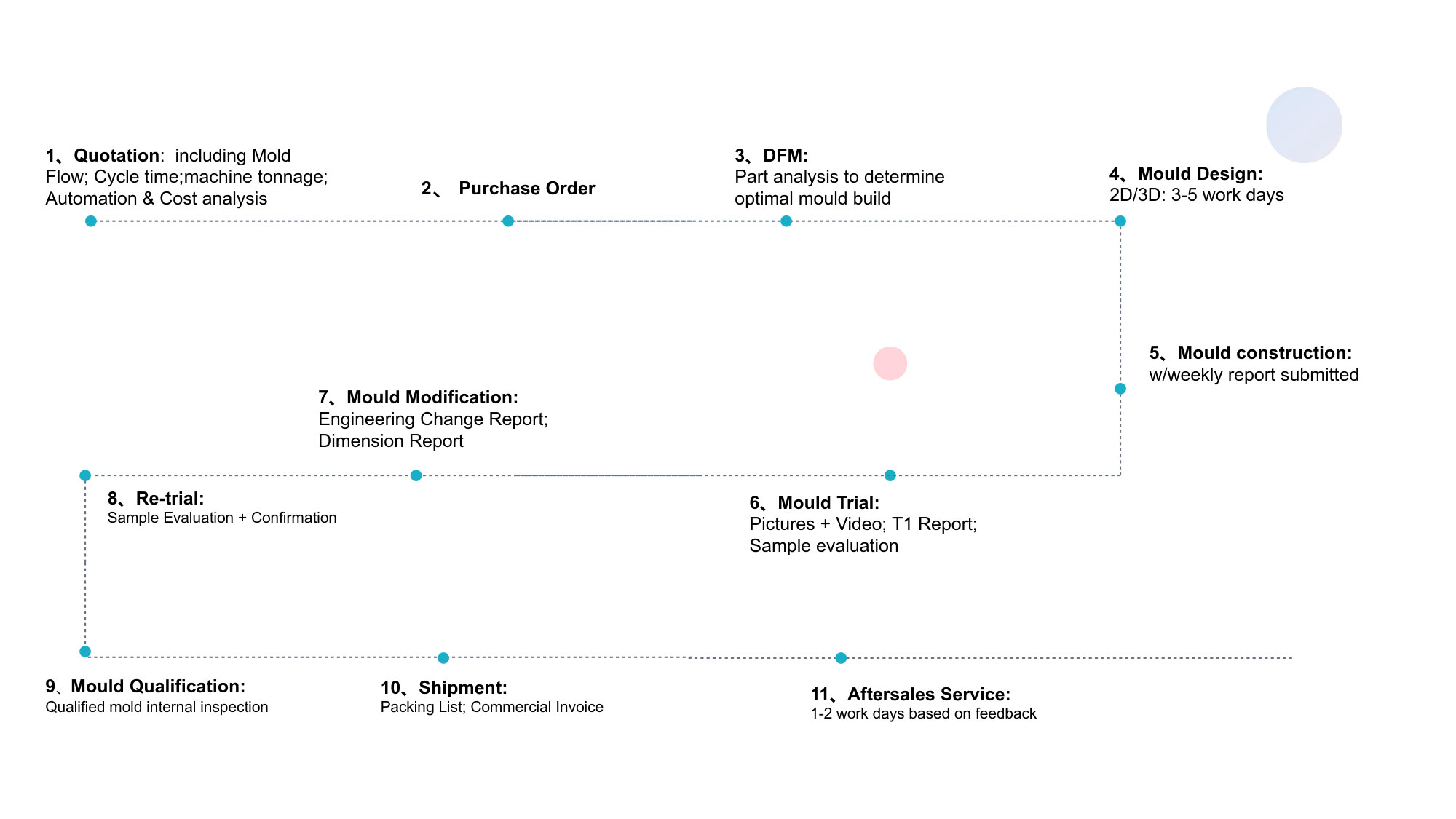
Ansix Tech brings more than 28 years of manufacturing excellence to the development and production of brain pacemaker component molds. Our comprehensive manufacturing solution integrates ultra-precision toolmaking, advanced injection molding capabilities, and ISO 13485-compliant quality systems to deliver components that meet the most stringent regulatory requirements worldwide. This document outlines how our technical expertise translates directly into measurable customer value: reduced costs, minimized risks, accelerated time-to-market, and uncompromising product reliability.
Section Ⅰ: Equipment Foundation — Building Customer Trust Through Demonstrated Hard Capabilities
Customers investing in medical implant components require tangible proof of manufacturing capability before any project commitment. We present our equipment foundation not as a list of machines, but as a direct answer to the question: “Can you consistently produce parts at the precision my device requires
-
Mold Manufacturing Equipment
Five-Axis High-Speed Machining Centers — Our facility is equipped with advanced five-axis simultaneous machining centers capable of positioning accuracy of ±0.001mm and repeatability better than ±0.0005mm. This capability directly translates to customer value: complex freeform surfaces required for brain pacemaker housings are machined in a single setup, eliminating multiple clamping errors and ensuring seamless parting lines with zero burrs. The result is a finished mold that produces parts with exceptional surface quality, reducing or eliminating secondary finishing operations.
Slow Wire Electrical Discharge Machining (EDM) — We deploy precision wire EDM systems for machining micro-features that conventional cutting tools cannot access. With the ability to cut features as fine as 0.03mm in diameter, this technology creates narrow slots, micro-holes, and complex profiles in mold components. For brain pacemaker parts requiring thin-wall geometries (often below 0.5mm wall thickness), our wire EDM capability prevents deformation during manufacturing, ensuring structural integrity in the final molded component.
CN Machining and Electrode Manufacturing — Our in-house CNC electrode machining center creates high-precision electrodes for sinker EDM operations, enabling the production of intricate cavity details with surface finishes that minimize post-processing. The self-contained nature of our electrode production eliminates outsourcing delays and ensures complete process control.
Value to Customer: Reduced mold manufacturing lead times, elimination of hand-fitting variations, and consistently repeatable mold geometry that translates directly into dimensionally stable production parts.
Injection Molding Machine Fleet
Our injection molding machine lineup spans clamping forces from 30 tons to 400 tons, optimized for the small-to-medium precision components characteristic of brain pacemaker systems. This range specifically addresses the dimensional profile of implantable medical components—typically small, intricate parts requiring nanometer-level control.
All-Electric Servo Drive Technology — Every injection molding machine in our medical production line features all-electric servo drive systems. The closed-loop servo control maintains injection pressure fluctuation within ±1% and achieves repeatability precision of ±0.5MPa for packing pressure. For customers, this means every molded part produced during a production run matches the first part identically. Batch-to-batch variation is eliminated, and critical dimensions remain stable over millions of cycles.
Temperature Control Precision — Barrel temperature is maintained with ±2°C accuracy, and mold temperature control through PID intelligent algorithms achieves stability within ±0.5°C. Brain pacemaker materials—many of which are high-temperature engineering plastics with narrow processing windows—respond predictably and consistently shot after shot.
Ultrasonic Wall Thickness Feedback — Select machines are equipped with real-time ultrasonic thickness sensors that monitor wall thickness variations during the injection process and automatically trigger packing pressure compensation. This closed-loop feedback system ensures that thin-wall sections—some as thin as 0.15mm—maintain uniform thickness regardless of environmental fluctuations.
Value to Customer: Predictable dimensional output, elimination of manual process intervention, and documented process stability that supports regulatory submission requirements.
Measurement and Inspection Equipment
Coordinate Measuring Machines (CMM) — We employ high-accuracy CMM systems that provide real-time feedback for dimensional error correction down to the 0.001mm level, combined with laser interferometers for dynamic precision compensation, forming a complete closed-loop manufacturing verification system.
Optical Imaging and Vision Inspection — Automated optical inspection systems capable of detecting surface defects as small as 0.1mm² run at speeds of 2,000 frames per second, identifying weld marks, flow lines, and surface irregularities that could compromise implant safety.
Full-Dimension Reporting Protocol — Every mold we produce undergoes comprehensive dimension measurement before shipment. Key tolerances are verified against customer specifications, with Critical to Quality (CTQ) dimensions achieving CpK ≥ 1.33—a statistical guarantee that the process is capable and controlled.
X-ray Computed Tomography (CT) — For implantable components where internal defects cannot be tolerated, we employ X-ray CT scanning combined with finite element analysis (FEA) to predict product service performance under real-world conditions.
Value to Customer: Zero-defect delivery confidence, documented traceability from measurement records, and defect detection capability that catches issues before they reach your production line.
Section Ⅱ: Mold Manufacturing Core Competencies — Measurable Performance Metrics
Customers invest in molds as assets that must deliver consistent returns over millions of production cycles. Our mold manufacturing competency is expressed not in technical jargon but in quantifiable commitments that directly impact your production economics.
Mold Life Expectancy
Material Application Mold Life Guarantee Customer Value
Glass-fiber reinforced resins (PEEK, PPS+GF, LCP) 500,000+ cycles Reduced amortized tooling cost per part
Unfilled medical grades (PC, PP, PE, PSU) 1,000,000+ cycles Extended production runs without retooling
High-wear applications 2,000,000+ cycles with DLC coating Capital equipment longevity
Our mold base materials are selected for specific applications: P20 steel for cost-effective long-run molds, S136 stainless and H13 hot-work tool steel for corrosion resistance in medical environments, NAK80 for high-polish applications requiring exceptional surface finish, and hardened tool steels including DC53 and SKD61 for wear-intensive glass-filled materials. Every mold is supplied with complete material certification reports and documented heat treatment curves.
Customer Question Answered: “How much will I spend replacing molds over the product lifecycle?” Our documented mold life guarantees provide predictable capital planning horizons.
Achievable Dimensional Tolerances
Component Type Standard Tolerance Precision Capability Customer Impact
General structural/connector parts ±0.05mm ±0.02mm Reliable mechanical assembly
Precision gears, alignment features ±0.01mm ±0.005mm Interchangeable mating components
Implantable housings, microfluidic features ±0.005mm ±0.003mm Life-sustaining device reliability
For brain pacemaker housing applications, ultra-precision molds must achieve mold manufacturing tolerances ≤ ±0.003mm. Our five-axis machining and EDM capability consistently delivers this level of precision, verified at every stage through CMM inspection.
Customer Question Answered: “Will my parts fit and function as designed on first assembly?” Precision tolerances guarantee assembly-ready components with zero rework.
Mold Type Capabilities
Hot Runner Systems — For brain pacemaker components requiring annual volumes exceeding 100,000 pieces, hot runner molds achieve 99.5% material utilization, saving more than $150,000 annually in material costs for high-value engineering resins like PEEK. The zero-waste design eliminates runner scrap while reducing cycle time by up to 30% and increasing daily output by 40%. Hot runner systems also eliminate gate marks on medical precision parts, maintaining clean, defect-free surfaces suitable for implantable devices.
Multi-Cavity and Family Molds — When production volumes demand efficiency, our multi-cavity molds produce 8–32 precision parts per injection cycle, boosting equipment utilization to 92% while reducing per-part cost.
High-Polish / Mirror-Finish Molds — For transparent brain pacemaker components requiring optical clarity, our mirror-finish molds achieve surface roughness Ra < 0.05μm. Laboratory experiments demonstrate a 99.6% reduction in bacterial residue on precision-molded surfaces polished to this level compared to conventionally finished products. For implantable devices, this means dramatically reduced infection risk.
Two-Shot / Multi-Material Molds — Where design requires overmolding of different materials—such as a rigid PEEK housing with a soft silicone sealing element—our two-shot molding capability produces fully integrated components in a single manufacturing cell.
Gate and Runner Optimization
Using computational fluid dynamics (CFD) simulation technology, we optimize gate placement, runner cross-sectional areas, and melt filling paths before any steel is cut. For thin-walled structures, multi-point gating and hot runner systems ensure uniform melt filling, avoiding dimensional deviations caused by pressure gradients. Our cooling system adopts conformal cooling channel design, generating cooling paths that fully conform to the product contour through topological optimization algorithms, maintaining mold surface temperature differentials within ±1°C to eliminate thermal stress-induced deformation.
Customer Value: Weld lines, gas traps, and flow marks are identified and eliminated in the virtual environment, not discovered during trial runs. This predictive approach reduces mold trials from an average of five iterations to just two or three, saving weeks of development time.
Lead Time Standards
Mold Complexity Standard Lead Time Rush Service (20% premium) Value Proposition
Simple / single-cavity 25 days 15 days Rapid prototyping to production
Medium complexity (2-4 cavities, hot runner) 35-45 days 25-28 days Balanced speed and quality
High complexity (multi-cavity, family mold, complex cooling) 50-60 days 35-40 days Full capability without compromise
All rush service orders receive expedited machining priority while maintaining our standard validation protocols—nothing is skipped, no shortcuts are taken. T0 molds are verified, T1 trials confirm filling behavior, T2 trials optimize process parameters, and T3 establishes production-ready conditions.
Customer Question Answered: “When can I start production?” Clear, realistic lead times support your product launch schedule.
Section Ⅲ: Injection Molding Process Control — Eliminating Quality Anxiety
Medical device manufacturers consistently cite three primary concerns when sourcing injection-molded components: dimensional instability, cosmetic defects (sink marks, flash, weld lines), and batch-to-batch variation. Our process control systems address each of these concerns through data-driven methodology and automated verification.
Process Standardization and Monitoring
Every injection molding machine in our medical production facility is networked to a Manufacturing Execution System (MES) that locks all molding parameters—temperature, pressure, speed, and timing—at validated setpoints. Changes require engineering-level authorization with full audit trail documentation. Each production batch undergoes first-article and last-article inspection comparison, with automated alerting for any deviation beyond control limits.
Customer Value: Regulatory auditors receive complete parameter documentation. Production operators cannot introduce variation. What passed validation runs the same way for the entire production lifecycle.
Dimensional Stability Control
Our molds incorporate zone-controlled mold temperature regulation using a combination of oil and water temperature control units. Core and cavity temperature differentials are maintained within 2°C, minimizing warpage from differential cooling. Independent testing on similar medical components demonstrates that with our cooling system optimization, key hole-to-hole spacing fluctuations across three consecutive weekly production batches remain ≤ 0.02mm.
For wall thickness uniformity—critical for brain pacemaker electronic encapsulation—our molds maintain uniformity within 0.1mm. Any minor deviation beyond this range could lead to electronic component failure; our control systems prevent this from occurring .
Customer Value: Parts assemble correctly every time. No sorting, no rework, no field failures from dimensionally incorrect components.
Surface Quality Standards
Surface Grade Ra Value Application Typical Defect Tolerance
Mirror polish (DLC-coated) ≤ 0.01μm Articulating implant surfaces Zero visual defects
High gloss 0.05-0.2μm Transparent housings, optical paths Gas trap free, zero bubbles
Medical satin 0.4-0.8μm Standard implantable housings No weld lines visible at 10x
Textured As-specified Ergonomic grip surfaces Uniform grain throughout
For components requiring subsequent coating or printing, we incorporate compensated geometry that accounts for secondary process shrinkage, achieving print registration accuracy of ±0.1mm on a standard medical label line.
Special Material Processing Capabilities
Ansix Tech has accumulated extensive production experience with high-performance engineering thermoplastics commonly specified for brain pacemaker and medical implant applications:
Material Key Properties Challenges Addressed Regulatory Status
PEEK (Polyetheretherketone) HDT 160°C, σy 95MPa, UL94 V-0 High melt temperature (343°C), low MFR (≈3 g/10min) ISO 10993 biocompatible
PPS+40%GF Chemical resistance, dimensional stability, V-0 Abrasive on mold components USP Class VI
LCP (Liquid Crystal Polymer) Ultra-thin wall capability, flowability MFR 12-20 g/10min Anisotropic shrinkage control FDA device master file
PEI (Polyetherimide) Tg 217°C, σy 110MPa, V-0 Amorphous, high-temperature drying required ISO 10993
PC/ABS blends Impact resistance, processing ease Moisture sensitivity Medical grade certified
PEEK with 20% GF Enhanced stiffness, wear resistance Increased gas evacuation demand by 40% Implantable approved
PTFE/PFA Chemical inertness, low friction High melt viscosity, corrosion Biocompatible
Medical-grade LSR (Liquid Silicone Rubber) Biocompatible, flexible, high tear strength Precise injection control, flash prevention ISO 10993, USP Class VI
Biopolymer-Specific Process Controls:
PEEK and LCP materials, frequently specified for brain pacemaker housings due to their combination of mechanical strength, biocompatibility, and X-ray transparency, present specific molding challenges that our process protocols address directly:
High melt viscosity handling — PEEK materials have MFR around 3 g/10min at 400°C, significantly lower than standard engineering resins, requiring specialized screw design and injection pressure management
Moisture sensitivity control — Vacuum drying systems maintain material moisture content below 0.02% (compared to standard 0.05% for conventional injection molding), preventing bubble formation and surface defects
Gas evacuation — Materials with 20% glass fiber content generate 40% higher gas evacuation demand than unfilled grades, addressed through optimized venting geometry and porous steel inserts where necessary
Flame Retardancy and Aging Performance: All UL94 V-0 rated materials used in brain pacemaker shell components undergo UV exposure validation to 3,000 hours with no color shift or mechanical property degradation, ensuring long-term device reliability.
Section Ⅳ: Full-Service Lifecycle Management — Reducing Customer Administrative Costs
Many contract manufacturers limit their value proposition to “we make molds and run parts.” Ansix Tech’s commitment extends across the entire product realization lifecycle, eliminating costly coordination overhead and reducing your internal management burden.
Early Engagement: Design for Manufacturability (DFM) Report
Before any steel is cut, we deliver a comprehensive mold feasibility analysis report that identifies and resolves potential manufacturing issues in the digital realm. Our DFM report includes:
Section Technical Detail Customer Benefit
Draft angle recommendations Optimized for part geometry without compromising functional surfaces No stuck parts, no redesigns
Wall thickness optimization Uniformity within ±0.1mm maintained Elimination of sink marks, reduced cycle time
Gate placement Multi-point gating design with CFD verification Balanced fill, reduced internal stress
Ejector pin location Approved locations and witness mark allowances No functional surface damage
Venting strategy Optimized gas evacuation for defect-free surfaces Air trap elimination
Mold cooling design Conformal cooling path simulation 20-35% cycle time reduction
Customer Value: Issues that would cost $10,000+ to correct after mold manufacturing are identified and resolved during the design phase, when changes cost nearly nothing.
Validation Protocol: IQ/OQ/PQ Methodology
We follow Industry Standard Qualification (IQ), Operational Qualification (OQ), and Performance Qualification (PQ) protocols for every medical mold project, as required by ISO 13485:2016 for Class II and Class III medical device component manufacturing:
IQ — Installation Qualification: Verifies tooling alignment, auxiliary equipment configuration, and press setup against design specifications
OQ — Operational Qualification: Establishes proven acceptable ranges for melt temperature, hold pressure, injection speed, and cooling time through design of experiments (DOE)
PQ — Performance Qualification: Confirms that production processes consistently produce conforming parts across multiple lots under routine operating conditions
Statistical validation: All validations are backed by GR&R studies, DOE analysis, and control charting to document process capability
T0 to T3 Trial Sequence:
Trial Focus Deliverables
T0 (dry cycle) Mold assembly verification, cooling system test Assembly clearance report
T1 (first fill) Filling behavior validation, balance confirmation Short-shot progression, filling images
T2 (full cycle) Process window optimization, defect elimination Optimized parameter set, defect log
T3 (capability) Statistical validation, CpK documentation Full dimension report, CpK ≥ 1.33 verification
Each trial iteration is accompanied by a detailed improvement report documenting changes made and results achieved. When alternative design approaches need evaluation, we can rapidly exchange mold inserts without remanufacturing the entire mold base—saving weeks of lead time and thousands of dollars in trial costs.
Customer Value: Documented, regulatory-ready validation packages that support your FDA, CE Mark, or NMPA submissions. No gaps, no surprises.
Pilot Production Run
Before committing to full-scale mass production, we offer pilot runs of 100 to 500 molded parts under actual production conditions. Pilot runs generate critical data:
Yield rate calculations for commercial production
CpK values for all CTQ dimensions under full-speed conditions
Operator training documentation
Packaging and handling validation
Customer Value: Confidence before volume commitment. If issues appear, they appear on 100 parts, not 100,000.
Maintenance and Spare Parts Program
Every mold we manufacture ships with a complete set of spare wear components: ejector pins, core inserts, and hot runner nozzles as applicable to the mold configuration. Our maintenance program includes:
Milestone Service Action Customer Benefit
Every 200,000 cycles Full mold inspection, cleaning, wear assessment, preventive component replacement Extended mold life, reduced unscheduled downtime
Every 500,000 cycles Major overhaul: polish, recoating, full dimension re-validation Renewed original precision
Annually (regardless of cycle count) Mold certification, corrosion inspection, cooling circuit flush Zero surprise failures
Emergency response In-house electrode machining center and EDM department enable 24-hour repair turnaround for weld repair or insert replacement Minimal production interruption
Post-warranty repairs are performed at cost, maintaining our commitment to long-term customer partnership.
Section Ⅴ: Differentiating Value — Direct Solutions to Common Industry Pain Points
Rather than making generic claims about our capabilities, we address the specific complaints medical device manufacturers consistently voice about mold and injection molding suppliers:
Customer Complaint Ansix Tech Response Quantified Commitment
“Molds need frequent repair, disrupting production schedules.” Each mold undergoes 2,000-cycle accelerated wear testing before delivery, with complete wear report documentation Three-year structural warranty on mold base and components (excluding normal wear consumables)
“Excessive flash requires costly secondary deburring operations.” Parting surfaces machined to 0.005mm fit tolerances with self-locking clamp force compensation Flash controlled to ≤ 0.03mm per side—no manual deburring required
“Dimensions vary from batch to batch; quality is unpredictable.” Closed-loop servo machines with real-time thickness compensation and in-mold pressure/temperature sensors Three consecutive production batches show key hole spacing variability ≤ 0.02mm
“Mold repair takes weeks, causing line shutdowns.” In-house electrode and EDM shop enables repairs without external suppliers Standard repair: 24-hour turnaround; emergency weld repair/insert replacement next-day
“Documentation for regulatory submission is incomplete.” ISO 13485:2016 certified QMS with full Device Master Record and Device History Record documentation Complete validation package ready for FDA/CE Mark/NMPA submission
The Ansix Tech Principle: Molds as Production Assets, Not Engineering Experiments
We design every mold with a holistic view of the entire manufacturing ecosystem:
Production readiness — Molds arrive at your facility ready to run, validated on machines comparable to your production equipment
Cooling balance — Conformal cooling channels maintain thermal uniformity, eliminating hot spots that cause variable shrinkage
Gas management — Strategic vent placement prevents air traps without compromising part surface quality
Wear compensation — Critical features incorporate geometric allowances for wear over mold life
Maintenance access — Cooling circuits and wear components are designed for easy access without mold disassembly
This is not how commodity mold makers approach tooling. This is how medical device partners build production assets.
Section Ⅶ: Cost Reduction Framework — Material, Efficiency, and Process Optimization
Cost reduction is not an afterthought in our manufacturing approach. It is systematically engineered into every stage of the production process.
Material Cost Savings
Strategy Implementation Typical Savings
Hot runner vs. cold runner selection Multi-cavity hot runner systems eliminate runner scrap 15-25% material cost reduction for engineering resins
Zero-waste design Runner-less molding with 99.5% material utilization >$150,000/year for high-volume PPSU or PEEK components
PEEK injection optimization Process-specific screw design reduces regrind generation Up to 80% material waste reduction for PEEK components
Family molding Multiple components produced in single cycle Reduced material handling, lower per-part cost
Process Efficiency Gains
Strategy Implementation Customer Impact
Cycle time reduction Optimized cooling and fill parameters from DFM simulation 20-35% faster cycles, higher daily output
Defect rate reduction Process validation (IQ/OQ/PQ) eliminates variation Defect rates from >5% to <0.3%
Automation integration Pick-and-place systems, vision inspection, automated packaging Reduced labor cost, higher consistency
Tooling efficiency Multi-cavity molds (8-32 cavities) Per-unit mold cost reduced by 70% compared to single-cavity
Risk Reduction Value
Every manufacturing decision includes a risk assessment component:
Risk Category Mitigation Strategy Result
Regulatory compliance ISO 13485 QMS, full documentation traceability Reduced submission risk, faster approvals
Supply chain disruption In-house electrode manufacturing, mold repair capabilities 24-hour emergency response, no external dependencies
Mold failure 2,000-cycle validation, wear component spares Predictable replacement, zero surprises
Dimensional non-conformance CpK ≥ 1.33 on all CTQ dimensions 99.7%+ yield rate, minimal sorting
Field failure X-ray CT verification, mechanical testing Device safety assured
Section Ⅸ: Summary — Partnering for Success
Ansix Tech brings more than 28 years of manufacturing expertise to the brain pacemaker component market. Our capabilities extend from raw material selection through mold design, precision manufacturing, process validation, and mass production.
To our customers, we offer a simple proposition: Our molds are not blocks of steel. They are asset investments that generate predictable returns through higher yields, fewer disruptions, documented quality, and lower total cost of ownership.
The technical capabilities we have outlined—five-axis machining with ±0.001mm positioning, closed-loop servo injection machines with ±0.5°C temperature control, full ISO 13485 quality systems, and demonstrated experience with PEEK, LCP, PPS, and other biocompatible engineering polymers—serves one purpose: delivering implant-grade components that meet the highest standards of safety, reliability, and value.
We invite you to put our capabilities to the test. Choose an existing product or concept drawing. Let us walk you through a complete DFM analysis—identifying where weld lines will form, where gas will trap, where shrinkage will occur—and demonstrate how our approach resolves these issues before mold manufacturing begins. You will see directly how our process expertise translates into your product‘s success.
Ansix Tech Co Ltd
If you have any plans related to Brain Pacemaker Component Molds , you can contact us at any time. We will turn your ideas into reality, let you realize your dreams, and obtain large orders from the market. Our contact information is info@ansixtech.com. Or contact our CTO, mail: stephen@ansixtech.com
#www.ansixtech.com #ansixtech.com #Brain Pacemaker Component Molds #Brain Pacemaker Component Molds moulds #Brain Pacemaker Component Molds injection molding companies #Brain Pacemaker Component Molds Canopy Mold injection mold companies #Ansix #Ansix moulds #Ansix china #Ansix tech china #Ansix tech company #Ansix facotry #Brain Pacemaker Component Molds injection molding #Brain Pacemaker Component Molds injection tools #Brain Pacemaker Component Molds injection moulds #Brain Pacemaker Component Molds plastic mould #Brain Pacemaker Component Molds plastic tools #Ansix Tech #Ansix molds #Ansix injection molding #Ansix mold factory #injection molding Brain Pacemaker Component Molds #Ansix mold factory #Brain Pacemaker Component Molds china #Brain Pacemaker Component Molds molds #injection factory #Brain Pacemaker Component Molds injection molding #Brain Pacemaker Component Molds injection molding factory #injection molding company #Brain Pacemaker Component Molds injection mold companies #Brain Pacemaker Component Molds#Brain Pacemaker Component Molds mold limited #Ansix mold china #Ansix companies #Ansix company China #Brain Pacemaker Component Molds facotry #Ansix Tech #Ansix Tech mould #Brain Pacemaker Component Molds injection moulding #injection moulding company #Ansix Brain Pacemaker Component Molds parts injection mold companies #medical injection molding companieschina #Brain Pacemaker Component Molds china factory #Ansix moulding companies #Ansix molding company #Brain Pacemaker Component Molds injection moulding facotry #Ansix Tech mold #Brain Pacemaker Component Molds mould #Brain Pacemaker Component Molds plastic injection molding #ansix plastic mold #Mold manufacturing #Brain Pacemaker Component Molds parts manufacturing #Brain Pacemaker Component Molds plastic parts factory #Brain Pacemaker Component Molds injection parts mold #Brain Pacemaker Component Molds PRECISION MANUFACTURING #Brain Pacemaker Component Molds #China mold #Brain Pacemaker Component Molds injection moulding china #Brain Pacemaker Component Molds mould china #china precision mold #mold in china #Brain Pacemaker Component Molds mold china #Precision molds #High-precision molds #Brain Pacemaker Component Molds #Injection molds #Brain Pacemaker Component Molds Factory #Brain Pacemaker Component Molds Company #Super Large Injection Mold Factory #Large Tonnage Injection Molding Factory #Brain Pacemaker Component Molds Company #Brain Pacemaker Component Molds Factory #2800T Injection Molding Factory #3000 Ton Injection Molding #4500 Ton Injection Molding Factory #Large Mold Injection Molding #Large Plastic Mold Injection Molding Factory #Large Injection Mold Manufacturer #Plastic Mold Factory #Injection Mold #Plastic Mold