



Medical Tubing radio frequency welded catheter tubing
FEATURES
Mold Description
Product Materials:
Soft rubber: silicone
Mold Material:
S136ESR
Number of Cavities:
1
Glue Feeding Method:
Hot runner
Cooling Method:
Water cooling
Molding Cycle
22.5s
Executive Summary
The global medical tubing market stood at approximately $14.52 billion in 2026 and is projected to reach $21.86 billion by 2031, registering a compound annual growth rate (CAGR) of 8.52%. Within this expanding landscape, radio frequency (RF) welded catheter tubing represents a specialized and technically demanding segment. RF welding technology uses high-frequency electromagnetic energy to bond polymer materials, enabling catheter tips to transition from multi-lumen shafts to single-lumen geometries, creating rounded tips, and forming complex shapes with fluid-tight seals.
Ansix Tech, an ISO 13485:2016 certified manufacturer with over 28 years of experience in medical tubing design and production, has developed a comprehensive approach to RF welded medical tubing manufacturing that addresses the industry’s most persistent challenges: balancing clinical performance with cost efficiency, maintaining traceable quality at scale, and delivering certified components under compressed timelines. Operating four production bases across China and Vietnam with 260 injection molding machines and over 1,200 employees, Ansix Tech provides end-to-end engineering for radio frequency welded catheter tubing projects—from conceptual prototyping through to high-volume manufacturing and assembly validation.
-
This article examines how Ansix Tech structures each phase of the medical tubing lifecycle—project initiation, design for manufacturability, material science, mold engineering, extrusion optimization, quality validation, packaging logistics, and cost engineering—to deliver measurable value to catheter device manufacturers.
Section I: Project Initiation and Value Proposition – From Concept to High-Volume Production
The journey of a radio frequency welded catheter tubing project at Ansix Tech begins with parallel engineering between the customer’s clinical team and the company’s in-house design group. Unlike traditional contract manufacturers that receive finalized designs for production, Ansix Tech engages at the concept stage, performing Design for Manufacturability (DFM) analysis before any tooling commitments are made.
“Make Our Customers Successful” is the operating philosophy that guides every project. Ansix Tech’s value proposition rests on four pillars:
First, application-specific design for RF welding compatibility. Catheter shafts intended for RF tipping require distinct design considerations compared to conventional adhesively bonded tips. The tubing geometry must allow uniform dielectric heating, particularly at transition zones where lumen structures change. Ansix Tech engineers evaluate these parameters early, ensuring that the tubing cross-section accommodates RF welding without creating weak spots or dimensional distortion.
Second, material-process integration. RF welding performance depends on the dielectric properties of the polymer. Ansix Tech maintains a curated library of medical-grade materials—including Pebax®, TPU, polyurethane, and high-flow polypropylene grades—and matches each to an optimized RF welding protocol that accounts for power, frequency, electrode geometry, and cycle timing.
Third, full-spectrum manufacturing capability. The company’s four facilities house over 260 injection molding machines ranging from 30 to 2800 tons, enabling production of RF welded catheter components—including hubs, tips, strain reliefs, and multi-lumen transition fittings—across a wide range of volumes.
Fourth, regulatory confidence. ISO 13485:2016 certification for medical devices, alongside IATF 16949 and ISO 9001 qualifications, assures customers that every RF welded component meets documented quality management requirements from raw material receipt through final packaging.
Section II: Solving Critical Manufacturing Problems – What RF Welded Catheter Tubing Customers Face
Catheter manufacturers encounter five recurring technical challenges that Ansix Tech’s integrated model directly addresses:
Problem 1: Unreliable RF weld bond strength. In RF catheter tipping, the weld interface between the tubing body and the molded tip must withstand balloon inflation pressures and clinical manipulation without separation. Weak bonds are typically caused by material incompatibility, contamination, or improper RF field application. Ansix Tech solves this by using validated welding protocols that include pre-weld cleanliness verification, matched-material selection based on dielectric loss tangent compatibility, and in-process RF power monitoring. For multi-lumen to single-lumen transitions, the company designs mandrel-supported fixtures that ensure uniform heating across the weld zone.
Problem 2: Dimensional instability after welding. Traditional RF welding can cause polymer shrinkage, warpage, or lumen collapse—particularly problematic for thin-wall tubing. Through mold flow analysis (MFA) and predictive simulation, Ansix Tech models the thermal profile of the welding process and designs cooling systems that lock dimensions before post-weld relaxation occurs. The company reports achieving simulation-to-production agreement on linear shrinkage with width deviations as small as 1%.
Problem 3: Slow cycle times and low throughput. Manual RF welding processes are inherently variable and operator-dependent. Ansix Tech automates many steps—tube loading, electrode positioning, weld cycle execution, part ejection, and visual inspection—to achieve consistent cycle times. For anesthesia tubing projects, the company has demonstrated up to 30% production cost reduction through a combination of automated RF welding cells, optimized fixturing, and reduced touch labor.
Problem 4: Validation burden for regulated devices. Catheter tips and RF welded assemblies require extensive qualification data for 510(k) submissions and CE marking. Ansix Tech provides full validation packages—including design verification protocols, process validation (IQ/OQ/PQ), sterilization compatibility testing, and shelf-life studies—as part of its integrated engineering deliverables, reducing the customer’s internal regulatory burden.
Problem 5: Supply chain fragmentation. Many catheter companies source tubing from one supplier, tips from another, and assembly from yet another—creating interface risks and coordination delays. Ansix Tech consolidates the entire value chain: custom extrusion of multi-lumen catheter shafts, RF tipping and welding, overmolding of connectors and strain reliefs, assembly into finished devices, and final sterile packaging. This vertical integration eliminates interface failures and reduces procurement overhead.
Section III: Design and Prototyping – The DFM Foundation
Before any steel is cut for an RF welding mold or extrusion die, Ansix Tech initiates a structured design and prototyping phase anchored in DFM methodology. For thin-walled catheter tubing and L-shaped geometries, the stakes are particularly high.
The DFM process begins with a deep analysis of three interdependent requirements: clinical function (internal bend radius, lumen size and layout, kink resistance), user ergonomics (handling torque response, connection interfaces), and production efficiency (wall thickness uniformity, demolding geometry). Engineers scrutinize wall thickness transitions, which must be gradual to avoid flow hesitation and stress concentration. For L-shaped tubing, the internal radius of the bend receives special attention because material flow slows and can cool prematurely, leading to incomplete fill or molded-in stresses.
Once the DFM review is complete, Ansix Tech produces functional prototypes either through 3D printing (for form and fit verification) or with aluminum soft tooling if molding characteristics must be validated. This prototyping phase typically costs 5–15% of a full production tooling investment but identifies 70% or more of potential manufacturing issues—a cost leverage point that the company emphasizes with every customer.
The prototype stage also serves as the first RF welding qualification opportunity. Customers receive sample RF welded assemblies for functional testing under real-world conditions, verifying bond strength, leak integrity, and sterilization compatibility. Any adjustments to tubing dimensions, gate location, or electrode geometry are made at this low-risk stage, ensuring the final production tooling is optimized for first-run efficiency.
Section IV: The Science of Material Selection – Building for Performance and Safety
The choice of polymer determines not only clinical performance and biocompatibility but also RF weldability, extrusion behavior, and total component cost. Ansix Tech’s material selection process balances these factors using a large proprietary material database and predictive simulation.
For radio frequency welded catheter tubing, the company categorizes materials by application tier:
High-performance thermoplastics for vascular catheters and surgical guides: Pebax® MED (medical-grade polyether-block-amide) is a flagship material in this category. It offers USP Class VI and ISO 10993-4/5 biocompatibility certification, excellent kink resistance, low hysteresis for torque transmission, and compatibility with gamma radiation, steam, and EtO sterilization. Pebax® MED is available across a Shore hardness range from 25 Shore D (very soft) to 74 Shore D (firm), allowing precise tuning of catheter stiffness along its shaft length. For RF welding applications, Pebax® responds well to high-frequency energy, producing clean welds with minimal flash when processing parameters are properly controlled.
Polyurethanes for flexibility and durability: Thermoplastic polyurethane (TPU) is widely specified for balloon catheters and guide catheters. TPU offers excellent tear strength, abrasion resistance, and shape retention. In RF welding, TPU requires careful moisture control because residual water content during extrusion creates bubbles or voids that weaken weld interfaces. Ansix Tech uses dried material handling systems and online moisture monitoring to ensure TPU tubing quality.
Polyolefins for economic tubing solutions: Medical-grade polypropylene (PP) and polyethylene (PE) are specified for lower-cost disposable tubing applications—blood pressure cuffs, IV extension sets, and drainage systems. While their RF weldability is generally good, the dielectric heating rates differ from engineering thermoplastics, requiring adjusted electrode gap and dwell time. For projects where cost reduction is a primary driver, Ansix Tech performs material substitution analysis: selecting high-flow PP grades that allow faster cycle times or thinner wall sections without sacrificing rigidity, directly reducing per-part material consumption.
Medical connector and hub materials: For RF welded assemblies that combine tubing with pre-molded hubs or connectors (common in IV sets and dialysis catheters), Ansix Tech uses polycarbonate (PC), PC/ABS blends, or polysulfone (PSU) for dimensional stability and thermal resistance.
For each material family, Ansix Tech specifies exact commercial grades and provides verifiable certificates of analysis (CoAs) to its customers, establishing the traceability chain required by ISO 13485.
Section V: Mold Flow Analysis and DFM – Predictive Engineering in Practice
Approximately 70% of manufacturing costs are determined at the design stage. Ansix Tech’s digital simulation capabilities intercept cost drivers before production begins.
The company uses advanced CAE software, including Autodesk Moldflow and Moldex3D, to create a digital twin of each mold and the polymer flow within it. This Mold Flow Analysis (MFA) predicts filling patterns, identifies optimal gate location, calculates pressure requirements, simulates cooling times, and flags potential defects such as weld lines, air traps, and sink marks.
For RF welded catheter tubing molds, MFA pays particular attention to:
Flow balance for multi-lumen geometries. Uneven filling across multiple lumens creates dimensional variation and potential collapse during cooling. MFA identifies and corrects flow imbalance by adjusting runner dimensions or gate placement.
Gate location and type optimization. The gate is the entry point where molten polymer enters the cavity. For catheter tubing, Ansix Tech typically specifies edge gates at one end of the tube geometry, ensuring a smooth, uniform flow around bends and minimizing visible gate vestiges that could interfere with catheter function.
Cooling efficiency simulation. Uneven cooling is the primary cause of warpage and out-of-roundness in extruded tubing. MFA models the cooling channel layout to achieve uniform heat extraction, often achieving cycle time reductions of 28% or more [L5-L6].
Ansix Tech has quantified its simulation accuracy: using a virtual Design of Experiments (DOE) approach, the company predicts linear shrinkage with width deviations as small as 1% between simulation results and production outcomes. This level of predictive precision eliminates costly mold rework and accelerates time-to-volume production.
Section VI: Mold Design and Manufacturing – Precision at Scale
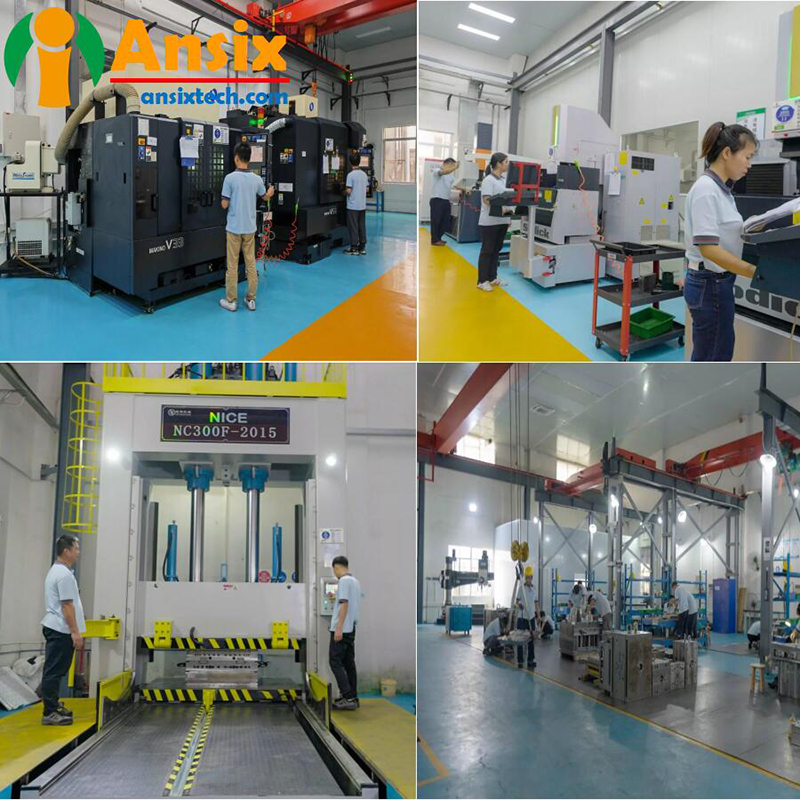
The mold that produces RF welded catheter tubing must withstand millions of injection cycles while maintaining micron-level geometric accuracy. Ansix Tech operates a dedicated mold workshop with the following design and manufacturing methodology:
Mold design priorities for medical tubing: The mold must incorporate ejection geometry that does not damage thin walls, cooling channels that extract heat evenly without hot spots, a runner system that balances flow for multiple cavities, and gate placement that leaves the lumen interior untouched. For multi-cavity tools, Ansix Tech uses hot runner systems to reduce sprue waste and eliminate cold runner regrind—a significant material cost saving for high-volume production.
Mold steel selection: For long-running, high-precision medical tubing molds, pre-hardened P20 steel is the standard choice, offering good machinability with adequate wear resistance for several million cycles. For highly abrasive filled polymers or projects requiring extremely high volume (over 10 million cycles), Ansix Tech specifies stainless 420 or H13 tool steel, which can be polished to a mirror finish. Mirror finishes are essential for RF welded catheter components because surface defects become stress risers during welding and clinical use.
Mold manufacturing process flow: The mold fabrication sequence begins with rough machining (CNC milling and turning) of the mold base, followed by wire electrical discharge machining (EDM) for complex cavity details and cooling channels. Precision grinding and CNC milling achieve final dimensions, followed by electrode discharge machining for features too intricate for standard milling. Hand polishing achieves required surface finishes. The final step is assembly with all cooling, ejection, and gating components installed.
Cooling system integration: Cooling represents the longest phase of the injection cycle. For medical tubing, removing heat uniformly is critical to prevent ovality. Ansix Tech designs conformal cooling channels—curved cooling passages that follow the tubing geometry—using additive manufacturing techniques where the part geometry justifies the investment. Conventional drilled cross-cooling channels are used for standard straight tubing profiles. Water flow velocity is modeled to ensure turbulent flow (Reynolds number > 4000), maximizing heat transfer efficiency.
Ejection system design: Ejection pins are positioned to avoid contact with critical sealing surfaces or thin-walled portions of the tubing. For delicate tubing with clips, threads, or other undercut geometries, Ansix Tech uses slide systems or hydraulic core pulls to complete demolding without imposing stresses that could cause post-mold warpage.
Section VII: Extrusion of Catheter Tubing – Process Challenges and Optimization
Before RF welding can occur, the catheter tubing itself must be extruded to precise dimensions, with clean surfaces, consistent wall thickness, and no internal defects. Multi-lumen tubing extrusion presents particular difficulty: manufacturers strive for increasingly smaller outside diameters, more lumens, and thinner walls—often thinner than a human hair.
Key extrusion challenges: The first challenge is flow instability in the extrusion die. The bifurcated flow path that forms separate lumens can create weld lines at lumen junctions—lines that weaken the tubing and become failure points during RF welding or catheter inflation. The second is degradation of sensitive polymers during processing. Polymer degradation—the breakdown of large molecules into shorter chains—reduces tensile strength, causes embrittlement, changes color, and compromises biostability. Thermoplastic polyurethane (TPU), for example, is hygroscopic; any residual moisture boils during extrusion, creating surface defects and bubble formations that propagate into the RF welding zone as voids.
Ansix Tech’s extrusion optimization strategy: The company addresses these challenges through a combination of pre-processing controls, process monitoring, and downstream validation. Screw designs are optimized for each material grade, with feed zones, compression zones, and metering zones tailored to the polymer’s melt profile. Drying protocols are established for each hygroscopic material, with regenerative desiccant dryers and online moisture meters to guarantee proper water content before extrusion begins. Process parameter tracking captures melt temperature, die pressure, line speed, and puller tension for every production run, with deviations automatically flagged for investigation.
For multi-lumen catheter tubing projects, Ansix Tech uses vacuum sizing and precision calibration dies to hold lumen dimensions within 0.001–0.002 inch of design intent. The tubing passes through multiple cooling tanks with cascading temperature zones—starting warm near the die to allow polymer relaxation, then progressively cooler to lock dimensions without induced stress. After cooling, laser micrometers check outside diameter in real time, with automated feedback to the puller to correct drift.
Efficiency improvement and cost control: By optimizing the combination of material selection, screw design, cooling zone layout, and downstream automation, Ansix Tech increases extrusion line speeds without sacrificing dimensional quality. For standard single-lumen catheter tubing, the company reports that process refinements have reduced scrap rates by over 40% compared to baseline measurements from typical extrusion job shops.
Section VIII: Quality Validation – From First Article to Ongoing Process Control
Quality validation for RF welded catheter tubing follows a four-stage protocol aligned with ISO 13485 and FDA QSR requirements:
Stage one: Material incoming inspection. For every purchased material lot—whether Pebax®, TPU, PP, or a specialty medical-grade polymer—Ansix Tech performs melt flow index testing, moisture analysis, and certificate-of-analysis verification before the material is released to production.
Stage two: Process validation (IQ/OQ/PQ). For a new RF welding tool or extrusion line, installation qualification (IQ) documents that the equipment is correctly installed and calibrated. Operational qualification (OQ) establishes process windows for key parameters (RF power, dwell time, electrode pressure, temperature). Performance qualification (PQ) runs three consecutive production shifts of qualified parts, with in-process inspection data documented to demonstrate statistical process control. Only after PQ acceptance does the line move into routine production.
Stage three: First article inspection (FAI). For each new RF welded catheter tubing product, Ansix Tech performs a comprehensive dimensional inspection based on the customer’s approved drawing and quality plan. Critical dimensions—including inside diameter, outside diameter, lumen positions, wall thickness, RF weld interface dimensions, and overall length—are measured using coordinate measuring machines (CMMs), optical comparators, and pin gauges. All data is compiled into an FAI report for customer review and regulatory submission support.
Stage four: In-process quality control (IPQC). During routine production, Ansix Tech follows an AQL-based sampling plan (typically MIL‑STD‑105E or ANSI/ASQ Z1.4) that specifies sample size and acceptance criteria by defect class. Process parameters are monitored continuously, and statistical process control charts track critical-to-quality characteristics including OD, ID, ovality, weld peel strength, and leak test results. For RF welded catheter tips, destructive tests are performed on a defined frequency: pull testing measures bond strength; pressure decay leak testing at 37°C detects micro-leaks; and burst testing at 3× working pressure confirms structural integrity.
Tensile and burst testing: Ansix Tech adheres to ISO standards for mechanical testing. For catheter tubing, tensile testing determines core material properties and weld strength; burst pressure testing validates that assemblies withstand at least three times their intended working pressure with leakage rates under 3 mL/min at body temperature.
Sterile barrier integrity: For products requiring terminal sterilization, Ansix Tech validates the packaging system to ASTM and ISO standards, confirming seal strength, microbial barrier performance, and material compatibility with EtO, gamma, or steam sterilization. Packaging is specified to withstand sterilization conditions without seal failure or degradation.
Section IX: Packaging – Maintaining Integrity Under Sterilization and Transport
Packaging for RF welded catheter tubing is engineered simultaneously with the manufacturing process, not added as an afterthought. Ansix Tech’s packaging validation process includes three major phases:
Primary packaging design: The inner pouch or tray must protect the catheter tubing from physical damage and contamination while allowing sterilization to penetrate. For RF welded components with delicate tips, custom-formed trays with dedicated tip pockets prevent deformation during transport. Materials are selected to be compatible with the sterilization method: Tyvek® or medical-grade porous films for EtO and steam sterilization; polyethylene or polypropylene for gamma irradiation.
Seal validation: Every packaging seal is validated per ASTM F88 (seal strength testing) and ASTM F1929 (dye penetration for leaks). Ansix Tech documents seal parameters (temperature, pressure, dwell time) and sets control limits that remain well within validation ranges. Sample packages are tested at routine intervals for seal integrity and peel characteristics.
Sterilization compatibility validation: For each product—packaging combination—Ansix Tech runs sterilization validation cycles that replicate the actual commercial sterilization method (EtO, gamma, or steam). Before-and-after testing confirms that the catheter tubing’s mechanical properties and RF weld strength are unchanged after maximum exposure doses, and that the packaging remains intact and maintains its microbial barrier.
Section X: Fast Delivery – Lead Time Management in Medical Tubing Manufacturing
Standard lead times for custom manufactured medical tubing typically range from 8 to 14 weeks after design freeze. Ansix Tech compresses this timeline through two primary strategies:
First, parallel workstreams. Rather than sequential handoffs (DFM → tooling design → mold manufacturing → sampling → validation → production), Ansix Tech overlaps these activities. Prototype tooling (soft tooling or 3D-printed sampling fixtures) is started while DFM analysis is still underway, enabling early component testing before production tooling completion. For large-volume programs, the company uses multi-cavity tooling from the start, producing mold bases during tool design and machining EDM electrodes while final cavity shapes are finalized.
Second, global production footprint. With four production bases in two countries, Ansix Tech can shift orders between facilities to balance workload and maintain on-time delivery. For expedited projects, the company can dedicate line capacity and assign a project management resource to oversee every step from raw material purchase to export shipment.
The company’s integrated approach—owning the mold, the extrusion line, the RF welding station, the assembly line, and the packaging line under one management umbrella—eliminates the handoff delays that occur when customers use separate suppliers for each process step.
Section XI: Cost Reduction – Systematic Engineering of Hard Costs
Cost reduction is embedded in every decision point of Ansix Tech’s manufacturing model, delivered systematically rather than through arbitrary price concessions. The company achieves cost savings through three primary vectors:
Material cost reduction: The most direct lever, accounting for 30–60% of total part cost depending on geometry and polymer selection. Ansix Tech achieves material savings through resin grade optimization (selecting a lower-cost high-flow grade that processes faster and fills thin walls completely), wall thickness reduction (DFM analysis identifies where wall stock can be reduced without compromising mechanical performance), material substitution analysis (rigorously evaluating whether a high-performance engineering plastic is truly required, or whether a validated polyolefin alternative meets all clinical requirements), and multi-cavity efficiency (a 16-cavity mold produces parts at 1/16 the per-cycle material handling cost of a single-cavity mold). For L-shaped medical tubing projects using advanced cooling design, Ansix Tech reported “significant material cost savings” alongside a 28% cycle time reduction.
Process efficiency cost reduction: Reducing cycle time on an injection molding machine or extrusion line directly increases throughput, spreading fixed costs over more parts. Ansix Tech’s efficiency improvements come from conformal cooling designs that extract heat faster and more evenly than drilled channels, automated parts handling systems (robots drop molded parts into bins, eliminating manual inspection at press side), real-time SPC that adjusts process parameters automatically, reducing scrap, and mold maintenance programs that prevent unexpected downtime. For anesthesia tubing production, the company achieved 30% production cost reduction through efficiency gains across multiple process steps.
Reliability cost reduction: The most overlooked cost driver. A mold that crashes every month due to inadequate cooling or poor gate design imposes repair costs, replacement part expenses, and lost production capacity—costs that are not captured in piece-price quotations. Ansix Tech’s robust mold designs, with adequate steel thickness, proper gate placement, and effective cooling systems, minimize unscheduled maintenance. DFM analysis prevents geometry-induced tool damage. Material selection that avoids excessive injection pressure or thermal load extends mold life.
Case example: For a three-way anesthesia connector project, Ansix Tech applied DFM analysis to redesign the gate location and modify the cooling channel geometry. The optimized mold achieved shorter cycle times, reduced flash at the gate, and eliminated an operator-intensive secondary trimming operation. Together with automated quality testing (integrated into the molding cell), the total production cost decreased by approximately 30% while quality metrics improved.
Section XII: Industry Experience – Beyond Injection Molding into Full Medical Device Assembly
Ansix Tech’s expertise extends beyond RF welded catheter tubing to the full spectrum of medical device components. The company’s precision molding serves a wide range of applications: anesthetic needles, syringe components, catheter tubing, fluidic connectors, diagnostic instrument housings, implantable device parts, and ophthalmic devices.
For catheter systems, Ansix Tech’s assembly capabilities include ultrasonic welding (an alternative to RF welding for certain material pairs where RF heating is inefficient), laser welding for high-precision medical device assemblies, leak testing integrated into automated assembly lines, and finished device packaging in ISO 8 cleanroom environments. The company’s ISO 13485:2016 certification provides the regulatory framework for Class I and Class II medical device contract manufacturing.
Section XIII: Conclusion – Engineering Value from Polymer to Package
Radio frequency welded catheter tubing manufacturing is not a commodity business; it is a precision engineering discipline where the cost of failure is measured in patient outcomes. Ansix Tech’s integrated model—from DFM and material selection through mold flow analysis, extrusion optimization, RF welding validation, and final packaging—delivers value across the entire product lifecycle.
By consolidating design, mold building, extrusion, RF welding, assembly, and quality validation under one management roof, the company eliminates the coordination costs and interface risks that plague fragmented supply chains. By applying systematic cost reduction through material science, process efficiency, and reliability engineering, Ansix Tech delivers hard cost savings that are engineered, not negotiated.
For medical device companies seeking a manufacturing partner for radio frequency welded catheter tubing—whether demanding Pebax®-based vascular catheters, economical polyolefin-based drainage tubes, or complex multi-lumen surgical access systems—Ansix Tech offers over 28 years of demonstrated capability: from prototype to high-volume production, from material certification to regulatory validation, from concept to clinic.
Ansix Tech Co Ltd
If you have any plans related to Medical Tubing radio frequency welded catheter tubing , you can contact us at any time. We will turn your ideas into reality, let you realize your dreams, and obtain large orders from the market. Our contact information is info@ansixtech.com. Or contact our CTO, mail: stephen@ansixtech.com
#www.ansixtech.com #ansixtech.com #Medical Tubing radio frequency welded catheter tubing #Medical Tubing radio frequency welded catheter tubing #Medical Tubing radio frequency welded catheter tubing moulds #Medical Tubing radio frequency welded catheter tubing molds #Medical Tubing radio frequency welded catheter tubing injection molding companies #Medical Tubing radio frequency welded catheter tubing #Medical Tubing radio frequency welded catheter tubing Canopy Mold injection mold companies #Ansix #Ansix moulds #Ansix china #Ansix tech china #Ansix tech company #Ansix facotry #Medical Tubing radio frequency welded catheter tubing injection molding #Medical Tubing radio frequency welded catheter tubing injection tools #Medical Tubing radio frequency welded catheter tubing injection moulds #Medical Tubing radio frequency welded catheter tubing plastic mould #Medical Tubing radio frequency welded catheter tubing plastic tools #Ansix Tech #Ansix molds #Ansix injection molding #Ansix mold factory #injection molding Medical Tubing radio frequency welded catheter tubing #Ansix mold factory #Medical Tubing radio frequency welded catheter tubing china #Medical Tubing radio frequency welded catheter tubing molds #injection factory #Medical Tubing radio frequency welded catheter tubing injection molding #Medical Tubing radio frequency welded catheter tubing injection molding factory #injection molding company #Medical Tubing radio frequency welded catheter tubing injection mold companies #Medical Tubing radio frequency welded catheter tubing#Medical Tubing radio frequency welded catheter tubing mold limited #Ansix mold china #Ansix companies #Ansix company China #Medical Tubing radio frequency welded catheter tubing facotry #Ansix Tech #Ansix Tech mould #Medical Tubing radio frequency welded catheter tubing injection moulding #injection moulding company #Ansix Medical Tubing radio frequency welded catheter tubing parts injection mold companies #medical injection molding companieschina #Medical Tubing radio frequency welded catheter tubing china factory #Ansix moulding companies #Ansix molding company #Medical Tubing radio frequency welded catheter tubing injection moulding facotry #Ansix Tech mold #Medical Tubing radio frequency welded catheter tubing mould #Medical Tubing radio frequency welded catheter tubing plastic injection molding #ansix plastic mold #Mold manufacturing #Medical Tubing radio frequency welded catheter tubing parts manufacturing #Medical Tubing radio frequency welded catheter tubing plastic parts factory #Medical Tubing radio frequency welded catheter tubing injection parts mold #Medical Tubing radio frequency welded catheter tubing PRECISION MANUFACTURING #Medical Tubing radio frequency welded catheter tubing #China mold #Medical Tubing radio frequency welded catheter tubing injection moulding china #Medical Tubing radio frequency welded catheter tubing mould china #china precision mold #mold in china #Medical Tubing radio frequency welded catheter tubing mold china #Precision molds #High-precision molds #Medical Tubing radio frequency welded catheter tubing #Injection molds #Medical Tubing radio frequency welded catheter tubing Factory #Medical Tubing radio frequency welded catheter tubing Company #Super Large Injection Mold Factory #Large Tonnage Injection Molding Factory #Medical Tubing radio frequency welded catheter tubing Company #Medical Tubing radio frequency welded catheter tubing Factory #2800T Injection Molding Factory #3000 Ton Injection Molding #4500 Ton Injection Molding Factory #Large Mold Injection Molding #Large Plastic Mold Injection Molding Factory #Large Injection Mold Manufacturer #Plastic Mold Factory #Injection Mold #Plastic Mold