



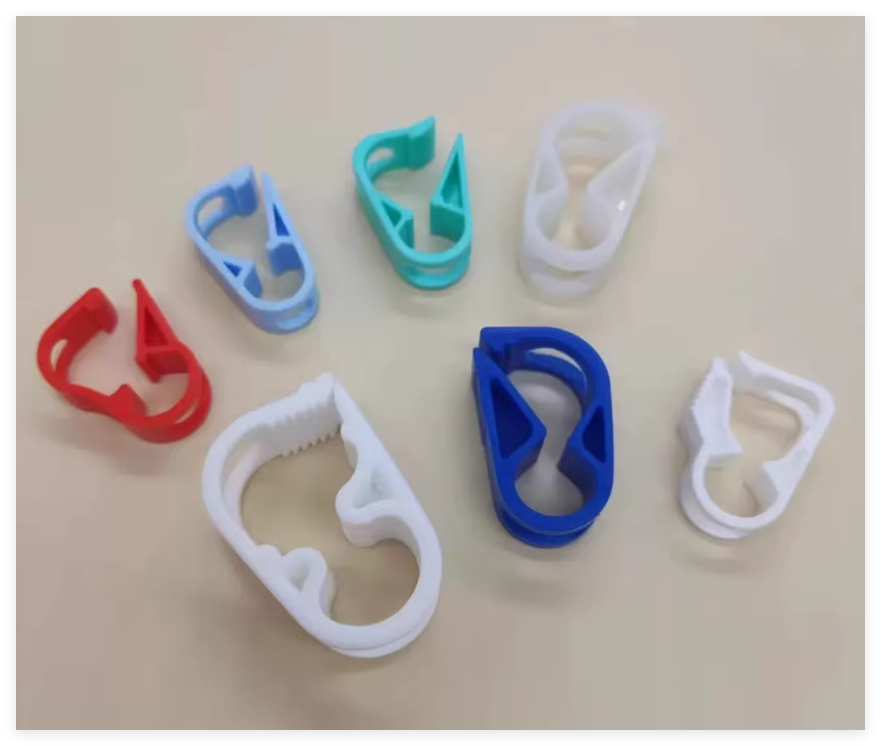
32-cavity flow control clamp mold
32-cavity flow control clamp mold

Engineering Value: Inside Ansix Tech's 32-Cavity Clamp Mold Revolution
The 32-cavity flow control clamp mold produced by Ansix Tech can reduce per-unit part costs by over 30%, a strategic advantage in the competitive world of precision industrial components.
In the high-stakes arena of injection molding, where margins are thin and reliability is paramount, a quiet revolution is taking place. At its forefront is Ansix Tech, a leader in Precision Mold manufacturing, whose latest project—a 32-cavity flow control clamp mold—showcases a holistic mastery of engineering that is redefining value for manufacturers globally. This project is more than a manufacturing endeavor; it is a comprehensive blueprint for how intelligent design, advanced material science, and process optimization converge to drive down costs while elevating quality and speed to market. From the initial digital simulation to the final packaged shipment, Ansix Tech demonstrates that the most significant savings are engineered into a product long before production begins.
The Demand for Efficiency: Why 32 Cavities?
The drive toward higher cavitation—moving from 8 or 16 to 32 cavities—is fundamentally an economic one. For high-volume components like flow control clamps, used across plumbing, industrial automation, and HVAC systems, production volume is critical. A 32-Cavity Mold multiplies output per machine cycle dramatically, spreading the fixed costs of machine time, labor, and energy over many more parts. Industry data suggests that well-engineered 32-cavity systems can increase output per cycle by approximately 50% compared to more conventional tooling.
However, this leap in scale introduces significant engineering challenges. As the industry notes, increasing cavitation extends the flow length of plastic from the machine nozzle to the farthest cavities, raising concerns about residence time (the duration molten plastic is heated in the system) and pressure drop. An unbalanced mold can lead to inconsistent part quality, higher scrap rates, and diminished tool life. Success in this domain requires not just manufacturing capability but deep analytical prowess, a core competency Ansix Tech has honed through projects ranging from complex medical syringe molds to multi-colored consumer electronics components.
The Digital Foundation: DFM and Prototype Verification
Every successful high-cavity project at Ansix Tech begins in the virtual world, governed by a principle that 70% of manufacturing costs are locked in during the design phase.
Design for Manufacturability (DFM): Ansix Tech's engineers, with an average of over 12 years of experience, perform a collaborative, synchronous DFM analysis on the clamp's 3D model. They scrutinize wall thickness uniformity, draft angles, and the feasibility of ejection to ensure the part is inherently designed for efficient, reliable molding. The goal is to avoid costly, complex mold actions by designing self-releasing features where possible.
Advanced Mold Flow Analysis (MFA): This is where potential is separated from peril. Using software like Autodesk Moldflow or Moldex3D, engineers simulate the injection process. They analyze fill patterns, predict weld lines, identify air traps, and—most critically for a 32-cavity mold—optimize the runner and gating system for perfect cavity-to-cavity balance. This virtual troubleshooting prevents costly physical trials and ensures the mold will fill uniformly, a prerequisite for consistent part quality and weight.
Prototype and Design Verification: Before any steel is cut, functional prototypes may be created via high-accuracy 3D printing. This step allows for final verification of form, fit, and function, de-risking the project and ensuring the design is flawless before committing to the high cost of mold manufacturing.
Strategic Material Selection: Plastic and Steel
Selecting the right materials is a dual-strategy exercise that impacts performance, durability, and cost.
Plastic Resin for the Clamp:
Flow control clamps require a balance of strength, stiffness, and environmental resistance. Ansix Tech's material scientists perform a holistic analysis, often favoring engineering polymers that offer the best cost-to-performance ratio.
Glass-Filled Polyamide (PA): A prime candidate, offering high tensile strength, excellent dimensional stability, and faster crystallization rates for shorter cycle times.
Polypropylene (PP) or Acrylonitrile Butadiene Styrene (ABS): For less demanding applications, these cost-effective materials provide good chemical resistance and impact strength.
The selection is data-driven, balancing datasheet properties like tensile strength and heat deflection temperature against flow characteristics to ensure the material can fill the complex, multi-cavity tool efficiently.
Mold Steel for Longevity:
The mold steel is selected to withstand millions of cycles of high pressure and thermal stress. Ansix Tech's choice is strategic, matching steel grade to function.
Cavities and Cores: For high-volume production with abrasive or glass-filled materials, pre-hardened steels like P20 or hot-work steels like H13 are standards for their toughness and resistance to thermal fatigue. For ultimate polish and corrosion resistance, as required for clear parts or in humid environments, stainless steels like S136 or 420SS are employed.
Structural Plates: Cost-effective steels like S50C carbon steel may be used for non-critical, high-volume structural components to control overall mold cost without sacrificing performance.
Table: Strategic Material Selection for High-Cavity Molds
Component Material Options Key Properties & Selection Rationale
Plastic Part (Clamp) Glass-Filled PA, PP, ABS Strength, stiffness, cost. Fast-crystallizing grades reduce cycle time.
Mold Cavities/Cores H13 Tool Steel, S136 Stainless Steel Wear resistance, polishability, thermal fatigue resistance. Chosen based on resin abrasiveness and surface finish requirements.
Mold Base/Plates P20 Steel, S50C Carbon Steel Strength, cost-effectiveness. Robust support for high-cavitation tooling without unnecessary premium cost.
Precision Engineering: Core Mold Systems
The mold is a symphony of integrated systems, each optimized for peak performance.
Runner and Gating System: For a 32-cavity mold, a hot runner system with valve gates is often the solution of choice. It eliminates solid cold runners, reducing material waste by up to 100% for the runner itself. Independently heated and controlled valve gates, as used in advanced PET preform molds, ensure each cavity receives molten plastic at the optimal time and temperature, preventing defects and enabling perfect balance.
Cooling System: Cooling typically consumes over 50% of the cycle time. Ansix Tech employs conformal cooling wherever possible. By using metal 3D printing to create channels that follow the exact contour of the clamp, heat is extracted uniformly and rapidly. This innovation can reduce cooling time by 15-39%, directly slashing the cost per part and minimizing warpage from uneven cooling.
Ejection and Venting: A meticulously calculated ejection system—using pins, sleeves, and blades—ensures the delicate clamp is removed without damage. Simultaneously, a network of micro-vents at the end of flow paths and along parting lines allows trapped air to escape, preventing burns and short shots.
From Machining to Validation: The Manufacturing Crucible
Translating the digital design into a physical masterpiece demands precision machining and rigorous testing.
The workflow proceeds from CNC roughing to finish machining, Electrical Discharge Machining (EDM) for intricate details, precision grinding, and finally, polishing to a specified SPI finish. A critical challenge is achieving perfect alignment and concentricity across all 32 cavities; advanced techniques like "dipole taper localization" ensure each cavity self-clamps independently for flawless alignment.
Once assembled, the mold undergoes Sample Approval Testing. Parts are produced and measured against all dimensional, visual, and functional specifications. Critical metrics for a 32-cavity mold include a part weight variation of less than 0.3 grams and wall thickness consistency across all cavities. This validation is the final proof of the mold's capability before it is certified for mass production.
Process Optimization: The Science of Cost Control
With a validated mold, Ansix Tech's focus shifts to mastering the injection molding process itself, where continuous optimization yields dramatic savings.
Cycle Time Reduction: Every second saved is money earned. By optimizing the conformal cooling system and fine-tuning packing pressure and time, cycles are minimized. For instance, reducing holding time on a part from 5 to 3.5 seconds can boost efficiency by 30%.
Scrap Reduction and Energy Efficiency: Ansix Tech employs scientific molding principles and in-cavity pressure sensors to establish a repeatable "sweet spot" for the process. This data-driven approach minimizes defects. Furthermore, using all-electric injection machines can reduce energy consumption by up to 40% compared to hydraulic machines, a significant long-term saving.
Automation and Lean Flow: Automated robotics for part removal and insertion ensure consistent cycle times and reduce labor. Integrated with a Manufacturing Execution System (MES), the entire production line operates on lean principles, minimizing downtime and handling errors.
Quality Assurance and Rapid Delivery
Quality is not inspected in; it is built into the process. Statistical Process Control (SPC) monitors key dimensions in real-time, while automated vision systems perform final checks. This commitment is underpinned by ISO 9001 certification, ensuring traceability and consistent procedures.
Understanding that speed to market is a critical component of value, Ansix Tech has streamlined its end-of-line process. From automated packaging and barcode scanning to optimized logistics, the company has demonstrated the ability to execute rapid delivery, with some project timelines as short as 3-4 weeks from order to shipment. The mold is delivered secure, protected, and ready for immediate high-volume production.
Conclusion: The Ansix Tech Value Proposition
The 32-cavity flow control clamp mold project encapsulates the Ansix Tech advantage: deep industry experience channeled into a systematic engineering process designed to lower the total cost of ownership for the client. By investing upfront in DFM and simulation, selecting materials with strategic intelligence, engineering molds for maximum thermal and mechanical efficiency, and controlling the production process with data-driven precision, Ansix Tech does not just manufacture components.
They engineer reliability and value, proving that in today's competitive landscape, the most effective way to reduce cost is not to cut corners, but to build smarter from the very beginning. For partners seeking a competitive edge through precision, efficiency, and unwavering quality, Ansix Tech offers not just a mold, but a foundational asset for market success.


Ansix Tech Co Ltd
If you have any plans related to 32-cavity flow control clamp mold , you can contact us at any time. We will turn your ideas into reality, let you realize your dreams, and obtain large orders from the market. Our contact information is info@ansixtech.com. Or contact our CTO, mail: stephen@ansixtech.com
#www.ansixtech.com #ansixtech.com #32-cavity flow control clamp mold #Ansix injection mould #Blood filter factory #Blood filter injection molding company #Blood filter injection mold companies #Ansix #Ansix moulds #Ansix china #Ansix tech china #Ansix tech company #Ansix facotry #Ansix Tech #Ansix molds #Ansix injection molding #Ansix mold factory #injection molding Blood filter #Ansix mold factory #Blood filter china #Blood filter precision molds #injection factory #Blood filter precision injection molding #Blood filter injection molding factory #injection molding company #Blood filter injection mold companies #Blood filter factory #Blood filter mold limited #Ansix mold china #Ansix companies #Ansix company China #Blood filter facotry #Ansix Tech #Ansix Tech mould #Blood filter injection moulding #injection moulding company #Ansix Blood filter parts injection mold companies #Blood filter #Blood filter china #Blood filter china factory #Ansix moulding companies #Ansix molding company #Blood filter injection moulding facotry #Ansix Tech mold #Blood filter precision mould #Blood filter plastic injection molding #ansix plastic mold #Mold manufacturing #Blood filter parts manufacturing #Blood filter plastic parts factory #Blood filter injection parts mold #Blood filter PRECISION MANUFACTURING #Blood filter precision #China mold #Blood filter injection moulding china #Blood filter mould china #china precision mold #mold in china #Blood filter precision mold china #Precision molds #High-precision molds #Blood filter #Injection molds #Blood filter Factory #Blood filter Company #Super Large Injection Mold Factory #Large Tonnage Injection Molding Factory #Blood filter Company #Blood filter Factory #2800T Injection Molding Factory #3000 Ton Injection Molding #4500 Ton Injection Molding Factory #Large Mold Injection Molding #Large Plastic Mold Injection Molding Factory #Large Injection Mold Manufacturer #Plastic Mold Factory #Injection Mold #Plastic Mold