



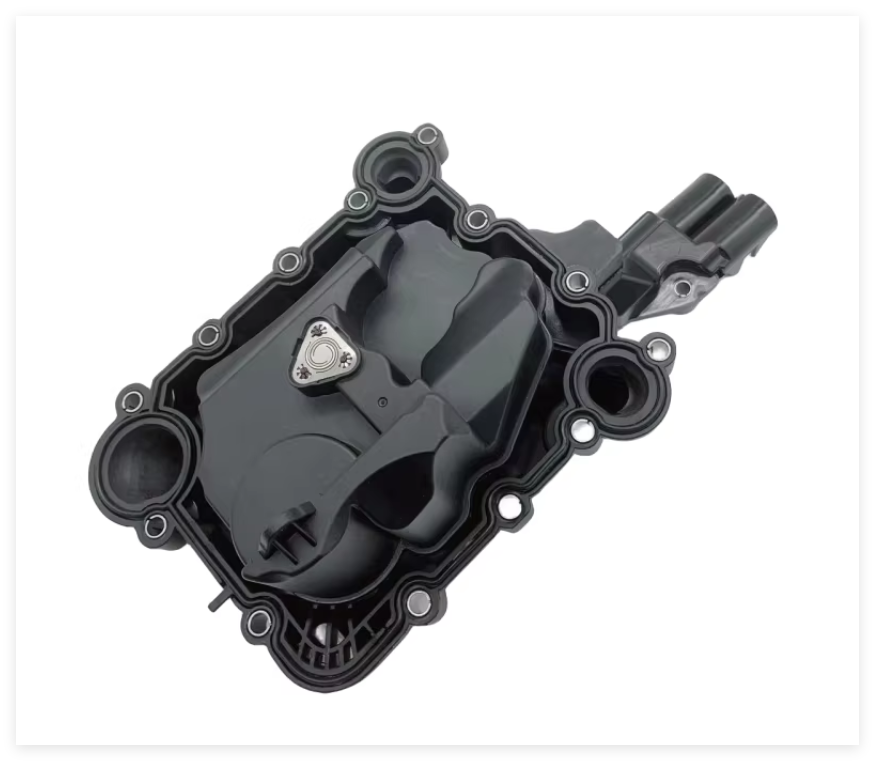
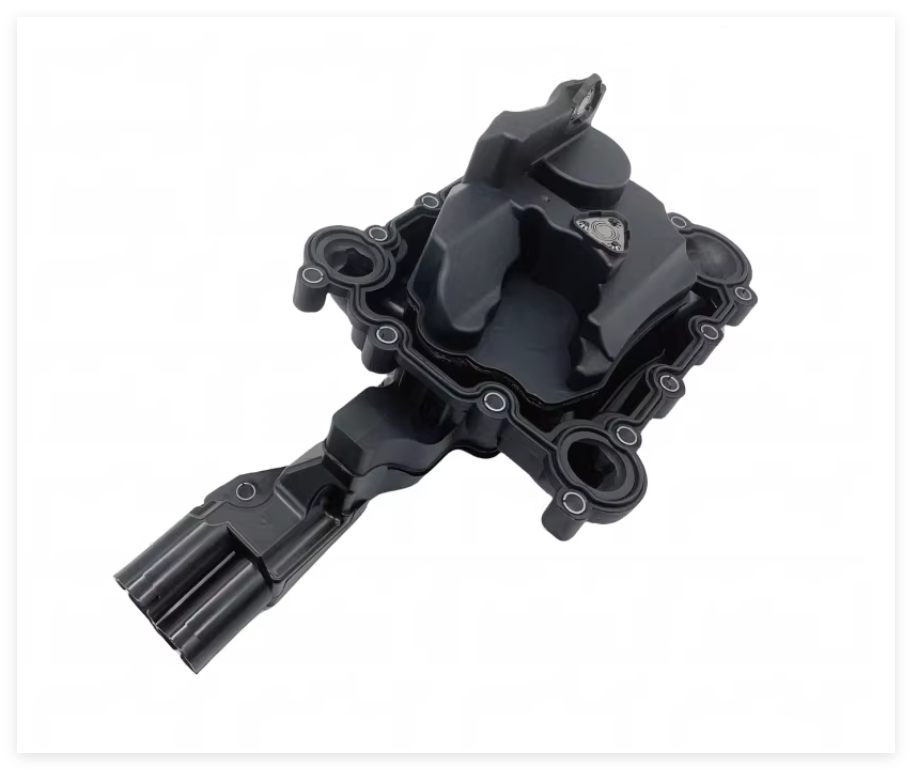
Audi Engine Oil-Water Separator PCV Valve — Gas-Assisted Molding
Audi Engine Oil-Water Separator PCV Valve — Gas-Assisted Molding

Precision Under the Hood: How Ansix Tech is Redefining Audi Engine Oil-Water Separator and PCV Valve Production Through Gas-Assisted Molding
In the high-stakes world of automotive engineering, the components hidden within a modern Internal Combustion Engine (ICE) are marvels of precision required to manage complex physical phenomena. Among the most critical yet underappreciated of these are the Engine Oil-Water Separator and the Positive Crankcase Ventilation (PCV) Valve. These components are essential for emissions control, engine efficiency, and longevity. For a marque like Audi, which demands the pinnacle of engineering, these parts cannot simply be "good enough"; they must be perfect.
For over 28 years, Ansix Tech has positioned itself at the intersection of precision manufacturing and cost-efficient innovation. Specializing in the design and production of these exacting Audi components, Ansix Tech has mastered the complex methodology of Gas-Assisted Injection Molding. This article provides a comprehensive, in-depth look at the end-to-end capabilities of Ansix Tech—from the initial project launch and material science to the intricacies of mold engineering and the rigorous validation processes that ensure every component meets the stringent standards of the German automotive giant. Crucially, we will explore how Ansix Tech systematically reduces the "hard costs" for its clients through strategic optimization, proving that world-class quality and economic efficiency are not mutually exclusive, but are two sides of the same engineering coin.
Project Initiation: A Partnership Forged in Precision
The journey of an Audi engine component at Ansix Tech begins long before any plastic resin is melted. It starts with a collaborative, engineering-led project launch. Understanding that up to 70% of a product’s ultimate manufacturing cost is determined during the initial design phase, Ansix Tech employs a Concurrent Engineering approach .
When Audi (or a Tier 1 supplier) presents a concept for a new Oil-Water Separator or PCV Valve, Ansix Tech’s team of design and manufacturing engineers does not simply receive the blueprints and begin cutting steel. Instead, they enter a dialogue. They scrutinize the part’s geometry, its functional requirements—separating crankcase gases from oil mist, regulating pressure, and withstanding under-hood temperatures and chemical exposure—and its intended assembly interfaces.
This phase is governed by rigorous Design for Manufacture (DFM) principles. The goal is to identify potential manufacturing challenges before they become costly production problems. For instance, a sharp internal corner designed for optimal airflow might create a stress concentration point during ejection, or a nominal wall thickness might be challenging to fill consistently in a large, structural component. By addressing these issues upfront, Ansix Tech ensures the design is optimized for the Gas-Assisted Molding process, paving the way for efficiency and reliability .
The Foundation: Material Selection and Prototyping
The performance of an Oil-Water Separator and PCV Valve is dictated by its material composition. This is not a one-size-fits-all decision. Ansix Tech guides its clients through a multi-dimensional optimization problem, balancing mechanical performance, thermal stability, chemical resistance, and cost.
For these Audi components, which operate under the hood in a harsh environment of hot oil, fuel vapors, and extreme temperatures, standard polymers are insufficient. Ansix Tech typically specifies high-performance engineering thermoplastics.
Material Composition and Grades: A common choice for these applications is Polyamide (PA) 66, often reinforced with 30% glass fiber (PA66-GF30) . The specific grades are selected for their high heat deflection temperature, excellent mechanical strength to withstand vacuum and pressure cycles, and resistance to oils, greases, and other automotive fluids. The glass fiber reinforcement is critical for maintaining dimensional stability and structural integrity under load. For components requiring even greater chemical resistance or lower moisture absorption, a high-performance Polypothalamide (PPA) might be specified. The selection of the precise grade—such as those from leading suppliers like BASF (Ultramid®) or DuPont (Zytel®)—is based on extensive data analysis of melt flow rate, impact resistance, and long-term heat aging properties . Ansix Tech’s material engineers possess deep expertise in how these specific grades behave during the Gas-Assisted Molding process, ensuring the material and the manufacturing method are perfectly synchronized.
Before committing to full-scale production, this material choice is validated through a rigorous prototyping phase. Utilizing a hybrid approach, Ansix Tech combines rapid prototyping techniques like 3D Printing for form and fit checks with precision-machined prototype tooling. This allows for the production of functional prototypes from the actual specified material (e.g., PA66-GF30). These parts are then subjected to functional testing—flow rates, pressure drop, separation efficiency, and thermal cycling—to validate the design’s performance against Audi’s specifications .
Digital Precision: Mold Flow Analysis and DFM Validation
With the design and material finalized, the transition from concept to tooling begins in the digital realm. This is where Ansix Tech’s advanced engineering capability truly shines. Before any metal is cut, a comprehensive Mold Flow Analysis (MFA) is conducted using advanced Computer-Aided Engineering (CAE) software. This is not merely a simulation; it is a full digital prototype of the injection molding process .
For a complex, gas-assisted component like an Oil-Water Separator, the MFA is indispensable. Engineers create a virtual model of the mold cavity, runner system, and cooling channels. They then simulate the injection of the molten PA66-GF30, observing how it flows, cools, and solidifies. This analysis identifies potential issues with surgical precision:
Filling Patterns: Ensuring the melt front advances uniformly to prevent "hesitation" or "jetting," which can cause surface defects or weak points.
Weld/Meld Lines: Predicting where flow fronts meet, particularly critical around structural ribs and sealing surfaces, as glass fibers may not orient optimally at these junctions, creating potential weak points. The analysis allows for the optimization of gate location and processing parameters to move these lines to low-stress areas.
Air Traps: Identifying areas where air might become trapped in the mold, leading to burn marks or short shots, and enabling the design of proper venting.
Cooling and Warpage: Simulating the cooling phase to predict part shrinkage and warpage. For a PCV valve body that must seal perfectly against a gasket, dimensional stability is paramount. The analysis helps design a cooling system that minimizes thermal stresses and ensures the final part meets tight tolerances .
Most critically, MFA is used to design and validate the gas-assisted injection process. It simulates the injection of nitrogen gas into the partially filled mold, showing how the gas cores out the thicker sections of the part. This virtual validation ensures the gas penetrates the correct channels, does not break through to the surface ("finger out"), and creates the desired hollow geometry without compromising the part’s structural integrity. This digital validation is the cornerstone of Ansix Tech’s value proposition, identifying and resolving up to 90% of potential manufacturing issues before tooling begins .
The Art of the Possible: Mold Design and Engineering
Armed with a digitally validated design, Ansix Tech’s engineers embark on the most critical phase: designing the physical mold. The mold is not just a block of steel with a hole in it; it is a high-performance piece of precision machinery—a "pressure vessel and heat exchanger" —that must produce thousands of perfect parts reliably and efficiently.
Mold Material Selection: The choice of steel for the mold is a strategic decision balancing longevity against cost. For high-volume production of abrasive glass-filled nylon, standard P20 tool steel is often insufficient. For the core and cavity inserts that directly shape the Audi components, Ansix Tech typically selects high-hardness, wear-resistant steels like H13 or 420SS, which are hardened to 48-52 HRC . These materials offer exceptional wear resistance against the abrasive glass fibers and excellent polishability to achieve the required surface finish, ensuring the mold maintains its precision over millions of cycles.
Advanced Cooling System Design: The largest portion of the injection molding cycle is cooling time. Reducing this time directly translates to increased production capacity and lower per-part costs. Ansix Tech achieves this through the implementation of conformal cooling channels .
Unlike traditional straight-drilled cooling lines that run in simple lines, conformal cooling channels are designed using additive manufacturing (3D printing) to follow the exact contour of the part’s geometry. For an Oil-Water Separator with complex curves and deep ribs, these channels wrap around the core and cavity, maintaining a consistent distance from the molding surface. This geometry allows for uniform and rapid heat extraction. The benefits are dramatic:
Reduced Cycle Times: By pulling heat away faster, the plastic solidifies more quickly. In documented applications, switching to conformal cooling has reduced cooling times by over 35% .
Improved Part Quality: Uniform cooling eliminates hot spots, reducing residual stresses and preventing warpage. This results in dimensionally consistent parts with better mechanical properties.
Higher Efficiency: The turbulent flow maintained within these optimized channels maximizes heat transfer, making the entire process more energy-efficient .
Runner and Gating Systems: The design of the runner system is critical for material efficiency and part quality. For multi-cavity molds producing these Audi components, Ansix Tech utilizes a balanced hot runner system . This ensures that the melt travels the same distance and experiences the same pressure drop to reach each cavity, guaranteeing that all parts are identical. The gate location is meticulously chosen based on the Mold Flow Analysis. For gas-assisted parts, the gate is often positioned to allow the gas to effectively core out the designated channel. Submarine or tunnel gates are frequently used, which automatically shear off during ejection, minimizing vestige and eliminating a secondary trimming operation.
Ejection Systems: Ejecting a complex, thin-walled, and possibly ribbed part without distortion requires a carefully engineered system. Ansix Tech designs ejection systems that apply force evenly across the part. This may involve a combination of ejector pins, blades, and sleeves, strategically placed on strong ribs or bosses to distribute the force and prevent sink marks or push-on pins .
The Crucible: Mold Manufacturing and Machining Challenges
Translating the intricate mold design into a physical reality of hardened steel presents immense manufacturing challenges. The creation of an Audi Oil-Water Separator mold pushes the limits of machining technology.
The internal features—the tortuous paths for the gas channel, the fine sealing lips, and the small orifices of the PCV valve—require extreme precision. Ansix Tech employs a combination of high-speed CNC machining and Micro Electrical Discharge Machining (Micro-EDM) . Micro-EDM uses ultra-fine electrodes to burn intricate details into the hardened steel with sub-micron precision, creating features that are impossible to achieve with traditional cutting tools.
The manufacturing of conformal cooling inserts is another technological hurdle. These inserts are produced via additive manufacturing, a process that requires careful design of support structures to prevent collapse during printing while ensuring the internal channels remain clear and smooth to promote turbulent flow. After printing, these inserts often require post-processing to achieve the required surface finish and dimensional accuracy before being integrated into the main mold base.
Finally, the surface finish of the cavity itself is critical. For sealing surfaces, a high polish (SPI A-2) is required to ensure a perfect seal against a gasket. Other areas may require specific textures to aid in ejection or to meet assembly specifications. Each mold component undergoes rigorous inspection using Coordinate Measuring Machines (CMM) and optical comparators to verify that every dimension is within the specified micron-level tolerance .
Mastering the Process: Gas-Assisted Injection Molding
With the mold installed in the press, the focus shifts to process optimization—where Ansix Tech’s expertise delivers its most significant economic impact. Gas-Assisted Injection Molding (GAIM) is a sophisticated variant of traditional injection molding, and mastering it is the key to producing superior Audi components at a lower cost.
The GAIM process at Ansix Tech involves a precise sequence:
Short Shot: A predetermined volume of molten polymer (the "short shot") is injected into the mold cavity, filling it partially (typically 70-95%).
Gas Injection: High-pressure nitrogen gas is then injected into the core of the molten polymer through the nozzle or directly into the cavity. The path of least resistance, the gas follows the hotter, molten core, pushing the plastic ahead of it to fill the remainder of the mold.
Packing and Cooling: The gas pressure is maintained during the cooling phase, packing the plastic against the mold walls from the inside out. This internal pressure compensates for material shrinkage, preventing sink marks.
Venting: Once the part is solidified, the gas is vented (often recovered or released to the atmosphere), and the mold opens to eject the hollow part.
This process offers transformative advantages for Audi Oil-Water Separators and PCV Valves:
Reduced Material Usage: By creating hollow sections (e.g., in the separator body or large connecting tubes), GAIM can reduce material consumption by up to 50% compared to a solid part . This is a direct and substantial reduction in "hard cost."
Elimination of Sink Marks: Thick sections, like boss mounts or rib intersections, are prone to sink marks. GAIM uses the gas to pack these areas from within, eliminating surface defects without the need for long, inefficient cooling cycles.
Improved Strength-to-Weight Ratio: The hollow core creates a structure akin to an I-beam, providing high strength and rigidity with significantly less weight.
Reduced Clamp Tonnage: Because the gas pressure packs the part uniformly, the required injection and holding pressures are lower, allowing the part to be molded on a smaller press, reducing energy consumption and machine wear .
Process Optimization: Efficiency and Cost Control
The GAIM process is not a set-it-and-forget-it operation. Ansix Tech technicians use a data-driven, scientific approach to optimize every variable. They move beyond single-parameter adjustments to treat the molding machine, mold, material, and environment as an integrated system .
Using in-mold cavity pressure and temperature sensors, they monitor the process in real-time. This data allows for closed-loop control, where the machine automatically adjusts parameters to compensate for minor variations in material viscosity or ambient conditions. This ensures that every part, in every cycle, is a perfect part. This is the ultimate cost-control measure: the complete elimination of scrap .
Key optimization strategies include:
Injection Speed Profiling: Creating a gradual acceleration profile to ensure a smooth, controlled flow front, preventing defects like jetting or gas fingering.
Gas Delay and Pressure Profiling: Precisely controlling the time at which gas is injected and its pressure profile to ensure optimal core-out and packing without breakthrough.
Optimized Pack and Cool Times: Using sensor data to determine the exact moment the gate freezes, allowing for the shortest possible cycle time without compromising part quality.
Automation: Integrating automated robotic arms for part removal, degating, and packaging removes human variability from the cycle, increases throughput, and lowers labor costs .
Quality Validation: The Audi Standard
At Ansix Tech, quality is not an afterthought; it is built into the process from day one. For Audi, quality is a multi-faceted concept encompassing emotional, functional, and service qualities . Ansix Tech’s validation protocol mirrors this comprehensive philosophy.
The quality regime includes:
First Article Inspection (FAI): Using high-precision CMMs and optical measuring systems, the first parts off the press are meticulously measured against the CAD master. Every critical dimension is verified and documented.
In-Process Statistical Process Control (SPC): During production runs, critical dimensions are continuously monitored. This data tracks the stability of the process, alerting operators to any drift before it results in out-of-spec parts.
Functional Testing: Samples from each batch are subjected to functional tests that simulate under-hood conditions: leak tests to verify seal integrity, pressure decay tests for the PCV valve, and flow bench tests for the separator.
Automated Vision Systems: For high-volume production, in-line vision systems perform 100% inspection, checking for surface defects, flash, or other cosmetic imperfections that could affect fit or function .
Packaging and Rapid Delivery
The final step in the value chain is ensuring that these precision components reach the customer’s assembly line in perfect condition and on time. Packaging is a science in itself. Parts are packaged in custom-designed, partitioned containers that prevent them from touching each other, thus avoiding scratches or damage to critical sealing surfaces. Anti-static materials are used where necessary to prevent dust attraction .
Ansix Tech’s entire manufacturing workflow is designed for rapid delivery. By controlling the process so tightly, they guarantee that the production run is predictable and efficient. This reliability allows them to synchronize with customers' just-in-time (JIT) manufacturing schedules, ensuring components arrive exactly when needed, reducing the customer's inventory holding costs and contributing to a leaner, more efficient supply chain .
Conclusion: The Ansix Tech Value Proposition
In the demanding arena of Audi engine components, Ansix Tech has established itself not just as a vendor, but as an engineering partner. The company’s mastery of Gas-Assisted Injection Molding, combined with nearly three decades of manufacturing experience, provides clients with a unique value proposition that goes far beyond the simple supply of parts.
The true value lies in the systematic reduction of "hard costs" through engineering intelligence. This is achieved by:
Design Excellence: Utilizing DFM and MFA to prevent costly mistakes before they happen.
Material Science: Selecting the optimal, cost-effective material grade and leveraging the material-saving benefits of GAIM.
Process Optimization: Implementing advanced cooling and closed-loop control to slash cycle times and eliminate scrap.
Quality Assurance: Building quality into the process to guarantee zero-defect delivery, eliminating the cost of rework and returns.
Operational Efficiency: Streamlining the entire workflow from prototype to packaging to ensure on-time, JIT delivery.
For every Oil-Water Separator and PCV valve that leaves its facility, Ansix Tech demonstrates that the highest standards of German automotive engineering can be met with an efficiency that makes economic sense. They prove that in modern manufacturing, precision and cost-effectiveness are not a trade-off, but the result of a perfectly optimized process. By delivering reliability, reducing waste, and maximizing efficiency at every turn, Ansix Tech provides its clients with a definitive competitive advantage in the global automotive market.




Ansix Tech Co Ltd
If you have any plans related to Audi Engine Oil-Water Separator PCV Valve — Gas-Assisted Molding , you can contact us at any time. We will turn your ideas into reality, let you realize your dreams, and obtain large orders from the market. Our contact information is info@ansixtech.com. Or contact our CTO, mail: stephen@ansixtech.com
#www.ansixtech.com #ansixtech.com #Audi Engine Oil-Water Separator PCV Valve — Gas-Assisted Molding #Audi Engine Oil-Water Separator PCV Valve — Gas-Assisted Molding#Audi Engine Oil-Water Separator PCV Valve — Gas-Assisted Molding injection molding company #Audi Engine Oil-Water Separator PCV Valve — Gas-Assisted Molding injection mold companies #Ansix #Ansix moulds #Ansix china #Ansix tech china #Ansix tech company #Ansix facotry #Ansix Tech #Ansix molds #Ansix injection molding #Ansix mold factory #injection molding Audi Engine Oil-Water Separator PCV Valve — Gas-Assisted Molding #Ansix mold factory #Audi Engine Oil-Water Separator PCV Valve — Gas-Assisted Molding china #Audi Engine Oil-Water Separator PCV Valve — Gas-Assisted Molding molds #injection factory #Audi Engine Oil-Water Separator PCV Valve — Gas-Assisted Molding injection molding #Audi Engine Oil-Water Separator PCV Valve — Gas-Assisted Molding injection molding factory #injection molding company #Audi Engine Oil-Water Separator PCV Valve — Gas-Assisted Molding injection mold companies #Audi Engine Oil-Water Separator PCV Valve — Gas-Assisted Molding#Audi Engine Oil-Water Separator PCV Valve — Gas-Assisted Molding mold limited #Ansix mold china #Ansix companies #Ansix company China #Audi Engine Oil-Water Separator PCV Valve — Gas-Assisted Molding facotry #Ansix Tech #Ansix Tech mould #Audi Engine Oil-Water Separator PCV Valve — Gas-Assisted Molding injection moulding #injection moulding company #Ansix Audi Engine Oil-Water Separator PCV Valve — Gas-Assisted Molding parts injection mold companies #Audi Engine Oil-Water Separator PCV Valve — Gas-Assisted Molding #Audi Engine Oil-Water Separator PCV Valve — Gas-Assisted Molding china #Audi Engine Oil-Water Separator PCV Valve — Gas-Assisted Molding china factory #Ansix moulding companies #Ansix molding company #Audi Engine Oil-Water Separator PCV Valve — Gas-Assisted Molding injection moulding facotry #Ansix Tech mold #Audi Engine Oil-Water Separator PCV Valve — Gas-Assisted Molding mould #Audi Engine Oil-Water Separator PCV Valve — Gas-Assisted Molding plastic injection molding #ansix plastic mold #Mold manufacturing #Audi Engine Oil-Water Separator PCV Valve — Gas-Assisted Molding parts manufacturing #Audi Engine Oil-Water Separator PCV Valve — Gas-Assisted Molding plastic parts factory #Audi Engine Oil-Water Separator PCV Valve — Gas-Assisted Molding injection parts mold #Audi Engine Oil-Water Separator PCV Valve — Gas-Assisted Molding PRECISION MANUFACTURING #Audi Engine Oil-Water Separator PCV Valve — Gas-Assisted Molding #China mold #Audi Engine Oil-Water Separator PCV Valve — Gas-Assisted Molding injection moulding china #Audi Engine Oil-Water Separator PCV Valve — Gas-Assisted Molding mould china #china precision mold #mold in china #Audi Engine Oil-Water Separator PCV Valve — Gas-Assisted Molding mold china #Precision molds #High-precision molds #Audi Engine Oil-Water Separator PCV Valve — Gas-Assisted Molding #Injection molds #Audi Engine Oil-Water Separator PCV Valve — Gas-Assisted Molding Factory #Audi Engine Oil-Water Separator PCV Valve — Gas-Assisted Molding Company #Super Large Injection Mold Factory #Large Tonnage Injection Molding Factory #Audi Engine Oil-Water Separator PCV Valve — Gas-Assisted Molding Company #Audi Engine Oil-Water Separator PCV Valve — Gas-Assisted Molding Factory #2800T Injection Molding Factory #3000 Ton Injection Molding #4500 Ton Injection Molding Factory #Large Mold Injection Molding #Large Plastic Mold Injection Molding Factory #Large Injection Mold Manufacturer #Plastic Mold Factory #Injection Mold #Plastic Mold