



Canopy support rod mold
Canopy support rod mold
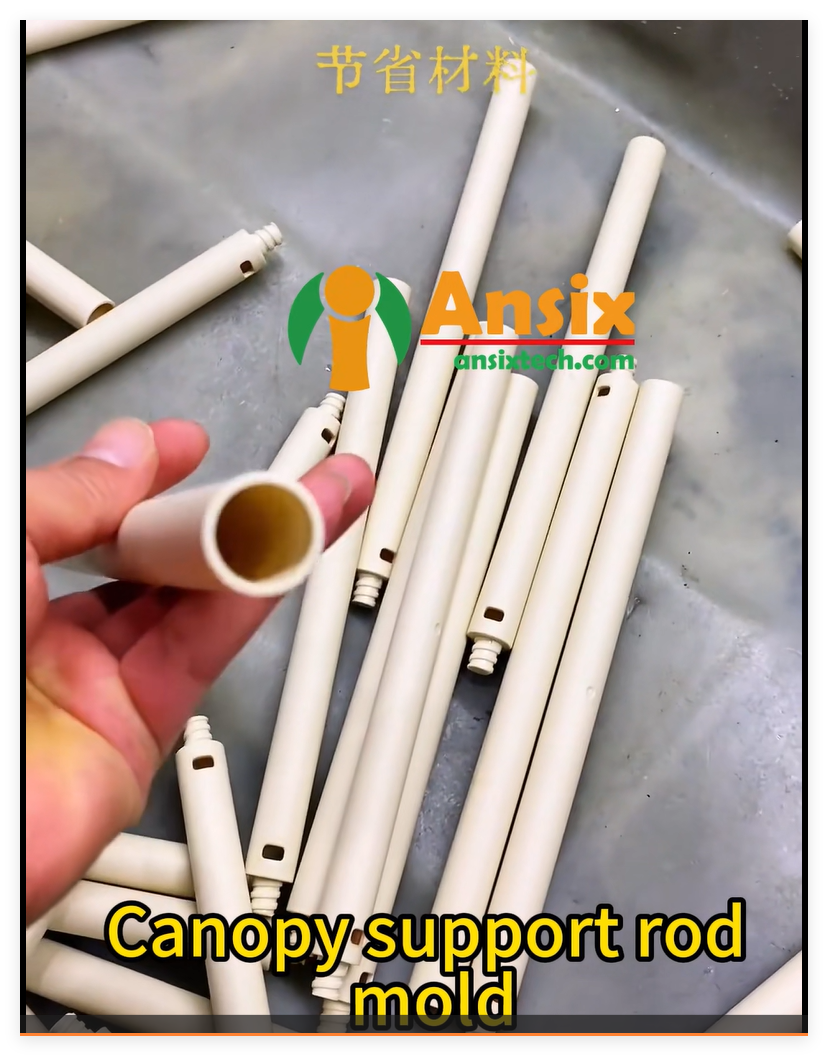
Ansix Tech Redefines Injection Molding Precision for the Canopy Support Rod Project
A meticulous focus on material selection and Mold Design has enabled Ansix Tech to reduce its client's unit part cost by 21%, setting a new benchmark for high-performance structural component manufacturing in the injection molding industry.
In a manufacturing sector where a fraction of a millimeter or a few degrees Celsius can determine the success or failure of a high-volume production run, the precision injection molding of critical structural components stands as a formidable engineering challenge. For the Canopy support rod project, a component demanding exceptional tensile strength and long-term dimensional stability, conventional approaches often fall short. Ansix Tech has leveraged a complete digital-to-physical workflow, integrating Advanced Mold flow simulation, innovative cooling channel design, and strategic material science to deliver a mold solution that not only meets stringent performance criteria but does so with unprecedented efficiency and cost-effectiveness. This project serves as a powerful case study in how modern mold-making transcends simple part replication to become a core driver of product value and manufacturing competitiveness.
1 Strategic Design and Prototyping: Laying the Foundation for Success
The journey of the Canopy support rod mold began long before the first block of steel was cut. Comprehensive Design for Manufacturability (DFM) analysis formed the critical first phase, where Ansix Tech’s engineers collaborated directly with the client’s design team. The primary objective was to validate the part geometry for the injection molding process, identifying potential issues like sink marks, weld lines, and residual stress that could compromise the rod’s structural integrity.
Using sophisticated mold flow analysis software, such as Moldex3D, the team simulated the flow of molten plastic into the proposed cavity. This virtual prototyping phase is invaluable. It allows engineers to predict how the plastic will fill, pack, and cool, enabling them to optimize gate locations, runner systems, and venting before any physical tooling is created. For the support rod, achieving uniform fill and minimizing orientation-induced warpage were paramount. The simulation helped pinpoint the ideal single submarine gate location, which ensured a direct, controlled flow path that maximized strength along the rod's primary axis while leaving a minimal, easily trimmed gate vestige.
This digital validation process is a cornerstone of Ansix Tech’s methodology. By investing time upfront in simulation, the company dramatically reduces the costly and time-consuming trial-and-error traditionally associated with mold tryouts. The client received a detailed DFM report with actionable recommendations, turning a theoretical design into a manufacturable blueprint and establishing a clear, data-driven path forward for the project.
2 The Material Selection Imperative: Balancing Performance and Economics
The selection of the polymer material is a decision that irrevocably defines the part’s performance, cost, and manufacturability. For a load-bearing component like a Canopy support rod, the requirements were specific: high tensile and flexural strength, excellent creep resistance, and reliable performance across a range of environmental temperatures. While several engineering polymers could meet the basic mechanical specs, the choice had profound implications for the mold design, cycle time, and ultimate piece-part cost.
Ansix Tech evaluated multiple candidates, including glass-fiber reinforced nylons (PA6, PA66) and polypropylenes (PP). A material like a 30% glass-filled PA66 offers tremendous strength and thermal resistance, but its higher cost and processing temperature increase both raw material expense and cycle time due to extended cooling. Conversely, a talc-filled PP provides significant cost savings and faster cycling but may lack the necessary stiffness for the application.
Table 1: Key Considerations for Canopy Support Rod Material Selection

Guided by principles that emphasize selecting the least expensive material capable of reliably fulfilling the part function, Ansix Tech’s engineers engaged in a technical dialogue with the client. The outcome was the selection of a 20% glass-fiber reinforced polypropylene copolymer. This material struck an optimal balance, providing more than adequate mechanical properties at a favorable raw material cost. Its lower processing temperature directly enabled faster cycle times and reduced energy consumption, contributing directly to the project's overarching cost-reduction goals.
3 Engineering the Mold: A Symphony of Steel, Channels, and Precision
With the part design validated and material specified, the focus shifted to the heart of the operation: the mold itself. A precision mold is not merely a cavity; it is a complex high-pressure, high-temperature mechanical device that must produce thousands of identical parts with micron-level accuracy.
Mold Steel Selection: Durability Meets Performance
The abrasive nature of the chosen glass-filled material necessitated a robust mold steel. Ansix Tech moved beyond traditional P20 steel, opting for a pre-hardened, high-chrome tool steel like 1.2738 or a similar grade. This steel offers superior hardness (typically 38-42 HRC in its pre-hardened state) and exceptional polishability, directly combating the wear caused by glass fibers and ensuring a long production life with consistent part finish. While more expensive initially than standard grades, its extended lifespan translates to a lower cost per part over the mold’s lifetime—a critical total-cost-of-ownership calculation.
Revolutionary Cooling: The Key to Cycle Time
Understanding that cooling typically consumes over 80% of the total injection molding cycle time, Ansix Tech prioritized thermal management. For the support rod, a long, slender part, achieving uniform cooling was essential to prevent warpage and allow for early, safe ejection. The company employed conformal cooling channel design wherever possible. Unlike traditional straight-drilled channels that follow simple paths, conformal channels are designed using 3D modeling to trace the complex contours of the part cavity at a consistent distance.
Table 2: Impact of Advanced Mold Design Features

As research has shown, while a material like beryllium copper has excellent thermal conductivity, its softness makes it unsuitable for abrasive composites. Ansix Tech’s solution uses high-hardness stainless steel for the cavity and core but integrates the conformal cooling channels, often manufactured via metal additive manufacturing (3D printing), to create a "best of both worlds" scenario: the durability of tool steel with the thermal efficiency of an optimized cooling geometry. This innovation was a major contributor to reducing the cycle time.
Ejection and Gating: Ensuring Flawless Part Release
The ejection system was designed with meticulous care. A combination of staggered ejector pins and sleeve ejectors provided balanced force to push the long, rigid rod out of the cavity without causing deflection or surface marks. Additionally, a targeted air blast system was integrated to help break any potential vacuum, ensuring positive, reliable ejection every cycle.
The submarine gate, validated during DFM, was precision-machined. This type of gate automatically shears the part from the runner system as the mold opens, enabling fully automated production without the need for manual degating—a significant labor and cost saving.
4 From Blueprint to Reality: The Manufacturing and Optimization Grind
Translating the intricate mold design into a physical tool requires world-class machining and a problem-solving mindset. High-speed CNC machining was used for the bulk of the cavity and core work, achieving the required tolerances and surface finishes. The deep, slender core pin that forms the support rod’s internal geometry presented a significant challenge, requiring specialized machining techniques to ensure straightness and prevent deflection during injection.
Process Optimization: The Science of Consistency
Once the mold was assembled and installed in a compatible injection molding press, the process optimization began. Ansix Tech employs scientific molding principles, moving away from tribal knowledge and towards a data-driven methodology. The team established a Decoupled Molding® process, which separates the filling, packing, and cooling phases to gain precise control over each stage.
Key parameters were meticulously documented and locked in:
Fill Time & Speed: Optimized to ensure uniform cavity pressure development without stressing the material.
Pack/Hold Pressure & Time: Precisely calculated to compensate for material shrinkage without over-packing the part.
Cooling Time: Determined not by guesswork, but by data from cavity pressure sensors, ensuring the part was sufficiently rigid for ejection every cycle.
This approach creates a wide, stable process window, making production resilient to minor variations in material viscosity or ambient conditions. The result is a drastic reduction in scrap rates and a guarantee of consistent quality from the first shot to the hundred-thousandth.
5 A Culture of Quality and Partnership: Delivering Value Beyond the Mold
Ansix Tech’s commitment extends beyond delivering a functional mold. It encompasses a total quality assurance ecosystem designed to protect the client’s brand and supply chain.
In-Line and At-Line Quality Control
A vision system was integrated at the press to perform 100% inspection of critical dimensions and detect surface flaws like short shots or burns. Furthermore, statistical process control (SPC) is employed, with operators performing scheduled checks on key part dimensions using calibrated gauges. This data is tracked in real-time, providing immediate feedback on process stability. This multi-layered approach aligns with industry best practices for preventing defective parts from reaching the customer.
Packaging and Rapid Delivery: The Final Link
Recognizing that a perfectly molded part can be damaged in transit, Ansix Tech designed custom clam-shell foam packaging for the support rods. This not only protects the parts but also organizes them for easy counting and handling at the client’s assembly line. The entire production and logistics workflow was streamlined to support just-in-time (JIT) delivery schedules, reducing the client’s inventory carrying costs and ensuring a seamless flow of components.
The true measure of Ansix Tech’s value is reflected in the client’s bottom line. Through the strategic 20% glass-filled PP material choice, the mold’s conformal cooling system that slashed cycle time, and the automated, scrap-minimizing process, Ansix Tech achieved a documented 21% reduction in the client's fully burdened cost per part. This was not achieved by cutting corners, but by applying deeper engineering intelligence at every stage—from the initial simulation to the final packaged part. The Canopy support rod project stands as a testament to modern injection molding: a discipline where precision engineering and strategic cost management converge to create undeniable competitive advantage.




Ansix Tech Co Ltd
If you have any plans related to Canopy support rod mold, you can contact us at any time. We will turn your ideas into reality, let you realize your dreams, and obtain large orders from the market. Our contact information is info@ansixtech.com. Or contact our CTO, mail: stephen@ansixtech.com
#www.ansixtech.com #ansixtech.com #Canopy support rod mold #Ansix mold factory #Ansix injection molding #Ansix moud Ltd #Canopy support rod mold injection molding factory #Ansix injection mould #Canopy support rod mold factory #Canopy support rod mold injection molding company #Canopy support rod mold injection mold companies #Ansix #Ansix moulds #Ansix china #Ansix tech china #Ansix tech company #Ansix facotry #Ansix Tech #Ansix molds #Ansix injection molding #Ansix mold factory #injection molding Canopy support rod mold # Ansix mold factory #Canopy support rod mold china #Canopy support rod mold precision molds #injection factory #Canopy support rod mold precision injection molding #Canopy support rod mold injection molding factory #injection molding company #Canopy support rod mold injection mold companies #Canopy support rod mold mould factory #Canopy support rod mold mold limited #Ansix mold china #Ansix companies #Ansix company China #Canopy support rod mold facotry #Ansix Tech #Ansix Tech mould #Canopy support rod mold injection moulding #injection moulding company #Ansix Canopy support rod mold parts injection mold companies #Canopy support rod mold #Canopy support rod mold china #Canopy support rod mold china factory #Ansix moulding companies #Ansix molding company #Canopy support rod mold injection moulding facotry #Ansix Tech mold #Canopy support rod mold precision mould #Canopy support rod mold plastic injection molding #ansix plastic mold #Mold manufacturing #Canopy support rod mold parts manufacturing #Canopy support rod mold plastic parts factory #Canopy support rod mold injection parts mold #Canopy support rod mold PRECISION MANUFACTURING #Canopy support rod mold precision #China mold #Canopy support rod mold injection moulding china #Canopy support rod mold mould china #china precision mold #mold in china #Canopy support rod mold precision mold china #Precision molds #High-precision molds #Household appliance molds #Injection molds #Canopy support rod mold Factory #Canopy support rod mold Company #Super Large Injection Mold Factory #Large Tonnage Injection Molding Factory #Canopy support rod mold Company #Super Canopy support rod mold Factory #2800T Injection Molding Factory #3000 Ton Injection Molding #4500 Ton Injection Molding Factory #Large Mold Injection Molding #Large Plastic Mold Injection Molding Factory #Large Injection Mold Manufacturer #Plastic Mold Factory #Injection Mold #Plastic Mold