



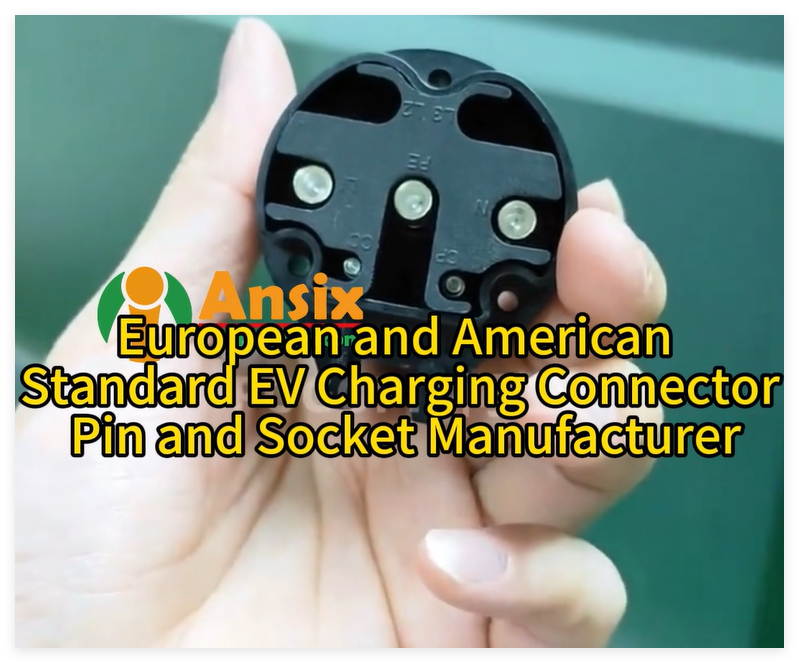
European and American Standard EV Charging Connector Pin and Socket Manufacturer
European and American Standard EV Charging Connector Pin and Socket Manufacturer

Precision Under Pressure: How Ansix Tech is Redefining the Backbone of EV Charging Infrastructure
As the global automotive industry accelerates toward an electrified future, the difference between a reliable EV charging network and a fragmented, safety-critical failure often comes down to components measured in millimeters. The connectors that link vehicle to grid—specifically the pins and sockets conforming to European (IEC 62196) and American (SAE J1772, NACS) standards—are the unsung workhorses of e-mobility. They must endure extreme temperatures, resist corrosion, survive tens of thousands of mating cycles, and handle increasingly higher voltages, all while maintaining micro-ohm levels of electrical resistance.
In this high-stakes arena, Ansix Tech has emerged not merely as a manufacturer but as a strategic engineering partner. With over 28 years of specialized experience in the design and manufacturing of European and American standard EV charging connector pins and sockets, the company has systematically de-risked the supply chain for its clients. By controlling the narrative from raw material selection through to mass production assembly verification, Ansix Tech is solving the industry’s most persistent problems: how to achieve German-level engineering precision at a cost structure that allows for mass adoption, and how to scale production capacity without sacrificing the rigorous safety validation required by automotive OEMs.
This article explores the depth of Ansix Tech’s operational philosophy, detailing how its project initiation processes, advanced Mold Design strategies, and meticulous injection molding optimizations deliver quantifiable value—specifically targeting the "hard costs" that often cripple EV infrastructure projects.
Project Initiation: Bridging the Gap Between Concept and Compliance
The journey of a high-performance charging connector begins long before the first plastic pellet is melted. In the sector of European and American standard connectors, the initial phase is often the most fraught with risk. Clients typically approach Ansix Tech with a set of electrical specifications (current ratings up to 500A for liquid-cooled systems), mechanical durability requirements (10,000+ insertion cycles), and stringent environmental standards (IP67, IK10, and UL94 V-0 flammability ratings).
Ansix Tech’s project initiation process is designed to eliminate ambiguity. Unlike generalist manufacturers who treat connector pins and sockets as commodity items, Ansix Tech engages in a deep-dive design review. The team deconstructs the client’s end-use scenario: Is this a high-frequency public DC fast charger where thermal management is paramount? Or is it a European Type 2 socket for residential AC charging where space constraints and ergonomics dictate the design?
By positioning its products to meet the specific standards of both the client and the broader market, Ansix Tech ensures that the project scope encompasses the entire lifecycle—from prototype design, manufacturing, and validation through to mass production and assembly verification. This holistic approach prevents the common industry pitfall where a prototype that passes lab tests fails catastrophically when scaled to high-volume assembly lines or exposed to real-world environmental stressors.
The Material Science Edge: Selecting the Right Grade for Performance
For connector pins and sockets, the raw material is not just a bill-of-materials line item; it is the primary determinant of electrical performance, safety, and longevity. Ansix Tech’s 28 years of manufacturing experience have culminated in a proprietary understanding of material science specifically tailored for high-current, high-cycle applications.
Conductive Materials:
For the pins and sockets themselves, copper alloys are the standard, but the grade selection is critical. Ansix Tech primarily utilizes high-conductivity copper alloys such as C11000 (ETP - Electrolytic Tough Pitch Copper) for applications prioritizing maximum conductivity. However, for terminals requiring high stress relaxation resistance—critical in spring-loaded socket contacts that must maintain clamping force over a decade of use—the company employs C18200 (Chromium Zirconium Copper) or C15100 (Zirconium Copper) .
C18200: Offers a blend of high electrical conductivity (80% IACS minimum) and excellent resistance to softening at elevated temperatures. This is vital for DC fast charging pins, where temperatures can spike rapidly.
C15100: Provides superior stress relaxation resistance, ensuring that the socket contacts maintain their grip on the pin after thousands of thermal cycles, preventing arcing and hotspot generation.
Plastic Insulation and Housings:
The housings and insulating cores must meet UL94 V-0 flammability standards while maintaining high comparative tracking index (CTI) values to prevent electrical leakage. Ansix Tech specializes in engineering-grade thermoplastics, specifically:
Polyamide (PA66) with Glass Fiber Reinforcement: For European standard (Type 2) and American standard (J1772) housings, the company uses customized PA66 compounds, often with 25-35% glass fiber reinforcement. These grades are selected for their high heat deflection temperature (HDT) and dimensional stability.
PBT (Polybutylene Terephthalate): Used for internal insulating components where low moisture absorption and precise dielectric properties are required.
High-Temperature Nylon (PPA): For pins and sockets integrated into active cooling systems or high-power terminals, Ansix Tech employs Polyphthalamide (PPA). This material maintains structural integrity at sustained temperatures exceeding 150°C, which is crucial for preventing creep and loosening of the terminal interfaces.
Engineering Precision: DFM, Mold Design, and the Art of the Possible
If material selection is the foundation, mold design is the architecture. The geometry of EV connector pins and sockets is notoriously complex. They feature multi-diameter profiles for sealing, anti-scoop protection, and locking mechanisms. Replicating these geometries with micron-level tolerances over millions of cycles requires a mold design philosophy that prioritizes manufacturability from day one.
Mold Flow Analysis (DFM)
Before steel is cut, Ansix Tech performs comprehensive Mold Flow Analysis (Design for Manufacturability). This simulation predicts how the molten plastic will fill the cavity. For connector pins and sockets, which often feature thin walls adjacent to thick metal inserts, flow analysis is non-negotiable.
The analysis identifies potential weld lines (which can become structural failure points under vibration), air traps (which compromise dielectric strength), and areas of excessive shear stress (which degrade the glass fiber reinforcement, leading to surface imperfections that compromise sealing). By simulating the injection process in a virtual environment, Ansix Tech optimizes gate locations to ensure that the critical sealing surfaces and snap-fit features are the last areas to fill, ensuring they are free from defects.
Critical Considerations in Mold Design
Designing molds for connector components requires a hyper-focus on three specific areas:
Venting: Because connector housings often incorporate shut-off surfaces for sealing (IP67), any trapped gas can cause "burn marks" or incomplete filling. Ansix Tech utilizes advanced venting strategies, often incorporating vacuum-assisted molding for high-cavitation tools, ensuring complete evacuation of air from the cavity.
Parting Lines: The location of the parting line on a connector socket is critical. If placed incorrectly, a parting line flash can interfere with the sealing gasket or the mating mechanism. Ansix Tech engineers collaborate with clients to define parting lines that are functionally invisible, ensuring the final product meets ingress protection standards without secondary deburring operations.
Insert Molding Dynamics: Many high-current pins and sockets require insert molding, where the metal terminal is placed in the mold and plastic is injected around it. This presents a challenge: differential shrinkage between metal and plastic can create stress cracks or gaps. Ansix Tech’s mold designs incorporate pre-warming stations for inserts and specialized geometric features to anchor the metal securely without inducing residual stress.
Mold Manufacturing: The Machining Challenge
The translation of a digital design into a physical mold is where the theoretical meets the practical. For EV connector components, mold manufacturing demands machining precision measured in microns.
Ansix Tech operates a dedicated mold manufacturing facility equipped with high-speed CNC machining centers and sinker Electrical Discharge Machining (EDM). The challenges here are significant:
Micro-detailing: Connector pins often feature micro-grooves for crimp retention or barb features for plastic anchoring. Machining these features requires specialized micro-endmills (often <0.3mm diameter) and high-spindle speeds to prevent tool breakage.
Surface Finish: The cavities that form the mating faces of sockets must have a mirror finish (SPI A-1 or A-2) to allow for smooth insertion of the mating pin and to prevent wear on the plastic housing. Ansix Tech employs a rigorous workflow: rough machining, heat treatment, semi-finishing, and finally high-speed machining or EDM with specialized electrode materials to achieve the required surface texture without polishing-induced geometry distortion.
Steel Selection: The mold material itself must withstand the abrasive nature of glass-filled plastics. Ansix Tech standardizes on hardened tool steels such as DIN 1.2343 (H11) or 1.2344 (H13) for cavities, which offer exceptional toughness and wear resistance at high operating temperatures. For high-cavitation molds (16, 32, or 64 cavities), the company utilizes Stavax ESR or similar stainless variants to prevent corrosion from condensation and aggressive release agents, ensuring tool longevity in high-humidity production environments.
The Cooling Architecture: Managing Thermal Dynamics
In high-volume injection molding of EV connectors, cycle time is directly correlated to cost. The single most significant factor controlling cycle time is the efficiency of the mold cooling system. Ansix Tech’s mold design philosophy treats cooling not as an afterthought but as a primary engineering discipline.
For connector pins and sockets, which often feature complex geometries and varying wall thicknesses, achieving uniform cooling is critical to prevent warpage and sink marks.
Conformal Cooling: For complex core pins and intricate cavities, traditional straight-line cooling channels are insufficient. Ansix Tech employs conformal cooling—using 3D-printed mold inserts with cooling channels that follow the geometry of the part. This reduces cooling time by up to 30% and ensures that the core pin (which forms the pin receptacle) cools at the same rate as the outer housing, eliminating ovality.
Runner and Gate Design: The company utilizes a balanced runner system. For multi-cavity tools, they employ geometrically balanced runners (rather than naturally balanced, which can lead to shear imbalances) to ensure that each cavity fills simultaneously with identical pressure. For gating, submarine (tunnel) gates are preferred for automatic degating, reducing manual labor and ensuring a clean break point that does not interfere with the connector’s sealing surface.
Ejection Systems: Because connector components often feature delicate snap features and thin walls, ejection must be precise. Ansix Tech designs ejection systems using a combination of ejector pins strategically placed on ribs (never on cosmetic or sealing surfaces) and stripper plates for large-diameter sockets. This prevents deformation during ejection, maintaining the micron-level tolerances required for assembly.
The Injection Molding Process: Validation and Optimization
Once the mold is qualified, the focus shifts to the injection molding process. This is where Ansix Tech’s value proposition crystallizes: optimizing the process to reduce "hard costs"—the direct costs of materials, labor, and scrap.
Validation Process
Ansix Tech employs a science-based molding approach. The initial process validation is governed by rigorous standards such as ISO 16486 and automotive core tools like PPAP (Production Part Approval Process) . During this phase, the company conducts:
Cpk Studies: For critical dimensions (e.g., pitch between pins, inner diameter of sockets), the process is run to demonstrate a Cpk (Process Capability Index) of >1.33, ensuring statistical confidence that the process will produce defect-free parts at high volumes.
Design of Experiments (DOE): The team performs DOEs to understand the interaction between melt temperature, injection speed, packing pressure, and cooling time. For glass-filled PA66, for instance, excessive injection speed can break glass fibers, reducing mechanical strength. Too slow, and the mold may freeze before filling. Ansix Tech identifies the "sweet spot" that balances mechanical properties with cycle time.
Technical Challenges in Injection Molding
Molding EV connector components presents unique challenges:
Burn Marks: In high-cavitation tools, air trapped in the deepest ribs (for latch strength) can ignite due to adiabatic compression. Ansix Tech solves this with advanced vacuum venting and dynamic feed systems that slow the injection speed at critical fill points to allow air to escape.
Flash: The thin shut-offs required for multi-pin connectors are prone to flash (excess plastic). The company combats this with rigid mold bases (using standardized DME or Hasco components) and precise clamping force monitoring to ensure the mold remains sealed under high injection pressures.
Cost Reduction Strategies: Beyond the Unit Price
The most compelling value Ansix Tech offers is its ability to reduce the total landed cost—the "hard costs"—for clients. This is achieved through three strategic pillars:
Material Optimization: By leveraging its purchasing power and technical expertise, Ansix Tech can recommend alternative material grades that offer the same or better performance at a lower cost. For example, substituting a general-purpose PPA with a specific, high-flow PA66 for non-thermal critical applications can reduce material cost per part by 15-20% without compromising UL ratings.
Process Efficiency: Through the aforementioned conformal cooling and automated runner systems, Ansix Tech reduces cycle times. A reduction from 45 seconds to 30 seconds on a 64-cavity mold operating 24/7 translates into millions of additional parts per year without additional capital expenditure.
Secondary Operation Elimination: The company designs molds to produce "ready-to-assemble" parts. By utilizing in-mold degating and designing for zero-flash conditions, Ansix Tech eliminates costly secondary operations like deflashing, hole drilling, or manual gate removal. Furthermore, the design of the pins and sockets often incorporates anti-rotation and self-locating features that simplify downstream automated assembly for the client, reducing their assembly line complexity and labor costs.
Quality Assurance: A Closed-Loop System
In the EV industry, a single field failure due to a connector defect can lead to catastrophic safety incidents and massive recalls. Ansix Tech’s quality control system is designed to prevent defects from leaving the facility.
The manufacturing workflow is monitored by a Manufacturing Execution System (MES) that provides traceability from raw material lot to final shipment.
In-Process Inspection: Automated vision systems are integrated into the injection molding machines. These systems inspect 100% of critical dimensions—such as the contact engagement force zone and the sealing surface diameter—in real-time. Parts that deviate from the nominal range are automatically rejected and segregated.
Mechanical and Electrical Validation: Ansix Tech maintains in-house testing labs capable of performing:
Thermal Cycling: Simulating the heating and cooling cycles of DC fast charging to validate contact retention.
Insertion/Withdrawal Force Testing: Ensuring that the pins and sockets meet the required mating force specifications (typically <100N insertion, >30N retention) over simulated life cycles.
Hi-Pot and Insulation Resistance Testing: Verifying dielectric integrity under high voltage conditions, ensuring no current leakage across the insulating barriers.
Packaging and Rapid Delivery
Quality extends to how the components are delivered. For pins and sockets destined for automated assembly lines, packaging must ensure "first-time-right" feeding into pick-and-place machines. Ansix Tech designs custom trays and tape-and-reel packaging that protect the critical contact surfaces from oxidation and physical damage during transit. With strategically located warehousing and a supply chain management team dedicated to reducing lead times, the company guarantees on-time delivery, synchronizing with client’s just-in-time manufacturing schedules.
Experience as a Service: The 28-Year Advantage
The depth of Ansix Tech’s expertise is perhaps its most intangible yet valuable asset. Twenty-eight years in the manufacturing space predates the modern EV boom. This longevity means the company has witnessed the evolution from simple industrial connectors to the sophisticated, high-power, data-enabled charging interfaces of today.
This experience translates into risk mitigation. When a client proposes a new design for a European standard (Type 2) socket with a complex shutter mechanism, Ansix Tech’s engineers do not rely solely on simulations. They draw on a library of historical data—knowing, for instance, that a specific draft angle is required for a glass-filled PBT to eject reliably without damaging a thin-walled shutter, or that a particular steel hardness is required to prevent galling when molding high-retention force clips.
This expertise also fosters innovation in assembly verification. As the final step, Ansix Tech often performs assembly verification, ensuring that the pins and sockets integrate seamlessly into the client’s housing assemblies. By simulating the client’s assembly process—whether ultrasonic welding, laser welding, or mechanical snapping—the company validates that its components are not just individually conforming, but collectively compatible.
Conclusion
As the EV market matures, the industry is moving away from a fragmented supply chain toward partnerships with specialized, vertically integrated manufacturers. Ansix Tech embodies this evolution. By focusing exclusively on the demanding sector of European and American standard EV charging connector pins and sockets, the company has built an ecosystem of value that extends far beyond injection molding.
From the initial project initiation, where deep technical consultation sets the stage for success, to the final packaging of precision-machined components, Ansix Tech addresses the specific problems that keep EV infrastructure executives awake at night: thermal management failures, supply chain inconsistency, and the escalating hard costs that threaten profitability.
Through strategic material selection—leveraging C18200 copper alloys and high-performance PPA plastics—coupled with advanced mold engineering that utilizes conformal cooling and micro-precision machining, Ansix Tech delivers components that meet the stringent safety and durability demands of the automotive industry.
Moreover, its ability to reduce costs through process optimization, eliminate secondary operations via smart design, and guarantee delivery through scalable production capacity makes it a critical enabler for the electrification of transport. In a world where charging reliability is paramount, the precision and durability of the pins and sockets define the user experience. For clients seeking not just a supplier, but a partner capable of navigating the complexities of European and American standards with 28 years of hardened expertise, Ansix Tech provides the connective tissue that makes the future of mobility possible.


Ansix Tech Co Ltd
If you have any plans related to European and American Standard EV Charging Connector Pin and Socket Manufacturer , you can contact us at any time. We will turn your ideas into reality, let you realize your dreams, and obtain large orders from the market. Our contact information is info@ansixtech.com. Or contact our CTO, mail: stephen@ansixtech.com
#www.ansixtech.com #ansixtech.com #European and American Standard EV Charging Connector Pin and Socket Manufacturer #European and American Standard EV Charging Connector Pin and Socket Manufacturer #European and American Standard EV Charging Connector Pin and Socket Manufacturer injection molding company #European and American Standard EV Charging Connector Pin and Socket Manufacturer injection mold companies #Ansix #Ansix moulds #Ansix china #Ansix tech china #Ansix tech company #Ansix facotry #Ansix Tech #Ansix molds #Ansix injection molding #Ansix mold factory #injection molding European and American Standard EV Charging Connector Pin and Socket Manufacturer #Ansix mold factory #European and American Standard EV Charging Connector Pin and Socket Manufacturer china #European and American Standard EV Charging Connector Pin and Socket Manufacturer molds #injection factory #European and American Standard EV Charging Connector Pin and Socket Manufacturer injection molding #European and American Standard EV Charging Connector Pin and Socket Manufacturer injection molding factory #injection molding company #European and American Standard EV Charging Connector Pin and Socket Manufacturer injection mold companies #European and American Standard EV Charging Connector Pin and Socket Manufacturer#European and American Standard EV Charging Connector Pin and Socket Manufacturer mold limited #Ansix mold china #Ansix companies #Ansix company China #European and American Standard EV Charging Connector Pin and Socket Manufacturer facotry #Ansix Tech #Ansix Tech mould #European and American Standard EV Charging Connector Pin and Socket Manufacturer injection moulding #injection moulding company #Ansix European and American Standard EV Charging Connector Pin and Socket Manufacturer parts injection mold companies #European and American Standard EV Charging Connector Pin and Socket Manufacturer #European and American Standard EV Charging Connector Pin and Socket Manufacturer china #European and American Standard EV Charging Connector Pin and Socket Manufacturer china factory #Ansix moulding companies #Ansix molding company #European and American Standard EV Charging Connector Pin and Socket Manufacturer injection moulding facotry #Ansix Tech mold #European and American Standard EV Charging Connector Pin and Socket Manufacturer mould #European and American Standard EV Charging Connector Pin and Socket Manufacturer plastic injection molding #ansix plastic mold #Mold manufacturing #European and American Standard EV Charging Connector Pin and Socket Manufacturer parts manufacturing #European and American Standard EV Charging Connector Pin and Socket Manufacturer plastic parts factory #European and American Standard EV Charging Connector Pin and Socket Manufacturer injection parts mold #European and American Standard EV Charging Connector Pin and Socket Manufacturer PRECISION MANUFACTURING #European and American Standard EV Charging Connector Pin and Socket Manufacturer #China mold #European and American Standard EV Charging Connector Pin and Socket Manufacturer injection moulding china #European and American Standard EV Charging Connector Pin and Socket Manufacturer mould china #china precision mold #mold in china #European and American Standard EV Charging Connector Pin and Socket Manufacturer mold china #Precision molds #High-precision molds #European and American Standard EV Charging Connector Pin and Socket Manufacturer #Injection molds #European and American Standard EV Charging Connector Pin and Socket Manufacturer Factory #European and American Standard EV Charging Connector Pin and Socket Manufacturer Company #Super Large Injection Mold Factory #Large Tonnage Injection Molding Factory #European and American Standard EV Charging Connector Pin and Socket Manufacturer Company #European and American Standard EV Charging Connector Pin and Socket Manufacturer Factory #2800T Injection Molding Factory #3000 Ton Injection Molding #4500 Ton Injection Molding Factory #Large Mold Injection Molding #Large Plastic Mold Injection Molding Factory #Large Injection Mold Manufacturer #Plastic Mold Factory #Injection Mold #Plastic Mold