



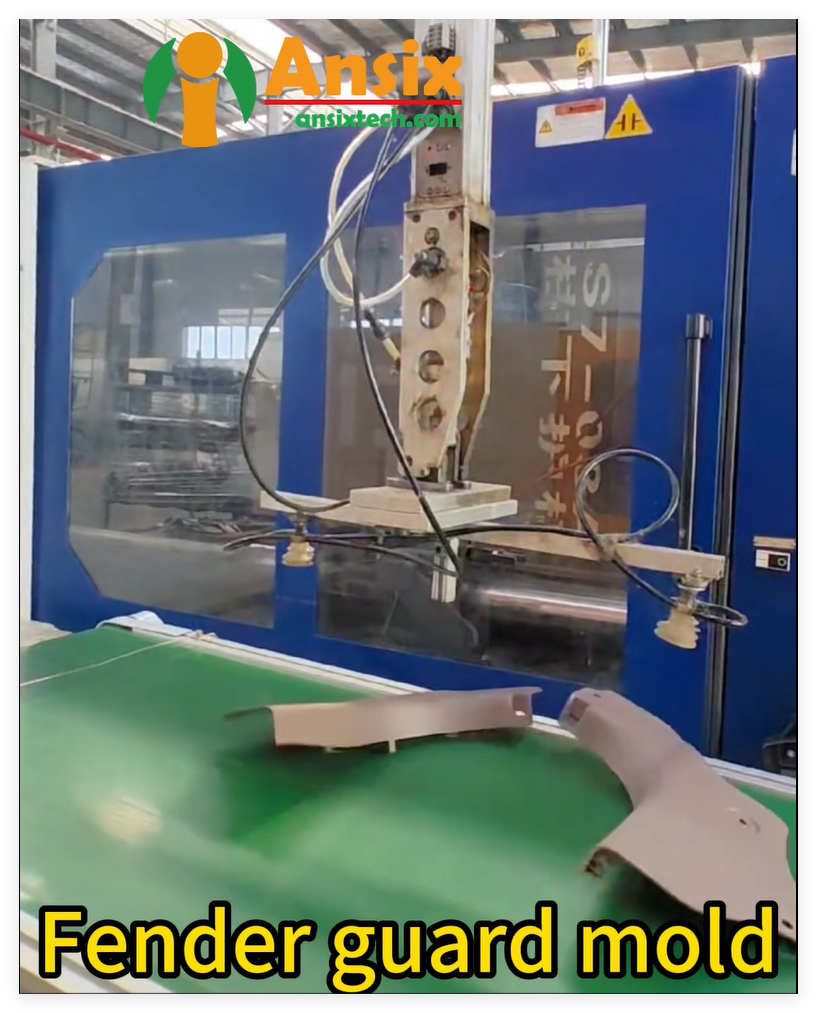
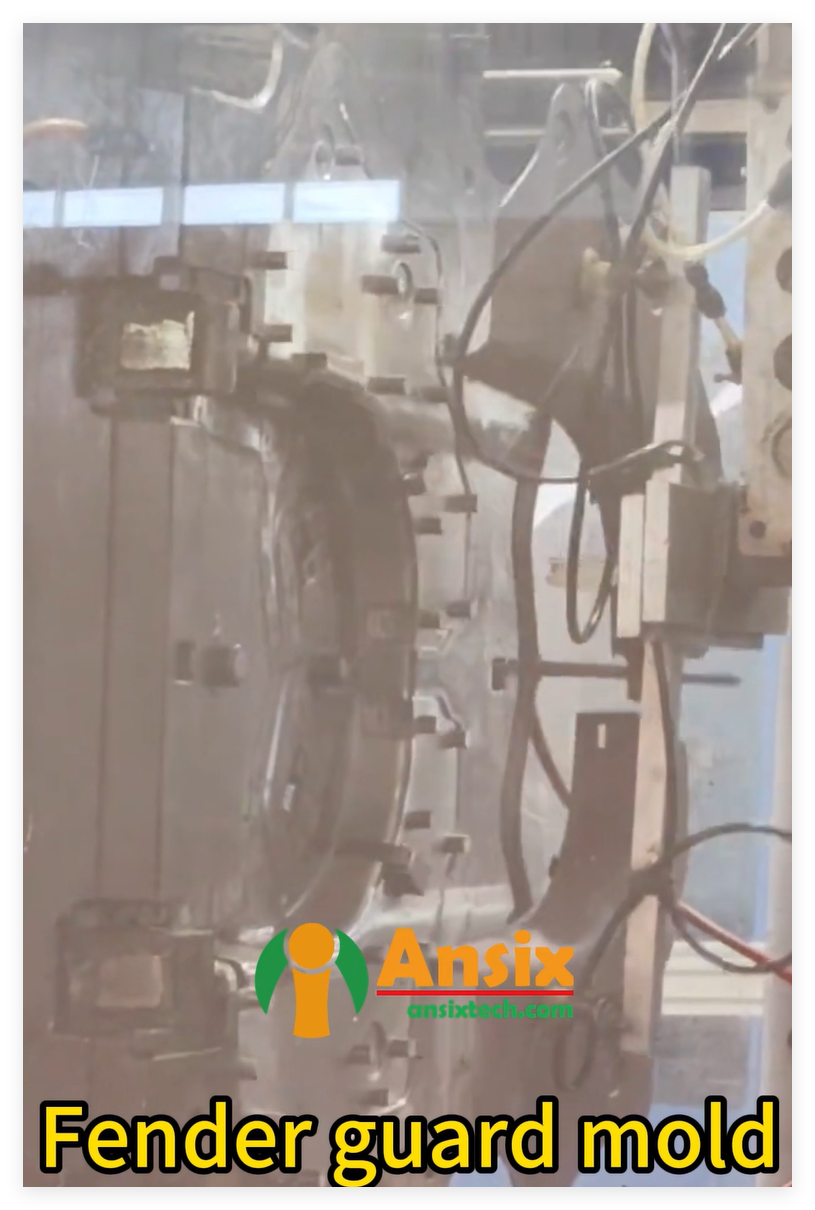
Fender guard mold
Fender guard mold
Forging the Future: How Ansix Tech Masters Complexity, Drives Efficiency, and Redefines Value in Automotive Injection Molding
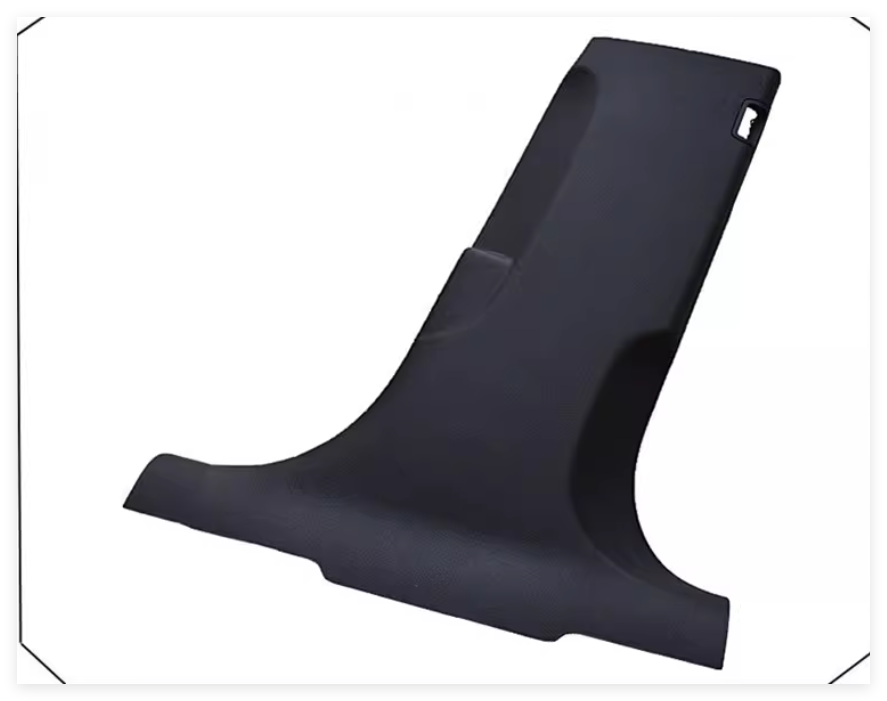
[CITY/STATE] – In the high-stakes, precision-driven world of automotive manufacturing, every component tells a story of engineering rigor, material science, and logistical orchestration. Beyond the gleaming exteriors and powerful engines lies a universe of meticulously crafted Plastic Parts, each born from a mold that is itself a masterpiece of tooling. Among these, the fender guard—or wheel arch liner—is a critical, yet often overlooked, sentinel. It shields vital vehicle underbody components from road debris, water, and corrosive elements while contributing to aerodynamic efficiency and acoustic dampening. The journey from a CAD model to millions of identical, reliable parts is a saga of technological prowess. At the forefront of this narrative is Ansix Tech, a leader in precision injection molding, whose recent project for a next-generation electric SUV’s fender guard mold exemplifies a holistic approach that marries innovation with uncompromising cost-effectiveness.
The Mandate: More Than Just a Shield
The market requirements for a modern fender guard are deceptively complex. For this project, Ansix Tech’s client, a tier-1 automotive supplier, presented a multifaceted brief. The component needed to be:
Structurally Resilient: Withstand impacts from stones, ice, and road debris at high speeds.
Environmentally Resistant: Endure constant exposure to UV radiation, temperature extremes (-40°C to 120°C), road salts, oils, and chemical cleaners without degrading, warping, or losing color.
Aerodynamically Optimized: Designed to manage airflow around the wheel well, reducing drag and contributing to the vehicle’s overall efficiency—a paramount concern for EV range.
Acoustically Performant: Dampen road and tire noise, enhancing cabin comfort.
Lightweight: Every gram saved contributes directly to improved vehicle efficiency and range.
Aesthetically Integrated: Feature a Class-A surface finish on visible sections, with precise fit and flushness to adjacent body panels.
Product standards were rigorous, adhering to global OEM specifications including stringent ASTM D638 (tensile strength), ASTM D256 (Izod impact strength), SAE J1960 (accelerated weathering), and ISO 16750 (environmental testing for electrical and electronic equipment). The part also had to comply with end-of-life vehicle (ELV) directives, restricting hazardous substances.
The Genesis: From Digital Blueprint to Physical Prototype
Ansix Tech’s process began with a collaborative deep dive into the prototype design. Utilizing advanced 3D scanning and reverse engineering on benchmark components, their team worked in lockstep with the client’s R&D department. The focus was on optimizing ribbing patterns for stiffness-to-weight ratio, ensuring uniform wall thickness (a critical target of 2.8mm ±0.2mm), and integrating mounting points for sensors and wiring harnesses often routed in modern vehicles.
Before a single ounce of steel was cut, the design underwent exhaustive Design for Manufacturability (DFM) and Mold Flow Analysis. This digital simulation phase is where Ansix Tech’s expertise first manifests significant cost savings for the customer.
"The DFM report is our first and most powerful tool for value engineering," explains David Chen, Ansix Tech’s Chief Engineering Officer. "By simulating the filling, packing, cooling, and warpage of the part, we identify potential defects—sink marks, weld lines, air traps, and residual stress—while still in the digital realm. Correcting a design flaw in a simulation costs virtually nothing. Correcting it in a hardened steel mold can cost tens of thousands and weeks of delay."
The analysis guided critical decisions: optimal gate locations to ensure balanced filling and minimize visible weld lines; cooling channel layout to achieve uniform cooling and reduce cycle time; and predicting volumetric shrinkage to ensure final part dimensions were within the tight ±0.15mm tolerance.
The Crucible: Mold Design & Manufacturing Mastery
With a validated digital design, the project moved into the physical realm of mold creation.
- Steel Selection: The Foundation of Longevity
For a high-volume automotive part like a fender guard, expected to produce over 500,000 cycles, mold steel selection is critical. Ansix Tech selected a premium Pre-Hardened Stainless Steel (e.g., P20+Ni or 420SS) for the majority of the cavity and core. This offers an excellent balance of machinability, polishability (for the Class-A surfaces), and corrosion resistance against potential moisture in the plastic or cooling lines. For high-wear areas like gates and thin ribs, Hardened Tool Steel (e.g., H13) inserts were used to prolong mold life without the cost of making the entire mold from hardened steel—a strategic cost-saving decision.
- The Anatomy of a High-Performance Mold
Cooling System/Water Channels: Ansix Tech employed a conformal cooling design. Unlike traditional straight-drilled channels, conformal cooling channels follow the 3D contours of the part cavity at a near-constant distance. This innovation, fabricated via additive manufacturing (3D printing) of mold inserts, resulted in up to 40% more efficient heat extraction. The benefit for the customer? A dramatic reduction in cycle time—the single biggest driver of part cost—and minimized part warpage.
Runner & Gating System: A hot runner system with eight individually controlled valve gates was chosen. This eliminates material waste from cold runners, provides precise control over the fill pattern to push weld lines to non-critical areas, and allows for sequential gating to optimize packing pressure. The system’s energy efficiency further chips away at the operational cost per part.
Ejection System: Given the part’s large, relatively flat geometry and deep draws, a multi-system approach was vital. It incorporated:
Standard ejector pins in thick sections.
Sleeve ejectors around core pins.
Stripper plates to provide even, high-surface-area ejection force, preventing distortion or damage to the thin-walled component.
Air poppet valves to assist in breaking the vacuum on deep sections, ensuring reliable, automated ejection every cycle.
- Conquering Manufacturing Challenges
The fender guard’s size (over 1.5 meters in length) and complex geometry presented formidable hurdles.
Large-Scale Precision Machining: Maintaining parallelism and flatness across the massive mold base during CNC milling, EDM (Electrical Discharge Machining), and deep-hole drilling for cooling channels required state-of-the-art, large-format machine tools and meticulous process planning.
Surface Finish Consistency: Achieving a uniform, high-gloss SPI-A1 finish on visible surfaces across such a large area demanded expert hand-polishing by master craftsmen over several stages.
Ejection Reliability: Designing and fitting the intricate network of ejector pins, sleeves, and stripper plates without interfering with the cooling channels was a 3D puzzle solved through advanced CAD/CAM integration.
The Material Science: Selecting the Optimal Polymer
The choice of plastic material is a direct lever for performance, cost, and sustainability. After evaluating the requirements, Ansix Tech recommended and validated two primary candidates:
Talium® PP-1102 (Polypropylene Copolymer): A high-impact, mineral-filled polypropylene. This grade offers an outstanding balance of low cost, good chemical resistance, and excellent stiffness. Its low density (~0.95 g/cm³) supports lightweighting goals. The mineral fill (often talc) improves dimensional stability and heat deflection temperature. For standard trim levels, this material provided the best total value.
Inforge™ TPO A 9100 (Thermoplastic Polyolefin): A more advanced, reactor-grade TPO blend of polypropylene and ethylene-propylene rubber. This material excels in ultra-low-temperature impact resistance (down to -40°C), offers superior surface aesthetics, and has a higher heat resistance for models with performance brakes or hotter climates. While slightly more expensive per kilogram, its potential for down-gauging (thinner walls due to higher toughness) and reduced warranty risk presented a compelling lifecycle cost argument for premium vehicle variants.
Ansix Tech’s material scientists worked with the client to run comparative tests, ultimately enabling the customer to make an informed, cost-optimized decision based on the specific performance tier of the vehicle.
The Symphony: Process Optimization & Mass Production Certification
The first shot from a new mold is a moment of truth. Ansix Tech’s Manufacturing Verification process is a meticulous, data-driven sequence.
Initial Sampling (T0): Parts are inspected for visual defects, dimensional accuracy via CMM (Coordinate Measuring Machine) scanning, and basic function.
Process Window Development: Engineers establish a robust Design of Experiments (DOE) to find the optimal process parameters—melt temperature, injection speed and pressure, packing pressure profile, cooling time, and mold temperature. The goal is to find a wide "sweet spot" where the process is tolerant of minor variations without producing defects.
Pre-Production Run (PPAP - Production Part Approval Process): A statistically significant batch of parts (e.g., 300 consecutive shots) is produced. All critical dimensions are measured, material certificates are verified, and parts undergo full suite of laboratory tests (impact, weathering, etc.). Process capability indices (Cp, Cpk) are calculated to prove the process is stable and capable of meeting specifications long-term.
Mass Production Certification: Upon PPAP sign-off, the mold and process recipe are certified for volume production.
Optimization for Efficiency and Cost Control is continuous:
Cycle Time Reduction: The conformal cooling system, combined with fine-tuned packing and cooling times, reduced the standard cycle from an estimated 75 seconds to 52 seconds—a 30% improvement translating directly to higher output and lower cost per part.
Energy Management: The efficient hot runner system and servo-driven hydraulic units on the injection molding machines reduced energy consumption by approximately 18%.
Scrap Minimization: Through precise process control and automated vision systems for 100% inline inspection, the first-pass yield rate exceeded 99.5%, virtually eliminating waste in material and reprocessing costs.
The Assurance: End-to-End Quality and Rapid Delivery
Quality Control & Assurance is embedded at every stage. From spectrometer validation of incoming steel and resin, to in-process sensor monitoring of cavity pressure and temperature, to final inspection of parts for dimensions, weight, and surface defects, data is continuously logged for full traceability. Each fender guard is laser-marked with a unique QR code linking to its production batch data.
Packaging is designed for protection and efficiency. Custom-designed, returnable plastic dunnage nests the parts securely, preventing deformation during transit, while optimizing container density to minimize shipping costs and environmental footprint.
The Entire Rapid Delivery Process, from order to certified production, was compressed through Ansix Tech’s Integrated Project Management model. Concurrent engineering, digital twin simulations, and 24/7 manufacturing shifts enabled the delivery of a production-ready, PPAP-approved mold and process in just 14 weeks, shattering the industry standard of 20+ weeks for a tool of this complexity.
The Ansix Tech Advantage: Delivering Reliability and Unmatched Value
This fender guard project is not an isolated feat but a manifestation of Ansix Tech’s deep industry experience. With a portfolio spanning thousands of automotive molds, they have built a proprietary knowledge base of design solutions, material behaviors, and process shortcuts that de-risk projects and accelerate time-to-market for clients.
Ultimately, Ansix Tech’s mission crystallizes in its unwavering commitment to reducing the total landed cost for the customer. This is achieved not by cutting corners, but through intelligent engineering:
Material Strategy: Recommending the optimal material grade that meets performance at the lowest possible cost-in-use, considering part weight, durability, and processing ease.
Process Innovation: Implementing conformal cooling and optimizing cycle parameters to drive down the cost-per-cycle, the most fundamental metric in injection molding.
Efficiency Engineering: Designing for high yield, automated production, and energy efficiency, ensuring that every watt of energy and every gram of material is converted into saleable product.
"Our value proposition is simple," concludes Linda Wang, Ansix Tech’s CEO. "We build molds that are not just durable and precise, but are fundamentally architected to produce parts at the lowest sustainable cost over their entire lifecycle. By investing in advanced design and simulation upfront, we save our clients millions in production costs downstream. In today’s competitive automotive landscape, that’s not just a service—it’s a strategic partnership."
As the automotive industry accelerates towards an electrified, automated, and more sustainable future, the demand for smarter, lighter, and more cost-effective components will only intensify. Through projects like the advanced fender guard mold, Ansix Tech demonstrates that the path forward is forged not just in steel and polymer, but in data, innovation, and a relentless pursuit of value.



Ansix Tech Co Ltd
If you have any plans related to Fender guard mold , you can contact us at any time. We will turn your ideas into reality, let you realize your dreams, and obtain large orders from the market. Our contact information is info@ansixtech.com. Or contact our CTO, mail: stephen@ansixtech.com
#www.ansixtech.com #ansixtech.com #Fender guard mold #Ansix mold factory #Ansix injection molding #Ansix mould Ltd #Fender guard mold injection molding factory #Ansix injection mould #Fender guard mold factory #Fender guard mold injection molding company #Fender guard mold injection mold companies #Ansix #Ansix moulds #Ansix china #Ansix tech china #Ansix tech company #Ansix facotry #Ansix Tech #Ansix molds #Ansix injection molding #Ansix mold factory #injection molding Fender guard mold # Ansix mold factory #Fender guard mold china #Fender guard mold precision molds #injection factory #Fender guard mold precision injection molding #L-shaped medical tumold injection molding factory #injection molding company #Fender guard mold injection mold companies #Fender guard mold factory #Fender guard mold mold limited #Ansix mold china #Ansix companies #Ansix company China #Fender guard mold facotry #Ansix Tech #Ansix Tech mould #Fender guard mold injection moulding #injection moulding company #Ansix Fender guard mold parts injection mold companies #Fender guard mold #Fender guard mold china #Fender guard mold china factory #Ansix moulding companies #Ansix molding company #Fender guard mold injection moulding facotry #Ansix Tech mold #Fender guard mold precision mould #Fender guard mold plastic injection molding #ansix plastic mold #Mold manufacturing #Fender guard mold parts manufacturing #Fender guard mold plastic parts factory #Fender guard mold injection parts mold #Fender guard mold PRECISION MANUFACTURING #Fender guard mold precision #China mold #Fender guard mold injection moulding china #Fender guard mold mould china #china precision mold #mold in china #Fender guard mold precision mold china #Precision molds #High-precision molds #Fender guard mold #Injection molds #Fender guard mold Factory #Fender guard mold Company #Super Large Injection Mold Factory #Large Tonnage Injection Molding Factory #Fender guard mold Company #Super Fender guard mold Factory #2800T Injection Molding Factory #3000 Ton Injection Molding #4500 Ton Injection Molding Factory #Large Mold Injection Molding #Large Plastic Mold Injection Molding Factory #Large Injection Mold Manufacturer #Plastic Mold Factory #Injection Mold #Plastic Mold