



Gas-Assisted Molding of Car Door Handles
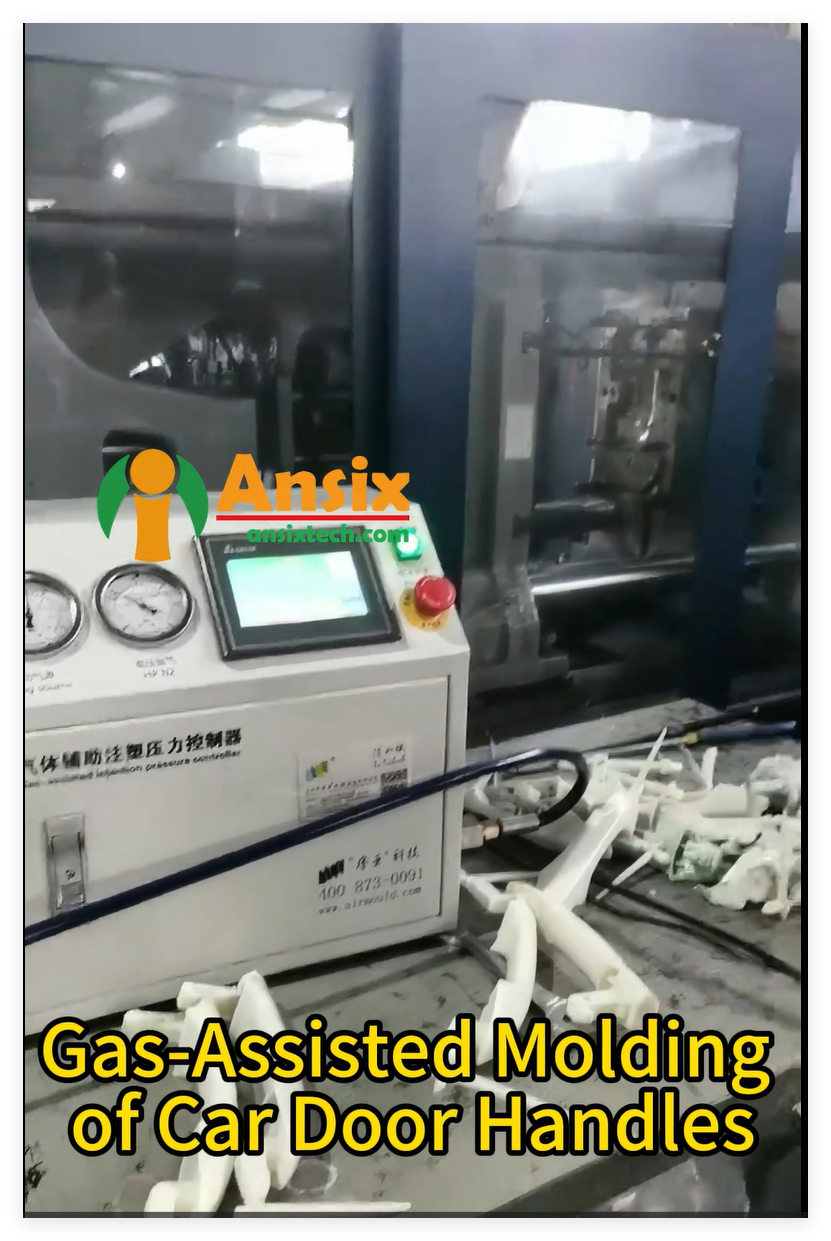
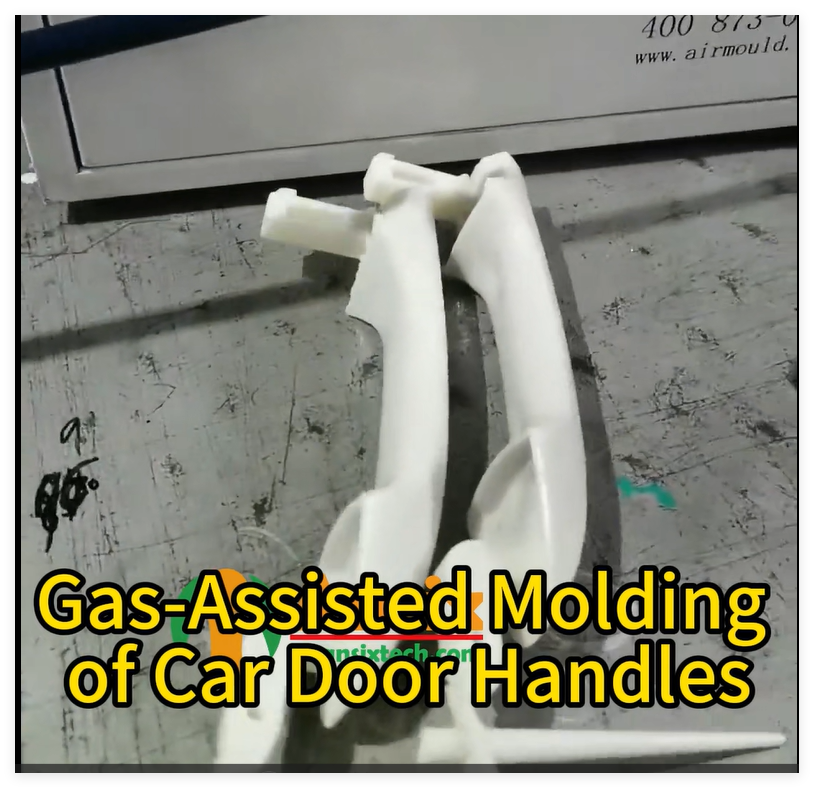
Gas-Assisted Molding of Car Door Handles

Ansix Tech Redefines Automotive Craftsmanship: Mastering Gas-Assisted Molding for Premium Car Door Handles Through 28 Years of Precision Engineering
In the fiercely competitive landscape of automotive manufacturing, the humble car door handle has been transformed from a simple mechanical latch into a complex aesthetic and functional statement. It is the first point of physical contact a driver has with their vehicle, demanding an impeccable finish, ergonomic perfection, and unwavering durability. For over 28 years, Ansix Tech has stood at the forefront of this niche, not merely as a supplier, but as a specialized architect of gas-assisted molded car door handles. In an exclusive industry deep-dive, we explore how Ansix Tech initiates complex projects, delivers unparalleled value through vertical integration, and systematically reduces hard costs for global clients without compromising the rigorous standards of the automotive sector.
The Genesis of a Project: Engineering Confidence from Concept to Cavity
The initiation of a car door handle project at Ansix Tech is never a passive exercise in following blueprints. It begins with a collaborative deep-dive into the Original Equipment Manufacturer's (OEM) specifications and the broader market standards. With nearly three decades of domain expertise, the company understands that the door handle is a "high-visibility, high-stress" component.
When a new project kicks off, Ansix Tech’s engineering team immediately engages in a comprehensive Design for Manufacturability (DFM) review. This phase is critical; it bridges the gap between an industrial designer's vision and the physical realities of polymer flow. Utilizing Advanced Mold Flow Analysis (MFA) software, the team simulates the gas-assisted injection molding process before a single gram of material is purchased or a block of steel is cut . This virtual prototyping allows Ansix Tech to predict how the polymer melt will fill the complex geometry of the handle, identify potential air traps, and, most importantly, design the gas channels that will define the part's integrity and weight reduction . By optimizing the interplay between the plastic injection and the subsequent nitrogen gas injection, they ensure that the final product will be free from the unsightly sink marks that plague traditional solid molding, setting the stage for a lifecycle of reliability.
The Science of Selection: Raw Materials for High-Performance Handles
Ansix Tech’s ability to deliver superior products is rooted in a deep understanding of materials science. The company recognizes that the selection of raw materials is not a one-size-fits-all decision; it is a strategic choice dictated by the handle's location—interior vs. exterior—and the client's performance requirements.
For exterior door handles, which are subjected to UV radiation, thermal shock, and physical impact, Ansix Tech specifies high-performance engineering thermoplastics. The material of choice often falls within the family of glass-fiber reinforced polyamides (PA6), similar to the globally recognized Akulon family . These materials, typically comprising PA6 reinforced with 20% to 30% glass fiber, offer the necessary stiffness and impact resistance. The specific grades are carefully selected for their "high-flow" characteristics, which are essential for the gas-assist process, ensuring the melt fills the mold quickly before the gas penetrates the core. For painted variants, the material must exhibit exceptionally low surface roughness and strong chemical affinity for paint adhesion. For "unpainted" or "class-A" surface handles, Ansix Tech specifies UV-stabilized grades that can withstand years of direct sunlight without fading or chalking, maintaining the deep, rich color defined by the OEM .
For interior handles, where tactile feel and cost sensitivity are paramount, materials like impact-modified Polypropylene (PP) with talc or glass fiber reinforcement are utilized. As noted in recent studies, blends such as PP+20%GF are common, offering an excellent balance between lightweight properties and the rigidity required for repeated use . Ansix Tech’s expertise lies in matching the exact chemical composition and melt flow index of these materials to the specific gas-assisted mold design, ensuring that the chemical structure of the polymer aligns perfectly with the thermodynamics of the molding process.
The Crucible of Creation: Mastering Mold Design and Machining
The soul of Ansix Tech’s manufacturing capability resides in its approach to mold design and fabrication. Creating a tool for gas-assisted molding is a distinct discipline that diverges significantly from conventional injection molding. The mold must act not just as a shaping vessel, but as a controlled environment for gas penetration.
Mold Design and Critical Considerations
Ansix Tech’s design philosophy centers on the strategic placement of gas injection points. Unlike traditional molding, where pressure is applied from the gate, gas-assist uses nitrogen to push the polymer from within. The team meticulously designs the geometry of the gas channels—usually integrated into ribs or thicker cross-sections—to guide the gas precisely where it is needed to pack out the part and eliminate shrinkage . In specific applications, such as interior handles, Ansix Tech employs advanced techniques like inverse blowing (or back-firing) gas-assist. This involves designing the mold with a specific overflow cavity. After the main cavity is filled, gas is injected to displace the molten core into an overflow well, which is then isolated using a cut-off valve, resulting in a perfectly hollow, lightweight handle with a solid surface .
The Machining Workflow and Material Selection for Molds
Building a tool that can withstand hundreds of thousands of cycles requires an unyielding commitment to precision. The workflow at Ansix Tech begins with high-grade steel, typically P20 or H13 tool steel for the core and cavity, chosen for its hardness, wear resistance, and thermal conductivity. The machining process is a ballet of computer numerical control (CNC) precision:
Rough Machining: Removing bulk material to rough out the mold base.
Heat Treatment: Stress-relieving and hardening the steel to prepare it for the rigors of production.
Finish Machining and EDM: High-speed CNC finishing and Electrical Discharge Machining (EDM) create the final shape, achieving tolerances in the micron range. The gas pin nozzles, which inject the nitrogen, are installed with extreme precision to prevent blow-back or gas leakage into unwanted areas .
Texturing and Polishing: For the cavity side that forms the outer surface, Ansix Tech collaborates with texture specialists to replicate the exact grain (fine, medium, or leather) specified by the automaker, ensuring the handle matches the interior grain of the dashboard perfectly.
Cooling Systems and Ejection Mechanisms
To support high-volume production, the thermal management of the mold is critical. Ansix Tech engineers design conformal cooling channels that follow the contour of the handle. By using techniques like baffles and bubblers in deep core pins, they ensure uniform heat extraction. This rapid, even cooling is vital for minimizing cycle times and preventing warpage in the finished part. Furthermore, the ejection system is designed with finesse. Given the aesthetic demands, ejector pins are strategically placed on hidden surfaces or inside the handle structure, utilizing lifters and angle pins to release complex undercuts without leaving unsightly marks . For gas-assist specifically, the design must also account for the sealing of the gas nozzles during the injection phase and their clean retraction or shut-off post-gas injection.
Process Optimization: The Pursuit of Efficiency and Control
With the mold fabricated, the focus shifts to the injection molding process itself—the variable that determines consistency. Ansix Tech treats the injection molding machine as a precision instrument. The optimization of parameters is a data-driven endeavor, often utilizing techniques like Taguchi Design of Experiments (DOE) and orthogonal testing to find the perfect processing window .
The key parameters under scrutiny are:
Melt Temperature: Precisely controlled to ensure the polymer flows easily but doesn't degrade.
Mold Temperature: Managed by the cooling system to control the skin formation rate.
Shot Size (Pre-injection volume): This is arguably the most critical parameter in gas-assist. Ansix Tech calculates the exact volume of polymer needed to partially fill the mold (usually 70-90%) before the gas is injected. Too much plastic, and the gas has no void to fill; too little, and the gas will blow through the skin, ruining the part .
Gas Injection Parameters: The delay time, gas pressure, and hold time are meticulously calibrated. Studies utilized by Ansix Tech show that factors like gas pressure and delay time directly influence the length and consistency of the gas bubble, impacting part strength and weight .
Cooling Time: By hollowing out the thick sections, the gas-assist process dramatically reduces the cooling time. Ansix Tech leverages this to cut cycle times by 30-50% compared to solid molding, a primary driver of cost reduction .
The result of this meticulous optimization is a component that consistently meets quality metrics. For instance, by refining the process based on CAE analysis, Ansix Tech ensures that the shrinkage and deformation of the door handle are controlled below 0.45%, guaranteeing that the part fits perfectly on the vehicle door assembly every time .
Validation, Quality, and Delivery: The Pillars of Reliability
Ansix Tech’s responsibility extends far beyond the molding floor. Before a single handle is shipped for mass production assembly, it must endure a gauntlet of validation protocols that mirror its real-world lifespan.
Rigorous Quality Validation
The validation process at Ansix Tech is a closed-loop system. It begins with first-article inspection (FAI) using Coordinate Measuring Machines (CMM) to verify dimensional accuracy against the CAD model. Following dimensional approval, parts are subjected to functional tests. The gas-assisted internal structure is examined, sometimes destructively, to ensure the hollow core is uniform and free of bubbles or irregularities. The assembly verification process is exhaustive; handles are mounted on test rigs and cycled tens of thousands of times to test for latch mechanism wear, spring fatigue, and structural integrity under extreme temperatures. For exterior parts, weatherability chambers simulate years of UV exposure and salt spray corrosion.
Quality Control and Packaging
Throughout production, Statistical Process Control (SPC) is employed. Sensors in the mold cavity monitor pressure and temperature in real-time, flagging any deviation from the ideal process window. This ensures that every part, not just the first, meets the stringent standards. For packaging, Ansix Tech utilizes custom-engineered trays that isolate each handle, preventing surface scratches or damage during transit. The packaging is designed for "right to line" delivery, meaning parts can be taken directly from the shipping container to the automotive assembly line without repackaging, saving the client time and labor.
Boosting Capacity and Guaranteeing Delivery
Meeting the just-in-time (JIT) demands of automotive giants requires a production strategy that is both agile and robust. Ansix Tech boosts production capacity through a multi-pronged approach. First, by optimizing the gas-assist process, they shorten cycle times, effectively increasing the output of each molding machine. Second, they employ multi-cavity tools—often running four or eight impressions per cycle—to maximize throughput . Third, their facility is equipped with a range of injection molding machines, allowing them to dedicate specific presses to high-volume, long-running programs while maintaining flexibility for prototypes or low-volume variants. By combining predictive maintenance on their molds and machines with a strategically managed supply chain for raw materials, Ansix Tech consistently guarantees delivery deadlines, providing clients with the confidence to run their assembly lines without interruption.
Cost Reduction: Engineering Value into Every Handle
In an era of margin compression, Ansix Tech’s ability to significantly reduce "hard costs" for its clients is its most compelling value proposition. This is not achieved through corner-cutting, but through strategic optimization.
Material Savings: The gas-assist process creates a hollow core, reducing the weight of the handle by 20% to 50% compared to a solid part . For a client ordering millions of units annually, the savings in polymer resin alone translate directly to the bottom line.
Lower Tooling and Machine Costs: Because gas-assist requires lower injection pressure, the molds experience less stress. This allows Ansix Tech to utilize high-quality, but potentially less exotic, steel grades and extends the lifespan of the tool. Furthermore, the reduced clamping force required means that large handles can be produced on smaller, more energy-efficient injection molding machines, reducing capital expenditure and energy bills .
Consolidation of Parts and Elimination of Secondary Operations: By integrating features into a single molded part (thanks to the design freedom of gas-assist), Ansix Tech eliminates the need for assembling multiple components. Furthermore, because the process eliminates sink marks, there is no need for secondary finishing or filling operations, which are costly and time-consuming.
Reduced Scrap Rates: Through rigorous Mold Flow Analysis and process optimization, Ansix Tech launches tools "right the first time." This minimizes the scrap generated during tryouts and ensures a stable, repeatable production process that yields a higher percentage of perfect parts.
Conclusion: The Ansix Tech Advantage
With over 28 years of experience etched into its corporate DNA, Ansix Tech does more than just mold plastic; it molds trust. By mastering the complexities of gas-assisted injection molding—from the initial DFM and material science to the intricacies of mold machining and high-volume production—the company delivers car door handles that are lighter, stronger, and more beautiful. Ansix Tech stands as a definitive partner to the automotive industry, turning the challenges of modern design into reliable, cost-effective realities, and ensuring that every time a driver grips a handle, they feel the quality of nearly three decades of dedicated engineering.





Ansix Tech Co Ltd
If you have any plans related to Gas-Assisted Molding of Car Door Handles , you can contact us at any time. We will turn your ideas into reality, let you realize your dreams, and obtain large orders from the market. Our contact information is info@ansixtech.com. Or contact our CTO, mail: stephen@ansixtech.com
#www.ansixtech.com #ansixtech.com #Gas-Assisted Molding of Car Door Handles #Gas-Assisted Molding of Car Door Handles#Gas-Assisted Molding of Car Door Handles injection molding company #Gas-Assisted Molding of Car Door Handles injection mold companies #Ansix #Ansix moulds #Ansix china #Ansix tech china #Ansix tech company #Ansix facotry #Ansix Tech #Ansix molds #Ansix injection molding #Ansix mold factory #injection molding Gas-Assisted Molding of Car Door Handles #Ansix mold factory #Gas-Assisted Molding of Car Door Handles china #Gas-Assisted Molding of Car Door Handles molds #injection factory #Gas-Assisted Molding of Car Door Handles injection molding #Gas-Assisted Molding of Car Door Handles injection molding factory #injection molding company #Gas-Assisted Molding of Car Door Handles injection mold companies #Gas-Assisted Molding of Car Door Handles#Gas-Assisted Molding of Car Door Handles mold limited #Ansix mold china #Ansix companies #Ansix company China #Gas-Assisted Molding of Car Door Handles facotry #Ansix Tech #Ansix Tech mould #Gas-Assisted Molding of Car Door Handles injection moulding #injection moulding company #Ansix Gas-Assisted Molding of Car Door Handles parts injection mold companies #Gas-Assisted Molding of Car Door Handles #Gas-Assisted Molding of Car Door Handles china #Gas-Assisted Molding of Car Door Handles china factory #Ansix moulding companies #Ansix molding company #Gas-Assisted Molding of Car Door Handles injection moulding facotry #Ansix Tech mold #Gas-Assisted Molding of Car Door Handles mould #Gas-Assisted Molding of Car Door Handles plastic injection molding #ansix plastic mold #Mold manufacturing #Gas-Assisted Molding of Car Door Handles parts manufacturing #Gas-Assisted Molding of Car Door Handles plastic parts factory #Gas-Assisted Molding of Car Door Handles injection parts mold #Gas-Assisted Molding of Car Door Handles PRECISION MANUFACTURING #Gas-Assisted Molding of Car Door Handles #China mold #Gas-Assisted Molding of Car Door Handles injection moulding china #Gas-Assisted Molding of Car Door Handles mould china #china precision mold #mold in china #Gas-Assisted Molding of Car Door Handles mold china #Precision molds #High-precision molds #Gas-Assisted Molding of Car Door Handles #Injection molds #Gas-Assisted Molding of Car Door Handles Factory #Gas-Assisted Molding of Car Door Handles Company #Super Large Injection Mold Factory #Large Tonnage Injection Molding Factory #Gas-Assisted Molding of Car Door Handles Company #Gas-Assisted Molding of Car Door Handles Factory #2800T Injection Molding Factory #3000 Ton Injection Molding #4500 Ton Injection Molding Factory #Large Mold Injection Molding #Large Plastic Mold Injection Molding Factory #Large Injection Mold Manufacturer #Plastic Mold Factory #Injection Mold #Plastic Mold