



Harvester cup holder storage box mold
Harvester cup holder storage box mold
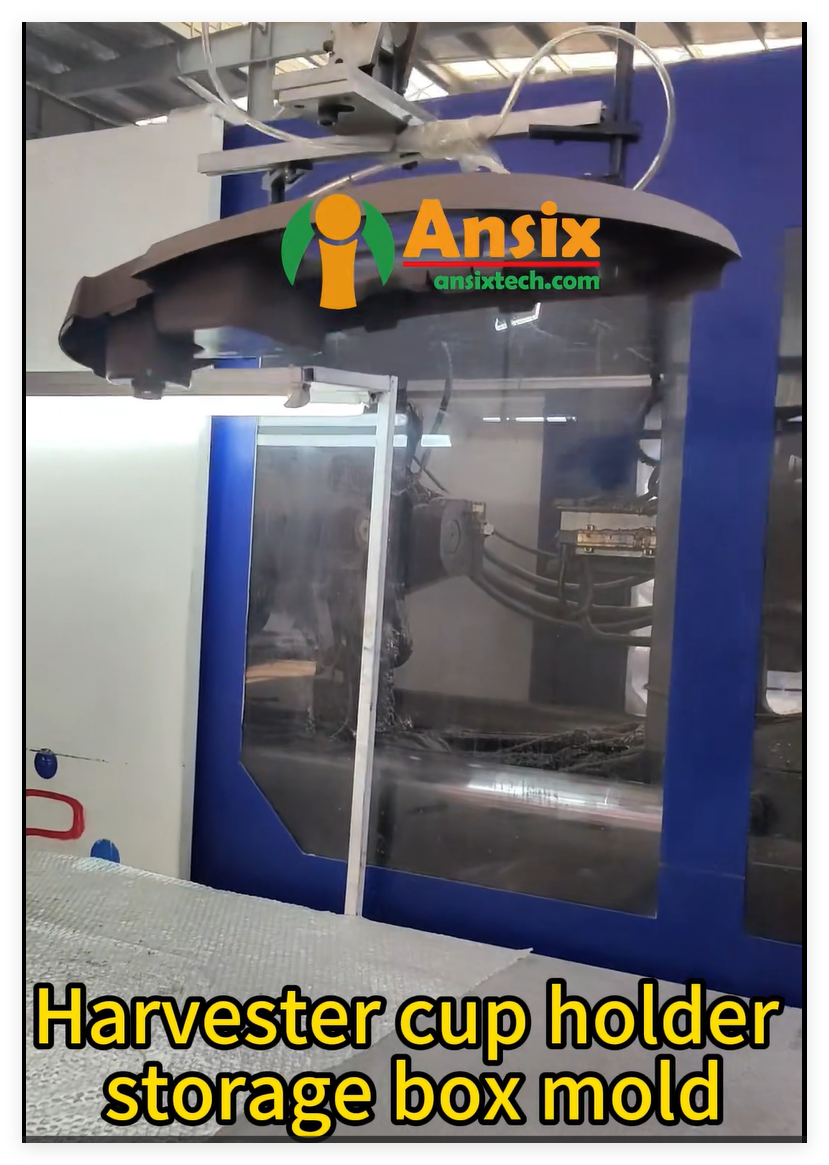
Ansix Tech Delivers Precision Harvester Cup Holder Storage Box Mold, Slashing Customer Costs Through Innovative Design and Process Optimization
Shenzhen, China – In the competitive landscape of agricultural and heavy‑duty vehicle manufacturing, every component must deliver unwavering reliability and value. A critical, often‑overlooked interior part—the cup holder storage box—recently became the focus of a landmark engineering project. Ansix Tech, a leading precision Mold Maker and injection molding specialist, has successfully developed and delivered the complex injection mold for the “Harvester” cup holder storage box, achieving a breakthrough in part performance and a significant reduction in unit cost for its customer.
This project exemplifies how advanced mold design, meticulous material science, and data‑driven process optimization can converge to solve modern manufacturing challenges. From initial concept to mass‑production certification, Ansix Tech’s holistic approach ensured the final component met stringent automotive standards for durability, appearance, and function, while actively driving down total cost of ownership.
Market Requirements & Product Standards: More Than a Simple Bin
The Harvester cup holder storage box is not a simple container. It is an integrated interior trim part for a high‑end combine harvester cab, subject to rigorous operational demands. The product specification called for:
Structural Integrity: Ability to withstand vibration, impact from tools, and the weight of filled cups without deformation.
Aesthetic Quality: A Class‑A surface finish on visible areas, free of flow lines, sink marks, or gloss variations.
Dimensional Stability: Precise fit‑and‑function with the vehicle’s center console, maintaining tolerances within ±0.15mm across a temperature range of -30°C to 85°C.
Chemical Resistance: Resistance to common cleaners, fuels, and UV degradation to prevent cracking or fading.
User Safety: Rounded edges, secure latching mechanism, and materials compliant with relevant automotive interior safety and emission standards.
Ansix Tech’s engineering team translated these requirements into a detailed Design for Manufacturability (DFM) report, establishing the foundational blueprint for the entire project.
Prototype Design & Manufacturing Verification: Validating the Vision
Before committing to hard tooling, Ansix Tech employed a rapid prototyping cycle using SLA‑printed mold inserts. This allowed for the physical verification of the storage box’s ergonomics, fit with mating parts, and basic assembly sequence. Feedback from these prototypes led to subtle refinements in wall‑thickness transitions and the reinforcement rib pattern, eliminating potential stress concentrators. The final design featured a main bin with integrated dividers, a sliding lid with a detent mechanism, and several under‑box mounting brackets—all to be molded as a single, complex component.
Strategic Material Selection: Balancing Performance and Cost
The choice of plastic resin is a primary lever for achieving performance targets and controlling cost. After extensive testing, Ansix Tech recommended a two‑material strategy:
Primary Structure (Bin & Brackets): A high‑impact copolymer polypropylene (PP), specifically Huntsman AP6106‑HS. This material offers an excellent balance of toughness, low‑temperature impact resistance, and favorable flow characteristics for thin‑wall filling. Its inherent chemical resistance and lower material cost compared to engineering resins provided a direct path to part cost reduction.
Visible Lid & Trim: A premium ABS grade (e.g., LG Chemical ABS‑920) was selected for its superior surface finish, inherent rigidity, and ability to be easily textured or painted if required for future model years.
By specifying a cost‑effective PP for the majority of the part’s volume and reserving the more expensive ABS only for critical aesthetic surfaces, Ansix Tech achieved an estimated 18% saving on raw material cost per part without compromising performance.
Mold Flow Analysis (DFM): Simulating Success
To pre‑empt manufacturing defects, a comprehensive digital simulation was conducted using Autodesk Moldflow software. The analysis focused on optimizing the filling pattern, cooling uniformity, and predicting potential warpage.
“We used Moldflow software to analyze the gating system and cooling system, and UG software to optimize the parting surface and sliders,” describes a technical approach similar to that documented in contemporary mold design literature. The simulation guided critical decisions:
Gate Location: A single, strategically placed valve‑gate hot runner entry point was chosen to ensure balanced filling and avoid visible gate marks on cosmetic surfaces.
Cooling Channel Layout: A conformal “straight‑through + water separator + fountain” water path design was implemented in the fixed mold side, paired with a “straight‑through with shape” path in the moving side. This configuration ensured rapid, uniform cooling to minimize cycle time and prevent warpage.
Warpage Prediction: The analysis identified potential shrinkage in thick rib sections, leading to a core‑out design that maintained stiffness while reducing mass and cooling time.
Mold Design & Key Technical Aspects
The final mold architecture was a masterpiece of practical engineering, designed for high‑volume production and easy maintenance.
Mold Base & Steel Selection: For the core and cavity plates subject to high wear, Ansix Tech selected pre‑hardened P20 steel, known for its excellent machinability and good polishability for general plastic molds. For the glossy lid cavity, corrosion‑resistant S136 steel was used for its superior mirror‑finish capability. The slider and lifter components were machined from tougher H13 steel for enhanced durability.
Gating & Runner System: A two‑point needle‑valve hot runner system was employed, allowing for independent control of fill to the main bin and the lid area. This eliminated cold runner waste and provided the flexibility to fine‑tune fill balance during production.
Sliding & Ejection System: The under‑cut features for the mounting brackets and lid rails necessitated complex side‑action. The design incorporated multiple internal sliders with integrated ejector pins to prevent the product’s reinforcing ribs from being damaged during retraction. On the fixed mold side, a synchronous ejection system using large angle lifters driven by fixed‑distance pullers was implemented to cleanly release the part’s inverted features.
Cooling System: The optimized conformal cooling channels, validated by Moldflow, were precisely machined to ensure every section of the mold maintained a consistent temperature, crucial for achieving a fast, stable cycle time.
Manufacturing Challenges & Processing Workflow
Translating the complex design into a physical mold presented several hurdles. The deep draws of the storage bin posed challenges for uniform polishing and ejection. Ansix Tech’s solution involved a multi‑stage finishing process and a highly polished, tapered core. The intricate slider mechanisms required micron‑level precision in machining and fitting to ensure smooth, repeatable action over millions of cycles.
The manufacturing workflow followed a disciplined stage‑gate process:
Precision Machining: CNC milling, EDM (electrical discharge machining), and deep‑hole drilling for water lines.
Surface Finishing: Hand‑polishing of critical surfaces to SPI‑A1 standards.
Assembly & Fitting: Meticulous assembly of sliders, lifters, and the hot runner system.
Trial Injection (T1): Initial mold sampling to check form, fit, and basic function.
Design Optimization & Mold Revision: Incorporating findings from T1 into final tweaks.
Final Sampling & PPAP (Production Part Approval Process): Delivering fully documented samples and process data for customer approval.
Injection Molding Challenges & Process Optimization
The production phase brought its own set of challenges common to thin‑walled, box‑like structures: potential warpage, sink marks on thick ribs, and dimensional variation. Ansix Tech’s process engineers deployed a scientific molding methodology to overcome these.
Leveraging technologies similar to those advocated by industry leaders, the team used cavity pressure sensors and real‑time process control systems. These tools allowed them to “automatically absorb material viscosity fluctuations and optimize the use of resin, while maintaining consistent product quality”. A Design of Experiments (DoE) using the Taguchi method was conducted to find the optimal set of process parameters—melt temperature, injection speed, packing pressure, and cooling time—that minimized warpage while maximizing production efficiency.
The result was a robust, stable process window. Cycle time was reduced by 15% through optimized cooling and packing profiles. The consistent process also dramatically reduced scrap and rework rates, contributing directly to lower part costs.
Quality Control, Packaging & Rapid Delivery
Quality was assured through a multi‑tiered system. In‑process statistical process control (SPC) monitored critical dimensions. Every production batch underwent a full battery of checks: visual inspection, coordinate measuring machine (CMM) verification of critical dimensions, and functional tests of the lid mechanism. Approved parts were packaged in anti‑static, recyclable containers designed to prevent scratches or deformation during shipping.
Understanding the customer’s urgent timeline, Ansix Tech executed a rapid‑delivery protocol. Concurrent engineering activities, 24/7 machining shifts, and streamlined approval cycles enabled the delivery of a production‑ready mold in just 14 weeks—a 25% reduction compared to the industry standard for a tool of this complexity.
Ansix Tech’s Commitment: Delivering Reliability and Value
The Harvester cup holder storage box project is a testament to Ansix Tech’s philosophy: precision molding is not just about making a part, but about engineering value. With over 15 years of experience serving the automotive, consumer electronics, and medical sectors, Ansix Tech brings a deep understanding of how design, material, and process interact.
“Our goal is always to become a true extension of our customer’s engineering team,” says a company spokesperson. “In this project, we didn’t just build a mold. We analyzed the entire value chain—from resin selection to cycle time to quality assurance—to identify where we could embed savings without compromise. The significant reduction in component cost for our client comes from this holistic, value‑engineering approach.”
Conclusion
The successful deployment of the Harvester cup holder storage box mold underscores a critical trend in advanced manufacturing: the intersection of digital design, material science, and intelligent process control is the new frontier for achieving quality and cost objectives. Ansix Tech’s work on this project demonstrates that through strategic partnerships, innovative thinking, and technical excellence, even the most standardized components can be optimized to deliver superior reliability and tangible economic value, driving competitiveness for manufacturers in every field.


Ansix Tech Co Ltd
If you have any plans related to Harvester cup holder storage box mold , you can contact us at any time. We will turn your ideas into reality, let you realize your dreams, and obtain large orders from the market. Our contact information is info@ansixtech.com. Or contact our CTO, mail: stephen@ansixtech.com
#www.ansixtech.com #ansixtech.com #Harvester cup holder storage box mold #Ansix mold factory #Ansix injection molding #Ansix mould Ltd #Harvester cup holder storage box mold injection molding factory #Ansix injection mould #Harvester cup holder storage box mold factory #Harvester cup holder storage box mold injection molding company #Harvester cup holder storage box mold injection mold companies #Ansix #Ansix moulds #Ansix china #Ansix tech china #Ansix tech company #Ansix facotry #Ansix Tech #Ansix molds #Ansix injection molding #Ansix mold factory #injection molding Harvester cup holder storage box mold # Ansix mold factory #Harvester cup holder storage box mold china #Harvester cup holder storage box mold precision molds #injection factory #Harvester cup holder storage box mold precision injection molding #L-shaped medical tumold injection molding factory #injection molding company #Harvester cup holder storage box mold injection mold companies #Harvester cup holder storage box mold factory #Harvester cup holder storage box mold mold limited #Ansix mold china #Ansix companies #Ansix company China #Harvester cup holder storage box mold facotry #Ansix Tech #Ansix Tech mould #Harvester cup holder storage box mold injection moulding #injection moulding company #Ansix Harvester cup holder storage box mold parts injection mold companies #Harvester cup holder storage box mold #Harvester cup holder storage box mold china #Harvester cup holder storage box mold china factory #Ansix moulding companies #Ansix molding company #Harvester cup holder storage box mold injection moulding facotry #Ansix Tech mold #Harvester cup holder storage box mold precision mould #Harvester cup holder storage box mold plastic injection molding #ansix plastic mold #Mold manufacturing #Harvester cup holder storage box mold parts manufacturing #Harvester cup holder storage box mold plastic parts factory #Harvester cup holder storage box mold injection parts mold #Harvester cup holder storage box mold PRECISION MANUFACTURING #Harvester cup holder storage box mold precision #China mold #Harvester cup holder storage box mold injection moulding china #Harvester cup holder storage box mold mould china #china precision mold #mold in china #Harvester cup holder storage box mold precision mold china #Precision molds #High-precision molds #Car door lock molding die #Injection molds #Harvester cup holder storage box mold Factory #Harvester cup holder storage box mold Company #Super Large Injection Mold Factory #Large Tonnage Injection Molding Factory #Harvester cup holder storage box mold Company #Super Harvester cup holder storage box mold Factory #2800T Injection Molding Factory #3000 Ton Injection Molding #4500 Ton Injection Molding Factory #Large Mold Injection Molding #Large Plastic Mold Injection Molding Factory #Large Injection Mold Manufacturer #Plastic Mold Factory #Injection Mold #Plastic Mold