



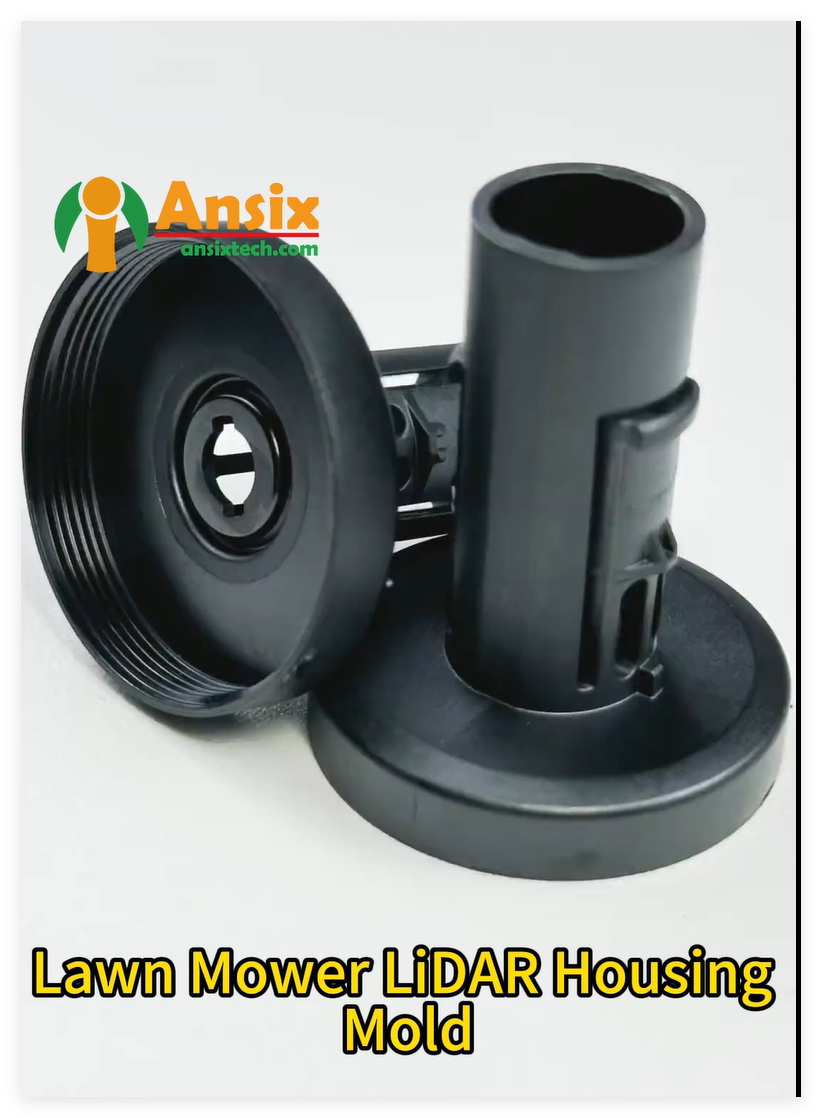
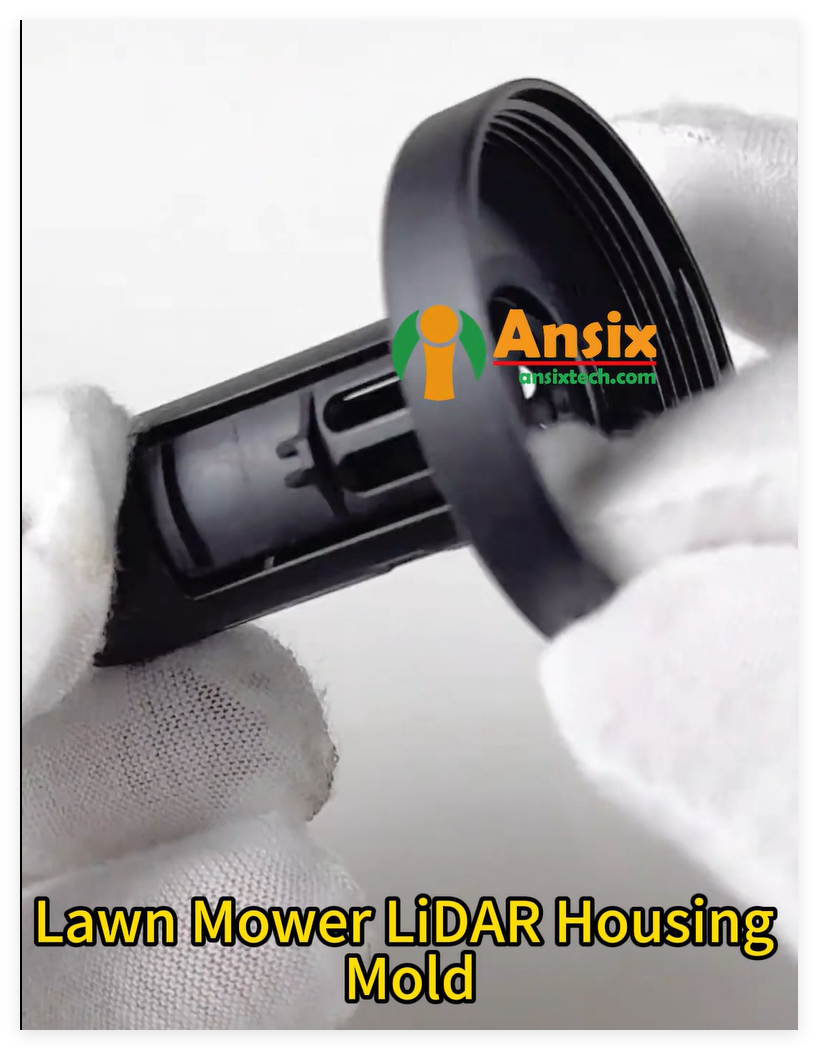
Lawn Mower LiDAR Housing Mold
Lawn Mower LiDAR Housing Mold

Precision in a Perception-Driven World: How Ansix Tech is Redefining the Lawn Mower LiDAR Housing Mold Sector
In the rapidly evolving landscape of autonomous outdoor power equipment, the lawn mower has undergone a quiet but profound transformation. No longer a simple assembly of steel blades and a combustion engine, the modern robotic lawn mower is a sophisticated convergence of mechatronics, artificial intelligence, and photonics. At the heart of this autonomy lies the Light Detection and Ranging (LiDAR) system—the “eyes” of the machine. For these eyes to function with millimeter-level accuracy in the harsh, debris-filled environment of a lawn, they require a protective housing of exceptional precision. This is where the unseen industrial hero emerges: the Lawn Mower LiDAR Housing Mold.
For over 28 years, Ansix Tech has positioned itself not merely as a supplier but as a strategic partner in this niche, yet critically important, sector. Specializing in the design and manufacturing of Lawn Mower LiDAR Housing Mold products, Ansix Tech has built a reputation for solving the seemingly impossible equation: delivering optical-grade precision at the scale of mass production, while simultaneously driving down the hard costs that weigh on their clients’ balance sheets.
This article delves into the technical rigor and strategic engineering that define Ansix Tech’s approach—from the initiation of complex mold projects to the final validation of components designed to survive the relentless demands of the outdoors.
The Genesis of Precision: Initiating LiDAR Housing Mold Projects
The journey of a LiDAR housing mold at Ansix Tech does not begin with a CAD file, but with a consultative analysis of the end-user environment. LiDAR units on lawn mowers occupy a unique operational niche. Unlike automotive LiDAR, which is often shielded by a vehicle’s grille or windshield, lawn mower LiDAR is exposed. It must withstand direct impacts from pebbles thrown by the blades, constant UV radiation, chemical fertilizers, and the vibration of uneven terrain.
Ansix Tech’s project initiation phase is defined by what they call “application-first engineering.” When a client approaches them with a concept for a new robotic mower platform, Ansix Tech deploys a cross-functional team of mold flow analysts, material scientists, and mechanical design engineers. They do not simply wait for finalized blueprints; they engage in Design for Manufacturability (DFM) collaboration from day one.
The initiation phase focuses on de-risking the geometry. LiDAR housings are unique in that they often consist of two distinct functional zones: the optical window and the structural base. The optical window requires absolute transparency and minimal internal stress to prevent signal refraction, while the structural base requires high impact resistance and thermal stability to dissipate heat from the LiDAR’s internal electronics. Ansix Tech’s expertise lies in unifying these two disparate requirements into a single, manufacturable mold geometry.
The Value Proposition: Design, Development, and Manufacturing Synergy
Ansix Tech’s value proposition to the lawn mower industry is rooted in vertical integration and deep historical expertise. With nearly three decades in injection molding, they have cultivated a manufacturing ecosystem where design, development, and production are not siloed departments but a continuous feedback loop.
The value delivered to clients manifests in three specific areas:
Risk Mitigation: By controlling the entire lifecycle—from prototype design through to assembly verification—Ansix Tech eliminates the finger-pointing that often occurs when using separate design and manufacturing vendors. If a warp appears in the optical window during sampling, Ansix Tech’s team can immediately trace it back to cooling channel design, gate placement, or material crystallization rates, resolving the issue in days rather than months.
Time-to-Market Acceleration: In the competitive robotics market, being first to market with a new generation of navigation technology is paramount. Ansix Tech’s parallel processing model allows for the manufacturing of Prototype Molds while final validation is still ongoing. This overlap ensures that by the time the design is frozen, the production tooling is ready for qualification.
Hard Cost Reduction: This is the cornerstone of their client relationships. In the LiDAR housing sector, “hard costs” refer to the tangible, direct expenses of production—material spend, cycle time labor, secondary operations, and scrap rates. Ansix Tech has demonstrated a consistent ability to reduce these costs by 15–25% through strategic optimization, a feat achieved without compromising the optical or structural integrity of the component.
Confronting the Specific Challenges of LiDAR Housings
The production of LiDAR housings presents a unique constellation of technical challenges that standard injection molding suppliers often fail to anticipate. Ansix Tech has built its niche by systematically resolving these pain points.
Challenge 1: Optical Clarity and Weld Lines
For a LiDAR housing, the lid or window must exhibit near-perfect light transmission (typically >92% for specific wavelengths like 905nm or 1550nm). Weld lines—inevitable in complex geometries—act as optical obstructions, scattering the laser signal. Ansix Tech resolves this through precise manipulation of melt front temperature and strategic venting, ensuring that if a weld line cannot be eliminated, it is positioned in a non-critical zone away from the emitter or receiver apertures.
Challenge 2: Warpage and Flatness
The structural integrity of the LiDAR housing is critical for calibration. Even a warp of 0.1mm over the mounting flange can throw off the unit’s spatial mapping, causing the mower to miss patches of grass or collide with obstacles. Ansix Tech’s Mold Design addresses warpage through differential cooling strategies, balancing shrinkage rates between the glass-filled structural sections and the amorphous polymer optical sections.
Challenge 3: Environmental Sealing
Lawn mowers operate in wet, dusty conditions. The housing must accommodate a gasket or ultrasonic weld to achieve IPX6 or IPX7 ingress protection. Achieving this requires maintaining micron-level tolerances on the sealing groove dimensions. Ansix Tech utilizes high-speed machining (HSM) to ensure that the steel in the mold cavity is finished to a surface texture that allows for consistent compression of silicone or TPE gaskets.
The Alchemy of Materials: Raw Material Selection for LiDAR Housings
Ansix Tech’s manufacturing strategy is anchored in a deep understanding of polymer science. The selection of raw materials for Lawn Mower LiDAR Housing Mold components is a delicate balance of optical, mechanical, and chemical properties.
For the Optical Window/Lid, Ansix Tech frequently works with Polycarbonate (PC) grades, specifically those classified for optical applications. While PC offers excellent clarity and impact resistance, it is susceptible to UV degradation. For outdoor applications, they specify UV-stabilized PC grades or employ co-injection molding techniques where the outer layer utilizes a weatherable acrylic (PMMA) or a specialized PC copolymer like LEXAN™ EXL resin. These materials maintain ductility at low temperatures—critical for winter storage or early-spring operation—while retaining the high light transmission required for LiDAR.
For the Structural Base, the requirements shift to rigidity, chemical resistance, and thermal management. Here, Ansix Tech often employs Glass-Filled Polybutylene Terephthalate (PBT) or Polyamide (PA66) . A specific grade frequently utilized is PBT-GF30 (30% glass fiber reinforced). This material offers superior stiffness, low moisture absorption (crucial for maintaining dimensional stability in humid lawn conditions), and excellent chemical resistance against lawn fertilizers, oils, and pesticides.
In more demanding high-heat scenarios—where the LiDAR unit’s processing chip generates significant thermal load—Ansix Tech may recommend Polyetherimide (PEI) or Polyethersulfone (PESU) . While more expensive, these amorphous thermoplastics offer exceptional thermal stability (HDT > 200°C) and maintain flatness under load, ensuring the LiDAR’s calibration remains true even during peak summer operation.
Mold Flow Analysis (DFM): The Blueprint for Success
Before a single block of steel is cut, every project undergoes rigorous Mold Flow Analysis (MFA) . This is not a cursory step at Ansix Tech; it is the foundational blueprint that dictates the entire manufacturing strategy. The DFM (Design for Manufacturability) report generated by their engineers is exhaustive, often spanning over 50 pages, covering:
Filling Analysis: Predicting the melt front advancement to ensure the optical window fills uniformly. Ansix Tech uses this analysis to determine the optimal injection speed profile—slow through the gate to prevent shear-induced birefringence (which creates optical distortion), then fast to fill the thin-walled sections before the material freezes off.
Pressure Drop Analysis: Ensuring that the clamping tonnage is sufficient to hold the mold shut against the injection pressure, preventing flash (excess plastic bleeding out of the cavity) which would compromise the sealing surfaces.
Air Trap and Venting Prediction: Identifying zones where air becomes trapped. For LiDAR housings, trapped air causes “burn marks” on optical surfaces. Ansix Tech’s designs incorporate precisely placed venting channels (often 0.02mm to 0.03mm deep) to evacuate air without allowing plastic to escape.
Critical Considerations in Mold Design
The mold design phase is where Ansix Tech’s 28 years of experience crystallizes into tangible technical advantage. The company views the mold not as a tool, but as a manufacturing asset that must balance longevity, precision, and cycle efficiency.
Gate Location & Design:
For LiDAR housings, gate location is a matter of optical physics. Ansix Tech typically employs fan gates or diaphragm gates for optical components. A fan gate spreads the melt uniformly across the width of the part, reducing molecular orientation in the flow direction. For housings requiring gate vestige removal (to ensure a smooth exterior surface), they utilize hot runner systems with valve gates. These allow for “sequential valving,” where gates open and close in sequence to control the weld line location, effectively “tuning” the mold to hide flow lines beneath the mounting bracket or logo features, away from the optical aperture.
Ejection Mechanisms:
LiDAR housings often feature thin walls (1.5mm to 2.5mm) and delicate clip features for PCB mounting. Aggressive ejection can warp these features. Ansix Tech employs stripper plates rather than traditional ejector pins for large, flat surfaces. Stripper plates push the entire perimeter of the part evenly, eliminating pin marks on cosmetic surfaces and distributing the ejection force to prevent deformation of the thin optical lid.
The Technical Nuances of Mold Manufacturing and Machining
The manufacturing of the mold itself requires a level of precision that standard machine shops cannot achieve. Ansix Tech operates a dedicated mold manufacturing facility equipped with high-speed CNC machining centers and Electrical Discharge Machining (EDM) .
The challenge in machining LiDAR housing molds lies in the texture and polish requirements. The optical cavity—the section that forms the LiDAR window—must be polished to a SPI A-1 diamond polish (surface roughness Ra < 0.012µm). Achieving this on complex geometries with deep ribs is challenging. Ansix Tech utilizes hard milling (machining steel in its hardened state, 48-52 HRC) to achieve superior surface finishes that reduce the need for extensive hand polishing, which can introduce geometric inconsistencies.
For the structural base cavity, where texture is often required for adhesion or aesthetics, they employ EDM texturing . This process allows for precise replication of grain patterns onto the steel, ensuring consistent release and aesthetic uniformity across millions of cycles.
Cooling System and Thermal Regulation
Injection molding is, at its core, a heat transfer process. The speed at which a mold can extract heat dictates the cycle time and, consequently, the production cost. For LiDAR housings, cooling is also critical for dimensional stability.
Ansix Tech’s mold designs feature conformal cooling channels. Unlike traditional straight-line drilled cooling lines, conformal cooling channels follow the contour of the part. For the dome-like geometry of a LiDAR housing, this is essential.
Using additive manufacturing or advanced 5-axis machining, Ansix Tech creates cooling circuits that run parallel to the optical surface. This ensures uniform temperature distribution across the window, eliminating hot spots that cause differential shrinkage. A uniform cooling profile ensures that the optical window remains flat and that the mounting bosses for the LiDAR PCB are dimensionally stable. By optimizing the cooling system, Ansix Tech frequently reduces cycle times by 20–30% compared to conventionally cooled molds, directly contributing to the hard cost reduction they promise clients.
Runner, Gate, and Venting Systems for Mass Production
Transitioning from prototype to mass production requires a runner and gate system designed for automation and efficiency. Ansix Tech utilizes hot runner systems with thermal gate technology. This approach serves a dual purpose: it eliminates the plastic sprue (reducing material waste, which directly cuts raw material hard costs) and it allows for fully automated operation.
In high-cavity molds (multi-cavity tools for high-volume mowers), maintaining balance across cavities is critical. Ansix Tech designs naturally balanced runners—where the flow path length from the sprue to each cavity is geometrically identical. This ensures that each LiDAR housing produced in a 2+2 or 4+4 configuration experiences the same pressure, temperature, and packing conditions, guaranteeing part-to-part consistency.
Venting is another often-overlooked critical element. For LiDAR housings, inadequate venting leads to “dieseling” (compression ignition of trapped air), which carbonizes the plastic and leaves black specks on optical surfaces. Ansix Tech integrates peripheral venting along the parting line and pin venting in deep rib sections, ensuring that no optical surface is compromised by trapped gas.
Validation: Ensuring Real-World Survivability
The validation phase for a Lawn Mower LiDAR Housing Mold is exhaustive. Ansix Tech does not simply validate the mold; they validate the manufacturing process and the final product’s resilience.
The validation workflow includes:
First Article Inspection (FAI): Utilizing Coordinate Measuring Machines (CMM) and optical comparators, every critical dimension—especially the sealing groove width, the optical window thickness, and the PCB mounting boss heights—is measured against the CAD model. Tolerances are typically held to ±0.02mm on critical features.
Process Capability Study (Cpk): For mass production readiness, Ansix Tech runs trial batches to calculate Cpk values. A Cpk of >1.33 is the baseline for critical dimensions, ensuring that even with normal process variation, the parts will remain within spec.
Environmental Stress Testing: Samples are subjected to thermal shock (alternating between -40°C and +85°C), UV exposure (simulating years of sunlight), and chemical resistance tests (immersing the housing in common lawn chemicals to ensure no stress cracking occurs).
Optimizing the Injection Molding Workflow
In the production phase, Ansix Tech focuses on efficiency gains and cost control. They have implemented Industry 4.0 principles in their molding facility. Sensors on the injection molding machines monitor barrel temperature, hydraulic pressure, and cavity pressure in real-time.
For LiDAR housings, cavity pressure sensors are a game-changer. By monitoring the pressure inside the mold during the packing phase, Ansix Tech can detect fluctuations in material viscosity or machine performance instantaneously. If a variation is detected, the system automatically adjusts the holding pressure to compensate, ensuring that every shot is identical. This closed-loop control system reduces scrap rates to below 1%—a significant factor in hard cost reduction, as material waste and rework are eliminated.
Quality Control, Packaging, and Rapid Delivery
Quality assurance at Ansix Tech is a 360-degree protocol. Beyond dimensional checks, they utilize non-destructive testing for optical components. This includes:
Haze Meters: To quantify the clarity of the optical window, ensuring light transmission meets LiDAR specifications.
Stress Viewers (Polariscope): To visualize residual stress in the molded parts. High residual stress in an optical window can lead to birefringence, distorting the LiDAR signal. Ansix Tech uses the polariscope to fine-tune processing parameters until the stress patterns are minimized.
Packaging solutions are designed with logistics and assembly in mind. For delicate LiDAR housings, particularly those with pre-installed gaskets or optical coatings, Ansix Tech designs custom trays that prevent part-on-part contact. These trays are designed to be stackable and compatible with robotic pick-and-place systems at the client’s assembly facility.
To ensure rapid delivery, Ansix Tech maintains a strategic inventory of raw materials—specifically the high-grade PC and PBT materials used for LiDAR housings. By stocking these materials (which often have lead times of 12–16 weeks from specialty chemical companies), they can offer lead times that are 30–40% shorter than industry standard.
The Reliability Factor: 28 Years of Experience
The cumulative value of Ansix Tech lies in their longevity. With 28 years of manufacturing expertise, they have witnessed the evolution of the plastics industry from manual machining to fully automated, data-driven manufacturing.
This depth of experience translates into institutional knowledge that no textbook can provide. They understand that a LiDAR housing for a lawn mower sold in Arizona requires a different UV stabilizer package than one sold in Scandinavia. They know that the “sweet spot” for gate size on a PC optical window is 1.2mm to 1.8mm—wide enough to prevent shear degradation, narrow enough to facilitate clean break-off.
Their reliability is proven in the numbers: zero-defect shipments, adherence to ISO 9001:2015 quality management standards, and a track record of maintaining tooling for multi-year production runs without degradation in part quality.
Conclusion: Engineering the Future of Autonomous Mowing
As the lawn care industry shifts towards fully autonomous, GPS-guided, and LiDAR-reliant machinery, the demand for precision components will only intensify. The LiDAR housing is no longer a simple plastic cover; it is a mission-critical component that bridges the gap between digital perception and physical action.
Ansix Tech has demonstrated that by focusing on the specific needs of this sector—by mastering the nuances of optical-grade mold manufacturing, by strategically selecting materials that withstand the elements, and by relentlessly optimizing processes to reduce hard costs—they are not just manufacturing parts. They are enabling the autonomy revolution.
For clients seeking to bring next-generation robotic lawn mowers to market, the choice is no longer just about finding a mold maker. It is about finding a partner capable of handling the technical complexity of LiDAR integration, from prototype to mass production. With its comprehensive in-house capabilities, rigorous validation standards, and 28-year foundation in injection molding excellence, Ansix Tech stands as the definitive partner in the Lawn Mower LiDAR Housing Mold sector—delivering not just components, but the confidence that every unit leaving the line will see the world with perfect clarity.



Ansix Tech Co Ltd
If you have any plans related to Lawn Mower LiDAR Housing Mold , you can contact us at any time. We will turn your ideas into reality, let you realize your dreams, and obtain large orders from the market. Our contact information is info@ansixtech.com. Or contact our CTO, mail: stephen@ansixtech.com
#www.ansixtech.com #ansixtech.com #Lawn Mower LiDAR Housing Mold #Lawnmower Canopy Mold injection molding company #Lawnmower Canopy Mold injection mold companies #Ansix #Ansix moulds #Ansix china #Ansix tech china #Ansix tech company #Ansix facotry #Ansix Tech #Ansix molds #Ansix injection molding #Ansix mold factory #injection molding Lawnmower Canopy Mold #Ansix mold factory #Lawnmower Canopy Mold china #Lawnmower Canopy Mold molds #injection factory #Lawnmower Canopy Mold injection molding #Lawnmower Canopy Mold injection molding factory #injection molding company #Lawnmower Canopy Mold injection mold companies #Lawnmower Canopy Mold#Lawnmower Canopy Mold mold limited #Ansix mold china #Ansix companies #Ansix company China #Lawnmower Canopy Mold facotry #Ansix Tech #Ansix Tech mould #Lawnmower Canopy Mold injection moulding #injection moulding company #Ansix Lawnmower Canopy Mold parts injection mold companies #Lawn Mower LiDAR Housing Moldchina #Lawnmower Canopy Mold china factory #Ansix moulding companies #Ansix molding company #Lawnmower Canopy Mold injection moulding facotry #Ansix Tech mold #Lawnmower Canopy Mold mould #Lawnmower Canopy Mold plastic injection molding #ansix plastic mold #Mold manufacturing #Lawnmower Canopy Mold parts manufacturing #Lawnmower Canopy Mold plastic parts factory #Lawnmower Canopy Mold injection parts mold #Lawnmower Canopy Mold PRECISION MANUFACTURING #Lawnmower Canopy Mold #China mold #Lawnmower Canopy Mold injection moulding china #Lawnmower Canopy Mold mould china #china precision mold #mold in china #Lawnmower Canopy Mold mold china #Precision molds #High-precision molds #Lawnmower Canopy Mold #Injection molds #Lawnmower Canopy Mold Factory #Lawnmower Canopy Mold Company #Super Large Injection Mold Factory #Large Tonnage Injection Molding Factory #Lawnmower Canopy Mold Company #Lawnmower Canopy Mold Factory #2800T Injection Molding Factory #3000 Ton Injection Molding #4500 Ton Injection Molding Factory #Large Mold Injection Molding #Large Plastic Mold Injection Molding Factory #Large Injection Mold Manufacturer #Plastic Mold Factory #Injection Mold #Plastic Mold