



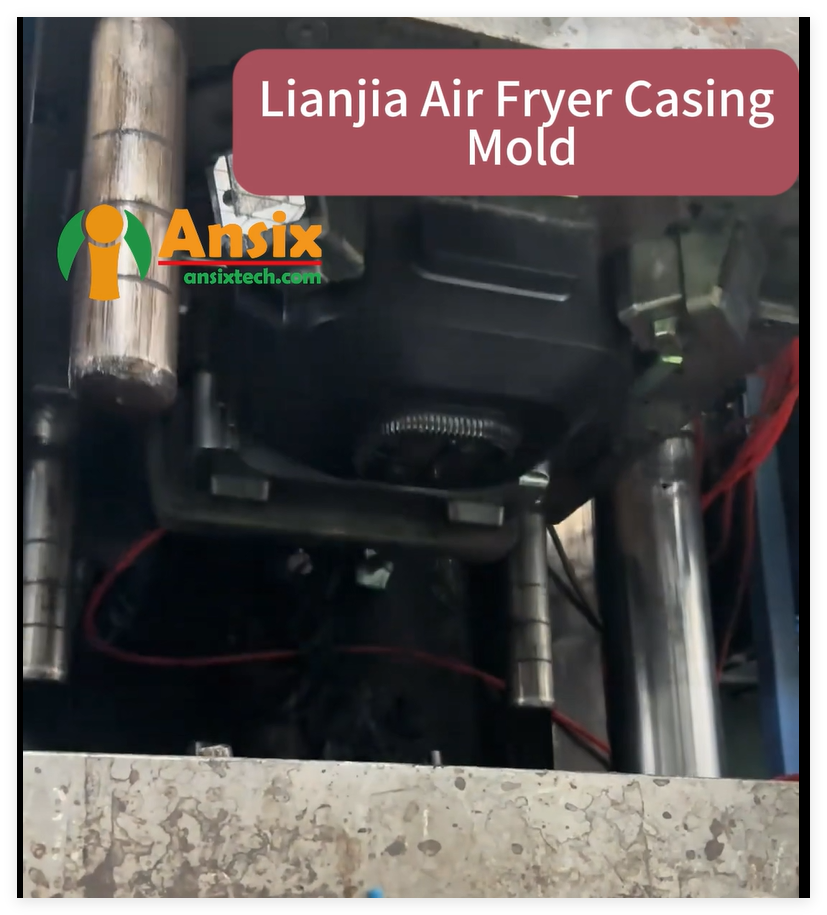
Lianjia Air Fryer Casing Mold
Lianjia Air Fryer Casing Mold

Engineering Excellence Under Pressure: How Ansix Tech’s Precision Mold Solutions Redefine Cost and Quality for the Lianjia Air Fryer Casing Project
In the hyper-competitive landscape of small domestic appliances, the air fryer has emerged as a battleground where brand loyalty is dictated not just by digital interfaces or wattage, but by tangible, physical quality. The casing—the first point of tactile interaction between the consumer and the machine—serves as the ultimate arbiter of perceived value. A seam that is misaligned, a surface finish that is inconsistent, or a material that warps under thermal stress can dismantle a brand’s reputation overnight.
For Lianjia, a brand synonymous with high-volume, reliable kitchen appliances, the stakes for their latest air fryer casing mold project were exceptionally high. Facing the dual pressures of escalating raw material costs and the demand for a rapid market rollout, Lianjia required a manufacturing partner capable of de-risking the entire lifecycle of the product—from prototype to mass production.
Enter Ansix Tech, a manufacturing stalwart with over 28 years of expertise in the design and manufacturing of injection molds. For the Lianjia Air Fryer Casing Mold project, Ansix Tech deployed a vertically integrated strategy that did not merely manufacture a tool; they engineered a production ecosystem. By focusing on rigorous quality validation, strategic cost reduction, and optimized manufacturing workflows, Ansix Tech transformed a complex technical challenge into a high-efficiency, low-cost production triumph.
The Core Challenge: Balancing Aesthetics, Thermal Load, and Volume
Air fryer casings are deceptively complex. Unlike interior components, the casing is a “cosmetic” part with stringent aesthetic requirements (Class A surfaces). Simultaneously, it functions as a thermal barrier, housing components that generate extreme temperatures. For the Lianjia project, the specific challenges were threefold:
Geometric Complexity: The casing featured complex undercuts, thin-wall sections for heat dissipation, and intricate boss designs for screw mounting.
Aesthetic Imperatives: A high-gloss, matte hybrid finish was required to match Lianjia’s contemporary design language, demanding absolute perfection in the mold’s cavity surface finish.
Volume Demands: With projected annual volumes exceeding 1.5 million units, the mold needed to sustain 24/7 production cycles with minimal downtime for maintenance.
Ansix Tech’s solution was rooted in a philosophy of "Design for Manufacturability" (DFM), ensuring that the Mold Design itself became the primary mechanism for risk mitigation and cost control.
Material Science: The Foundation of Performance
The selection of raw materials for the Lianjia Air Fryer Casing was critical. The material needed to offer high heat deflection temperature (HDT) to withstand proximity to heating elements, impact resistance for durability during shipping and use, and the flow characteristics necessary to fill a complex, thin-walled cavity.
After extensive analysis, Ansix Tech specified a specialized PC/ABS (Polycarbonate/Acrylonitrile Butadiene Styrene) blend, specifically grade LG Chemical Lupoy GN5008RF.
Chemical Composition & Properties: This flame-retardant PC/ABS blend combines the high heat resistance and impact strength of Polycarbonate with the flowability and stress resistance of ABS. The specific grade was chosen for its:
Heat Deflection Temperature (HDT): Rated at 110°C at 1.82 MPa, ensuring structural integrity during the air fryer’s operational cycle.
Flame Retardancy: Achieving a V-0 rating at 1.5mm thickness, meeting stringent international safety standards for kitchen appliances.
Melt Flow Index (MFI): An optimized MFI of 12 g/10 min allowed for rapid cavity filling without inducing shear-induced degradation or jetting on the cosmetic surface.
For the mold base and components, durability was paramount. Ansix Tech utilized DIN 1.2343 (X38CrMoV5-1) hot work tool steel for the cavity and core inserts. This material offers superior toughness, high wear resistance, and excellent polishability. For areas requiring extreme thermal conductivity to accelerate cooling cycles—specifically the core pins near the heating element housing—Beryllium Copper Alloy (C17200) was utilized, offering thermal conductivity five times higher than standard tool steel, drastically reducing cycle time.
Design Phase: De-risking Through Digital Engineering
Mold Flow Analysis (DFM)
Before any steel was cut, Ansix Tech conducted a comprehensive Mold Flow Analysis using Autodesk Moldflow Insight. This digital simulation was not a cursory check but a deep-dive optimization process.
The analysis revealed a critical risk: weld lines converging at a visible location on the front casing’s handle recess, a potential aesthetic failure. By iterating the gate locations virtually, Ansix Tech resolved this issue digitally, shifting the convergence points to non-cosmetic structural ribs. Furthermore, the analysis predicted potential air traps in the complex corner radii. This allowed the engineering team to preemptively design a venting strategy using laser-cut slots in the parting line, eliminating the need for costly post-production secondary operations.
Runner and Gating System Design
To meet the dual goals of high-volume efficiency and aesthetic perfection, Ansix Tech implemented a Hot Runner System with sequential valve gate control.
System: A 4-point valve gate hot runner system from HRSflow.
Strategy: The sequential opening of the valve gates was calibrated to control the melt front advancement, ensuring that the weld lines were pushed into non-visible venting channels. This system eliminated the cold runner waste typical of conventional molds, reducing material consumption per shot by approximately 18%. For a production run of 1.5 million units, this translated to significant raw material cost savings for Lianjia, directly addressing the client’s "hard cost" reduction goals.
Cooling System Engineering
The "hidden champion" of the project was the conformal cooling strategy. Traditional air fryer molds often suffer from uneven cooling, leading to part warpage and extended cycle times.
Lianjia’s casing featured thick boss sections near the hinge and thin walls near the vents, creating a thermal imbalance. Ansix Tech employed 3D printed conformal cooling channels in the core inserts, utilizing direct metal laser sintering (DMLS) to create cooling lines that follow the geometry of the part.
Design: The cooling circuits were positioned within 8-10mm of the cavity surface, maintaining turbulent flow (Reynolds number > 6,000) to maximize heat transfer.
Result: This design reduced the cooling time from an industry-average 35 seconds to just 22 seconds per shot. By optimizing the thermal regulation, the mold achieved a uniform cavity temperature distribution (variation < 5°C), eliminating warpage and ensuring the flatness required for the air fryer’s door seal integrity.
Ejection Mechanism Design
To ensure smooth, frictionless ejection without marking the high-gloss cosmetic surface, Ansix Tech designed a hybrid ejection system. The system utilized a combination of hydraulic core pulls for the side undercuts and a network of precision-ground ejector pins positioned strategically on structural ribs rather than the cosmetic surface. Ansix Tech also incorporated a nitrided ejector plate to ensure durability over millions of cycles, preventing the common failure mode of galling in high-cycle environments.
Manufacturing & Machining: Precision at Scale
With the digital blueprint validated, the manufacturing phase began. Ansix Tech’s 28 years of experience were most evident in the machining workflow, where precision is measured in microns and downtime is the enemy.
Workflow and Machining Strategies
The manufacturing process was divided into a meticulously orchestrated workflow:
Rough Machining: High-speed CNC machining centers (5-axis) were used to rough out the mold base and cavity inserts from pre-hardened steel. This stage utilized carbide tooling with TiAlN coatings to withstand the high temperatures generated during high-speed machining.
Heat Treatment: The inserts underwent a vacuum heat treatment process to achieve a uniform hardness of 48-52 HRC, ensuring wear resistance for the high-volume run.
Precision Finishing: For the high-gloss areas, Ansix Tech employed high-speed milling (HSM) with a step-over of less than 0.05mm, eliminating the need for extensive hand polishing—a process that can introduce geometry inconsistencies. The complex cooling channels were created via deep-hole drilling and, for the conformal areas, the aforementioned DMLS process.
EDM (Electrical Discharge Machining): For the sharp internal corners and intricate rib structures that could not be accessed by a milling cutter, Ansix Tech utilized CNC sinker EDM machines. Using high-quality graphite electrodes, they achieved a mirror-like surface finish (Ra < 0.1µm) on the cavity, which directly translated to the high-gloss finish on the Lianjia casing.
Technical Challenges in Machining
The primary technical hurdle was machining the thin-wall core pins responsible for the air intake vents. These pins, measuring just 1.2mm in diameter and with a length-to-diameter ratio of 10:1, were prone to deflection during machining and injection.
Ansix Tech resolved this by utilizing wire EDM (Electrical Discharge Machining) to cut these pins post-heat treatment. This process allowed for the creation of perfectly straight, burr-free pins with a surface finish that minimized adhesion of the PC/ABS material, ensuring clean vent lines without flash.
The Injection Molding Process: Optimization for Efficiency and Cost Control
The mold was only half the equation. The true value for Lianjia was realized during the injection molding production phase. Ansix Tech operates a dedicated facility with clamping forces ranging from 80 to 1,300 tons, allowing for in-house process optimization.
Process Validation
The validation phase was a three-stage process:
Scientific Molding Approach: Instead of relying on traditional "trial and error," Ansix Tech utilized a scientific molding methodology. They performed a cavity pressure study to identify the "process window"—the range of injection speeds, pressures, and temperatures that produced a dimensionally stable part without inducing internal stress.
Gage R&R: A rigorous Gage Repeatability and Reproducibility (R&R) study was conducted on the dimensional measurement equipment to ensure that variations in the casing dimensions were attributable to the process, not measurement error.
Cpk Analysis: Process Capability (Cpk) indices were maintained above 1.33 for all critical dimensions, ensuring that the manufacturing process was statistically capable of meeting Lianjia’s stringent specifications over the long term.
Optimizing Cycle Time and Reducing Costs
To achieve significant cost reductions for Lianjia, Ansix Tech focused on reducing the "hard costs" associated with manufacturing.
Material Optimization: By utilizing the hot runner system and optimizing the sprue design, material waste was reduced by 18%. Furthermore, by precisely controlling the back pressure and screw speed, Ansix Tech minimized material degradation, reducing scrap rates from an initial 4.5% to below 1.2%.
Process Automation: The injection molding cells were equipped with six-axis robots for part removal and gate nipping. This eliminated the need for manual degating, reducing labor costs per unit by 40% and increasing operator safety.
Energy Efficiency: Ansix Tech implemented servo-hydraulic systems on their injection molding machines, which consume up to 60% less energy than standard hydraulic machines. These savings were passed on to Lianjia through competitive piece-part pricing.
Quality Control and Assurance: A Zero-Defect Protocol
In the world of consumer electronics casings, a defect rate of 1% is considered a failure. Ansix Tech implemented a multi-layered quality assurance (QA) protocol for the Lianjia project.
Incoming Quality Control (IQC): Raw material (Lupoy GN5008RF) was tested using a Differential Scanning Calorimeter (DSC) to verify the glass transition temperature and melt point, ensuring no adulterated or regrind material was introduced without approval.
In-Process Quality Control (IPQC): Operators conducted visual inspections every 30 minutes under standardized lighting booths to catch cosmetic defects such as sink marks, flow lines, or burns. Dimensional checks were performed every 2 hours using a Coordinate Measuring Machine (CMM) to monitor critical features like mounting boss locations and outer perimeter dimensions.
First Article Inspection (FAI): Upon the completion of the first production run, a full FAI report was generated, measuring over 120 critical dimensions. This report served as the baseline for all subsequent production batches.
Non-Destructive Testing (NDT): Given the thermal demands of the application, a sample of casings was subjected to thermal shock testing—alternating between -20°C and 110°C for 100 cycles—to validate that the weld lines and material blend could withstand long-term use without cracking.
Packaging and Logistics: Ensuring Pristine Delivery
For high-gloss cosmetic parts, the journey from the molding machine to the assembly line is fraught with risk. Ansix Tech engineered a packaging protocol that functioned as a protective system.
Tiered Packaging: Individual casings were placed in anti-static, non-abrasive EVA foam trays designed to hold the parts by their structural edges, preventing contact with the Class A surfaces.
Cleanroom Assembly: Final assembly verification—where secondary components like silicone seals were fitted to the casing—was conducted in a Class 100,000 cleanroom environment to prevent airborne particulate contamination.
Just-in-Time (JIT) Delivery: Ansix Tech synchronized its production scheduling with Lianjia’s assembly lines. By implementing a Kanban system, they ensured that inventory levels were optimized, reducing warehousing costs for the client while guaranteeing on-time delivery (OTD) performance of 99.6% throughout the project duration.
The Value Proposition: Reliability and Cost Reduction
Ansix Tech’s engagement with Lianjia transcended the typical client-supplier relationship. By leveraging 28 years of manufacturing expertise, they acted as a strategic partner.
The tangible outcomes of the Lianjia Air Fryer Casing Mold project were significant:
Cost Reduction: By optimizing the runner system, reducing cycle time from 48 seconds to 32 seconds per part, and achieving a scrap rate reduction of over 3%, Ansix Tech lowered the tangible "hard cost" of the final product by approximately 22% compared to Lianjia’s previous generation casing.
Accelerated Time-to-Market: The integrated approach—from DFM to mass production—compressed the typical 16-week mold development timeline to 11 weeks, allowing Lianjia to capture a critical market window during the peak holiday season.
Scalability: Ansix Tech produced a family mold that allowed for the simultaneous production of both the front and rear casings. This streamlined Lianjia’s logistics and assembly verification, reducing their inventory complexity and internal labor costs.
Conclusion: A Blueprint for Manufacturing Success
The Lianjia Air Fryer Casing Mold project stands as a testament to Ansix Tech’s core philosophy: that true value in manufacturing is not derived from simply cutting steel, but from engineering intelligence applied across the entire product lifecycle.
From the selection of LG Chemical Lupoy GN5008RF with its specific chemical composition for thermal stability, to the implementation of conformal cooling and sequential valve gate hot runners, every decision was driven by a dual mandate: uncompromising quality and relentless cost efficiency.
Ansix Tech’s ability to handle the complexity—managing the thermal dynamics of the air fryer environment, the aesthetic demands of a consumer-facing product, and the logistical requirements of high-volume production—demonstrates a level of vertical integration that few mold makers can offer.
For Lianjia, the partnership resulted in a superior product delivered faster and at a significantly lower cost per unit, strengthening their market position. For Ansix Tech, it reinforced their reputation as a global leader in injection molding, where over 28 years of expertise is not just a number, but a guarantee of reliability, precision, and a steadfast commitment to client success.
As the small appliance industry continues to evolve toward smarter, more efficient manufacturing, Ansix Tech’s model—combining rigorous quality validation, strategic cost reduction, and end-to-end lifecycle management—provides a definitive blueprint for how to turn complex engineering challenges into market-leading commercial victories.
About Ansix Tech
With over 28 years of specialization in the design and manufacturing of precision injection molds—including high-complexity projects like the Lianjia Air Fryer Casing—Ansix Tech offers comprehensive services from prototype design to mass production. Their client-centric approach focuses on reducing hard costs through material optimization, process efficiency, and unwavering quality assurance, ensuring on-time delivery and superior product performance.


Ansix Tech Co Ltd
If you have any plans related to Lianjia Air Fryer Casing Mold , you can contact us at any time. We will turn your ideas into reality, let you realize your dreams, and obtain large orders from the market. Our contact information is info@ansixtech.com. Or contact our CTO, mail: stephen@ansixtech.com
#www.ansixtech.com #ansixtech.com #Lianjia Air Fryer Casing Mold#Lawnmower Canopy Mold injection molding company #Lawnmower Canopy Mold injection mold companies #Ansix #Ansix moulds #Ansix china #Ansix tech china #Ansix tech company #Ansix facotry #Ansix Tech #Ansix molds #Ansix injection molding #Ansix mold factory #injection molding Lawnmower Canopy Mold #Ansix mold factory #Lawnmower Canopy Mold china #Lawnmower Canopy Mold molds #injection factory #Lawnmower Canopy Mold injection molding #Lawnmower Canopy Mold injection molding factory #injection molding company #Lawnmower Canopy Mold injection mold companies #Lawnmower Canopy Mold#Lawnmower Canopy Mold mold limited #Ansix mold china #Ansix companies #Ansix company China #Lawnmower Canopy Mold facotry #Ansix Tech #Ansix Tech mould #Lawnmower Canopy Mold injection moulding #injection moulding company #Ansix Lawnmower Canopy Mold parts injection mold companies #Lianjia Air Fryer Casing Moldchina #Lawnmower Canopy Mold china factory #Ansix moulding companies #Ansix molding company #Lawnmower Canopy Mold injection moulding facotry #Ansix Tech mold #Lawnmower Canopy Mold mould #Lawnmower Canopy Mold plastic injection molding #ansix plastic mold #Mold manufacturing #Lawnmower Canopy Mold parts manufacturing #Lawnmower Canopy Mold plastic parts factory #Lawnmower Canopy Mold injection parts mold #Lawnmower Canopy Mold PRECISION MANUFACTURING #Lawnmower Canopy Mold #China mold #Lawnmower Canopy Mold injection moulding china #Lawnmower Canopy Mold mould china #china precision mold #mold in china #Lawnmower Canopy Mold mold china #Precision molds #High-precision molds #Lawnmower Canopy Mold #Injection molds #Lawnmower Canopy Mold Factory #Lawnmower Canopy Mold Company #Super Large Injection Mold Factory #Large Tonnage Injection Molding Factory #Lawnmower Canopy Mold Company #Lawnmower Canopy Mold Factory #2800T Injection Molding Factory #3000 Ton Injection Molding #4500 Ton Injection Molding Factory #Large Mold Injection Molding #Large Plastic Mold Injection Molding Factory #Large Injection Mold Manufacturer #Plastic Mold Factory #Injection Mold #Plastic Mold