



Mercedes-Benz steering column shift lever housing mold
Mercedes-Benz Steering column shift lever housing mold
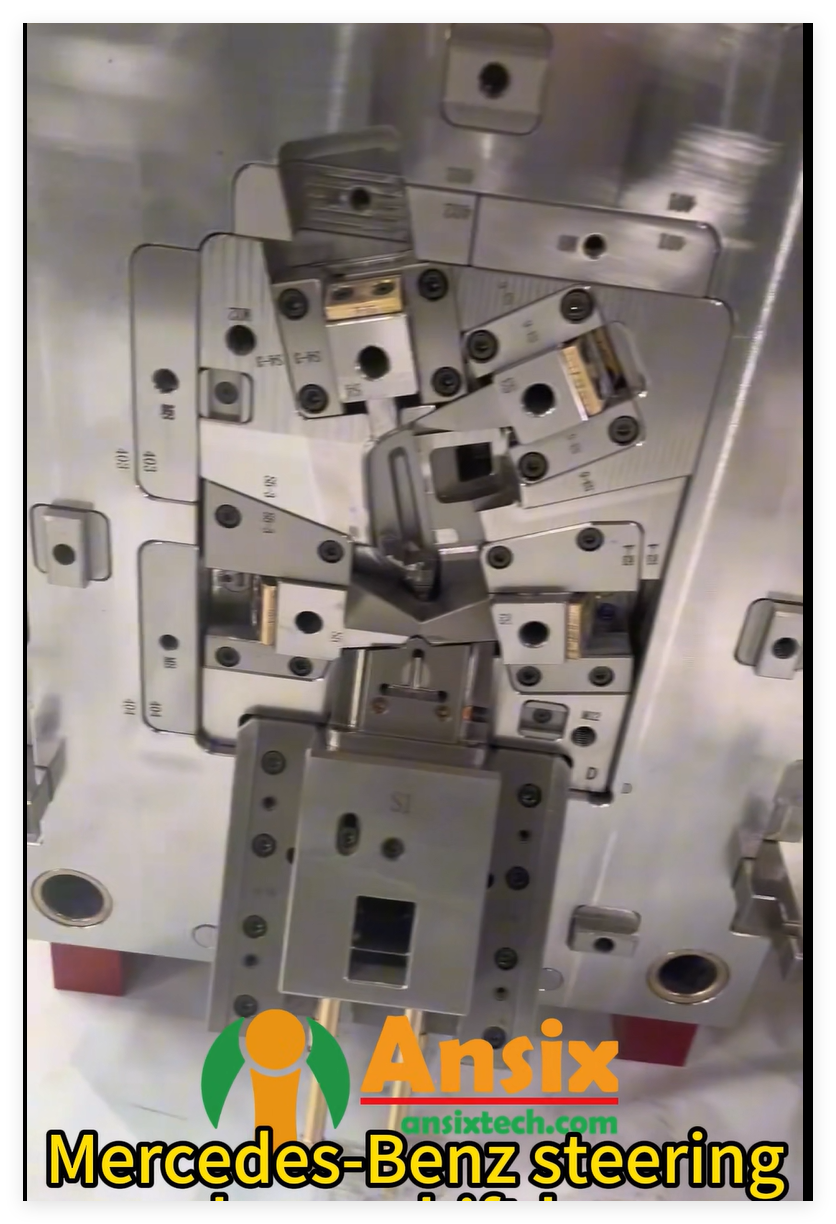
Precision Engineering: How Ansix Tech Masters the Art of Injection Molding for Mercedes-Benz
In the high-stakes world of luxury automotive manufacturing, where performance, aesthetics, and safety converge, the smallest components often bear the greatest responsibility. For a global leader like Mercedes-Benz, ensuring that every single part, from the largest body panel to the most discreet interior lever, meets an uncompromising standard of quality is non-negotiable. This principle drives the entire supply chain, creating a challenging proving ground for specialized manufacturers. It is here, in the demanding arena of precision injection molding, that Ansix Tech has distinguished itself, recently securing and expertly executing a high-profile project to manufacture the complex steering column shift lever housing for a new Mercedes-Benz model. This project serves as a masterclass in modern, value-driven mold manufacturing, blending advanced engineering with a relentless pursuit of efficiency and reliability.
Project Genesis: Meeting the Challenge of Complexity and Cosmetic Perfection
The shift lever housing is a critical interior component that blends robust mechanical function with high-visibility cosmetic appeal. It must withstand years of daily tactile operation, maintain dimensional stability for smooth gear engagement, and present a flawless, premium surface finish—often with intricate textures—in the driver's immediate line of sight. The challenge presented to Ansix Tech was multifaceted: to design and manufacture an injection mold capable of producing a high-precision, structurally sound part with a complex geometry and a "Class-A" surface finish, all while optimizing the production process to deliver significant value without compromising the exacting standards of the Mercedes-Benz brand.
Ansix Tech's deep industry experience with automotive interior components positioned them uniquely for this task. Their proven track record in navigating stringent Original Equipment Manufacturer (OEM) specifications and their commitment to proactive engineering solutions were key factors in their selection for this prestigious project.
Phase 1: Strategic Design & Digital Validation
The foundation of any successful mold is laid long before the first block of steel is cut. For the shift lever housing, Ansix Tech's process began with a comprehensive Design for Manufacturability (DFM) analysis, heavily reliant on sophisticated mold flow simulation.
Digital Prototyping and Flow Analysis: Using advanced computer-aided design (CAD) software, engineers created a detailed 3D model of the part and its corresponding mold. Mold flow simulation software was then employed to create a virtual "digital twin" of the injection process. This powerful tool allowed engineers to analyze critical parameters in a risk-free environment:
Polymer Behavior: Simulating the flow of molten plastic to predict fill patterns, identify potential air traps, and locate weld lines—areas where separate melt fronts meet, which can create structural weaknesses.
Thermal Dynamics: Analyzing the cooling phase to predict areas of differential shrinkage that could lead to warpage or sink marks on the visible surface.
Process Optimization: The software helped optimize key variables such as polymer melt temperature, mold temperature, injection pressure, and packing force before physical manufacturing began. As noted in industry research, this digital approach "helps to optimize the product geometry and design, and almost remove the usage of preliminary practice of mold trials by verifying the product prior to its manufacture".
This upfront simulation was crucial for the shift lever housing, which featured varying wall thicknesses and required a cosmetically perfect finish. By identifying and resolving potential defects digitally, Ansix Tech dramatically reduced the time and material waste associated with traditional trial-and-error mold sampling, setting a clear path for efficient manufacturing.
Phase 2: Material Science & Compliance: Selecting the Right Plastic
Material selection is a critical strategic decision that directly impacts part performance, cost, and manufacturability. For an interior component like the shift lever housing, Mercedes-Benz mandates compliance with specific material standards to ensure safety, durability, and performance consistency across its global fleet.
Ansix Tech guided the selection process to align with Mercedes-Benz's rigorous DBL 1224 standard, which comprehensively describes the technical requirements for thermoplastic synthetic materials used in interior applications. After evaluating options like ABS and PC/ABS for their balance of strength and surface finish, the team, in consultation with the client, specified a glass-fiber reinforced, heat-stabilized Polyamide 6 (PA6-GF). This decision was backed by several key factors:

This engineered plastic, compliant with Mercedes-Benz's DBL 5474 specification for heat-stabilized, glass-fiber reinforced PA6, provided the optimal balance of properties. The glass fiber reinforcement (typically 15-30% by weight) significantly increased the material's stiffness and dimensional stability, while the heat stabilization additives ensured it could perform reliably at the elevated temperatures a car interior can experience.
Phase 3: Precision Mold Design & Engineering
With the part design validated and material selected, Ansix Tech's engineers translated the digital model into a robust, production-ready mold design. This stage involved meticulous planning of every system within the mold.
Mold Steel Selection: The choice of steel was dictated by the project's requirements for high-volume production (longevity), excellent polishability (for surface finish), and resistance to wear from the abrasive glass-fiber-filled plastic. A pre-hardened stainless steel or high-quality tool steel was likely selected. Stainless steel is often recommended for plastic molds where corrosion from condensation or corrosive gases during long shutdowns is a concern, ensuring the preservation of critical surface finishes.
Cooling System (Water Channels): Efficient cooling is paramount for cycle time reduction and preventing warpage. Ansix Tech designed a conformal cooling channel layout that followed the complex contours of the part as closely as possible. This ensured uniform heat extraction, leading to faster cycle times and a more dimensionally stable part.
Runner and Gate System: The team designed a hot runner system to minimize material waste. The gate location—the point where molten plastic enters the part cavity—was strategically chosen based on the earlier flow analysis. It was positioned to ensure balanced filling, minimize visible gate marks on aesthetic surfaces, and avoid directing polymer flow against core pins or other delicate features.
Ejection System: Given the part's deep draws and potential for sticking, a multi-stage ejection system with strategically placed pins, sleeves, and possibly air poppets was designed to ensure the delicate part could be demolded smoothly and without damage in every cycle.
Phase 4: Advanced Manufacturing & Process Optimization
The machining of the mold itself is where precision engineering meets master craftsmanship. Ansix Tech employed a multi-stage workflow:
Rough Machining: Removing the bulk of the steel from the mold blocks.
Semi-Finishing & Finishing: Using high-speed CNC milling, EDM (Electrical Discharge Machining), and precision grinding to achieve the final dimensions and surface textures. The cavity surfaces were polished to a mirror finish or textured to match the specified grain, a critical step for interior components.
Assembly and Initial Sampling: The meticulously machined components were assembled into the complete mold, which was then mounted in an injection molding machine for the first-shot trials.
The initial trials are rarely perfect. Common challenges for a part like this include:
Sink Marks: Occurring in thicker sections due to insufficient packing pressure or cooling. The DFM analysis was key to mitigating this.
Warpage: Caused by uneven cooling or internal stresses. Adjustments to cooling line temperatures and packing profiles were made.
Surface Defects: Such as flow lines or jetting, addressed by fine-tuning injection speed and melt temperature.
Ansix Tech’s engineers systematically optimized the process parameters—injection speed, pressure, temperatures, and cooling time—to eliminate defects and achieve a cycle time that maximized production efficiency. Research shows that such optimization can lead to measurable improvements; one study found that optimizing gate design and process parameters could reduce filling time by over 8% and shot volume by over 6%, directly contributing to cost savings.
Phase 5: AI-Driven Quality Assurance & Reliable Delivery
For Mercedes-Benz, quality is not an inspection point but a built-in process. Ansix Tech integrated advanced quality control methodologies to meet this expectation.
In-Process Monitoring: Sensors on the injection molding machine continuously monitored key parameters (pressure, temperature, time) for every shot, ensuring process stability.
Statistical Process Control (SPC): Critical dimensions of sampled parts were measured and tracked using SPC charts to detect any drift in the process before it produced out-of-spec parts.
Leveraging AI for Predictive Quality: Looking to the forefront of industry innovation, technologies like AI-based quality prediction systems represent the future of this field. Such systems can analyze real-time process data to predict potential quality deviations and perform root-cause analysis, thereby "increasing product quality and process quality" while "reducing inspection cost and rework cost".
Once the process was validated and stable, the production run commenced. Finished shift lever housings were carefully packaged in anti-static and protective materials to prevent any shipping damage to the precision surfaces. Ansix Tech’s integrated project management ensured that all phases—from design to delivery—were tightly coordinated, enabling a rapid and reliable delivery schedule that aligned with the client’s just-in-time production needs.
Conclusion: Engineering Value into Every Component
The successful completion of the Mercedes-Benz steering column shift lever housing project is a testament to Ansix Tech’s holistic approach to injection molding. It demonstrates that achieving the highest standards of precision and quality does not preclude driving significant value for the client.
Ansix Tech’s expertise manifests in several key value-generating areas:
Strategic Material Guidance: Selecting the optimal, specification-compliant material that balances performance with cost.
Front-Loaded Digital Engineering: Using DFM and mold flow analysis to prevent costly errors and reduce time-to-market.
Process Optimization: Fine-tuning every parameter to minimize cycle time and scrap rate, directly lowering the cost per part.
Robust Quality Systems: Implementing proactive quality assurance to ensure reliability and eliminate downstream waste.
In an industry where excellence is the baseline, Ansix Tech differentiates itself by being a true engineering partner. They go beyond simply cutting metal to shape plastic; they engineer efficiency, reliability, and value directly into the mold, ensuring that every component produced not only meets the rigorous demands of a brand like Mercedes-Benz but does so in the most intelligent and economical way possible. This project underscores their role as a vital link in the automotive supply chain, where their mastery of the injection molding craft helps drive the industry forward.


Ansix Tech Co Ltd
If you have any plans related to Mercedes-Benz steering column shift lever housing mold, you can contact us at any time. We will turn your ideas into reality, let you realize your dreams, and obtain large orders from the market. Our contact information is info@ansixtech.com. Or contact our CTO, mail: stephen@ansixtech.com
#www.ansixtech.com #ansixtech.com #Brake light mold factory #Mercedes-Benz steering column shift lever housing mold#Ansix mold factory #Ansix injection molding #Ansix moud Ltd #Engine oil pan moldinjection molding factory #Ansix injection mould #Center console storage compartment ing factory #Engine oil pan mold injection molding company #Engine oil pan mold injection mold companies #Ansix #Ansix moulds #Ansix china #Ansix tech china #Ansix tech company #Ansix facotry #Ansix Tech #Ansix molds #Ansix injection molding #Ansix mold factory #injection molding Engine oil pan mold# Ansix mold factory #Engine oil pan mold china #Engine oil pan moldprecision molds #injection factory #Engine oil pan mold precision injection molding #Engine oil pan moldinjection molding factory #injection molding company #Engine oil pan mold injection mold companies #Engine oil pan moldmould factory #Engine oil pan moldmold limited #Ansix mold china #Ansix companies #Ansix company China #Engine oil pan moldfacotry #Ansix Tech #Ansix Tech mould #Engine oil pan mold injection moulding #injection moulding company #Ansix Engine oil pan mold parts injection mold companies #Engine oil pan moldmould #Engine oil pan mold china #Engine oil pan mold china factory #Ansix moulding companies #Ansix molding company #Engine oil pan mold injection moulding facotry #Ansix Tech mold #Engine oil pan moldprecision mould #Engine oil pan moldplastic injection molding #ansix plastic mold #Mold manufacturing #Engine oil pan moldparts manufacturing #Engine oil pan moldplastic parts factory #Engine oil pan moldinjection parts mold #Engine oil pan moldPRECISION MANUFACTURING #Engine oil pan moldmold precision #China mold #Engine oil pan moldinjection moulding china #Engine oil pan moldmould china #china precision mold #mold in china #Engine oil pan moldprecision mold china #Precision molds #High-precision molds #Household appliance molds #Injection molds #Large Injection Molding Factory #Large Injection Molding Company #Super Large Injection Mold Factory #Large Tonnage Injection Molding Factory #Large Injection Molding Company #Super Large Injection Molding Factory #2800T Injection Molding Factory #3000 Ton Injection Molding #4500 Ton Injection Molding Factory #Large Mold Injection Molding #Large Plastic Mold Injection Molding Factory #Large Injection Mold Manufacturer #Plastic Mold Factory #Injection Mold #Plastic Mold