



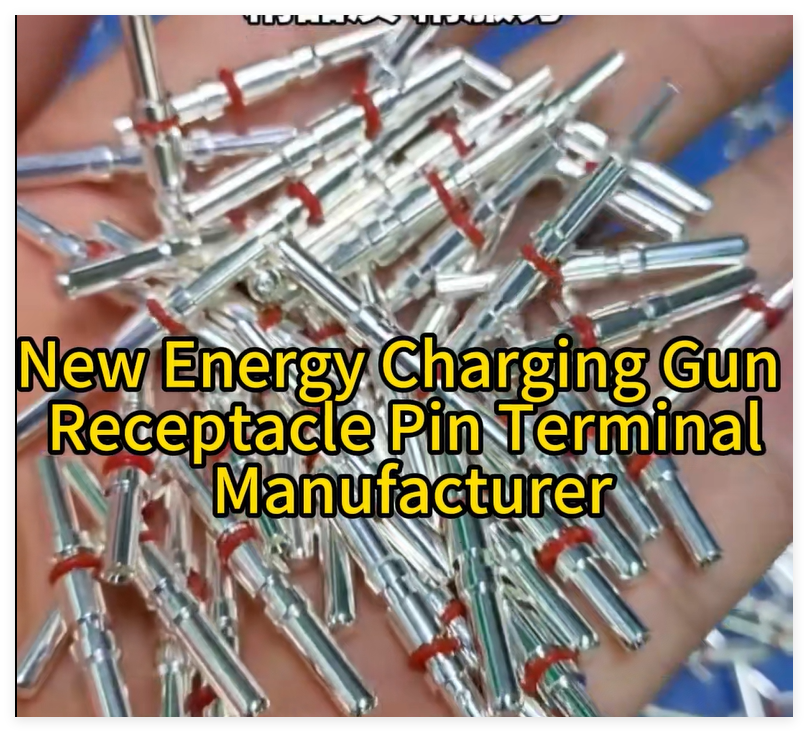
New Energy Charging Gun Receptacle Pin Terminal Manufacturer
New Energy Charging Gun Receptacle Pin Terminal Manufacturer

The Precision Behind the Plug: How Ansix Tech is Redefining Hard Cost Economics in New Energy Charging Pin Terminal Manufacturing
In the rapidly evolving landscape of new energy vehicles (NEVs), the difference between a reliable vehicle and a recalled one often comes down to a component no larger than a fingertip: the charging gun receptacle pin terminal. As the global automotive industry pivots toward electrification, the demand for high-cycle durability, thermal stability, and absolute electrical integrity in charging components has never been more critical. Manufacturers are currently caught in a squeeze—caught between the escalating technical requirements of 800V ultra-fast charging architectures and the relentless pressure to reduce "hard costs" (the tangible, line-item expenses of materials and production).
In this high-stakes arena, Ansix Tech has emerged not merely as a supplier, but as a strategic engineering partner. With over 28 years of manufacturing experience, the company has systematically de-risked the lifecycle of the charging gun receptacle pin terminal. By integrating prototype design, mold development, precision injection molding, and rigorous validation under one roof, Ansix Tech is solving the industry’s most persistent problems: material creep at high temperatures, signal instability after repeated mating cycles, and the prohibitive cost structures that stifle scalability.
This article delves into the technical depth of Ansix Tech’s operations, exploring how its approach to raw material selection, mold flow analysis, and process optimization is setting a new benchmark for value and reliability in the new energy supply chain.
The Ansix Tech Mandate: From Concept to High-Volume Verification
The journey of a pin terminal—from a concept on a CAD screen to a component capable of surviving 10,000 mating cycles and extreme temperature fluctuations—is fraught with engineering pitfalls. Ansix Tech’s value proposition is rooted in its ability to manage this entire journey.
Unlike traditional contract manufacturers who simply execute client blueprints, Ansix Tech engages at the project initiation phase. The company’s product positioning strategy is strictly aligned with client and market requirements, meaning that before a single piece of steel is cut for a mold, Ansix Tech’s engineers are already modeling the terminal’s lifecycle.
"We don't just manufacture pins; we engineer the interface between the vehicle and the energy grid," a senior engineer at Ansix Tech’s R&D center explains. "For our clients, a failure in the receptacle pin means a failure in the field. Our role is to eliminate that risk while simultaneously attacking the cost structure."
This philosophy translates into a service model that encompasses the entire lifecycle: prototype design, manufacturing, validation, mass production, and assembly verification. For clients, this consolidation means reduced logistical fragmentation, faster time-to-market, and a single point of accountability.
Solving the Material Conundrum: Raw Material Selection and Characteristics
The foundation of any high-performance pin terminal is the raw material. In the new energy sector, the choice of alloy dictates electrical conductivity, thermal dissipation, spring retention, and corrosion resistance. Ansix Tech’s 28-year history has afforded it a deep library of material science data, allowing it to match specific copper alloy grades to specific application stresses.
For high-power charging applications—typically 250A to 500A—Ansix Tech frequently specifies C18150 (Chromium Zirconium Copper) . This material is critical for scenarios where the terminal must maintain structural integrity under extreme heat. C18150 offers a unique combination of high electrical conductivity (greater than 80% IACS) and superior softening resistance. Unlike standard beryllium copper, C18150 maintains its mechanical strength even after exposure to the high temperatures generated during fast charging cycles. Ansix Tech utilizes this grade for power pins where thermal management is the primary constraint, ensuring that the material does not anneal or lose its clamping force over time.
For signal pins and terminals requiring high cycle fatigue resistance, Ansix Tech employs C7025 (Copper-Nickel-Silicon) . This alloy is prized for its exceptional stress relaxation resistance. In a charging receptacle, the signal pins are the "canary in the coal mine"; if they lose spring tension, the control pilot circuit fails, halting the charge. C7025 provides the durability needed to maintain consistent contact pressure over tens of thousands of insertions, ensuring the reliability of the vehicle’s communication protocol with the charging station.
To address cost-sensitive applications where conductivity requirements are moderate but corrosion resistance is paramount—such as in outdoor AC charging stations—Ansix Tech utilizes C2680 (Brass) . While offering lower conductivity than copper alloys, C2680 provides excellent machinability and corrosion resistance. By strategically selecting C2680 for non-critical power paths or environmental sealing zones, Ansix Tech helps clients reduce raw material expenditures without compromising safety or functional longevity.
The selection process is not static. Ansix Tech employs a rigorous validation protocol for incoming materials, verifying chemical composition via Optical Emission Spectrometry (OES) to ensure that the grade supplied matches the certification—a critical step, as off-spec copper alloys are a leading cause of premature terminal failure.
The Art of the Mold: Engineering for Mass Production
If the material is the soul of the terminal, the mold is the body that shapes it. The complexity of manufacturing charging gun receptacle pin terminals lies in the geometry: they often require a combination of conductive metal (for the pin) and high-performance plastic (for the housing and isolation) integrated into a single, cohesive part. Ansix Tech’s expertise in Mold Flow Analysis (DFM) is the critical bridge between design feasibility and manufacturing reality.
DFM and Design Considerations
During the Design for Manufacturing (DFM) phase, Ansix Tech’s engineers utilize advanced simulation software to predict how molten plastic will flow around the inserted metal pins. The primary challenge here is "Insert Molding"—where pre-stamped copper pins are placed into the mold cavity, and engineering plastics (such as PA66+GF or PBT) are injected around them.
The DFM analysis focuses on minimizing "pin sweep." As high-pressure resin (often exceeding 1,500 bar) enters the cavity, it exerts force on the delicate metal pins. If the pin sweep exceeds tolerances (typically >0.1mm), it can lead to poor electrical mating or short circuits. Ansix Tech uses Mold Flow Analysis to optimize gate locations specifically to balance the flow front pressure, ensuring that the resin envelops the pins symmetrically, neutralizing lateral forces.
Key Design Considerations for Mass Production
Cooling Channel Design: The thermal management of the mold is crucial for cycle time. Ansix Tech employs conformal cooling channels—complex, curved channels that follow the geometry of the part—rather than traditional straight-drilled lines. This ensures uniform heat extraction, particularly critical in thick-walled sections where sink marks can compromise the sealing surface of the receptacle. By reducing cooling time by up to 30%, this design directly contributes to cost reduction through increased throughput.
Runner and Gating Systems: To reduce material waste (a significant component of hard costs), Ansix Tech utilizes hot runner systems with valve gates. For pin terminals, the gate location is strategically placed on non-cosmetic surfaces (such as the mounting flange) to eliminate post-processing gate removal. Valve gate sequencing allows Ansix Tech to control the fill pattern precisely, preventing weld lines from forming at high-stress points near the terminal interfaces.
Ejection Mechanisms: Given the presence of metal inserts, standard ejector pins can cause surface damage. Ansix Tech designs custom stripper plate ejection systems. This mechanism pushes the entire Molded Part uniformly off the core, distributing the ejection force evenly across the plastic housing rather than focusing it on the sensitive metal-plastic interface. This prevents micro-cracking, which can lead to moisture ingress and electrical failure over time.
Manufacturing Challenges and Processing Workflows
The injection molding of these terminals presents a unique set of challenges: the disparity in thermal expansion between metal (copper) and plastic (nylon). As the mold cools, the plastic shrinks at a rate up to ten times greater than the copper. If not accounted for in the mold design, this results in "pull-out" or loss of interfacial sealing.
Ansix Tech mitigates this through mold material selection. The mold cores and cavities are typically manufactured from S136 (Stavax) stainless steel or H13 tool steel, hardened to 48–52 HRC. For high-volume production runs exceeding 1 million cycles, Ansix Tech employs coated cavities—specifically, TiAlN (Titanium Aluminum Nitride) coatings—to protect the mold surfaces from the abrasive nature of glass-filled nylons. This extends mold life and ensures dimensional consistency over millions of shots, protecting the client’s capital investment.
The Injection Molding Process: Optimization for Efficiency and Cost Control
Once the mold is qualified, the focus shifts to the injection molding process itself. Ansix Tech treats this not as a production task but as a continuous optimization cycle. The company’s process engineering team focuses on three pillars: Efficiency Gains, Cost Control, and Zero-Defect Quality.
To achieve efficiency, Ansix Tech utilizes high-speed electric injection molding machines from tier-1 suppliers. Unlike hydraulic machines, electric machines offer unparalleled repeatability (crucial for maintaining pin position tolerances) and energy efficiency. In the context of hard cost reduction, this translates to lower utility costs per part and reduced cycle times through faster clamp movements.
Cost control is further addressed through automated runner removal. Ansix Tech integrates robotic arms into the molding cell that remove the sprue and cold runners immediately after ejection. The regrind—carefully controlled to prevent degradation of the engineering polymer—is reintroduced at a controlled ratio into the process. This closed-loop system reduces raw material waste by upwards of 15–20%, a direct reduction in the client’s material hard cost.
Moreover, Ansix Tech employs Scientific Molding principles. This involves utilizing in-cavity pressure sensors to monitor the packing phase in real-time. By ensuring that every shot is packed to the exact same density, Ansix Tech eliminates dimensional variation. This is particularly vital for the pin terminal’s "insertion force." If the housing dimensions vary, the force required to insert the charging gun becomes inconsistent—a critical customer experience metric.
Rigorous Validation: Testing the Unseen
In the new energy sector, validation is not just a checklist; it is the legal and safety backbone of the product. Ansix Tech’s in-house validation laboratory is equipped to simulate the entire life of a charging receptacle.
The validation process begins with thermal cycling. Terminals are subjected to temperatures ranging from -40°C to +120°C (simulating arctic cold to desert heat while charging) while under electrical load. Ansix Tech monitors micro-second interruptions in continuity to ensure that the differential thermal expansion of the materials does not cause contact separation.
Durability testing is another core competency. Using automated insertion/withdrawal testers, Ansix Tech validates that the pin terminals maintain their contact force after thousands of cycles. The company utilizes Contact Resistance Testing (milliohm measurement) before and after environmental exposure to ensure that the interface resistance remains below the UL 2251 or IEC 62196 thresholds.
Perhaps most importantly, Ansix Tech performs Partial Discharge (PD) testing for high-voltage applications. As vehicles move to 800V architectures, ensuring that there are no microscopic voids in the plastic surrounding the pin terminals is critical. Voids can lead to corona discharge, which degrades the plastic and ultimately leads to dielectric failure. By performing this test in-house, Ansix Tech guarantees the safety integrity of the insulation system, solving a problem that many assemblers only discover after costly field failures.
The Full Manufacturing Workflow: Quality, Packaging, and Rapid Delivery
Ansix Tech’s operational excellence is best observed in the fluidity of its manufacturing workflow. The process is a testament to its 28 years of refining lean manufacturing principles.
Automated Insert Loading: The workflow begins with precision stamping of the copper alloys (C18150, C7025, etc.) into finished pin geometries. These pins are then loaded into carriers using high-speed robotic placement systems. Automation eliminates the human error of mis-oriented pins, which is a leading cause of mold damage.
Insert Molding: The loaded pins are transferred into the injection molding cell, where the custom-designed molds (featuring the advanced cooling and ejection systems described above) inject the engineering plastic under tightly controlled parameters. In-line vision systems immediately inspect for flash, short shots, and pin position.
Post-Molding Operations: After molding, terminals often require laser marking for traceability (a key requirement for automotive OEMs). Ansix Tech integrates fiber laser marking stations that etch data matrix codes onto each part, linking it to the specific mold cavity, production date, and material batch. This granular traceability is a cornerstone of its quality assurance.
Quality Control and Assurance: The QC process is multi-layered. Beyond the in-mold sensors, Ansix Tech employs Coordinate Measuring Machines (CMM) for first-article inspections, verifying critical dimensions to the micron level. X-ray inspection is utilized to detect internal voids or wire sweep inside the overmolded area—flaws invisible to the naked eye but fatal to performance.
Packaging and Delivery: Recognizing that contamination is a silent killer in electrical connectors, Ansix Tech packages its pin terminals in ESD-safe, sealed trays within cleanroom environments. Packaging is designed for automated assembly lines; trays are configured to feed directly into the client’s pick-and-place equipment, eliminating secondary handling. The company’s strategic warehousing and supply chain management ensure rapid delivery, with Kanban systems in place to align production schedules with client assembly line demands, ensuring on-time delivery rates that exceed industry averages.
Reducing Hard Costs: The Ansix Tech Economic Model
A recurring theme in discussions with Ansix Tech’s clients is the company’s ability to reduce "hard costs." In manufacturing, hard costs are the tangible expenses: raw material, tooling amortization, labor, and logistics. While many suppliers focus on reducing labor (soft cost), Ansix Tech has engineered its entire system to attack the hard cost line items directly.
Material Optimization: By utilizing its 28 years of expertise, Ansix Tech often recommends alternative alloy grades (e.g., shifting from high-cost beryllium copper to C7025 or C18150 where appropriate) that meet or exceed performance specs at a lower base material price.
Mold Efficiency: The use of multi-cavity molds (often 8, 16, or 32 cavities) with conformal cooling dramatically lowers the "cost per shot." A higher initial tooling investment is offset by a lower piece price over the production run, providing a faster return on investment for the client.
Process Scrap Reduction: Through the implementation of robotic automation and in-cavity sensors, Ansix Tech routinely achieves scrap rates below 1% for mature programs. In an industry where raw copper alloys and high-temperature plastics constitute the majority of the product cost, this reduction in waste translates directly to client savings.
Vertical Integration: By handling everything from mold design to final packaging, Ansix Tech eliminates the markups associated with third-party logistics, external plating vendors (where applicable), and outsourced assembly. This single-source model reduces the client’s supply chain management overhead and the associated transaction costs.
Conclusion: Engineering Reliability into the Energy Transition
As the new energy industry matures, the conversation is shifting from "can we make it?" to "can we make it reliably and cost-effectively at scale?" The charging gun receptacle pin terminal is a component that demands perfection. A failure here is not merely an inconvenience; it is a breach of trust between the OEM and the consumer.
Ansix Tech’s 28-year trajectory in manufacturing has positioned it as a linchpin in this sector. By combining deep expertise in copper alloy metallurgy (C18150, C7025, C2680) with advanced mold engineering—featuring conformal cooling, stripper plate ejection, and rigorous Mold Flow Analysis—the company has solved the core engineering challenges of insert molding for high-power applications.
More importantly, Ansix Tech delivers a compelling economic value proposition. In an industry where margins are tight and scalability is paramount, its focus on reducing hard costs through material optimization, automated processing, and vertical integration provides clients with a competitive edge.
For automotive OEMs and Tier 1 suppliers looking to secure their supply chain, Ansix Tech represents more than a manufacturer; it represents a partner capable of navigating the complex intersection of electrical performance, mechanical durability, and cost efficiency. As the global fleet transitions to electric, the reliability of the connection between the grid and the vehicle will define the user experience. With its rigorous validation processes, end-to-end lifecycle management, and unwavering commitment to quality, Ansix Tech is ensuring that this connection is not only secure today but built to last for the millions of charging cycles that lie ahead.


Ansix Tech Co Ltd
If you have any plans related to New Energy Charging Gun Receptacle Pin Terminal Manufacturer , you can contact us at any time. We will turn your ideas into reality, let you realize your dreams, and obtain large orders from the market. Our contact information is info@ansixtech.com. Or contact our CTO, mail: stephen@ansixtech.com
#www.ansixtech.com #ansixtech.com #New Energy Charging Gun Receptacle Pin Terminal Manufacturer #New Energy Charging Gun Receptacle Pin Terminal Manufacturer #New Energy Charging Gun Receptacle Pin Terminal Manufacturer injection molding company #New Energy Charging Gun Receptacle Pin Terminal Manufacturer injection mold companies #Ansix #Ansix moulds #Ansix china #Ansix tech china #Ansix tech company #Ansix facotry #Ansix Tech #Ansix molds #Ansix injection molding #Ansix mold factory #injection molding New Energy Charging Gun Receptacle Pin Terminal Manufacturer #Ansix mold factory #New Energy Charging Gun Receptacle Pin Terminal Manufacturer china #New Energy Charging Gun Receptacle Pin Terminal Manufacturer molds #injection factory #New Energy Charging Gun Receptacle Pin Terminal Manufacturer injection molding #New Energy Charging Gun Receptacle Pin Terminal Manufacturer injection molding factory #injection molding company #New Energy Charging Gun Receptacle Pin Terminal Manufacturer injection mold companies #New Energy Charging Gun Receptacle Pin Terminal Manufacturer#New Energy Charging Gun Receptacle Pin Terminal Manufacturer mold limited #Ansix mold china #Ansix companies #Ansix company China #New Energy Charging Gun Receptacle Pin Terminal Manufacturer facotry #Ansix Tech #Ansix Tech mould #New Energy Charging Gun Receptacle Pin Terminal Manufacturer injection moulding #injection moulding company #Ansix New Energy Charging Gun Receptacle Pin Terminal Manufacturer parts injection mold companies #New Energy Charging Gun Receptacle Pin Terminal Manufacturer #New Energy Charging Gun Receptacle Pin Terminal Manufacturer china #New Energy Charging Gun Receptacle Pin Terminal Manufacturer china factory #Ansix moulding companies #Ansix molding company #New Energy Charging Gun Receptacle Pin Terminal Manufacturer injection moulding facotry #Ansix Tech mold #New Energy Charging Gun Receptacle Pin Terminal Manufacturer mould #New Energy Charging Gun Receptacle Pin Terminal Manufacturer plastic injection molding #ansix plastic mold #Mold manufacturing #New Energy Charging Gun Receptacle Pin Terminal Manufacturer parts manufacturing #New Energy Charging Gun Receptacle Pin Terminal Manufacturer plastic parts factory #New Energy Charging Gun Receptacle Pin Terminal Manufacturer injection parts mold #New Energy Charging Gun Receptacle Pin Terminal Manufacturer PRECISION MANUFACTURING #New Energy Charging Gun Receptacle Pin Terminal Manufacturer #China mold #New Energy Charging Gun Receptacle Pin Terminal Manufacturer injection moulding china #New Energy Charging Gun Receptacle Pin Terminal Manufacturer mould china #china precision mold #mold in china #New Energy Charging Gun Receptacle Pin Terminal Manufacturer mold china #Precision molds #High-precision molds #New Energy Charging Gun Receptacle Pin Terminal Manufacturer #Injection molds #New Energy Charging Gun Receptacle Pin Terminal Manufacturer Factory #New Energy Charging Gun Receptacle Pin Terminal Manufacturer Company #Super Large Injection Mold Factory #Large Tonnage Injection Molding Factory #New Energy Charging Gun Receptacle Pin Terminal Manufacturer Company #New Energy Charging Gun Receptacle Pin Terminal Manufacturer Factory #2800T Injection Molding Factory #3000 Ton Injection Molding #4500 Ton Injection Molding Factory #Large Mold Injection Molding #Large Plastic Mold Injection Molding Factory #Large Injection Mold Manufacturer #Plastic Mold Factory #Injection Mold #Plastic Mold