



Rapid Prototyping Services
Rapid Prototyping Services


What is Rapid Prototyping?
Rapid Prototyping is a transformative approach that swiftly converts early-stage design concepts into tangible physical models. Utilizing advanced technologies such as 3D Printing and CNC machining, this method offers a fast and cost-effective way to bring ideas to life, typically delivering prototypes within 1-3 business days.
Choosing rapid prototyping is essential for accelerating the design process while mitigating the financial and operational risks inherent in new product development. It facilitates comprehensive testing and refinement of designs, ensuring each iteration builds upon the last. This iterative process is crucial for making informed decisions early in the development cycle, minimizing the risk of costly modifications later on.
By embracing rapid prototyping, you can visualize, test, and enhance your designs with greater efficiency, paving the way for successful product development and faster time-to-market.

Our Rapid Prototyping Services
ANSIX TECH offers a diverse range of rapid prototyping services designed to meet the specific needs of our clients. Our advanced technologies ensure precision, speed, and cost-effectiveness across various prototyping methods.
CNC Machining
CNC Machining is ideal for creating high-precision prototypes from a wide range of materials, including metals anD Plastics. This method is perfect for projects requiring tight tolerances and complex geometries.
Achieve exact specifications and intricate details, crucial for functional testing and fitting.
Suitable for a wide array of materials, providing flexibility in design and application.
Produces robust prototypes that can withstand rigorous testing.

3D Printing
3D Printing offers unparalleled flexibility and speed, making it an excellent choice for rapid iteration and design validation. This method supports a variety of materials and is particularly effective for complex and detailed designs.
Quickly produce prototypes, allowing for rapid iterations and reduced time-to-market.
Easily create intricate designs that would be difficult or impossible with traditional methods.
Lower production costs for small batches and one-off prototypes.

Rapid Injection Molding
Rapid Injection Molding is the go-to solution for producing high-quality prototypes that closely mimic the final product. It is ideal for functional testing and market validation, providing a bridge between prototyping and full-scale production.
Create prototypes with the same material and finish as the final product.
Easily transition from prototype to production, streamlining the development process.
Ensure uniformity across multiple prototypes, essential for testing and validation.

Vacuum Casting
Vacuum Casting is perfect for producing detailed and durable prototypes, especially when low-volume production is needed. It is widely used for testing and validation across various industries.
Achieve high-quality finishes that are ideal for presentation and testing.
Use a range of materials to simulate different production scenarios.
Ideal for small batch production, reducing costs while maintaining quality.

Choosing the Right Prototyping Method for Your Business Needs
Selecting the appropriate prototyping method is crucial for achieving your project goals effectively and efficiently. Each prototyping technique offers unique advantages and considerations.
CNC Machining
Advantages:
- Precision: Ideal for accurate, detailed prototypes with tight tolerances.
- Material Versatility: Supports various materials, suitable for diverse applications.
- Durability: Produces robust prototypes for rigorous testing.
Considerations:
- Cost: Higher setup costs make it less economical for small batches.
- Lead Time: Slower than 3D printing for simple designs.
3D Printing
Advantages:
- Speed: Rapid production for quick design iterations.
- Complex Geometry: Handles intricate shapes with ease.
- Cost-Effective: Ideal for low-volume and one-off prototypes.
Considerations:
- Material Limitations: Fewer material options compared to CNC.
- Surface Finish: May need post-processing for smoothness.
Rapid Injection Molding
Advantages:
- Production-Quality: Prototypes closely mimic final products.
- Scalability: Smooth transition from prototype to production.
- Consistency: Uniformity in multiple prototypes.
Considerations:
- Setup Cost: Higher initial costs due to mold creation.
- Lead Time: Longer than 3D printing for complex designs.
Vacuum Casting
Advantages:
- Surface Finish: High-quality finishes ideal for testing.
- Material Variety: Simulates different production scenarios.
- Cost-Effective: Suitable for small batch production.
Considerations:


This Is Why
We Should Work Together
Fast Delivery
We understand the importance of time in product development. Our streamlined processes ensure that your prototypes are delivered quickly, keeping your projects on schedule.
Competitive Pricing
We offer cost-effective solutions without sacrificing quality, making high-quality prototyping accessible for businesses of all sizes.
Low MOQ
Our low minimum order quantity allows you to prototype efficiently, whether you're testing a single concept or multiple iterations, providing flexibility for your development needs.
One-Stop Solution
From initial design to final prototype, we offer a comprehensive range of services, ensuring a seamless and hassle-free experience for all your prototyping requirements.
Startup Friendly
We cater to startups by providing tailored solutions that fit their unique challenges, offering support and flexibility to help bring innovative ideas to market.
Fast Production
Our advanced technologies and efficient workflows enable rapid production, allowing you to iterate and refine designs quickly, accelerating your path to market readiness.


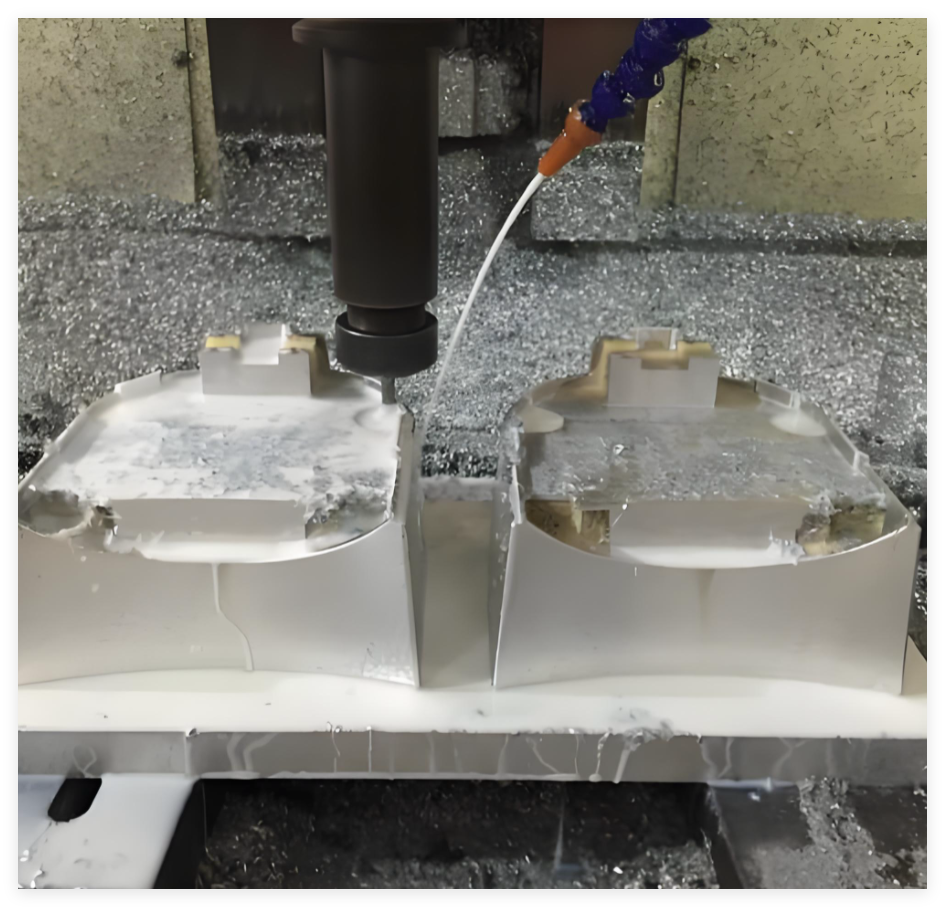
Ansix Tech Revolutionizes Rapid Prototyping: Cutting Costs and Speeding Innovation with Precision Injection Molding
The difference between a successful product launch and a delayed one often comes down to 15 seconds—the time Ansix Tech's advanced mold cooling technology can shave off each production cycle, translating to thousands in savings and weeks gained in market readiness.
In an era where time-to-market is a critical competitive advantage, Ansix Tech has redefined the rapid prototyping landscape. The company specializes in bridging the gap between conceptual design and mass production, offering a seamless, integrated service that drastically reduces both cost and development time for clients. Through a meticulous process encompassing advanced design verification, strategic material science, and process optimization, Ansix Tech delivers high-fidelity prototypes that are virtually indistinguishable from final production parts.
The impact is measurable: by implementing sophisticated conformal cooling channels in its molds, the company has achieved cycle time reductions of up to 25%, directly translating to lower costs and faster iterations for product developers. This commitment to efficiency is embedded in every step, from the initial digital simulation to the final packaged shipment.
1 The Critical Path: From Digital Design to Physical Verification
The journey at Ansix Tech begins not with steel or plastic but with data. The company’s Design for Manufacturability (DFM) analysis is the cornerstone of its process, serving as a preventative measure against costly errors. Before a single toolpath is programmed, engineers conduct a comprehensive review of the client’s 3D model, focusing on draft angles, wall thickness uniformity, and potential sink marks.
This proactive analysis allows for design adjustments that ensure the part can be manufactured reliably and efficiently, setting the stage for a smooth prototyping run and future mass production. Following DFM, Mold Flow Analysis (MFA) takes center stage. Ansix Tech utilizes advanced simulation software to predict how molten plastic will fill the mold cavity. This virtual testing identifies potential issues like air traps, weld lines, and uneven cooling long before physical tooling is made.
A key innovation in their approach is the use of simplified simulation workflows. By focusing analysis on gate contribution and flow front advancement without initially modeling the complete runner system, Ansix engineers can rapidly iterate on gate placement and sizing. This method, supported by industry-leading software, maintains high accuracy while slashing simulation time, allowing for more design exploration and optimization in the critical early phases.
2 Material Science and the Art of Selection
Choosing the right plastic material is a strategic decision that profoundly impacts a prototype’s function, appearance, and cost. Ansix Tech guides clients through a vast material landscape, balancing performance requirements with economic realities.
For instance, a common material like General Purpose Polystyrene (GPPS), with a specific gravity of 1.05 g/cm³, offers high clarity (91% light transmission) and excellent electrical insulation at a relatively low cost. Its rigidity makes it suitable for display components, but its brittleness may rule it out for parts requiring impact resistance. In contrast, engineering-grade materials like Polycarbonate/Acrylonitrile Butadiene Styrene (PC-ABS) blends provide the toughness needed for functional prototypes that must withstand snap-fits and mechanical stress testing.
Ansix Tech’s expertise lies in matching the material’s properties—from tensile strength and Vicat softening point to flammability rating—to the prototype’s intended use. This careful selection prevents over-specification, where a needlessly expensive material is used, and under-specification, where a prototype fails during testing. The goal is to provide a part that behaves like the final product, enabling valid functional tests that inform the final production decision.
3 Engineering the Mold: The Foundation of Precision
The mold itself is the heart of the injection molding process. Ansix Tech’s mold design philosophy is built on four interconnected pillars that ensure quality, speed, and durability.
Advanced Cooling Systems: The most significant innovation is the adoption of conformal cooling channels. Unlike traditional straight-drilled channels that may be distant from the mold surface, conformal channels are 3D-printed to follow the precise contours of the part geometry. This allows for uniform and efficient heat extraction, which is the largest factor in cycle time. As demonstrated in industry applications, targeted cooling can reduce cycle times by 25% or more, a direct boost to prototyping throughput and cost-efficiency. Ansix Tech uses simulation to strategically place these channels where heat concentration is highest, ensuring balanced cooling.
Intelligent Gating and Runner Systems: The gate is the entry point of plastic into the cavity, and its design is crucial. Ansix Tech employs analytical tools to determine the optimal gate type (edge, pin, or submarine), location, and size to ensure complete filling, minimize visible marks, and control shear stress on the material. The runner system, which delivers plastic from the machine nozzle to the gates, is designed for balance and minimal material use, reducing waste and cooling time.
Robust Ejection and Venting: Once cooled, the part must be cleanly ejected without damage. Ansix Tech designs ejection systems using precisely placed pins, sleeves, or blade ejectors. Proper venting is equally critical; shallow channels cut into the mold allow trapped air to escape, preventing defects like burns or short shots. In some designs, dedicated exhaust channels are added opposite gates to maximize air evacuation.
Strategic Steel Selection: Mold components are machined from steels selected for the specific prototyping challenge. For high-volume prototype runs or abrasive materials, a pre-hardened or through-hardened tool steel is used for longevity. For rapid-turn projects expecting fewer shots, alternative materials or methods may be employed. Research into processes like using 3D-printed thermoset plastics for low-volume molding has shown promise for certain applications, offering another tool for cost and speed optimization.
4 The Prototyping Workflow: Speed Meets Rigor
Ansix Tech’s project execution follows a disciplined, transparent workflow designed for speed without compromising quality.
Digital Validation & Quotation: The process begins with the client’s 3D data undergoing DFM and preliminary mold flow analysis. A fixed-price, detailed quote and project timeline are provided based on this analysis.
Mold Design & Fabrication: Upon approval, full mold design commences. Modern Computer-Aided Manufacturing (CAM) software generates efficient toolpaths for CNC machining. The focus here is on "good enough" surface finish for prototyping, avoiding time-intensive polishing unless absolutely required for part function. As seen in other successful operations, optimizing machining parameters—like adjusting wire feed rates in EDM—can yield significant savings in both time and consumable costs.
Trial & Process Optimization: The first shots from the new mold are part of a scientific molding process. Technicians establish a stable process window by methodically adjusting variables—injection speed, packing pressure, and mold temperature—and documenting their effect on the part. The goal is to produce consistent, high-quality prototypes and to hand over a fully vetted process sheet to the client.
Quality Assurance & Delivery: Every prototype batch undergoes inspection against the client's specifications. Critical dimensions are verified with coordinate measuring machines (CMM) or laser scanners. Finally, parts are packaged with an eye for efficiency and protection. Ansix Tech applies principles of logistics optimization, ensuring packaging is robust yet space-efficient to minimize shipping volume and cost—a consideration that, as highlighted by global firms, can lead to substantial logistical savings and a reduced environmental footprint.
5 Delivering Tangible Value: The Ansix Tech Advantage
The ultimate measure of Ansix Tech’s service is the value delivered to its clients. This value manifests in three key areas: radical cost reduction, accelerated development cycles, and de-risked production launches.
By integrating cost-saving measures at every stage, Ansix Tech directly lowers the client’s component cost. This is achieved through strategic material substitution, where a less expensive material that meets all functional needs is identified; through process efficiencies like conformal cooling that reduce the cost-per-part; and through design optimization that minimizes material usage and ensures first-time-right tooling, eliminating costly rework.
Perhaps the most critical value is the reliability of the prototypes. A prototype that accurately mimics the final production part in material properties, dimensional accuracy, and structural integrity allows for meaningful functional testing. Clients can confidently test snap-fits, assess ergonomics, conduct thermal tests, and secure regulatory approvals. This significantly de-risks the subsequent investment in high-volume production tooling, preventing expensive mid-production design changes.
The following table contrasts the traditional, fragmented approach to prototyping with Ansix Tech’s integrated, value-driven model:

6 A Vision for Smarter, Faster Manufacturing
As industries from medical devices to consumer electronics face ever-shortening product lifecycles, the ability to innovate rapidly and bring robust designs to market is paramount. Ansix Tech operates at the nexus of this challenge, providing more than just a prototyping service.
The company functions as a collaborative development partner, embedding manufacturing intelligence into the product development cycle from the earliest stages. The deep industry experience of its team in both mold projects and injection molding translates into practical guidance that steers clients away from potential pitfalls and toward optimal, cost-effective solutions.
In one documented case study for a panel body component, the application of a conformal cooling channel and precise mold temperature control reduced the production cycle from 52 seconds to 36 seconds. This 28% increase in productivity boosted daily output from 1,300 to 1,670 pieces, generating significant additional annual profit per mold. This is the tangible, bottom-line impact of Ansix Tech’s methodology—transforming prototyping from a necessary expense into a strategic investment that paves the way for profitable, efficient, and successful mass production.
Case Studies


Ansix Tech Co Ltd
If you have any plans related to Rapid Prototyping Services, you can contact us at any time. We will turn your ideas into reality, let you realize your dreams, and obtain large orders from the market. Our contact information is info@ansixtech.com. Or contact our CTO, mail: stephen@ansixtech.com
#www.ansixtech.com #ansixtech.com #Rapid Prototyping Services #Ansix Rapid Prototyping Services factory #Rapid Prototyping Services injection mold #Ansix mold factory #Ansix injection molding #Ansix injection molding Rapid Prototyping Services #Rapid Prototyping Services injection molding factory #Ansix injection mould #Rapid Prototyping Services injection molding factory #Rapid Prototyping Services injection molding company #Rapid Prototyping Services injection mold companies #Ansix #Ansix mould #Ansix china #Rapid Prototyping Services injection molding companies #Ansix company #Ansix facotry #Ansix Tech #Ansix mould #Ansix injection molding #Ansix Ansix injection molding Rapid Prototyping Services injection molding #Ansix mold factory #injection molding Rapid Prototyping Services injection molding injection mold # Ansix mold factory #Rapid Prototyping Services injection molding mold #Rapid Prototyping Services precision molds #injection factory #Rapid Prototyping Services precision injection molding #Rapid Prototyping Services injection molding factory #injection molding company #Rapid Prototyping Services injection mold companies #Rapid Prototyping Services mould factory #Rapid Prototyping Services mold limited #Ansix china #Ansix companies #Ansix company China #Rapid Prototyping Services facotry #Ansix Tech #Ansix Tech mould #Rapid Prototyping Services injection moulding #injection molding company #Ansix Rapid Prototyping Services parts injection mold companies #Rapid Prototyping Services mould #Rapid Prototyping Services mold #Rapid Prototyping Services china #Ansix moulding companies #Ansix molding company #Rapid Prototyping Services injection moulding facotry #Ansix Tech mold #Rapid Prototyping Services precision mould #Rapid Prototyping Services plastic injection molding #ansix plastic mold #Mold manufacturing #Rapid Prototyping Services parts manufacturing #Rapid Prototyping Services plastic parts factory #Rapid Prototyping Services injection parts mold #Rapid Prototyping Services PRECISION MANUFACTURING #Rapid Prototyping Services mold precision #China mold #Rapid Prototyping Services injection moulding china #Rapid Prototyping Services mould china #china precision mold #mold in china #Rapid Prototyping Services precision mold china #Precision molds #High-precision molds #Household appliance molds #Injection molds #Large Injection Molding Factory #Large Injection Molding Company #Super Large Injection Mold Factory #Large Tonnage Injection Molding Factory #Large Injection Molding Company #Super Large Injection Molding Factory #2800T Injection Molding Factory #3000 Ton Injection Molding #4500 Ton Injection Molding Factory #Large Mold Injection Molding #Large Plastic Mold Injection Molding Factory #Large Injection Mold Manufacturer #Plastic Mold Factory #Injection Mold #Plastic Mold