



Semiconductor plastic parts mold processing and injection moulding
Semiconductor Plastic Parts mold processing and injection moulding


I will provide a comprehensive overview of Ansix Tech's semiconductor plastic parts processing and write a detailed news article for you. The main contents of the report are as follows:
Company introduction: Introduction to Ansix Tech's role in the semiconductor packaging ecosystem.
Design process: Explains the product design methodology and Mold Design approach.
Material selection: Details the material characteristics and selection criteria for semiconductor components.
Mold manufacturing: Covers mold flow analysis, manufacturing challenges, and efficiency optimization.
Injection molding: Describes the molding process parameters, challenges, and quality control systems.
Packaging and delivery: Outlines the specialized packaging protocols and supply chain reliability.
Ansix Tech: Mastering the Art of Semiconductor Plastic Parts Processing
Executive Summary
In the rapidly evolving semiconductor industry, where miniaturization and extreme reliability are paramount, Ansix Tech has established itself as a pivotal player in the specialized domain of semiconductor plastic packaging. This comprehensive analysis delves into Ansix Tech's end-to-end capabilities in transforming raw polymers into sophisticated semiconductor components through integrated manufacturing approaches. By examining their technical processes from material selection and advanced mold design to precision injection molding and rigorous quality assurance, we uncover how Ansix Tech delivers components that meet the stringent requirements of automotive, industrial, and consumer electronics applications. Their expertise in overcoming inherent manufacturing challenges through technological innovation and disciplined process control positions them as an indispensable partner in the global semiconductor ecosystem, supporting the industry's relentless advancement through precision-engineered plastic packaging solutions.
1 Introduction to Ansix Tech in the Semiconductor Ecosystem
Ansix Tech operates as a critical enabler within the global semiconductor supply chain, specializing in the precision-intensive domain of plastic encapsulation for semiconductor devices. While not a semiconductor manufacturer itself, Ansix Tech has carved a specialized niche in the packaging segment—a crucial stage that protects delicate silicon dies from environmental factors while providing electrical connectivity and thermal management. The company's expertise spans the entire manufacturing value chain, from initial design consultation through to final packaging and delivery, with particular emphasis on solving complex challenges associated with plastic encapsulation of sensitive semiconductor components.
The strategic importance of Ansix Tech's capabilities becomes evident when considering the paradoxical requirements of semiconductor packaging: these components must simultaneously provide robust protection while maintaining extreme precision; must offer excellent thermal performance while withstanding significant mechanical stress; and must achieve high reliability at competitive costs. Through years of focused experimentation and process refinement, Ansix Tech has developed proprietary methodologies that address these competing demands, particularly for the automotive semiconductor sector where zero-defect expectations prevail. Their client portfolio includes numerous tier-1 semiconductor companies that supply to leading automotive brands such as BYD, Tesla, and BMW .
Positioned at the intersection of traditional precision molding and advanced materials science, Ansix Tech has built its reputation on mastering the subtle intricacies of semiconductor-grade polymers and the exacting processes required to transform them into reliable components. Their manufacturing facilities house specialized equipment capable of handling the stringent cleanliness, precision, and process control requirements essential for semiconductor packaging. As the semiconductor industry continues its relentless advancement, with increasing emphasis on miniaturization and thermal performance, Ansix Tech's role in the ecosystem continues to grow in strategic importance, enabling chip manufacturers to meet increasingly demanding application requirements across automotive, industrial, and consumer domains.
2 Semiconductor Part Design Process

2.1 Product Design Methodology
At Ansix Tech, the semiconductor part design process begins with a fundamental understanding of the end application requirements, translating often-abstract performance needs into concrete technical specifications. Engineering teams employ systems-thinking approaches to balance multiple competing factors: electrical insulation, thermal conductivity, mechanical strength, dimensional stability, and cost efficiency. Each design initiates with comprehensive application profiling that defines operational parameters such as temperature ranges, humidity exposure, mechanical stress factors, and chemical environments . For automotive applications, this includes creating detailed mission profiles that simulate the harsh operating conditions—thermal cycling from -40°C to 150°C, continuous vibration exposure, and long-term reliability requirements spanning decades of operation.
The conceptual design phase heavily leverages computational simulations to model performance characteristics before physical prototyping. Engineers utilize advanced modeling software to predict how proposed designs will behave under various stress conditions, enabling early identification of potential failure points. This virtual validation process incorporates thermomechanical finite element analysis (FEA) to visualize stress distribution during thermal cycling, computational fluid dynamics (CFD) to optimize cooling performance, and electromagnetic simulations to ensure proper signal integrity in applications involving high-frequency switching . These digital prototypes undergo multiple iterative refinements, progressively optimizing the design to meet all specified requirements while maintaining manufacturability.

2.2 Mold Design Integration
Concurrent with product design, Ansix Tech's mold engineers develop the tooling strategies that will transform polymer materials into precision components. This integrated approach ensures that design intent is preserved throughout the manufacturing process. Mold designers focus on several critical elements: gate design that ensures complete cavity filling without material degradation, cooling channel configuration that promotes uniform solidification, and venting systems that prevent air traps and burning . The company has developed specialized expertise in gate optimization, employing sophisticated algorithms to determine optimal gate locations that minimize flow resistance while avoiding sensitive functional areas of the semiconductor device .
For components requiring exceptional thermal performance or facing significant space constraints, Ansix Tech implements conformal cooling channels through additive manufacturing techniques. Unlike traditional straight-drilled cooling lines, these 3D-printed conformal channels follow the precise contours of the mold cavity, achieving up to 40% more efficient heat extraction and significantly reducing cycle times . Case studies document production cycles decreasing from 52 seconds to 36 seconds—a 28% improvement—after implementing conformal cooling channels, translating to substantial increases in daily output from 1,300 to 1,670 units . This integrated design philosophy, where product and mold development occur synergistically, forms the foundation of Ansix Tech's ability to deliver high-performance semiconductor plastic components with exceptional reliability and manufacturing efficiency.
3 Material Selection and Characteristics
3.1 Material Composition Requirements
The selection of appropriate polymer materials represents a critical determinant of success in semiconductor packaging, with Ansix Tech maintaining rigorous standards for material composition based on application requirements. For the vast majority of their semiconductor components, engineering-grade epoxy molding compounds (EMCs) form the foundational material system, specifically formulated to meet the demanding conditions of semiconductor operation and reliability testing. These advanced compounds consist of multicomponent formulations precisely engineered to deliver specific performance characteristics: epoxy resins as the primary binding matrix, hardeners for cross-linking, silica fillers for coefficient of thermal expansion (CTE) control, catalysts to regulate curing kinetics, flame retardants for safety compliance, and various additives to modify processing or end-use properties .
The filler composition and distribution within these material systems receives particular attention at Ansix Tech, as this significantly influences key performance parameters. High-purity fused silica fillers, typically comprising 70-90% of the compound by weight, serve to reduce the CTE of the polymer system to better match that of silicon and copper leadframes, thereby minimizing thermomechanical stress during temperature cycling. The particle size distribution of these fillers is carefully optimized to maximize packing density while maintaining adequate flow characteristics during the molding process. For applications requiring enhanced thermal conductivity, such as power semiconductor packaging, specialized fillers like aluminum oxide or boron nitride may be incorporated to create efficient thermal pathways while maintaining electrical insulation. Each material lot undergoes thorough incoming inspection to verify composition consistency, with technical teams maintaining statistical process control charts on key material parameters to ensure batch-to-batch uniformity.
3.2 Application-Specific Material Selection
Ansix Tech employs a systematic methodology for matching material properties to application requirements, recognizing that different operational environments demand specialized material characteristics. For automotive semiconductors, materials must satisfy the most stringent reliability standards, with selections emphasizing exceptional thermal cycling performance (capable of withstanding -55°C to 150°C for thousands of cycles), high temperature endurance (continuous operation at 150°C), and excellent moisture resistance (withstanding 85°C/85% RH for extended periods) . These requirements typically lead to the selection of high-glass-transition-temperature (Tg) EMCs with low CTE and low ionic impurity levels to prevent corrosion-induced failures over the vehicle's operational lifespan.

In the rapidly growing power semiconductor sector, material selection prioritizes thermal management capabilities alongside traditional reliability concerns. Here, Ansix Tech specifies materials with enhanced thermal conductivity (1.5-3.0 W/m·K compared to standard 0.8-1.0 W/m·K) to efficiently dissipate heat generated by switching losses, while maintaining excellent electrical insulation properties to prevent short circuits in high-voltage applications. For consumer electronics applications, where cost sensitivity is higher but operational conditions less extreme, material selections balance adequate performance with manufacturing economics, often opting for standard EMCs that meet the necessary moisture sensitivity levels (MSL 3 or better) and provide sufficient mechanical protection for the expected product lifespan. This application-driven material selection strategy ensures optimal price-to-performance matching across diverse market segments while maintaining the requisite reliability standards for each specific use case.

4 Mold Design and Manufacturing
4.1 Advanced Mold Flow Analysis
The implementation of sophisticated simulation technologies represents a cornerstone of Ansix Tech's mold design process, with Moldex3D Flow analysis serving as their primary tool for predicting and optimizing plastic flow behavior during injection molding. This advanced simulation platform employs three-dimensional non-isothermal analysis based on Navier-Stokes equations to accurately model the complex flow dynamics within mold cavities . The engineering team leverages this capability to identify potential manufacturing defects before tool fabrication, simulating flow front advancement to predict weld line locations, air trap formation, and filling patterns that might lead to short shots or other filling-related defects. This virtual validation process enables designers to make data-driven decisions regarding gate placement, runner system geometry, and cooling channel configuration to ensure optimal filling behavior across the entire component.
Beyond basic filling analysis, Ansix Tech's simulation experts employ advanced modeling techniques to predict critical quality parameters such as volumetric shrinkage, residual stress distribution, and warpage tendencies. By modeling the fountain flow effect—the characteristic forward-flow pattern of non-Newtonian polymers during injection—engineers can accurately predict fiber orientation in reinforced compounds and anticipate its impact on mechanical properties and dimensional stability . The simulation process also incorporates thermal analysis to identify regions of insufficient cooling that might extend cycle times or create differential shrinkage, and shear rate analysis to pinpoint areas where excessive shear might degrade the polymer material. Through this comprehensive simulation approach, Ansix Tech achieves first-pass success in mold design with remarkable consistency, significantly reducing development time and eliminating costly trial-and-error iterations in the manufacturing phase.
4.2 Mold Manufacturing Challenges and Solutions
The fabrication of high-precision molds for semiconductor components presents numerous technical challenges that Ansix Tech has systematically addressed through specialized manufacturing capabilities. The inherent complexity of semiconductor packaging molds, which often incorporate intricate cavity details, tight tolerances (typically ±5 microns), and sophisticated ejection systems, demands exceptional manufacturing precision. To achieve this, Ansix Tech employs state-of-the-art machining centers capable of micro-milling with cutter diameters as small as 0.1mm, electrical discharge machining (EDM) for complex geometries, and precision grinding for critical seal-off surfaces. The company has developed particular expertise in manufacturing multi-level mold cavities that accommodate the varying thicknesses often present in semiconductor packages, ensuring uniform material compaction across all sections of the component.
Perhaps the most significant advancement in Ansix Tech's mold manufacturing capabilities lies in their adoption of additive manufacturing technologies for producing conformal cooling channels. Unlike conventional cooling lines restricted to straight drilled passages, 3D-printed conformal cooling channels follow the exact contours of the mold cavity, enabling homogeneous heat extraction that dramatically reduces cooling times and minimizes thermal gradients that cause warpage . This innovative approach forms part of Ansix Tech's comprehensive "closed-loop additive mold solution" that integrates design optimization, additive manufacturing, precision finishing, and active temperature control . The implementation of conformal cooling has yielded documented cycle time reductions of up to 30% in production applications, while simultaneously improving part quality through more uniform cooling. Additionally, Ansix Tech addresses the challenge of ventilation for thin-walled sections by employing specialized micro-EDM processes to create ventilation channels as narrow as 5-10 microns, allowing trapped air to escape without permitting material flash, thereby eliminating burning defects that commonly afflict high-speed injection molding of semiconductor packages.
4.3 Mold Processing Efficiency Optimization
Ansix Tech pursues mold efficiency optimization through a multifaceted approach that balances productivity, quality, and tool longevity. The foundation of their efficiency strategy lies in scientific mold design that maximizes laminar flow, minimizes flow resistance, and ensures balanced filling across all cavities in multi-cavity molds. Engineering teams employ parametric design methodologies to systematically evaluate gate configurations, runner geometries, and cooling layouts, identifying optimal combinations that reduce injection pressure requirements while maintaining dimensional stability. This methodical approach often yields significant reductions in cycle times—documented cases show 15-25% improvements—while simultaneously reducing injection pressure by 10-15%, thereby decreasing mechanical stress on both the mold and injection molding equipment .
Beyond the mold itself, Ansix Tech implements sophisticated process control technologies to maintain optimal operating conditions throughout production runs. Their proprietary mold temperature management system employs 3D-printed specialized mold temperature controllers that continuously monitor and adjust flow rates, temperatures, and pressure differentials across multiple cooling circuits . By maintaining Reynolds numbers in the ideal turbulence range of 4,000-8,000, this system ensures efficient heat transfer while avoiding excessive energy consumption . The company also employs predictive maintenance protocols based on continuous monitoring of hydraulic performance, ejection resistance, and vacuum integrity (when applicable), allowing maintenance interventions to be scheduled during natural production breaks rather than as emergency responses to tooling failures. This proactive approach to mold management has demonstrated remarkable results in production environments, with documented cases showing 40% reductions in unplanned downtime and 60% extensions in preventive maintenance intervals, contributing significantly to overall manufacturing efficiency and cost effectiveness.
5 Semiconductor Part Injection Molding Process

5.1 Injection Molding Parameters and Control
The injection molding process for semiconductor components demands exceptional precision in parameter control to achieve the necessary consistency in material properties, dimensional accuracy, and visual appearance. Ansix Tech employs a scientific molding methodology that establishes robust process windows based on material characteristics and component geometry rather than relying on traditional trial-and-error approaches. The critical process parameters—injection speed profiles, cavity pressure development, temperature settings, and packing profiles—are meticulously developed through designed experiments that correlate machine settings with measured outcomes. Injection speed receives particular attention, as it directly influences shear heating, molecular orientation, and fiber alignment in filled compounds, with profiles typically segmented into multiple phases to balance complete filling without excessive shear or jetting phenomena.
Temperature control extends beyond the basic barrel zones to encompass comprehensive thermal management of the entire molding system. Nozzle temperatures are precisely maintained to prevent material degradation while ensuring adequate flow, with specialized thermocouples providing real-time feedback for closed-loop control. Mold temperature control represents an especially critical factor, with Ansix Tech utilizing multi-zone temperature controllers to maintain different regions of the mold within narrow bands (typically ±2°C of setpoint) to ensure uniform cooling rates across the component . For advanced semiconductor packages with thick and thin sections adjacent to one another, the company may employ dynamic mold temperature control using rapid heat cycle molding (RHCM) techniques that elevate mold surface temperature during injection to improve flow characteristics, then rapidly cool to minimize cycle time. This integrated approach to thermal management ensures optimal material behavior throughout the injection, packing, and cooling phases, resulting in components with minimal residual stress and consistent dimensional characteristics.
5.2 Challenges in Semiconductor Part Injection Molding
The injection molding of semiconductor plastic components presents several unique challenges that differentiate this specialty from conventional plastic injection molding. Void formation represents a particularly persistent issue, especially in components with thick sections where the external surface solidifies before the interior, trapping air or volatiles within the material . Ansix Tech addresses this challenge through a combination of optimized process parameters—increased injection pressure, extended injection time, and reduced barrel temperature—and mold design solutions such as strategic gate placement that promotes directional solidification from furthest points back toward the gate . For components where thickness variations are unavoidable, the company may incorporate gas ventilation channels within the mold itself, allowing trapped gases to escape without creating surface blemishes.
Another significant challenge lies in managing the precise encapsulation of delicate semiconductor components without causing wire sweep or die paddle shift during the injection process. The high flow rates necessary for complete filling can exert substantial hydraulic forces on the internal components of the semiconductor package, potentially displacing bond wires or even cracking the silicon die. Ansix Tech mitigates these risks through rheologically-optimized gate designs that reduce flow velocity while maintaining fill time, and multi-stage injection profiles that slow the flow front as it approaches critical structures. Warpage represents another common challenge, arising from differential shrinkage due to uneven cooling or molecular orientation . Through a combination of simulation-driven design, conformal cooling, and process optimization—including reduced injection pressure, lower barrel temperatures, and extended cooling times—Ansix Tech successfully minimizes warpage to levels acceptable for subsequent automated assembly processes .
5.3 Process Optimization Techniques
Ansix Tech employs a systematic approach to injection molding optimization that balances multiple competing objectives: cycle time reduction, quality improvement, yield enhancement, and energy efficiency. Their methodology begins with comprehensive characterization of the molding process using advanced sensors that measure cavity pressure, temperature distribution, and material viscosity in real-time. This data-rich environment enables engineers to establish causal relationships between machine parameters and quality outcomes, moving beyond simple correlation to develop first-principles understanding of the process dynamics. The resulting process windows are deliberately designed with sufficient operating margins to accommodate normal material lot-to-lot variations and minor machine fluctuations while maintaining output quality within specification limits.
For high-volume production programs, Ansix Tech implements closed-loop control systems that continuously adjust process parameters based on real-time feedback from cavity pressure sensors. This adaptive approach compensates for gradual machine drift, ambient condition changes, and material viscosity variations, maintaining consistent melt front advancement and packing behavior throughout the production run. The company has also developed specialized techniques for challenging molding scenarios, such as low-pressure molding for ultra-large components where minimizing residual stress is paramount, and high-speed molding for thin-walled packages where rapid filling is essential. These optimized processes deliver documented improvements in manufacturing efficiency, with one case study showing scrap rates reduced from 3.2% to 0.5% while simultaneously increasing production output by 18% through cycle time reduction . This rigorous approach to process optimization ensures that Ansix Tech consistently delivers components that meet or exceed all specified requirements while maintaining competitive manufacturing economics.

6 Quality Control and Assurance Systems

6.1 Comprehensive Quality Management Framework
Ansix Tech has implemented a robust quality management system that spans the entire product lifecycle from design through production to delivery, with particular emphasis on meeting the exacting standards of the semiconductor industry. The company's quality framework builds upon the IATF 16949 foundation,
incorporating additional industry-specific protocols such as AEC-Q100 for integrated circuits and AEC-Q101 for discrete semiconductors . This comprehensive system begins with the Advanced Product Quality Planning (APQP) process, structured around five distinct phases: product planning and definition, product design and development, process design and development, product and process validation, and production launch with continuous improvement . At each phase, specific quality deliverables are meticulously completed, including Design FMEA, Process FMEA, Control Plans, and Statistical Process Control methodologies, ensuring potential failure modes are identified and mitigated before production commences.
During the product and process validation phase, Ansix Tech conducts rigorous qualification testing that far exceeds standard industry practices. Semiconductor components undergo extensive reliability stress testing including temperature cycling (typically -55°C to 150°C for automotive applications), high-temperature operating life testing, autoclave testing (121°C, 100% RH, 2 atm pressure), and highly accelerated stress testing . These demanding validation protocols ensure that components will survive their intended operational lifespan even under extreme conditions. The company maintains a zero-defect mentality throughout production, implementing PPM-based quality metrics and statistical process control charts on all critical parameters, with real-time monitoring systems that automatically flag deviations from established control limits. This systematic approach to quality management has enabled Ansix Tech to achieve exceptional quality levels, with demonstrated performance of less than 100 PPM defect rates even for the most challenging automotive semiconductor components.
6.2 Production Quality Control Implementation
In daily production operations, Ansix Tech employs a multi-layered quality control approach that combines advanced inspection technologies with statistical methodologies to ensure consistent output quality. The foundation of their production quality system lies in comprehensive first-article inspections that verify all critical dimensions using coordinate measuring machines (CMM), optical comparators, and specialized gauges. This initial verification ensures the manufacturing process begins with conforming setup parameters before full production commences. During production runs, automated vision systems perform 100% inspection of critical features such as gate vestiges, surface defects, and dimensional outlines, with machine learning algorithms continuously improving detection accuracy based on verified defect classifications. These automated systems can identify deviations as subtle as 10-micron dimensional variations or minute surface discolorations that might indicate underlying material or process issues.
For internal quality parameters that cannot be assessed through visual inspection, Ansix Tech employs statistical sampling plans based on Military Standard 105E with tightened inspection levels for critical characteristics. Samples are regularly extracted from production flows for detailed laboratory analysis including cross-sectional inspection to verify internal structure integrity, scanning acoustic microscopy to detect delamination or internal voids, and mechanical strength testing to ensure proper adhesion between materials. The company also monitors process capability indices (PpK) on all critical manufacturing parameters, with automotive components requiring demonstrated PpK values of 1.67 or greater during the PPAP submission phase . This data-driven approach enables early detection of process drift before non-conforming product is generated, facilitating proactive process adjustments that maintain output within specification limits. All quality data is recorded in a centralized manufacturing execution system (MES) that maintains full traceability from raw material lot through all process parameters to final test results for each production batch, enabling comprehensive analysis and rapid response to any quality issues that may emerge in the field.
7 Packaging, Delivery, and Industry Expertise


7.1 Specialized Packaging Protocols
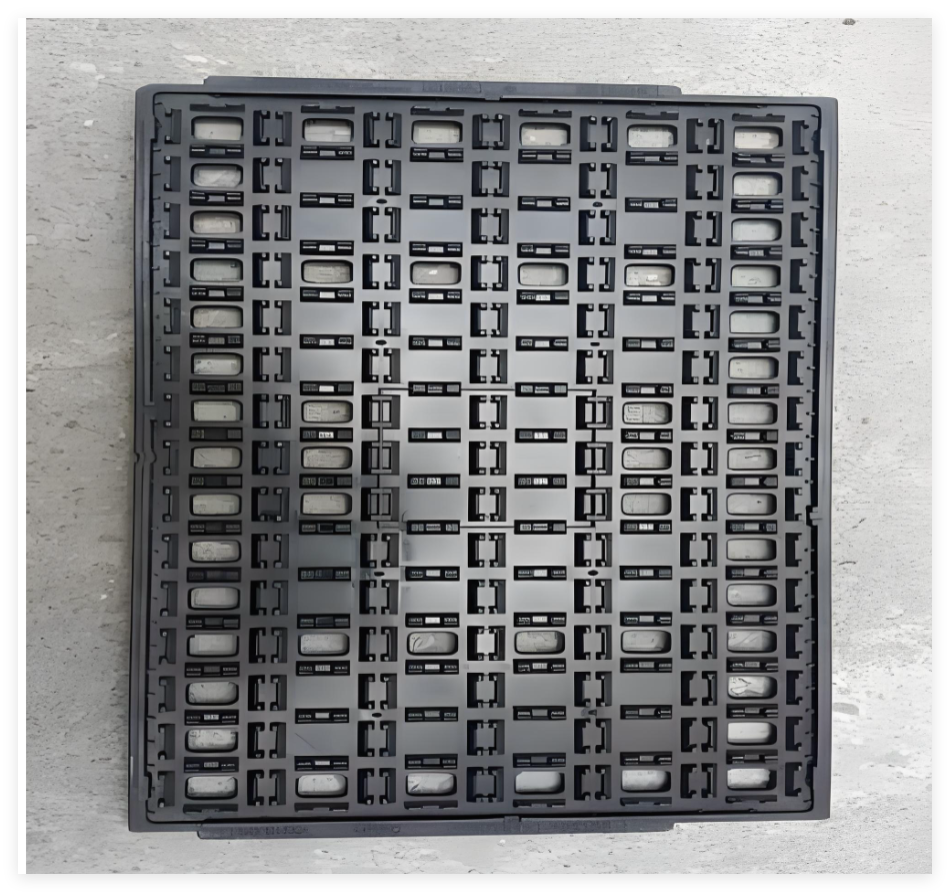
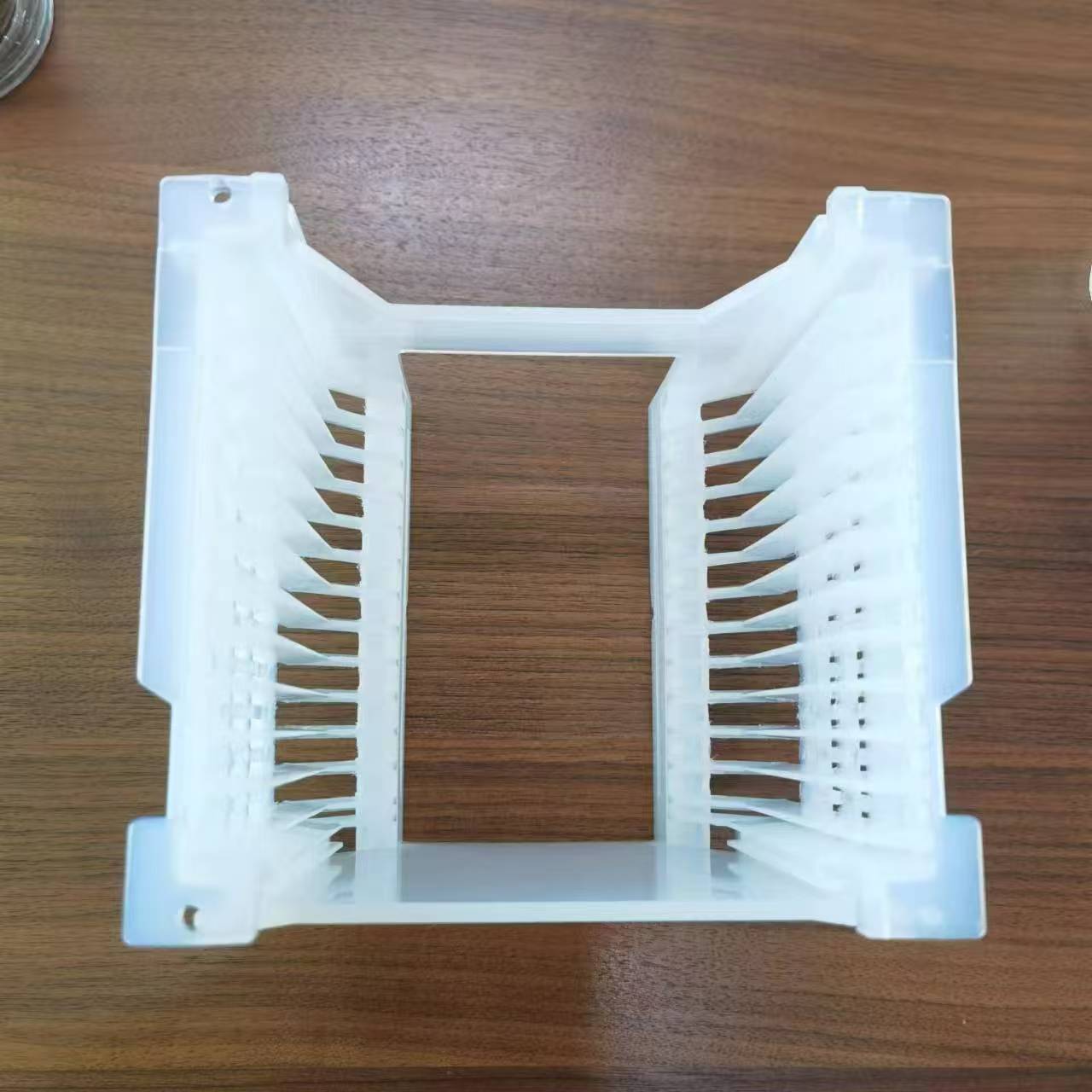
The packaging of finished semiconductor components requires meticulous attention to detail to prevent damage during transportation while maintaining traceability and preventing contamination. Ansix Tech has developed application-specific packaging solutions that address the unique requirements of semiconductor components, which are often both mechanically fragile and environmentally sensitive. For most semiconductor products, the company employs anti-static carrier tapes embedded in humidity-controlled bags with desiccant packets to maintain moisture sensitivity levels (MSL) appropriate to the component type. The packaging process begins with automated vision inspection that verifies component orientation and integrity before placement into specially designed trays or tapes, preventing contact between components that could cause mechanical damage during handling and transit.
Recognizing that electrostatic discharge (ESD) represents a significant risk to semiconductor components, Ansix Tech maintains strictly controlled ESD-protected areas throughout their packaging operations, with continuous monitoring systems that alert personnel if static charge levels approach dangerous thresholds. All packaging materials comply with JEDEC standards for surface resistivity and charge dissipation, providing multiple layers of protection against ESD events. For components destined for automotive applications, where supply chain integrity is paramount, the company implements tamper-evident sealing and unique lot identification codes that enable full traceability back to manufacturing date, shift, and even specific machine parameters. This comprehensive packaging approach ensures that components arrive at customer facilities in perfect condition, ready for integration into their automated assembly processes without additional sorting or inspection.
7.2 Supply Chain Reliability and Delivery Performance
In the semiconductor industry where production interruptions can have catastrophic consequences for downstream manufacturers, Ansix Tech has established an exemplary track record for supply chain reliability and on-time delivery performance. The company maintains a global logistics framework with redundant distribution capabilities that ensure continuous supply even during regional disruptions, as demonstrated during the 2022 Shanghai pandemic restrictions when the company successfully shifted operations to alternative distribution centers to maintain customer commitments . Their logistics strategy incorporates demand forecasting models that anticipate customer requirements based on historical patterns and market intelligence, enabling proactive inventory management that buffers against demand fluctuations while maintaining target service levels.
Ansix Tech's delivery performance is underpinned by manufacturing flexibility that can rapidly adjust production schedules in response to changing customer priorities without compromising quality or efficiency. The company employs advanced planning and scheduling systems that optimize production sequences across their manufacturing footprint, balancing due date performance with operational efficiency metrics. This systematic approach to supply chain management has yielded demonstrated performance of 98% on-time delivery across their customer base, with particularly strong performance for automotive clients where production shutdown prevention is critical. The company further enhances supply chain reliability through strategic inventory management of critical raw materials, maintaining safety stocks while implementing first-in-first-out (FIFO) rotation systems that prevent material degradation over time. This comprehensive approach to delivery and supply chain management positions Ansix Tech as a reliable partner in the semiconductor ecosystem, capable of supporting the just-in-time manufacturing strategies employed by leading semiconductor manufacturers across diverse market segments.
7.3 Industry Experience and Reliability
Ansix Tech's extensive industry experience, accumulated over decades of specialized focus on semiconductor plastic components, represents a significant competitive advantage and value proposition for their customers. The company's expertise spans multiple technology generations, from traditional leadframe packages through advanced QFNs and BGAs to cutting-edge system-in-package (SiP) configurations, providing valuable historical perspective on reliability challenges and proven solutions. This deep institutional knowledge enables Ansix Tech to anticipate potential issues based on pattern recognition from similar historical scenarios, often identifying and resolving challenges before they impact product quality or manufacturing efficiency. The company's engineers maintain active participation in industry standards committees and technical conferences, ensuring their methodologies incorporate the latest advancements in materials, processes, and quality techniques.
The reliability of Ansix Tech's components is demonstrated through their proven field performance in some of the most demanding applications, including automotive powertrain systems where operational lifetimes exceed 15 years and failure rates are measured in parts per billion. This field reliability stems from their systematic approach to design margin optimization, where operational parameters are maintained well within material capabilities to accommodate unexpected stress conditions without failure. The company's dedication to reliability extends beyond basic compliance to customer requirements, incorporating application-specific validation testing that simulates actual operating conditions more aggressively than standard qualification protocols. For automotive applications, this includes extended temperature cycling that exceeds standard AEC-Q100 requirements, and vibration testing that mimics the harsh environment of vehicle operation . This commitment to exceptional reliability has established Ansix Tech as a trusted supplier to numerous tier-1 semiconductor companies, with their components serving in safety-critical applications where failure is not an option. As the semiconductor industry continues to evolve toward increasingly demanding applications, Ansix Tech's proven experience and demonstrated reliability position them as an invaluable partner in the ongoing advancement of electronic technology.
8 Conclusion: Strategic Position in the Semiconductor Value Chain
Ansix Tech has established itself as a critical specialist within the global semiconductor ecosystem, mastering the complex interplay between materials science, precision engineering, and manufacturing excellence required for producing high-reliability plastic components for semiconductor applications. Through their integrated approach that spans design, materials selection, mold engineering, injection molding, and quality assurance, the company delivers components that meet the increasingly demanding requirements of modern semiconductor packages, particularly in automotive and industrial applications where failure is not an option. Their expertise in overcoming inherent manufacturing challenges through technological innovation—such as conformal cooling, scientific molding methodologies, and advanced process control—enables them to achieve quality and reliability standards that differentiate them from conventional plastic injection molders.
As the semiconductor industry continues its relentless advancement, Ansix Tech's role is likely to grow in strategic importance. The ongoing trends toward miniaturization, increased power density, and heightened reliability requirements across all electronic applications will demand even more sophisticated plastic packaging solutions. With their foundation in systematic process optimization and their commitment to technological innovation, Ansix Tech is well-positioned to support the semiconductor industry's future requirements, enabling the continued proliferation of electronics into every aspect of modern life. Their demonstrated ability to balance precision, reliability, and manufacturing economics makes them an indispensable partner in the semiconductor value chain, contributing to the advancement of technology through excellence in semiconductor plastic parts processing.





Ansix Tech Co Ltd
If you have any plans related to Semiconductor plastic parts mold processing and injection moulding, you can contact us at any time. We will turn your ideas into reality, let you realize your dreams, and obtain large orders from the market. Our contact information is info@ansixtech.com. Or contact our CTO, mail: stephen@ansixtech.com
#www.ansixtech.com #ansixtech.com #Semiconductor plastic parts mold processing and injection moulding #Ansix Semiconductor plastic parts mold processing and injection moulding factory #Semiconductor plastic parts mold processing and injection moulding injection molding injection mold #Ansix mold factory #Ansix injection molding Semiconductor plastic parts mold processing and injection moulding #Ansix injection molding Semiconductor plastic parts mold processing and injection moulding injection mold #Ansix injection molding Semiconductor plastic parts mold processing and injection moulding injection molding injection molding factory #Ansix injection molding Semiconductor plastic parts mold processing and injection moulding injection molding injection molding #Ansix injection molding Semiconductor plastic parts mold processing and injection moulding injection molding injection factory #Ansix injection molding Semiconductor plastic parts mold processing and injection moulding injection molding injection molding company #Ansix injection molding Semiconductor plastic parts mold processing and injection moulding injection molding injection mold companies #Ansix #Ansix mold #Ansix china #Ansix Semiconductor plastic parts mold processing and injection moulding injection molding companies #Ansix company #Ansix facotry #Ansix Tech #Ansix mould #Ansix injection molding #Ansix Ansix injection molding Semiconductor plastic parts mold processing and injection moulding injection molding #Ansix mold factory #injection molding Semiconductor plastic parts mold processing and injection moulding injection molding injection mold # Ansix mold factory #Ansix injection molding Semiconductor plastic parts mold processing and injection moulding injection molding mold #Ansix injection molding Semiconductor plastic parts mold processing and injection moulding injection molding injection mold #Ansix injection molding Semiconductor plastic parts mold processing and injection moulding injection molding injection molding factory #Ansix injection molding Semiconductor plastic parts mold processing and injection moulding injection molding #Ansix injection molding factory #Ansix injection molding Semiconductor plastic parts mold processing and injection moulding injection molding company #Ansix injection mold companies #Ansix #Ansix mold #Ansix china #Ansix companies #Ansix company #Ansix facotry #Ansix Tech #Ansix mould #Ansix injection molding #injection molding company #Ansix Semiconductor plastic parts mold processing and injection moulding parts injection mold companies #Semiconductor plastic parts mold processing and injection moulding #Ansix mold #Ansix china #Ansix companies #Ansix company #Ansix facotry #Ansix Tech #Ansix Semiconductor plastic parts mold processing and injection moulding mould #Ansix injection molding #ansix mold