



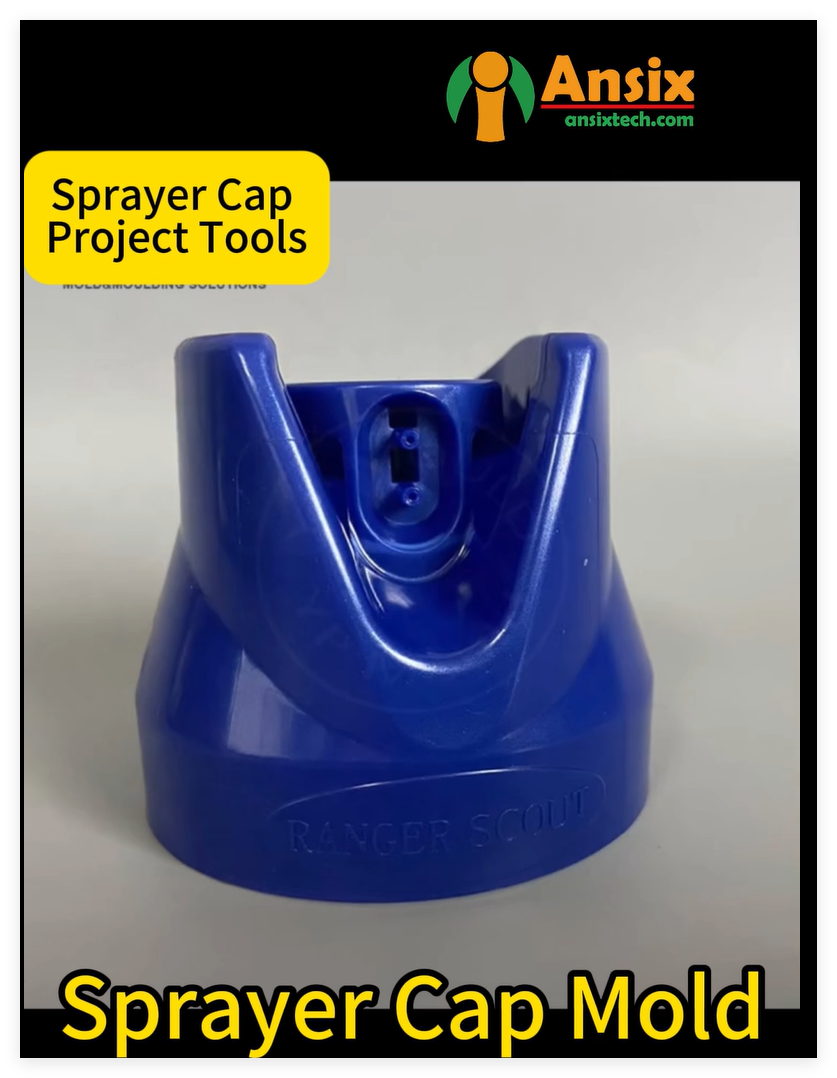
Sprayer Cap Mold
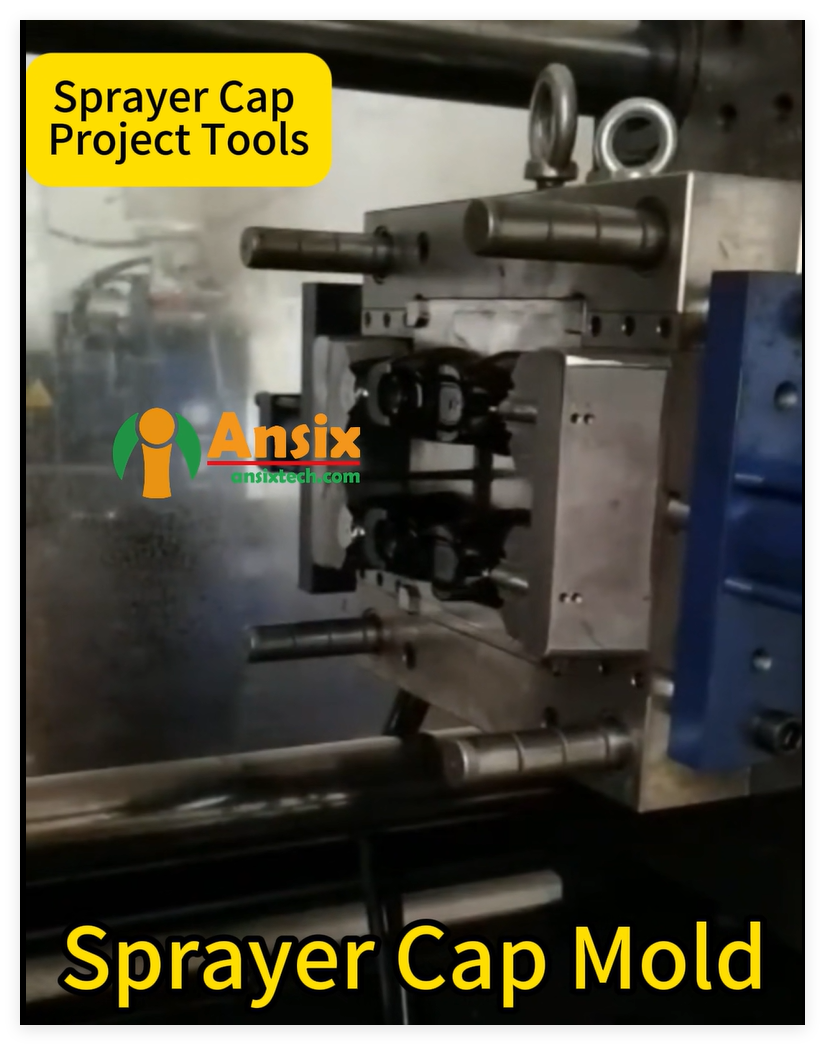
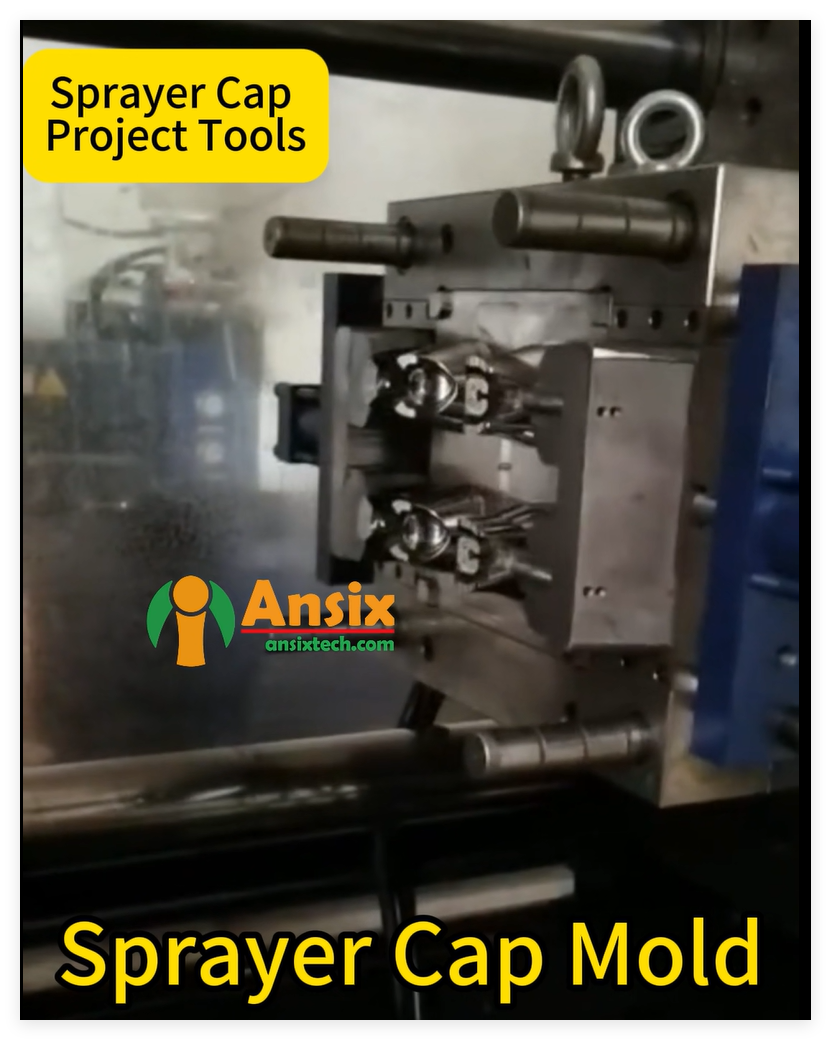
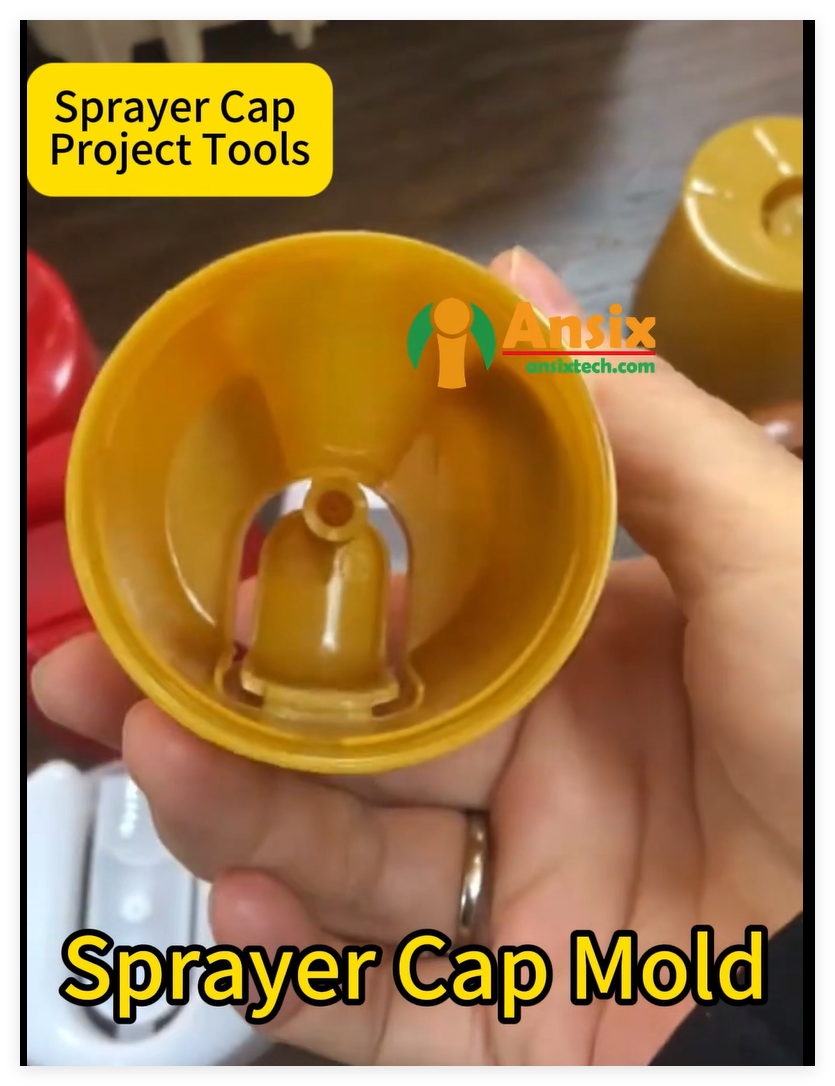
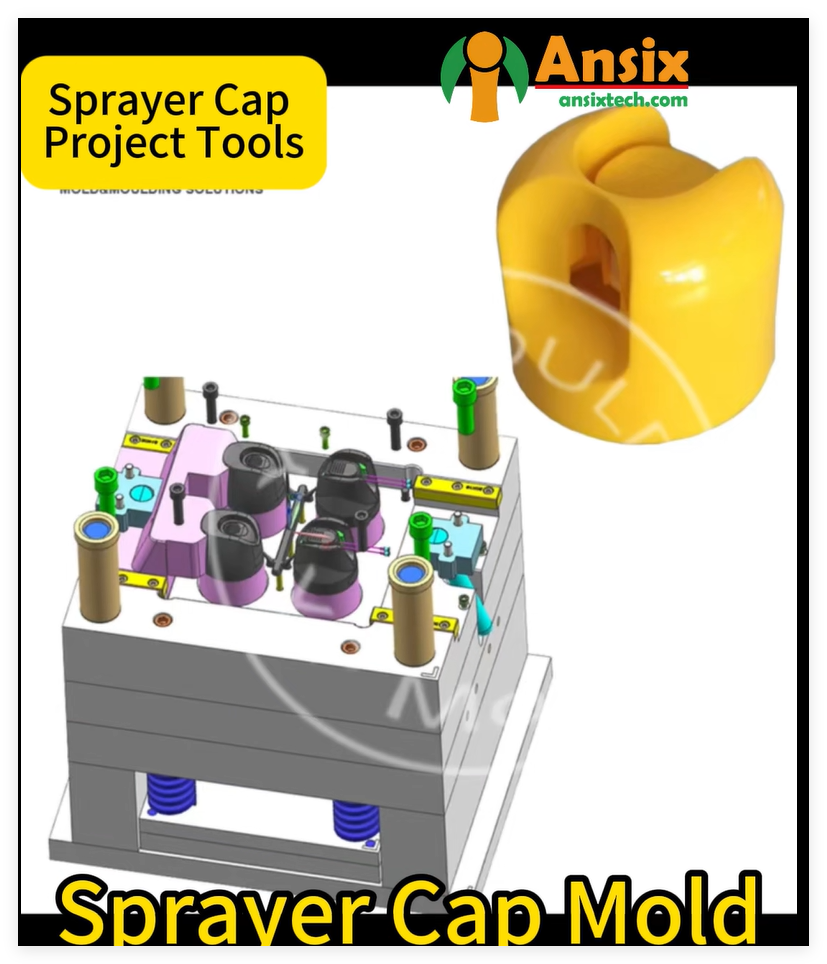
Sprayer Cap Mold

Precision Under Pressure: How Ansix Tech Redefines the Sprayer Cap Mold Landscape Through Engineering Excellence and Strategic Cost Optimization
In the intricate world of high-volume injection molding, few components present as many engineering challenges as the humble sprayer cap. What appears to be a simple consumer product is, in reality, a symphony of micro-precision, material science, and mechanical timing. A sprayer cap—whether for household cleaners, cosmetic lotions, or pharmaceutical dispensers—must engage with a bottle via high-precision threads, accommodate a moving plunger or trigger mechanism, and often incorporate living hinges or tamper-evident bands, all while cycling through production runs that can exceed millions of units annually.
Within this demanding sector, Ansix Tech has carved out a distinct position. With over 28 years of specialized experience in the design and manufacturing of Sprayer Cap Molds, the company has moved beyond being a mere supplier to become a strategic partner in the value chain. For Ansix Tech, the mold is not just a tool; it is the primary engine of profitability for its clients. This article explores the technical depth of Ansix Tech’s operations—from the moment a project is initiated to the final delivery of validated, production-ready molds—and analyzes how the company systematically solves the industry’s most persistent problems: quality inconsistency, high hard costs, and supply chain unreliability.
The Ansix Tech Approach: Project Initiation as a Diagnostic Art
The journey of a sprayer cap mold at Ansix Tech begins not with a CAD file, but with a consultation focused on lifecycle value. Many Mold Makers approach project initiation as a simple translation of client specifications into steel. Ansix Tech, however, views this phase as a diagnostic process designed to identify hidden cost drivers and potential failure modes before they materialize on the production floor.
When a client approaches Ansix Tech, the engineering team engages in what they term “pre-engineering discovery.” This involves a deep dive into the client’s target market, annual volume projections, assembly line integration, and the specific chemical resistance required for the end-use environment. For instance, a sprayer cap intended for aggressive citrus-based cleaning agents requires a vastly different material strategy and ejection system than one designed for a high-viscosity cosmetic lotion.
By positioning its products to meet specific standards and demands of both the client and the broader market, Ansix Tech bridges the gap between conceptual design and mass production. The company’s project management structure is built around transparency. From day one, clients are integrated into a workflow that covers the entire lifecycle: prototype design, manufacturing, validation, mass production, and assembly verification. This holistic view ensures that the mold design is never optimized in isolation but is instead engineered to harmonize with the client’s existing filling lines, capping equipment, and quality assurance protocols.
Solving the Specific Problems of Sprayer Cap Production
The sprayer cap sector is plagued by three specific technical challenges that Ansix Tech has systematically engineered solutions to overcome.
- Thread Geometry and Dimensional Stability
Sprayer caps require precise thread profiles to ensure consistent torque application during high-speed capping operations. Even a micron-level deviation can lead to cross-threading, leaks, or “cap jumping” on automated filling lines. Ansix Tech solves this through hyper-accurate machining of core pins and cavity inserts, combined with advanced simulation that predicts shrinkage behavior across different material batches.
- Tamper-Evident Band Integrity
The tamper-evident (TE) band—the ring that separates from the cap upon first opening—is notoriously difficult to mold. It requires delicate bridge connections that must be strong enough to survive packaging and shipping but weak enough to break cleanly for the end-user. Ansix Tech’s mold designs incorporate sophisticated stripper plate mechanisms and collapsible cores that release these complex undercuts without distorting the delicate bridges.
- Cosmetic Surface Finishes
In the beauty and personal care sector, sprayer caps are a brand statement. Gate blush, sink marks, or weld lines are unacceptable. Ansix Tech leverages high-speed machining and precision polishing to achieve mirror-like finishes on cavity surfaces, ensuring that the final plastic product meets the aesthetic demands of premium consumer brands.
Material Science: The Foundation of Mold Longevity
One of the most critical factors in sprayer cap mold performance is the selection of raw materials for the mold components themselves. Ansix Tech’s 28 years of production experience have resulted in a highly refined material selection protocol. The company understands that the mold material dictates cycle time, maintenance intervals, and part quality.
For high-cavitation sprayer cap molds—often running 24/7 cycles—Ansix Tech predominantly utilizes Stavax ESR (Electro-Slag Remelted) or its equivalent, S136 stainless steel. This martensitic, chromium stainless steel is selected for its exceptional corrosion resistance, a crucial characteristic given that sprayer cap molds often run with aggressive release agents and handle materials like polypropylene (PP) that produce corrosive off-gases at high temperatures. The S136 grade, specifically hardened to 48-52 HRC, offers the wear resistance necessary to withstand the abrasive nature of glass-filled materials used in high-strength sprayer components.
For the core pins—the slender components that form the internal geometry of the sprayer nozzle and dip tube connection—Ansix Tech employs H13 or 1.2344 hot-work tool steel. These grades are chosen for their superior toughness and resistance to thermal fatigue. In sprayer cap molds, the core pins are subjected to the highest thermal stress as plastic is injected around them. By specifying H13 with a vacuum heat treatment process, Ansix Tech ensures that these pins maintain their concentricity over millions of cycles, preventing the “core shift” that leads to uneven wall thickness and product failure.
For components requiring extreme wear resistance—such as slides, lifters, and the shear edges of the cutting mechanism—Ansix Tech integrates Powder Metallurgy (PM) steels like ASP 23 or Vanadis 4 Extra. These materials offer a uniform carbide distribution, providing the edge retention required to maintain clean shear-off points for TE bands over long production runs.
Technical Mastery: From Flow Analysis to Cooling Dynamics
Mold Flow Analysis (DFM)
Before steel is cut, Ansix Tech engages in a rigorous Design for Manufacturability (DFM) process augmented by Mold Flow Analysis. In sprayer cap molds, the geometry is often asymmetric—a thin wall with a thick central hub—which creates a natural tendency for flow imbalance and warpage.
Using software such as Moldex3D or Autodesk Moldflow, Ansix Tech engineers simulate the filling pattern of the polymer. The analysis focuses on the critical balance of the runner system. In a multi-cavity mold—often 8, 16, 32, or even 48 cavities for sprayer caps—flow balance is non-negotiable. Ansix Tech’s simulations ensure that each cavity fills simultaneously at the same pressure and temperature. This prevents overpacking of some cavities while underfilling others, which is the primary cause of dimensional variation across a single shot.
The DFM phase also identifies potential air traps and weld lines. For sprayer caps, weld lines located near the nozzle orifice or thread sealing area are catastrophic. Ansix Tech modifies gate locations and incorporates vacuum venting systems in the mold design to eliminate these defects.
The Cooling System: The Heart of Cycle Time Efficiency
In the sprayer cap sector, time is money. Cycle time directly correlates to part cost. Ansix Tech’s competitive advantage lies in its advanced cooling system designs. Unlike standard mold makers who drill straight cooling lines, Ansix Tech utilizes conformal cooling strategies where possible, and high-pressure baffled and bubbler systems in critical areas.
The challenge in sprayer cap molds is the concentration of heat at the core pins and the gate area. Ansix Tech designs separate cooling circuits for the cavity plate, core plate, and slides. For the core pins—which heat up rapidly due to the injection of molten plastic—Ansix Tech employs spiral cores or thermal pins that circulate water directly through the center of the pin. This localized cooling reduces ejection temperatures significantly, allowing for faster solidification and reduced cycle times by 15-25% compared to standard molds.
The cooling circuit design is meticulously calculated to ensure uniform temperature distribution across the mold face. A delta of even 5°C across cavities can result in mismatched part weights and heights, leading to issues in automated assembly. Ansix Tech’s designs typically maintain a temperature variance of less than 2°C across all cavities, ensuring part consistency.
Runner, Gating, and Ejection Systems
The runner system for sprayer caps is typically designed for hot runner technology to eliminate sprue waste and reduce injection pressure. Ansix Tech partners with leading hot runner suppliers (such as Synventive or Yudo) to implement valve gate systems. Valve gate sequencing is critical for sprayer caps; by timing the opening of the valve pins, Ansix Tech engineers can control the shear rate and molecular orientation of the plastic, ensuring that the threaded area has the required hoop strength to resist splitting during capping.
For the gating system, the “submarine” or “tunnel” gate is the standard for sprayer caps. Positioned on the underside of the cap where it is hidden from view, this gate self-degates upon ejection. Ansix Tech has refined the angle and geometry of these gates to ensure clean break-off without leaving a sharp protrusion that could interfere with the sprayer mechanism or irritate a consumer’s lip.
The ejection system is where many molds fail. Sprayer caps have deep undercuts (threads) and thin walls, making them sticky and difficult to eject. Ansix Tech utilizes a stripper plate ejection system rather than standard ejector pins. The stripper plate pushes the entire cap off the core pins simultaneously. This method distributes the ejection force evenly across the cap’s perimeter, preventing deformation and ensuring that the delicate TE band bridges remain intact. For complex caps with internal splines or locking mechanisms, Ansix Tech integrates collapsible cores that retract radially before the stripper plate actuates, allowing for the release of complex undercuts without dragging or scratching the part surface.
Navigating Manufacturing Challenges: Precision Machining
The translation of a sophisticated design into a physical mold requires a manufacturing environment of extreme precision. Ansix Tech’s facility is equipped with high-speed CNC machining centers, EDM (Electrical Discharge Machining) with graphite and copper electrodes, and wire EDM capabilities.
The primary challenge in sprayer cap mold manufacturing is electrode wear and geometry transfer. Because the cavities for sprayer caps are often deep and require high polishability, Ansix Tech relies heavily on CNC machining for roughing, followed by EDM for finishing complex contours. The company employs graphite electrodes for roughing due to their ability to hold intricate shapes, and copper electrodes for finishing where a superior surface finish is required to minimize polishing time.
Polishing itself is a critical skill. The cavities must be polished to a mirror finish (SPI A1 or A2) to allow the plastic to flow freely and to release easily. However, over-polishing can round sharp edges, particularly at the TE band shear interface. Ansix Tech technicians use a combination of diamond compounds and ultrasonic polishing equipment to achieve the required surface texture without compromising the sharp geometric features required for the band’s clean break.
The Processing Workflow: Precision Meets Validation
Ansix Tech’s manufacturing workflow is a closed-loop system designed to prevent defects from propagating.
Steel Procurement and Inspection: Raw materials (S136, H13, etc.) are certified and inspected for hardness and microstructure using a Rockwell hardness tester and microscope. Incoming steel is ultrasonically tested to ensure no voids or inclusions exist.
CNC Roughing: Large stock allowances are removed, and stress-relieving heat treatments are applied to prevent warpage during finishing.
Precision Finishing: High-speed milling (HSM) achieves tolerances of ±0.002mm. For complex geometries, EDM is used.
Fitting and Assembly: Mold bases (typically standardized to DME or HASCO standards) are assembled. The fit of slides and lifters is checked; in sprayer cap molds, slides must move with zero hesitation to prevent flashing on the cap’s trigger mechanism.
Mold Validation: This is the most critical phase. Ansix Tech operates a dedicated in-house injection molding workshop. Every mold undergoes rigorous testing using the client’s specified resin.
Validation, Process Optimization, and Cost Control
Ansix Tech’s validation process is exhaustive. It is not merely a test of the mold; it is an optimization of the client’s future production economics.
During the Trial Run (TO), the engineering team documents a comprehensive process window. They perform Design of Experiments (DOE) to map the acceptable ranges for melt temperature, injection pressure, holding pressure, and cooling time. For sprayer caps, the DOE focuses on three key outputs: cap height, torque retention, and visual quality.
The validation process also includes CMM (Coordinate Measuring Machine) inspection of the first articles. Every critical dimension—thread pitch diameter, inside diameter of the nozzle seat, height of the TE band—is measured and documented. A full GR&R (Gauge Repeatability and Reproducibility) study is often conducted to ensure that the measurement systems used to verify the parts are accurate.
Optimizing Injection Molding: Efficiency and Cost
Once the mold is validated, Ansix Tech assists clients in optimizing the injection molding process. The company focuses on three levers for cost control:
Cycle Time Reduction: By fine-tuning the cooling system and optimizing the recovery time of the screw, Ansix Tech helps clients shave fractions of a second off each cycle. Over a run of 10 million parts, a 0.5-second reduction can translate to thousands of hours of machine time saved.
Material Utilization: By ensuring perfect gate balance and minimizing drool or stringing in hot runners, Ansix Tech reduces scrap rates. In high-speed molding, scrap rates of 2-3% are often considered acceptable; Ansix Tech engineers target <0.5% scrap through optimized process windows.
Cavitation Strategy: Ansix Tech advises clients on the optimal number of cavities. While a 48-cavity mold offers the highest output per cycle, it requires a larger injection molding machine and a more complex cooling system. Ansix Tech performs a total cost of ownership (TCO) analysis to help clients determine whether a 32-cavity mold on a smaller, faster machine yields a better ROI than a 48-cavity mold on a large, capital-intensive press.
Quality Assurance, Packaging, and Rapid Delivery
Quality control at Ansix Tech is integrated into every stage of manufacturing, not relegated to a final inspection checkpoint. The company employs in-process inspections at each machining station. After validation, the molds undergo a final inspection that includes:
Water Flow Testing: To ensure all cooling circuits are free of obstructions and meet specified flow rates.
Electrical Testing: For hot runner systems, ensuring no ground faults or thermocouple failures.
Corrosion Protection: Given the sensitivity of the steel grades used, molds are treated with anti-rust coatings before packaging.
Packaging is a critical element often overlooked by mold makers. Ansix Tech uses heavy-duty wooden crates with desiccants and VCI (Vapor Corrosion Inhibitor) paper to protect the mold during transit, particularly for international shipments where humidity and transit times vary.
The company’s rapid delivery capabilities stem from its vertical integration. By controlling the entire workflow—from steel cutting to assembly—Ansix Tech eliminates the bottlenecks associated with outsourcing critical operations like heat treatment or EDM. For clients facing production line downtime, Ansix Tech offers expedited replacement parts (cavities, cores, ejector pins) with lead times measured in days rather than weeks.
Reducing Hard Costs: Ansix Tech’s Strategic Advantage
Perhaps the most compelling value proposition Ansix Tech offers is its strategic approach to reducing the “hard costs” of production. In the consumer goods industry, the cost of the sprayer cap is a significant line item in the bill of materials. Ansix Tech helps clients lower this cost not by compromising on quality, but by optimizing the interdependencies between the mold, the material, and the manufacturing process.
- Material Optimization:
Ansix Tech frequently collaborates with clients to select the optimal resin. While a client might specify a premium virgin resin out of habit, Ansix Tech’s 28 years of experience allow it to recommend alternative formulations—such as specific PP copolymers or HDPE grades—that meet mechanical requirements at a lower cost per kilogram. Because the mold is designed with the specific shrinkage and flow characteristics of these materials in mind, the client gains the flexibility to switch to cost-effective materials without retooling.
- Wear Component Standardization:
Wear and tear on molds is a hidden cost. When a core pin breaks or a slide wears down, the client pays for replacement parts and downtime. Ansix Tech uses interchangeable cavity inserts and standardized wear plates. Instead of replacing an entire mold base when wear occurs, clients can replace a standardized, low-cost insert. This modular approach lowers the long-term maintenance cost and ensures that the mold remains in production for decades rather than years.
- Automation-Ready Design:
Labor is a significant hard cost in assembly. Ansix Tech designs sprayer cap molds with unscrewing mechanisms that are fully synchronized with robotic take-out systems. By ensuring that the mold’s ejection sequence is timed perfectly with downstream automation (vision inspection systems, conveyors, and assembly robots), Ansix Tech enables clients to run “lights-out” manufacturing—24-hour production with minimal human intervention. This dramatically lowers the unit cost per cap.
Conclusion: Delivering Reliability and Tangible Value
In an industry where the margin for error is measured in microns and the cost of failure is measured in millions of dollars, Ansix Tech stands as a bastion of reliability. The company’s 28-year trajectory in the Sprayer Cap Mold sector is a testament to its ability to adapt to evolving market demands—from the rise of sustainable materials (such as PCR, Post-Consumer Recycled resins, which behave differently in molds) to the increasing aesthetic complexity demanded by luxury brands.
By mastering the full lifecycle—from prototype design, manufacturing, and validation, to mass production and assembly verification—Ansix Tech eliminates the friction that typically exists between mold makers and injection molders. The company solves the specific problems of thread integrity, TE band functionality, and cosmetic perfection through rigorous engineering and a deep understanding of material science.
For clients, the value is quantifiable. It is seen in reduced scrap rates, faster cycle times, lower maintenance costs, and the elimination of costly production stoppages. Ansix Tech’s strategic focus on reducing hard costs—through material optimization, modular design, and automation integration—ensures that the initial investment in a high-quality mold is recouped many times over through operational savings.
Ultimately, in the competitive landscape of consumer packaging, Ansix Tech provides more than just a mold; it provides the assurance of production continuity. With a proven track record of delivering complex, high-cavitation sprayer cap molds with guaranteed on-time delivery and uncompromising quality validation, Ansix Tech has established itself not merely as a manufacturer, but as a strategic asset to its clients. As the packaging industry continues to evolve toward greater efficiency and sustainability, Ansix Tech’s engineering-led approach positions it to remain at the forefront, turning the complex challenge of the sprayer cap into a streamlined, cost-effective success story.






Ansix Tech Co Ltd
If you have any plans related to Sprayer Cap Mold , you can contact us at any time. We will turn your ideas into reality, let you realize your dreams, and obtain large orders from the market. Our contact information is info@ansixtech.com. Or contact our CTO, mail: stephen@ansixtech.com
#www.ansixtech.com #ansixtech.com #Sprayer Cap Mold #Sprayer Cap Mold #Sprayer Cap Mold injection molding company #Sprayer Cap Mold injection mold companies #Ansix #Ansix moulds #Ansix china #Ansix tech china #Ansix tech company #Ansix facotry #Ansix Tech #Ansix molds #Ansix injection molding #Ansix mold factory #injection molding Sprayer Cap Mold #Ansix mold factory #Sprayer Cap Mold china #Sprayer Cap Mold molds #injection factory #Sprayer Cap Mold injection molding #Sprayer Cap Mold injection molding factory #injection molding company #Sprayer Cap Mold injection mold companies #Sprayer Cap Mold#Sprayer Cap Mold mold limited #Ansix mold china #Ansix companies #Ansix company China #Sprayer Cap Mold facotry #Ansix Tech #Ansix Tech mould #Sprayer Cap Mold injection moulding #injection moulding company #Ansix Sprayer Cap Mold parts injection mold companies #Sprayer Cap Mold #Sprayer Cap Mold china #Sprayer Cap Mold china factory #Ansix moulding companies #Ansix molding company #Sprayer Cap Mold injection moulding facotry #Ansix Tech mold #Sprayer Cap Mold mould #Sprayer Cap Mold plastic injection molding #ansix plastic mold #Mold manufacturing #Sprayer Cap Mold parts manufacturing #Sprayer Cap Mold plastic parts factory #Sprayer Cap Mold injection parts mold #Sprayer Cap Mold PRECISION MANUFACTURING #Sprayer Cap Mold #China mold #Sprayer Cap Mold injection moulding china #Sprayer Cap Mold mould china #china precision mold #mold in china #Sprayer Cap Mold mold china #Precision molds #High-precision molds #Sprayer Cap Mold #Injection molds #Sprayer Cap Mold Factory #Sprayer Cap Mold Company #Super Large Injection Mold Factory #Large Tonnage Injection Molding Factory #Sprayer Cap Mold Company #Sprayer Cap Mold Factory #2800T Injection Molding Factory #3000 Ton Injection Molding #4500 Ton Injection Molding Factory #Large Mold Injection Molding #Large Plastic Mold Injection Molding Factory #Large Injection Mold Manufacturer #Plastic Mold Factory #Injection Mold #Plastic Mold