



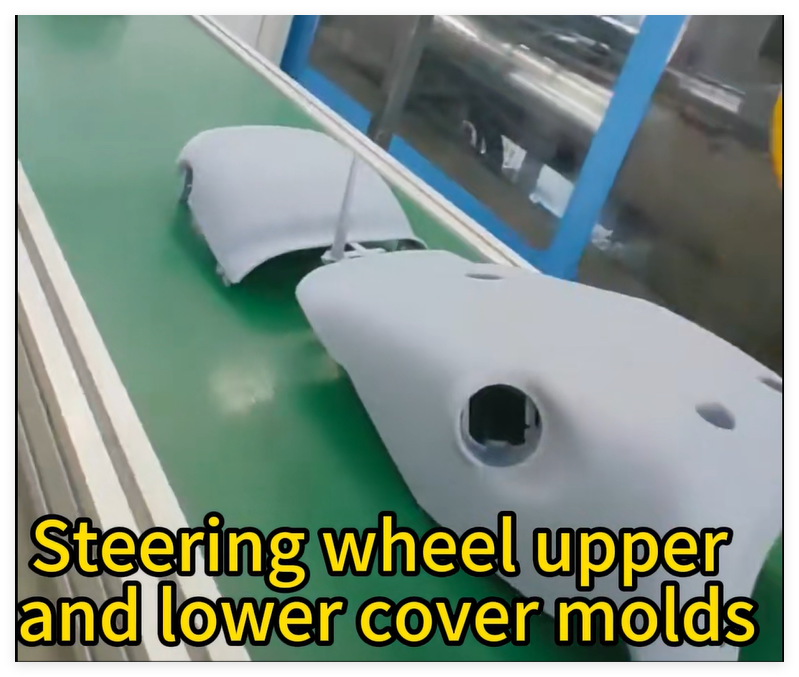
Steering wheel upper and lower cover molds
Steering wheel upper and lower cOver Molds

Precision Engineering: Ansix Tech's Advanced Approach to Steering Wheel Cover Injection Molding
The Automotive Injection Molding Revolution
The global automotive mold industry is experiencing unprecedented transformation, driven by technological advancements and shifting market demands. Recent industry data indicates that the global automotive mold market is projected to reach $240 billion by 2025, with a steady compound annual growth rate of 6.8% . Within this expanding market, interior component molds—particularly for critical elements like steering wheel assemblies—represent one of the most dynamic segments. As vehicles evolve toward electrification and smart connectivity, these once purely functional components have become integrated interfaces combining aesthetics, ergonomics, and technology.
Within this competitive landscape, Ansix Tech has established itself as a leader in precision mold manufacturing for automotive applications. Specializing in the design and production of steering wheel upper and lower cover molds, the company has developed proprietary methodologies that address the complex challenges of modern automotive interior manufacturing. With automotive manufacturers under increasing pressure to reduce development cycles while enhancing quality standards, Ansix Tech's integrated approach—combining advanced design simulation with practical manufacturing expertise—provides clients with reliable solutions that accelerate time-to-market while optimizing production economics.
Design and Engineering: The Foundation of Precision
Material Selection for Performance and Economy
The selection of appropriate materials represents a critical first decision in steering wheel cover manufacturing, balancing performance requirements with cost considerations. For upper and lower covers, which serve both structural and aesthetic functions, material properties must satisfy diverse criteria including impact resistance, dimensional stability, temperature resilience, and surface finish quality.
Table: Common Material Options for Steering Wheel Covers

Historically, ABS plastic has served as the industry standard for steering wheel covers due to its balanced properties and favorable economics. According to technical specifications, ABS offers a density of 1.02-1.05 g/cm³ with theoretical shrinkage rates of approximately 0.6%—critical parameters for dimensional accuracy in final components . The material provides adequate impact resistance for safety considerations while accepting various surface finishes ranging from textured patterns to high-gloss appearances.
For enhanced performance applications, fiber-reinforced composites are increasingly employed. Research from thyssenkrupp Presta AG demonstrates that components manufactured with 50% glass-fiber reinforced polyamide can achieve weight reductions up to 50% compared to traditional metal housings while maintaining or exceeding structural requirements . These materials are particularly valuable in meeting stringent CO₂ emission standards (such as the EU's 95 g/km limit) through vehicle lightweighting initiatives. The mean-field homogenization approach allows engineers to predict macroscopic material behavior based on microscopic fiber orientation—a crucial capability when working with reinforced polymers .
DFM Analysis and Mold Flow Optimization
Prior to mold fabrication, Design for Manufacturing (DFM) analysis represents a critical phase in Ansix Tech's development process. Utilizing advanced simulation tools, engineers conduct comprehensive mold flow analyses to anticipate and resolve potential manufacturing challenges before physical tooling begins. This proactive approach significantly reduces development iterations, with industry data indicating that CAD/CAM software combined with simulation technology can shorten design cycles by up to 40% .
Key considerations in DFM for steering wheel covers include:
Wall thickness uniformity to minimize sink marks and warpage
Optimal gate locations to ensure complete filling with minimal stress
Weld line positioning in non-critical visual or structural areas
Draft angle optimization for efficient part ejection
Rib design to enhance stiffness without creating thick sections
The integration of AI simulation and digital twin technology further enhances this analytical phase, effectively reducing the number of physical trial runs required for mold validation . These digital tools enable engineers to simulate various material behaviors under different processing conditions, identifying the optimal balance between fill time, injection pressure, and cooling parameters before committing to steel.
Manufacturing Process: From Concept to Production
Prototype Development and Verification
The transition from digital design to physical prototype represents a critical validation milestone in steering wheel cover development. Ansix Tech follows a structured prototyping methodology that aligns with automotive industry standards, beginning with rapid prototype parts produced through techniques like 3D printing or soft tooling. These initial prototypes primarily serve to verify dimensional accuracy and assembly fit with adjacent components.
According to automotive development protocols, prototype evaluation extends beyond simple dimensional checks to encompass functional testing under simulated operating conditions . For steering wheel covers, this includes assessments of:
Ergonomics and human-machine interface considerations
Surface texture and tactile feedback characteristics
Durability under thermal cycling and UV exposure
Assembly compatibility with underlying structures and electronic components
The prototype verification phase also serves to validate manufacturing assumptions, particularly regarding material flow characteristics and cooling behavior. By comparing physical prototype performance against simulation predictions, engineers refine processing parameters and identify potential modifications to optimize the final production mold design.
Mold Design Engineering
The architectural design of the injection mold represents a technical cornerstone of successful steering wheel cover production. Ansix Tech approaches mold design as an integrated system, balancing multiple functional requirements within a cohesive tooling architecture.
Core and Cavity Design: For steering wheel covers, which typically feature complex three-dimensional geometries with both aesthetic surfaces and functional mounting features, the separation between core and cavity components requires meticulous planning. The parting line placement must accommodate both geometric requirements and ejection considerations while minimizing visible witness lines on finished components. In cases involving undercuts or complex side features, collapsible core mechanisms or side-action systems are engineered to enable part release without compromising dimensional integrity.
Cooling System Optimization: Given that approximately 80% of the injection molding cycle is dedicated to cooling, the thermal management design significantly impacts production efficiency . Ansix Tech employs conformal cooling channel technology that follows the three-dimensional contours of the mold surface, providing uniform heat extraction and reducing cycle times by up to 30% compared to conventional straight-drilled channels. This approach not only enhances productivity but also minimizes thermal gradients that contribute to part warpage and dimensional variation.
Ejection System Engineering: The ejection mechanism must accommodate the geometric complexity of steering wheel covers while applying uniform force to prevent distortion or surface damage. Strategically placed ejector pins, sleeves, and blades work in coordination with optimized draft angles (typically 1-3° depending on texture depth) to ensure consistent part release. For components with particularly challenging geometries, Ansix Tech often incorporates air-assisted ejection or partial mold rotation to facilitate part removal without compromising cycle time.
Steel Selection and Mold Fabrication
The choice of mold base material directly influences tooling longevity, maintenance requirements, and ultimately, part quality consistency. For steering wheel cover production, which typically involves high-volume manufacturing runs, Ansix Tech selects premium-grade steels with specific characteristics:
P20 pre-hardened steel for most mold bases, offering good machinability and polishability
H13 hot-work steel for cores and cavities in high-wear areas, providing enhanced resistance to abrasive glass-filled materials
Stainless steel variants for components exposed to corrosive cooling water additives
Advanced machining capabilities, including high-speed CNC milling, electrical discharge machining (EDM), and precision grinding, ensure dimensional tolerances within ±0.02mm—exceeding typical automotive requirements by approximately 40% . This precision is particularly critical for steering wheel covers, where seam alignment between upper and lower components directly impacts perceived quality and customer satisfaction.
Production Challenges and Technical Solutions
Addressing Injection Molding Complexities
The production of steering wheel covers presents distinct manufacturing challenges that require specialized solutions. Among the most significant is dimensional stability management, as the relatively large surface area and thin-walled construction make these components particularly susceptible to warpage during cooling. Ansix Tech addresses this challenge through a multipronged approach:
Balanced filling patterns achieved through carefully positioned gates and runner systems
Staged packing pressure profiles that compensate for material shrinkage without inducing residual stress
Precision temperature control across multiple mold zones to maintain uniform cooling rates
Another persistent challenge involves surface defect prevention, particularly sink marks over thicker sections and visible flow lines on Class-A surfaces. Through strategic use of gas-assisted injection in designated areas and optimized holding pressure parameters, these aesthetic imperfections are minimized without compromising structural integrity.
For molds producing glass-filled materials, abrasive wear on flow channels and gate areas represents an additional concern. Ansix Tech implements specialized surface treatments including nitriding and PVD coatings to extend tooling life between maintenance intervals, with some premium coatings demonstrating up to 8 times the wear resistance of untreated steels.
Quality Assurance and Process Control
Maintaining consistent quality across high-volume production runs requires implementation of robust process controls and comprehensive inspection protocols. Ansix Tech's quality management system integrates multiple verification methodologies:
Statistical Process Control (SPC) monitoring of critical parameters including injection pressure, temperature profiles, and cycle times
In-mold sensor technology that provides real-time feedback on cavity pressure and temperature distribution
Automated vision systems for 100% inspection of critical dimensions and surface characteristics
According to industry best practices, establishing a scientific molding process with documented parameters represents the foundation of consistent quality . By developing and maintaining a process window that accommodates normal material and environmental variations, Ansix Tech minimizes the need for reactive adjustments that can introduce quality inconsistencies.
The implementation of decoupled molding techniques, combined with cavity pressure sensors, enables compensation for material viscosity variations that might otherwise result in short shots or flash . This approach is particularly valuable when working with cost-optimized resin grades that may exhibit broader property variations than premium materials.
Cost Optimization: Delivering Value Through Efficiency
Strategic Material Utilization
One of the most significant opportunities for cost reduction in steering wheel cover production lies in optimized material selection and utilization. Ansix Tech employs a tiered approach to material strategy:
For standard applications where regulatory and performance requirements permit, carefully evaluated wide-specification resins can reduce material costs by 15-25% compared to premium-grade alternatives. Through advanced process monitoring and control, the inherent variability of these materials is managed without compromising finished part quality. This approach requires sophisticated real-time viscosity monitoring and dynamic adjustment of injection parameters, capabilities that Ansix Tech has developed through specialized sensor integration and control algorithms.
Beyond material grade selection, physical material utilization represents another key optimization area. Through runner system minimization and strategic use of hot runner technology, Ansix Tech typically achieves material utilization rates exceeding 95% for steering wheel cover production—significantly higher than the industry average of 85-90% for similar components. This efficiency not only reduces direct material costs but also minimizes recycling requirements for sprues and runners.
Production Efficiency Enhancements
Cycle time optimization stands as another critical component of Ansix Tech's value delivery model. Through systematic analysis and improvement of each phase of the injection cycle, the company has demonstrated consistent reductions in production time while maintaining quality standards:
Table: Cycle Time Optimization Strategies for Steering Wheel Covers

These incremental improvements compound to deliver overall cycle time reductions of 20-25% compared to conventional approaches—a significant competitive advantage in high-volume automotive production where equipment utilization directly impacts unit economics.
Beyond the molding process itself, automation integration further enhances operational efficiency. Automated part removal, inspection, and packaging systems minimize labor requirements while improving consistency. According to industry analysis, comprehensive automation of handling processes can reduce variability in cycle times by up to 40%, translating directly to improved production predictability and resource planning .
Tooling Longevity and Maintenance Optimization
The total cost of ownership for injection molds extends far beyond initial fabrication expenses, encompassing maintenance, repair, and potential production downtime. Ansix Tech addresses these lifecycle considerations through several strategic approaches:
Preventive maintenance protocols based on shot count rather than calendar intervals ensure that wear components are replaced before they fail during production. By tracking cavity pressure trends and monitoring for gradual changes in ejection resistance, maintenance can be scheduled during planned production breaks rather than as emergency interventions.
Modular mold design facilitates the replacement of high-wear components without requiring complete mold disassembly. For steering wheel cover production, this approach specifically targets gate inserts, ejector pins, and sliding components—elements most susceptible to wear—reducing typical maintenance downtime by 50-60%.
Conclusion: Engineering Excellence in Automotive Manufacturing
The manufacturing of steering wheel upper and lower covers represents a microcosm of modern automotive production challenges, balancing aesthetic requirements, structural performance, ergonomic considerations, and economic realities. Within this complex landscape, Ansix Tech has established a distinctive position through integrated expertise spanning material science, precision engineering, and production optimization.
As the automotive industry continues its transformation toward electrification and autonomous operation, the role of interior components—particularly steering system elements—will evolve in both function and significance. With its foundation in technical excellence and process innovation, Ansix Tech is positioned to support this evolution while delivering measurable value through reduced component costs, accelerated development cycles, and enhanced quality consistency.
The company's demonstrated capabilities in steering wheel cover production reflect a broader commitment to advancing injection molding technology through scientific principles and practical innovation—an approach that benefits not only automotive manufacturers but ultimately the consumers who interact with these precisely engineered components every time they enter a vehicle.


Ansix Tech Co Ltd
If you have any plans related to Steering wheel upper and lower cover molds , you can contact us at any time. We will turn your ideas into reality, let you realize your dreams, and obtain large orders from the market. Our contact information is info@ansixtech.com. Or contact our CTO, mail: stephen@ansixtech.com
#www.ansixtech.com #ansixtech.com #Steering wheel upper and lower cover molds #Ansix mold factory #Ansix injection molding #Ansix mould Ltd #Steering wheel upper and lower cover molds injection molding factory #Ansix injection mould #Steering wheel upper and lower cover molds factory #Steering wheel upper and lower cover molds injection molding company #Steering wheel upper and lower cover molds injection mold companies #Ansix #Ansix moulds #Ansix china #Ansix tech china #Ansix tech company #Ansix facotry #Ansix Tech #Ansix molds #Ansix injection molding #Ansix mold factory #injection molding Steering wheel upper and lower cover molds # Ansix mold factory #Steering wheel upper and lower cover molds china #Steering wheel upper and lower cover molds precision molds #injection factory #Steering wheel upper and lower cover molds precision injection molding #L-shaped medical tumold injection molding factory #injection molding company #Steering wheel upper and lower cover molds injection mold companies #Steering wheel upper and lower cover molds factory #Steering wheel upper and lower cover molds mold limited #Ansix mold china #Ansix companies #Ansix company China #Steering wheel upper and lower cover molds facotry #Ansix Tech #Ansix Tech mould #Steering wheel upper and lower cover molds injection moulding #injection moulding company #Ansix Steering wheel upper and lower cover molds parts injection mold companies #Steering wheel upper and lower cover molds #Steering wheel upper and lower cover molds china #Steering wheel upper and lower cover molds china factory #Ansix moulding companies #Ansix molding company #Steering wheel upper and lower cover molds injection moulding facotry #Ansix Tech mold #Steering wheel upper and lower cover molds precision mould #Steering wheel upper and lower cover molds plastic injection molding #ansix plastic mold #Mold manufacturing #Steering wheel upper and lower cover molds parts manufacturing #Steering wheel upper and lower cover molds plastic parts factory #Steering wheel upper and lower cover molds injection parts mold #Steering wheel upper and lower cover molds PRECISION MANUFACTURING #Steering wheel upper and lower cover molds precision #China mold #Steering wheel upper and lower cover molds injection moulding china #Steering wheel upper and lower cover molds mould china #china precision mold #mold in china #Steering wheel upper and lower cover molds precision mold china #Precision molds #High-precision molds #Car door lock molding die #Injection molds #Steering wheel upper and lower cover molds Factory #Steering wheel upper and lower cover molds Company #Super Large Injection Mold Factory #Large Tonnage Injection Molding Factory #Steering wheel upper and lower cover molds Company #Super Steering wheel upper and lower cover molds Factory #2800T Injection Molding Factory #3000 Ton Injection Molding #4500 Ton Injection Molding Factory #Large Mold Injection Molding #Large Plastic Mold Injection Molding Factory #Large Injection Mold Manufacturer #Plastic Mold Factory #Injection Mold #Plastic Mold