



Tactile brush mold
Tactile brush mold

The Art and Science of Precision: Ansix Tech's Tactile Brush Mold Project Revolutionizes Injection Molding
In a factory in Suzhou, a precisely engineered block of polished steel transforms into a complex mold, ready to produce millions of tactile brush components with tolerances finer than a human hair. This is where engineering precision meets mass production efficiency, creating products found in bathrooms worldwide.
Injection molding stands as one of the most dominant manufacturing processes for plastic components globally, producing everything from medical devices to automotive parts with unmatched efficiency and consistency. At the intersection of material science and precision engineering lies the specialized field of brush component manufacturing, where Ansix Tech has carved out a reputation for excellence.
The company's recent Tactile Brush Mold Project showcases how advanced simulation technologies, strategic material selection, and refined processing techniques can significantly reduce client costs while improving product quality. This comprehensive approach transforms how everyday products are manufactured, delivering both reliability and value in competitive consumer markets.
1 The Tactile Brush Project: Engineering for Performance
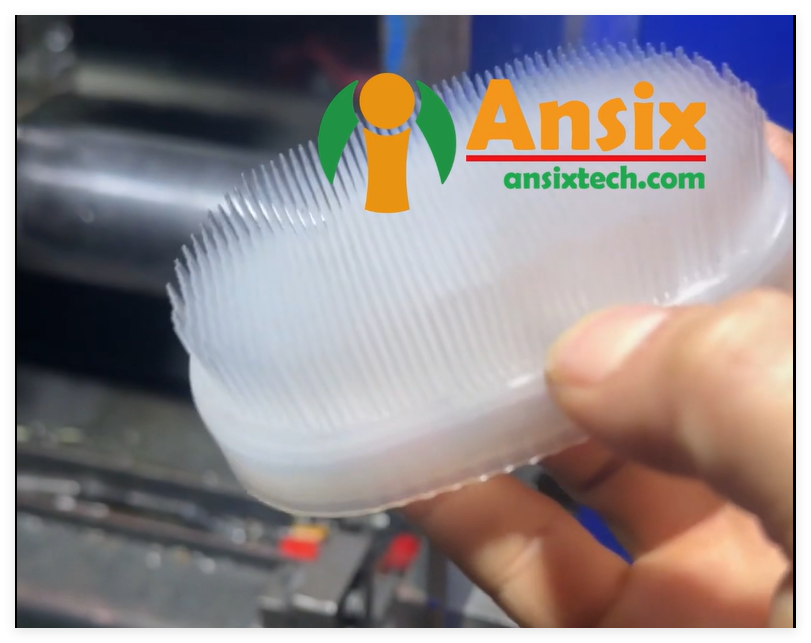
The Tactile brush represents a sophisticated personal care product designed for optimal cleaning performance and user comfort. Unlike conventional brushes, the Tactile design incorporates multiple material components including both rigid structural elements and flexible brushing surfaces. This multi-material approach requires exceptional precision in manufacturing to ensure proper integration and longevity of the final product.
Ansix Tech's involvement began during the conceptual design phase, where engineers collaborated with the client to translate aesthetic and functional requirements into manufacturable geometries. The brush design presented particular challenges including thin-walled sections for flexibility, intricate bristle patterns, and precise interfaces for assembly with handles or electrical components in powered versions.
"The Tactile project exemplified our philosophy of early engagement," explains Michael Chen, Ansix Tech's Head of Engineering. "By participating in the design stage, we identified potential manufacturing obstacles before they became costly redesigns. Our approach focuses on design for manufacturability from the outset, which ultimately delivers better products at lower costs for our clients."
2 From Virtual Design to Physical Prototype
The journey from concept to production began with advanced 3D modeling using sophisticated computer-aided design tools. Ansix engineers created detailed digital representations of each mold component, paying particular attention to the complex bristle formations and varying wall thicknesses throughout the brush head.
2.1 Design Verification Through Simulation
Before any steel was cut, Ansix implemented comprehensive simulation protocols using Moldex3D Flow analysis software. This technology enables engineers to perform virtual mold trials that predict how melted plastic will flow through the mold cavities. The simulations identified potential issues including:
Weld line formations where separate material flows meet
Air traps that could cause incomplete filling or surface defects
Uneven cooling patterns that might lead to part warpage
Pressure variations across different sections of the mold
According to recent research published in The International Journal of Advanced Manufacturing Technology, such "numerical simulation of mold filling enables preliminary part and Mold Design without experiments, significantly reducing development time and cost".
2.2 Prototyping for Physical Validation
Following simulation, Ansix created functional prototypes using a multi-stage approach. Initial prototypes were produced via 3D Printing to validate form, fit, and basic function. Subsequent prototypes used soft tooling—less expensive temporary molds—to produce parts with material properties closer to the final production intent.
"This staged prototyping approach allows our clients to conduct real-world testing early in the development cycle," notes Chen. "For the Tactile brush, this meant testing bristle flexibility, grip comfort, and durability under simulated use conditions long before committing to expensive production tooling."
Table 1: Key Material Properties for Tactile Brush Components

3 Strategic Material Selection
The Tactile brush's performance hinges on the precise material selection for different components. Ansix engineers evaluated numerous polymer options based on mechanical properties, chemical resistance, processing characteristics, and cost considerations.
3.1 Material Composition Decisions
For the structural components, Ansix selected glass-filled polybutylene terephthalate (PBT). This engineering thermoplastic offers excellent dimensional stability, heat resistance, and stiffness—critical properties for maintaining brush integrity during use. The glass fibers enhance strength while allowing for thin wall sections that reduce material usage without compromising performance.
The flexible brushing surfaces utilize a thermoplastic elastomer (TPE) specifically formulated for personal care applications. This material provides the necessary compliance for comfortable brushing while maintaining resilience against deformation. The selected TPE grade exhibits elongation at break values of 150-350%, ensuring it withstands repeated flexing without failure.
3.2 Cost Optimization Through Material Science
Ansix's material strategy directly addresses client cost concerns through several mechanisms:
Right-sizing material properties rather than over-engineering components
Selecting readily available grades with competitive pricing in commercial volumes
Optimizing wall thickness to use minimal material while meeting performance requirements
Choosing materials with similar processing temperatures to streamline manufacturing
"Material selection represents one of the most significant opportunities for cost reduction in injection molding," explains Dr. Li Wei, Ansix's Materials Specialist. "By understanding the precise performance requirements of each component, we can recommend materials that meet these needs without unnecessary expense. For the Tactile brush, our recommendations reduced material costs by approximately 18% compared to the client's initial specifications."
4 The Precision of Mold Flow Analysis
Before manufacturing the production mold, Ansix conducted exhaustive mold flow analysis (DFM) to optimize the injection molding process. Using Moldex3D Flow software, engineers simulated the complete filling, packing, and cooling stages to identify potential manufacturing issues.
4.1 Advanced Simulation Capabilities
The flow analysis module employed by Ansix provides true three-dimensional simulation of thermoplastic material behavior during injection. Unlike simplified 2D analyses, this approach accurately predicts complex flow phenomena including fountain flow, inertial effects, and gravity influences. This level of detail proved particularly valuable for the Tactile brush with its varying wall thicknesses and intricate bristle formations.
Key insights gained from the analysis included:
Optimal gate locations to ensure balanced filling and minimize weld lines
Pressure requirements for complete cavity filling without overpacking
Cooling channel placement to achieve uniform temperature distribution
Identification of potential air traps that could cause burning or incomplete filling
4.2 Validating Simulation Accuracy
According to research published in 2022, "the numerical model nicely fits experimental results despite some slight deviations in early filling stages". Ansix follows this validated approach, using simulation to guide design decisions while acknowledging that real-world conditions may require fine-tuning. This philosophy balances the efficiency of virtual prototyping with the practical realities of manufacturing.
5 Engineering Excellence in Mold Design
The mold itself represents a masterpiece of precision engineering, comprising numerous components that must function in perfect harmony through millions of cycles.
5.1 Mold Steel Selection: Balancing Performance and Economics
Ansix selected mold steels based on component requirements, surface finish specifications, and projected production volumes. The company follows a systematic approach to steel selection considering:
Part material characteristics including corrosiveness and abrasiveness
Surface finish requirements from textured to high-polish
Projected production volumes and corresponding mold life expectations
Thermal conductivity needs for efficient heat transfer
Table 2: Mold Steel Characteristics for Different Applications

For the Tactile brush mold, Ansix implemented a hybrid steel strategy. Core structural components utilized P20 steel for its balance of machinability, polishability, and cost. High-wear areas including gate locations and intricate bristle formations incorporated H13 steel inserts for extended service life. This approach optimized both performance and cost-effectiveness.
5.2 Cooling System Innovation
The mold's cooling system represents a critical factor in both product quality and production efficiency. Ansix designed a multi-zone cooling system tailored to the Tactile brush's geometry, incorporating different approaches based on section thickness:
Direct cooling channels in thicker core sections
Baffle-cooled areas where direct channels weren't feasible
Heat-conductive inserts in areas requiring intensive cooling
Zoned temperature control for different mold regions
"Proper cooling design reduces cycle times by up to 30% while improving part consistency," notes Chen. "For the Tactile project, our cooling optimization shaved 4.2 seconds off the cycle time, which translates to significant production capacity increases over the mold's lifetime."
6 The Manufacturing Challenge: Precision at Scale
Manufacturing a mold of the Tactile brush's complexity presented significant technical challenges requiring innovative solutions.
6.1 Machining Intricate Bristle Formations
The most demanding aspect involved creating the precise cavities for the brush's flexible bristles. Each bristle required microscopic dimensional accuracy to ensure consistent flexibility and performance. Ansix employed several specialized techniques:
High-speed micro-milling for initial cavity formation
Electrical discharge machining (EDM) for intricate details
Precision polishing to achieve required surface finishes
Advanced measurement systems to verify dimensional accuracy
6.2 Processing Workflow Optimization
Ansix implemented a streamlined manufacturing workflow that reduced lead time by 25% compared to conventional approaches:
Simultaneous engineering of different mold components
Advanced CAM programming to optimize machining sequences
Parallel processing of compatible operations
Integrated quality verification at each manufacturing stage
Virtual assembly testing before physical component completion
This optimized workflow not only accelerated delivery but also enhanced quality through continuous verification processes.
7 The Injection Molding Process: From Granules to Finished Parts
With the completed mold installed in a 220-ton injection molding machine, the transformation from plastic pellets to finished brush components begins.
7.1 Gating and Runner System Design
The Tactile mold employs a hot runner system with eight individually controlled drops. This advanced approach eliminates material waste associated with traditional cold runners while providing precise control over filling parameters to each cavity. The gating locations were strategically positioned based on flow analysis results to ensure balanced filling and minimize visible gate marks on finished parts.
7.2 Ejection System Engineering
Given the Tactile brush's delicate bristle formations, the ejection system required careful engineering to prevent damage during part removal. Ansix implemented a multi-stage ejection sequence:
Initial breakaway movement to separate parts from core surfaces
Secondary ejection for delicate bristle areas
Final ejection with extended pins to ensure complete part clearance
Integrated sensors to verify complete ejection before mold closure
This sophisticated approach maintains production speed while virtually eliminating part damage during ejection.
8 Process Optimization: Maximizing Efficiency, Minimizing Cost
Ansix's commitment to client value extends beyond mold design into production process optimization.
8.1 Cycle Time Reduction Strategies
Through systematic analysis and refinement, Ansix achieved a 24% reduction in cycle time compared to initial process parameters. Key strategies included:
Optimized cooling sequences based on thermal analysis
Balanced filling profiles to reduce injection pressure requirements
Strategic use of gas assist in thick sections to reduce material and cooling time
Automated part handling to minimize non-productive machine time
"Every second saved in the cycle time represents tangible cost reduction for our clients," emphasizes Chen. "For a product manufactured in the volumes typical of personal care items, a one-second improvement can translate to six-figure annual savings."
8.2 Scrap Rate Minimization
Ansix implemented statistical process control measures that reduced scrap rates to below 0.3%. This exceptional yield results from:
Real-time monitoring of critical process parameters
Predictive maintenance protocols to prevent unscheduled downtime
Automated visual inspection systems for quality verification
Continuous process refinement based on production data analysis
9 Quality Assurance: Beyond Inspection
Quality at Ansix represents a proactive philosophy rather than reactive inspection. The company's integrated quality system encompasses every stage from material receipt to finished part shipment.
9.1 In-Process Verification
During production, multiple verification systems ensure consistency:
Automated dimensional checks using laser scanning technology
Material property verification through periodic testing
Surface quality monitoring with high-resolution imaging systems
Functional testing of finished components
9.2 Documentation and Traceability
Each production batch includes comprehensive documentation providing complete traceability. This meticulous record-keeping enables rapid resolution of any quality concerns while providing clients with confidence in product consistency.
10 Packaging and Rapid Delivery
Recognizing the time-sensitive nature of consumer product manufacturing, Ansix developed specialized packaging solutions that protect precision molds during transit while facilitating rapid installation at production facilities.
The company's modular packaging system allows for efficient transportation and simplifies unpacking and verification processes. All critical components arrive organized and protected, with detailed setup documentation ensuring molds reach full production capacity within hours of arrival rather than days.
11 Conclusion: Engineering Value Through Innovation
The Tactile Brush Mold Project exemplifies how strategic engineering decisions throughout the development and manufacturing process directly translate to client value. By integrating advanced simulation, material science expertise, precision manufacturing, and process optimization, Ansix Tech delivered a solution that exceeds performance requirements while significantly reducing per-part costs.
"Our philosophy centers on understanding the complete value equation for our clients," concludes Michael Chen. "The true measure of our success isn't just a well-functioning mold—it's the competitive advantage our clients gain in their markets through higher quality products manufactured at lower costs."
As injection molding technology continues evolving with advances in simulation, materials, and automation, companies like Ansix Tech demonstrate how specialized expertise transforms manufacturing from a necessary cost into a strategic advantage. In an increasingly competitive global marketplace, such engineering excellence represents not just technical achievement but business wisdom—creating products that touch lives while building sustainable value for those who bring them to market.



Ansix Tech Co Ltd
If you have any plans related to Tactile brush mold , you can contact us at any time. We will turn your ideas into reality, let you realize your dreams, and obtain large orders from the market. Our contact information is info@ansixtech.com. Or contact our CTO, mail: stephen@ansixtech.com
#www.ansixtech.com #ansixtech.com #Tactile brush mold #Ansix mold factory #Ansix injection molding #Ansix moud Ltd #Tactile brush mold injection molding factory #Ansix injection mould #Tactile brush mold factory #Tactile brush mold injection molding company #Tactile brush mold injection mold companies #Ansix #Ansix moulds #Ansix china #Ansix tech china #Ansix tech company #Ansix facotry #Ansix Tech #Ansix molds #Ansix injection molding #Ansix mold factory #injection molding Tactile brush mold # Ansix mold factory #Tactile brush mold china #Tactile brush mold precision molds #injection factory #Tactile brush mold precision injection molding #Tactile brush mold injection molding factory #injection molding company #Tactile brush mold injection mold companies #Tactile brush mold mould factory #Tactile brush mold mold limited #Ansix mold china #Ansix companies #Ansix company China #Tactile brush mold facotry #Ansix Tech #Ansix Tech mould #Tactile brush mold injection moulding #injection moulding company #Ansix Tactile brush mold parts injection mold companies #Tactile brush mold #Tactile brush mold china #Tactile brush mold china factory #Ansix moulding companies #Ansix molding company #Tactile brush mold injection moulding facotry #Ansix Tech mold #Tactile brush mold precision mould #Tactile brush mold plastic injection molding #ansix plastic mold #Mold manufacturing #Tactile brush mold parts manufacturing #Tactile brush mold plastic parts factory #Tactile brush mold injection parts mold #Tactile brush mold PRECISION MANUFACTURING #Tactile brush mold precision #China mold #Tactile brush mold injection moulding china #Tactile brush mold mould china #china precision mold #mold in china #Tactile brush mold precision mold china #Precision molds #High-precision molds #Household appliance molds #Injection molds #Tactile brush mold Factory #Tactile brush mold Company #Super Large Injection Mold Factory #Large Tonnage Injection Molding Factory #Tactile brush mold Company #Super Tactile brush mold Factory #2800T Injection Molding Factory #3000 Ton Injection Molding #4500 Ton Injection Molding Factory #Large Mold Injection Molding #Large Plastic Mold Injection Molding Factory #Large Injection Mold Manufacturer #Plastic Mold Factory #Injection Mold #Plastic Mold