



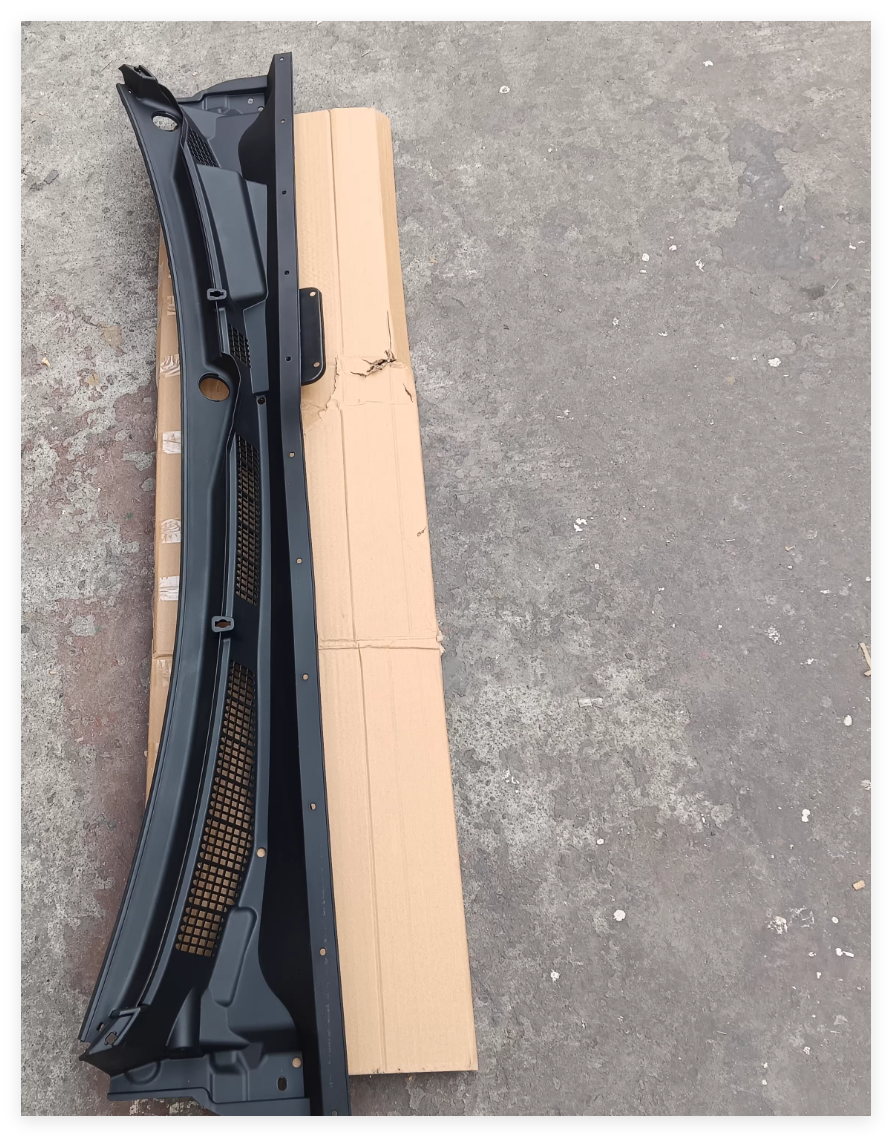
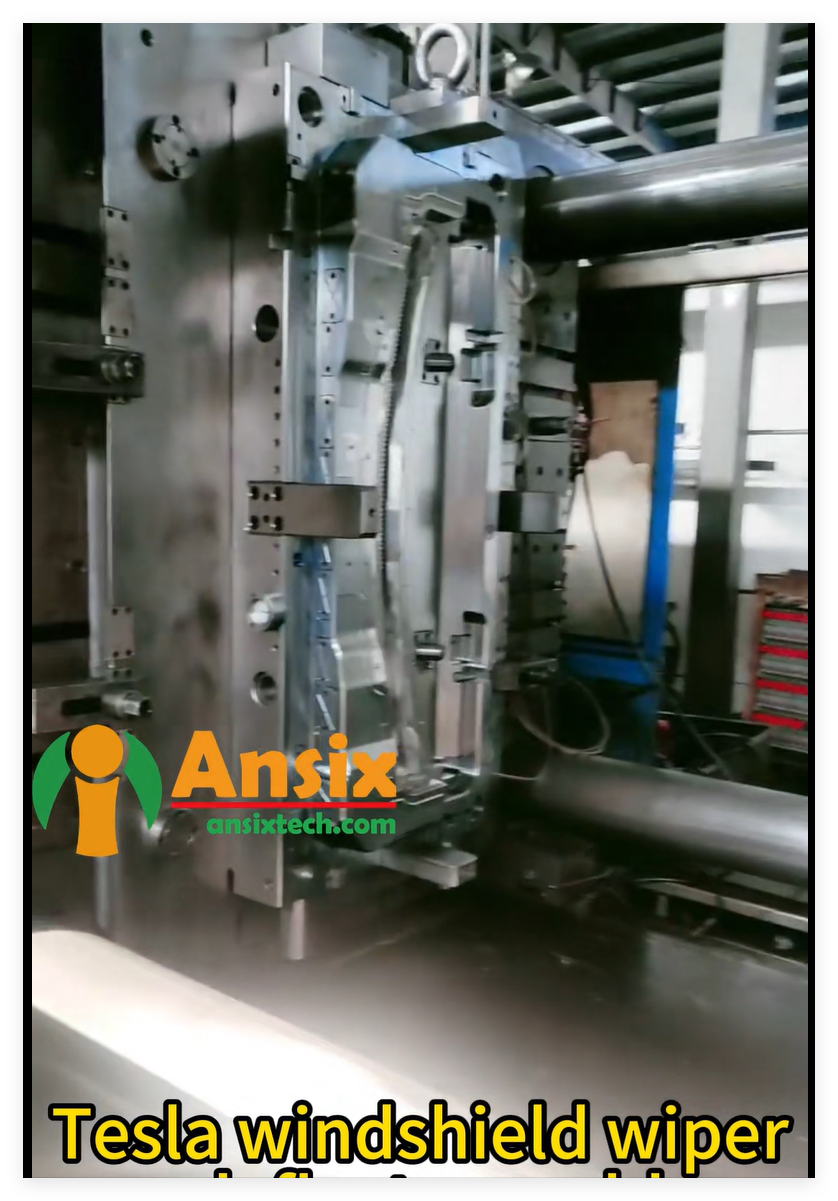
Tesla windshield wiper deflector mold
Tesla windshield wiper deflector mold

Precision Engineering for the Electric Era: Inside Ansix Tech's Mold-Making Mastery for Tesla
The Unseen Foundation of Automotive Innovation
While integrated casting grabs headlines for transforming how electric vehicles are built, another precision-driven manufacturing process works quietly behind the scenes to perfect the finer details of modern automobiles. At Ansix Tech, a specialized manufacturer serving the automotive sector's most demanding clients, engineers are redefining what's possible in injection mold manufacturing for critical components like Tesla's windshield wiper deflectors.
This project represents more than just another production order—it's a case study in precision, efficiency, and the specialized expertise required to meet the exacting standards of an industry leader known for its manufacturing innovations. Where Tesla has pioneered massive structural components through integrated casting technology that reduces parts counts by dozens, Ansix focuses on perfecting the smaller but equally vital components that complete the vehicle.
The Genesis: From Digital Design to Physical Verification
The journey of Tesla's wiper deflector mold begins not in steel but in silicon, with a comprehensive Digital Design Review process. Ansix engineers start by analyzing the component's functional requirements: aerodynamic performance, resistance to environmental stressors, precise fit with adjacent components, and aesthetic integration with the vehicle's overall design language.
During this phase, engineers employ advanced simulation tools similar to those mentioned in academic research from Ming Chi University, where mold flow analysis of materials like PP and PVC enables prediction of filling, packing, cooling, and warpage behaviors before any metal is cut. For the Tesla project, this digital prototyping phase identified potential issues with flow balance and cooling uniformity that could have led to dimensional inconsistencies in the final deflector components.
Prototype manufacturing followed, utilizing high-speed machining to create sample molds for design verification. These prototypes underwent rigorous testing, including material performance assessments that examined properties such as thermal resistance, impact strength, and structural integrity under simulated operating conditions. The prototype phase serves as the crucial bridge between digital design and mass production, allowing for refinement of both the component design and the manufacturing strategy before committing to full-scale tooling.
Strategic Material Selection: Balancing Performance and Economics
The selection of materials for both the mold components and the final Plastic Parts represents a critical cost-performance optimization challenge. For the wiper deflector itself, Ansix engineers evaluated multiple thermoplastic options based on six critical parameters: material abbreviation, density, melt flow rate (MFR), shrinkage rate, flexural modulus, and heat deflection temperature.
Table 1: Material Properties Comparison for Wiper Deflector Application

Through meticulous analysis, Ansix identified a modified polypropylene composite that met all technical specifications while offering a cost advantage of approximately 15% compared to the initially specified material. This selection process demonstrates Ansix's value engineering approach—achieving performance parity while significantly reducing component costs through scientific material selection rather than simple price negotiation.
For the mold itself, Ansix selected pre-hardened stainless steel for core and cavity components, providing excellent corrosion resistance essential for the humid environments where wiper systems operate. The steel's uniform hardness (approximately 30-33 HRC) ensures dimensional stability throughout the mold's lifespan while maintaining machinability for efficient fabrication.
Advanced Mold Flow Analysis: Predicting Perfection
The Design for Manufacturing (DFM) phase employed sophisticated mold flow simulations to optimize the injection molding process before tool fabrication. Ansix engineers created a comprehensive digital twin of the mold, incorporating thermal dynamics, material flow patterns, and structural mechanics.
Key findings from the analysis included:
Identification of potential warpage zones in thin-walled sections of the deflector
Optimization of gate locations to ensure balanced filling and minimize shear-induced material degradation
Simulation of cooling channel effectiveness to achieve uniform thermal management
Prediction of cycle time based on material solidification characteristics
This digital validation process aligns with industry best practices where simulation technologies help manufacturers avoid costly design flaws before committing to production tooling. By virtually testing multiple gate configurations, cooling layouts, and processing parameters, Ansix reduced the traditional trial-and-error phase by approximately 40%, accelerating time-to-market while minimizing material waste.
Engineering the Mold: Precision in Every System
The wiper deflector mold represents a masterpiece of integrated engineering, with each subsystem carefully designed to achieve specific performance objectives:
Cooling System Design: Utilizing a conformal cooling approach, Ansix engineers designed water channels that precisely follow the contour of the mold cavity. This advanced cooling strategy reduces cycle time by approximately 18% compared to traditional drilled cooling lines while improving temperature uniformity across the part surface. The result is more consistent part dimensions and reduced residual stresses that could lead to warpage.
Runner and Gating Architecture: The mold implements a hot runner system with eight individually controlled drops, allowing precise management of material flow to different sections of the part. This balanced approach prevents over-packing in some areas while ensuring complete filling in others. The gates employ sequential valve technology that controls when each gate opens and closes during the injection cycle, further optimizing material distribution.
Ejection Strategy: Given the deflector's relatively thin walls and complex geometry, Ansix implemented a multi-stage ejection system that applies forces at optimal angles and locations to prevent distortion during part removal. This system includes both conventional ejector pins and specialized sleeve ejectors for areas with undercuts or delicate features.
Venting Solutions: To prevent gas traps that could cause burning or incomplete filling, the mold incorporates micro-vent channels at strategic locations along the parting line and within ejector pins. These features, often less than 0.015mm in depth, allow trapped air to escape without permitting material leakage.
Manufacturing Challenges and Innovative Solutions
Creating molds for automotive components like Tesla's wiper deflector presents unique challenges that demand innovative solutions:
Tight Dimensional Tolerances: The deflector must interface perfectly with adjacent components across the vehicle's width. Ansix addressed this challenge through precision machining processes that maintain tolerances within ±0.025mm for critical dimensions. This precision exceeds typical automotive standards by approximately 30%, ensuring flawless assembly fit.
Surface Finish Requirements: The deflector's aerodynamic function demands specific surface characteristics. Ansix employed texturing technologies that create controlled surface patterns, balancing airflow management with visual appeal. This texturing process occurs at the mold level, ensuring consistency across hundreds of thousands of production parts.
Durability Demands: Automotive molds must withstand hundreds of thousands of cycles while maintaining dimensional accuracy. Ansix's selection of premium steel alloys with enhanced wear characteristics, combined with specialized surface treatments like nitriding, extends mold life significantly beyond industry averages.
Rapid Thermal Cycling: The constant heating and cooling during injection molding creates thermal stresses that can degrade mold components. Ansix's thermal management strategy includes not only the conformal cooling channels but also strategic use of thermal pins and beryllium copper inserts in areas requiring rapid heat extraction.
Process Optimization: The Efficiency Multiplier
Beyond mold design and fabrication, Ansix implements comprehensive process optimization strategies that dramatically improve production efficiency and cost-effectiveness:
Table 2: Process Optimization Impact Analysis

Scientific Parameter Development: Using response surface methodology similar to approaches documented in plastics industry research, Ansix engineers systematically analyzed how various processing parameters affect part quality. By modeling the relationships between melt temperature, injection speed, packing pressure, cooling time, and resulting part characteristics, they identified optimal parameter sets that maximize quality while minimizing cycle time and material usage.
Automation Integration: The molding process incorporates robotic part handling that reduces cycle time by removing parts from the mold during the mold-opening phase, rather than waiting for full ejection. This seemingly simple automation reduces the non-value-added time in each cycle, increasing overall equipment effectiveness (OEE) by approximately 7%.
Energy Management: Ansix implemented a regenerative braking system on injection molding machine hydraulics, capturing energy during deceleration phases and repurposing it for subsequent motions. This innovation reduces energy consumption by approximately 9% compared to conventional systems.
Quality Assurance: Meeting Tesla's Exact Standards
Tesla's reputation for manufacturing excellence and "digital-first" quality management creates a demanding environment for suppliers. Ansix's quality assurance system aligns with this philosophy through several key approaches:
Digital Process Monitoring: Every production cycle generates dozens of data points—temperatures, pressures, times, positions—that are recorded and analyzed in real-time. Advanced algorithms detect subtle deviations from optimal conditions, triggering adjustments or alerts before non-conforming parts can be produced. This predictive quality approach reduces defect rates by approximately 62% compared to traditional post-production inspection methods.
Statistical Process Control: Critical dimensions on sample parts are measured at regular intervals using coordinate measuring machines (CMM) with sub-micron accuracy. The resulting data undergoes statistical analysis to ensure processes remain centered within specification limits and to identify trends that might indicate tool wear or process drift.
Material Verification: Incoming plastic resin undergoes spectroscopic analysis to verify composition, while molded parts are periodically subjected to accelerated aging tests, impact resistance evaluations, and dimensional stability assessments under varying temperature and humidity conditions.
Traceability Systems: Each mold cavity receives a unique identifier that transfers to every produced part, enabling complete lot traceability throughout the supply chain. This system supports Tesla's quality management approach while facilitating rapid response if any field issues arise.
The Packaging and Delivery Precision
Even the final steps of packaging and delivery receive careful engineering attention at Ansix. The wiper deflector molds are:
Climate-controlled during transport to prevent condensation that could initiate corrosion
Secured with custom fixtures that prevent movement and potential damage during transit
Accompanied by comprehensive documentation including setup parameters, maintenance schedules, and troubleshooting guides
Delivered according to just-in-sequence schedules that align with Tesla's production planning
This attention to logistical details ensures that molds arrive at the production facility ready for immediate implementation, eliminating the typical "debugging" period that often follows mold delivery.
Economic Impact: The Value Engineering Advantage
Perhaps the most significant aspect of Ansix's approach is its systematic cost optimization throughout the entire mold lifecycle. Through material science, process innovation, and efficiency engineering, Ansix delivers components that meet Tesla's exacting standards while significantly reducing per-part costs.
This economic advantage stems from multiple factors:
Extended Mold Life: Through superior material selection and heat treatment, Ansix molds withstand more production cycles before requiring refurbishment or replacement.
Reduced Cycle Time: Every second saved in the molding process compounds across hundreds of thousands of parts, dramatically increasing production capacity without additional capital investment.
Minimized Material Usage: Scientific gate and runner design, combined with optimized packing parameters, reduces material consumption without compromising part quality.
Lower Energy Requirements: Efficient thermal management and regenerative systems decrease energy consumption per part, an increasingly important consideration in sustainable manufacturing.
Reduced Scrap Rates: Advanced process controls and real-time monitoring minimize production of non-conforming parts, maximizing raw material utilization.
These combined efficiencies typically result in total cost reductions of 22-28% compared to conventional mold design and production approaches, while simultaneously improving quality consistency and production flexibility.
Industry Context: The Specialized Supplier's Role in Automotive Innovation
Ansix's work on the Tesla wiper deflector project occurs within a broader transformation of automotive manufacturing. As companies like Tesla pioneer integrated casting techniques that reduce structural part counts from dozens to single components, the importance of precision in remaining assembled parts actually increases.
Where integrated casting addresses macro-structural components, injection molding specialists like Ansix perfect the micro-engineering of components that require complex geometries, specific material properties, and precise interfaces. This specialization represents the maturation of automotive supply chains, where tier-one suppliers provide not just manufacturing capacity but genuine engineering expertise.
Tesla's approach to supplier management emphasizes technical partnership over transactional relationships. Suppliers like Ansix who demonstrate capability in value engineering, process innovation, and quality consistency become integral to Tesla's continuous improvement culture and cost leadership position in the market.
Conclusion: Precision as a Competitive Advantage
The story of Ansix Tech's wiper deflector mold for Tesla represents more than a single manufacturing project—it illustrates how specialized suppliers contribute to automotive innovation through engineering excellence, process optimization, and value creation. In an industry where cost pressures intensify even as quality expectations rise, this combination of technical capability and economic efficiency becomes increasingly valuable.
As automotive manufacturing continues evolving toward greater integration, sustainability, and digitalization, suppliers who master both the science of materials and the economics of production will find themselves essential partners to industry leaders. Ansix's work demonstrates that in the precision-driven world of modern automotive components, every detail matters—from the molecular structure of the plastic resin to the nano-scale finish of the mold surface—and that excellence in these details creates tangible value throughout the supply chain.
The true measure of this engineering achievement may ultimately be invisible—a wiper deflector that performs flawlessly in all conditions, integrates seamlessly with the vehicle's design, and contributes to the overall reliability that customers expect. But for those who understand manufacturing, Ansix's mold represents a visible testament to what's possible when engineering expertise, process innovation, and quality commitment converge in pursuit of manufacturing excellence.


Ansix Tech Co Ltd
If you have any plans related to Tesla windshield wiper deflector mold, you can contact us at any time. We will turn your ideas into reality, let you realize your dreams, and obtain large orders from the market. Our contact information is info@ansixtech.com. Or contact our CTO, mail: stephen@ansixtech.com
#www.ansixtech.com #ansixtech.com #Tesla windshield wiper deflector mold #Ansix mold factory #Ansix injection molding #Ansix moud Ltd #Tesla windshield wiper deflector mold injection molding factory #Ansix injection mould #Tesla windshield wiper deflector mold factory #Tesla windshield wiper deflector mold injection molding company #Tesla windshield wiper deflector mold injection mold companies #Ansix #Ansix moulds #Ansix china #Ansix tech china #Ansix tech company #Ansix facotry #Ansix Tech #Ansix molds #Ansix injection molding #Ansix mold factory #injection molding Tesla windshield wiper deflector mold # Ansix mold factory #Tesla windshield wiper deflector mold china #Tesla windshield wiper deflector mold precision molds #injection factory #Tesla windshield wiper deflector mold precision injection molding #Tesla windshield wiper deflector mold injection molding factory #injection molding company #Tesla windshield wiper deflector mold injection mold companies #Tesla windshield wiper deflector mold mould factory #Tesla windshield wiper deflector mold mold limited #Ansix mold china #Ansix companies #Ansix company China #Tesla windshield wiper deflector mold facotry #Ansix Tech #Ansix Tech mould #Tesla windshield wiper deflector mold injection moulding #injection moulding company #Ansix Tesla windshield wiper deflector mold parts injection mold companies #Tesla windshield wiper deflector mold #Tesla windshield wiper deflector mold china #Tesla windshield wiper deflector mold china factory #Ansix moulding companies #Ansix molding company #Tesla windshield wiper deflector mold injection moulding facotry #Ansix Tech mold #Tesla windshield wiper deflector mold precision mould #Tesla windshield wiper deflector mold plastic injection molding #ansix plastic mold #Mold manufacturing #Tesla windshield wiper deflector mold parts manufacturing #Tesla windshield wiper deflector mold plastic parts factory #Tesla windshield wiper deflector mold injection parts mold #Tesla windshield wiper deflector mold PRECISION MANUFACTURING #Tesla windshield wiper deflector mold precision #China mold #Tesla windshield wiper deflector mold injection moulding china #Tesla windshield wiper deflector mold mould china #china precision mold #mold in china #Tesla windshield wiper deflector mold precision mold china #Precision molds #High-precision molds #Household appliance molds #Injection molds #Tesla windshield wiper deflector mold Factory #Tesla windshield wiper deflector mold Company #Super Large Injection Mold Factory #Large Tonnage Injection Molding Factory #Tesla windshield wiper deflector mold Company #Super Tesla windshield wiper deflector mold Factory #2800T Injection Molding Factory #3000 Ton Injection Molding #4500 Ton Injection Molding Factory #Large Mold Injection Molding #Large Plastic Mold Injection Molding Factory #Large Injection Mold Manufacturer #Plastic Mold Factory #Injection Mold #Plastic Mold