



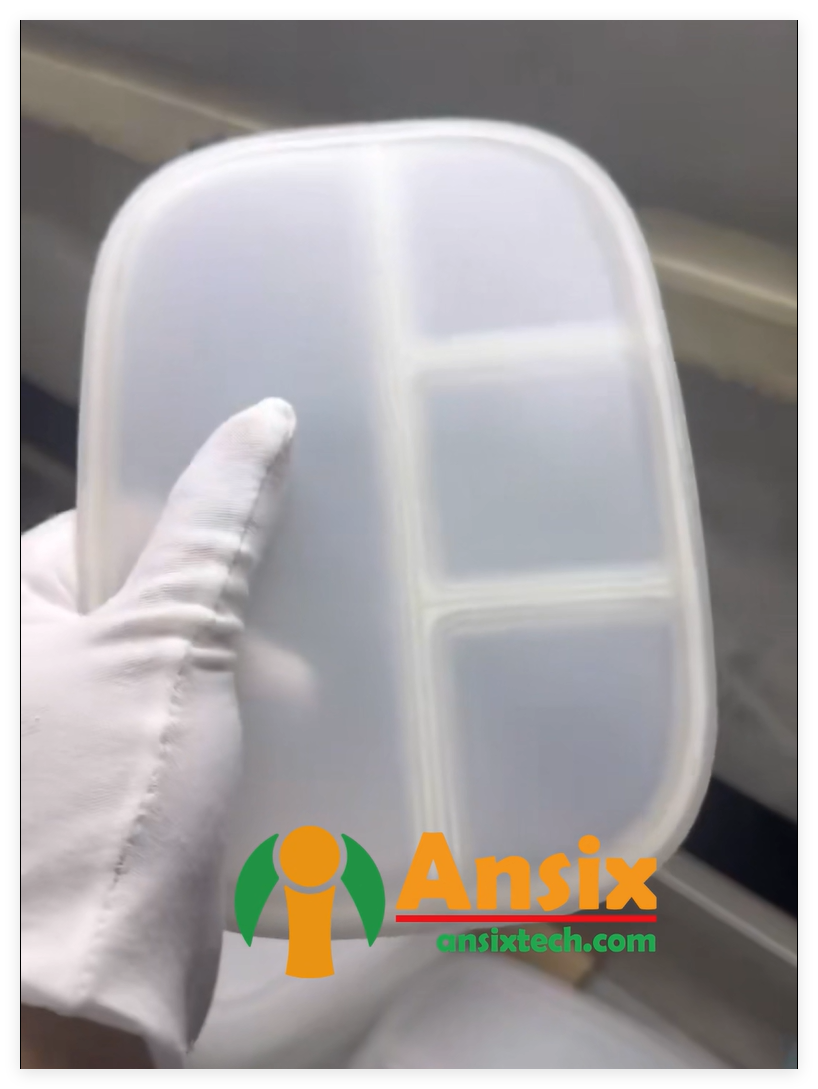
TPE injection mold for food container lids
TPE injection mold for food container lids
Pioneering Excellence in TPE Injection Molding: How Ansix Tech Redefines Food Packaging Manufacturing
A New Standard for Food Container Lids
In the dynamic world of food packaging, the humble container lid plays a critical role in ensuring product safety, freshness, and consumer satisfaction. As market demands evolve towards more sustainable, user-friendly, and high-performance packaging solutions, thermoplastic elastomers (TPEs) have emerged as a material of choice for sealing applications. At the forefront of this manufacturing revolution stands Ansix Tech, a company that has mastered the intricate art and science of TPE injection molding. Through a relentless focus on process optimization, material science, and cost-effective innovation, Ansix Tech is not just producing superior food container lids but is fundamentally reshaping the economics of injection-molded components for clients worldwide.
This comprehensive exploration delves into the entire manufacturing journey of a TPE food container lid at Ansix Tech, from the initial design concept to the final packaged product ready for rapid delivery. We will uncover how a deep understanding of each technical phase translates into tangible reliability and value for customers, with a particular emphasis on the strategic levers that allow Ansix Tech to significantly lower component costs without compromising on quality.
Mastering the Material: The Foundation of TPE Performance
The journey begins with a profound understanding of the material itself. TPEs are a unique class of polymers that combine the elastic properties of rubber with the processability of thermoplastics. Their structure consists of hard, crystalline "resin" segments that form physical cross-links and soft, amorphous "rubber" segments that provide flexibility. For food container lids, this translates into essential characteristics: a reliable, airtight seal that is easy for consumers to open and close, excellent resistance to repeated flexing, and compliance with stringent food-contact safety regulations.
Ansix Tech’s expertise lies in selecting and tailoring the precise TPE grade for each application. For lids requiring adhesion to rigid polypropylene (PP) or polyethylene (PE) bases, they utilize specialized bonding grades engineered for strong molecular attachment. Key performance indicators guiding their selection include:
Shore Hardness: Typically ranging from 40A to 70A for lids, balancing softness for sealing with rigidity for handling.
Tensile Strength & Elongation: Ensuring the lid can withstand deformation without tearing.
Compression Set: A critical measure of how well the seal rebounds after prolonged compression, directly impacting long-term freshness.
Food-Contact Compliance: Guaranteeing the material meets global standards like FDA (USA), EFSA (EU), and other regional regulations for food safety.
By strategically partnering with material suppliers and leveraging in-house compounding knowledge, Ansix Tech navigates the cost-performance matrix. They can often recommend a slightly adjusted, more cost-effective grade that meets all functional requirements or optimize the part design to use less material without sacrificing performance, delivering immediate savings.
The Blueprint for Success: Design, Simulation, and Mold Engineering
Before any steel is cut, the component is perfected in the digital realm. Ansix Tech’s process integrates advanced Computer-Aided Design (CAD), Design for Manufacturability (DFM) analysis, and sophisticated Mold Flow Simulation.
- Design and Prototyping: The functional and aesthetic requirements of the lid are modeled in CAD. DFM principles are applied from day one to eliminate costly manufacturing issues later. This includes ensuring uniform wall thickness to prevent sink marks and warpage, incorporating adequate draft angles for easy ejection, and designing seals with geometries optimized for the flow characteristics of TPE.
- Mold Flow Analysis (DFM): This virtual testing phase is where Ansix Tech’s engineering prowess shines. Simulation software predicts how the molten TPE will fill the mold cavity. Engineers analyze:
Fill Patterns: To ensure balanced filling and avoid air traps that cause burns or weak spots.
Pressure and Temperature Distribution: Identifying areas of high pressure that may require thicker steel or better cooling.
Weld Lines: Predicting where flow fronts meet and strengthening those areas through gate positioning or temperature control to prevent weak points.
Cooling Time & Warpage: Simulating the cooling phase to minimize cycle time and predict potential deformation.
This virtual validation prevents costly mold rework, turning potential failures on the production floor into corrected digital models.
- Precision Mold Design: The mold is the heart of the process. Ansix Tech designs molds as highly efficient pressure vessels and heat exchange systems. Every subsystem is meticulously planned:
Steel Selection: Core and cavity plates are often made from pre-hardened steels like P20 or H13 for good machinability and wear resistance. For high-volume production or abrasive material grades, hardened tool steels or stainless steels are selected for longevity.
Cooling System: As cooling can consume 50-70% of the cycle time, its optimization is paramount for cost reduction. Ansix Tech designs conformal cooling channels that follow the contour of the lid to extract heat uniformly and rapidly. They ensure turbulent water flow (Reynolds number >4000) for maximum heat transfer efficiency, directly reducing cycle time.
Gating & Runner System: For TPEs, gate location and size are crucial to control flow and minimize shear, which can affect the material's elastic properties. Submarine or pinpoint gates are often used to automate degating. A hot runner system is frequently employed for multi-cavity molds to eliminate material waste from cold runners.
Ejection System: Given TPE’s flexibility and potential for sticking, a robust and perfectly balanced ejection system is designed. This includes sufficient numbers of ejector pins, sleeves, or even air-assisted ejection to gently and consistently remove the part without distortion.
Conquering Production: Process Optimization and Challenge Mitigation
Transitioning to the production floor, Ansix Tech’s process engineers face the unique challenges of TPE injection molding. Their systematic approach transforms these challenges into opportunities for consistency and efficiency.
The TPE Processing Workflow and Challenges:
Material Drying: TPEs are hygroscopic. Challenge: Inadequate drying leads to surface splay (silver streaks) and weak seals. Ansix Solution: Strict adherence to drying parameters (e.g., 3-4 hours at 70-80°C) with monitored dry-air hopper dryers.
Plasticization and Injection: TPEs have a sharp melt transition. Challenge: Over-shearing or overheating degrades the polymer, causing odor or black specks. Ansix Solution: Using screws with a low-compression ratio, precise temperature control on all barrel zones, and moderate injection speeds to ensure laminar flow and prevent jetting.
Packing and Cooling: TPEs have different shrinkage rates than rigid plastics. Challenge: Insufficient packing or uneven cooling causes sink marks, warpage, or dimensional instability. Ansix Solution: Optimized packing pressure profiles and a validated, turbulent cooling system ensure uniform part stability.
Ejection: TPEs can be sticky. Challenge: Parts tearing or distorting during ejection. Ansix Solution: A combination of optimal mold polish, sufficient draft angles, and a perfectly timed, balanced ejection sequence.
Optimizing for Efficiency and Cost: Ansix Tech’s mastery is most evident in its continuous optimization, directly targeting the customer's bottom line.
Cycle Time Reduction: The single biggest driver of part cost. By optimizing cooling, automating the pick-and-place process, and fine-tuning packing and cooling times using scientific molding principles, Ansix Tech relentlessly drives down cycle time.
Energy Consumption Management: Process engineers analyze the energy input from barrel heaters and screw drive motors. They find the "sweet spot" where slightly higher melt temperature (reducing viscosity and injection pressure) may save more energy than it consumes.
Scrap and Downtime Minimization: Through process monitoring and automated quality gates, defects are caught in-cycle. Techniques like Decoupled Molding® and cavity pressure sensors make the process robust against material viscosity variations, virtually eliminating batches of scrap. Quick mold change (QMC) systems and effective purging procedures between runs slash non-productive downtime.
The Uncompromising Gate: Quality Assurance and Delivery
Quality at Ansix Tech is not an inspection step; it is a principle embedded in every stage.
In-Process Controls: Technicians monitor critical parameters in real-time—melt temperature, cavity pressure, cooling line flow—ensuring the process remains within its validated "sweet spot." Automated vision systems can check for flash, short shots, or surface defects on every part.
Final Validation: Every batch of lids undergoes rigorous checks:
Dimensional Accuracy: Using coordinate measuring machines (CMM) and custom gauges.
Functional Testing: Seal integrity tests (e.g., compression set, leak tests), closure force measurement, and durability cycling.
Material Compliance: Certificates of Analysis (CoA) from material batches are maintained, and periodic laboratory testing is conducted for food-contact compliance.
Packaging and Rapid Delivery: Understanding that the final product must arrive in perfect condition, Ansix Tech designs packaging that prevents deformation or contamination of the TPE lids. Leveraging a streamlined supply chain and logistics partnerships, they fulfill their promise of reliable, on-time delivery, turning manufacturing excellence into supply chain confidence for their customers.
Conclusion: A Partnership Built on Value and Expertise
The manufacturing of a TPE food container lid is a symphony of advanced materials science, precision engineering, and disciplined process control. Ansix Tech has elevated this process into a strategic advantage for its clients. By investing in upfront design and simulation, they mitigate downstream risk. By engineering molds for peak thermal and mechanical efficiency, they drive down cycle times. By mastering the nuances of TPE processing, they ensure consistent, high-quality output.
Ultimately, Ansix Tech’s industry experience translates into one undeniable outcome for customers: significantly lower total component cost. This cost reduction is achieved not through corner-cutting but through intelligent design, strategic material selection, and relentless process optimization that squeezes out waste, inefficiency, and variability. In a competitive global market, this commitment to delivering both reliability and value is what makes Ansix Tech not just a supplier, but an essential partner in innovation.


Ansix Tech Co Ltd
If you have any plans related to TPE injection mold for food container lids, you can contact us at any time. We will turn your ideas into reality, let you realize your dreams, and obtain large orders from the market. Our contact information is info@ansixtech.com. Or contact our CTO, mail: stephen@ansixtech.com
#www.ansixtech.com #ansixtech.com #TPE injection mold for food container lids #TPE injection mold for food container lids factory #TPE injection mold for food container lids injection mold #Ansix mold factory #Ansix injection molding #Ansix moud Ltd #TPE injection mold for food container lids injection molding factory #Ansix injection mould #TPE injection mold for food container lids injection molding factory #TPE injection mold for food container lids injection molding company #TPE injection mold for food container lids injection mold companies #Ansix #Ansix moulds #Ansix china #Ansix tech china #Ansix tech company #Ansix facotry #Ansix Tech #Ansix molds #Ansix injection molding #Ansix mold factory #injection molding TPE injection mold for food container lids # Ansix mold factory #TPE injection mold for food container lids china #TPE injection mold for food container lids precision molds #injection factory #TPE injection mold for food container lids precision injection molding #TPE injection mold for food container lids injection molding factory #injection molding company #TPE injection mold for food container lids injection mold companies #TPE injection mold for food container lids mould factory #TPE injection mold for food container lids mold limited #Ansix mold china #Ansix companies #Ansix company China #TPE injection mold for food container lids facotry #Ansix Tech #Ansix Tech mould #TPE injection mold for food container lids injection moulding #injection moulding company #Ansix TPE injection mold for food container lids parts injection mold companies #TPE injection mold for food container lids mould #TPE injection mold for food container lids china #TPE injection mold for food container lids china factory #Ansix moulding companies #Ansix molding company #TPE injection mold for food container lids injection moulding facotry #Ansix Tech mold #TPE injection mold for food container lids precision mould #TPE injection mold for food container lids plastic injection molding #ansix plastic mold #Mold manufacturing #TPE injection mold for food container lids parts manufacturing #TPE injection mold for food container lids plastic parts factory #TPE injection mold for food container lids injection parts mold #TPE injection mold for food container lids PRECISION MANUFACTURING #TPE injection mold for food container lids mold precision #China mold #TPE injection mold for food container lids injection moulding china #TPE injection mold for food container lids mould china #china precision mold #mold in china #TPE injection mold for food container lids precision mold china #Precision molds #High-precision molds #Household appliance molds #Injection molds #Large Injection Molding Factory #Large Injection Molding Company #Super Large Injection Mold Factory #Large Tonnage Injection Molding Factory #Large Injection Molding Company #Super Large Injection Molding Factory #2800T Injection Molding Factory #3000 Ton Injection Molding #4500 Ton Injection Molding Factory #Large Mold Injection Molding #Large Plastic Mold Injection Molding Factory #Large Injection Mold Manufacturer #Plastic Mold Factory #Injection Mold #Plastic Mold