



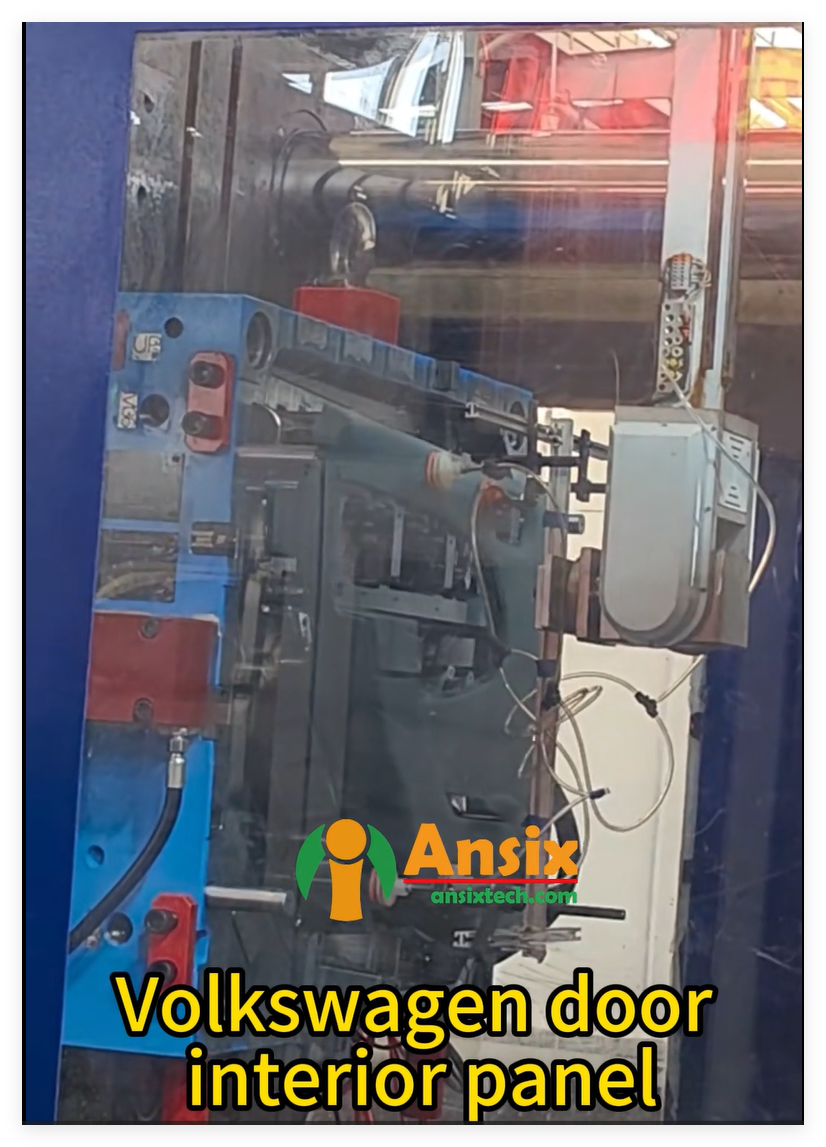
Volkswagen door interior panel
Volkswagen door interior panel

Engineering Excellence: How Ansix Tech Drives Efficiency in Volkswagen's Interior Supply Chain
The intricate dance of precision engineering, material science, and process optimization behind a car door panel.
In the highly competitive automotive industry, where every gram and every second translate to cost and performance, the production of interior components stands as a critical frontier. The door interior panel, a large, visible, and functionally complex part, embodies this challenge. For global giants like Volkswagen, producing these panels requires a symphony of advanced design, stringent quality control, and relentless cost efficiency. This is where specialized suppliers like Ansix Tech enter the frame, leveraging deep technical expertise to transform blueprints into reality. This article delves into Ansix Tech's pivotal role in a Volkswagen door panel project, exploring the journey from digital prototype to certified mass production and highlighting the sophisticated engineering that delivers reliability, quality, and significant value to the end customer.
- The Benchmark: Volkswagen's Exacting Requirements
The starting point for any project with Volkswagen is a comprehensive set of uncompromising standards. The door interior panel is not merely a piece of trim; it is a structural element that houses speakers, window switches, and armrests, must withstand daily use, and contribute to the vehicle's safety and acoustic performance. Volkswagen's VW 52000 standard forms the cornerstone of material quality validation, dictating rigorous testing protocols for every polymer, metal, and composite used in production.
For Ansix Tech, compliance begins at the design phase. Volkswagen's requirements, detailed in technical specifications (TL), internal standards (VW), and test protocols (PV), cover everything from flammability and fogging resistance to long-term durability and dimensional stability. The door panel must maintain its form, color, and function under extreme temperatures, UV exposure, and mechanical stress for the life of the vehicle. Furthermore, as the industry pushes toward lighter vehicles for improved fuel efficiency, Volkswagen sets ambitious weight reduction targets without compromising strength or quality—a directive that directly influences material and design choices.
Summary of Key Volkswagen VW 52000 Requirements:
Scope: Material quality verification for all components during development and production approval.
Governing Documents: Technical Supply Specifications (TL), Volkswagen Standards (VW), and Test Specifications (PV).
Core Mandate: Suppliers must provide complete, unaltered documentation proving all material requirements are met.
Performance Scoring: Volkswagen maintains a material quality verification performance score for each supplier, influencing future business decisions.
- The Foundational Phase: Design, Prototyping, and Simulation
Before a single gram of steel is cut for the mold, the component is born and refined in the digital realm. Ansix Tech's process begins with a comprehensive Design for Manufacturability (DFM) analysis. Using industry-standard software like UG and CATIA, engineers scrutinize the Volkswagen-provided 3D model of the door panel. This large part, which can measure over 800mm in length and 700mm in width, presents immediate challenges: deep draws, uneven wall thicknesses, numerous rib structures for rigidity, and integrated fixtures for components.
The heart of this phase is Moldflow analysis. This advanced computer simulation predicts how molten plastic will fill the mold cavity. Engineers at Ansix Tech simulate various scenarios to preemptively solve critical issues. The primary goals are to ensure a balanced fill—preventing warpage—and to eliminate or minimize weld lines, which are weak points where flow fronts meet and can compromise both structural integrity and aesthetics. As noted in research on similar projects, optimizing the gate (entry point) location and sequence is crucial; for a large door panel, a multi-point hot runner system with valve gates is often essential. By sequentially opening these gates, engineers can direct the flow of plastic to push potential weld lines to non-critical, hidden areas of the part.
Simultaneously, the material selection is finalized. For a door panel base, the choice typically falls on a engineered thermoplastic polypropylene (PP) compound. A material like API-2515, a PP with a 20% talc filler, offers an excellent balance of stiffness, impact resistance, low density, and cost-effectiveness. The talc reinforcement increases the material's flexural modulus, allowing for thinner walls to meet weight targets while maintaining the required structural rigidity for mounting hardware. This careful selection is the first major lever Ansix Tech pulls to control the final part's cost.
- Precision in Steel: Mold Design and Manufacturing
The mold is the multi-million-dollar, multi-ton heart of the production process. Its design and construction demand an extraordinary level of precision. For a Volkswagen door panel mold, Ansix Tech targets exceptionally tight tolerances: core/cavity positioning under 0.02mm and成型面 (forming surface)精度 under 0.015mm.
Key aspects of the mold design include:
Cooling System: Often the most critical yet overlooked subsystem. Efficient cooling, which accounts for 50-70% of the cycle time, is paramount for profitability. Ansix Tech designs complex conformal cooling channels that follow the part's contours to ensure uniform heat extraction, preventing sink marks and reducing cycle times. Maintaining turbulent water flow in these channels is essential for optimal heat transfer.
Gating and Runner System: As analyzed during simulation, a hot runner system is employed to eliminate solid waste (cold runners). Valve gates provide precise control over the injection sequence. The design follows principles that minimize shear and pressure loss to ensure consistent material properties throughout the part.
Ejection System: Given the part's large surface area and potential for sticking, a robust and perfectly synchronized ejection system using hundreds of pins and blades is designed to release the part without distortion or damage.
Steel Selection: Different sections of the mold require different steels. High-wear areas like gates and slides are made from premium hardened steels (e.g., H13), while the main cavity and core might use pre-hardened steels (e.g., P20) for a balance of machinability and durability. The goal is a mold life exceeding one million cycles.
The manufacturing of such a mold involves a symphony of advanced CNC machining, EDM (Electrical Discharge Machining), and deep-hole drilling. Each component is meticulously measured with CMM (Coordinate Measuring Machine) to ensure it matches the digital model perfectly before final assembly and try-out.
- The Crucible: Injection Molding Process Optimization
With the mold mounted in a high-tonnage injection press, the focus shifts to process optimization. The initial challenge is to achieve a flawless first-shot part that meets all dimensional and cosmetic checks. This involves fine-tuning a matrix of interconnected parameters: melt temperature, injection speed and pressure, packing pressure and time, and cooling time.
Ansix Tech's engineers systematically work to enhance efficiency and control cost per part. Key strategies include:
Cycle Time Reduction: By optimizing the cooling system and establishing the minimum required packing time, engineers can shave seconds off each cycle. As one industry analysis notes, a saved second in a high-volume production line translates to massive annual savings.
Energy Consumption Management: The process is energy-intensive. Ansix Tech analyzes energy input from barrel heaters and screw rotation to find the "sweet spot." For instance, sometimes slightly increasing melt temperature to reduce viscosity can allow for lower injection pressure, resulting in net energy savings.
Scrap and Downtime Minimization: Consistent process control is key to near-zero defect rates. Ansix Tech implements practices like using specialized purging compounds to reduce downtime during material or color changes, ensuring maximum machine uptime.
- Assurance and Delivery: Quality Control and Rapid Ramp-Up
Quality control at Ansix Tech is not a final inspection but a philosophy embedded throughout the process. Their system aligns with ISO 9001:2015 principles and Volkswagen's own Process Audit standards. It encompasses:
Incoming Material Inspection: Verifying the resin compound against Volkswagen's TL standards.
In-Process Checks: Dimensional checks on first-off parts, statistical process control (SPC) on critical dimensions during the run, and regular visual inspections for cosmetic defects.
Comprehensive Final Validation: This includes 100% functional checks and audits against the PPAP (Production Part Approval Process) package submitted to Volkswagen. Advanced tools like 3D scanners and CMMs are used to validate the part's geometry against the digital master.
The path to mass production certification with Volkswagen is methodical. After successful tool try-out and initial sample approval, Ansix Tech conducts a pre-production run, simulating the full production cycle. Data from this run forms the final PPAP submission. Upon Volkswagen's approval, the project moves into the rapid delivery phase, where Ansix Tech's production planning and logistics teams ensure a seamless, on-time supply to Volkswagen's assembly line, often operating on a Just-In-Time (JIT) or sequenced basis.
Conclusion: Delivering Value Through Engineered Partnership
Ansix Tech's involvement in the Volkswagen door interior panel project exemplifies modern, value-driven manufacturing. It is a partnership that extends far beyond simple part supply. By applying profound expertise in material science, simulation-driven design, precision mold-making, and data-optimized processing, Ansix Tech achieves two paramount goals for Volkswagen: flawless quality and significant cost reduction.
The cost savings are engineered into every step: from selecting the most efficient material compound and designing a mold for maximum longevity and speed, to fine-tuning the injection process for minimal energy use and waste. In an industry where margins are tight and standards are high, it is this ability to deliver reliability, innovation, and tangible value that makes suppliers like Ansix Tech indispensable partners in the automotive manufacturing ecosystem. Their work ensures that every time a Volkswagen driver closes a door, they experience the quiet, solid, and quality feel that is the result of countless hours of invisible engineering excellence.



Ansix Tech Co Ltd
If you have any plans related to Volkswagen door interior panel , you can contact us at any time. We will turn your ideas into reality, let you realize your dreams, and obtain large orders from the market. Our contact information is info@ansixtech.com. Or contact our CTO, mail: stephen@ansixtech.com
#www.ansixtech.com #ansixtech.com #Volkswagen door interior paneling #Ansix mould Ltd #Volkswagen door interior panel injection molding factory #Ansix injection mould #Volkswagen door interior panel factory #Volkswagen door interior panel injection molding company #Volkswagen door interior panel injection mold companies #Ansix #Ansix moulds #Ansix china #Ansix tech china #Ansix tech company #Ansix facotry #Ansix Tech #Ansix molds #Ansix injection molding #Ansix mold factory #injection molding Volkswagen door interior panel # Ansix mold factory #Volkswagen door interior panel china #Volkswagen door interior panel precision molds #injection factory #Volkswagen door interior panel precision injection molding #L-shaped medical tumold injection molding factory #injection molding company #Volkswagen door interior panel injection mold companies #Volkswagen door interior panel factory #Volkswagen door interior panel mold limited #Ansix mold china #Ansix companies #Ansix company China #Volkswagen door interior panel facotry #Ansix Tech #Ansix Tech mould #Volkswagen door interior panel injection moulding #injection moulding company #Ansix Volkswagen door interior panel parts injection mold companies #Volkswagen door interior panel #Volkswagen door interior panel china #Volkswagen door interior panel china factory #Ansix moulding companies #Ansix molding company #Volkswagen door interior panel injection moulding facotry #Ansix Tech mold #Volkswagen door interior panel precision mould #Volkswagen door interior panel plastic injection molding #ansix plastic mold #Mold manufacturing #Volkswagen door interior panel parts manufacturing #Volkswagen door interior panel plastic parts factory #Volkswagen door interior panel injection parts mold #Volkswagen door interior panel PRECISION MANUFACTURING #Volkswagen door interior panel precision #China mold #Volkswagen door interior panel injection moulding china #Volkswagen door interior panel mould china #china precision mold #mold in china #Volkswagen door interior panel precision mold china #Precision molds #High-precision molds #Volkswagen door interior panel #Injection molds #Volkswagen door interior panel Factory #Volkswagen door interior panel Company #Super Large Injection Mold Factory #Large Tonnage Injection Molding Factory #Volkswagen door interior panel Company #Volkswagen door interior panel Factory #2800T Injection Molding Factory #3000 Ton Injection Molding #4500 Ton Injection Molding Factory #Large Mold Injection Molding #Large Plastic Mold Injection Molding Factory #Large Injection Mold Manufacturer #Plastic Mold Factory #Injection Mold #Plastic Mold