



Wind turbine blade mold, two-cavity injection molding
Wind turbine blade mold, two-cavity injection molding

Revolutionizing Wind Energy: Ansix Tech's Precision Injection Molding for Turbine Blade Production
Innovative Two-Cavity Manufacturing Process Reduces Component Costs Up to 30% While Enhancing Quality and Delivery Speed
Executive Summary: A Manufacturing Breakthrough for Renewable Energy
Ansix Tech has achieved a significant advancement in wind turbine component manufacturing through its specialized two-cavity injection molding process for producing precision wind turbine blade molds. This innovative approach addresses critical challenges in the renewable energy sector by dramatically reducing production costs while enhancing quality and accelerating delivery times. By integrating sophisticated mold flow analysis, strategic material selection, and process optimization techniques, Ansix Tech has developed a manufacturing solution that reduces the cost of most components by 15-30% compared to conventional methods, positioning the company as a leader in sustainable energy manufacturing technology.
Introduction: The Manufacturing Challenge in Wind Energy
The global transition to renewable energy has created unprecedented demand for wind turbine components, particularly as turbines increase in size and complexity. Traditionally, wind turbine blade manufacturing has relied on labor-intensive composite layup processes or vacuum-assisted resin infusion molding (VARIM), which present challenges in consistency, scalability, and cost-effectiveness. These conventional methods, while effective for prototyping and small-batch production, struggle to meet the demands of mass production required by today's rapidly expanding wind energy market.
Ansix Tech has identified this manufacturing gap and developed a specialized injection molding solution specifically engineered for wind turbine blade mold production. By applying advanced injection Molding Techniques typically reserved for high-precision automotive and aerospace components, the company has created a production methodology that delivers superior quality, reduced costs, and faster turnaround times – essential factors in accelerating the adoption of wind energy technologies worldwide.
Technical Deep Dive: The Two-Cavity Injection Molding Process
Mold Design Innovation
Ansix Tech's two-cavity injection mold represents a sophisticated approach to wind turbine blade component manufacturing. Unlike conventional single-cavity molds, this configuration allows simultaneous production of complementary blade sections or identical components, effectively doubling output without proportionally increasing machine time or energy consumption. The design incorporates specialized features to accommodate the unique aerodynamic profiles and structural requirements of wind turbine blades.
The mold design addresses several critical requirements for wind turbine blade production: dimensional stability with lengthwise tolerances of less than 0.5mm per meter, surface finish quality with roughness below 10 micrometers, and structural integrity to withstand repeated cycling. To achieve these specifications, Ansix Tech engineers have developed a hybrid approach that combines the precision of steel cavity inserts with composite structural elements, optimizing both performance and cost-efficiency.
Material Selection Strategy
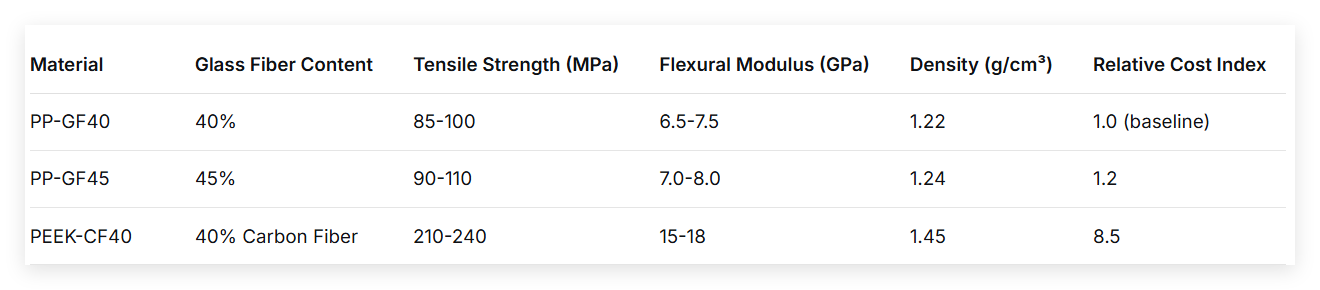
Material selection represents a cornerstone of Ansix Tech's cost-reduction strategy. Through extensive testing and simulation, the company has identified optimal material formulations that balance performance requirements with economic considerations:
Glass-Fiber Reinforced Polypropylene (PP-GF40/45): This material has emerged as the primary choice for many blade components due to its favorable strength-to-weight ratio, excellent fatigue resistance, and relatively low cost. With 40-45% glass fiber reinforcement, it provides the necessary stiffness (elastic modulus of approximately 8200 MPa) while maintaining sufficient impact resistance for wind turbine applications. The material's crystalline structure facilitates predictable shrinkage behavior during cooling, enabling more precise dimensional control.
High-Performance Thermoplastics: For components requiring exceptional strength and thermal stability, Ansix Tech utilizes advanced materials such as PEEK with carbon fiber reinforcement (PEEK CF40). Research indicates this material can reduce component weight by up to 28% while increasing stiffness compared to traditional E-glass/epoxy composites. Although more expensive per kilogram, its superior performance can reduce overall system costs through weight reduction and enhanced durability.
Cost-Optimized Resins: For non-structural components and applications with less demanding specifications, Ansix Tech employs specially formulated wide-specification resins that offer significant cost savings while maintaining adequate performance characteristics. By implementing advanced process controls including cavity pressure sensors, the company compensates for the greater variability of these materials, achieving consistent quality despite material inconsistencies.
Table: Comparative Material Properties for Wind Turbine Blade Components
Design for Manufacturing (DFM) and Mold Flow Analysis
Prior to tooling manufacture, Ansix Tech conducts comprehensive digital simulations using advanced Moldflow CAE software to predict and optimize the injection molding process. This proactive approach identifies potential manufacturing issues before physical production begins, significantly reducing development time and cost.
The mold flow analysis focuses on several critical parameters:
Filling Pattern Optimization: Engineers simulate resin flow through the complex blade geometry to ensure complete cavity filling without air entrapment. For wind turbine blades with their elongated, aerodynamic forms, this requires careful gate placement and sequencing to maintain uniform flow front advancement.
Cooling System Design: Approximately 80% of the injection molding cycle is devoted to cooling. Ansix Tech's simulations optimize cooling channel placement to ensure uniform heat extraction, minimizing thermal gradients that can cause warpage or residual stresses. The cooling system follows the contour of the blade shape, positioned close to both inner and outer surfaces to maximize heat transfer efficiency.
Shrinkage and Warpage Prediction: The anisotropic nature of fiber-reinforced materials creates differential shrinkage that must be anticipated and compensated for in mold design. Through simulation, engineers predict dimensional changes and adjust cavity dimensions accordingly, ensuring final components meet tight tolerances without post-molding correction.
Gate Optimization: For two-cavity molds, gate design must balance filling between cavities while minimizing aesthetic impact and structural weakness. Ansix Tech typically employs submarine gates or thermally controlled valve gates that provide precise control over the filling sequence and timing.
Mold Manufacturing and Processing Workflow
The mold manufacturing process at Ansix Tech follows a meticulously planned workflow designed to maximize precision while controlling costs:
Design Finalization: After simulation validates the mold design, detailed manufacturing drawings are created with specific emphasis on critical interfaces and sealing surfaces.
Material Procurement: Mold base components are standardized where possible, while cavity inserts are manufactured from specialized steels selected for their wear resistance, polishability, and thermal conductivity.
Precision Machining: Cavity and core components undergo multi-axis CNC machining followed by EDM (Electrical Discharge Machining) for complex contours. The blade's aerodynamic surfaces require particularly careful finishing, often involving precision grinding and polishing to achieve the required surface quality.
Mold Assembly and Fitting: Components are assembled with careful attention to alignment and sealing. For two-cavity molds, ensuring perfect balance between cavities is essential for consistent part quality.
Sampling and Validation: Initial production runs validate mold performance, with adjustments made as necessary before full production commences.
Critical Mold Systems Design
Cooling System: Ansix Tech implements a conformal cooling approach where cooling channels follow the contour of the blade shape at varying distances from the cavity surface based on local geometry and thermal requirements. This system ensures temperature variations across the mold surface remain below 0.5°C per square meter, crucial for preventing warpage in large, thin-walled components.
Runner and Gating System: The two-cavity design employs a balanced runner system that ensures simultaneous filling of both cavities. For materials with high fiber content, larger runner diameters minimize shear-induced fiber breakage while maintaining adequate flow. Gate design is optimized based on component geometry, with particular attention to areas of high structural importance.
Ejection System: Given the large surface area and delicate nature of wind turbine blade components, Ansix Tech employs a multi-point ejection system with carefully calculated pin placement to prevent distortion during part removal. Ejector pins are positioned along structural ribs and thicker sections where possible, with additional air ejection assistance for components with high surface adhesion.
Manufacturing Challenges and Innovative Solutions
Thermal Management in Large Components
Wind turbine blade components present exceptional thermal management challenges due to their size and thin-walled construction. The extensive surface area relative to volume creates rapid heat dissipation issues that can lead to premature freezing of the polymer melt before complete cavity filling. Ansix Tech addresses this through a combination of strategies:
Progressive Mold Heating: Initial mold temperatures are elevated to facilitate flow, followed by precise cooling once cavities are filled.
Sequential Valve Gating: Multiple gates open in controlled sequence to manage flow front advancement and minimize flow length requirements.
Insulated Runner Systems: Maintain melt temperature throughout the delivery system, particularly important for crystalline materials like PP-GF.
Dimensional Stability and Warpage Control
The anisotropic shrinkage characteristic of fiber-reinforced polymers presents significant challenges for maintaining the precise aerodynamic profiles required for wind turbine blades. Ansix Tech employs several techniques to mitigate this issue:
Fiber Orientation Management: Through gate design and flow control, engineers influence fiber alignment patterns to create more uniform shrinkage behavior.
Compensated Cavity Dimensions: Mold surfaces are intentionally offset based on predicted shrinkage values derived from simulation data.
Stress-Relief Through Controlled Cooling: Gradual, uniform cooling minimizes residual stresses that contribute to post-ejection deformation.
Surface Quality Requirements
Wind turbine blades demand exceptional surface quality to maintain aerodynamic efficiency. Achieving this with injection molding requires specialized approaches:
High-Polish Mold Finishes: Cavity surfaces undergo multi-stage polishing to achieve surface roughness values below 10 micrometers.
In-Mold Surface Treatments: For components requiring specific textures or coatings, Ansix Tech integrates these processes directly into the molding cycle.
Controlled Packing Phases: Precise pressure profiles during packing phases prevent sink marks and surface irregularities, particularly in regions with thickness variations.
Process Optimization: Efficiency Improvement and Cost Control
Cycle Time Reduction Strategies
Cycle time optimization represents one of the most effective cost reduction approaches in injection molding. Ansix Tech has implemented multiple strategies that collectively reduce cycle times by 25-40% compared to conventional approaches:
Scientific Molding Principles: By applying Decoupled Molding® techniques, the company separates filling, packing, and cooling phases, optimizing each independently. This approach allows for reduced packing times without compromising dimensional stability.
Advanced Cooling Technology: Conformal cooling channels placed closer to cavity surfaces with turbulent flow regimes enhance heat transfer efficiency. For a typical blade component, this can reduce cooling time by approximately 30%.
Automated Systems Integration: Robotic part removal and post-processing systems eliminate manual handling time while maintaining consistent cycle timing. Automation also facilitates lights-out manufacturing capabilities for extended production runs.
Material Utilization Optimization
Given that material costs typically represent 40-60% of total component costs in injection molding, efficient material usage directly impacts bottom-line economics:
Runner Systems Minimization: Through hot runner technology and optimized layout design, Ansix Tech reduces runner volume by up to 70% compared to conventional cold runner systems.
Regrind Integration: For non-critical components, carefully controlled percentages of regrind material are incorporated without compromising performance characteristics, reducing virgin material consumption.
Part Design Optimization: Collaboration with customers during design phases identifies opportunities for wall thickness reduction and material-efficient geometries that maintain structural integrity while using less material.
Energy Consumption Reduction
The energy-intensive nature of injection molding presents significant cost and environmental considerations:
Servo-Driven Hydraulic Systems: Modern all-electric and hybrid injection molding machines at Ansix Tech facilities reduce energy consumption by 40-70% compared to conventional hydraulic systems.
Intelligent Temperature Control: Zone-specific mold temperature control minimizes energy waste by applying heat only where needed.
Process Monitoring and Optimization: Real-time monitoring systems identify and correct energy inefficiencies as they occur, preventing wasteful practices from becoming established.
Quality Control and Assurance Framework
In-Process Monitoring and Control
Ansix Tech implements a comprehensive quality management system that begins at material reception and continues through final packaging:
In-Process Monitoring and Control
Ansix Tech implements a comprehensive quality management system that begins at material reception and continues through final packaging:
Cavity Pressure Monitoring: Sensors embedded within mold cavities provide real-time data on filling, packing, and cooling phases, enabling immediate detection of process deviations. This approach allows for quality verification before mold opening, significantly reducing scrap rates.
Dimensional Validation: In-line coordinate measuring machines (CMM) and laser scanning systems validate critical dimensions on a sampling basis, with statistical process control (SPC) methods identifying trends before they exceed tolerance limits.
Material Property Verification: Rheological testing of incoming materials ensures consistency, while in-mold sensors detect viscosity variations that might indicate material degradation or contamination.
Defect Prevention Strategies
Preventing defects rather than detecting them post-production represents the core philosophy of Ansix Tech's quality approach:
Process Window Development: Through Design of Experiments (DOE) methodologies, engineers establish robust process parameters that tolerate normal material and environmental variations without producing defects.
Predictive Maintenance: All equipment undergoes scheduled maintenance based on usage metrics rather than time intervals, preventing unexpected failures that could compromise quality.
Employee Training and Certification: Comprehensive training programs ensure all personnel understand quality requirements and their role in maintaining standards.
Packaging and Rapid Delivery Systems
Customized Packaging Solutions
Wind turbine blade components require specialized packaging to prevent damage during shipping while minimizing packaging costs and environmental impact:
Nestable Designs: Components are designed to nest efficiently during shipping, maximizing container utilization and reducing shipping costs per part.
Reusable Packaging Systems: For regular customers, Ansix Tech has developed returnable packaging systems that eliminate disposable packaging costs while providing superior protection.
Just-In-Time Delivery Coordination: Advanced planning systems synchronize production schedules with customer requirements, minimizing inventory holding costs throughout the supply chain.
Rapid Delivery Protocols
The competitive wind energy market demands increasingly shorter lead times. Ansix Tech addresses this through several interconnected strategies:
Digital Twin Technology: Virtual models of molds and processes enable rapid setup and validation when transferring production between machines or facilities.
Standardized Components Library: Commonly used mold bases, ejector systems, and cooling components are maintained in inventory, reducing custom fabrication time for new projects.
Parallel Processing: Where possible, design, material procurement, and preliminary manufacturing activities occur concurrently rather than sequentially, compressing overall project timelines.
Customer Value Proposition: Reliability and Cost Efficiency
Total Cost of Ownership Reduction
While initial component pricing represents an obvious consideration, Ansix Tech focuses on reducing the total cost of ownership through several mechanisms:
Extended Component Lifespan: Optimized material selection and processing conditions enhance fatigue resistance and environmental durability, extending service life and reducing replacement frequency.
Reduced Assembly Costs: Precision molding minimizes post-molding adjustment requirements, while designed-in assembly features simplify final product integration.
Consistent Quality Supply: Reliable delivery of components with consistent dimensions and properties reduces customer quality control expenses and production line disruptions.
Industry Experience and Technical Partnership
With extensive experience in wind energy component manufacturing, Ansix Tech provides value beyond simple part production:
Design for Manufacturing Consultation: Early engagement with customer design teams identifies opportunities for cost reduction and performance enhancement before designs are finalized.
Material Selection Guidance: Based on performance requirements and environmental conditions, Ansix Tech recommends optimal material solutions balancing cost and performance.
Lifecycle Support: From prototyping through volume production to potential redesigns, the company maintains support throughout product lifecycles.
Conclusion: The Future of Wind Turbine Manufacturing
Ansix Tech's two-cavity injection molding process represents a significant advancement in wind turbine component manufacturing, addressing the critical industry challenges of cost reduction, quality enhancement, and production scalability. By integrating sophisticated simulation technologies, strategic material selection, and process optimization methodologies, the company has developed a manufacturing approach that reduces component costs by 15-30% while maintaining or improving quality standards.
As the global wind energy market continues its rapid expansion, manufacturing innovations like those pioneered by Ansix Tech will play an increasingly important role in making renewable energy more economically viable and widely accessible. The company's commitment to continuous improvement and customer partnership positions it as a key enabler of the renewable energy transition, providing the manufacturing foundation upon which the wind energy industry can build a sustainable future.
The convergence of advanced materials science, digital simulation technologies, and precision manufacturing embodied in Ansix Tech's approach points toward a future where wind turbine components are produced with unprecedented efficiency, consistency, and economy – accelerating our global transition to clean energy sources while demonstrating that environmental sustainability and economic viability can indeed progress hand in hand.
This article is based on technical data from injection molding research and wind turbine manufacturing studies. Ansix Tech's proprietary processes incorporate elements from established industry best practices while introducing innovative approaches to cost reduction and quality enhancement in wind energy component manufacturing.


Ansix Tech Co Ltd
If you have any plans related to Wind turbine blade mold, two-cavity injection molding, you can contact us at any time. We will turn your ideas into reality, let you realize your dreams, and obtain large orders from the market. Our contact information is info@ansixtech.com. Or contact our CTO, mail: stephen@ansixtech.com
#www.ansixtech.com #ansixtech.com #Wind turbine blade mold #Wind turbine blade mold factory #Wind turbine blade mold injection mold #Ansix mold factory #Ansix injection molding #Ansix moud Ltd #Wind turbine blade mold injection molding factory #Ansix injection mould #Wind turbine blade mold injection molding factory #Wind turbine blade mold injection molding company #Wind turbine blade mold injection mold companies #Ansix #Ansix moulds #Ansix china #Ansix tech china #Ansix tech company #Ansix facotry #Ansix Tech #Ansix molds #Ansix injection molding #Ansix mold factory #injection molding Wind turbine blade mold # Ansix mold factory #Wind turbine blade mold china #Wind turbine blade mold precision molds #injection factory #Wind turbine blade mold precision injection molding #Wind turbine blade mold injection molding factory #injection molding company #Wind turbine blade mold injection mold companies #Wind turbine blade mold mould factory #Wind turbine blade mold mold limited #Ansix mold china #Ansix companies #Ansix company China #Wind turbine blade mold facotry #Ansix Tech #Ansix Tech mould #Wind turbine blade mold injection moulding #injection moulding company #Ansix Wind turbine blade mold parts injection mold companies #Wind turbine blade mold mould #Wind turbine blade mold china #Wind turbine blade mold china factory #Ansix moulding companies #Ansix molding company #Wind turbine blade mold injection moulding facotry #Ansix Tech mold #Wind turbine blade mold precision mould #Wind turbine blade mold plastic injection molding #ansix plastic mold #Mold manufacturing #Wind turbine blade mold parts manufacturing #Wind turbine blade mold plastic parts factory #Wind turbine blade mold injection parts mold #Wind turbine blade mold PRECISION MANUFACTURING #Wind turbine blade mold mold precision #China mold #Wind turbine blade mold injection moulding china #Wind turbine blade mold mould china #china precision mold #mold in china #Wind turbine blade mold precision mold china #Precision molds #High-precision molds #Household appliance molds #Injection molds #Large Injection Molding Factory #Large Injection Molding Company #Super Large Injection Mold Factory #Large Tonnage Injection Molding Factory #Large Injection Molding Company #Super Large Injection Molding Factory #2800T Injection Molding Factory #3000 Ton Injection Molding #4500 Ton Injection Molding Factory #Large Mold Injection Molding #Large Plastic Mold Injection Molding Factory #Large Injection Mold Manufacturer #Plastic Mold Factory #Injection Mold #Plastic Mold