



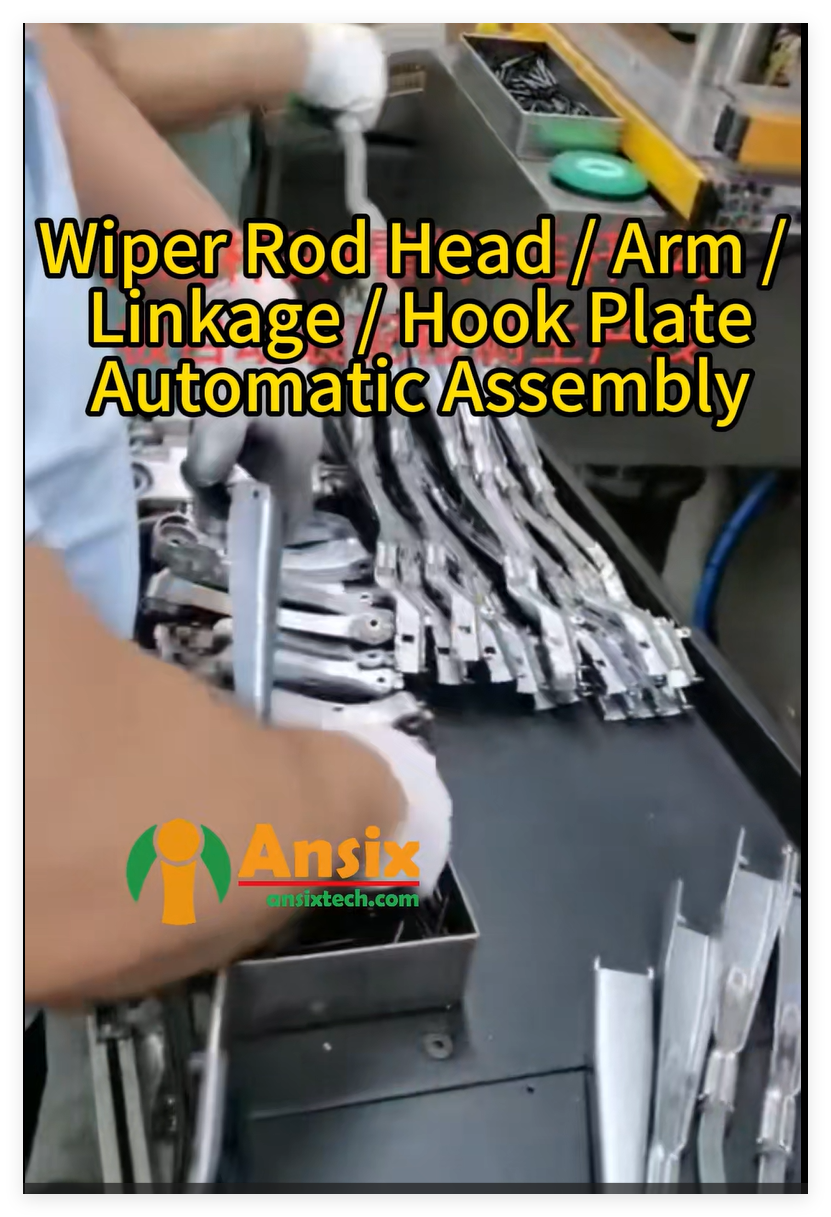
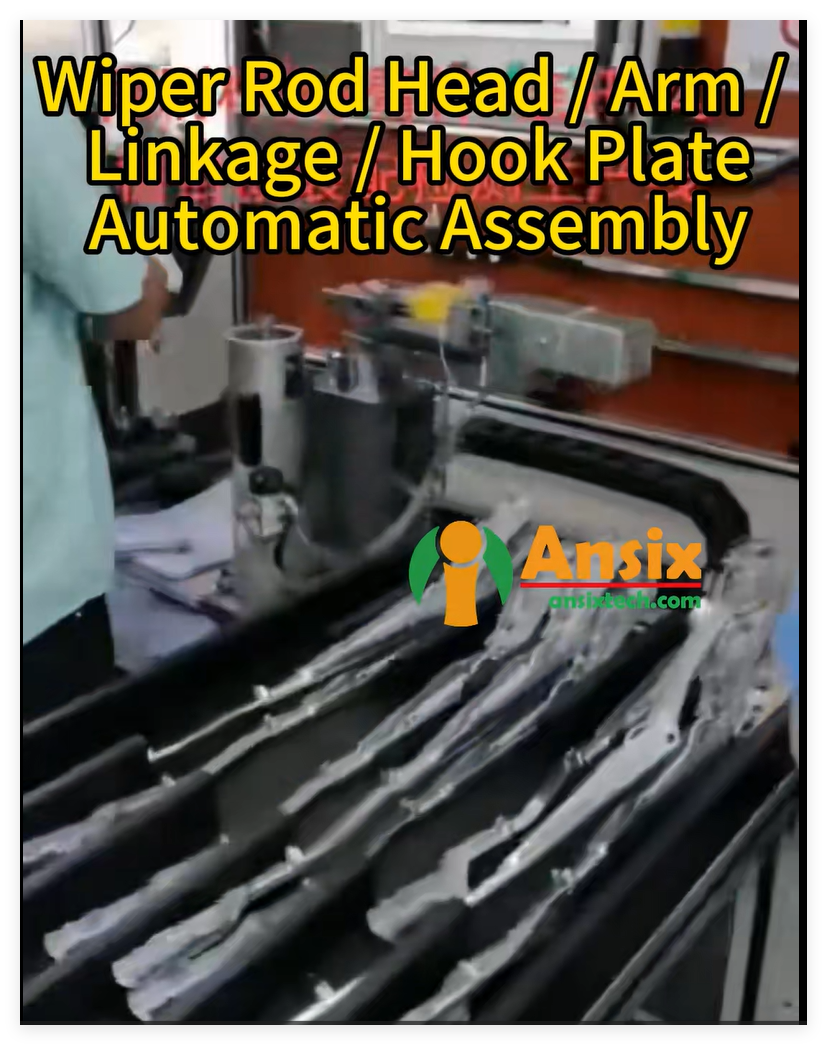
Wiper Rod Head Arm Linkage Hook Plate Automatic Assembly
Wiper Rod Head Arm Linkage Hook Plate Automatic Assembly

Headline: Precision in Motion: How Ansix Tech is Revolutionizing Wiper System Manufacturing with Integrated Automation and Cost Engineering
In the intricate ecosystem of automotive manufacturing, few components are as deceptively complex as the windshield wiper system. It is a module where mechanical engineering meets material science, requiring flawless interaction between the wiper rod head, arm, linkage, and hook plate. A failure in any of these elements compromises driver safety, making precision non-negotiable. For over 28 years, Ansix Tech has positioned itself at the apex of this specialized field. Leveraging deep manufacturing expertise and a holistic engineering philosophy, the company has launched a series of groundbreaking automatic assembly projects for these critical components. This article delves into Ansix Tech’s comprehensive methodology—exploring how its design, development, and manufacturing capabilities are solving persistent industry problems, rigorously validating quality, slashing hard costs, and guaranteeing delivery for a global clientele.
The Genesis of Automation: Answering the Market’s Call for Precision
The traditional assembly of wiper rod heads, arms, linkages, and hook plates has long been plagued by inconsistencies inherent in manual or semi-automated processes. Tolerances stack up, leading to issues like "wiper chatter," uneven pressure distribution, and premature mechanical failure. Ansix Tech recognized that as vehicle aerodynamics and quiet-cabin standards became more stringent, the old methods were no longer viable.
This recognition spurred the initiation of Ansix Tech’s dedicated automatic assembly projects. The goal was not merely to automate but to create an integrated manufacturing ecosystem. By focusing on these specific sub-components, Ansix Tech aims to solve the core problem of interfacial integrity—ensuring that the metal arm connects seamlessly with the plastic head and the linkage mechanism with zero perceptual or functional defect.
The company’s approach begins long before the assembly line starts. It starts with a philosophy rooted in Concurrent Engineering. Ansix Tech’s specialists collaborate with client design teams from the initial sketch, applying Design for Manufacturability (DFM) principles to ensure that every component is optimized for automated handling and assembly . This proactive stance prevents the common pitfall of designing parts that are theoretically perfect but practically impossible to assemble at high speeds.
Solving the "Hard Cost" Equation: Material Science as the First Lever
One of the most significant value propositions Ansix Tech offers its clients is the aggressive reduction of "hard costs"—the tangible expenses of raw materials and production. In wiper systems, material selection is a high-stakes balancing act between durability, weight, and cost.
For components like the wiper rod head and hook plate, material choice dictates performance. Ansix Tech engineers utilize a deep database of polymer science to move beyond simple catalog selection. They perform a rigorous analysis based on critical parameters: density, melt flow rate (MFR), shrinkage rate, flexural modulus, and heat deflection temperature .
For instance, while a standard glass-filled nylon might be the default choice for a robust linkage component, Ansix Tech might identify a modified polypropylene composite that meets or exceeds the technical specifications for impact and thermal resistance but offers a cost advantage of approximately 15% . This is not value engineering by compromise, but value engineering through science.
Furthermore, for non-structural or semi-structural parts, Ansix Tech strategically utilizes "wide-spec" resins—materials with slightly broader performance tolerances available at a lower cost. While the inherent variability of these resins would typically cause issues in standard molding, Ansix Tech mitigates this through advanced process control, using Cavity Pressure sensors to compensate for viscosity fluctuations in real-time . This strategy allows clients to benefit from lower material costs without sacrificing the consistency of the final part.
From Digital Twin to Physical Reality: The Mold Engineering Advantage
The heart of Ansix Tech’s capability lies in its precision tooling. The mold is where the economics of scale are born, and its design dictates cycle time, scrap rate, and ultimately, the cost per part. For wiper system components, which often feature complex curves and thin walls, mold design is particularly challenging.
Mold Flow Analysis (DFM) and Simulation
Before any steel is cut, Ansix Tech engineers create a comprehensive digital twin of the mold using advanced CAE software like Moldex3D . This Mold Flow Analysis is critical for wiper components. It predicts how the molten polymer will fill the cavity, identifying potential issues like weld lines (which can become structural weak points), air traps, and warpage due to uneven cooling .
For a complex wiper arm linkage, the simulation allows engineers to optimize gate locations to ensure balanced filling and minimize shear-induced material degradation. In recent projects, this digital validation has reduced the traditional trial-and-error phase by approximately 40%, dramatically accelerating time-to-market .
Critical Considerations in Mold Design
Armed with DFM data, Ansix Tech’s design phase focuses on several critical systems:
Cooling System Design: Cooling accounts for 70-80% of the total cycle time . Traditional straight-drilled cooling lines are often inadequate for the complex geometries of wiper components. Ansix Tech employs conformal cooling—channels that are 3D-printed or machined to follow the exact contour of the mold cavity . This ensures uniform and rapid heat extraction. For a client in the wiper sector, this innovation has resulted in cycle time reductions of 28-39% and temperature uniformity improvements of over 35% compared to conventional cooling . This directly translates to higher output from the same machine and a lower cost per part.
Runner and Gating Architecture: To eliminate waste and shorten cycles, Ansix Tech frequently implements hot runner systems. For larger components like wiper arms, they employ sequential valve gating, which controls when each gate opens during the injection cycle. This optimizes material distribution and prevents over-packing in specific areas, reducing internal stresses that could cause the arm to warp over time .
Ejection Systems: Ejecting a thin-walled, delicate wiper head or a complex linkage without distortion requires precision. Ansix Tech designs multi-stage ejection systems that apply forces at optimal angles and locations. This includes a combination of conventional ejector pins and specialized sleeve ejectors for areas with undercuts, ensuring the part’s geometry is preserved .
Manufacturing the Mold: Conquering Technical Challenges
Transitioning the digital design into a physical mold capable of hundreds of thousands of cycles is where Ansix Tech’s 28 years of experience become tangible.
Material Selection for the Mold: The choice of steel for the mold itself is a critical cost-performance decision. For high-volume production of wiper components, Ansix Tech selects pre-hardened stainless steels for core and cavity components, offering excellent corrosion resistance essential for the humid environments of wiper systems . For projects involving abrasive materials (like glass-filled nylons for linkages), they opt for more durable, wear-resistant tool steels like H13 to prevent premature failure .
Machining and Processing Workflow: Achieving tolerances within ±0.025mm for critical mating surfaces on wiper components demands a sophisticated machining workflow . Ansix Tech’s facilities boast an automated machining ratio of 70%, utilizing 5-axis CNC and EDM (Electrical Discharge Machining) to create the intricate geometries required . This precision ensures that when the mold is mounted, the resulting plastic parts will interface perfectly with metal components in the final assembly.
Overcoming Injection Molding Challenges for Wiper Systems
The injection molding of wiper components presents unique hurdles. The long, slender geometry of an arm or linkage is prone to warpage. Thin-walled sections may cool too quickly, leading to short shots or sink marks.
Ansix Tech addresses these challenges through rigorous validation and process optimization. The prototype phase serves as the bridge between digital design and mass production. Physical prototypes are subjected to material performance assessments, examining thermal resistance, impact strength, and structural integrity under simulated operating conditions .
Once validated, the focus shifts to Process Optimization. Using scientific molding principles and Design of Experiments (DOE), Ansix Tech engineers systematically analyze processing parameters—melt temperature, injection speed, packing pressure, and cooling time . By identifying the optimal parameter set, they maximize quality while minimizing cycle time and material usage. For example, in one automotive sensor project, optimizing the cooling process reduced the cycle from 52 to 36 seconds, boosting daily output by over 28% . Applied to wiper components, this efficiency gain is transformative for meeting high-volume OEM demands.
Quality Assurance: A Digital Fortress
In the automotive supply chain, zero-defect delivery is the standard, not the aspiration. Ansix Tech’s quality assurance system is engineered to meet this demand through a "preventive" rather than "detective" approach .
Digital Process Monitoring: Every production cycle generates a "digital fingerprint"—dozens of data points including temperatures, pressures, and times. Advanced algorithms monitor this data in real-time, detecting subtle deviations from optimal conditions and triggering adjustments before a non-conforming part can be produced. This predictive approach has been shown to reduce defect rates by approximately 62% compared to traditional post-production inspection .
In-Process and Final Validation:
First-Article Inspection (FAI): Initial samples are meticulously measured using Coordinate Measuring Machines (CMM) with sub-micron accuracy to verify all dimensions against the CAD model .
Statistical Process Control (SPC): During production runs, critical dimensions are continuously monitored. This data ensures processes remain centered within specification limits and identifies trends indicating tool wear or process drift .
Automated Vision Systems: For high-volume runs, these systems provide 100% inspection for surface defects, ensuring aesthetic perfection for visible wiper components .
Cost Reduction Strategies and Capacity Guarantees
Ansix Tech’s ability to reduce "hard costs" is not a single action but a systemic outcome of its integrated workflow. The cost reduction framework operates on three primary levers:
Material and Design: As noted, strategic material selection (e.g., modified polypropylene over engineering resins) and DFM-driven simplification (e.g., consolidating multiple parts into one moldable geometry) can reduce material costs by 5-18% and assembly time by up to 40% .
Process Efficiency: The implementation of conformal cooling and scientific molding reduces cycle times and energy consumption. Servo-electric machines and optimized heating systems can lower energy usage by up to 30%, a saving passed directly to the client .
Quality and Waste Reduction: By shifting to predictive quality monitoring, scrap and rework costs are slashed by 60-70% . This maximizes raw material utilization and ensures that every production hour is productive.
These efficiencies compound to ensure that Ansix Tech not only meets but often exceeds delivery deadlines. By utilizing SMED (Single-Minute Exchange of Die) techniques, changeover times are minimized by 60%, enhancing equipment utilization to over 85% . This agility allows the company to respond to fluctuating client demands without compromising on lead times.
Packaging and Delivery: The Final Milestone
The commitment to precision extends to the final mile. Ansix Tech understands that even the most perfectly manufactured wiper arm is useless if damaged in transit. Therefore, packaging solutions are engineered to the component's sensitivity. Parts are secured with custom fixtures that prevent movement and potential damage during transit. Climate-controlled transport is utilized to prevent condensation that could initiate corrosion on metal components or metal inserts within the plastic parts . Every shipment is accompanied by comprehensive documentation, ensuring the client receives a turnkey solution ready for immediate integration into their assembly lines.
Conclusion: The Ansix Tech Value Proposition
In the demanding world of wiper system manufacturing, Ansix Tech stands out not merely as a supplier, but as a strategic engineering partner. By initiating specialized automatic assembly projects for rod heads, arms, linkages, and hook plates, the company addresses the specific mechanical challenges of these components with a holistic, data-driven approach.
From the initial Mold Flow Analysis and strategic selection of raw materials (like cost-optimized polypropylene composites) to the precision manufacturing of molds with conformal cooling and the implementation of predictive quality assurance, every step is engineered to deliver one thing: uncompromising value. Ansix Tech’s 28 years of experience translate into a proven ability to significantly reduce hard costs for clients—not by cutting corners, but by engineering them out of existence. In an industry where reliability, cost, and speed are paramount, Ansix Tech provides the definitive solution for bringing perfect wiper systems to the road.
About Ansix Tech:
Ansix Tech is a global leader in providing end-to-end injection molding and automatic assembly solutions. With over 28 years of experience, IATF 16949 certification, and a network of production bases across China and Vietnam, the company specializes in transforming complex engineering challenges into cost-effective, high-volume manufacturing successes .




Ansix Tech Co Ltd
If you have any plans related to Wiper Rod Head Arm Linkage Hook Plate Automatic Assembly , you can contact us at any time. We will turn your ideas into reality, let you realize your dreams, and obtain large orders from the market. Our contact information is info@ansixtech.com. Or contact our CTO, mail: stephen@ansixtech.com
#www.ansixtech.com #ansixtech.com #Wiper Rod Head Arm Linkage Hook Plate Automatic Assembly #Wiper Rod Head Arm Linkage Hook Plate Automatic Assembly#Wiper Rod Head Arm Linkage Hook Plate Automatic Assembly injection molding company #Wiper Rod Head Arm Linkage Hook Plate Automatic Assembly injection mold companies #Ansix #Ansix moulds #Ansix china #Ansix tech china #Ansix tech company #Ansix facotry #Ansix Tech #Ansix molds #Ansix injection molding #Ansix mold factory #injection molding Wiper Rod Head Arm Linkage Hook Plate Automatic Assembly #Ansix mold factory #Wiper Rod Head Arm Linkage Hook Plate Automatic Assembly china #Wiper Rod Head Arm Linkage Hook Plate Automatic Assembly molds #injection factory #Wiper Rod Head Arm Linkage Hook Plate Automatic Assembly injection molding #Wiper Rod Head Arm Linkage Hook Plate Automatic Assembly injection molding factory #injection molding company #Wiper Rod Head Arm Linkage Hook Plate Automatic Assembly injection mold companies #Wiper Rod Head Arm Linkage Hook Plate Automatic Assembly#Wiper Rod Head Arm Linkage Hook Plate Automatic Assembly mold limited #Ansix mold china #Ansix companies #Ansix company China #Wiper Rod Head Arm Linkage Hook Plate Automatic Assembly facotry #Ansix Tech #Ansix Tech mould #Wiper Rod Head Arm Linkage Hook Plate Automatic Assembly injection moulding #injection moulding company #Ansix Wiper Rod Head Arm Linkage Hook Plate Automatic Assembly parts injection mold companies #Wiper Rod Head Arm Linkage Hook Plate Automatic Assembly #Wiper Rod Head Arm Linkage Hook Plate Automatic Assembly china #Wiper Rod Head Arm Linkage Hook Plate Automatic Assembly china factory #Ansix moulding companies #Ansix molding company #Wiper Rod Head Arm Linkage Hook Plate Automatic Assembly injection moulding facotry #Ansix Tech mold #Wiper Rod Head Arm Linkage Hook Plate Automatic Assembly mould #Wiper Rod Head Arm Linkage Hook Plate Automatic Assembly plastic injection molding #ansix plastic mold #Mold manufacturing #Wiper Rod Head Arm Linkage Hook Plate Automatic Assembly parts manufacturing #Wiper Rod Head Arm Linkage Hook Plate Automatic Assembly plastic parts factory #Wiper Rod Head Arm Linkage Hook Plate Automatic Assembly injection parts mold #Wiper Rod Head Arm Linkage Hook Plate Automatic Assembly PRECISION MANUFACTURING #Wiper Rod Head Arm Linkage Hook Plate Automatic Assembly #China mold #Wiper Rod Head Arm Linkage Hook Plate Automatic Assembly injection moulding china #Wiper Rod Head Arm Linkage Hook Plate Automatic Assembly mould china #china precision mold #mold in china #Wiper Rod Head Arm Linkage Hook Plate Automatic Assembly mold china #Precision molds #High-precision molds #Wiper Rod Head Arm Linkage Hook Plate Automatic Assembly #Injection molds #Wiper Rod Head Arm Linkage Hook Plate Automatic Assembly Factory #Wiper Rod Head Arm Linkage Hook Plate Automatic Assembly Company #Super Large Injection Mold Factory #Large Tonnage Injection Molding Factory #Wiper Rod Head Arm Linkage Hook Plate Automatic Assembly Company #Wiper Rod Head Arm Linkage Hook Plate Automatic Assembly Factory #2800T Injection Molding Factory #3000 Ton Injection Molding #4500 Ton Injection Molding Factory #Large Mold Injection Molding #Large Plastic Mold Injection Molding Factory #Large Injection Mold Manufacturer #Plastic Mold Factory #Injection Mold #Plastic Mold