



Separable honey cap mineral water bottle cap
FEATURES
Manufacturing Process
The manufacturing of separable honey cap mineral water bottle caps requires a meticulously engineered production system integrating injection molding, assembly, and quality verification. The core manufacturing flow follows:
Material Preparation: Food-grade thermoplastic resins—predominantly polypropylene (PP) or high-density polyethylene (HDPE)—are selected for their durability, chemical resistance, and regulatory compliance with FDA, EU 10/2011, and ISO 22000 standards. Materials undergo pre-drying treatment to eliminate moisture content below ultra-low standards, preventing silver streaks, bubbles, and sealing performance degradation during molding. Anti-static additives may be incorporated to reduce electrostatic adsorption, ensuring food-grade hygiene requirements.
-
Mold Description
Product Materials:
PP
Mold Material:
S136ESR
Number of Cavities:
64
Glue Feeding Method:
Hot runner
Cooling Method:
Water cooling
Molding Cycle
6.5s
- The mold manufacturing process and product material selection
Injection Molding: The cap components are produced using high-speed, multi-cavity injection molding systems. High-speed bottle cap molds adopt multi-cavity configurations, with mainstream cavity counts including 32 cavities, 48 cavities, and 64 cavities, while high-end mass production can reach 72 cavities. The cavity layout is optimized as circular or matrix patterns to ensure balanced melt filling and uniform stress distribution. The hot runner system with needle valve technology eliminates cold material waste, with each cavity independently temperature-controlled to prevent melt temperature differentials that cause uneven filling. Point gates or submarine gates are arranged at the top inner side of the bottle cap, improving melt shear rates, reducing viscosity, and enabling automatic gate break-off for gate-mark-free demolding.
Cooling and Demolding: Conformal cooling channels and spiral water channel designs are machined close to cavity surfaces, ensuring rapid and uniform heat exchange. The use of high-thermal-conductivity materials (such as beryllium copper alloy) in critical thin-walled areas, particularly the thread zone, prevents thread deformation and shrinkage marks while ensuring sealing surface flatness. For caps with anti-tamper bands, the thread core is driven by a servo motor to rotate and retreat, adapting to short-cycle high-speed molding.
-
Assembly and Finishing: Following injection molding, the separable honey cap components undergo precision assembly, where the honey chamber is integrated with the base cap structure. This stage includes insertion of sealing elements (silicone gaskets or linerless sealing designs), installation of tamper-evident features, and printing/decorating operations as required by branding specifications.
5. Automated Quality Inspection: State-of-the-art vision inspection systems are deployed post-molding, capable of inspecting up to 252,000 caps per hour with high-resolution color cameras. These systems detect typical defects including micro-holes, temperature variations, dimensional deviations, sealing surface imperfections, and visual defects, ensuring that only defect-free caps proceed to packaging.
Delivery Efficiency
Ansix Tech‘s delivery efficiency advantage stems from three critical enablers:
Multi-Cavity Productivity: Through 32-, 48-, and 64-cavity mold configurations, cycle times have been substantially shortened. Advanced production cells utilizing all-electric injection molding machines with 3,800 kN clamping force achieve consistent 4-second cycles in 48-cavity configurations for standard closure caps. This translates to production outputs exceeding 43,000 caps per hour from a single machine.
Integrated Production Ecosystem: By co-locating raw material suppliers, tooling workshops, and automated assembly lines within close geographic proximity, the supply chain achieves rapid turnaround and cost efficiency. Monthly delivery volumes can reliably exceed several million units while maintaining tight tolerances and consistent quality.
Rapid Mold Development: For separable honey cap projects, Ansix Tech employs accelerated mold development timelines. Standard mold design and manufacturing typically completes in 25–60 days, with feasibility studies and DFM (Design for Manufacturing) reports delivered within 3–5 days to accelerate customer product launches.
Quality Assurance
The quality assurance framework for separable honey caps is built around regulatory compliance, dimensional precision, and functional validation:
Material Safety Compliance: All resins are FDA-compliant, BPA-free polymers. Full documentation is provided demonstrating adherence to ISO 22000 or FSSC 22000 standards for food safety management. For European exports, REACH and RoHS compliance is verified, along with EC 1935/2004 declarations confirming suitability for food contact.
Dimensional Accuracy: Statistical process control (SPC) during injection molding maintains dimensional accuracy within ±0.05mm, ensuring compatibility with bottling line capping equipment and preventing leakage or cross-threading issues.
Functional Testing: Comprehensive testing protocols include torque testing (ensuring consistent application torque and removal force), seal integrity testing (pressure decay or vacuum decay methods to validate closure performance under real-use conditions), visual defect inspection, and batch consistency verification.
Process Validation: Each batch undergoes first-article inspection and last-off comparison. Critical dimensions are monitored through CpK analysis, with target CpK ≥ 1.33 for all seal-related dimensions.
Most Competitive Cost Control
Ansix Tech‘s cost leadership approach focuses on eliminating waste across the entire production lifecycle:
Hot Runner Optimization: The adoption of needle valve hot runner systems eliminates cold runner material waste entirely. Each cavity is independently temperature-controlled, achieving material utilization rates exceeding 98%. For a high-volume separable cap project producing 10 million units annually, this translates to direct raw material savings of approximately 15–20% compared to traditional cold runner systems.
Cycle Time Reduction: Conformal cooling designs, combined with high-speed injection units, reduce cooling time by up to 66% while minimizing residual stress and warpage. For thin-walled cap applications, cycle times can be compressed from 8 seconds to 5.5 seconds, increasing daily output capacity by 45% without additional capital investment.
Lightweighting Engineering: Through precise mold flow analysis, material distribution can be optimized to reduce part weight by 8–15% while maintaining all performance requirements—seal integrity, mechanical strength, and tamper-evidence functionality. Each gram removed from per-unit weight translates directly to material cost savings.
Automated Quality Screening: Integrated vision inspection systems operating at speeds up to 360,000 caps per hour automatically detect and reject non-conforming parts. This eliminates downstream inspection labor while ensuring zero-defect shipments to customers.
Energy Efficiency: All-electric injection molding machines consume up to 30% less energy than conventional hydraulic systems while delivering superior motion precision and repeatability, further reducing per-unit production costs.
In summary, the separable honey cap mineral water bottle cap represents both a packaging innovation for brand owners and a manufacturing optimization opportunity for Ansix Tech‘s production capabilities. Through integrated engineering, material science, and process control, Ansix delivers a product that meets food-grade safety standards while achieving market-leading cost efficiency.
Part Two: Separable Honey Cap Mineral Water Bottle Cap – Mold Manufacturing, Injection Molding Material Selection, Smart Manufacturing Integration, Efficiency Improvement, and Process Quality Assurance
Mold Manufacturing – Core Customer Value
Mold manufacturing is the fundamental driver of product quality, production efficiency, and long-term cost structure for separable honey caps. Ansix Tech‘s mold engineering approach focuses on translating technical parameters into measurable customer value.
Precision Equipment Foundation: Equipped with five-axis high-speed machining centers from Mori Seiki and Makino achieving ±0.002mm positioning accuracy and surface roughness Ra < 0.15μm, Ansix produces complex mold geometries with exceptional repeatability. For separable honey caps—which require thread precision, sealing surface flatness, and multi-component assembly interfaces—this accuracy level ensures that mating components fit perfectly without binding or leaking.
Mold Life Commitment: Based on the expected production volume and material selection, mold steel grades are carefully matched to application requirements:
Mold Component Steel Grade Hardness (HRC) Application Value
Mold Base P20 (1.2311) 28–32 Cost-effective, excellent machinability for structural frames
Cavity/Core (High Vol.) S136/STAVAX 50–55 Superior corrosion resistance, high mirror finish—ideal for food-contact caps
Cavity/Core (Glass-Filled) H13/SKD61 48–52 High wear resistance for abrasive glass-fiber-reinforced materials
High-Polish Transparent NAK80 35–40 Pre-hardened, outstanding polishability for clear honey chambers
For standard polypropylene caps (non-reinforced), Ansix guarantees mold life of 1,000,000 shots. For glass-fiber-reinforced materials (30–50% GF loading), we guarantee 500,000 shots with appropriate surface coatings. Each mold ships with a full material certificate, heat treatment record, and dimensional inspection report.
Precision Tolerances: Routine structural components are held to ±0.05mm. For critical sealing surfaces and thread engagement features, tolerances can be tightened to ±0.005mm. Parting lines are machined to ±0.005mm fit precision, eliminating flash and the need for secondary deburring operations.
Mold Type Capabilities: For separable honey cap applications, Ansix offers specialized mold configurations:
Hot Runner Systems: Needle valve hot runner with independent cavity temperature control, eliminating cold runner waste and achieving 98%+ material utilization.
Stack Molds: Doubles output per molding cycle by utilizing two parting planes, delivering efficiency gains without increasing machine tonnage.
Unscrewing Mechanisms: Servo-driven unscrewing systems for complex cap thread geometries, enabling consistent demolding without thread damage.
High-Polish Molds: Surface finishes as fine as Ra 0.05μm, ideal for transparent honey chambers requiring optical clarity.
Gate and Runner Optimization: Using Moldflow simulation software, the melt filling process is analyzed prior to mold manufacture. Weld line positions, air trap locations, and shear heating patterns are predicted and optimized. Gate locations and quantities are adjusted to ensure balanced filling across all cavities, ensuring that each cap produced is identical to the first—eliminating reject variation between molding cycles.
Delivery Timelines: For separable honey cap molds: simple molds delivered in 10 days, medium-complexity molds in 25–45 days, and urgent projects can be expedited to 20 days while maintaining all validation steps.
Injection Molding Material Selection
Material selection drives both product performance and production economics. Ansix maintains expertise across a broad portfolio of injection molding materials optimized for separable cap applications:
Primary Food-Contact Materials:
Polypropylene (PP): The industry standard for bottle caps. Offers temperature resistance from -20°C to 100°C, low cost, excellent fluidity, and shear-rate adaptability for high-speed molding. PP caps are lightweight, flexible, and fully recyclable within existing polyolefin recycling streams.
High-Density Polyethylene (HDPE): Superior durability, impact resistance, and stiffness compared to PP. HDPE provides exceptional chemical resistance and sealing performance, making it ideal for long-shelf-life applications.
Engineering-Grade Materials (for specialized honey chambers or functional additives):
PC/ABS: Dimensional stability and high-impact resistance for premium cap aesthetics.
PBT+30% GF: Enhanced stiffness and dimensional stability with glass fiber reinforcement.
PEEK/PPS/LCP: High-performance thermoplastics for elevated-temperature applications requiring chemical resistance and thermal stability.
For all food-contact applications, materials are sourced with full FDA compliance, EU 10/2011 certification, and BPA-free declarations. Migration test reports for temperature extremes, odor neutrality, and heavy metal screening are provided upon request. For European market exports, REACH and RoHS compliance documentation is also maintained.
Smart Manufacturing Integration and Efficiency Improvement
Ansix Tech‘s smart manufacturing ecosystem bridges the gap between mold engineering and production performance:
MES Integration: All injection molding machines are networked to a Manufacturing Execution System (MES) that locks all molding parameters—temperature, pressure, speed, and time—within controlled ranges. Only authorized engineers can modify these settings, and all changes are logged with traceability. This eliminates the risk of unauthorized operator adjustments that compromise product quality.
Real-Time Process Control: The MES system collects real-time data from connected injection molding machines and quality control equipment, providing centralized process monitoring. CpK values are automatically calculated for critical-to-quality dimensions on every production batch. Operators receive immediate alerts when any parameter drifts outside control limits, enabling proactive intervention before non-conforming parts are produced.
Automated Cycle Optimization: Digital assistance systems analyze injection processes in real time, automatically adjusting switchover points and holding pressure within fractions of a second. This compensates for shot-weight fluctuations without manual intervention, delivering consistently high part quality and minimal scrap—even under tight tolerance specifications.
Ultrasonic Wall Thickness Monitoring: For cap applications where consistent wall thickness directly impacts sealing performance, ultrasonic sensors provide real-time wall thickness feedback. The control system automatically compensates holding pressure to maintain thickness within specification, eliminating progressive drift over long production runs.
Mold Temperature Control: Injection molds are equipped with mold temperature controllers that maintain core and cavity temperatures within 2°C differential. This precise temperature management prevents differential shrinkage, ensuring that cap threads remain round and sealing surfaces remain flat across all production shifts.
Process Quality Assurance
Quality assurance begins before the first shot is ever produced:
DFM and Mold Flow Analysis: Prior to mold manufacturing, a comprehensive Design for Manufacturing (DFM) report is provided, including:
Material recommendation based on functional requirements and cost targets
Wall thickness optimization suggestions to eliminate sink marks and voids
Gate location optimization to ensure balanced filling
Draft angle recommendations for reliable demolding
Ejector pin mark location approval to accommodate customer branding requirements
Trial Shots and Improvement Rounds: From T0 to T3 trial samples, each round is accompanied by detailed improvement reports showing dimensional measurements, visual defect analysis, and corrective actions taken. The ability to swap cavity inserts to test alternative gating or cooling strategies means different solutions can be validated without rebuilding entire molds.
Pre-Production Validation: Before full-scale production begins, Ansix offers 100–500 shot pilot runs to validate yield rates and CpK values. Only once stability is confirmed through statistical evidence does mass production commence.
Post-Delivery Support: Each mold ships with a complete set of spare wear parts (ejector pins, core inserts). Preventative maintenance documentation is provided every 200,000 cycles. Lifetime repairs are offered at cost, and the mold structure (excluding normal wear parts) is covered by a three-year warranty.
The core value delivered to customers is simple: lower total cost per part, minimized production risk, and predictable quality across every production batch—from the first hundred thousand shots to the millionth.
Part Three: Separable Honey Cap Mineral Water Bottle Cap – Comprehensive Manufacturing Solution (2,000+ words)
ANSIX TECH – Separable Honey Cap Mineral Water Bottle Cap: From Technical Specifications to Customer Value
Project Initiation: Ansix Tech‘s Commitment to Separable Honey Cap Excellence
With over 28 years of manufacturing experience in the plastic packaging industry, Ansix Tech has established itself as a specialized manufacturer and solution provider for the separable honey cap mineral water bottle cap product category. From initial prototype design verification to high-volume production and assembly validation, Ansix delivers end-to-end manufacturing solutions that transform innovative packaging concepts into market-ready products. This comprehensive document outlines the complete manufacturing solution—transforming technical specifications into measurable customer value by addressing the core questions every brand owner asks: “What problems can you solve for me? How much cost can you save me? What risks can you mitigate?“
Section One: The Separable Honey Cap – Product Definition and Market Value
1.1 Product Description and Design Principle
The separable honey cap is a three-component closure system consisting of:
Base Cap: Threaded closure that seals onto the bottle neck finish
Honey Chamber: Hollow storage compartment integrated into the cap, capable of holding 3–15 grams of liquid honey concentrate
Tamper-Evident Seal: Breakable membrane or twist-activated release mechanism that maintains physical separation until consumption
When the consumer twists the cap 90° (or presses the activation mechanism), the honey chamber opens, releasing concentrated honey into the purified water below. A gentle shake evenly disperses the honey, creating a ”freshly made“ beverage without preservatives.
1.2 Available Specifications and Sizes
Ansix manufactures separable honey caps across a comprehensive range of standard neck finishes:
Neck Finish Outside Diameter Inside Diameter Height Typical Application
20mm ø24.50±0.30 ø20.20±0.30 12.50±0.30 Small-format, single-serve
24mm ø27.65±0.30 ø23.40±0.30 15.00±0.30 Compact portable bottles
28mm (CSD) ø32.60±0.30 ø26.00±0.30 20.10±0.30 Standard carbonated beverages
28mm (Short) ø29.90±0.30 ø25.70±0.30 15.90±0.30 Lightweight water bottles
30mm ø33.50±0.30 ø27.50±0.30 18.00±0.30 PET water bottles
38mm ø40.55±0.30 ø35.70±0.30 16.55±0.30 Large-format bottles
45mm ø46.50±0.30 ø41.50±0.30 22.00±0.30 Sports bottles
55mm ø56.00±0.30 ø51.00±0.30 25.00±0.30 5-gallon/19-liter large containers
Custom neck finishes and dimensions are available for unique brand bottle designs.
1.3 Material Selection and Raw Material Properties
The selection of raw materials directly impacts product safety, shelf life, consumer perception, and cost:
Primary Resin – Polypropylene (PP):
Melt Flow Rate (MFR): 8–25 g/10min (depending on cap geometry and molding speed)
Density: 0.90–0.91 g/cm³
Temperature Resistance: -20°C to +100°C
Key Characteristics: Non-toxic, odorless, excellent fatigue resistance for hinge mechanisms, FDA-compliant, BPA-free
Grade Example: Borealis HD120MO or equivalent
Alternative Resin – High-Density Polyethylene (HDPE):
Density: 0.94–0.96 g/cm³
Superior chemical resistance and sealing performance
Higher stiffness and lower permeability than PP
Widely used for still water applications
Specialty Additives:
Slip agents: Eliminated for still water applications to prevent off-taste and migration
Anti-static additives: Reduce electrostatic dust adhesion during high-speed production, ensuring food-grade hygiene
UV stabilizers: Maintain color integrity during extended shelf display (UV test 3,000 hours minimum)
Color masterbatches: Pantone-matched for brand consistency
Section Two: What Value Does Ansix Provide? – Solving Customer Problems, Reducing Costs, Minimizing Risks
Instead of presenting capabilities in isolation, Ansix frames every technical advantage in terms of customer benefit. Here is how we translate mold manufacturing and injection molding expertise into your competitive advantage:
2.1 Problem: “I worry about mold failure causing production downtime and missed customer orders.”
Ansix‘s Solution:
Predictive Mold Life Guarantee: Based on production volume, we select the optimal steel grade. For standard PP caps without glass reinforcement: 1,000,000 shots minimum. For 30-50% glass-fiber-filled materials: 500,000 shots minimum, with coated cavity surfaces to resist abrasive wear.
Spare Parts Kit Included: Every mold ships with comprehensive spare wear parts—ejector pins, core inserts, and guide bushings—ensuring any normal wear item can be replaced immediately.
2000-Shot Aging Test: Before mold delivery, we run 2,000 continuous cycles under production conditions and provide a wear report. You see exactly how the mold will perform before it arrives in your factory.
Three-Year Structural Warranty: Excluding normal consumable parts, the mold structure is fully warrantied for three years or 1,000,000 cycles, whichever comes first.
Your Value: Production schedule certainty. No unplanned downtime waiting for outsourced mold repairs. Average repair turnaround: 24 hours or less.
2.2 Problem: “Flash on my caps means expensive secondary deburring and higher labor costs.”
Ansix‘s Solution:
±0.005mm Parting Line Fit: Our 5-axis machining centers achieve parting line matching precision of 0.005mm. The result: zero flash at the parting line for the first several hundred thousand cycles, and even at end-of-life, flash thickness never exceeds 0.03mm.
Self-Locking Clamp Force Compensation: Injection molding machines are programmed with real-time clamp force feedback. As the mold temperature stabilizes, the clamping force adjusts automatically to maintain perfect parting line closure.
High-Rigidity Mold Base: Mold bases are constructed from pre-hardened P20 steel with anti-warpage heat treatment, preventing progressive deformation under repeated high-clamp-force cycles.
Your Value: Eliminate manual flash-trimming operations entirely. Save $0.005–0.01 per cap in secondary labor and avoid the quality risk of inconsistent manual trimming.
2.3 Problem: “Every production batch gives me different dimensions. My automated filling line rejects caps unpredictably.”
Ansix‘s Solution:
MES-Locked Parameters: All molding parameters—temperature zones, injection pressure profiles, holding pressure stages, cooling time, screw speed—are stored in a Manufacturing Execution System that requires engineer-level authorization for any change. Unauthorized adjustments are impossible.
In-Mold Temperature Sensors: Thermocouples embedded in the cavity wall measure real-time plastic temperature. If the temperature varies from the validated range by more than ±2°C, the system alerts the operator before non-conforming parts are produced.
Ultrasonic Wall Thickness Monitoring: Integrated sensors measure cap wall thickness every cycle. Data feeds back to the injection unit, which automatically adjusts holding pressure to compensate for material viscosity variations. For a typical 28mm cap, wall thickness variation is maintained below ±0.02mm across 100,000 cycles.
CPK ≥ 1.33 on All Critical Dimensions: We don‘t just claim quality—we prove it. Full dimensional inspection reports accompany every sample shipment, with CpK values calculated for sealing surface flatness, thread pitch, and anti-tamper band break force.
Your Value: Plug-and-play compatibility with your automated filling line. No machine downtime to adjust capping head torque settings between batches. No rejected caps from failed seal integrity testing.
2.4 Problem: “Mold modifications take weeks. I lose sales when packaging design changes are delayed.”
Ansix‘s Solution:
In-House Modification Capability: With on-site electrode manufacturing centers and EDM (electrical discharge machining) departments, mold repairs and modifications rarely leave our facility. Typical change orders—new logo engraving, gate geometry adjustments, venting slot deepening—are completed in 2–3 days rather than weeks.
Modular Insert Design: Critical features (branding, tear-off tabs, hinge mechanisms) are designed as interchangeable inserts. Changing from one brand logo to another takes hours, not days, and requires no complete mold rebuild.
Rapid Prototype to Production Transition: Using aluminum prototype molds, we validate designs and produce customer samples within 10–15 days. Once design is approved, the hardened steel production mold enters manufacturing while sample production continues—shrinking your total time-to-market by 40–50%.
Your Value: Faster product launches, more responsive packaging changes, and the ability to run parallel brand versions without significant capital investment.
2.5 Problem: “Material costs are eating my margins, but I can‘t compromise quality.”
Ansix‘s Solution:
Lightweighting Engineering: Using Moldflow simulation, we analyze material distribution and identify opportunities to reduce wall thickness in non-critical areas while maintaining structural integrity. Typical results: 8–15% material weight reduction with equal or improved functional performance.
Hot Runner Systems: Needle valve hot runners eliminate cold runner material waste entirely. Material utilization exceeds 98% versus 70–80% for cold runner systems. For high-volume production of 20 million caps annually, this alone saves 150–300 tons of plastic resin per year.
Material Substitution Expertise: For non-food-contact components, lower-cost alternatives may be suitable. For functional components, we help identify the optimal balance of cost and performance. Example: PBT+30% GF provides 2–3× the tensile strength of unfilled PBT at roughly 15% higher material cost—often enabling thinner walls and net material savings.
Scrap Reduction: Automated vision inspection systems detect defects in real-time, immediately rejecting non-conforming parts at the point of production. Combined with closed-loop process control, typical scrap rates are maintained below 1.5% (versus industry average of 3–5%).
Your Value: Direct reduction in per-unit material cost. For a typical 28mm PP cap weighing 2.2 grams, achieving 10% weight reduction saves approximately 0.22 grams per cap. At 50 million caps annually, that‘s 11,000 kg of resin—roughly $15,000–22,000 in material savings, every single year.
Section Three: Hard Power Infrastructure – The Foundation of Customer Trust
3.1 Mold Manufacturing Equipment
Ansix‘s mold shop is equipped with production-grade precision machinery:
5-Axis High-Speed Machining Centers:
Positioning Accuracy: ±0.002mm (2 microns)
Surface Finish Capability: Ra < 0.15μm—cavity surfaces require minimal manual polishing before mold assembly
Hardened Steel Machining: Capable of cutting steel up to 60 HRC
Customer Value: Complex cap geometries—including internal threads, tamper-evident band notches, and snap-fit honey chamber features—are machined directly without secondary electrode EDM operations, reducing lead time by 30–40%.
Slow Wire EDM (Electrical Discharge Machining):
Precision: ±0.002mm positioning accuracy
Minimum Kerf Width: 0.03mm – ideal for narrow cooling slots, venting channels, and thin-walled core pins
Customer Value: Fine cooling channels are machined precisely, enabling conformal cooling designs that reduce cycle time by up to 40% while preventing localized hot spots that cause warpage.
Coordinate Measuring Machines (CMM):
Inspection Precision: ±0.0012mm volumetric accuracy
Customer Value: Every mold cavity undergoes full dimensional inspection before delivery. A complete measurement report accompanies every mold shipment, documenting critical dimensions against your drawing specifications.
Optical Measuring Systems:
Resolution: 0.001mm for 2D profile measurement
Customer Value: Rapid comparison of molded samples against CAD data. Full-part surface geometry is measured in seconds, instantly identifying deviations from design intent.
3.2 Injection Molding Machine Fleet
Clamping Force Range: 30 tons to 2,000 tons (covering small single-cavity prototype tools to large 64-cavity production molds)
Drive Technology: 100% servo-electric or servo-hydraulic hybrid drives
Precision: ±0.1% shot-weight repeatability
Maximum Injection Speed: Up to 1 m/s screw circumferential speed for thin-wall packaging applications
Clamping Force Accuracy: ±0.5% setpoint with real-time strain gauge feedback
Customer Value: Parts produced on Monday are dimensionally identical to parts produced on Friday of the following week. Batch-to-batch consistency eliminates downstream filling line adjustment.
3.3 Inspection and Testing Equipment
Vision Inspection Systems: Up to 7 cameras per station; inspection speed up to 360,000 caps per hour
Torque Testing: Digital torque gauges for application and removal force verification
Seal Integrity Testers: Pressure decay and vacuum decay methods; sensitivity down to 0.1cc/min leakage rate
Dimensional Gauging: Optical comparators, plug gauges, thread ring gauges, and micrometers
Customer Value: Every production batch is fully characterized before shipment. You receive caps that perform identically to approved samples, eliminating the need for incoming inspection on most product categories.
Section Four: DFM – Turning Analysis into Guaranteed Production Success
4.1 The DFM Process – What You Receive Before the First Mold Cut
Prior to any steel being machined, Ansix delivers a comprehensive Design for Manufacturing report that identifies and resolves potential production issues while you can still modify the part design at minimal cost.
The DFM Report Includes:
Wall Thickness Analysis: Uniform wall thickness is the single most impactful DFM rule in injection molding. If the design exhibits abrupt thickness changes, we propose gradual transitions, rib reinforcements, or core-outs to prevent sink marks and voids.
Draft Angle Recommendations: Standard draft angles of 1–3° on vertical walls are specified for reliable demolding. For textured surfaces, additional draft is required. We calculate optimal angles to ensure cavity release without part deformation.
Gate Location Optimization: Through Moldflow simulation, we predict weld-line positions (visible and potential structural weak points), air trap locations, and flow hesitation. Based on this analysis, we recommend gate types (point gate, submarine gate, fan gate) and optimal gate locations to produce cosmetically and structurally sound caps.
Ejector Pin Placement Map: Ejector marks leave visible witness lines. We map pin locations to non-cosmetic surfaces (inside the cap, under the anti-tamper band, or on hidden surfaces) and provide CAD overlays showing exact pin positions. No surprises.
Material Shrinkage Compensation: Every resin shrinks differently as it cools—differentially in the flow direction versus cross-flow direction. We factor material-specific shrinkage rates into cavity dimensions so that the final cooled part exactly matches your drawing, not a dimensionally warped approximation.
Runner Balance Validation: For multi-cavity molds, we simulate melt flow to ensure each cavity fills simultaneously. Weight variation between cavities is maintained below 0.5% (industry standard is typically 1–2%).
Customer Value: Instead of discovering a fatal design flaw after spending $50,000–150,000 on mold construction, you identify and fix the issue during the DFM phase—when change cost is near zero.
4.2 Mold Design Priorities for Separable Honey Caps
Cooling System Design:
The cooling phase accounts for 50–80% of the total molding cycle time. Ansix designs conformal cooling channels that follow the contour of the part geometry closely. Using 3D-printed beryllium copper inserts in critical areas (particularly the thread zone and sealing surface), cooling efficiency improves by 30–50% compared to conventional straight-drilled channels. Temperature gradient between core and cavity is maintained within 2°C, preventing differential shrinkage that causes oval threads and inconsistent sealing.
Runner and Gate System:
Needle valve hot runners are standard for high-volume separable cap production. Key benefits:
Zero cold runner waste (98%+ material efficiency)
No gate vestige—clean separation at the gate location
Individual temperature control per nozzle ensures each cavity fills at the same melt viscosity
Valve gate sequence control can balance filling across complex geometries
Ejector System:
For separable caps with undercuts (anti-tamper band retention features), Ansix employs:
Unscrewing mechanisms with servo-driven rotation for threaded caps
Collapsible cores for deep internal undercuts
Stripper plates for flat, thin-walled parts to distribute ejection force evenly and prevent warpage
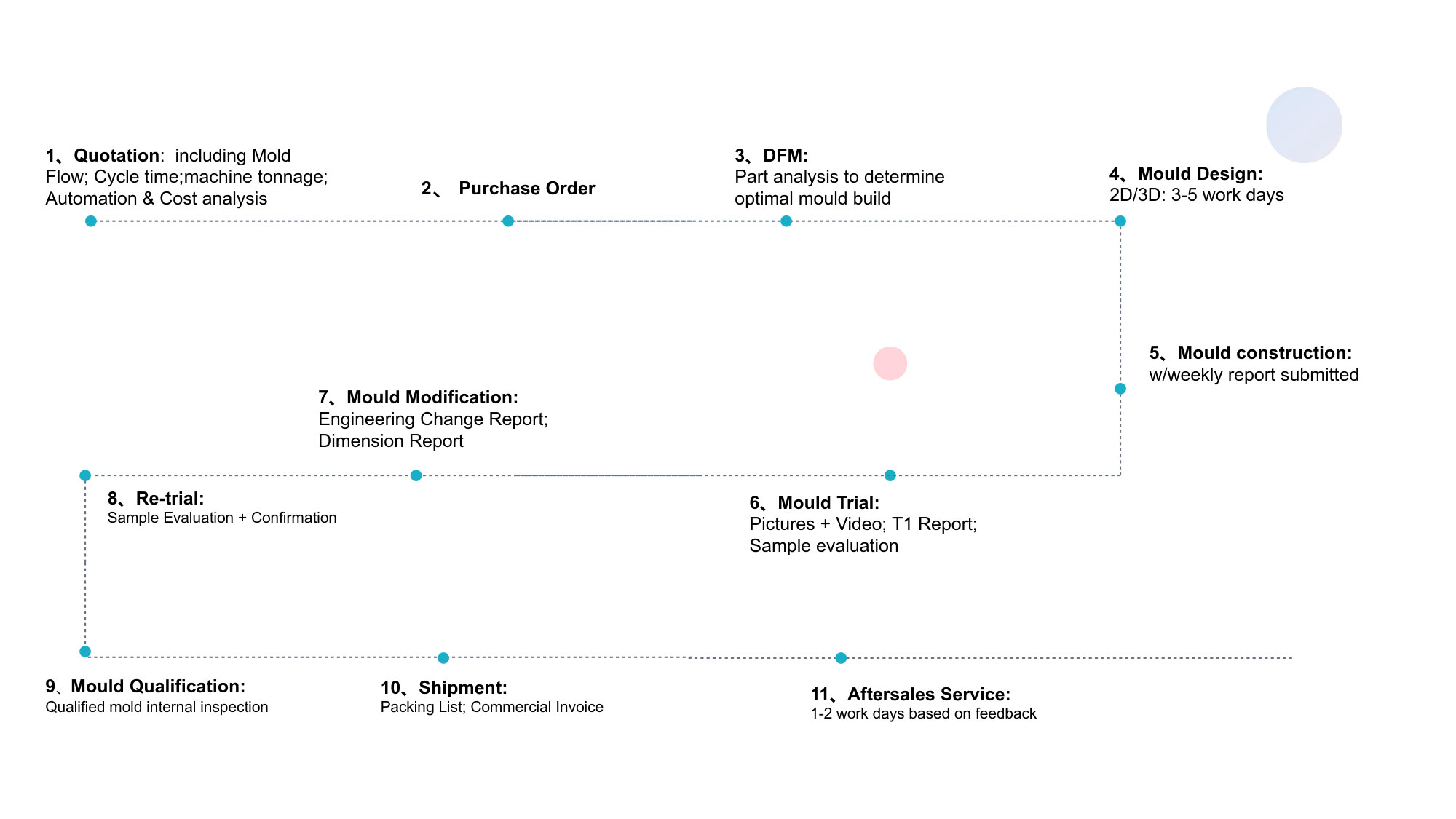
4.3 Mold Manufacturing Process Flow
Steel Selection & Procurement: Based on production volume, material type, and required surface finish, appropriate mold steel is sourced with full material certification.
Rough Machining: 3-axis CNC roughing removes 70–80% of stock material.
Heat Treatment: Where required (S136, H13, 8407), components undergo vacuum heat treatment to achieve target hardness (typically 48–52 HRC).
Semi-Finish Machining: 5-axis machining achieves final geometric form with 0.02mm remaining stock.
EDM Finishing: For features inaccessible to CNC cutters—sharp internal corners, fine slots, deep ribs—EDM provides final form.
Manual Polishing & Texturing: Cavity surfaces are polished to required finish (Ra 0.05μm for high-gloss caps, spark-eroded texture for matte finishes). For transparent honey chambers, NAK80 provides excellent polishability and optical clarity.
Assembly & Fitting: Guide pins, bushings, ejector plates, and cavity inserts are assembled with precision.
Mold Trial (T0): First test shots are produced, dimensional measurements are taken, and function is validated.
Adjustment & Optimization: Based on T0 findings, mold modifications (gate polishing, vent deepening, cooling channel adjustments) are performed.
Final Inspection & Documentation: Full dimensional report, material certificates, and recommended process parameters are compiled and shipped with the mold.
Section Five: Injection Molding – Process Control and Quality Assurance
5.1 Injection Molding Validation Process
Step 1 – Material Verification:
Before production begins, raw material batch certifications are reviewed:
FDA/EU food-contact compliance documentation
Material Safety Data Sheet (MSDS)
Melt flow index verification
Moisture content (<0.02% for PP, achieved through pre-drying at 80°C for 2–4 hours)
Step 2 – Machine Setup:
All parameters are documented in the MES system:
Barrel temperatures: 180–240°C (depending on material)
Mold temperature: 10–60°C (controlled by mold temperature controllers)
Injection pressure: 50–200 bar
Holding pressure: 30–150 bar (multi-stage pressure profile)
Cooling time: 2–8 seconds (optimized through simulation)
Screw speed: 100–300 RPM
Back pressure: 5–20 bar
Step 3 – Trial Production (T1–T3):
Three progressive trial rounds are conducted:
T1: First sample run – dimensional measurement, visual inspection, functional testing (torque, seal integrity)
T2: Modified sample run – incorporating T1 corrections
T3: Validation sample run – full dimensional CpK analysis, 200-shot continuous run without interruption, defect rate measurement
Step 4 – Pre-Production Validation (PPV):
Before mass production begins, a 100–500 shot pilot run is conducted using full production parameters. Statistical process control data is collected and analyzed. Only when CpK ≥ 1.33 on all critical dimensions and scrap rate <2% is confirmed does mass production commence.
5.2 Injection Molding Challenges – Separable Honey Caps
Challenge 1 – Thin-Wall Design:
Separable honey caps feature thin walls (0.8–1.2mm typical) to reduce material weight and cost. Thin-wall molding requires high injection speeds and pressures to fill the cavity before the melt freezes. Ansix addresses this through:
High-speed injection units capable of 1 m/s screw velocity
Multi-stage injection profiles (fast initial fill, slower pack and hold)
Hot runner systems with large-diameter nozzles for unrestricted flow
Optimized gate locations to minimize flow length
Challenge 2 – Thread Integrity:
Cap threads must engage smoothly on bottle necks and provide consistent sealing force without cross-threading. Ansix ensures thread quality through:
Servo-driven unscrewing mechanisms with precise rotation control
Beryllium copper thread cores for rapid, uniform cooling
Thread profile inspection using optical comparators after every 10,000 shots
Cpk monitoring of thread major/minor diameters
Challenge 3 – Tamper-Evident Band Performance:
The tamper-evident band must break cleanly when the cap is first opened, leaving clear visual evidence of opening. Ansix optimizes band performance through:
Gate placement that avoids weld lines at the band bridge region
Mold temperature control to ensure consistent polymer orientation
Post-molding cooling conveyor with temperature-controlled environment to prevent premature band setting
On-line vision inspection of bridge integrity
Challenge 4 – Assembly of Honey Chamber:
The honey chamber must seal hermetically to prevent leakage during storage and shipping. Ansix addresses this through:
Precision tolerances on mating surfaces (±0.02mm)
Automated assembly systems with vision verification of seal seating
Helium leak testing on sample batches to verify sealing performance
Ultrasonic welding (for certain designs) with energy monitoring to ensure consistent weld strength
5.3 In-Process Quality Control
Real-Time Monitoring:
MES dashboards show real-time OEE (Overall Equipment Effectiveness), scrap rate, CpK by cavity, and energy consumption per kilogram of processed material.
Alarm thresholds are set for each parameter. If any parameter exceeds control limits, the machine alerts the operator and can be programmed to automatically stop production to prevent further scrap generation.
Inspection Frequency:
First article inspection: 100% dimensional measurement on first 5 shots after machine start-up
In-process inspection: Every 500 shots for dimensions; every 2 hours for torque and seal integrity
Last-off inspection: 100% dimensional measurement on last 5 shots before machine shut-down
Scrap Management:
All scrap is segregated by material type for recycling
Regrind usage (where permitted by customer and regulation) is closely controlled—maximum 10–15% for caps not in direct food contact
Closed-loop material handling systems transport virgin resin directly from dryers to machine hoppers, eliminating contamination risk
Section Six: Packaging, Logistics, and Delivery Assurance
6.1 Packaging Standards
Primary Packaging: Food-grade polyethylene bags sealed inside corrugated cardboard cartons
Layer Packaging: High-strength pallets with stretch wrap and corner protectors
Moisture Control: Desiccant packs included for maritime shipments
Labeling: Full traceability labels including batch number, production date, quantity, material grade, and quality certification reference
6.2 Delivery Lead Times – Guaranteed
Stage Lead Time
DFM Report 3–5 days
Prototype Mold (Aluminum) 15–25 days
Prototype Samples 20–30 days
Production Mold (Steel) – Simple 10 days
Production Mold (Steel) – Medium 25–45 days
Production Mold (Steel) – Complex 60–90 days
Production Part Lead Time (after mold approval) 7–15 days
Bulk Shipment (container load) 20–40 days depending on destination
Customer Value: Working with a single integrated partner from DFM through production molds eliminates coordination delays between separate mold makers, material suppliers, and molding houses—shrinking your total lead time by 30–50%.
6.3 Supply Chain Reliability
Safety Stock: Minimum 5–10% safety inventory maintained for active production molds
Secondary Tooling: For high-volume programs (50M+ caps annually), second tooling runs are initiated proactively—not reactively after a mold fails
Contingency Planning: Ansix maintains relationships with backup molding facilities to absorb unexpected demand spikes
Section Seven: Cost Reduction – Comprehensive Strategy
Ansix‘s cost reduction philosophy recognizes that lowest purchase price rarely equals lowest total cost. Our approach examines five cost drivers:
1. Material Cost Reduction:
Lightweighting: 8–15% weight reduction through optimized wall thickness distribution
Hot Runner Waste Elimination: 98%+ material utilization versus 70–80% industry baseline
Bulk Purchasing: Consolidating all plastic resin purchases across customers yields volume discounts
Regrind Optimization: Where permitted, up to 25% in-house regrind can be blended with virgin resin
2. Cycle Time Reduction:
Conformal Cooling: 20–40% reduction in cooling time; up to 66% in optimized applications
High-Speed Injection: 67% increased injection speed capability for thin-wall packaging
Automated Part Handling: High-speed robots remove parts from molds within 0.5 seconds, eliminating waiting time for manual extraction
3. Scrap Reduction:
Process Control (CpK ≥ 1.33): 95%+ yield rates versus 90–93% industry average
Real-Time Defect Detection: Vision systems identify defects immediately—non-conforming parts are not counted toward your order quantity, and machine parameters are adjusted before another defective part is produced
Maintenance Prevention: Predictive maintenance schedules based on shot counter (not calendar time) ensures molds are serviced before wear affects quality
4. Logistics Cost Reduction:
Container Optimization: Precise packing density planning maximizes container utilization
Consolidated Shipments: Multiple product lines ship together, reducing per-unit freight cost
Local Warehousing: Strategic stock positioning in key markets reduces last-mile delivery costs
5. Quality Failure Cost Elimination:
No Customer Inspection Required: Our outbound quality certification eliminates your receiving inspection cost
No Line Downtime: Consistently dimensioned parts mean your filling line runs continuously—no adjustments between batches
No Field Failure Liability: Tamper-evident reliability and seal integrity are validated before shipment, eliminating consumer complaints and regulatory risk
Section Eight: Why Ansix Tech – The Trusted Partner Advantage
With 28 years of specialized experience in injection molding and mold manufacturing, Ansix Tech has produced over 5,000 custom molds for packaging customers worldwide. Our separable honey cap expertise includes:
Proven References: Active production programs for leading honey beverage brands across Asia, Europe, and North America
Regulatory Expertise: Full compliance with FDA, EU 10/2011, REACH, RoHS, and ISO 22000
Capacity Scalability: Multiple molding lines can be ramped up within 10 days for demand surges
Continuous Investment: Annual reinvestment in new machining centers, molding machines, and inspection equipment
Final Customer Commitment Statement:
”Dear Customer, for us, a mold is not just a block of steel—it‘s a money-printing machine for your business. We design every mold with production robustness, optimized cooling, balanced filling, and clean venting built in. When the mold reaches your production floor, it requires no extensive trial runs or frustrating parameter tweaking. It runs. It produces perfect parts. It lasts for millions of cycles. We invite you to bring one of your existing products for a full DFM analysis—you will see firsthand how we eliminate weld lines, air traps, and sink marks before they ever reach your production line.” — Ansix Tech Management
Contact Ansix Tech to begin your separable honey cap project. From DFM to production molds to millions of caps delivered on time, on spec, and on budget—we deliver the complete solution.
Ansix Tech Co Ltd
If you have any plans related to Separable honey cap mineral water bottle cap , you can contact us at any time. We will turn your ideas into reality, let you realize your dreams, and obtain large orders from the market. Our contact information is info@ansixtech.com. Or contact our CTO, mail: stephen@ansixtech.com
#www.ansixtech.com #ansixtech.com #Separable honey cap mineral water bottle cap #Separable honey cap mineral water bottle cap #Separable honey cap mineral water bottle cap injection molding companies #Separable honey cap mineral water bottle capCanopy Mold injection mold companies #Ansix #Ansix moulds #Ansix china #Ansix tech china #Ansix tech company #Ansix facotry #Separable honey cap mineral water bottle cap injection molding #Separable honey cap mineral water bottle cap injection tools #Separable honey cap mineral water bottle cap injection moulds #Separable honey cap mineral water bottle cap plastic mould #Separable honey cap mineral water bottle cap plastic tools #Ansix Tech #Ansix molds #Ansix injection molding #Ansix mold factory #injection molding Separable honey cap mineral water bottle cap#Ansix mold factory #Separable honey cap mineral water bottle cap china #Separable honey cap mineral water bottle cap molds #injection factory #Separable honey cap mineral water bottle cap injection molding #Separable honey cap mineral water bottle cap injection molding factory #injection molding company #Separable honey cap mineral water bottle cap injection mold companies #50mm Neck Edible Oil Bottle Preform (100ml250ml) Transparent PET Plastic Oil Bottle Preform#Separable honey cap mineral water bottle cap mold limited #Ansix mold china #Ansix companies #Ansix company China #Separable honey cap mineral water bottle cap facotry #Ansix Tech #Ansix Tech mould #Separable honey cap mineral water bottle cap injection moulding #injection moulding company #Ansix Separable honey cap mineral water bottle cap parts injection mold companies #medical injection molding companieschina #Separable honey cap mineral water bottle cap china factory #Ansix moulding companies #Ansix molding company #Separable honey cap mineral water bottle cap injection moulding facotry #Ansix Tech mold #Separable honey cap mineral water bottle cap mould #Separable honey cap mineral water bottle cap plastic injection molding #ansix plastic mold #Mold manufacturing #Separable honey cap mineral water bottle cap parts manufacturing #Separable honey cap mineral water bottle cap plastic parts factory #Separable honey cap mineral water bottle cap injection parts mold #Separable honey cap mineral water bottle cap PRECISION MANUFACTURING #Separable honey cap mineral water bottle cap #China mold #Separable honey cap mineral water bottle cap injection moulding china #Separable honey cap mineral water bottle cap mould china #china precision mold #mold in china #Separable honey cap mineral water bottle cap mold china #Precision molds #High-precision molds #Separable honey cap mineral water bottle cap #Injection molds #Separable honey cap mineral water bottle cap Factory #Separable honey cap mineral water bottle cap Company #Super Large Injection Mold Factory #Large Tonnage Injection Molding Factory #Separable honey cap mineral water bottle cap Company #Separable honey cap mineral water bottle cap Factory #2800T Injection Molding Factory #3000 Ton Injection Molding #4500 Ton Injection Molding Factory #Large Mold Injection Molding #Large Plastic Mold Injection Molding Factory #Large Injection Mold Manufacturer #Plastic Mold Factory #Injection Mold #Plastic Mold