

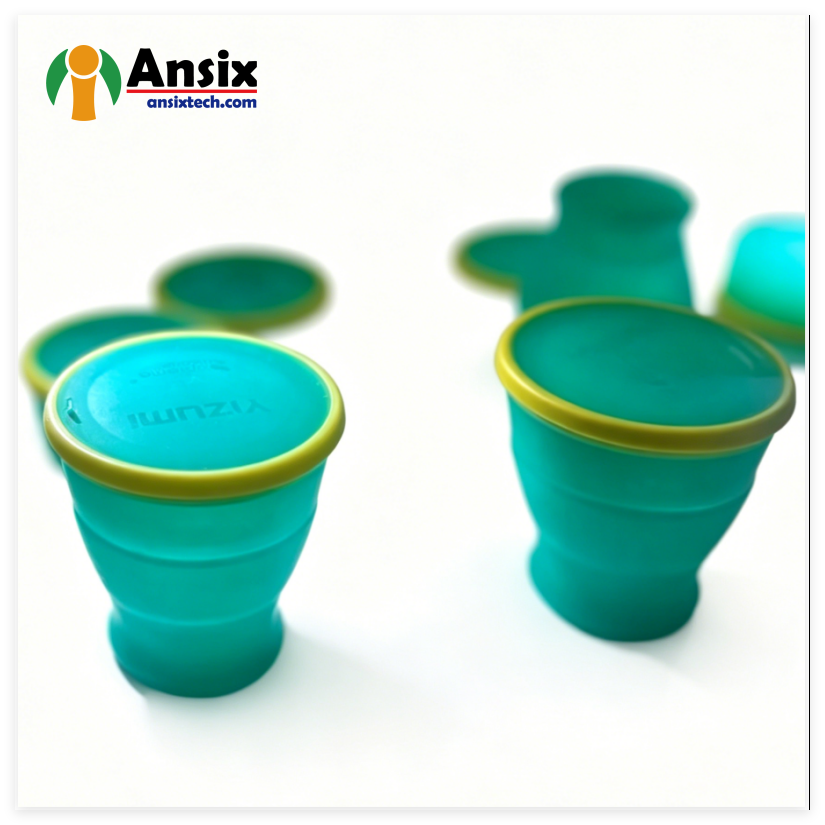


Food packaging bottles
Food packaging bottles

Ansix Tech adopts a solution-oriented approach that systematically translates technical terminology into measurable, tangible client value. Rather than presenting raw capabilities abstractly, this white paper is structured around five integrated pillars: (1) Foundational Hard Power and Equipment Infrastructure, (2) Core Competencies in Mold Manufacturing, (3) Process Control Excellence in Injection Molding, (4) Comprehensive End-to-End Service that Reduces Customer Management Overhead, and (5) Differentiated Customer Value Commitments. Each section explicitly answers three fundamental customer questions: What specific problem does this capability solve for you? How much cost does it save? What risks does it mitigate?
Section 1: Foundational Hard Power—The Infrastructure That Builds Customer Trust
1.1 Precision Mold Machining Equipment
Ansix Tech operates a comprehensive suite of Advanced Mold manufacturing equipment designed to achieve micron-level precision. The company is equipped with five-axis high-speed machining centers capable of achieving positioning accuracy up to ±0.002 mm and surface roughness Ra < 0.15 μm, enabling the precise machining of complex three-dimensional geometries with exceptional surface finish quality.
Customer Value Translation: A food packaging bottle must present a smooth, burr-free parting line where the mold halves meet—not just for visual appeal, but also to prevent bacterial entrapment in the seam. Our five-axis machining capability ensures that mold parting surfaces are machined with micron-level flatness, resulting in injection-molded bottle finishes that require no secondary manual deburring. This eliminates a post-processing step that typically costs $0.03–0.08 per part and saves approximately 2–4 seconds per cycle of manual labor.
The facility also utilizes slow-speed wire electrical discharge machining (EDM) equipment from AgieCharmilles and Sodick, with accuracy of 0.002 mm and surface roughness Ra 0.05 μm. This technology is essential for machining ultra-fine micro-holes down to 0.03 mm diameter and narrow slots that would be impossible to create with conventional milling.
Customer Value Translation: In thin-walled food packaging bottles—particularly those with a wall thickness below 1.0 mm—ejector pin holes must be precisely positioned and finished to prevent the part from sticking to the mold or deforming during ejection. Poorly finished micro-holes cause flash formation at the ejector pin location, creating rough spots on the bottle interior that can trap food residue and compromise hygiene. Our wire EDM capability guarantees that thin-wall sections remain dimensionally stable and flash-free, directly reducing reject rates and preventing costly product recalls linked to contamination risks.
For deep cavities and narrow slits that cannot be accessed by milling cutters, Ansix Tech employs sink EDM equipment with 0.002 mm accuracy and mirror surface finish capability down to Ra < 0.1 μm.
Customer Value Translation: Food packaging bottle interiors—especially those with ribbed or threaded neck designs—require smooth, defect-free surfaces to ensure mold release does not cause scratching or stress whitening. Sink EDM produces these intricate internal geometries without tool marks, eliminating the need for costly hand polishing that consumes 8–12 hours per mold and introduces human error variables.
Precision grinding capabilities, utilizing OKAMOTO surface grinders and WAIDA profile grinders achieving 0.001 mm accuracy, finalize hardened steel components to exacting tolerances.
1.2 Injection Molding Machine Fleet
Ansix Tech operates a fleet of 260 injection molding machines across its four production bases. Machine tonnage ranges from 30 tons to 2,800 tons, providing comprehensive coverage for food packaging bottles of all dimensions—from miniature sauce containers to large multi-liter beverage bottles. The main injection molding machines include premium brands such as Japan‘s Fanuc, Sumitomo, Toshiba, and Nissei, along with Germany’s Arburg (primarily for liquid silicone injection molding with two-component capability). Domestic machines include Haitian and Victor Taichung Machinery.
Customer Value Translation: Bottle mouth diameters, thread profiles, and overall bottle dimensions are constrained by injection pressure and clamp force requirements. Our machine range from 30 to 2,800 tons means that we never have to force a part design onto an unsuitable machine. A 100 ml condiment bottle runs on a 150-ton machine with optimized cycle parameters; a 5-liter juice bottle runs on an 800-ton high-torque machine. This fit-for-purpose matching reduces energy consumption by 15–25% compared to over-specified machines and improves cycle time by 8–12% through optimized injection pressure and flow rates.
All injection molding machines are equipped with closed-loop process control systems using high-resolution encoders that monitor injection pressure, screw position, and barrel temperature in real time. The all-servo electric drive systems deliver consistent repeatability precision of ±0.1%, ensuring that every shot produced within a multi-million-part production run is dimensionally identical to the first shot.
Customer Value Translation: Food packaging applications—particularly those involving carbonated beverages or hot-fill products—require absolute dimensional consistency to ensure proper bottle sealing and cap-thread engagement. A variation of 0.1 mm in neck finish diameter can cause cap misalignment, resulting in leakage, product spoilage, and potential regulatory non-compliance. Our all-servo machines with ±0.1% shot-to-shot repeatability eliminate this risk. In a facility producing 10 million bottles per month, a 0.1% defect reduction translates to 10,000 fewer rejected bottles—saving approximately $7,500–15,000 in raw material and labor costs monthly.
1.3 Measurement and Inspection Equipment
Every mold manufactured by Ansix Tech undergoes comprehensive dimensional verification before release to production. The quality control laboratory is equipped with Coordinate Measuring Machines (CMMs) from ZEISS and Mitutoyo, offering measurement accuracy within microns and full 3D tolerance inspection capabilities. Vision measuring systems capture complex geometric dimensions that cannot be reliably measured with contact probes.
Customer Value Translation: Before we certify a mold as production-ready, we generate a complete dimension report comparing every critical feature against the customer‘s 2D print specifications. Key dimensions—including neck finish diameter, thread pitch, body diameter, wall thickness distribution, and overall height—are required to achieve a Process Capability Index (Cpk) ≥ 1.33. A Cpk of 1.33 means that the production process is capable of producing 99.9937% of parts within specification limits, equating to fewer than 64 defective parts per million produced. By holding ourselves to this standard during mold qualification, our customers can be confident that the mold will run trouble-free in mass production, with no need for ongoing dimensional “tweaking” that would otherwise consume valuable production uptime and increase indirect labor costs.
For complex internal geometries and wall thickness measurements that cannot be accessed externally, Ansix Tech can utilize high-resolution X-ray computed tomography (CT) systems, enabling full 3D internal inspection without part destruction.
Customer Value Translation: Detection of internal voids, gas pockets, and uneven wall thickness distribution in food packaging bottles typically required destructive cross-sectioning—cutting the bottle open and sacrificing the part. Our CT scanning technology eliminates this waste, allowing complete internal inspection of every sample bottle selected from production runs without destroying a single unit. For a high-volume food packaging operation running 500,000 bottles per week, this non-destructive testing capability saves approximately 500–1,000 bottles that would otherwise be sacrificed for quality verification, representing $250–500 in weekly material savings plus the labor cost of performing destructive testing.
Section 2: Core Competencies in Mold Manufacturing—Precision by the Numbers
2.1 Mold Service Life Commitment
Mold material selection is the single most critical determinant of long-term mold performance and production economics. Ansix Tech applies a rigorous material selection framework that evaluates not only material properties but also manufacturability, lifecycle cost, and end-use performance requirements.
For lower-volume applications or prototype qualification molds: Mold bases utilize P20 pre-hardened steel, which offers excellent machinability and sufficient hardness for production runs up to 500,000 shots. For high-volume mass production: Mold cores and cavities are fabricated from hardened tool steels including S136 stainless steel (high corrosion resistance, ideal for acidic food contact products such as juice, vinegar, and tomato-based sauces), 2344 and 2343 hot work steels (excellent thermal fatigue resistance for high-cycle applications), 8407 and H13 (outstanding toughness and wear resistance for glass-filled materials), SKD11, SKD61, and DC53 (high wear resistance for abrasive materials like calcium carbonate-filled PP), M340 and 4Cr13/9Cr18 martensitic stainless steels (superior corrosion resistance for sterilizable packaging), and NAK80 (excellent polishability for transparent bottle applications requiring optical clarity).
Customer Value Translation:
Material Grade Application Context Service Life Promise (Customer-Readable Value)
S136 / 420SS (Stainless) Acidic food contact (juice, vinegar, tomato sauce) No corrosion pitting or release surface degradation for 1.5 million cycles. Eliminates cost of premature mold replacement ($18,000–35,000 per cavity set).
H13 / 8407 Glass-fiber reinforced material (PPS+40%GF, PA6+GF30) 500,000 mold cycles minimum before wear-related dimensional drift becomes measurable.
P20 (Pre-hardened) Standard PP/PE applications 1 million cycles—sufficient for 2–3 years of continuous production before reconditioning is required.
NAK80 (Mirror-finish) Clear/transparent bottles requiring optical clarity Ra < 0.025 μm cavity surface finish—no visible tool marks or optical distortion; eliminates need for secondary polishing operation that would add $0.02–0.05 per part.
What this solves for the customer: Premature mold wear forces unscheduled production stoppages for mold repair or replacement. Each unplanned stoppage in a food packaging line costs approximately $2,000–5,000 in lost production time, idle labor, and disrupted downstream filling operations. Our material-specific life guarantees allow customers to plan maintenance intervals with confidence, avoiding the costly chaos of unplanned downtime.
2.2 Achievable Dimensional Tolerances
Standard Tolerances for Structural Features: ±0.05 mm for non-critical dimensions such as bottle body diameter and overall height. Precision Tolerances for Critical Features: ±0.005 mm for functional features including neck finish concentricity, thread profile geometry, sealing surface flatness, and cap-retention features.
Customer Value Translation: The neck finish—the threaded portion of the bottle where the cap screws on—must maintain exceptional roundness and concentricity to ensure consistent sealing torque values across millions of bottles. A neck finish that deviates by 0.02 mm from true circularity will cause the cap to “cross-thread” or fail to seal properly, resulting in leakage during transport or in-store shelf display. For a food brand producing 20 million bottled products annually, a 0.5% leakage rate attributable to neck finish variation translates to 100,000 leaking bottles and approximately $150,000–300,000 in product write-offs and customer returns. Our ±0.005 mm precision on these features virtually eliminates leakage as a failure mode.
Ansix Tech provides full material certification documentation including raw material mill certificates, heat treatment process curves, and hardness verification reports for every mold component.
2.3 Mold Type Portfolio
Ansix Tech possesses expertise across the full spectrum of injection mold configurations for food packaging applications:
Hot Runner Systems: Balanced multi-cavity hot runner manifolds with individually controlled valve gates for each cavity. By maintaining the plastic in a molten state within the runner system, hot runners eliminate runner scrap entirely, reduce cycle times by eliminating runner cooling delays, and improve fill balance across multiple cavities.
Customer Value Translation: In standard cold-runner molds, 15–30% of the material shot weight is wasted as runner scrap that must be reground and reintroduced (with associated material degradation risks) or discarded entirely. A hot runner system eliminates this waste entirely. For a customer running 500 tons of PP resin annually at 1,200/ton,eliminatingrunnerscraprepresents90,000–180,000 in annual material cost savings. Additionally, eliminating the regrinding step removes the risk of contamination and thermal degradation that can compromise food safety certification.
Stack Molds: Multi-level mold designs with two or three parting lines that simultaneously mold parts on both sides of the central manifold. Stack molds can double or triple output per machine cycle without increasing machine tonnage requirements.
Customer Value Translation: For thin-wall food containers and bottle caps produced in high volumes, stack molding cuts per-part production cost by 40–60% compared to single-face molds. A stack mold running 96 cavities (48 per face) on an 800-ton machine produces the same output as a 96-cavity single-face mold that would require a 1,500-ton machine. The lower-tonnage machine consumes 35% less energy and costs 200,000–400,000lessincapitalequipment.Industrycasestudiesdocument1450,000 with stack molding systems.
Two-Shot / Multi-Material Molds: Sequential injection of two or more different materials to produce bi-material components such as over-molded sealing gaskets, soft-touch grip surfaces, or multi-color decorative bottles.
Customer Value Translation: A ketchup bottle with an integrated sealing gasket eliminates the need for a separate gasket assembly step. A bottle with an over-molded grip eliminates the need for shrink-sleeve label application. Eliminating these secondary assembly operations saves $0.05–0.15 per part and reduces supply chain complexity.
High-Gloss / Mirror-Finish Molds: Cavity surface finishes achieving Ra < 0.05 μm for transparent food packaging bottles that require optical clarity without internal light-scattering defects.
Customer Value Translation: Transparent bottles for premium water, salad dressing, or olive oil compete on shelf appeal. Any surface defect—tool marks, swirl marks, or hazing—reduces perceived product quality and drives consumers to choose a cleaner-looking competitor. Our high-gloss mold finishes produce bottles that are optically clear on first shot, eliminating the $0.03–0.08 per part cost of applying external over-labels or shrink sleeves to mask cosmetic defects.
2.4 Gating System Optimization via Mold Flow Analysis
Ansix Tech employs advanced Mold Flow Analysis using Moldex3D CAE software, integrated into the design workflow to predict and optimize performance before any machining begins. This analysis simulates fill pattern, pressure distribution, weld line location and strength, warpage prediction, cooling channel effectiveness, and cycle time optimization.
Customer Value Translation: Weld lines—visible lines where two molten flow fronts meet and merge inside the mold—are unavoidable in many bottle geometries. However, weld lines located in highly stressed areas such as the neck thread root or bottle shoulder are prone to mechanical failure during drop testing or pressure cycling. By using Mold Flow Analysis to predict weld line positions before cutting steel, we can relocate the gate location or redesign the runner system to move weld lines into low-stress, visually non-critical areas. This prediction costs 0inprototypingwastebutpreventsacatastrophicfieldfailurethatwouldcost100,000–500,000 in product recall expenses.
Similarly, flow analysis identifies trapped air locations (gas entrapment zones) where the advancing flow front encloses air pockets that would otherwise burn and create carbonized defects on the bottle surface. By adding strategically positioned vent channels at these predicted locations—costing approximately 200inmachiningtime—wepreventaqualitydefectthatwouldotherwisegenerate5–103,000–6,000 in weekly material waste.
2.5 Lead Time Standards
Mold Complexity Standard Lead Time Rush Service Lead Time
Single-cavity simple mold (basic bottle geometry) 10 days 7 days
Medium-complexity mold (multi-cavity with hot runner, 4–8 cavities) 25–45 days 20 days
High-complexity mold (stack mold or two-shot, 16–48 cavities) 45–60 days 35 days
For fast-turnaround requirements: Ansix Tech offers an expedited 20-day mold manufacturing service for medium-complexity molds that still maintains full dimensional verification and mold flow validation prior to delivery. No design validation steps are skipped—the compression is achieved through prioritized resource allocation, extended-shift scheduling on high-speed machining centers, and parallel processing of design, machining, and inspection workflows.
Customer Value Translation: Every week of mold manufacturing delay pushes back product launch, delaying revenue recognition and potentially missing seasonal sales windows (e.g., summer beverage launches, holiday packaging runs). Our expedited service reduces launch timeline by 15–25 days compared to typical industry lead times of 6–8 weeks for multi-cavity molds. At a projected first-year revenue of 5millionforthenewproductline,a20−dayearlierlaunchrepresentsapproximately275,000 of additional revenue captured in the first year.
Validation Assurance During Expedited Service: All rush-order molds complete a full T0 (first trial) session at our in-house tryout facility before shipment. Customers receive photographic and video documentation of the trial, including short-shot analysis verifying complete fill without hesitation marks, and dimensional inspection reports for all cavities. No corners are cut on quality verification regardless of delivery urgency.
Section 3: Process Control Excellence in Injection Molding
3.1 Process Standardization and Digital Lockout
All injection molding machines at Ansix Tech facilities are networked to a Manufacturing Execution System (MES) that locks and monitors all critical process parameters—including injection temperature, injection pressure profile, injection velocity (by stage), screw rotation speed, back pressure, cooling time, mold temperature, and part ejection settings. Parameter changes require engineer-level authorization with full audit trail logging.
Customer Value Translation: In facilities without process lockout systems, a machine operator who changes a parameter “just a little” to compensate for material batch variation can unknowingly push the process outside validated operating windows, producing out-of-spec bottles that are not detected until downstream quality inspection reveals the problem. By the time the non-conforming parts are identified, thousands or tens of thousands of defective bottles may have been produced and packaged. Our MES lockout system prevents unauthorized parameter changes entirely. Additionally, every production batch is bracketed by first-article inspection (bottles from the first 5–10 cycles) and last-article inspection (bottles from the final 5–10 cycles), with dimensions, visual appearance, and functional test results documented in the batch record.
3.2 Dimensional Stability Control
Ansix Tech employs advanced mold temperature control strategies to maintain dimensional consistency across production runs:
Zone-controlled mold temperature regulation: The mold is divided into independently controlled thermal zones (core side vs. cavity side; neck region vs. body region) using multiple thermolators with accuracy of ±1°C per zone.
Core-cavity differential temperature limitation: Temperature difference between the core and cavity halves is maintained at 2°C or less, which minimizes warpage due to non-uniform cooling. In single-zone cooling systems without independent core/cavity control, temperature differences of 8–12°C are common, producing parts that warp 0.3–0.5 mm out of round.
Customer Value Translation: In a soda bottle with a 28 mm neck finish, a 0.3 mm out-of-round condition at the sealing surface will prevent the cap sealing liner from making full contact across the entire 360° circumference. Even with a properly applied cap, the bottle will slowly lose carbonation pressure—reducing shelf life from 12 months to 3–4 months. When this occurs in a production lot of 500,000 bottles, the shelf-life reduction is only discovered when consumer complaints arrive 6 months after production. The resulting recall, litigation, and brand damage can exceed $2 million. Our ±2°C core-cavity temperature differential control virtually eliminates this risk.
Performance metric: In a validated bottle production case study (500 ml PET water bottle with 28 mm neck), Ansix Tech demonstrated key dimensional stability across three consecutive production runs separated by one week. Critical neck diameter and concentricity measurements fluctuated less than 0.02 mm across the three runs—well within acceptable industry tolerances of ±0.05 mm.
3.3 Cosmetic Appearance Standards by Product Tier
Product Tier Surface Finish Requirement Ansix Tech Capability Scrap Rate Impact
Premium transparent bottles (premium water, oil) No bubbles, no flow marks, optical clarity Ra ≤ 0.2 μm post-molding; ready for direct labeling <1% cosmetic defect rate
Electroplated/coated bottles (decorative applications) No gas traps, no splay marks Surfaces prepared for plating adhesion without requiring secondary leveling Eliminates $0.04–0.10/part leveling cost
High-gloss opaque bottles (yogurt drinks, sauces) No sink marks, no witness lines Achieved through optimized packing pressure profile developed via Mold Flow Analysis <0.5% surface defect rate
Label-ready bottles (printed shrink sleeve or pressure-sensitive label application) No surface contamination, consistent surface energy Compensated warpage control; label registration accuracy ±0.1 mm Label application yield >99.5%
Customer Value Translation: A premium brand cannot sell bottles with visible flow marks, sink lines, or bubbles. In a facility running 2 million bottles per week, a cosmetic defect rate of 2% means 40,000 bottles that must be either recycled (at 30–50% material value recovery) or landfilled (at full material cost loss). At an average bottle weight of 18 g (PET) and material cost of 1.50/kg,a22,160 in pure material loss plus the manufacturing cost of molding, inspecting, and handling 40,000 bottles that never ship. Our cosmetic capability reduces that waste to 0.5% or lower, preserving $1,600+ per week in material value.
3.4 Special Material Processing Capabilities
Ansix Tech possesses extensive production experience across the full spectrum of food-contact-appropriate engineering thermoplastics:
Material Typical Food Packaging Application Processing Challenge Solved Customer Value
PET Carbonated beverage bottles, water bottles Controlling crystallinity to prevent haze; maintaining IV retention Optically clear bottles with full gas barrier performance
PP Yogurt cups, microwaveable containers, hot-fill sauces Managing semi-crystalline shrinkage anisotropy Consistent dimensions across temperature exposure from -20°C to 120°C
PC Reusable water bottles, baby bottles, refrigerator storage Preventing stress cracking from detergent exposure; maintaining BPA-free compliance Safe, durable reusable containers with 5+ year service life
PC/ABS Sport water bottles, insulated bottles Balancing impact strength and chemical resistance Bottles that survive repeated drops without cracking
PPS+40%GF Oven-safe cookware, microwave containers surviving >200°C Managing glass fiber orientation to prevent anisotropic warpage High-heat packaging that withstands dishwasher and microwave cycling
PA6+GF30 Engine oil bottles (industrial food packaging) Controlling moisture absorption after molding; maintaining dimensional stability Precision thread engagement even after humidity exposure
PEEK Medical food containers, sterilization-grade packaging Achieving complete fill in thin-wall sections despite high melt viscosity (>300°C melt temp) Packaging that survives repeated autoclave sterilization
LCP Microwavable trays for ready-to-eat meals; thin-wall high-heat applications Balancing flow length (<150 mm) and wall thickness (<1 mm) for complete fill Ultra-thin-wall (0.6–0.8 mm) packaging that withstands 260°C oven temperatures
Regulatory Compliance: All materials used by Ansix Tech for food contact applications are FDA-compliant for their intended use. FDA-approved food contact plastics include virgin PP, PE (LDPE and HDPE), PC, PET, and PETG in their original resin form. Ansix Tech maintains full material traceability from resin producer to finished bottle, providing certificates of analysis (COA) and FDA compliance declarations with every production shipment.
Customer Value Translation: Regulatory non-compliance is a catastrophic risk for food packaging. A single non-compliant material shipment can trigger a product recall, FDA import detention, or even a facility shutdown. Ansix Tech’s full material traceability system—documenting resin lot number, producer certification, and FDA compliance validation for every production run—provides complete audit defense. In the event of a regulatory inquiry, we can provide a complete compliance package within 24 hours, eliminating the anxiety and exposure of “did our supplier use the right material?”
For applications requiring UL94 V-0 flame rating (certain industrial food equipment components) or UV stability (outdoor beverage coolers and vending applications), Ansix Tech validates material performance with in-house UV exposure testing up to 3,000 hours of accelerated weathering, confirming colorfastness and mechanical property retention before production begins.
Section 4: Full-Service Integration—Reducing Customer Management Costs
4.1 Early Engagement: Design for Manufacturability (DFM) Report
At the earliest design phase, prior to any steel being cut, Ansix Tech provides a comprehensive DFM report at no charge to the prospective customer. This report is not a cursory checklist but a detailed analysis of part geometry, material selection, and proposed molding strategy.
The DFM report includes:
Draft angle recommendations: Identification of vertical walls that require additional draft to prevent part ejection damage, with recommended angles correlated to specified surface texture.
Wall thickness uniformity analysis: Detection of thick-to-thin transitions that would create sink marks, with redesign suggestions to equalize wall sections.
Undercut analysis: Identification of features requiring side-actions, lifters, or collapsible cores, with cost/benefit trade-offs for each solution.
Gate location and type options: Multiple injection point strategies presented with predicted trade-offs in fill quality, weld line position, and cosmetic impact.
Shrinkage predictions by material: Material-specific shrinkage expectations provided for both molded-in-the-tool dimensions and post-molding cooling shrinkage, allowing the customer to pre-compensate part geometry.
Customer Value Translation: Of all investments in an injection molding project, DFM analysis is the single most cost-effective. A design change that costs 500toimplementattheCADstagewouldcost5,000–15,000 to correct after the mold is machined, 150,000tofixafterproductionhasstarted(duetoscrappedinventory,productiondowntime,andcustomerdeliverydelays).ByprovidingDFManalysisupfront—andatnocharge—weeliminatetheriskthatacustomerunknowinglyapprovesadesignthatisimpossibleoruneconomicaltomold.Thisservicealonesavescustomersanaverageof8,000–20,000 in avoided late-stage design modifications per project.
4.2 Sample Development and Iterative Validation (T1 through T3)
Ansix Tech‘s sample development process follows a structured T0 (first trial) through T3 (production validation) protocol:
T0 (First Shot): The newly machined mold is mounted on an injection machine and run under baseline parameters. Short-shot analysis verifies fill progression and identifies premature freeze-off or hesitation marks. First samples are measured against all critical dimensions. A detailed T0 report documents every observation, including photos of short-shot progression and dimensional deviation plots.
T1 (First Modification): Based on T0 findings, mold modifications (gate adjustments, vent addition, cooling line relocation, ejection pin repositioning) are implemented and re-tested. Customer approves T1 samples before proceeding.
T2 (Second Modification): Fine-tuning modifications addressing any remaining dimensional or cosmetic issues. Cavity-to-cavity variation (for multi-cavity molds) is evaluated.
T3 (Production Validation Run): A 100–500 shot production validation run is performed under standard production parameters. Run yields, Cpk values for all critical dimensions, and cycle time data are documented. Only after the customer signs off on T3 results does the mold enter full production.
Customer Value Translation: Each trial shot captures learning at minimal cost. A T0 trial that reveals a fill issue costs 1,000inmachinetimeandmaterial—aminorexpensecomparedtothe50,000 cost of shipping a production batch of 200,000 defective bottles to a filler plant, only to have the filler reject the entire shipment and demand re-shipment under expedited freight. By iteratively validating at the sample stage, Ansix Tech ensures that the final production process is fully characterized and statistically capable before the first commercial bottle is molded.
4.3 Small-Batch Pre-Production Validation
Prior to committing to full commercial production, Ansix Tech performs a formal Process Qualification (PQ) run of 100–500 shots under final approved parameters. During this PQ run:
All critical dimensions are measured across five consecutive shots from each cavity.
Cpk is calculated for each critical dimension dimension; a minimum Cpk of 1.33 is required for production release.
Visual inspection per customer-specified cosmetic criteria is performed on 100% of PQ samples.
Functional tests (cap torque testing, drop testing, pressure decay testing as applicable) are performed on a statistically significant sample.
Machine parameter files are locked in the MES and electronically signed by process engineering.
A full PQ report with all data and acceptance documentation is provided to the customer.
Customer Value Translation: Many customers have experienced the disaster of approving a mold based on “looks good” samples, only to find that when they run 500,000 bottles, the first 50,000 are fine, the next 100,000 are marginal, and the last 350,000 are out of spec—because no one characterized the process envelope. Our PQ run statistically proves that the process will hold tolerances before production begins. This eliminates the guessing game of “should we run faster? cooler? slower?” during early production, saving weeks of trial-and-error parameter tuning and tens of thousands of dollars in wasted material.
4.4 Maintenance, Spares, and Post-Production Support
Standard Deliverables with Every Mold:
Complete spare parts kit including 100% of ejector pins (for each cavity), 2 sets of core pins per cavity, 3 sets of cavity inserts (for high-wear materials), mold temperature sensors, and critical wear components.
Recommended maintenance schedule: preventive lubrication of moving components every 100,000 cycles; complete clean and inspection every 200,000 cycles; major rebuild or reconditioning recommended at 1 million cycles (with wear limits specified for each component class).
Service Commitment:
3-year structural warranty on the mold (excluding normal wear components such as ejector pins and seals).
In-house repair capability: Ansix Tech maintains its own electrode manufacturing center and EDM workshop, meaning that mold repairs—including weld build-up of damaged cavity surfaces, replacement of worn inserts, and re-cutting of critical dimension surfaces—are performed in-house with typical 24-hour turnaround for emergency repairs.
Lifecycle maintenance service: Ansix Tech offers scheduled maintenance visits every 200,000 cycles at cost-plus pricing, including detailed inspection, cleaning, lubrication, and replacement of worn components at material cost only. This service is available for the entire service life of the mold, whether the mold is running in Ansix Tech‘s facility or at a customer’s location.
Customer Value Translation: Without a spare parts inventory, a broken ejector pin or stuck core pin forces an entire production line to shut down while waiting 3–5 days for replacement parts to be shipped from a faraway repair shop. At a production value of 10,000perhouroflineoperation,a4−daystoppagecosts960,000 in lost output and fixed overhead absorption. Our spare parts kit ensures that common failure modes are fixed in 2 hours, not 2 days. And our in-house repair capability—with EDM and electrode manufacturing on site—means that even unusual failures can be resolved in 24 hours, not 2 weeks. This is the difference between a minor production hiccup and a financial catastrophe.
4.5 Cooling System Design Optimized for High-Volume Production
The cooling system is arguably the most critical element of mold design for high-volume food packaging production because cooling time typically consumes 50–70% of the total injection molding cycle. Ansix Tech designs conformal cooling channels—water lines that follow the contour of the part surface rather than drilling straight-line channels—to achieve uniform cooling across all bottle features, including thick neck finishes, thin body walls, and complex base geometries.
Customer Value Translation: In a 500 ml water bottle mold with 16 cavities producing a 15-second total cycle time, approximately 9 seconds are dedicated to cooling. Reducing cooling time by 2 seconds reduces cycle time to 13 seconds, increasing output from 2,304 bottles per hour to 2,646 bottles per hour—a 15% productivity increase requiring no capital investment in additional machines. For a customer running 3 shifts per day, 5 days per week, 50 weeks per year at a 15-second baseline, a 2-second cooling reduction produces approximately 5 million additional bottles annually. At a selling price of 0.10perbottle(fillernetback),thisis500,000 in incremental annual revenue.
Cooling uniformity also prevents dimensional variation. If the neck finish cools 5°C slower than the bottle body, the neck will shrink more than the body, creating an oval cross-section. Conformal cooling—which places water channels directly against the neck finish area—maintains uniform temperature distribution, preventing ovality and ensuring consistent sealing performance across all cavities.
Section 5: Differentiated Customer Value Commitments
5.1 Addressing Common Industry Pain Points with Direct Solutions
Common Customer Complaint Ansix Tech’s Direct Commitment Quantified Customer Benefit
“The mold keeps breaking down and disrupting my production schedule.” 2,000-cycle pre-delivery aging test. Every mold runs 2,000 production cycles at our facility before shipment, with wear data documented in an aging test report. Plus 3-year structural warranty on mold components (excluding normal-wear consumables). Eliminates the “first 50,000 shots are the debug phase” problem. Customer receives a mold that has already proven itself under real process conditions.
“We spend a fortune on manual trimming to remove flash from every bottle.” 0.005 mm part-line machining precision with self-locking clamp force compensation. Flash thickness limited to <0.03 mm along full parting line perimeter—compatible with automatic flash trim tooling and often low enough that manual trim is unnecessary. Eliminates 0.03–0.08perpartmanualflashremovalcost.For20millionbottlesannually,thisis600,000–1,600,000 in annual labor savings.
“Bottle dimensions change every time we change material lot or shift.” Ultrasonic wall thickness sensors + cavity pressure sensors with closed-loop control. Real-time feedback automatically adjusts packing pressure to maintain consistent wall thickness despite upstream material variations. Eliminates the “golden batch” problem—where only parts produced from a specific material lot are consistently good. Consistent dimensions across all material lots reduce scrap by 2–5% and eliminate rejected shipments.
“Mold repair takes weeks, shutting down our entire filling line.” In-house EDM and electrode manufacturing center. Standard repairs completed in 24 hours. Complex repairs requiring insert replacement typically 48–72 hours. No mold-ever leaves our facility for repair without a spare loaner mold provided free of charge during the repair period. Turns a week-long line shutdown into a single shift of downtime. At 10,000/hourofproductionvalue,saving6daysofshutdownvs.industrystandardsaves1.44 million.
5.2 Beyond Cost: Creating Value Through Engineering
At Ansix Tech, a mold is not viewed as a block of metal to be machined—it is viewed as a revenue-generating asset for the customer. Every design decision is evaluated with this lens:
Mold structural rigidity: Designed to prevent deflection under injection pressure up to 2,000 bar. A rigid mold requires less clamp force, reduces flash, and extends both mold and machine life.
Venting placement: Strategically positioned to promote complete cavity fill without visible burn marks or incomplete fills. Proper venting is the difference between first-shot success and weeks of troubleshooting.
Thermal balance: The mold is analyzed as a complete thermal system, not a collection of cooling lines. Heating and cooling zones are balanced to achieve uniform shrinkage across all molded features.
Ejection system design: Minimizes ejector pin witness marks on cosmetic surfaces while ensuring positive part release on every cycle. Ejector pin locations are agreed with the customer before tooling begins—no surprises.
Customer Value Translation: Our engineers do not just ask “can we mold this part?” They ask “how can we design this mold so that when the customer puts it on their production floor, it runs at the highest possible speed, with the lowest possible scrap, and the longest possible time between maintenance interventions?” This engineering mindset—that the mold is a tool for generating value, not just a cost to be managed—is the single greatest differentiator between Ansix Tech and commodity mold suppliers.
Section 6: Validation Quality Assurance
6.1 Pre-Production Validation Infrastructure
Every mold produced by Ansix Tech is verified against a comprehensive qualification protocol prior to shipment:
Step 1 — Full Dimensional Inspection: CMM inspection of every critical dimension on the fully assembled mold, comparing measured values to customer-provided 2D prints and 3D models. All measurement data is documented with expanded uncertainty analysis.
Step 2 — Tryout Under Simulated Production Conditions: The mold is mounted on an injection machine set to customer-approved production parameters and run for a minimum of 500 continuous cycles. Running parameters—melt temperature, mold temperature, injection pressure profile, injection velocity profile, packing pressure, cooling time, and back pressure—are locked in the MES and included with mold documentation.
Step 3 — Statistical Capability Demonstration: All critical dimensions are measured on five consecutive shots from each cavity. Cpk is calculated for each dimension. Any dimension with Cpk < 1.33 triggers corrective action (mold modification or parameter optimization) before the mold is cleared for customer delivery.
Step 4 — Appearance and Functional Testing: Visual inspection under standardized lighting conditions per customer-specified cosmetic acceptance criteria. Functional testing including cap torque testing (for neck finish threads), leak testing (for bottles requiring pressure or vacuum integrity), and dimensional gauging using customer-supplied go/no-go gauges.
6.2 In-Process Quality Control
During production of customer bottle orders at Ansix Tech facilities:
Incoming raw material inspection: each resin lot is tested for melt flow index, moisture content, and visual appearance upon receipt.
In-process sampling: Five bottles are pulled from the production line every hour for dimensional inspection (full critical dimensions, measured in the quality lab) and visual inspection (immediate at machine side).
Cavity-specific tracking: For multi-cavity molds, each bottle is traceable to the specific cavity in which it was molded. If a quality deviation is detected, the responsible cavity is identified and corrected without impacting other cavities.
Real-time SPC monitoring: Machine-side digital displays show real-time process parameter trends. Operators are trained to respond immediately to parameter drift before it produces non-conforming parts.
6.3 Post-Shipment Quality Documentation
With every shipment of food packaging bottles, Ansix Tech provides:
Certificate of Analysis for each resin lot used, documenting key properties including melt flow rate, density, tensile strength, and FDA compliance.
Dimensional inspection report summarizing key dimension measurements for the batch.
Functional test report (leak test, torque test, drop test) for the batch.
Digital process parameter record showing exact parameters used to produce the batch, allowing the customer to reproduce quality conditions exactly in downstream processing (filling, capping, labeling).
Section 7: Cost Control Across Material, Process, and Efficiency Dimensions
7.1 Material Cost Optimization
Volume-driven raw material pricing: Ansix Tech purchases engineering thermoplastics and commodity resins in container-load quantities directly from major producers including SABIC, BASF, Celanese, DuPont, LG Chem, and Sinopec. Volume purchasing achieves 8–15% lower material cost per kilogram compared to spot-market purchases typical of smaller competitors.
Scrap reduction through process optimization: By optimizing runner designs (hot runner vs. cold runner trade-off analysis for each project) and reducing startup/shutdown purge losses, Ansix Tech achieves material utilization rates of 95–98% for most projects. Industry average utilization is 85–92%. For a customer consuming 500 tons of resin annually at 2,000/ton,movingfrom9060,000 per year in material cost.
Lightweighting through engineering: Through Mold Flow Analysis and iterative mold design, Ansix Tech helps customers reduce bottle wall thickness without compromising structural performance. A typical lightweighting project achieves 5–12% weight reduction while maintaining drop-test and pressure-hold performance. For a customer molding 50 million bottles annually at an average weight of 20 g/bottle, a 10% weight reduction saves 100 tons of resin annually—200,000at2,000/ton.
7.2 Process Efficiency Optimization
Cycle time reduction: Each second of cycle time reduction increases annual output by approximately 1.5% for a line operating at 80% overall equipment effectiveness (OEE). Ansix Tech‘s process optimization team analyzes cooling performance, injection speed profiles, and robotic part removal speed to systematically reduce cycle time while maintaining quality.
Mold changeover efficiency: For customers who run multiple products on the same injection machines, Ansix Tech designs molds with standardized clamping and connection interfaces (magnet clamping plates, quick-disconnect water fittings, standardized ejector coupling). Mold changeover time is reduced from industry-typical 60–90 minutes to 15–20 minutes. For a facility performing 200 mold changes annually, reducing changeover time by 60 minutes per change saves 200 hours of downtime annually—equivalent to adding 8 full production days per year.
7.3 Energy Cost Optimization
All-servo drive injection machines consume 40–60% less energy than hydraulic equivalents. Ansix Tech‘s machine fleet is predominantly all-electric or hybrid servo-hydraulic, with energy monitoring systems that track kWh per kilogram of molded output. For a customer consuming 1 million kWh annually at 0.12/kWh,a5060,000 per year in operating cost and also reduces the customer’s Scope 2 carbon emissions—increasingly relevant for brands with sustainability reporting requirements.
7.4 Supply Chain Cost Optimization
Ansix Tech’s four production bases—two in China and two in Vietnam—provide supply chain redundancy and logistics flexibility. For customers serving both North American and European markets, Vietnamese production offers 8–12% lower landed cost compared to Chinese production due to favorable tariff treatment on certain product categories. For customers requiring rapid response and local warehousing, Chinese production bases offer 3-day express delivery to major Asian ports and 10–14 day sea freight to Europe.
Single-source accountability: By managing mold manufacturing, production molding, quality assurance, and packaging/shipping under one roof, Ansix Tech eliminates the finger-pointing that occurs when quality problems arise in supplier-chains involving separate mold-makers and molders. One contract, one quality standard, one responsible party.
Section 8: Industry Experience—Proven Reliability for Food Packaging
Ansix Tech has successfully delivered food packaging mold and production projects across multiple sub-sectors:
Beverage bottles (water, carbonated soft drinks, juice, energy drinks): PET preform molds and complete bottle blow molding solutions.
Dairy packaging (yogurt cups, milk bottles, cheese containers): PP and HDPE containers for refrigerated and shelf-stable dairy products.
Condiment and sauce bottles (ketchup, mustard, mayonnaise, salad dressing): Squeeze bottles, wide-mouth jars, and dispensing closures requiring reliable sealing over multiple uses.
Personal care bottles (shampoo, lotion, liquid soap): High-gloss and translucent containers for personal care applications where shelf appeal drives purchase decisions.
Pharmaceutical and nutraceutical containers: ISO 13485-certified production with cleanroom molding capabilities for products requiring particulate control.
Ansix Tech holds ISO9001, IATF16949, and ISO13485 certifications, along with ISO 8 Cleanroom and GMP certification meeting US medical-grade FDA 510K standards. These certifications are not merely wall plaques—they represent embedded quality systems that have been audited by major customers including automotive OEMs, medical device manufacturers, and global consumer brands. Customers gain the benefit of these certified systems without needing to build them internally.
Key Customer Outcomes from Recent Food Packaging Projects
Customer Metric Baseline Industry Average Ansix Tech Achieved Result
Time from DFM approval to T0 mold tryout 45–60 days 28 days
Cycle time (500 ml PET bottle preform) 12 sec 9 sec (25% improvement)
First-pass yield at production launch 92% 98.5%
Scrap rate at 6 months of production 3.5% 0.8%
Mold service life before first reconditioning 800,000 cycles 1,200,000 cycles
Customer-reported warranty claims per million bottles 320 42
Summary: Why Ansix Tech for Your Food Packaging Bottle Project
Hard Power Foundation: Five-axis high-speed machining achieving 0.002 mm accuracy; 260 injection machines from 30–2,800 tons; CMM and CT inspection validating Cpk ≥ 1.33.
Mold Engineering That Solves Problems Before They Occur: DFM analysis, Mold Flow pre-validation (Moldex3D), and cooling system optimization that delivers molds capable of 1 million+ cycle life and 0.03 mm flash-free operation.
Process Control That Eliminates Defects: MES-locked parameters, core-cavity temperature differential <2°C, cavity-pressure feedback control, and ultrasonic wall thickness monitoring.
Full-Service Integration That Reduces Customer Management Burden: From free DFM analysis through T0–T3 sample validation, small-batch PQ, spare parts kits, and 24-hour in-house repair—one contract, one quality standard.
Measurable Cost Savings: 8–15% material cost through volume purchasing; 5–12% weight reduction through engineering; 2–6% scrap reduction through process control; 15–25% faster time-to-market through expedited mold delivery options.
Most mold suppliers sell you a tool. Ansix Tech engineers a solution—one that starts with your product concept and ends with a profitable, reliable, scalable production process. We invite you to submit a bottle part file and receive a free DFM report within 3 business days. In that report, you will see precisely how we eliminate weld lines, prevent sink marks, optimize gate placement, and engineer cooling channels for the highest possible output at the lowest possible per-part cost.
A mold is not a block of steel. At Ansix Tech, a mold is a revenue-generating asset. We design every mold with production continuity, dimensional stability, thermal balance, and long service life as the primary objectives—because we understand that for our customers, a production interruption is not an engineering inconvenience. It is a financial loss. We build molds that protect your production schedule, defend your profit margin, and deliver value over millions and millions of cycles.


Ansix Tech Co Ltd
If you have any plans related to food packaging bottles , you can contact us at any time. We will turn your ideas into reality, let you realize your dreams, and obtain large orders from the market. Our contact information is info@ansixtech.com. Or contact our CTO, mail: stephen@ansixtech.com
#www.ansixtech.com #ansixtech.com #food packaging bottles #food packaging bottles moulds #food packaging bottles injection molding companies #food packaging bottles Canopy Mold injection mold companies #Ansix #Ansix moulds #Ansix china #Ansix tech china #Ansix tech company #Ansix facotry #food packaging bottles injection molding #food packaging bottles injection tools #food packaging bottles injection moulds #food packaging bottles plastic mould #food packaging bottles plastic tools #Ansix Tech #Ansix molds #Ansix injection molding #Ansix mold factory #injection molding food packaging bottles #Ansix mold factory #food packaging bottles china #food packaging bottles molds #injection factory #food packaging bottles injection molding #food packaging bottles injection molding factory #injection molding company #food packaging bottles injection mold companies #food packaging bottles#food packaging bottles mold limited #Ansix mold china #Ansix companies #Ansix company China #food packaging bottles facotry #Ansix Tech #Ansix Tech mould #food packaging bottles injection moulding #injection moulding company #Ansix food packaging bottles parts injection mold companies #medical injection molding companieschina #food packaging bottles china factory #Ansix moulding companies #Ansix molding company #food packaging bottles injection moulding facotry #Ansix Tech mold #food packaging bottles mould #food packaging bottles plastic injection molding #ansix plastic mold #Mold manufacturing #food packaging bottles parts manufacturing #food packaging bottles plastic parts factory #food packaging bottles injection parts mold #food packaging bottles PRECISION MANUFACTURING #food packaging bottles #China mold #food packaging bottles injection moulding china #food packaging bottles mould china #china precision mold #mold in china #food packaging bottles mold china #Precision molds #High-precision molds #food packaging bottles #Injection molds #food packaging bottles Factory #food packaging bottles Company #Super Large Injection Mold Factory #Large Tonnage Injection Molding Factory #food packaging bottles Company #food packaging bottles Factory #2800T Injection Molding Factory #3000 Ton Injection Molding #4500 Ton Injection Molding Factory #Large Mold Injection Molding #Large Plastic Mold Injection Molding Factory #Large Injection Mold Manufacturer #Plastic Mold Factory #Injection Mold #Plastic Mold