



Toyota car door panel mold
Toyota car door panel mold
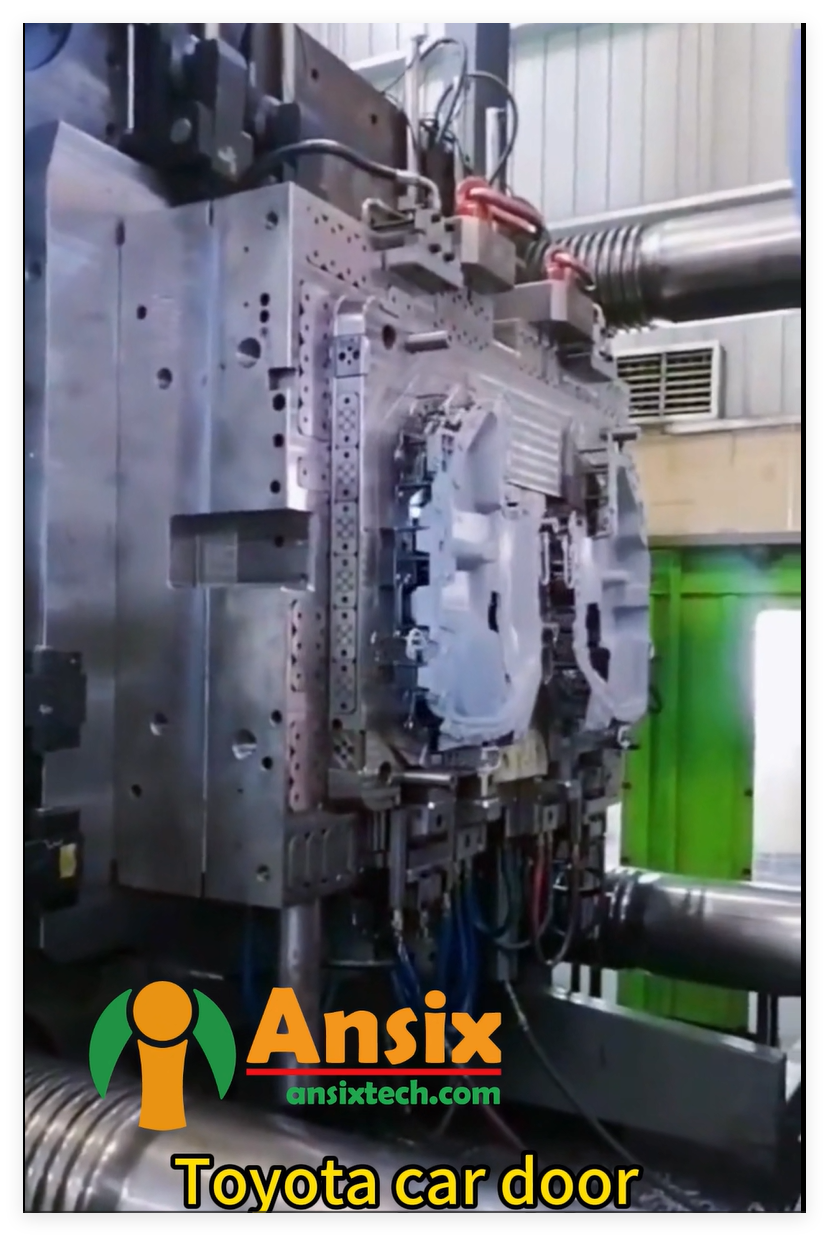
Engineering Excellence: Inside Ansix Tech's Toyota Door Panel Production
At the heart of modern automotive manufacturing, a single door panel mold represents thousands of hours of engineering, material science, and precision craftsmanship, converging to achieve what once seemed impossible: premium quality at significantly reduced cost.
The global automotive injection molding market, valued at over $220 billion, faces unprecedented pressure to deliver lighter, stronger, and more sustainable components without compromising cost or performance. Ansix Tech has emerged as a leader in this competitive space, particularly through its work on the complex Toyota car door panel mold project. This initiative required navigating intricate technical demands—from precise airbag door integration to achieving flawless Class-A surfaces—while adhering to Toyota's legendary standards for reliability and cost efficiency.
This article details the comprehensive journey of this project, from initial digital design to final rapid delivery, highlighting how Ansix Tech leverages advanced engineering, strategic material selection, and process optimization to deliver exceptional value to its automotive partners.
1 The Blueprint: Collaborative Design and Initial Prototyping
The Toyota door panel project began long before steel was cut. The process started with a collaborative digital design phase, where Ansix engineers worked alongside Toyota's design team. The door panel, a complex assembly integrating structural, aesthetic, and safety functions (including a seamless airbag door), required meticulous 3D modeling. Using advanced CAD software, the team generated a master computer representation of the part, a critical step that Toyota's own patent literature emphasizes for modern prototyping.
A core challenge identified early was the presence of undercuts and complex geometries—features that could trap the part in the mold. Following methodologies similar to those patented by Toyota, Ansix Tech utilized CAD to design specialized cores that would fill these undercut regions during initial mold creation. This digital foresight allowed for the manufacture of a perfect master pattern assembly, which was then used to create a silicone master mold. This approach, which streamlines traditional prototyping, enabled the rapid and precise production of first-article prototypes for design verification, fit, and function testing without the expense of a full production mold.
2 The Foundation: Strategic Material Science
Selecting the right plastic was paramount. The door panel is a large, structurally demanding component that must be rigid, dimensionally stable, impact-resistant, and aesthetically pleasing. Ansix Tech, drawing on deep industry knowledge and specifications aligned with Toyota's own research, selected a high-performance polypropylene (PP) composite.
The chosen material is not a simple plastic but a sophisticated, engineered thermoplastic composition. Its formulation is critical to performance and cost:
Base Resin (55-75%): A crystalline polypropylene provides the fundamental structural matrix, offering excellent chemical resistance and processability.
Elastomer Modifier (10-30%): A blend of rubbers, including ethylene-octene copolymer, is compounded into the PP. This crucial addition dramatically improves low-temperature impact toughness, preventing the part from shattering in cold climates—a non-negotiable safety and durability requirement.
Mineral Filler (15-25%): Fine talc with an average particle diameter under 3µm is added. This filler increases stiffness (modulus), improves dimensional stability by reducing shrinkage and warpage, and raises the heat deflection temperature (HDT). Crucially, it also reduces raw material cost, as talc is less expensive than the polymer resin.
This PP+EPDM-T20 grade (Polypropylene + Ethylene Propylene Diene Monomer rubber + 20% Talc filler) represents an optimal balance. Its typical properties, derived from industry standards, are outlined below:
*Table 1: Typical Properties of PP+EPDM-T20 for Door Panels*

For high-visibility, high-touch components like the door handle bezel, Ansix specified a PC/ABS alloy. This material combines the strength and aesthetic clarity of Polycarbonate with the processability of ABS, and it is readily plated or painted to provide a premium, metallic finish.
3 Virtual Perfection: Moldflow Analysis (DFM)
With the material selected and the part design frozen, Ansix Tech employed Moldflow simulation software to virtually craft the molding process. This Digital Fabrication Management (DFM) stage is where major costs are saved and quality is assured.
Engineers imported the 3D model to analyze filling patterns, cooling efficiency, and potential defects. The software simulated how the molten plastic would flow through different gating system designs, predicting issues like:
Air Traps: Pockets of air that could cause surface blemishes or weak spots.
Weld Lines: Where separate melt fronts meet, potentially creating a visible or structural flaw.
Sink Marks: Localized depressions caused by uneven cooling.
By comparing multiple gate locations—such as a single large gate versus several smaller point gates—the team optimized for the shortest fill time, most balanced pressure distribution, and least aesthetic impact. This virtual optimization eliminated costly "trial-and-error" adjustments on the actual press, saving weeks of time and significant material waste.
4 Crafting the Tool: Precision Mold Design and Manufacturing
The mold itself is a masterpiece of engineering. Ansix Tech designed a single-cavity, high-tonnage mold to produce the large panel. Key systems within the mold were engineered for peak performance and efficiency:
Cooling System: A complex network of conformal water channels was machined to follow the contour of the part surface closely. This ensures uniform and rapid heat extraction, which is the single largest factor in reducing the cycle time. Faster cooling directly translates to more parts per hour and lower cost per part.
Gating and Runner System: Based on Moldflow results, a hot runner system with strategically positioned valve gates was selected. This advanced system keeps the plastic molten in the runners between cycles, eliminating solid sprue waste and allowing for precise, sequential control of plastic injection to optimize fill and minimize stress.
Ejection System: Given the part's large surface area, a meticulously arranged array of ejector pins and sleeves was designed. Their placement ensures the cured part is released smoothly and without distortion or surface damage.
Steel Selection: Different mold steels were used for different functions. Core and cavity inserts were made from pre-hardened stainless steel (e.g., P20 or 420SS) for excellent polishability and corrosion resistance, critical for achieving a Class-A surface. High-wear areas like gates and slides used hardened tool steels (e.g., H13) for durability over millions of cycles.
5 The Art of the Process: Optimization and Quality Control
With the mold installed in a high-pressure injection molding machine, the focus shifted to process parameter optimization. Ansix Tech used a scientific molding approach, treating key parameters as interdependent variables to be tuned.
Table 2: Key Process Parameters and Optimization Goals

Quality control is continuous and multi-layered. First-article inspections involve full 3D coordinate measuring machine (CMM) scans to validate dimensions against the digital model. During production, statistical process control (SPC) tracks critical dimensions from sampled parts. Visual inspections under controlled lighting check for surface defects, and functional tests ensure features like the integrated airbag door perform flawlessly, separating cleanly along a predetermined "tear seam" during deployment.
6 Delivering Value: The Ansix Tech Advantage
The culmination of this engineering-intensive process is a tangible reduction in total cost for Toyota, achieved without sacrificing the quality synonymous with the brand.
Material Efficiency: The use of mineral-filled PP reduces per-part raw material cost. The hot runner system eliminates sprue waste, pushing material yield toward 99%.
Process Efficiency: Optimized cooling and cycle times, derived from Moldflow analysis and scientific molding, maximize press productivity. Reducing a cycle by 5 seconds can increase annual output by tens of thousands of parts.
Integrated Design: By designing for manufacturability from the start—consolidating parts, simplifying assembly (e.g., molding features in one shot that might otherwise require welding)—Ansix Tech helps Toyota save on downstream labor and logistics costs.
Reliability & Speed: A robustly designed and manufactured mold has a longer lifespan with less downtime, ensuring a stable, just-in-time supply. Ansix Tech's streamlined process from digital design to validated production enables rapid delivery of high-quality tools and components.
This project embodies a modern manufacturing truth: the greatest cost savings are engineered into the product long before production begins. Through material science, digital simulation, precision toolmaking, and process intelligence, Ansix Tech demonstrates that providing exceptional value is the most reliable way to earn and keep the business of the world's most demanding automakers.


Ansix Tech Co Ltd
If you have any plans related to Toyota car door panel mold, you can contact us at any time. We will turn your ideas into reality, let you realize your dreams, and obtain large orders from the market. Our contact information is info@ansixtech.com. Or contact our CTO, mail: stephen@ansixtech.com
#www.ansixtech.com #ansixtech.com #Brake light mold factory #Toyota car door panel mold#Ansix mold factory #Ansix injection molding #Ansix moud Ltd #Engine oil pan moldinjection molding factory #Ansix injection mould #Center console storage compartment ing factory #Engine oil pan mold injection molding company #Engine oil pan mold injection mold companies #Ansix #Ansix moulds #Ansix china #Ansix tech china #Ansix tech company #Ansix facotry #Ansix Tech #Ansix molds #Ansix injection molding #Ansix mold factory #injection molding Engine oil pan mold# Ansix mold factory #Engine oil pan mold china #Engine oil pan moldprecision molds #injection factory #Engine oil pan mold precision injection molding #Engine oil pan moldinjection molding factory #injection molding company #Engine oil pan mold injection mold companies #Engine oil pan moldmould factory #Engine oil pan moldmold limited #Ansix mold china #Ansix companies #Ansix company China #Engine oil pan moldfacotry #Ansix Tech #Ansix Tech mould #Engine oil pan mold injection moulding #injection moulding company #Ansix Engine oil pan mold parts injection mold companies #Engine oil pan moldmould #Engine oil pan mold china #Engine oil pan mold china factory #Ansix moulding companies #Ansix molding company #Engine oil pan mold injection moulding facotry #Ansix Tech mold #Engine oil pan moldprecision mould #Engine oil pan moldplastic injection molding #ansix plastic mold #Mold manufacturing #Engine oil pan moldparts manufacturing #Engine oil pan moldplastic parts factory #Engine oil pan moldinjection parts mold #Engine oil pan moldPRECISION MANUFACTURING #Engine oil pan moldmold precision #China mold #Engine oil pan moldinjection moulding china #Engine oil pan moldmould china #china precision mold #mold in china #Engine oil pan moldprecision mold china #Precision molds #High-precision molds #Household appliance molds #Injection molds #Large Injection Molding Factory #Large Injection Molding Company #Super Large Injection Mold Factory #Large Tonnage Injection Molding Factory #Large Injection Molding Company #Super Large Injection Molding Factory #2800T Injection Molding Factory #3000 Ton Injection Molding #4500 Ton Injection Molding Factory #Large Mold Injection Molding #Large Plastic Mold Injection Molding Factory #Large Injection Mold Manufacturer #Plastic Mold Factory #Injection Mold #Plastic Mold