



Pharmaceutical Bottle Caps
FEATURES
“Hard Power” Foundation — Building Customer Trust Through Equipment Capabilities
In pharmaceutical packaging manufacturing, equipment capability directly determines product quality consistency, production efficiency, and ultimately, customer profitability. Ansix Tech’s state-of-the-art equipment infrastructure transforms technical specifications into tangible customer value.
Mold Manufacturing Equipment: Precision That Drives Profitability
Ansix Tech is equipped with advanced five-axis high-speed machining centers that achieve 0.002mm accuracy for complex surface geometries. For pharmaceutical bottle caps, where seamless operation requires flawlessly smooth parting lines, this precision translates directly into reduced post-processing and elimination of customer complaints about rough edges or inconsistent sealing surfaces. The zero-burr, smooth-finish parting lines ensure that medical-grade bottle caps seal perfectly every time, preventing costly contamination risks and patient safety incidents.
The company also operates slow wire EDM (electrical discharge machining) capable of fabricating micro-holes as fine as 0.03mm and narrow slots—critical for pharmaceutical caps requiring precision vents, child-resistant locking features, or specialized dispensing nozzles. This capability prevents thin-wall deformation that commonly leads to warped caps, inconsistent thread engagement, and ultimately, product recalls that can cost millions.
By combining 5-axis CNC precision with EDM micro-machining, Ansix Tech delivers molds that produce pharmaceutical caps with flawless internal geometries, ensuring that every security feature, tamper-evident mechanism, and child-resistant lock functions consistently across millions of cycles.
-
Mold Description
Product Materials:
PP
Mold Material:
S136ESR
Number of Cavities:
8
Glue Feeding Method:
Hot runner
Cooling Method:
Water cooling
Molding Cycle
12.5s
- The mold manufacturing process and product material selection
Injection Molding Machine Fleet: Consistency That Eliminates Waste
Ansix Tech’s extensive fleet of 260 injection molding machines covers a clamping force range from 30 tons to 2,800 tons, supporting pharmaceutical bottle caps of all dimensions—from small dropper tips and child-resistant closures to large-volume container caps. Each machine is equipped with full-servo electric drive systems, achieving consistent repetition accuracy of ±0.1%. This means that when producing pharmaceutical caps in high volumes, every single mold cycle yields identical dimensions, eliminating the scrap, rework, and unexpected production line stoppages that plague customers relying on inferior equipment.
The value to customers is immediate and direct: consistent quality across every batch eliminates downstream sorting and inspection costs, while the ±0.1% repeatability ensures that caps interface perfectly with customer filling automation systems, preventing costly jamming and downtime on high-speed packaging lines.
Quality Inspection Equipment: Data-Driven Assurance
Every mold leaving Ansix Tech undergoes rigorous dimensional inspection using coordinate measuring machines (CMM) and optical imaging systems. The process is straightforward: each mold is accompanied by a full dimensional report comparing actual measurements against engineered specifications, with critical dimensions achieving a process capability index (Cpk) of at least 1.33. For customers, this means statistically proven process stability—a guarantee that the mold will produce conforming parts run after run, without the costly surprises of out-of-spec components discovered only during customer incoming inspection.
This data-driven quality system reduces customer validation costs by providing objective, traceable evidence that the mold meets all specifications before shipment. Pharmaceutical customers can integrate these reports directly into their supplier quality management systems, streamlining regulatory compliance documentation for submissions to authorities such as the FDA, EMA, or NMPA.
-
Mold Manufacturing Core Competitiveness — Delivering Concrete Metrics Customers Can Trust
Pharmaceutical bottle cap customers are primarily concerned with four measurable factors: mold lifespan (how long before expensive replacement), precision (whether caps will function correctly), delivery speed (when production can begin), and repair costs (hidden expenses of mold maintenance). Ansix Tech addresses each with quantifiable commitments.
Mold Lifespan: A Guarantee, Not a Promise
Ansix Tech’s mold construction is based on rigorous material selection tailored to the specific demands of each pharmaceutical application. The mold base typically utilizes P20 steel, while core and cavity components leverage premium materials including S136, 2344, 2343, 8407, SKD11, SKD61, DC53, M340, 4Cr13, 9Cr18, NAK80, and H13. For medical and pharmaceutical applications involving corrosive drugs or frequent sterilization cycles, S136 stainless tool steel (hardness HRC 48-52) is commonly selected due to its exceptional corrosion resistance and superior polishability. This ensures dimensional stability and optimal surface finish throughout the mold’s service life.
The value is expressed in guaranteed production volume: for glass-fiber reinforced pharmaceutical-grade plastics, Ansix Tech guarantees a minimum of 500,000 mold cycles; for standard medical-grade thermoplastics such as PP and HDPE, the guarantee extends to 1,000,000 cycles. Beyond this quantitative commitment, every mold is accompanied by a complete material certification report and heat treatment profile, enabling customers to validate material composition and processing history—critical documentation for pharmaceutical compliance audits.
Achievable Tolerance Standards: Predictable Performance
Ansix Tech delivers pharmaceutical bottle caps that meet stringent industry requirements. For standard structural features such as bottle cap bodies, threads, and tamper-evident bands, tolerance of ±0.05mm is standard. For critical precision components such as child-resistant locking mechanisms, metered-dose dispensing valves, and fluidic sealing surfaces, tolerance of ±0.005mm is achieved. High-volume pharmaceutical cap production requires tight dimensional control to ensure consistent assembly and function across millions of units.
The benefit to customers is reduced scrap during high-volume production. With guaranteed tolerances verified through measurement protocols and first-article inspection reports, customers can install new molds on their production lines with confidence, avoiding the costly trial-and-error phases that typically plague mold transitions.
Mold Types: Broad Capabilities for All Applications
Ansix Tech manufactures a complete spectrum of mold types tailored to pharmaceutical bottle caps:
Hot Runner Systems — Eliminate runner waste entirely, reducing material consumption per cap by 15-30%. For high-volume production lines running millions of caps annually, the material savings alone can justify the entire mold investment within the first year of production.
Stack Molds — Double productivity without doubling machine footprint or labor costs by producing two cap layers per cycle. For pharmaceutical manufacturers operating on tight margins, stack molds effectively halve per-unit production costs while maintaining identical quality standards.
Two-Color/Multi-Material Molds — Produce caps with integrated gaskets, dual-durometer sealing rings, or contrasting safety features in a single automated operation, eliminating secondary assembly steps, reducing labor costs, and improving quality consistency.
High-Gloss Molds (Ra < 0.05μm) — Essential for transparent pharmaceutical caps requiring optical clarity for visual inspection of drug contents or for caps used in premium ophthalmic and injectable drug packaging where surface finish directly correlates with patient perception and brand value.
Gate Design: Optimization Through Simulation
Before cutting any steel, Ansix Tech performs comprehensive Moldflow analysis to simulate molten plastic flow, predict weld line locations, identify gas entrapment areas, and optimize gate position and quantity to ensure balanced cavity filling. The virtual environment replicates the entire injection molding process for pharmaceutical bottle caps, enabling engineers to identify and eliminate defects before they appear in production.
For pharmaceutical caps, the value of gate optimization is substantial. Weld lines that weaken child-resistant features or create leak paths are designed out before production begins. Gas entrapment that would cause burn marks visible during patient use is eliminated through strategic vent placement. Warpage that would prevent caps from sealing consistently is addressed through balanced filling patterns. The result is a mold that produces flawless caps from the very first production run—saving weeks of debugging, thousands of dollars in wasted material, and eliminating the risk of delayed product launches.
Delivery Standards: Speed Without Compromise
Ansix Tech offers transparent and predictable lead times: simple molds in 10 days, medium-complexity projects in 25-45 days, and expedited schedules compressed to 20 days for urgent pharmaceutical packaging needs. Importantly, even under expedited conditions, critical validation phases—including mold trials, full dimensional inspections, and process capability studies—are never omitted. Every mold delivered, regardless of schedule, undergoes the same rigorous 2,000-cycle aging test and wear report prior to shipment.
This approach delivers outstanding value: customers can respond to supply chain disruptions, new product introductions, or unplanned demand spikes with confidence. Rushing production never means sacrificing quality, eliminating the risk of receiving non-conforming molds that damage customer reputations or cause regulatory compliance failures.
Section III: Injection Molding Process Control — Eliminating Customer Quality Anxiety
The greatest fears for pharmaceutical packaging buyers in injection molding are well-known: part shrinkage causing sealing failure, flash requiring expensive post-processing, dimensional instability leading to automation line jams, and batch-to-batch color variation damaging brand consistency. Ansix Tech addresses each systematically.
Process Standardization: Locked Consistency
All injection molding machines at Ansix Tech are networked to a Manufacturing Execution System (MES). All critical process parameters—including barrel temperatures, injection pressure, injection speed, holding pressure, cooling time, and screw rotation speed—are locked within the system and can only be adjusted by authorized engineers. Every production batch includes first-article and last-article dimensional comparisons to verify ongoing process stability.
The customer value is simple and powerful: pharmaceutical buyers do not need to worry about process drift over time, operator errors, or undocumented parameter changes. The digital lock ensures that what worked on day one continues to work on month twelve, eliminating the hidden costs of continuous troubleshooting and production disruptions.
Dimensional Stability Control: Real-Time Feedback
Ansix Tech’s molds incorporate zone-specific mold temperature controllers that maintain core-cavity temperature differentials within 2°C, dramatically reducing warpage and distortion in finished pharmaceutical bottle caps. For products requiring the highest dimensional stability, in-mold pressure and temperature sensors provide real-time feedback, enabling closed-loop control of injection and holding phases.
The performance is measurable: for similar cap geometries produced in three consecutive batches over a single week, Ansix Tech consistently demonstrates key feature dimensional variation of ≤0.02mm. For customers operating high-speed filling and capping lines, this consistency means no jams, no misfeeds, no line stoppages, and no scrap due to out-of-tolerance caps—directly translating to higher line utilization and lower operating costs.
Appearance Quality Standards: Visual Excellence
Pharmaceutical bottle caps must meet rigorous visual inspection criteria. For clear medical-grade transparent caps, Ansix Tech achieves zero bubbles and zero flow marks through optimized material drying, melt temperature control, and injection speed profiling. For caps requiring secondary decoration or printed labeling, engineered compensation for post-molding shrinkage ensures print registration accuracy of ±0.1mm.
Achievable surface finishes are specified precisely: Ra ≤0.2μm is standard for high-gloss applications such as cosmetics-grade or premium pharmaceutical packaging requiring consumer appeal. S136 mold steel for optical components provides flawless polishability that achieves Class A surface finishes.
The value is direct: pharmaceutical companies can eliminate the cost and risk of secondary finishing operations, knowing that parts emerge from the mold ready for assembly, labeling, or direct packaging into final drug product kits.
Special Materials Capabilities: Proven Expertise
Ansix Tech maintains extensive practical experience with engineering materials critical to pharmaceutical applications, including PC/ABS blends for impact-resistant device housings, polycarbonate (PC) for transparent reservoir caps, PPS with 40% glass fiber reinforcement for high-heat sterilization applications, PEEK for implantable-grade drug delivery components, PFA for chemically aggressive drug formulations, PA6 with 30% glass fiber for structural security features, PBT for dielectric sealing components, PEI and LCP for high-temperature stability, and liquid silicone rubber (LSR) for integrated gaskets and seals.
All materials meet the applicable compliance requirements including ISO 10993 biocompatibility standards and FDA food contact regulations. For customers requiring UL certification, Ansix Tech parts achieve UL94 V-0 flame ratings; for long-term drug stability testing, UV resistance is validated to 3,000 hours without discoloration. The value is simplified material qualification for pharmaceutical customers—Ansix Tech’s proven material compatibility eliminates months of internal testing and regulatory submission delays.
Process Validation: IQ/OQ/PQ Compliance
Pharmaceutical manufacturers require documented process validation for all critical components. Ansix Tech’s injection molding processes are subject to full validation protocols including Installation Qualification (IQ), Operational Qualification (OQ), and Performance Qualification (PQ). IQ certifies that equipment is properly installed and calibrated; OQ verifies that equipment operates within specified process parameter ranges; PQ demonstrates ongoing process repeatability and capability under production conditions. Validation includes supporting statistical analysis such as Cpk and Gage R&R studies. This validation package, aligned with ISO 13485 Clause 7.5 and FDA 21 CFR Part 820.75 requirements, provides pharmaceutical customers with objective, audit-ready evidence of process control.
The benefit to customers is reduced regulatory burden: Ansix Tech’s documented validation reduces internal supplier qualification time by enabling direct acceptance of the validation data, cuts submission documentation costs, and eliminates the risk of regulatory findings due to insufficient process validation—potentially saving weeks of staff time and thousands in consulting fees per project.
Section IV: Full-Process Service — Reducing Customer Management Costs
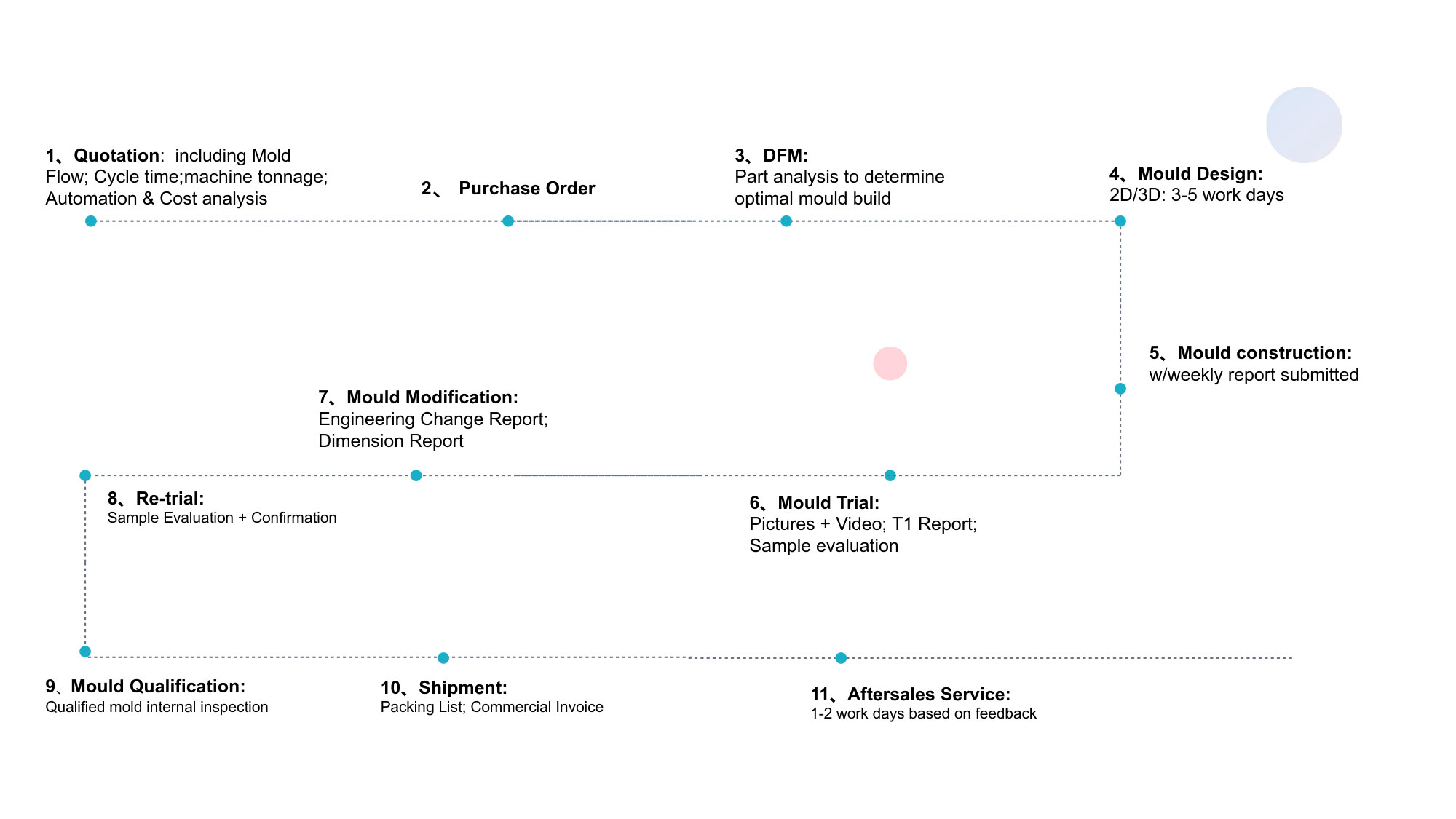
Many mold manufacturers focus exclusively on mold fabrication, leaving customers to manage the complex, costly, and risky handoffs between design, fabrication, trials, and production. Ansix Tech’s integrated full-process service model eliminates these pain points entirely.
Early Intervention (DFM Reports): Prevention Before Production
Before any contract is signed, Ansix Tech provides a comprehensive Design for Manufacturability (DFM) report containing detailed analysis of draft angle requirements, wall thickness optimization recommendations, gate placement strategies, and allowable witness mark locations for ejector pins. This early analysis includes Moldflow simulation results, predicted filling patterns, and expected defect locations.
For pharmaceutical bottle caps, the DFM process identifies and resolves production issues before mold fabrication begins. A simple drawing change eliminating a zero-draft vertical wall can prevent months of post-fabrication rework costing tens of thousands of dollars. Identifying an optimal gate location before mold steel is cut can eliminate weld lines that would cause sealing failures. This preventive approach shifts problem-solving from expensive reactive rework to low-cost proactive design—saving customers both time and money and preventing the devastating cost of discovering manufacturing defects through regulatory inspections or patient complaints.
Mold Trials and Samples: Verification Before Production
Ansix Tech provides T0 through T3 sample parts after each successive mold trial, accompanied by detailed improvement reports documenting modifications made and their measured effects on part quality. Where multiple design alternatives are under consideration, the company’s quick-change insert system allows real-time validation of different gate configurations, vent placements, or cooling patterns without fabricating an entirely new mold.
The value to customers is elimination of uncertainty. By seeing actual sample parts and tracking improvement reports at each trial stage, customers have full visibility into mold development progress before committing to production. The quick-change insert capability provides a low-cost, low-risk method for optimizing mold designs—shifting experimentation from expensive production molds to rapid, interchangeable validation tools.
Small-Batch Validation: Prove It Before Committing
Before moving to high-volume production, Ansix Tech provides 100 to 500 validation parts, complete with full dimensional inspection data, yield rate calculations, and Cpk analysis for critical features. Only when these metrics demonstrate stable, capable processes does the project proceed to full-scale production.
For pharmaceutical customers, small-batch validation eliminates the risk of scaling up non-viable processes. Discovering a sealing defect, dimensional drift, or surface finish issue across a hundred parts is months less costly and reputationally damaging than discovering the same issue across a million caps already delivered to patients.
Maintenance and Spare Parts: Lifetime Support
Every mold shipped from Ansix Tech includes a complete set of spare wear parts—including ejector pins, core inserts, and slide components—delivered simultaneously with the mold itself. Preventive maintenance schedules are provided, typically recommending service every 200,000 cycles. When service is required outside the preventive schedule, Ansix Tech performs repairs at cost, with lifetime support guaranteed.
The customer benefit is predictable ongoing mold ownership costs. Instead of facing surprise expenses for unexpected repairs, customers know exactly what spare parts are included and what scheduled maintenance will cost. The “at cost” repair policy for non-scheduled service eliminates the financial uncertainty that typically accompanies mold repair—preventing budget overruns and production interruptions caused by mold breakdowns.
Section V: Differentiated Value — Direct Answers to Common Customer Complaints
Rather than simply claiming superiority, Ansix Tech addresses the most common complaints in the mold manufacturing and injection molding industry with specific, actionable commitments:
Common Customer Complaint Ansix Tech’s Commitments
Molds need constant repairs, disrupting production schedules Every mold undergoes a 2,000-cycle accelerated wear test prior to shipment, with a detailed wear report documenting measured changes in critical dimensions. A three-year structural warranty covers the mold base and core components (excluding normal consumable wear on ejector pins and slides).
Injection flash requires expensive post-processing Parting lines are machined to 0.005mm fit precision, eliminating mismatched surfaces. Self-locking clamp force compensation maintains consistent mold closure during production, limiting flash height to ≤0.03mm across all batches. Most pharmaceutical caps are flash-free and usable directly from the machine without any secondary trimming.
Dimensional stability varies between production runs All machines equipped with ultrasonic wall thickness sensors that monitor in-mold material flow in real time and feed data back to the injection unit for automatic holding pressure compensation. For high-criticality applications, in-mold pressure and temperature sensors provide closed-loop control, ensuring dimensional stability from first shot to last.
Long mold repair cycles disrupt production Ansix Tech maintains in-house electrode manufacturing and EDM facilities capable of performing most common repairs—including weld repairs, insert replacements, and surface refinishing—within 24 hours. By never outsourcing emergency repairs to third-party machine shops, customers regain production capability in days rather than weeks.
These commitments are not marketing statements but operational promises backed by documented processes, auditable records, and accountability for outcomes. Pharmaceutical packaging customers deserve clear, measurable, and enforceable expectations—and Ansix Tech delivers exactly that.
Section VI: Quality Verification and Validation Protocols
Quality assurance in pharmaceutical bottle cap production requires systematic verification at every manufacturing stage. Ansix Tech implements a multi-stage validation protocol that generates objective evidence of quality for both internal process control and external regulatory submission.
First-Article Inspection (FAI) Protocol
Every new mold undergoes complete FAI per AS9102 or customer-specified requirements. All dimensions called out on engineering drawings are measured and reported, with critical features receiving 100% measurement and statistical analysis. The FAI package includes measurement method descriptions, equipment calibration records, and inspector qualifications—forming a complete quality pedigree traceable to national measurement standards.
The result is a comprehensive quality documentation package that pharmaceutical customers can submit directly to regulatory authorities as objective evidence of manufacturing capability, reducing their submission burden and accelerating product approval timelines by eliminating back-and-forth clarification requests.
In-Process Quality Control
During high-volume production of pharmaceutical bottle caps, Ansix Tech implements a statistically validated sampling protocol. Typically, five consecutive parts are measured every hour, with key functional dimensions receiving priority measurement. Process control charts track dimensional trends in real time, triggering intervention when control limits are approached—long before non-conforming parts could be produced.
Statistical process control (SPC) data is maintained in electronic batch records that are archived, searchable, and fully audit-ready. Pharmaceutical customers receive ongoing access to this data, enabling transparent, real-time insight into production quality without placing staff on-site.
Final Inspection and Packaging
Finished pharmaceutical bottle caps undergo 100% automated vision inspection systems that detect and reject parts with visible defects including flash, short shots, burn marks, or discoloration before packaging. Random samples from every finished goods batch are retained in a quality hold area for 12 months, enabling failure analysis and root cause investigation in the event of customer complaints.
Each shipping carton is labeled with a traceable batch number linking directly to electronic production records—material certificate numbers, molding machine identification, shift and operator information, SPC data, and inspection results. For pharmaceutical recall scenarios, this traceability enables rapid, precise identification of potentially affected production lots, minimizing recall scope and limiting patient safety exposure.
Packaging is designed to protect pharmaceutical bottle caps during transit and storage. Typical configurations include clean-room grade polybags sealed inside corrugated cartons, with desiccant where required for moisture-sensitive closures. Multi-layer packaging options are available for sterile applications requiring validated sterility maintenance throughout the supply chain.
Section VII: Delivery Speed — Accelerating Time-to-Market
Time-to-market is a critical competitive factor for pharmaceutical products. Ansix Tech’s capacity for rapid prototyping, mold fabrication, and production ramp-up provides meaningful acceleration for customer drug launch timelines.
Rapid Prototyping (1-7 Days)
For early-stage feasibility testing and regulatory submission samples, Ansix Tech offers 3D-printed prototypes of pharmaceutical bottle cap designs in customer-specified materials. For applications requiring molded-property validation, machined aluminum prototype molds can be produced in as few as 10 days, capable of running hundreds of parts for functionality and regulatory testing.
The value to customers is compressed product development cycles. Instead of waiting 8-12 weeks for a production steel mold to validate a design concept, customers can test, fail, and iterate through multiple design revisions in the same period—reducing total development duration by months and getting products to market faster.
Production Tooling Lead Times
Hardened production steel molds for pharmaceutical bottle caps are delivered in 25-45 days for standard complexity projects. For expedited urgent requirements, 20-day delivery is available. Importantly, mold aging tests and full dimensional qualification are completed before shipment, eliminating customer-side qualification time. The result is production-ready molds delivered, inspected, and validated in the shortest possible time—enabling pharmaceutical customers to convert new product designs into revenue-generating production runs faster.
Production Ramp-Up
Following mold installation, Ansix Tech typically achieves validated production rates exceeding 90% of ultimate target capacity within two weeks, with full capacity achieved within four weeks. For large-volume programs requiring dedicated production cells, the company offers managed inventory programs including vendor-managed inventory (VMI) and consignment stock arrangements, eliminating customer warehousing costs while guaranteeing supply continuity.
This production ramp-up capability provides pharmaceutical customers with flexible supply chain planning: products can be launched with minimal inventory risk, with Ansix Tech absorbing demand variability until stable ordering patterns are established—reducing working capital tied up in safety stock and preventing costly stockouts due to extended supplier lead times.
Section VIII: Cost Reduction Strategies — Direct Value to Customers
The most critical question for any pharmaceutical packaging buyer is simple: “What will this cost, and can Ansix Tech make it cheaper than other suppliers without compromising quality?” Ansix Tech’s answer focuses on three actionable cost-reduction levers: material optimization, process efficiency, and value engineering at scale.
Material Cost Reduction (15-40% savings)
Material over-specification is a primary driver of unnecessary cost in injection-molded parts. Ansix Tech’s material science expertise avoids this “over-design” trap by analyzing part requirements against material properties to determine the least expensive material that fully meets all functional, regulatory, and stability requirements.
A pharmaceutical bottle cap that can be molded from standard USP Class VI polypropylene rather than more expensive PEEK saves 30-40% in raw material costs. A transparent cap that functions perfectly with standard polycarbonate rather than optical-grade specialty resin saves 15-25%. A sealing gasket that can be two-shot molded using lower-cost TPE rather than silicone saves 20-30%. These savings multiply across millions of caps to generate substantial annual cost reductions.
Importantly, material selection decisions are fully documented and validated through regulatory submissions. Every material recommendation is accompanied by its FDA 21 CFR reference, ISO 10993 biocompatibility status, USP plastic classification, and material certificate—ensuring that cost savings never come at the expense of regulatory compliance.
Process Efficiency Optimization (10-30% cycle time reduction)
Cycle time is the single most significant variable cost in injection molding production. Ansix Tech’s process engineers systematically analyze every element of the molding cycle—filling, packing, cooling, mold opening, part ejection, and mold closing—identifying opportunities for reduction.
Advanced conformal cooling channels, designed through Moldflow simulation and fabricated using additive manufacturing techniques, reduce cooling time by 15-25% by bringing cooling water closer to cavity surfaces and eliminating hot spots. Automated part handling using pick-and-place robots eliminates operator-dependent ejection delays and reduces handling damage.
Real-world data from Ansix Tech pharmaceutical projects demonstrates 10-30% cycle time improvements over baseline processes. For a pharmaceutical bottle cap production line running at 5 million caps per month, a 15% cycle time reduction increases monthly output to 5.75 million caps without additional capital investment, labor, or overhead—representing a 15% reduction in per-unit fixed cost allocation.
Value Engineering at Scale
Ansix Tech’s integrated design and engineering teams offer value engineering services that systematically examine every element of a proposed pharmaceutical bottle cap design, identifying opportunities for cost reduction without compromising function or patient safety.
Wall thickness can often be reduced by 5-10% without compromising sealing force or drop-test performance—directly reducing material consumption per part. Complex multi-component assemblies can often be converted to single-piece designs using two-shot molding technology, eliminating assembly labor, reducing supply chain complexity, and improving quality consistency. Ejection systems can be refined to eliminate visible witness marks in visible areas, improving cosmetic appearance without secondary finishing.
Value engineering results are presented to customers as documented options with clear trade-offs: “Reducing wall thickness by 10% would save $X per thousand parts but may require requalification for drop testing—here is our recommended testing protocol to validate the change.” This transparent engineering-led approach gives pharmaceutical customers complete visibility into cost-quality trade-offs, enabling informed, risk-managed decisions about design modifications.
Integrated Supply Chain Cost Reduction
Ansix Tech’s ability to manage the entire manufacturing value chain—from prototype through mold fabrication through high-volume injection molding through secondary operations and final assembly—eliminates the transaction costs, communication delays, and margin stacking that occur when multiple independent suppliers handle different production stages.
The measurable results: project coordination overhead reduced by 30-50%, total lead time from design frozen to shipped parts reduced by 20-35%, and total landed cost reduced by 10-25% compared to fragmented supplier networks. This integrated cost reduction is not theoretical—it is documented across decades of Ansix Tech project experience, with specific case studies available for customer review.
Section IX: Risk Mitigation — Protecting Pharmaceutical Customers from Hidden Dangers
Every injection molding project, particularly for safety-critical pharmaceutical packaging, carries inherent risks. Ansix Tech systematically identifies and mitigates these risks through documented processes, redundant quality systems, and continuous improvement.
Supply Chain Risk: Single-Source Dependence
Ansix Tech maintains backup tooling at no additional customer cost for critical high-volume programs. By building and qualifying duplicate molds in parallel during the initial tooling program, the company can switch production to backup equipment within 24 hours of any primary mold failure or maintenance event. For customers, this redundant tooling strategy eliminates the production interruption risk that typically accompanies single-mold production.
Regulatory Compliance Risk: Outdated Material Approvals
Ansix Tech’s material selection protocols include ongoing monitoring of regulatory standards specific to pharmaceutical packaging, including the USP <661.1> and <661.2> requirements that became effective in December 2025 for all plastic pharmaceutical packaging. The team tracks FDA 21 CFR Part 177 requirements for food- and drug-contact plastics, as well as USP <671> container performance testing standards covering moisture permeation and closure integrity. For pharmaceutical packaging, materials are selected to meet both FDA food-contact regulations and USP plastic packaging system qualification requirements. For child-resistant pharmaceutical packaging, all designs are validated per CFR Title 16 and PPPA requirements, ensuring that packaging is difficult for children under five to open while remaining usable by adults, including seniors.
This continuous regulatory monitoring prevents the costly scenario of receiving a regulatory compliance violation or product recall due to obsolete material approvals.
Functional Failure Risk: Unvalidated Performance
Every pharmaceutical bottle cap design is validated against functional requirements including leak testing (positive pressure, vacuum, or dye ingress protocols appropriate to drug formulation), child-resistance force testing (opening torque and push-down force combinations validated to regulatory requirements), tamper-evidence verification (visual or audible indicators of first opening), and automated capping line compatibility (feed rates, orientation accuracy, and pick-and-place reliability).
These functional validation protocols are established during the DFM phase, executed during the T0-T3 trial phases, and monitored continuously during production through statistical sampling. Customers receive documented functional validation reports suitable for regulatory submission, eliminating the risk of field failures discovered after product launch.
Intellectual Property Risk: Unprotected Designs
Ansix Technology maintains strict confidentiality protocols including signed non-disclosure agreements (NDAs) preceding any technical discussion, segregated customer project documentation with access limited to assigned personnel, restricted facility visitation policies preventing unauthorized photography or data collection, and data encryption for all digital design files. For customers requiring maximum IP protection, manufacturing operations can be restricted to a single facility with caged tooling and dedicated personnel, ensuring that proprietary mold designs never leave controlled environments.
Section X: Industry Experience — Proven Reliability Across Pharmaceutical Applications
Ansix Tech’s 28 years of manufacturing experience are demonstrated through successful projects across multiple pharmaceutical and medical packaging applications for global clients.
Eyedrop Bottle Cap Molding
Ansix Tech has developed what it calls a “comprehensive, optimized manufacturing process specifically for eye drop bottle caps—a process that significantly reduces component costs without compromising the exacting quality required for medical applications”. This process demonstrates how the company balances the unique requirements of ophthalmic packaging—sterility assurance, precise drop dispensing, secure closure following repeated use, and compatibility with automated pharmaceutical filling lines—against the need for cost-effective mass production.
Effervescent Tube Cap Molding
Effervescent pharmaceutical tube caps present extreme humidity sensitivity challenges. Ansix Tech addresses these through comprehensive DFM analysis, Moldflow simulation, optimized gate placement, integrated moisture barrier evaluation, desiccant integration capability, and automated handling compatibility. As noted in case documentation, “each successful cap is inseparable from its equally precise injection mold—it is the perfect combination of engineering and mass production”. The process delivers caps with guaranteed moisture ingress protection validated to customer-specific leak test protocols.
Medical Syringe Plunger Production
Medical syringe plunger production requires ultra-tight tolerances on sealing surfaces and consistent frictional properties measured in grams of break-loose and sustained force. Ansix Tech has over a decade of experience in this exact application, developing “proprietary integrated manufacturing processes that have become industry benchmarks for quality and efficiency”. For syringe plungers, the company has demonstrated Cpk exceeding 1.33 on sliding force measurement, validated to ISO 11040-4 testing protocols for pre-filled syringe systems.
These case studies demonstrate that Ansix Tech’s pharmaceutical manufacturing capabilities are not theoretical—they are battle-tested across the most demanding packaging applications in healthcare.
Material Certificate Traceability
Every pharmaceutical material lot used in production is accompanied by the following certificates to ensure full regulatory traceability:
FDA 21 CFR Compliance Declaration: Verification that the material meets FDA requirements for food- or drug-contact applications, typically referencing CFR sections such as 21 CFR 177.1520 for polypropylene or 21 CFR 177.1520 for polyethylene
USP Plastic Classification: Documentation of compliance with USP <661.1> (plastic material components) and <661.2> (pharmaceutical plastic packaging systems) where applicable
ISO 10993 Biocompatibility Report: For materials contacting drug products, biological safety testing per ISO 10993 series requirements
Certificate of Analysis (CoA): Physical property data for each material lot including melt flow index, tensile strength, and elongation at break
ISO 13485 Manufacturing Traceability: Chain of custody documentation from raw material receipt through molding through final packaging
This documentation enables pharmaceutical customers to reconstruct complete material pedigrees for any production lot in the event of regulatory inspection or product complaint investigation.
Regulatory Compliance Summary
The following table maps Ansix Tech’s manufacturing processes to key pharmaceutical packaging regulations, ensuring that customer products meet all applicable requirements for global distribution:
Regulation/Standard Applicability Ansix Tech Compliance Method
FDA 21 CFR Part 211 (cGMP for pharmaceuticals) Drug product stability testing requirements for packaging Stability study documentation, validated container-closure integrity testing
FDA 21 CFR Part 820 (QMS for medical devices) Quality system requirements for medical device components ISO 13485-certified QMS, validated processes, device master records
FDA Child-Resistant Packaging (PPPA / 16 CFR) Prescription drug packaging requiring child-resistance Validated CRC designs meeting F-value testing, senior-adult usability verification
USP <661> Plastic Packaging Physicochemical testing of plastic packaging materials Third-party or in-house testing per USP protocols, documented compliance
USP <671> Container Performance Moisture permeation and closure integrity testing Performance qualification testing per USP <671> Class A/B standards
USP <87>/<88> Biocompatibility Biological reactivity testing for plastic components ISO 10993 testing documentation, material qualification reports
ISO 13485 Medical device quality management systems Full ISO 13485 certification, annual surveillance audits
ISO 15378 Primary packaging materials for medicinal products GMP-compliant packaging manufacturing, validated processes
EU 10/2011 Plastic materials intended to contact food (applicable to oral drug packaging) Materials on positive list, migration testing documentation
For child-resistant pharmaceutical packaging specifically, Ansix Tech validates designs per the Poison Prevention Packaging Act (PPPA) requirements enforced by both CPSC and FDA for prescription medications, OTC drugs, and selected chemicals. Child-resistant packaging is validated to be difficult for children under five to open while still usable by adults, including seniors, with opening protocols typically requiring 3.5 lb push-down force and 1.2 lb torque.
For pharmaceutical packaging intended for global distribution, containers are classified as either tight or well-closed per USP requirements—well-closed containers protecting contents from contamination by extraneous solids and from loss of the article under ordinary or customary conditions of handling, shipment, storage, and distribution.
This comprehensive regulatory mapping provides customers with complete validation information necessary for global product registration and market access. For existing products undergoing container closure system changes, Ansix Tech supports change control documentation and revalidation protocols as required by 21 CFR Part 211.
Section XI: Conclusion — Value Delivered, Risks Mitigated, Partnership Built
Pharmaceutical bottle cap injection molding is not merely a manufacturing transaction—it is a strategic partnership directly impacting drug product safety, patient compliance, brand reputation, and ultimately, shareholder value.
Partnering with Ansix Tech delivers:
Reduced Costs — 15-40% material cost savings through precise material selection, 10-30% cycle time improvements through process optimization, 10-25% landed cost reduction through integrated supply chain elimination of margin stacking and coordination overhead
Reduced Risk — Regulatory compliance guaranteed through documented material traceability (FDA 21 CFR, USP, ISO 10993), validated child-resistance per 16 CFR and PPPA, process validation packages (IQ/OQ/PQ) meeting FDA 21 CFR Part 820 and ISO 13485 requirements, redundant tooling eliminating single-point production failures, and supplier concentration risk removed through multi-facility manufacturing capability
Increased Reliability — One million guaranteed cycles for standard plastics (500,000 for reinforced materials) with documented wear reports, ±0.005mm precision on critical sealing surfaces, 0.002mm machining accuracy producing flawless parting lines, closed-loop process control maintaining dimensional consistency within ±0.02mm across multi-batch production
Faster Market Access — 25-45 day molds with built-in validation, small-batch verification before high-volume commitment, ERP-integrated supply chain management for on-time delivery, VMI and consignment inventory programs eliminating customer warehousing costs while guaranteeing supply continuity
Appendix: 28 Years of Manufacturing Excellence — By the Numbers
Metric Value Customer Implication
Years in operation 28+ years (since 1998) Proven stability, years of documented performance, institutional knowledge in pharmaceutical manufacturing
Total molds built 30,000+ sets Massive problem-solving experience across industries and applications
Annual capacity 260 injection molding machines Scalable production, non-compromised quality during demand spikes
Clamping force range 30 to 2,800 tons Supports smallest dropper tips to largest container caps, one supplier fits all
Manufacturing footprint 200,000 m² over 4 plants Geographic supply chain flexibility, disaster recovery capability, optimized logistics
Design engineering staff 200+ designers Deep in-house engineering bandwidth for complex projects, rapid DFM turnaround
Total employees 1,200+ personnel Dedicated quality inspection team separate from production, 24/7 multi-shift production
Machining accuracy 0.002mm (2μm) Flawless parting lines, seamless closures, no post-processing required
Mold trials average 2 times Rigorous pre-delivery validation, fewer surprises after mold reaches customer floor
Certifications ISO9001, ISO14001, IATF16949, ISO13485 Qualified for aerospace, automotive, medical, and pharmaceutical quality standards
Automation ratio 70% automated machining Reduced human error, consistent quality, faster delivery
Conclusion: For Ansix Tech, a pharmaceutical bottle cap mold is not a piece of steel—it is a revenue-generating asset for customers. Ansix Tech designs and builds molds with planned production robustness, optimized cooling efficiency for minimum cycle times, balanced filling eliminating flash and sink marks, and comprehensive validation ensuring fully qualified, regulatory-compliant molds from day one.
When you are ready to transform a cap design into a production asset rather than a manufacturing headache, Ansix Tech invites you to review a sample DFM report and Moldflow analysis for an existing product—demonstrating how the team eliminates weld lines, gas traps, shrinkage risks, and other hidden defects before they ever reach production, saving tens of thousands in rework costs and months of unnecessary delay.
Ansix Tech Co Ltd
If you have any plans related to Pharmaceutical Bottle Caps , you can contact us at any time. We will turn your ideas into reality, let you realize your dreams, and obtain large orders from the market. Our contact information is info@ansixtech.com. Or contact our CTO, mail: stephen@ansixtech.com
#www.ansixtech.com #ansixtech.com #Pharmaceutical Bottle Caps #Pharmaceutical Bottle Caps moulds #Pharmaceutical Bottle Caps molds #Pharmaceutical Bottle Caps injection molding companies #Pharmaceutical Bottle Caps Canopy Mold injection mold companies #Ansix #Ansix moulds #Ansix china #Ansix tech china #Ansix tech company #Ansix facotry #Pharmaceutical Bottle Caps injection molding #Pharmaceutical Bottle Caps injection tools #Pharmaceutical Bottle Caps injection moulds #Pharmaceutical Bottle Caps plastic mould #Pharmaceutical Bottle Caps plastic tools #Ansix Tech #Ansix molds #Ansix injection molding #Ansix mold factory #injection molding Pharmaceutical Bottle Caps #Ansix mold factory #Pharmaceutical Bottle Caps china #Pharmaceutical Bottle Caps molds #injection factory #Pharmaceutical Bottle Caps injection molding #Pharmaceutical Bottle Caps injection molding factory #injection molding company #Pharmaceutical Bottle Caps injection mold companies #Pharmaceutical Bottle Caps#Pharmaceutical Bottle Caps mold limited #Ansix mold china #Ansix companies #Ansix company China #Pharmaceutical Bottle Caps facotry #Ansix Tech #Ansix Tech mould #Pharmaceutical Bottle Caps injection moulding #injection moulding company #Ansix Pharmaceutical Bottle Caps parts injection mold companies #medical injection molding companieschina #Pharmaceutical Bottle Caps china factory #Ansix moulding companies #Ansix molding company #Pharmaceutical Bottle Caps injection moulding facotry #Ansix Tech mold #Pharmaceutical Bottle Caps mould #Pharmaceutical Bottle Caps plastic injection molding #ansix plastic mold #Mold manufacturing #Pharmaceutical Bottle Caps parts manufacturing #Pharmaceutical Bottle Caps plastic parts factory #Pharmaceutical Bottle Caps injection parts mold #Pharmaceutical Bottle Caps PRECISION MANUFACTURING #Pharmaceutical Bottle Caps #China mold #Pharmaceutical Bottle Caps injection moulding china #Pharmaceutical Bottle Caps mould china #china precision mold #mold in china #Pharmaceutical Bottle Caps mold china #Precision molds #High-precision molds #Pharmaceutical Bottle Caps #Injection molds #Pharmaceutical Bottle Caps Factory #Pharmaceutical Bottle Caps Company #Super Large Injection Mold Factory #Large Tonnage Injection Molding Factory #Pharmaceutical Bottle Caps Company #Pharmaceutical Bottle Caps Factory #2800T Injection Molding Factory #3000 Ton Injection Molding #4500 Ton Injection Molding Factory #Large Mold Injection Molding #Large Plastic Mold Injection Molding Factory #Large Injection Mold Manufacturer #Plastic Mold Factory #Injection Mold #Plastic Mold