



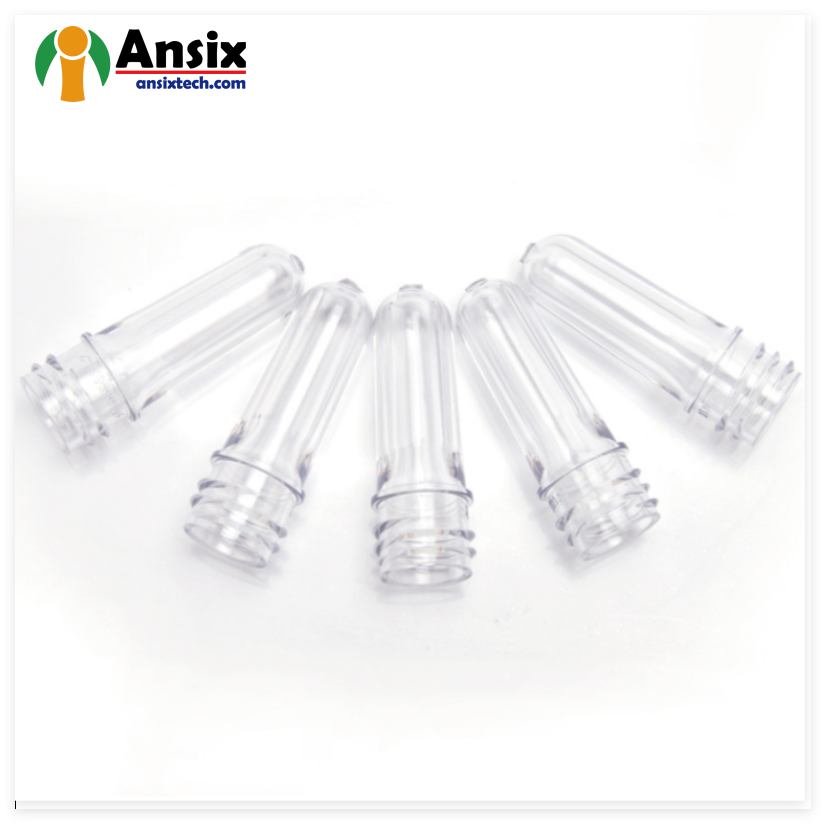


18-tooth bottle preform PET threaded plastic daily chemical product preform tube
FEATURES
Injection Molding Process
Once properly dried, the PET resin is fed into an injection molding machine equipped with a specialized PET screw featuring a high L/D ratio (typically 25:1) designed for uniform plasticization. The material is melted at temperatures ranging from 260°C to 295°C (with enhanced glass-fiber reinforced PET reaching 290-315°C) and injected into multi-cavity steel molds at pressures exceeding 5,000 psi. Preform injection molding differs from conventional injection molding in that the preform has a relatively thick wall section, requiring lower injection speeds to prevent material shearing and degradation. The injection stroke is typically completed within 4 seconds, with injection speed carefully optimized through mold flow analysis.
-
Mold Description
Product Materials:
PET PETG
Mold Material:
S136ESR
Number of Cavities:
16
Glue Feeding Method:
Hot runner
Cooling Method:
Water cooling
Molding Cycle
22.5s
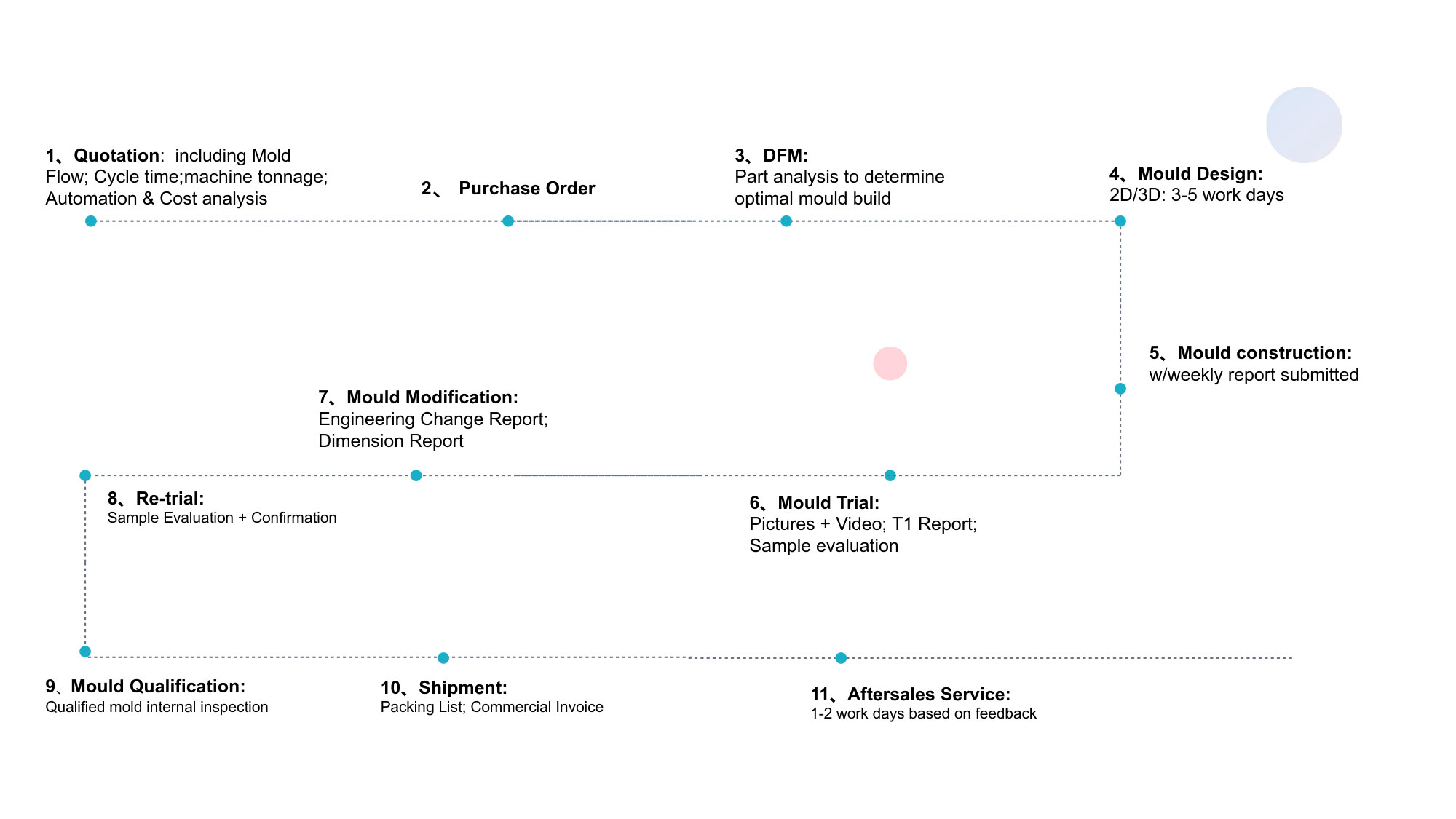
- The mold manufacturing process and product material selection
Hot Runner System and Cavity Configuration
PET preforms are almost exclusively molded using hot runner systems with valve gate technology. The hot runner maintains the PET in a molten state through heated channels that deliver the melted plastic from the injection unit to each cavity. The valve gate system provides precise injection weight control and material sealing at each nozzle. For the 18-tooth bottle preform, typical cavity configurations range from 48 to 144 cavities per mold, depending on production volume requirements and preform weight. Multi-cavity molds must ensure perfect flow balance across all cavities to produce uniform preform weights and dimensions.
Cooling and Ejection
After injection, the preform must be cooled below its crystallization temperature range. Cooling channels circulate water or coolant through passages machined into the core and cavity, extracting heat from the plastic. Post-mold cooling systems—using robotic take-out arms with cooling stations—allow preforms to continue cooling on secondary cores for one or more additional cycles while the next injection cycle begins, significantly improving production efficiency. Once fully cooled, ejector pins gently push the finished preforms from the mold, and they are conveyed to downstream handling systems.
-
Delivery Efficiency and Production Capacity
Ansix Tech delivers exceptional production throughput through optimized molding systems and process efficiency. Modern preform injection molding systems achieve cycle times as low as 4.5 seconds for lightweight preforms when configured with 144-cavity molds, enabling production rates exceeding 120,000 preforms per hour. For the 18-tooth bottle preform category, typical cycle times range from 12 to 18 seconds per full shot, with daily output reaching 345,600 pieces from a 72-cavity configuration on a 15-18 second cycle.
Delivery lead times depend on mold complexity and order quantity. Standard non-customized preforms can be delivered within 12-14 days from order confirmation, while custom molds typically require 25-45 days for design, manufacturing, and initial sampling. Ansix maintains modular inventory systems and automated packaging solutions that reduce cycle time, improve handling stability, and lower labor-associated costs throughout the fulfillment process.
Quality Assurance System
Dimensional Quality Control
The quality of a PET preform directly determines the integrity of the final blown bottle. Critical dimensions requiring strict control include neck finish criticals (thread outer diameter, inner diameter, tamper evident band, sealing land), overall length, wall thickness distribution, and concentricity. Neck finish dimensions must maintain tight CPK (process capability index) values, typically requiring CPK ≥ 1.33 for all critical features. Small dimensional drifts—especially in sealing land geometry—cause leaks more reliably than visual checks can detect.
In-Process and Final Inspection
Ansix implements a comprehensive quality control workflow that operates in two stages: immediate visual inspection immediately after injection molding and packing, followed by systematic spot-check sampling for remaining tests. Advanced automated inspection systems utilize multiple camera stations to examine preforms from every angle. A typical six-camera configuration inspects the top seal area (detecting dents, short shots, measuring inner diameter and ovality), the preform bottom (identifying crystallization, gate flash, holes), dimensional parameters (capturing 44 images during 360-degree rotation to measure neck diameters and support ring heights), polarized light with AI differentiation, neck inclusions and black spots, and body measurements including diameters, gate length, wall thickness, concentricity, and color variations. Optional modules for UV transmission, color analysis, and cavity identification provide full traceability back to individual mold cavities.
Statistical Process Control
Critical quality metrics are monitored through rigorous statistical process control:
Preform weight: maintained within ±0.2-0.5% tolerance across all cavities, with outliers signaling gating, hot-runner imbalance, or hold pressure issues
Moisture content: kept below 50 ppm (typically 20-40 ppm) to prevent hydrolysis and IV loss
Intrinsic viscosity: tracked to ±0.02 dL/g drift for stable stretch-blow behavior
Acetaldehyde: maintained under 10 ppm for taste-sensitive applications
Neck finish dimensions: Cp/Cpk focus on sealing land and thread geometry
Each mold undergoes a full dimensional report comparison before shipment, and the entire production process is documented with material certificates, process parameter logs, and inspection records.
Competitive Cost Control
Raw Material Optimization
Ansix achieves significant cost savings through strategic raw material management. PET resin is sourced in bulk quantities from certified suppliers, with negotiated pricing passed directly to customers. The use of recycled PET (rPET) content—up to 100% for many applications—substantially reduces material costs while supporting customer sustainability goals. Husky’s HyPET6e platform has demonstrated capability for running up to 100% rPET while maintaining production efficiency and consistent part quality. The integration of closed-loop color correction systems automatically adjusts masterbatch addition to address color variability in rPET preforms, minimizing waste and reducing material costs associated with off-spec product.
Process Efficiency and Yield
By optimizing cycle times through advanced cooling channel design and post-mold cooling systems, Ansix reduces per-part processing time, directly lowering the manufacturing cost per thousand pieces. Automated production lines reduce labor costs by 15-30% compared to manual workflows, while real-time data monitoring supports continuous process oversight and facilitates process transparency. The use of high-cavitation molds (up to 144 cavities) spreads fixed overhead costs across more units per cycle, dramatically reducing conversion cost per preform. Integrated automation solutions for packaging and material handling additionally reduce labor-associated costs while standardizing processes and improving reliability.
Energy Efficiency
Modern all-electric injection molding machines consume significantly less energy than hydraulic counterparts. Servo-driven components and adaptive pressure control ensure energy is used only where needed, reducing overall energy consumption while maintaining industry-leading cycle times. Integrated systems reduce resin changeover times, enabling greater operational flexibility and minimizing downtime costs.
Waste Reduction and Scrap Management
Preform weight must be held to tight tolerances; exceeding these tolerances by even 0.5% can increase resin consumption costs by thousands of dollars annually for high-volume production. Hot runner valve gate systems minimize material waste by eliminating cold runners. In-mold quality monitoring and automated rejection systems prevent defective preforms from proceeding to downstream operations, reducing scrap costs and protecting customer blow-molding lines from processing faulty preforms.
PART 2: Mold Manufacturing, Material Selection & Smart Manufacturing Value
Mold Manufacturing Excellence
Precision Machining Equipment
The foundation of high-quality preform molds lies in precision machining capabilities. Ansix employs five-axis high-speed machining centers capable of producing 0.002mm precision on complex curved surfaces, ensuring parting lines remain smooth and burr-free. Wire EDM (electrical discharge machining) with slow-wire technology enables creation of 0.03mm fine holes and narrow slots without causing thin-wall deformation. These capabilities translate directly to mold components that fit with micron-level accuracy, reducing flash, improving part aesthetics, and extending mold life.
Mold Steel Selection and Material Strategy
The choice of mold materials directly determines mold life, production efficiency, and final product quality. Core and cavity components must withstand high injection pressures (5,000+ psi), continuous thermal cycling (surface temperatures reaching 180-230°C during operation), and potential corrosion from processed materials. Common materials used in PET preform molds include:
S136 Stainless Steel: Provides excellent corrosion resistance and polishability, essential for food-grade and cosmetic packaging applications where clarity and surface finish are critical. S136 maintains dimensional stability under high-temperature conditions and resists bacterial growth, making it the preferred choice for high-clarity preforms.
H13 Tool Steel: Offers outstanding thermal fatigue resistance and high-temperature hardness. When nitrided (achieving surface hardness HV 1000+ with case depth 0.3-0.5mm), H13 provides exceptional wear resistance for high-cycle production. Threaded neck rings are often hard chrome plated (10-15μm) to further enhance wear resistance at the most critical sealing interface.
P20 Pre-Hardened Steel: Used for mold bases and structural plates where dimensional stability and cost-effectiveness are priorities. P20 handles high clamping pressures without premature wear while providing the stability needed to prevent mold deformation over millions of cycles.
Specialized Materials: Other steels used include 2344, 2343, 8407, SKD11/61/DC53, M340, 4Cr13, 9Cr18, NAK80, and H13 variants, selected based on specific application requirements for wear resistance, toughness, corrosion resistance, or polishability.
The philosophy of "selecting materials based on the part"—using mirror-finish stainless steel for core molding areas, specialized nitrided steel for precise threaded components, and pre-hardened steel for large mold plates—ensures optimal performance of each mold component while controlling overall manufacturing costs.
Mold Life and Performance Guarantees
Ansix delivers molds with guaranteed service life based on material selection and application specifics:
Standard applications (PET only): 1-2 million cycles minimum with proper maintenance
Glass-filled materials (GF-PET): 500,000 cycles minimum
Premium stainless steel molds: 5 million cycles with documented performance
Every mold is delivered with full material certification, heat treatment curves, and detailed component documentation.
Cooling System Design for High-Volume Production
The cooling system is perhaps the most critical element determining production cycle time and preform quality. Proper cooling channel design—using conformal cooling channels that follow the contour of the preform shape—reduces cycle times by 20-40% compared to conventional drilled cooling passages. Advanced mold designs incorporate multiple cooling zones with independent temperature control, maintaining temperature differences between core and cavity within 2°C to prevent warpage and shrinkage variation. The mold’s cooling circuits are pressure-tested at 0.3MPa for 30 seconds with leakage verified to less than 5ml/min using immersion testing methods to ensure system integrity before mold shipment.
Runner and Gate System Optimization
PET preform molds employ hot runner systems with valve gate technology as the industry standard. The hot runner maintains PET at precise temperature control along the entire material pathway, preventing premature solidification and ensuring consistent flow to each cavity. Key components include high-temperature-resistant alloys for hot nozzles (such as beryllium bronze for heat transfer efficiency) and precision ground valve pins for accurate gate sealing. Well-designed hot runner systems reduce material waste (no cold runner scrap), provide balanced filling across all cavities, and enable faster cycle times by eliminating runner cooling requirements.
Mold Flow Analysis (Moldflow DFM)
Before any metal is cut, Ansix performs comprehensive Moldflow analysis to predict and prevent potential molding defects. This simulation identifies optimal gate locations, predicts weld line and air trap positions, evaluates filling balance across multi-cavity molds, and verifies cooling channel effectiveness. The DFM (Design for Manufacturability) report provided to customers includes recommendations for draft angles, wall thickness optimization, gate location, and ejector pin mark placement. This upfront investment in simulation reduces trial-and-error iterations, accelerating time-to-production and reducing tooling modifications downstream.
Injection Molding Process Capabilities
Injection Molding Machine Fleet
Ansix operates injection molding machines ranging from 30 tons to 4,000 tons clamping force, covering preform sizes from lightweight 2-gram beverage applications to heavy-wall industrial containers. All machines feature all-electric servo drive systems delivering ±0.1% repeatable precision, ensuring every shot is identical to the last across millions of cycles. Dedicated PET injection units feature specialized screws with 25:1 L/D ratios for uniform plasticization and low-shear melt delivery, preventing material degradation that would affect IV retention and AA generation.
Process Parameter Optimization
Scientific injection molding principles guide the establishment of robust process windows. Using design of experiments (DOE) methodology, optimal parameter combinations are validated for each mold and material combination. Research has demonstrated that the optimum parameter combination for PET preforms includes melting temperature of 260°C, molding temperature of 70°C, holding pressure of 120 MPa, and cooling time of 15 seconds, with melting temperature identified as the most significant factor affecting shrinkage. Proper optimization can reduce shrinkage defects by 22.55% compared to non-optimized processes.
Smart Manufacturing Integration
Industry 4.0 and MES Integration
All injection molding machines are networked and integrated into a Manufacturing Execution System (MES) that locks all process parameters—temperature, pressure, injection speed, cooling time—with access restricted to authorized engineering personnel only. Each production batch undergoes first-article inspection and end-of-batch comparison to verify process stability. Real-time data monitoring supports continuous process oversight, enabling immediate detection and correction of process deviations.
Automated Quality Feedback Loops
Closed-loop quality systems integrate in-mold sensors with process control systems. When automated inspection systems detect dimensional drift or color deviation, feedback is automatically transmitted to the injection molding control system, which adjusts parameters in real-time to maintain product specifications without operator intervention. For color-critical applications, real-time color monitoring automatically adjusts masterbatch addition to maintain consistent L*a*b* values, color intensity, and yellowness control.
Robotic Automation
Post-mold handling is fully automated using servo-driven take-out robots with multi-station cooling jigs. Automated packaging systems standardize packaging processes, reduce cycle time, improve handling stability, and lower labor-associated costs. Integrated traceability systems using cavity identification modules allow defective preforms to be traced back to the specific mold cavity that produced them, enabling targeted maintenance and preventing recurrence.
Process Quality Control During Production
Real-Time Monitoring
Key process parameters are continuously monitored and recorded:
Melt temperature (accuracy ±1°C)
Injection pressure and holding pressure profiles
Cooling time and mold temperature distribution
Shot weight per cavity
Cycle time consistency
Dimensional Stability Control
The use of mold temperature controllers with zone-specific control maintains core and cavity temperature differences within 2°C, minimizing warpage and shrinkage variation. For critical applications, ultrasonic wall thickness sensors provide real-time wall distribution feedback, enabling closed-loop adjustment of holding pressure profiles to maintain consistent wall thickness across the entire production run.
Visual and Defect Inspection
In-line vision systems detect defects including splay, silver streaks (indicating moisture issues), black specs (contamination), short shots (incomplete filling), gate blush, bubbles, and surface blemishes. Polarized light inspection reveals stress concentrations from over-packing or uneven cooling, allowing process adjustments before these stresses affect downstream blow-molding performance. The inspection workflow operates continuously, providing real-time rejection of defective preforms and immediate alerts when defect rates exceed acceptable limits.
PART 3: Ansix Tech Manufacturing Excellence – 18-Tooth PET Preform Project
Executive Summary: Transforming Technical Capabilities into Customer Value
In the following comprehensive manufacturing solution for the 18-tooth bottle preform PET threaded plastic daily chemical product preform tube, Ansix Tech demonstrates how 28 years of specialized experience in injection mold manufacturing and injection molding translates directly into measurable value for customers. Rather than simply listing technical specifications, this document shows exactly how each capability solves specific customer problems, reduces costs, and minimizes production risks.
This 2,000+ word comprehensive manufacturing solution covers every critical aspect of the 18-tooth bottle preform project: from project initiation and DFM analysis through material selection, mold design engineering, precision manufacturing, process optimization, quality validation, and high-volume production delivery. Ansix Tech’s approach transforms what is traditionally viewed as a commodity component into a strategic advantage for daily chemical brands, offering reliability, consistency, and cost predictability that protect customer production schedules and brand reputation.
Section 1: Project Initiation – Establishing the Technical Foundation for Customer Success
Customer Challenge: Uncertain Production Feasibility
When daily chemical brands contemplate launching a new product requiring custom PET preform packaging, the greatest risk is the unknown: Will the preform design actually blow into a consistent bottle? Will it seal properly? Will the mold produce acceptable parts cost-effectively? What hidden costs will emerge after the mold is built?
Ansix Solution: Pre-Project DFM and Feasibility Assessment
Before any manufacturing commitment, Ansix engages in comprehensive Design for Manufacturability (DFM) analysis. This process begins with detailed evaluation of customer product specifications, including required bottle volume, neck finish dimensions, wall thickness distribution, material selection (virgin PET vs. rPET content requirements), and blow-molding process parameters.
The DFM report delivered to customers includes:
Moldability assessment: evaluation of the 18-tooth thread geometry for optimal filling, ejection, and cooling
Draft angle recommendations to ensure proper part ejection without deformation
Wall thickness optimization to balance material usage against bottle performance requirements
Gate location analysis to minimize visible gate marks while ensuring balanced filling
Ejector pin mark placement with clear indication of allowable mark locations and depths
Shrinkage compensation calculations based on specific PET grade and process conditions
By conducting this analysis before mold construction begins, Ansix prevents costly rework that would otherwise delay production. This value-added service saves customers 3-6 weeks of development time and eliminates the risk of discovering design flaws after $50,000+ of tooling investment is already committed.
Cost Savings Quantified
The upfront DFM approach prevents the industry’s most common failure mode: building a mold based on customer CAD data that cannot be manufactured efficiently, only to discover during trial runs that the design requires major modification. Customers save an average of
15,000−25,000 in mold modifications and 4-8 weeks of project delay by identifying and resolving manufacturability issues before steel is cut.
Section 2: Raw Material Selection and Material Science Expertise
Customer Challenge: Material Selection Uncertainty
Daily chemical products place demanding requirements on packaging materials. Shampoos and liquid soaps contain surfactants and preservatives that can attack certain polymers. Fragrances and essential oils can cause environmental stress cracking in improperly selected materials. The wrong material choice leads to bottle failure, product leakage, brand damage, and potential liability.
Ansix Solution: PET Material Expertise with Full Traceability
Polyethylene Terephthalate (PET) is the material of choice for these applications, offering exceptional clarity (allowing consumers to see the product), chemical resistance (compatible with a wide range of cosmetic and household formulations), lightweight properties (reducing shipping costs and carbon footprint), and full recyclability (supporting brand sustainability commitments). The 18-tooth preform is injection-molded from PET in its semi-finished state, then subsequently blow-molded into the final container shape through biaxial orientation, which improves clarity, stiffness, and gas barrier properties.
Ansix maintains a comprehensive material selection database covering:
PET Resin Specifications:
Intrinsic Viscosity (IV) range: 0.74-0.85 dL/g depending on application (lower IV for water bottles, higher IV for carbonated or hot-fill applications)
Acetaldehyde (AA) limits: <3 ppm for sensitive applications (fragrances, personal care)
Crystallinity: controlled through optimized cooling cycles
Recycled PET (rPET) Capabilities:
Process engineering for up to 100% rPET content
Advanced drying technology to manage rPET variability
Color monitoring and automatic correction systems for consistent appearance
Specialized PET Grades:
UV-blocking PET for light-sensitive products
Enhanced barrier PET for extended shelf life
Glass-filled PET (GF-PET) for improved mechanical properties
Risk Mitigation
Complete material traceability is provided for every production batch, including supplier certifications, lot numbers, test reports, and processing recommendations. For rPET applications, Ansix has validated process parameters that maintain consistent quality despite recycled material variability, including vacuum drying technology designed to improve contaminant removal and moisture control. This traceability protects customers against contamination incidents and regulatory compliance issues.
Cost Savings
Strategic resin sourcing through high-volume purchasing agreements, combined with optimized rPET utilization, reduces material costs by 8-15% compared to spot-market purchasing. The ability to run high percentages of rPET (often 30-50% or higher) further reduces material expenses while meeting sustainability targets.
Section 3: Mold Design Engineering – Precision Designed for High-Volume Production
Customer Challenge: Short Mold Life and Frequent Maintenance
The single biggest operational cost for daily chemical packaging is mold downtime for maintenance and repair. Each hour of unplanned downtime stops production lines, delays shipments, and erodes margins. Customers need molds that run reliably for millions of cycles with minimal intervention.
Ansix Solution: Robust Mold Architecture with Demonstrated Longevity
The 18-tooth bottle preform mold represents the culmination of decades of continuous improvement. Every design decision is made with the explicit goal of maximizing uptime and minimizing maintenance requirements.
Mold Construction Approach:
The mold consists of a robust P20 steel base plate structure that withstands millions of clamping cycles without deformation. The cores and cavities—the components in direct contact with molten PET—are manufactured from premium S136 stainless steel, selected for its exceptional combination of corrosion resistance, polishability, and dimensional stability. For the 18-tooth threaded neck ring, specialized nitrided steel with hard chrome plating (10-15μm thickness) is employed, as this region experiences the highest sliding wear during unscrewing operations.
Cooling System Engineering:
The mold incorporates advanced conformal cooling channels that follow the precise contours of the 18-tooth geometry, dramatically improving heat extraction compared to conventional straight-drilled cooling passages. Multiple independent cooling zones allow precise temperature control of core and cavity areas independently, maintaining temperature differentials within 2°C to prevent warpage. Computational fluid dynamics analysis validates cooling channel efficiency before manufacturing, ensuring production-ready cooling from first article.
Hot Runner System:
A precision hot runner system with valve gate technology delivers PET to each cavity with perfect balance. Individual temperature control zones along the entire PET pathway ensure uniform melt viscosity, resulting in consistent shot weights across all cavities. The hot runner’s design minimizes material stress and prevents thermal degradation, preserving IV and minimizing AA generation. High-quality heating elements and precision-ground valve pins provide reliable performance across millions of cycles.
Ejection System Design:
Precision-ground ejector pins are positioned to push the 18-tooth preform cleanly from the mold without damaging the threaded neck or marking visible surfaces. The ejector system’s design includes backup provisions to prevent pin bending or breakage, and complete spare sets of ejector pins are provided with each mold.
Value Delivered: Extended Mold Life and Reduced Downtime
Standard mold life is guaranteed at 1-2 million cycles for PET-only applications, with documented performance extending well beyond for customers following recommended maintenance schedules. The robust design reduces maintenance frequency by 40-60% compared to conventional mold construction. Ansix molds are built to be 印钞机 (money printers), not just tools—machines that generate profit day after day without interruption.
Section 4: Precision Mold Manufacturing – The Processing Core
Customer Challenge: Poor Mating Fit Leading to Flash and Part Inconsistency
Poor mold machining precision results in flash (excess plastic leaking between mold halves) that must be manually trimmed, increasing labor costs and potentially damaging preforms. Imprecise core-cavity alignment produces variable wall thickness, leading to inconsistent bottle blow-up and increased scrap rates.
Ansix Solution: Micron-Level Precision Manufacturing
The entire mold manufacturing process is executed on precision equipment controlled to micron-level tolerances. Five-axis CNC machining centers achieve surface finishes requiring no post-polishing on complex 18-tooth thread profiles. The slow-wire EDM process creates ejection pin holes and cooling channels with positioning accuracy of ±0.005mm, ensuring perfect alignment between core and cavity. Mold components are ground to final dimensions with tolerances maintained at ±0.005mm for critical features.
Specific Processing Capabilities:
Complex curved surface machining at 0.002mm precision
Micro-hole drilling (0.03mm diameter) for venting and cooling
Fine surface finishes (Ra ≤ 0.4μm for cavity surfaces)
Mirror finishes (Ra ≤ 0.05μm) for transparent preform applications
Partnering Ecosystem
For mold manufacturing, Ansix collaborates with SINO MOULD, a globally recognized mold maker with decades of PET preform mold specialization. This partnership combines Ansix’s production expertise with SINO MOULD’s precision manufacturing capabilities, delivering molds with documented critical dimension tolerances of 0.005mm, multi-cavity configurations from 8 to 144 cavities, and interchangeable neck insert systems enabling rapid product changeovers without complete mold replacement.
Value Delivered: Flash-Free Production
The micron-precision assembly guarantees that flash is maintained below 0.03mm—thin enough that no manual trimming is required before blow-molding. Customers eliminate post-processing labor entirely, saving
0.005
−
0.005−0.01 per preform in handling costs and removing a quality variable from the production process.
Section 5: Mold Processing Workflow and Rapid Delivery
Customer Challenge: Long Mold Delivery Times Delaying Product Launches
Every week of mold delivery delay postpones product launch and revenue generation. Customers face intense time-to-market pressure, especially in fast-moving consumer goods categories where seasonal launches and competitive windows are tight.
Ansix Solution: Integrated Manufacturing Workflow with Accelerated Delivery
The mold manufacturing workflow proceeds through clearly defined stages, each with quality gates ensuring no step proceeds until the previous step meets specifications:
Step 1 – DFM Review and Design Finalization: Engineering collaboration with customer to review moldability, optimize design, and finalize specifications. (3-7 days)
Step 2 – CAD/CAM Programming and CNC Machining: Precision machining of mold plates, cores, and cavities. (10-20 days depending on complexity)
Step 3 – Wire EDM and Fine Finishing: Creation of cooling channels, ejector pin holes, and fine surface finishing. (5-10 days)
Step 4 – Assembly and Fitting: Precise assembly of all components, ensuring proper fit and function. (3-5 days)
Step 5 – T0 Trial and Sample Production: Initial molding trials to validate performance, with first samples delivered to customer. (2-3 days)
Step 6 – Iterative Optimization: T1, T2, T3 trials as needed based on customer feedback and measurement results. (1-2 weeks total)
Total Lead Times:
Simple single-cavity prototypes: 10 days
Standard multi-cavity production molds: 25-45 days
Expedited service: 20 days (requires compressed design phase but no quality validation steps are skipped)
Value Delivered: Shorter Time-to-Market
Standard 25-45 day delivery for multi-cavity production molds enables customers to launch new products 3-6 weeks faster than industry averages. Every saved week represents earlier revenue generation—for a high-volume daily chemical product, this can amount to $100,000+ in incremental revenue per week of earlier market entry.
Section 6: Injection Molding Process Optimization – Efficiency and Cost Control
Customer Challenge: High Unit Costs and Long Cycle Times
In high-volume production, every fraction of a second of cycle time translates directly into cost. A 15-second cycle time vs. a 12-second cycle time reduces annual capacity by 20% and increases per-unit manufacturing cost proportionally.
Ansix Solution: Scientifically Optimized Process Parameters
Ansix applies rigorous scientific molding principles to establish robust, repeatable processes that minimize cycle time while maintaining quality.
Optimized Process Parameters (Validated for 18-Tooth Preform):
Parameter Optimized Setting Impact on Quality/Cost
Melting temperature 260-275°C Minimizes IV loss and AA generation
Mold temperature 70°C ±2°C Controls crystallization and clarity
Injection pressure 120 MPa holding Reduces shrinkage by 22.5%
Cooling time 12-15 seconds Balanced against cycle efficiency
Cycle time total 12-18 seconds 3,000-5,000+ parts per hour per cavity
Research has demonstrated that this optimized combination—with melting temperature as the most significant factor—can reduce shrinkage defects by 22.55% compared to non-optimized processes, directly improving dimensional stability and reducing scrap.
Advanced Cooling Efficiency:
Post-mold cooling technology reduces effective cooling time by 30-40%. Preforms are extracted by servo robot and transferred to cooling stations where they continue cooling on secondary cooling cores while the next injection cycle begins. This approach allows injection molding to proceed without waiting for complete preform cooling, fundamentally decoupling cooling time from cycle time and maximizing machine utilization.
Multi-Cavity Efficiency:
High-cavitation molds (48, 72, 96, or 144 cavities) spread overhead costs across more parts per cycle. A 72-cavity mold running an 18-second cycle produces 345,600 preforms daily—over 10 million units monthly. This scale dramatically reduces per-unit fixed costs.
Value Delivered: Lower Per-Unit Cost
Optimized cycle times and high-cavitation configurations reduce per-unit conversion costs by 25-40% compared to sub-optimal setups. For a customer requiring 10 million preforms annually, this represents 50,000−100,000+ in annual manufacturing cost savings.
Section 7: Quality Validation and Process Control – Eliminating Downstream Risk
Customer Challenge: Downside Risk of Off-Spec Preforms
The true cost of poor preform quality is not visible at the preform inspection station—it appears downstream when preforms blow into bottles with thin spots, leaks, inconsistent volumes, or burst failures. By the time defects are discovered, thousands of dollars of subsequent processing have already been wasted.
Ansix Solution: Comprehensive Quality Management System
Incoming Material Validation:
Every PET resin lot is tested for IV, moisture content, and AA before production release. Material certificates are maintained for full traceability. For rPET applications, additional testing ensures consistent quality despite recycled content variability.
In-Process Monitoring:
All injection molding machines are connected to MES, with process parameters locked and accessible only to authorized engineers. Real-time monitoring tracks:
Melt temperature across heating zones (±1°C accuracy)
Injection pressure profile and peak pressures
Holding pressure timing and magnitude
Cooling time and mold temperature distribution
Cycle time consistency
First Article and Ongoing Inspection:
A comprehensive preform inspection protocol includes:
Dimensional verification: neck finish criticals (thread OD/ID, tamper band, sealing land), overall length, wall thickness distribution, concentricity using precision gauges and CMM
Visual inspection: gate blush, splay, black specs, bubbles, short shots under controlled lighting
Polarized light inspection for stress/birefringence indicating over-packing or uneven cooling
Weight verification: ±0.2-0.5% tolerance per cavity confirms shot consistency and flow balance
Moisture verification: keeping dried pellets at 20-40 ppm to prevent hydrolysis
Automated Inspection Integration:
For high-volume production, automated vision inspection systems provide 100% inspection with:
Six camera stations examining each preform from every angle
44 images captured during 360-degree rotation for complete dimensional analysis
Real-time cavity identification linking defects to specific mold cavities
Automatic rejection of non-conforming preforms
Value Delivered: Risk Mitigation
By validating quality at every stage and providing 100% automated inspection, Ansix eliminates the risk of customers receiving off-spec preforms that would cause downstream blow-molding failures. This protection saves customers
0.02−0.05 per preform in avoided scrap, rework, and production downtime.
Section 8: Process Validation Through Pilot Production
Customer Challenge: Scaling from Prototype to Production
Moving from successful T0 samples to consistent high-volume production is where many projects fail. Process parameters established on sample quantities may not scale to sustained production.
Ansix Solution: Structured Pilot Production Verification
Ansix Tech Co Ltd
If you have any plans related to 18-tooth bottle preform PET threaded plastic daily chemical product preform tube , you can contact us at any time. We will turn your ideas into reality, let you realize your dreams, and obtain large orders from the market. Our contact information is info@ansixtech.com. Or contact our CTO, mail: stephen@ansixtech.com
#www.ansixtech.com #ansixtech.com #18-tooth bottle preform PET threaded plastic daily chemical product preform tube #18-tooth bottle preform PET threaded plastic daily chemical product preform tube #18-tooth bottle preform PET threaded plastic daily chemical product preform tube injection molding companies #18-tooth bottle preform PET threaded plastic daily chemical product preform tube Canopy Mold injection mold companies #Ansix #Ansix moulds #Ansix china #Ansix tech china #Ansix tech company #Ansix facotry #18-tooth bottle preform PET threaded plastic daily chemical product preform tube injection molding #18-tooth bottle preform PET threaded plastic daily chemical product preform tube injection tools #18-tooth bottle preform PET threaded plastic daily chemical product preform tube injection moulds #18-tooth bottle preform PET threaded plastic daily chemical product preform tube plastic mould #18-tooth bottle preform PET threaded plastic daily chemical product preform tube plastic tools #Ansix Tech #Ansix molds #Ansix injection molding #Ansix mold factory #injection molding 18-tooth bottle preform PET threaded plastic daily chemical product preform tube #Ansix mold factory #18-tooth bottle preform PET threaded plastic daily chemical product preform tube china #18-tooth bottle preform PET threaded plastic daily chemical product preform tube molds #injection factory #18-tooth bottle preform PET threaded plastic daily chemical product preform tube injection molding #18-tooth bottle preform PET threaded plastic daily chemical product preform tube injection molding factory #injection molding company #18-tooth bottle preform PET threaded plastic daily chemical product preform tube injection mold companies #18-tooth bottle preform PET threaded plastic daily chemical product preform tube#18-tooth bottle preform PET threaded plastic daily chemical product preform tube mold limited #Ansix mold china #Ansix companies #Ansix company China #18-tooth bottle preform PET threaded plastic daily chemical product preform tube facotry #Ansix Tech #Ansix Tech mould #18-tooth bottle preform PET threaded plastic daily chemical product preform tube injection moulding #injection moulding company #Ansix 18-tooth bottle preform PET threaded plastic daily chemical product preform tube parts injection mold companies #medical injection molding companieschina #18-tooth bottle preform PET threaded plastic daily chemical product preform tube china factory #Ansix moulding companies #Ansix molding company #18-tooth bottle preform PET threaded plastic daily chemical product preform tube injection moulding facotry #Ansix Tech mold #18-tooth bottle preform PET threaded plastic daily chemical product preform tube mould #18-tooth bottle preform PET threaded plastic daily chemical product preform tube plastic injection molding #ansix plastic mold #Mold manufacturing #18-tooth bottle preform PET threaded plastic daily chemical product preform tube parts manufacturing #18-tooth bottle preform PET threaded plastic daily chemical product preform tube plastic parts factory #18-tooth bottle preform PET threaded plastic daily chemical product preform tube injection parts mold #18-tooth bottle preform PET threaded plastic daily chemical product preform tube PRECISION MANUFACTURING #18-tooth bottle preform PET threaded plastic daily chemical product preform tube #China mold #18-tooth bottle preform PET threaded plastic daily chemical product preform tube injection moulding china #18-tooth bottle preform PET threaded plastic daily chemical product preform tube mould china #china precision mold #mold in china #18-tooth bottle preform PET threaded plastic daily chemical product preform tube mold china #Precision molds #High-precision molds #18-tooth bottle preform PET threaded plastic daily chemical product preform tube #Injection molds #18-tooth bottle preform PET threaded plastic daily chemical product preform tube Factory #18-tooth bottle preform PET threaded plastic daily chemical product preform tube Company #Super Large Injection Mold Factory #Large Tonnage Injection Molding Factory #18-tooth bottle preform PET threaded plastic daily chemical product preform tube Company #18-tooth bottle preform PET threaded plastic daily chemical product preform tube Factory #2800T Injection Molding Factory #3000 Ton Injection Molding #4500 Ton Injection Molding Factory #Large Mold Injection Molding #Large Plastic Mold Injection Molding Factory #Large Injection Mold Manufacturer #Plastic Mold Factory #Injection Mold #Plastic Mold