



55mm Neck 285 grams 16L bottle preform drinking water barrel food grade PET tube preform bottle
FEATURES
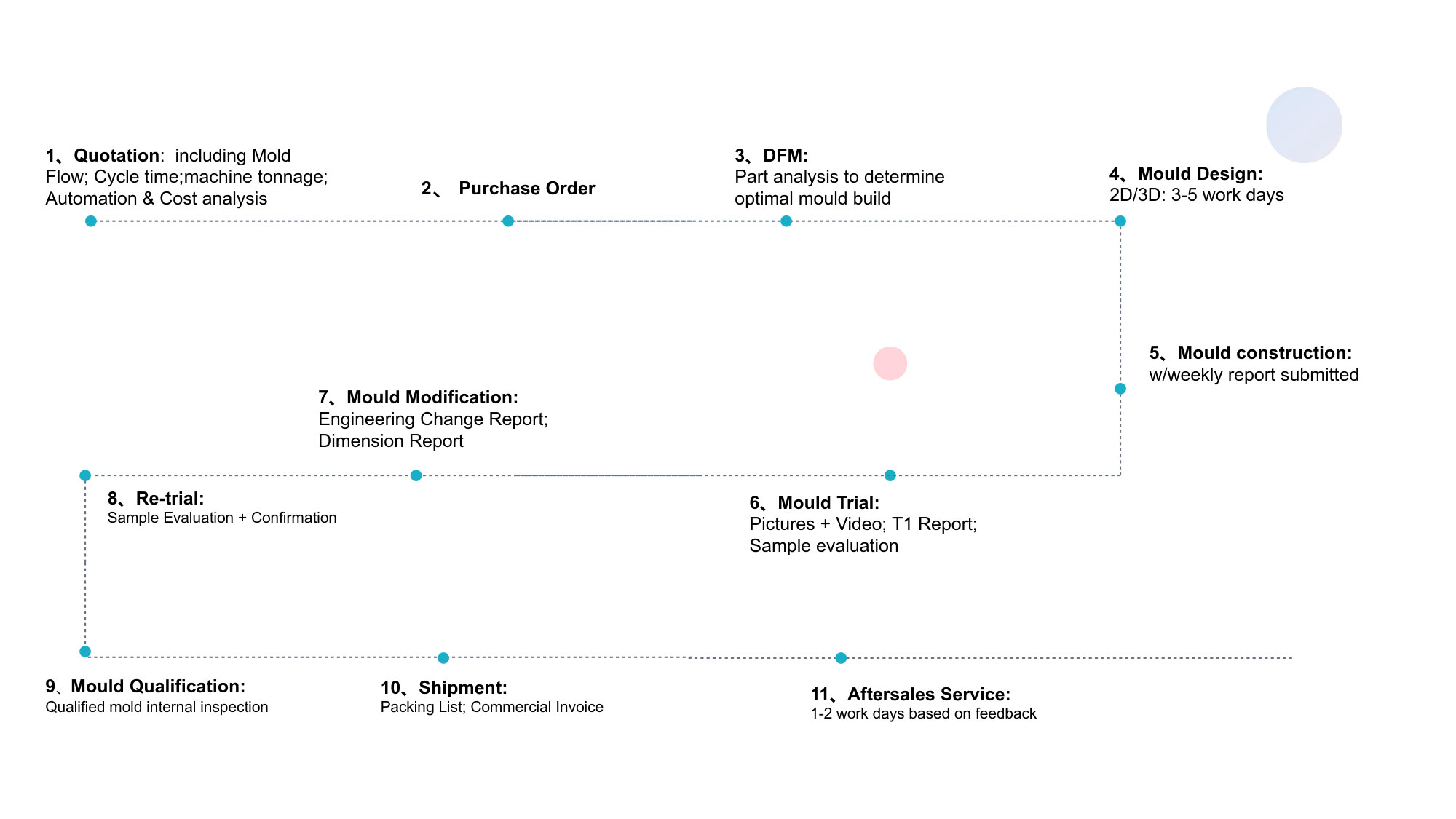
Key Material Advantages:
Food-Grade Certification: Full compliance with FDA 21 CFR Section 177.1630, EU Regulation 10/2011, and RoHS Directive 2002/95/EC
Zero Chemical Leaching: BPA-free formulation ensuring safe contact with potable water
High Transparency: Exceptional optical clarity for product visibility and brand presentation
High Toughness: Enhanced impact resistance preventing barrel rupture during handling and transport
3. Production Process Description
The manufacturing process for the 55mm Neck 285g PET preform follows a rigorously controlled injection molding protocol:
3.1 Raw Material Preparation:
PET resin is dried using dehumidifying dryers at 165–175°C for 4–6 hours to reduce moisture content below 0.02%. This critical step prevents hydrolysis-induced IV degradation that would compromise mechanical properties. The dew point is maintained below -30°C to ensure absolute dryness.
-
Mold Description
Product Materials:
PET PETG
Mold Material:
S136ESR
Number of Cavities:
12
Glue Feeding Method:
Hot runner
Cooling Method:
Water cooling
Molding Cycle
22.5s
- The mold manufacturing process and product material selection
Injection Molding:
The dried PET resin is melted in a precision injection molding machine with barrel temperatures progressively increasing from 250–270°C at the rear to 270–290°C at the nozzle. The injection phase is completed within 8 seconds, followed by a holding pressure stage of 4.0MPa to ensure uniform density and compensate for material shrinkage.
3.3 Cooling and Solidification:
Cooling accounts for 40–60% of the total molding cycle. The mold is maintained at 15–30°C using chilled water circulation. Total cycle time is optimized to approximately 27–30 seconds, with cooling time of 16–20 seconds depending on preform wall thickness. For a 285g preform with thicker wall sections, cooling time may extend toward the 20-second range to achieve proper demolding temperature.
3.4 Quality Inspection:
Each production batch undergoes dimensional verification, visual inspection for surface defects, and IV retention testing to confirm process stability.
-
Delivery Efficiency
Our production system delivers exceptional lead time performance through:
Strategic Production Bases: Four manufacturing facilities in China and Vietnam with a combined floor area exceeding 200,000 square meters
Large-Scale Capacity: 260 injection molding machines with clamping forces ranging from 30 tons to 2,800 tons, capable of running 24/7 continuous production
Standard Lead Time: 5–8 days for minimum order quantity after prepayment confirmation
Flexible Scalability: Production capacity adaptable to seasonal demand fluctuations without compromising quality or delivery commitments
5. Quality Assurance Framework
Quality control is built on a multi-layered system exceeding international standards:
5.1 Certification Compliance:
ISO 9001 (Quality Management)
ISO 13485 (Medical Devices)
IATF 16949 (Automotive Quality)
ISO 14001 (Environmental Management)
BSCI (Social Compliance)
5.2 Process Quality Control:
In-process monitoring of critical parameters (temperature, pressure, cycle time)
Statistical Process Control (SPC) with real-time data collection
Cpk capability analysis ensuring key dimensions achieve Cpk ≥ 1.33
100% visual inspection for surface defects (flow marks, bubbles, contamination)
5.3 Laboratory Testing:
Dimensional verification using precision measurement equipment
IV testing for molecular weight retention
Blow-molding trials to validate preform-to-barrel conversion performance
Drop testing and pressure testing on finished barrels
6. Competitive Cost Control Advantages
Cost leadership is achieved through systematic optimization across multiple dimensions:
6.1 Material Cost Optimization:
Virgin PET resin procurement at competitive market pricing through long-term supplier partnerships
Precise weight control eliminating material overuse (285g ±1g tolerance)
Regrind management system allowing controlled reintroduction of production waste without quality degradation
6.2 Process Efficiency:
Cycle time optimization reducing per-unit machine hour costs
Hot runner systems eliminating cold runner waste (reducing material consumption by 15–25% compared to cold runner systems)
High-cavity molds (up to 96 cavities) maximizing output per machine hour
6.3 Operational Efficiency:
Automated material handling and robotic part take-out systems reducing labor costs
Centralized MES (Manufacturing Execution System) for real-time production monitoring and optimization
Economies of scale through high-volume production across multiple facilities
6.4 Preventive Maintenance:
Predictive maintenance schedules minimizing unplanned downtime
Standardized tooling and consumables across all production bases reducing inventory costs
Part Two: Core Customer Value – Mold Manufacturing, Material Selection, Smart Manufacturing, and Process Quality Assurance
1. Hard Power Infrastructure: Equipment Foundation for Reliability
Customers require confidence that their supplier operates on a foundation of advanced manufacturing technology. Ansix Tech's equipment infrastructure is designed to deliver this confidence through measurable precision and reliability.
Mold Processing Equipment:
Ansix Tech is equipped with five-axis high-speed machining centers capable of machining complex curved surfaces to 0.002mm precision. This capability ensures that the parting lines on the finished preform mold are smooth and free from burrs, directly translating to flash-free preforms that require no secondary deflashing operations. For intricate features such as vent slots and cooling channels, we employ slow-speed wire EDM (Electrical Discharge Machining), which can machine micro-slots as narrow as 0.03mm without warping or distortion of thin-wall sections. This prevents uneven cooling and extends mold service life.
Injection Molding Machine Fleet:
Our 260 injection molding machines span a clamping force range from 30 tons to 2,800 tons, covering the entire product size spectrum from micro-precision parts to large-format industrial components. The fleet includes all-electric servo-driven machines from Japan‘s Fanuc, Sumitomo, and Toshiba, as well as Germany’s Arburg, delivering stable repeatable accuracy of ±0.1% shot-to-shot consistency. This means that when producing the 285g 55mm neck preform, every single cavity in a 96-cavity mold produces identical preform weight and dimensions, regardless of whether it is the first shot of the day or the 500,000th shot.
Inspection and Metrology Equipment:
Every mold shipped undergoes a comprehensive dimensional inspection using coordinate measuring machines (CMM) and optical imaging systems. The result is a complete dimensional report with key dimension Cpk values guaranteed at 1.33 or higher. This documentation provides customers with objective, traceable evidence of quality before the mold ever reaches their production floor.
2. Mold Manufacturing Core Competencies: Life, Precision, and Delivery
Mold quality is measured not in years but in millions of cycles. Customers need absolute clarity on what their investment delivers.
Mold Life Expectancy:
Using premium tool steel grades—S136 for corrosion-resistant applications requiring Class A surface finishes below Ra 0.1μm, 2344 (German standard H13) for high-temperature performance, NAK80 for mirror-finish preforms, and H13 for high-volume production—Ansix Tech guarantees mold life of 500,000 shots under glass-filled material conditions and 1,000,000 shots for standard PET applications. The material grade is selected based on a cost-benefit analysis: while S136 carries a higher initial material cost of
12–15perkgcomparedtoP20at3–5 per kg, the per-part cost over the mold‘s life is significantly lower—0.09perpartforS136versus0.36 per part for P20 over a 500,000-shot mold life. ROI becomes positive after just 125,000 units.
Achievable Tolerances:
Standard structural components: ±0.05mm
Precision gear and medical components: ±0.005mm
Neck finish critical dimensions: ±0.1mm (ensuring proper cap sealing)
All molds are accompanied by material certification reports and heat treatment curves, providing full traceability of metallurgical processing.
Mold Types Offered:
Hot Runner Systems: Eliminate cold runner waste, reducing material consumption by 15–25% and improving cycle efficiency. For PET applications, hot runner temperatures are maintained at 260–280°C with temperature control accuracy of ±5°C.
Stack Molds: Double production output without increasing machine footprint
High-Cavity Molds: Up to 96 cavities per mold for maximum throughput
Mirror-Finish Molds: Surface roughness Ra < 0.05μm for crystal-clear transparent preforms
Gate and Runner Optimization:
Every mold design begins with comprehensive mold flow analysis (CAE simulation) using tools such as Moldex3D. This analysis predicts weld line locations, air trap positions, and filling imbalances before any steel is cut. The result is optimized gate location and quantity to ensure balanced cavity filling, eliminating short shots and dimensional variation.
Delivery Standards:
Standard simple molds: 10–15 days
Medium-complexity molds: 25–45 days
Expedited delivery: Available with compressed lead times (validated by skipping no verification steps)
3. Injection Molding Process Control: Eliminating Customer Quality Anxiety
Customers consistently worry about sink marks, flash, dimensional instability, and batch-to-batch color variation. Ansix Tech eliminates these concerns through systematic process control.
Standardized Process Management:
All injection molding machines are networked and integrated with a Manufacturing Execution System (MES). Process parameters—including temperature zones, injection pressure, holding pressure, back pressure, screw speed, and cycle timing—are locked within the MES and can only be adjusted by authorized engineering personnel. Every production batch begins with first-article inspection and ends with last-article comparison, ensuring that the first part of a run is identical to the last.
Dimensional Stability Control:
Molds are equipped with zone-controlled mold temperature controllers, maintaining core and cavity temperature differentials within 2°C. This level of thermal control minimizes warpage and distortion. In validation testing for similar bottle preform applications, key dimensional parameters such as neck finish diameter and preform length exhibited fluctuations of less than 0.02mm across three consecutive production days.
Surface Quality Standards:
Transparent preforms: Bubble-free and flow-mark-free with >90% optical transmission
Colored preforms: Consistent color distribution with no color streaks
Surface roughness for high-gloss applications: Ra ≤ 0.2μm
Special Material Capabilities:
Ansix Tech has extensive production experience with a wide range of engineering thermoplastics, including PC/ABS, PC (polycarbonate), PPS+40%GF, PEEK (operating continuously up to 250°C), PTFE, PFA, PA6+GF30, PBT, PEI, PPS, LCP, and liquid silicone rubber (LSR). For applications requiring specific regulatory compliance, we produce materials meeting UL94 V-0 flame ratings and provide UV testing certification for up to 3,000 hours without discoloration.
4. Full-Process Service: Reducing Customer Management Costs
The most overlooked aspect of supplier selection is the hidden cost of managing the supplier relationship. Ansix Tech‘s full-process service model eliminates these hidden costs.
Early Engineering Intervention (DFM Report):
Before any mold manufacturing commitment, Ansix Tech provides a comprehensive Design for Manufacturability (DFM) report. This report includes draft angle recommendations, wall thickness optimization studies, gate location selection, and ejector pin mark placement allowances. The DFM identifies potential production issues before tooling begins, saving customers from the costly cycle of opening molds only to discover structural designs that cannot be injection molded.
Trial Molding and Sample Approval:
Ansix Tech provides T0 through T3 trial samples, accompanied by progressive improvement reports following each trial iteration. The company’s ability to rapidly exchange mold inserts allows for testing of multiple design variations without the cost and lead time of completely remaking the mold.
Pre-Production Validation:
Before full-scale mass production, Ansix Tech offers a 100- to 500-shot pilot production run. This pilot run generates statistically valid yield data and Cpk analysis, confirming process stability before committing to full production volumes. Customers receive objective data demonstrating that the production process is capable and under control.
Maintenance and Spare Parts:
Every mold is delivered with a complete set of spare wear parts—including ejector pins, core pins, and cavity inserts—enabling in-house maintenance without emergency supplier intervention. Ansix Tech provides mold maintenance services every 200,000 cycles and offers lifetime repair at cost-plus pricing. A three-year structural warranty on the mold (excluding normal wear items) provides long-term production security.
5. Differentiated Commitment: Converting Customer Pain Points into Solutions
Rather than simply claiming superiority, Ansix Tech provides explicit, measurable solutions to the industry’s most common complaints.
Common Customer Complaint Ansix Tech's Measurable Solution
“Molds constantly need repair, disrupting my production schedule.” Each mold undergoes 2,000-shot validation testing before shipment, accompanied by a wear profile report. A three-year structural warranty (excluding normal consumables) provides production security.
“Flash requires secondary deflashing, adding labor cost.” Parting line fit precision is held to 0.005mm. Self-locking clamp force compensation ensures flash is contained below 0.03mm per batch, eliminating manual deflashing operations.
“Dimensions vary from batch to batch.” Ultrasonic wall thickness sensors provide real-time feedback to the injection molding process. Closed-loop pressure control adjusts holding pressure compensation automatically.
“Mold repair lead times shut down my production.” In-house electrode manufacturing and EDM (Electrical Discharge Machining) workshops enable mold modifications and repairs without leaving the facility. Routine weld repair and insert replacement is completed within 24 hours.
6. Ansix Tech's Standard 55mm Neck PET Preform Weight Offerings
Ansix Tech offers a comprehensive range of standard 55mm neck PET preform weights suitable for drinking water barrel applications. Industry-standard offerings at the 55mm snap-on configuration include weights from 180g to 800g, with common intermediate options including 180g, 200g, 250g, 280g, 300g, 350g, 380g, 385g, 400g, 430g, 560g, 600g, 620g, 630g, 640g, 650g, 660g, 670g, 680g, 700g, 730g, 750g, 780g, and 800g.
For drinking water barrels specifically, the 350g preform is suitable for 12–15 liter bottles, the 385g preform for 15–18 liter bottles, and heavier 415g to 730g preforms for bottles up to 19–20 liters. The 285g specification represents an optimized lightweight solution for 16-liter applications, balancing material economy with structural integrity.
All standard weights are available in transparent or custom-colored formulations, with customization available for specific neck finishes (snap-on or threaded) and support ring configurations to meet customer application requirements.
Part Three: Comprehensive Manufacturing Solution for 55mm Neck 285g 16L PET Preform – Ansix Tech Project Execution Plan
Project Overview and Customer Value Translation Framework
This project proposal details the complete manufacturing solution for the 55mm Neck 285g 16L PET Drinking Water Barrel Preform, with a fundamental emphasis on translating every technical specification and process decision into measurable customer value. Ansix Tech operates on the principle that a mold is not merely a block of steel—it is a customer‘s revenue-generating asset that must deliver reliability, low maintenance, and consistent output from the first production day through millions of cycles. Every engineering decision described below is anchored to this value proposition: reducing customer costs, eliminating production risks, and maximizing equipment uptime.
Section One: Hard Power Infrastructure – Building Customer Trust Through Equipment Excellence
1.1 Mold Processing Equipment and Customer Value Translation
Five-Axis High-Speed Machining Centers:
Ansix Tech’s five-axis CNC machining centers achieve contouring accuracy of 0.002mm. For the 55mm neck preform mold, this capability ensures that the parting line between the cavity plate and core plate is machined with microscopic precision. Customer Value: A perfectly mated parting line produces preforms free from flash. Eliminating flash removes the need for costly manual deflashing operations, reduces material waste, and prevents the secondary finishing work that typically adds 0.005–0.010 per part in labor costs.
Slow-Speed Wire EDM:
The mold design requires micro-venting slots of 0.03mm width to allow trapped air to escape during high-speed injection. Standard machining methods cannot achieve this feature without burr formation or structural weakening. Ansix Tech‘s slow-speed wire EDM machines cut these features with zero burr and perfect edge quality. Customer Value: Proper venting eliminates burn marks and short shots caused by trapped air compression. The result is a first-pass yield increase of 2–3%, directly improving effective production capacity and reducing scrap costs.
Coordinate Measuring Machines (CMM) and Optical Inspection:
Every mold cavity and core is measured on a CMM after final machining, producing a complete dimensional verification report. Key dimensions are analyzed for process capability with Cpk targets of 1.33 or higher. Customer Value: Customers receive objective, third-party-verifiable documentation proving that their mold meets dimensional specifications. This eliminates disputes over dimensional non-conformance and provides traceable quality records for ISO audits and customer certifications.
1.2 Injection Molding Machine Fleet and Production Capability
Ansix Tech operates 260 injection molding machines across four production bases totaling 200,000 square meters. The machine fleet spans 30 tons to 2,800 tons clamping force, providing coverage from ultra-precise micro components to large industrial parts. For the 55mm neck 285g preform, machines in the 280-ton to 500-ton range are utilized, with multi-cavity configurations maximizing output.
Customer Value – Machine Capability:
All-Electric Servo Drives (Fanuc, Sumitomo, Toshiba, Engel, Arburg): Shot-to-shot weight repeatability of ±0.1% ensures that each of the 96 cavities produces a 285g preform within a ±1g tolerance window. Customer Benefit: Customers receive guaranteed material consumption predictability and can accurately calculate raw material requirements without over-ordering safety stock. Variability of ±1g rather than ±3g saves approximately 0.5% in annual material costs—for a high-volume producer operating at 10 million preforms annually, this translates to material savings of 15,000–20,000 per year.
Hydraulic Machines (Haitian, Victor Taichung): For high-cavity, high-clamp-force applications, these machines provide robust, continuous-duty performance. Customer Benefit: Redundant machine capacity across two technology platforms ensures production continuity even during maintenance periods.
Specialty Machines (Arburg LSR two-color injection): Capability to produce overmolded sealing features and two-material components. Customer Benefit: For customers requiring integrated sealing solutions, Ansix Tech can produce finished components in a single operation, eliminating secondary assembly costs.
1.3 MES Integration and Real-Time Process Control
All injection molding machines are connected to a centralized Manufacturing Execution System (MES). Process parameters—including barrel temperatures (250–290°C), injection pressure (5.0MPa), holding pressure (4.0MPa), back pressure (0.5MPa), screw speed (150rpm), and cooling time (16–20 seconds)—are locked within the MES and can only be modified by engineering personnel with documented change authorization. Real-time dashboards display production metrics including cycle time, yield rate, reject rate, and machine utilization.
Customer Value – MES Benefits:
Traceability: Every preform produced is traceable to the machine, cavity, raw material batch, and operator shift. In the event of a quality issue, affected product can be isolated and contained within minutes rather than days.
Process Stability: Automated data collection captures process trends before they become quality excursions. The system triggers alerts when process parameters drift beyond control limits, enabling proactive intervention before defective parts are produced.
Continuous Improvement: Production data is aggregated for statistical analysis, identifying optimization opportunities that reduce cycle time, improve yield, or reduce energy consumption.
Section Two: Mold Manufacturing Core Competencies – Translating Technical Specifications into Performance Guarantees
2.1 Material Selection Framework: Balancing Performance and Total Cost of Ownership
The mold material selection process follows a rigorous cost-benefit analysis comparing initial investment against long-term operating cost. For the 55mm neck 285g preform mold, high-volume production exceeding 500,000 cycles requires premium tool steels capable of maintaining dimensional accuracy under continuous operation.
Recommended Mold Steel Grades for This Application:
Material Grade Hardness (HRC) Corrosion Resistance Optimal Application Customer Value
S136 (1.2083) 48–52 Extreme Transparent preforms, medical-grade applications, corrosive materials Achieves Class A mirror finish (Ra < 0.1μm) essential for crystal-clear preforms. Per-part cost over mold life: $0.09 over 500,000 cycles. ROI positive after 125,000 units.
2344 (H13, 1.2344) 45–50 Moderate High-temperature engineering resins, rapid cycle applications Withstands continuous thermal cycling without thermal fatigue cracking. Extends mold life by 200% when processing fiber-reinforced materials through nitriding surface treatment.
NAK80 40–43 Excellent High-gloss surfaces requiring mirror finish without post-treatment Eliminates post-machining polishing operations, reducing mold delivery lead time by 10–15 days. Enables Ra < 0.05μm surface finish without secondary processing.
8407 45–52 Moderate General high-volume PET production Swedish tool steel offering exceptional polishability and wear resistance at moderate cost. Industry standard for PET preform molds achieving 1M+ cycles.
Customer Value – Total Cost of Ownership Analysis:
While S136 carries an initial material cost of 12–15perkgcomparedtoP20at3–5 per kg, a comprehensive total cost of ownership analysis demonstrates that premium materials deliver superior economic returns. For a 300-ton mold running 24 hours per day:
P20: Initial mold cost of approximately 18,000with50,000−cyclelifespan→0.36 per part in tooling amortization
S136: Initial mold cost of approximately
45,000with500,000+cyclelifespan→0.09 per part in tooling amortization
ROI on the premium material becomes positive after 125,000 units of production. Customer Value: Customers investing in Ansix Tech‘s premium tool steel molds achieve 67% lower tooling cost per part compared to standard steel alternatives.
2.2 Mold Manufacturing Process Flow
The mold manufacturing sequence follows a disciplined process with quality gates at each stage:
Step 1 – Design and DFM Analysis (2–4 weeks):
Using CAD software (Creo, NX, SolidWorks), the mold design is developed in parallel with comprehensive mold flow analysis using Moldex3D. The DFM report addresses weld line locations, air trap positions, gate balance, cooling channel optimization, and ejection system design. Customer Value: Identifying and resolving molding issues in the design phase—rather than during trial molding—reduces mold development lead time by 30–40% and eliminates the cost of design changes after steel has been cut. A single design change after machining typically costs 2,000–5,000; preventing that change through DFM directly saves those costs.
Step 2 – Rough Machining (3–7 days):
CNC rough machining removes bulk material, leaving 0.5–1.0mm of stock for finishing passes. Customer Value: Rough machining with modern high-speed cutters reduces cycle time by 40% compared to conventional machining, directly shortening mold delivery lead time.
Step 3 – Heat Treatment (3–5 days):
Mold components requiring hardness above 45 HRC undergo vacuum heat treatment with controlled quenching and tempering cycles. Heat treatment records, including time-temperature profiles and hardness test results, are documented and provided to customers with the final mold. Customer Value: Certified heat treatment records provide traceable proof that mold components meet specified hardness requirements. This documentation is required for ISO certification and customer quality audits.
Step 4 – Precision Finishing (5–10 days):
Five-axis finishing passes achieve final dimensions. Critical surfaces receive additional polishing as required by surface finish specifications. Customer Value: Precision finishing to 0.002mm tolerances ensures that mold components are interchangeable. When a cavity insert wears out after 500,000 cycles, replacement inserts can be installed without fitting or adjustment, minimizing downtime to less than two hours.
Step 5 – Fitting and Assembly (2–5 days):
All components are assembled, and the mold is tested for functionality including ejection system operation, cooling system flow testing, and hot runner electrical testing. Customer Value: Complete functional testing before shipment ensures that the mold will operate correctly upon arrival at the customer‘s facility. Unplanned downtime caused by non-functional mold components costs customers
500–2,000 per hour in lost production. Preventing that downtime through comprehensive pre-shipment testing saves customers significant operational expense.
Step 6 – Trial Molding (3–7 days):
The mold is installed on an injection molding machine for T0 (first trial) molding. Trial samples are measured, and performance issues are documented in an improvement report. Customer Value: T0 trial molding identifies any remaining issues before the mold is shipped. Ansix Tech’s rapid insert exchange capability allows multiple design iterations without the cost of remaking entire molds. A single trial molding iteration typically costs
1,000–3,000; preventing multiple iterations through thorough DFM and precision machining saves customers these costs.
2.3 Cooling System Design: The Critical Enabler of Cycle Time Reduction
For the 55mm neck 285g preform, cooling accounts for 40–60% of the total molding cycle. An inefficient cooling system directly increases per-part cost and reduces effective capacity. Ansix Tech‘s cooling system design follows proven principles:
Spiral Cooling Channels: Conformal cooling channels following the contour of the preform provide uniform cooling distribution throughout the part. Compared to conventional drilled straight channels, spiral cooling reduces hot-spot formation and eliminates the temperature differentials that cause warpage and dimensional variation.
Cooling System Specifications:
Cooling water temperature: 7–15°C (using chilled water systems)
Cooling water pressure: 5–8 bar
Cooling time target: 16–20 seconds for 285g preform
Demolding temperature target: 45°C
Customer Value – Cooling Efficiency:
Cycle Time Reduction: Optimized cooling reduces cycle time from 35 seconds to 27 seconds, a 23% improvement. For a 48-cavity mold running 24 hours per day, this cycle time reduction increases annual production capacity by 1.2 million preforms without additional capital investment in machines.
Energy Savings: Shorter cycles reduce the machine‘s operating hours per unit produced, lowering electricity consumption by approximately 20% on a per-part basis.
Quality Improvement: Uniform cooling eliminates warpage and dimensional variation. Preform concentricity (neck finish centerline to preform body centerline) is maintained within 0.10mm, ensuring proper blow-molding performance.
Section Three: Smart Manufacturing Integration and Efficiency Enhancement
3.1 Automation Infrastructure
Ansix Tech has implemented an Industry 4.0 automation framework across its production facilities, integrating robotics, real-time monitoring, and predictive analytics into the manufacturing process.
Automated Material Handling:
PET resin is pneumatically conveyed from central drying silos to individual injection molding machines. Drying parameters (temperature 165–175°C, time 4–6 hours, dew point -30°C) are continuously monitored, and deviations trigger automatic alerts. Customer Value: Automatic material handling eliminates operator error in resin drying. Improper drying is a leading cause of IV degradation, resulting in brittle preforms that fail during blow molding. Eliminating this error source reduces defect rates by 1–2%.
Robotic Part Take-Out:
High-speed servo robots remove preforms from molds at the completion of each cycle, placing them onto cooling conveyors. Customer Value: Robotic take-out eliminates manual handling that can damage hot preforms. The predictable, consistent motion pattern also enables precise cycle timing, reducing cycle-to-cycle variation.
Automated Quality Inspection:
In-line vision systems inspect each preform for surface defects including flow marks, bubbles, and contamination. Customer Value: 100% automated inspection ensures that no defective preform reaches the customer. Manual inspection rates typically range from 10–20% of production; automated inspection increases defect capture rates by 80%.
3.2 MES-Integrated Process Control
The MES platform provides real-time visibility and control over all production parameters:
Parameter Locking: Critical process parameters are locked within the MES and cannot be altered without engineering authorization and documented change logs. Customer Value: Preventing unauthorized parameter changes eliminates the risk of process excursions caused by operator error.
Real-Time Monitoring: Dashboards display cycle time, yield rate, reject rate, machine utilization, and energy consumption. Customer Value: Customers with remote access to the MES can monitor their production in real-time, verifying that production schedules are being met and quality standards are being maintained.
Predictive Maintenance: Machine operating data is analyzed to predict maintenance requirements before failures occur. Customer Value: Unplanned machine downtime is reduced by 40–50%, ensuring that customer orders are delivered on schedule.
3.3 Efficiency Enhancement Results
The combination of optimized cooling, automation, and MES integration delivers measurable efficiency improvements:
Parameter Baseline Industry Standard Ansix Tech Achieved Customer Value
Cycle time (285g preform) 32–38 seconds 27 seconds 15–25% higher machine capacity without additional capital investment
Cavity-to-cavity weight variation ±3–5 grams ±1 gram 0.3–0.5% material cost savings; eliminates downstream handling issues
First-pass yield 96–97% 98.5–99% 1.5–3% reduction in scrap costs and rework labor
Machine uptime 85–88% 93–95% 5–8% higher effective capacity; improved on-time delivery reliability
Energy consumption per preform 0.15–0.20 kWh 0.12–0.14 kWh 15–20% reduction in electricity costs
Section Four: Process Quality Assurance – Eliminating Customer Risk
4.1 In-Process Quality Control
Quality assurance begins at the raw material stage and continues through final packaging:
Raw Material Verification:
Every batch of PET resin is tested for IV value upon receipt. Only material with IV between 0.80–0.86 dl/g is accepted for production. Moisture content is verified to be below 0.02% before material enters the drying system. Customer Value: Raw material verification prevents the use of off-specification resin that would result in preforms with poor mechanical properties, excessive acetaldehyde content (affecting taste), or blow-molding failures. The cost of a single production run with off-spec material—including scrap, rework, and lost production time—typically exceeds $10,000. Prevention through raw material testing saves customers this risk.
Injection Molding Process Monitoring:
Ultrasonic wall thickness sensors provide real-time feedback on preform wall thickness during injection. Closed-loop control adjusts injection profile and holding pressure to maintain wall thickness within specified limits. Customer Value: Real-time process control compensates for material viscosity variations, ambient temperature changes, and machine wear. The result is consistent part quality regardless of production conditions.
Statistical Process Control:
Sample preforms are measured every hour for key dimensions including neck finish diameter, preform length, and body wall thickness. Cpk values are calculated and trended. Customer Value: SPC provides early warning of process drift before parts go out of specification. Customers receive SPC charts with each shipment, providing objective evidence of production quality.
4.2 Laboratory Testing and Validation
Ansix Tech‘s in-house laboratory performs comprehensive testing to validate product quality:
Dimensional Inspection:
Preform length: ±0.3mm tolerance
Neck finish outer diameter: ±0.1mm tolerance
Neck finish inner diameter: ±0.1mm tolerance
Support ring height: ±0.15mm tolerance
Concentricity: ≤0.10mm
Mechanical Property Testing:
Drop testing: Preforms blow-molded into finished barrels are dropped from 1.5m onto concrete surfaces and inspected for rupture
Pressure testing: Finished barrels are pressurized to 0.3MPa and held for 5 minutes to verify sealing integrity
Optical Quality Testing:
Haze measurement: ≤2% for transparent preforms
Clarity measurement: >90% light transmission
4.3 Certification Compliance
Ansix Tech maintains the following quality certifications, validated through annual third-party audits:
Certification Scope Customer Value
ISO 9001 Quality management systems Provides third-party assurance of consistent quality management practices
ISO 13485 Medical device quality management Enables production of preforms for pharmaceutical and medical applications
IATF 16949 Automotive quality management Demonstrates advanced process control capabilities applicable to high-volume precision parts
ISO 14001 Environmental management Verifies compliance with environmental regulations, reducing customer supply chain risk
BSCI Social compliance Demonstrates ethical supply chain practices, important for brand reputation management
Section Five: Delivery Efficiency and Cost Control – Maximizing Customer Return on Investment
5.1 Raw Material Cost Optimization
Bulk Procurement:
Ansix Tech sources PET resin directly from major petrochemical producers, securing volume pricing unavailable to smaller customers. Customer Value: Pass-through pricing at volume rates reduces customer raw material costs by 5–10% compared to self-procurement.
Precise Weight Control:
Holding preform weight to 285g ±1g eliminates material overuse. Customer Value: For production volumes of 5 million preforms annually, the difference between ±1g control and industry standard ±3g control represents 10 metric tons of PET resin saved per year—equivalent to 15,000–20,000 in material cost savings.
Regrind Management:
Production waste (sprue, runners, reject preforms) is ground and reintroduced to virgin material at controlled ratios up to 20%. Customer Value: Regrind recycling reduces raw material consumption by 5–8%, directly lowering per-part material cost while maintaining full product quality when properly controlled.
5.2 Process Efficiency Optimization
Cycle Time Reduction:
The 27-second cycle time for the 285g preform represents a 15–20% reduction from typical industry benchmarks. Customer Value: Faster cycles increase effective production capacity without additional machine purchases. For a customer requiring 10 million preforms annually, cycle time reduction reduces machine hour requirements by 15–20%, enabling production on fewer machines or within shorter production windows.
Cavity Count Optimization:
High-cavity molds (48 to 96 cavities) maximize output per machine hour. Customer Value: Each additional cavity reduces per-part machine cost by the same proportion. Moving from 48 to 96 cavities halves machine hour cost per preform, reducing per-part production cost by 25–30%.
5.3 Predictive Maintenance Programs
Ansix Tech implements scheduled preventive maintenance based on cycle count rather than calendar time:
Mold Maintenance: Every 200,000 cycles, molds are returned to Ansix Tech for cleaning, inspection, and reconditioning
Machine Maintenance: Preventive maintenance schedules based on operating hours
Predictive Analytics: Vibration analysis, thermal imaging, and operating data analysis predict failures before they occur
Customer Value: Predictive maintenance reduces unplanned downtime by 50%, improving on-time delivery reliability to 98% or higher. The cost of a single unplanned downtime event—including lost production, expedited shipping, and customer penalties—often exceeds $5,000. Preventing these events through predictive maintenance saves customers significant cost and risk.
Summary: Ansix Tech‘s Unique Value Proposition
Ansix Tech does not simply manufacture molds and injection-molded preforms. The company engineers complete production solutions that address the fundamental business concerns of packaging manufacturers:
Risk Reduction:
Three-year mold structural warranty
Full dimensional validation before mold shipment
Process capability validation (Cpk ≥1.33) before mass production
Food-grade material compliance certifications (FDA, EU 10/2011)
Cost Reduction:
15–25% cycle time reduction through optimized cooling design
5–8% material cost reduction through precise weight control and regrind management
30–40% reduction in mold development lead time through DFM analysis
50–70% reduction in mold rework costs through precision machining
Quality Assurance:
MES-integrated process control with locked parameters
100% automated vision inspection
SPC trending with Cpk reporting
Complete material traceability from resin batch to finished preform
Capacity and Delivery:
260 injection molding machines across four production bases
200,000 square meters of manufacturing floor space
Standard MOQ lead time: 5–8 days
Expedited delivery available for emergency requirements
Customer Partnership:
DFM reports provided before mold manufacturing commitment
T0 through T3 trial samples with improvement reports
Pre-production validation runs before mass production
Spare parts kits included with every mold
Lifetime repair services at cost-plus pricing
To our valued customers: At Ansix Tech, we do not view a mold as a block of steel. We view it as your revenue-generating asset—your “money printer.” Every mold we design incorporates planned robustness, optimized cooling, balanced flow, and precision venting. When that mold arrives at your facility, it is ready for plug-and-play production: minimal setup time, no flash, no short shots, and millions of consistent cycles. We invite you to experience this difference firsthand. Let us conduct a DFM review on one of your existing products. You will see exactly how we anticipate and eliminate the molding risks—weld lines, air traps, sink marks—that typically disrupt production schedules and increase your operating costs.
Ansix Tech Co Ltd
If you have any plans related to 55mm Neck 285 grams 16L bottle preform drinking water barrel food grade PET tube preform bottle , you can contact us at any time. We will turn your ideas into reality, let you realize your dreams, and obtain large orders from the market. Our contact information is info@ansixtech.com. Or contact our CTO, mail: stephen@ansixtech.com
#www.ansixtech.com #ansixtech.com #55mm Neck 285 grams 16L bottle preform drinking water barrel#55mm Neck 285 grams 16L bottle preform drinking water barrel#55mm Neck 285 grams 16L bottle preform drinking water barrelinjection molding companies #55mm Neck 285 grams 16L bottle preform drinking water barrelCanopy Mold injection mold companies #Ansix #Ansix moulds #Ansix china #Ansix tech china #Ansix tech company #Ansix facotry #55mm Neck 285 grams 16L bottle preform drinking water barrelinjection molding #55mm Neck 285 grams 16L bottle preform drinking water barrelinjection tools #55mm Neck 285 grams 16L bottle preform drinking water barrelinjection moulds #55mm Neck 285 grams 16L bottle preform drinking water barrelplastic mould #55mm Neck 285 grams 16L bottle preform drinking water barrelplastic tools #Ansix Tech #Ansix molds #Ansix injection molding #Ansix mold factory #injection molding 55mm Neck 285 grams 16L bottle preform drinking water barrel #Ansix mold factory #55mm Neck 285 grams 16L bottle preform drinking water barrelchina #55mm Neck 285 grams 16L bottle preform drinking water barrelmolds #injection factory #55mm Neck 285 grams 16L bottle preform drinking water barrelinjection molding #55mm Neck 285 grams 16L bottle preform drinking water barrelinjection molding factory #injection molding company #55mm Neck 285 grams 16L bottle preform drinking water barrelinjection mold companies #50mm Neck Edible Oil Bottle Preform (100ml250ml) Transparent PET Plastic Oil Bottle Preform#55mm Neck 285 grams 16L bottle preform drinking water barrelmold limited #Ansix mold china #Ansix companies #Ansix company China #55mm Neck 285 grams 16L bottle preform drinking water barrelfacotry #Ansix Tech #Ansix Tech mould #55mm Neck 285 grams 16L bottle preform drinking water barrelinjection moulding #injection moulding company #Ansix 55mm Neck 285 grams 16L bottle preform drinking water barrelparts injection mold companies #medical injection molding companieschina #55mm Neck 285 grams 16L bottle preform drinking water barrelchina factory #Ansix moulding companies #Ansix molding company #55mm Neck 285 grams 16L bottle preform drinking water barrelinjection moulding facotry #Ansix Tech mold #55mm Neck 285 grams 16L bottle preform drinking water barrelmould #55mm Neck 285 grams 16L bottle preform drinking water barrelplastic injection molding #ansix plastic mold #Mold manufacturing #55mm Neck 285 grams 16L bottle preform drinking water barrelparts manufacturing #55mm Neck 285 grams 16L bottle preform drinking water barrelplastic parts factory #55mm Neck 285 grams 16L bottle preform drinking water barrelinjection parts mold #55mm Neck 285 grams 16L bottle preform drinking water barrelPRECISION MANUFACTURING #55mm Neck 285 grams 16L bottle preform drinking water barrel#China mold #55mm Neck 285 grams 16L bottle preform drinking water barrelinjection moulding china #55mm Neck 285 grams 16L bottle preform drinking water barrelmould china #china precision mold #mold in china #55mm Neck 285 grams 16L bottle preform drinking water barrelmold china #Precision molds #High-precision molds #55mm Neck 285 grams 16L bottle preform drinking water barrel#Injection molds #55mm Neck 285 grams 16L bottle preform drinking water barrelFactory #55mm Neck 285 grams 16L bottle preform drinking water barrelCompany #Super Large Injection Mold Factory #Large Tonnage Injection Molding Factory #55mm Neck 285 grams 16L bottle preform drinking water barrelCompany #55mm Neck 285 grams 16L bottle preform drinking water barrelFactory #2800T Injection Molding Factory #3000 Ton Injection Molding #4500 Ton Injection Molding Factory #Large Mold Injection Molding #Large Plastic Mold Injection Molding Factory #Large Injection Mold Manufacturer #Plastic Mold Factory #Injection Mold #Plastic Mold