



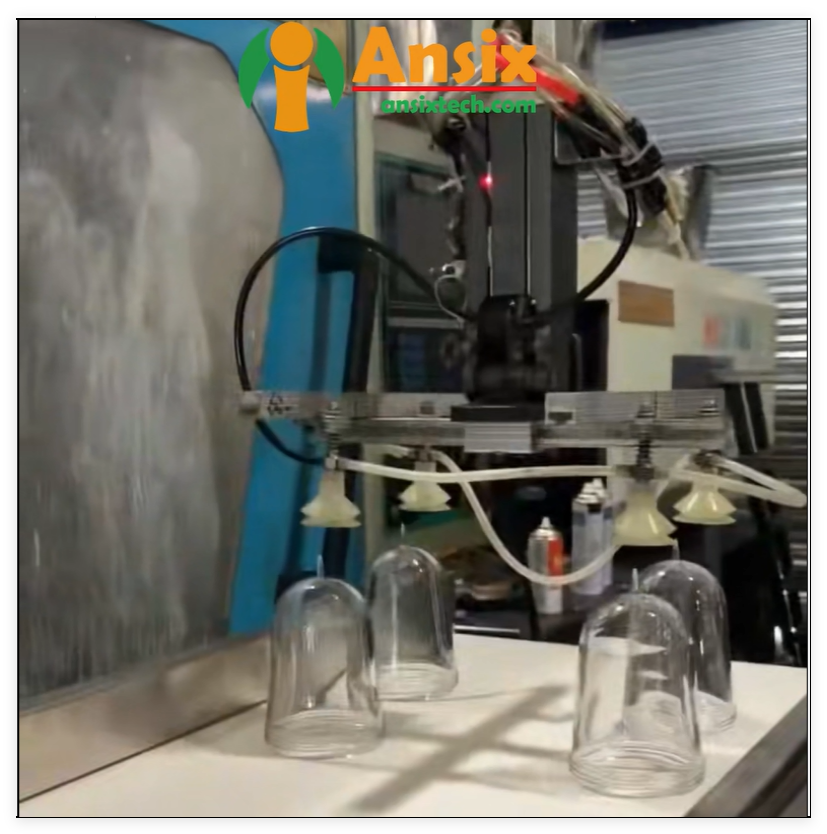

80mm Neck Multi-Specification PET Plastic Bottle Preforms and Cosmetic Tube Preforms Available Now at Factory Stock
FEATURES
This comprehensive document details our manufacturing solutions for 80mm neck multi-specification PET plastic bottle preforms and cosmetic tube preforms, now available at factory stock. We will explore our production capabilities, mold manufacturing expertise, injection molding processes, quality assurance protocols, and the customer value we deliver through cost reduction, risk mitigation, and operational efficiency.
Part One: Common Gram Weights for Ansix Tech’s 80mm Neck PET Preforms
Understanding the available gram weight options for 80mm neck PET preforms is essential for customers selecting the right product for their packaging needs. At Ansix Tech, we maintain a comprehensive inventory of preform weights to accommodate diverse bottle capacities, wall thickness requirements, and application specifications.
-
Mold Description
Product Materials:
PET PETG
Mold Material:
S136ESR
Number of Cavities:
4
Glue Feeding Method:
Hot runner
Cooling Method:
Water cooling
Molding Cycle
22.5s
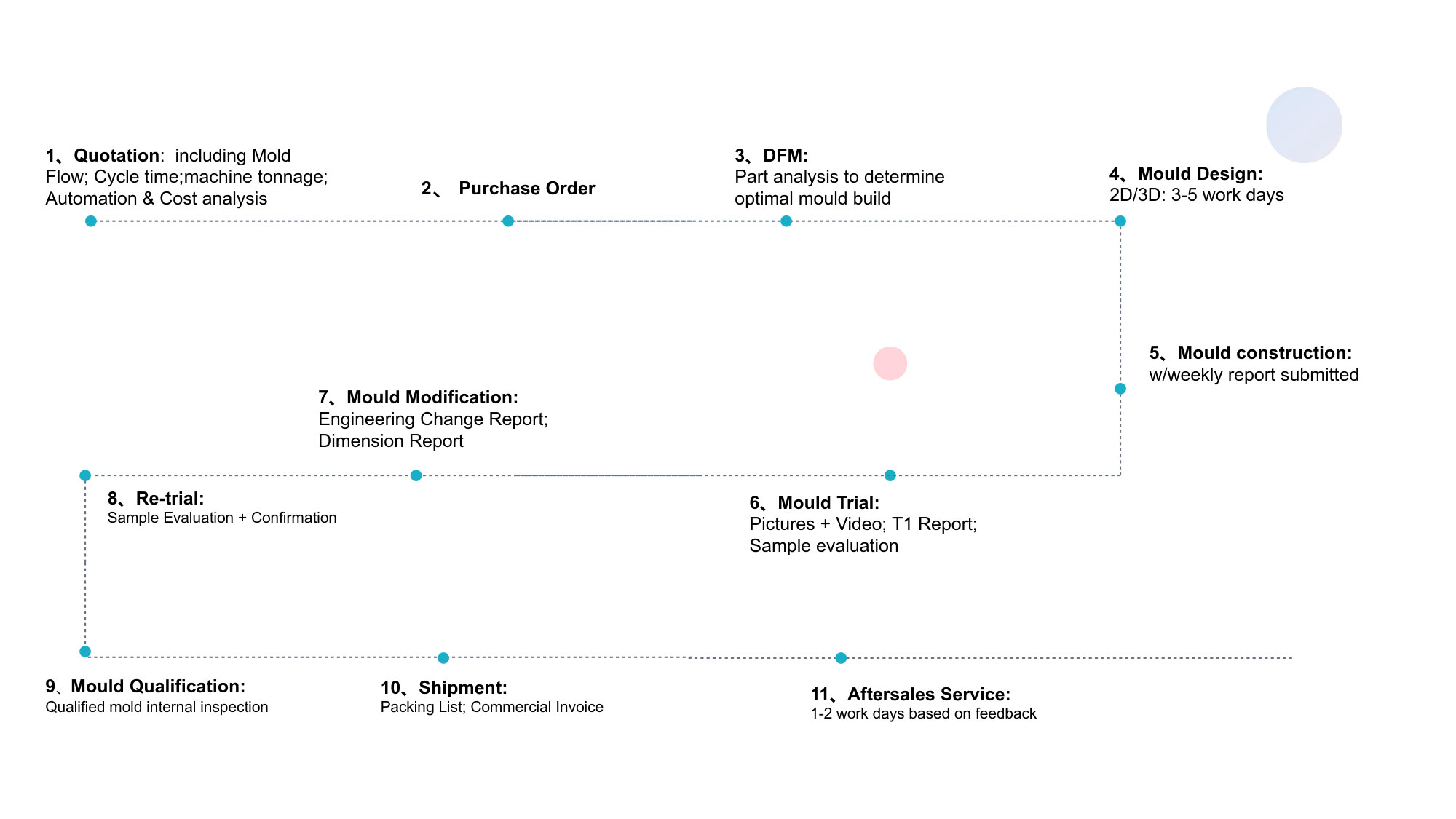
- The mold manufacturing process and product material selection
For 80mm neck PET preforms, the weight range typically spans from as low as 14 grams up to 350 grams, depending on the intended bottle volume and wall thickness requirements. The preform weight is a critical parameter because it directly governs the finished bottle‘s mass, stiffness, and overall mechanical performance. Lighter preforms reduce material consumption and shipping costs, while heavier preforms provide enhanced durability and impact resistance for demanding applications.
Our standard 80mm neck PET preform inventory includes the following typical gram weight categories:
Lightweight preforms (14g – 30g): Suitable for mineral water bottles, personal care products, and applications where weight reduction is prioritized
Medium-weight preforms (31g – 60g): Ideal for carbonated beverage bottles requiring higher pressure resistance and general-purpose packaging
Heavy-duty preforms (61g – 150g): Designed for large-capacity containers, industrial applications, and refillable bottles
Extra-heavy preforms (151g – 350g): For specialized applications including large edible oil bottles, medical containers, and high-strength packaging
For cosmetic tube preforms, the weight range is typically optimized for smaller volumes and specific closure compatibility, with standard offerings aligned with neck finish sizes including 24/410, 28/400, 28/415, and other common specifications.
-
It is important to note that preform weight is not merely a matter of selecting a number from a catalog. The optimal weight must be determined through careful analysis of the final bottle’s desired volume, stretch ratio, blow molding machine compatibility, and end-use requirements. Larger or heavier preforms consume more resin, so costs rise accordingly. At Ansix Tech, we work closely with customers to perform lightweighting analysis, identifying opportunities to reduce material usage by 2-5% while maintaining or improving mechanical properties, as demonstrated in industry studies where optimized parameters achieved weight reductions of up to 2.05%.
For customers requiring custom gram weights, our multi-cavity molds (available in configurations up to 48 cavities or more) enable precise weight control across every cavity. With advanced mold technology, the maximum weight difference between cavities in the same mold can be reduced to as low as ≤0.03g, compared to traditional molds where this difference often exceeds 0.15g.
Part Two: Raw Material Selection and Material Characteristics
The quality of any PET preform begins with the raw material. At Ansix Tech, we maintain a rigorous material selection protocol to ensure that every preform meets the highest standards of performance, safety, and consistency.
Intrinsic Viscosity (IV) Requirements
PET resin is characterized by its intrinsic viscosity (IV) value, measured in dL/g, which reflects the length and degree of polymerization of PET molecular chains. The IV value directly impacts melt strength, mechanical properties, and the final product‘s performance characteristics.
For PET bottle preform applications, the standard IV range is 0.70 – 0.85 dL/g. Within this range, specific applications require different IV values:
IV Range Applications Key Characteristics
0.72 – 0.78 dL/g Mineral water bottles, ordinary beverage bottles Good melt fluidity, easy injection molding, suitable for thin-walled preforms
0.78 – 0.85 dL/g Carbonated beverage bottles, pressure-resistant containers Higher melt viscosity requiring higher injection pressure, superior tensile strength and pressure resistance
≥0.85 dL/g High-strength packaging, large-capacity edible oil bottles, medical bottles Maximum pressure resistance, excellent anti-explosion performance
For cosmetic tube preforms, where surface finish and clarity are often paramount, we typically recommend IV values in the 0.72 – 0.78 dL/g range to optimize melt flow and transparency.
Raw Material Sourcing and Quality Assurance
We source our PET resin from leading global suppliers, including Indorama Ventures, Far Eastern New Century, and other certified manufacturers. All raw materials undergo incoming inspection at our facilities, including IV testing, acetaldehyde content analysis, and color measurement (b-value and L-value). Our robust supply chain ensures that we source the highest-quality materials for every project, working directly with manufacturers and their authorized agents to provide top-grade injection molding materials accompanied by detailed technical datasheets.
Virgin vs. Recycled PET (rPET)
In response to growing demand for sustainable packaging solutions, Ansix Tech offers both virgin PET and recycled PET (rPET) options for 80mm neck preforms. When using rPET, we apply advanced shrinkage rate compensation—typically 0.18% higher than for virgin material—to ensure dimensional accuracy.
Part Three: Mold Manufacturing – The Foundation of Quality
The mold is not merely a block of steel; it is the heart of the entire production process. At Ansix Tech, we design and manufacture molds that serve as “money-printing machines” for our customers—reliable, efficient, and capable of delivering consistent quality over millions of cycles.
Hard Power: Our Equipment Infrastructure
To achieve the precision required for 80mm neck PET preforms and cosmetic tube preforms, we have equipped our facilities with industry-leading machinery:
Mold Processing Equipment:
Five-axis high-speed machining centers: Capable of machining complex curved surfaces with precision down to 0.002mm, ensuring that product parting lines are smooth and burr-free
Slow wire EDM (Electrical Discharge Machining): Used for fine holes as small as 0.03mm and narrow slots, avoiding deformation of thin walls
High-precision CNC grinding machines: For achieving optimal surface finishes
In-house electrode processing center and EDM workshop: Ensuring mold repairs and modifications stay within our facility, with conventional repair/weld and insert replacement completed within 24 hours
Injection Molding Machine Fleet:
Our injection molding machine park comprises 260 machines with tonnage ranging from 30 tons to 2,800 tons, covering the full spectrum of preform sizes from small cosmetic tube preforms to large-capacity bottle preforms. Our machine lineup includes:
Japanese machines: Fanuc, Sumitomo, Toshiba, Nissei
European machines: Engel, Arburg (primarily for liquid silicone injection molding, two-component applications)
Domestic machines: Haitian, Victor Taichung Machinery
All machines feature full-servo electric drive systems, providing stable repeatable accuracy of ±0.1%, ensuring that every shot in batch production is identical.
Inspection and Testing Equipment:
Coordinate Measuring Machines (CMM) : For full dimensional inspection
Optical imaging systems: For surface quality assessment
Ultrasonic thickness sensors: For real-time wall thickness monitoring
Mold flow analysis software: For predictive simulation and optimization
Every mold undergoes a full dimensional report before leaving our factory, with critical dimensions validated to CPK ≥ 1.33.
Mold Steel Selection
The choice of mold steel directly impacts mold life, part quality, and maintenance costs. Ansix Tech selects mold materials based on application requirements, expected production volumes, and the specific characteristics of the resin being processed.
Our mold material portfolio includes:
Steel Grade Characteristics Typical Applications
P20 General-purpose pre-hardened steel, good machinability Low-volume molds (<50,000 cycles)
718H Improved hardness and polishability Medium-volume molds
NAK80 Excellent polishability, good mirror finish High-gloss surfaces, transparent parts
S136 Corrosion-resistant stainless steel, HRC 48-52 after heat treatment, high mirror finish PVC, PP, PC, PMMA, humid environments
H13 / 8407 / SKD61 Hot-work steel combining toughness and moderate wear resistance High-temperature molding cycles, glass-filled materials
2344 / 2343 General-purpose hot-work steel with balanced properties Die casting and high-temperature molding
DC53 High wear resistance, superior toughness Abrasive materials, high-volume production
M340 High-performance corrosion-resistant steel Medical and food-contact applications
For molds processing glass fiber-reinforced materials, we guarantee 500,000 cycles; for standard plastics, mold life extends to 1,000,000 cycles or more, in compliance with SPI Class 101 standards. All molds are accompanied by material certification reports and heat treatment curves for full traceability.
Achievable Tolerances
Our precision manufacturing capabilities enable us to achieve industry-leading tolerances:
Feature Achievable Tolerance
Conventional structural parts ±0.05mm
Precision gears / medical components ±0.005mm
Mold cavity temperature difference Reduced from ±8℃ to ±0.5℃
Preform mouth inner diameter standard deviation Compressed from ±10μm to ±1.5μm
Maximum weight difference between cavities ≤0.03g(compared to traditional molds >0.15g)
Mold Types and Configurations
Ansix Tech manufactures a comprehensive range of mold types for preform applications:
Hot runner molds: Reduce material waste, improve part quality through precise temperature control along the entire PET pathway
Cold runner molds: Cost-effective for lower-volume production
Stack molds: Double efficiency by producing twice the number of parts per cycle
Multi-cavity molds: Configurations from 1 cavity to 48+ cavities for high-volume production
High-gloss molds: Surface roughness Ra ≤ 0.05μm for transparent and cosmetic applications
Gate and Runner System Design
The gate system is critical for achieving balanced filling and optimal part quality. Using advanced mold flow analysis, we predict weld line and gas trap locations, optimizing gate quantity and placement before any steel is cut. For PET preforms, we implement multi-stage shear control hot runner systems with conical tapered torpedo heads that reduce melt shear rate gradient by 80% and eliminate flow lines.
Cooling System Design
Cooling is the most critical aspect of preform mold design. Uneven cooling directly leads to differences in preform shrinkage and crystallinity. At Ansix Tech, we implement:
Conformal cooling channels: Designed using mold flow analysis, ensuring each preform is cooled quickly and evenly
Spiral turbulent cooling channels: Maximize heat transfer efficiency
Zone temperature control: Type-to-core temperature difference controlled within ±2℃ to reduce warpage
Cooling efficiency deviation: Controlled within 5% across all cavities
Ejection System Design
Proper ejection system design prevents part damage and ensures smooth production cycles. Our ejection systems are engineered for high-volume production, with robust ejector pin layouts, balanced ejection force distribution, and provisions for automated part handling.
Mold Delivery Standards
Our mold manufacturing lead times are competitive and transparent:
Mold Complexity Standard Lead Time Expedited Lead Time (with full validation)
Simple molds 10 days 7 days
Medium complexity 25 – 45 days 20 days
High complexity / multi-cavity 45 – 60 days 35 days
All expedited deliveries maintain full validation protocols—no quality shortcuts are taken.
Part Four: Injection Molding Process – From Melt to Finished Preform
The injection molding process for PET preforms requires precise control of temperature, pressure, timing, and cooling. At Ansix Tech, we have developed optimized process parameters that maximize quality while minimizing cycle time and material waste.
Critical Process Parameters
Through extensive research and validation, we have identified the five most significant process parameters affecting preform quality: cooling time, cycle time, melting temperature, injection time, and molding temperature. Research has demonstrated that cooling time is the most significant factor, contributing 28.78% to overall quality variation, followed by cycle time and injection parameters.
Our optimized process parameters achieve:
Parameter Typical Range Quality Impact
Cooling time 6 – 15 seconds Most significant factor; affects warpage and crystallinity
Cycle time 8 – 20 seconds Directly impacts production rate and energy consumption
Melting temperature 270 – 290℃ Affects melt viscosity and acetaldehyde formation
Injection time 1 – 3 seconds Influences filling balance and molecular orientation
Molding temperature 5 – 15℃(cooling water) Affects cooling rate and final dimensions
Through systematic process optimization, we have achieved:
Warpage reduction: Up to 4.75% improvement (from 0.2mm to 0.1905mm)
Weight reduction: Up to 2.05% reduction in material consumption per preform, leading to significant annual raw material savings
Improved material efficiency: Direct reduction in plastic usage aligning with environmental sustainability goals
Process Control and Standardization
All injection molding machines in our facilities are networked and connected to our MES (Manufacturing Execution System). All molding parameters—temperature, pressure, speed, and timing—are locked within the system, adjustable only by authorized engineers. Every production batch undergoes first-piece and last-piece comparison to verify consistency.
Key process control measures include:
Ultrasonic thickness sensors: Installed on injection molding machines for real-time wall thickness feedback, automatically compensating packing pressure based on detected fluctuations
In-mold temperature and pressure sensors: Enabling closed-loop process control
CMM and optical inspection: For full dimensional verification at specified intervals
Statistical Process Control (SPC) : Real-time monitoring of critical-to-quality parameters
Quality Control and Assurance
Our quality management system spans the entire production lifecycle:
Incoming Quality Control:
Raw material testing (IV, acetaldehyde, color, moisture content)
Mold steel certification and heat treatment verification
Supplier material certifications
In-Process Quality Control:
First-piece inspection against master samples
Periodic cavity sampling with CMM verification
Real-time SPC monitoring of weight, dimensions, and appearance
Automated vision inspection for surface defects
Outgoing Quality Control:
100% visual inspection for critical cosmetic applications
Sample testing per AQL standards
Full dimensional report with each shipment
Material certification and traceability documentation
Quality Certifications:
ISO9001(Quality Management)
IATF16949(Automotive Quality)
ISO13485(Medical Devices)
ISO14001(Environmental Management)
BSCI(Social Compliance)
Special Material Capabilities
Beyond standard PET, Ansix Tech has extensive experience processing a wide range of engineering thermoplastics and high-performance materials:
Material Category Examples Applications
Engineering plastics PC/ABS, PC, POM, PA66, PBT Automotive, consumer goods
High-performance materials PEEK, PEI, PPS, LCP, PPA Medical, aerospace, electrical
Glass-fiber reinforced PA6+GF30, PPS+40%GF, PBT+GF Structural components requiring high strength and dimensional stability
Flame-retardant grades UL94 V-0 rated materials Electrical housings
Liquid silicone rubber LSR(two-component injection) Medical seals, baby products, kitchenware
For each specialty material, we have developed validated processing windows that account for material-specific requirements such as drying conditions, melt temperatures, mold temperatures, and shrinkage compensation.
Surface Finish and Appearance Standards
The cosmetic and packaging industries demand exceptional surface quality. Ansix Tech offers a full range of surface finishes:
As molded: Standard finish
SPI finishes: All standard grades from SPI A-1 (diamond polished) to SPI D-3 (EDM textured)
Polishing: High-gloss finishes up to Ra ≤ 0.2μm for high-gloss applications and Ra ≤ 0.05μm for mirror finishes required for transparent cosmetic preforms
Texturing / etching: Custom patterns and matte finishes
Printing and labeling support: Silkscreening, pad printing, in-mold labeling
For transparent preforms, we guarantee bubble-free, flowline-free surfaces. For preforms requiring subsequent coating or printing, we can pre-engineer compensation amounts to ensure print registration accuracy within ±0.1mm.
Part Five: Project Initiation and Co-Engineering Value
At Ansix Tech, we believe that successful preform manufacturing begins long before the first injection shot. Our co-engineering philosophy invites customers to partner with us from the concept stage, ensuring solutions are technically robust and cost-effective from the outset.
Early Engagement and DFM Analysis
Before any steel is cut, we provide comprehensive Design for Manufacturability (DFM) reports that include:
Moldability analysis: Assessing part geometry for injection molding feasibility
Gate location optimization: Identifying optimal gate placement to ensure balanced filling and minimize weld lines
Wall thickness recommendations: Ensuring uniform filling and optimal cooling
Draft angle suggestions: Preventing ejection issues and part damage
Ejector pin placement: Identifying acceptable pin mark locations
Shrinkage compensation: Applying material-specific shrinkage rates to final cavity dimensions
Our virtual DFM validation process identifies potential risks in the digital domain before physical production begins, dramatically reducing development time and eliminating costly mold rework.
Structured Project Approval Process
For every 80mm neck preform project, we follow a disciplined project approval methodology aligned with industry best practices:
Stage 1: Project Initiation
Formation of dedicated project team (design engineers, process engineers, quality personnel)
Confirmation of project objectives and specifications
Development of project plan and timeline
Stage 2: Design and Development
Design reviews incorporating customer feedback
Mold flow analysis and DFM documentation
CAD model validation and tolerance analysis
Stage 3: Mold Fabrication
Precision machining with in-process inspection
CMM verification of critical dimensions
Mold assembly and functional testing
Stage 4: Sampling and Validation
T0 to T3 trial samples with improvement reports
First Article Inspection Reports (FAIR)
Process capability study (CPK ≥ 1.33 for CTQ dimensions)
Stage 5: Pre-Production Validation
100 – 500 shot pilot run
Yield rate and CPK verification
Customer approval before mass production
Stage 6: Mass Production
Full production ramp-up with continuous quality monitoring
SPC data collection and analysis
Ongoing process optimization
Small-Batch Validation and Ramp-Up
Before committing to full-scale production, we offer small-batch validation runs of 100 to 500 shots. During this phase, we:
Verify yield rates under production conditions
Validate CPK values for all critical dimensions
Confirm process stability and repeatability
Identify and resolve any remaining issues before scaling
This approach ensures that when we move to full production, the process is fully validated and ready for stable, high-volume output.
Maintenance and After-Sales Support
We understand that mold maintenance is a critical factor in total cost of ownership. Ansix Tech provides:
Spare parts package: Standard wear parts (ejector pins, core pins, cavity inserts) delivered with each mold
Scheduled mold maintenance: Recommended service intervals at 200,000 cycles, 500,000 cycles, and 1,000,000 cycles
Lifetime repair services: At cost (plus labor) for the life of the mold
Three-year structural warranty: On mold frames and major components (excluding normal wear parts)
Part Six: Smart Manufacturing and Efficiency Optimization
The injection molding industry is undergoing a digital transformation, and Ansix Tech is at the forefront. Our smart manufacturing initiatives integrate connected machinery, real-time monitoring, and data-driven decision-making to maximize efficiency and quality.
MES Integration and Process Traceability
Our Manufacturing Execution System (MES) serves as the central control hub for all production activities:
Machine monitoring: Real-time visibility into machine status, cycle times, and output
Parameter management: Cloud-based process parameter storage with version control
Quality tracking: Integration of inspection data with production batches
Mold and equipment maintenance: Scheduled and predictive maintenance alerts
Data reporting: Comprehensive production and quality reports for every batch
All material lots, cavity numbers, and operator actions are logged and verified through the MES, ensuring complete traceability from raw material to finished product.
Cycle Time Reduction and Throughput Improvement
Cycle time is the single most important factor in production efficiency and unit cost. Even a reduction of a few seconds per cycle can translate to significant annual cost savings when producing millions of preforms.
Our approach to cycle time reduction includes:
Optimized cooling system design: Conformal cooling channels reduce cooling time while maintaining part quality
Advanced temperature control: Zone-specific temperature management prevents hot spots and enables faster cooling
Process parameter optimization: Using Taguchi methods and statistical analysis to identify optimal settings
High-speed injection molding machines: Fanuc, Sumitomo, Engel, and Arburg machines provide rapid injection and response
External cooling systems: Implementing advanced cooling where preforms are cooled outside the injection mold, breaking the traditional relationship between preform thickness and cycle time
Through these measures, we have achieved cycle time reductions of up to 10% compared to standard industry baselines, translating to higher throughput and lower per-unit costs.
Energy Efficiency
Our commitment to sustainable manufacturing extends to energy management. Our all-electric and hybrid injection molding machines consume significantly less energy than traditional hydraulic machines. Additionally, our XBrain telemetric system allows molds to communicate performance data directly to operators via smartphone, enabling proactive adjustments that prevent energy waste and quality issues.
Workforce Expertise
Technology alone is not enough. Ansix Tech’s technical team includes over 200 design engineers, process engineers, and quality control specialists with decades of combined experience in the injection molding industry. Our engineers hold expertise in:
Mold flow analysis and simulation
Precision mold design and manufacturing
Process optimization and validation
Quality management systems
Material science and characterization
Part Seven: Cost Reduction Strategies – Delivering Value Through Efficiency
At Ansix Tech, cost reduction is not an afterthought; it is engineered into every aspect of our production process. By optimizing materials, processes, and efficiency, we help our customers reduce product costs across three key dimensions: material cost, processing cost, and total cost of ownership.
Material Cost Reduction
Lightweighting: Through optimized preform design and process control, we can achieve weight reductions of 2-5% without compromising mechanical performance. For a customer producing 10 million preforms annually, a 2% weight reduction—from 43.25g to 42.37g per preform—represents raw material savings of approximately 8,800 kilograms of PET resin per year.
Reduced Scrap Rates: Our process stability, validated through SPC and CPK monitoring, minimizes scrap generation. Multi-cavity molds with cavity-to-cavity weight variation as low as ≤0.03g ensure that every preform meets specification, dramatically reducing rejection rates compared to traditional molds where weight variation often exceeds 0.15g.
Material Selection Optimization: By recommending the optimal IV value for each application—neither too low (causing brittleness) nor too high (increasing processing cost)—we help customers balance material cost with performance requirements.
Processing Cost Reduction
Cycle Time Reduction: Reducing cycle time by just 2 seconds per shot for a 48-cavity mold running 24 hours per day translates to an increase of more than 8,000 additional preforms per day, directly lowering per-unit processing costs.
Energy Efficiency: All-electric injection molding machines consume up to 50-70% less energy than comparable hydraulic machines, reducing utility costs and supporting environmental sustainability goals.
Automated Production: Our networked MES system reduces manual intervention, setup time, and changeover costs, freeing operator time for value-added activities.
In-House Mold Maintenance: With our in-house electrode machining center and EDM workshop, mold repairs can be completed within 24 hours without shipping molds to external vendors, eliminating costly downtime and transportation expenses.
Total Cost of Ownership Reduction
Extended Mold Life: By selecting appropriate steel grades (e.g., H13, 8407, S136 for high-volume production), we guarantee mold life of 500,000 to 1,000,000+ cycles, reducing the frequency of mold replacement and the associated capital expenditures.
Preventive Maintenance Program: Our scheduled maintenance and spare parts packages keep molds operating at peak efficiency, preventing unexpected breakdowns and production interruptions.
Reduced Logistics Costs: By maintaining factory stock of standard 80mm neck preforms in popular gram weights, we can fulfill many orders without mold fabrication lead times, reducing inventory carrying costs for customers.
Cost Transparency: Our DFM reports and project approval documentation provide complete cost visibility, enabling customers to make informed trade-offs between quality, price, and lead time.
Part Eight: Comparative Advantages – Addressing Common Customer Concerns
Rather than simply stating our capabilities, we address common industry pain points head-on, providing specific solutions backed by performance data.
Common Customer Pain Points and Our Responses
Customer Complaint Ansix Tech Response
“Molds constantly need repair, disrupting orders.” We conduct 2,000-shot aging tests before mold delivery and provide wear reports. Plus, three-year structural warranty (excluding normal wear parts) gives you peace of mind.
“Flash is excessive, requiring costly secondary finishing.” We process parting lines to 0.005mm fit precision using self-locking clamp force compensation. Flash is controlled to ≤0.03mm per batch, eliminating manual deflashing.
“Dimensions change from batch to batch.” MES-locked parameters, ultrasonic thickness sensors with real-time compensation, and in-mold temperature/pressure sensors for closed-loop control ensure consistent output.
“Mold repairs take weeks.” In-house electrode machining center and EDM workshop mean mold repairs stay on our premises—conventional repairs and insert replacements completed within 24 hours.
“High reject rates during blow molding.” Our cavity-to-cavity weight variation is ≤0.03g, compared to traditional molds at >0.15g. Every preform is virtually identical.
“Total cost of ownership is too high.” We engineer for 500,000 to 1,000,000+ cycle mold life, provide preventive maintenance schedules, and include spare wear parts with each mold.
Customer Value Summary
At Ansix Tech, we translate technical expertise into tangible customer value:
What we help customers solve:
Production delays caused by mold failures and repairs
Quality variability leading to high reject rates
High total cost of ownership from short mold life
Material waste from poor process control
Logistics inefficiencies from long lead times
How we reduce costs:
Lightweighting reduces raw material consumption by 2-5%
Cycle time optimization reduces per-unit processing cost
Extended mold life reduces capital replacement frequency
Lower energy consumption reduces operating expenses
Reduced scrap rates minimize material waste
How we reduce risks:
DFM analysis identifies issues before tooling begins
Process validation ensures stable production before ramp-up
Quality certifications verify compliance with industry standards
Transparent documentation supports customer audits
Conclusion: Delivering End-to-End Preform Manufacturing Solutions
Ansix Tech’s 80mm neck multi-specification PET plastic bottle preforms and cosmetic tube preforms represent the culmination of 28 years of injection molding expertise, advanced manufacturing technology, and a relentless commitment to customer value. From our founding in 1998 through today, we have delivered more than 30,000 mold sets to customers worldwide, earning our reputation as a trusted partner for the packaging, beverage, cosmetic, medical, and consumer goods industries.
Our comprehensive capabilities—spanning mold design, mold manufacturing, injection molding, quality control, and after-sales support—enable us to serve as a single-source solution provider for 80mm neck preform projects of any scale. Whether you require standard preforms from our factory stock inventory or custom-engineered solutions for specialized applications, Ansix Tech has the expertise, equipment, and experience to deliver.
The 80mm neck preform is not merely a component; it is the foundation of your packaging success. With Ansix Tech as your manufacturing partner, you gain:
Uncompromising quality: Validated through ISO9001, IATF16949, ISO13485, ISO14001, and BSCI certifications
Competitive pricing: Achieved through material optimization, process efficiency, and supply chain integration
Reliable delivery: Supported by four production bases across China and Vietnam with 260 injection molding machines
Technical expertise: Provided by over 200 design and process engineers with deep industry knowledge
Peace of mind: Delivered through transparent communication, comprehensive documentation, and responsive after-sales support
We invite you to experience the Ansix Tech difference. Whether you are launching a new product line, optimizing an existing packaging solution, or simply seeking a more reliable manufacturing partner for your 80mm neck preform requirements, our team is ready to demonstrate how we transform preform production from a challenge into a competitive advantage.
For more information about our factory stock inventory, custom manufacturing capabilities, or to schedule a DFM review for your specific application, please contact Ansix Tech at info@ansixtech.com.
Ansix Tech Co Ltd
If you have any plans related to 80mm Neck Multi-Specification PET Plastic Bottle Preforms and Cosmetic Tube Preforms Available Now at Factory Stock , you can contact us at any time. We will turn your ideas into reality, let you realize your dreams, and obtain large orders from the market. Our contact information is info@ansixtech.com. Or contact our CTO, mail: stephen@ansixtech.com
#www.ansixtech.com #ansixtech.com #80mm Neck Multi-Specification PET Plastic Bottle Preforms and Cosmetic Tube Preforms #80mm Neck Multi-Specification PET Plastic Bottle Preforms and Cosmetic Tube Preforms #80mm Neck Multi-Specification PET Plastic Bottle Preforms and Cosmetic Tube Preformsinjection molding companies #80mm Neck Multi-Specification PET Plastic Bottle Preforms and Cosmetic Tube Preforms Canopy Mold injection mold companies #Ansix #Ansix moulds #Ansix china #Ansix tech china #Ansix tech company #Ansix facotry #80mm Neck Multi-Specification PET Plastic Bottle Preforms and Cosmetic Tube Preformsinjection molding #80mm Neck Multi-Specification PET Plastic Bottle Preforms and Cosmetic Tube Preformsinjection tools #80mm Neck Multi-Specification PET Plastic Bottle Preforms and Cosmetic Tube Preformsinjection moulds #80mm Neck Multi-Specification PET Plastic Bottle Preforms and Cosmetic Tube Preformsplastic mould #80mm Neck Multi-Specification PET Plastic Bottle Preforms and Cosmetic Tube Preformsplastic tools #Ansix Tech #Ansix molds #Ansix injection molding #Ansix mold factory #injection molding 80mm Neck Multi-Specification PET Plastic Bottle Preforms and Cosmetic Tube Preforms #Ansix mold factory #80mm Neck Multi-Specification PET Plastic Bottle Preforms and Cosmetic Tube Preformschina #80mm Neck Multi-Specification PET Plastic Bottle Preforms and Cosmetic Tube Preformsmolds #injection factory #80mm Neck Multi-Specification PET Plastic Bottle Preforms and Cosmetic Tube Preformsinjection molding #80mm Neck Multi-Specification PET Plastic Bottle Preforms and Cosmetic Tube Preformsinjection molding factory #injection molding company #80mm Neck Multi-Specification PET Plastic Bottle Preforms and Cosmetic Tube Preformsinjection mold companies #50mm Neck Edible Oil Bottle Preform (100ml250ml) Transparent PET Plastic Oil Bottle Preform#80mm Neck Multi-Specification PET Plastic Bottle Preforms and Cosmetic Tube Preformsmold limited #Ansix mold china #Ansix companies #Ansix company China #80mm Neck Multi-Specification PET Plastic Bottle Preforms and Cosmetic Tube Preformsfacotry #Ansix Tech #Ansix Tech mould #80mm Neck Multi-Specification PET Plastic Bottle Preforms and Cosmetic Tube Preformsinjection moulding #injection moulding company #Ansix 80mm Neck Multi-Specification PET Plastic Bottle Preforms and Cosmetic Tube Preformsparts injection mold companies #medical injection molding companieschina #80mm Neck Multi-Specification PET Plastic Bottle Preforms and Cosmetic Tube Preformschina factory #Ansix moulding companies #Ansix molding company #80mm Neck Multi-Specification PET Plastic Bottle Preforms and Cosmetic Tube Preformsinjection moulding facotry #Ansix Tech mold #80mm Neck Multi-Specification PET Plastic Bottle Preforms and Cosmetic Tube Preformsmould #80mm Neck Multi-Specification PET Plastic Bottle Preforms and Cosmetic Tube Preformsplastic injection molding #ansix plastic mold #Mold manufacturing #80mm Neck Multi-Specification PET Plastic Bottle Preforms and Cosmetic Tube Preformsparts manufacturing #80mm Neck Multi-Specification PET Plastic Bottle Preforms and Cosmetic Tube Preformsplastic parts factory #80mm Neck Multi-Specification PET Plastic Bottle Preforms and Cosmetic Tube Preformsinjection parts mold #80mm Neck Multi-Specification PET Plastic Bottle Preforms and Cosmetic Tube PreformsPRECISION MANUFACTURING #80mm Neck Multi-Specification PET Plastic Bottle Preforms and Cosmetic Tube Preforms#China mold #80mm Neck Multi-Specification PET Plastic Bottle Preforms and Cosmetic Tube Preformsinjection moulding china #80mm Neck Multi-Specification PET Plastic Bottle Preforms and Cosmetic Tube Preformsmould china #china precision mold #mold in china #80mm Neck Multi-Specification PET Plastic Bottle Preforms and Cosmetic Tube Preformsmold china #Precision molds #High-precision molds #80mm Neck Multi-Specification PET Plastic Bottle Preforms and Cosmetic Tube Preforms#Injection molds #80mm Neck Multi-Specification PET Plastic Bottle Preforms and Cosmetic Tube PreformsFactory #80mm Neck Multi-Specification PET Plastic Bottle Preforms and Cosmetic Tube PreformsCompany #Super Large Injection Mold Factory #Large Tonnage Injection Molding Factory #80mm Neck Multi-Specification PET Plastic Bottle Preforms and Cosmetic Tube PreformsCompany #80mm Neck Multi-Specification PET Plastic Bottle Preforms and Cosmetic Tube PreformsFactory #2800T Injection Molding Factory #3000 Ton Injection Molding #4500 Ton Injection Molding Factory #Large Mold Injection Molding #Large Plastic Mold Injection Molding Factory #Large Injection Mold Manufacturer #Plastic Mold Factory #Injection Mold #Plastic Mold