



BMW Charcoal Canister Mold
FEATURES
Comprehensive Technical Proposal of BMW Charcoal Canister Mold Manufacturing and Injection Molding Production
Executive Summary
This technical document presents a complete manufacturing solution from Ansix Tech for the BMW Charcoal Canister Mold project. Founded in 1998, Ansix Tech has grown from its Hong Kong headquarters into a global leader in injection molding solutions, now operating four production bases across China and Vietnam with over 1200 employees and 260 injection molding machines. With more than 28 years of specialized experience in mold design and manufacturing, the company has built over 30,000 sets of molds and serves a diversified customer base across automotive, medical, commercial communications, and smart home industries. The company holds ISO9001, IATF 16949, ISO13485, and ISO14001 certifications, ensuring rigorous quality management systems throughout every stage of production.
-
Mold Description
Product Materials:
PA66+GF30
Soft rubber: TPR
Mold Material:
S136ESR
Number of Cavities:
2+2
Glue Feeding Method:
Hot runner
Cooling Method:
Water cooling
Molding Cycle
22.5s
A charcoal canister (EVAP canister) is the core component of the vehicle's evaporative emission control system – a plastic container filled with activated carbon that captures hydrocarbon fuel vapors from the fuel tank and stores them until the engine is ready to purge and burn them during combustion. For BMW vehicles, this component must meet stringent OEM specifications for sealing integrity, dimensional stability, and long-term durability under hood-level temperature conditions.
The following five sections detail Ansix Tech’s approach to delivering value for the BMW Charcoal Canister Mold, demonstrating how technical capabilities translate directly into customer benefits, including cost reduction, risk mitigation, and production efficiency gains.
-
I. Foundation of Hard Capabilities – Building Customer Trust Through Equipment Infrastructure
5-Axis High-Speed Machining Centers
Ansix Tech operates cutting-edge machining equipment from Mikron, Makino, and Frank, enabling the manufacture of complex mold geometries with precision tolerances controlled within ±0.002 mm. For the BMW Charcoal Canister Mold, which features multiple internal chambers for active carbon housing and external mounting brackets, this capability ensures critical outcomes that matter to the customer:
Flawless part appearance – Complex curved surfaces that form the canister’s internal ribs and external mounting bosses can be machined with such precision that the parting line on the final plastic part is smooth and burr-free, eliminating secondary manual finishing operations that add cost and production time.
Extended mold service life – The mirror-like surface finish achieved on the parting surface dramatically reduces wear during high-volume production, maintaining sealing integrity across hundreds of thousands of cycles.
Reduced post-molding labor – A smooth parting line means parts come out of the molding machine ready for assembly, directly reducing manufacturing cost per component.
Slow Wire EDM Cutting
The BMW Charcoal Canister incorporates numerous small vent holes and narrow slots for proper airflow and vapor exchange. Ansix Tech uses slow wire EDM capable of producing features as fine as 0.03 mm in diameter. The customer benefits are significant:
Avoidance of thin-wall deformation – Traditional machining methods can warp thin plastic walls during processing; slow wire EDM introduces no mechanical stress, leaving the canister’s delicate internal structures dimensionally intact and leak-free.
Precise ventilation port formation – The small diameter ports that allow air to circulate around the activated carbon core can be molded directly, eliminating secondary drilling operations and ensuring consistent airflow performance across every part.
Long-term performance reliability – BMW’s EVAP system relies on balanced airflow through the canister to capture and release fuel vapors effectively. Precision-formed vent features guarantee that each canister performs identically, batch after batch.
Mold Manufacturing Equipment Portfolio and Workflow
Process Stage Equipment / Method Customer Benefit
Rough cutting High-speed CNC mills Rapid material removal, shorter lead times
Heat treatment Vacuum heat treatment furnaces Uniform hardness with minimized distortion
Precision finishing 5-axis CNC, EDM, precision grinding Tolerances at ±0.002 mm level
Assembly Skilled technicians, precision fitting tools Perfect sealing – mold halves close without gaps
Testing In-house injection molding machine trials T1, T2 prototypes validated before your factory floor
Injection Molding Machine Fleet
Ansix Tech operates 260 injection molding machines, with clamping forces ranging from 30 tons up to 2,800 tons. The fleet includes leading brands such as Fanuc, Sumitomo, Toshiba, Nissei, Engel from Japan, and Arburg from Germany (primarily for liquid silicone rubber two-component molding), along with domestic machines from Haitian and Taichung. All core machines feature full-servo motor drive technology.
Flexible coverage – The 30-ton to 2,800-ton range covers everything from small precision parts to large structural components, allowing a single source for all BMW’s plastic injection needs.
Unwavering consistency – Full-servo drives deliver stable repeatability at ±0.1%, ensuring that the first part of the production run is identical to the millionth part. This means your assembly line never experiences batch-to-batch variation surprises.
Energy efficiency – Servo-driven machines consume significantly less energy than traditional hydraulic systems, lowering the carbon footprint of your supply chain.
Quality Inspection Equipment
Every mold manufactured by Ansix Tech undergoes comprehensive dimensional verification before shipment. The company uses coordinate measuring machines (CMM) and optical imaging inspection systems as standard.
Full dimensional reporting – Each mold is accompanied by a complete inspection report comparing all critical dimensions against the original CAD model.
Statistical process control – Critical dimensions are validated to a Process Capability Index (Cpk) of 1.33 or higher, meaning the mold will produce parts well within specification limits consistently.
No surprises – This inspection protocol ensures that when the mold arrives at your facility or your designated molding partner, it fits and functions exactly as designed, eliminating costly trial and adjustment delays.
Industry Certifications
Certification Scope of Value to Customer
ISO 9001 Comprehensive quality management across all operations
IATF 16949 Automotive-specific quality standard – the bedrock requirement for Tier 1 and OEM contracts
ISO 13485 Medical device quality management (extends control rigor to automotive components)
ISO 14001 Environmental management – aligns with BMW’s sustainability goals
The IATF 16949 certification is particularly significant for the BMW Charcoal Canister Mold project. This automotive-specific quality management standard requires rigorous process control, product traceability, and continuous improvement systems that directly translate into lower defect rates and higher reliability for the final plastic parts.
II. Core Competitiveness in Mold Manufacturing – Speaking the Language of Customer Value
Customers care most about four metrics: mold lifespan, achievable precision, delivery timeliness, and post-delivery repair and maintenance costs. Ansix Tech’s precision mold manufacturing services turn every technical specification into a measurable customer benefit.
Mold Lifespan – Concrete, Verifiable, and Guaranteed
Ansix Tech selects mold materials based on the specific demands of each application. For the BMW Charcoal Canister Mold, typical selections include P20 for mold bases, combined with S136, 2344, 2343, 8407, SKD11/61, DC53, M340/4Cr13/9Cr18, NAK80, or H13 for high-wear mold core and cavity inserts. These materials are chosen to withstand the chemical exposure and thermal cycling of automotive under-hood environments. Before fabrication begins, every steel batch is verified with material certification reports and detailed heat treatment curves.
Glass-fiber reinforced plastics – If BMW specifies a material such as PPS or PA66 with glass fiber reinforcement (often 30% to 40% by weight) to achieve the required mechanical strength and thermal resistance under the hood, Ansix Tech guarantees a mold service life of 500,000 cycles or more. This guarantee is backed by wear-resistant steel selections and precision heat treatment.
Unfilled engineering plastics – For standard thermoplastics without abrasive fillers, the same mold can be expected to achieve 1,000,000 cycles before any significant maintenance is required.
Proof-based warranties – Before mold delivery, Ansix Tech performs a 2,000-cycle aging test on select molds and provides a detailed wear report to the customer.
Peace of mind – Combined with a three-year structural warranty (excluding normal wear on consumables such as ejector pins and core inserts), this means you are not left holding the bill for premature mold failure.
Dimensional Precision – Delivering Part-to-Part Consistency That Your Assembly Line Can Rely On
Precision tolerance capability varies by product type, but the core principle remains unchanged: tighter tolerances mean higher assembly yields and fewer field failures.
Standard structural components – Ansix Tech routinely delivers molds capable of producing parts with ±0.05 mm tolerances on general features. This is more than sufficient for most charcoal canister mounting interfaces and internal support structures.
High-precision applications – For critical sealing surfaces, gear interfaces, or sensor mounting locations, the company can achieve tolerances as tight as ±0.005 mm. For BMW’s charcoal canister, this level of precision is particularly important at the sealing rim where the two halves of the housing join together. A precise seal eliminates fuel vapor leakage paths, directly supporting emissions compliance.
Predictable assembly – When every part dimension falls within a narrow band, assembly operations run smoothly without forcing, adjustment, or rework. This reduces assembly line downtime and lowers overall manufacturing cost.
Mold Type Expertise – The Right Configuration for Every Application
Mold Type Technical Description Customer Value
Hot runner mold Heated manifold system that keeps plastic molten from machine nozzle to cavity gates Zero runner waste, reduced material cost, faster cycle times for high-volume charcoal canister production
Stack mold (two-level) Two mold parting planes stacked on top of each other Double the output per machine cycle – ideal for symmetric components found in canister lid/base pairs
Two-shot / multi-material mold Sequential injection of two different plastics into the same mold Integration of sealing gaskets directly onto plastic housing – one part, fewer assembly steps
High-gloss mirror mold Polished surfaces achieving surface roughness Ra < 0.05 μm Perfect for transparent or high-gloss components such as inspection windows or decorative covers
Gating System Optimization – Avoiding Service Calls Before the First Production Shift Begins
Ansix Tech uses advanced Moldflow simulation software to analyze how molten plastic will behave inside the mold cavity before any steel is cut. For the BMW Charcoal Canister Mold, this simulation focuses on:
Predicting weld lines – Where two flow fronts meet, visible surface lines can form and create potential weak points. Moldflow analysis identifies weld line locations before tooling begins, allowing engineers to adjust gate placement or injection timing to move these lines to non-critical zones.
Identifying air traps – Trapped air in the mold cavity can cause incomplete filling, burn marks on the part surface, or blow holes in thick sections. The simulation predicts air trap locations so vent depths and positions can be optimized.
Ensuring fill balance – For multi-cavity molds or large single cavities with complex geometry, fill balance simulation ensures that all cavity regions fill at the same time. This prevents overpacking in some areas, reduces residual stress, and produces parts with consistent mechanical properties throughout.
Gate freeze time determination – The analysis determines the optimal gate freeze time and packing pressure profile, minimizing high volumetric shrinkage while maximizing dimensional stability.
The customer outcome for BMW is predictable: When the mold arrives at the production facility and is installed in the injection molding machine, the process works. There are no surprises, no week-long troubleshooting sessions, and no expensive mold reworking.
Delivery Lead Times – Predictable Schedules That Protect Your Production Calendar
Mold Complexity Standard Lead Time Expedited Option Quality Assurance Note
Simple two-plate mold 10 days 7 days (only with verified design) Validation steps never skip
Medium complexity (typical charcoal canister housing) 25–45 days 20 days with premium schedule T1 and T2 trial milestones preserved
High complexity (hot runner + multi-cavity) 50–75 days 40 days with accelerated workflow Full cycle validation still completed
The most common concern from automotive customers when requesting expedited delivery is whether quality will be compromised. Ansix Tech addresses this directly: In expedited cases, resources are reallocated and production shifts are added, but the fundamental validation process – from DFM review to T1, T2, and T3 sampling – is never abbreviated. The customer receives a mold that works on day one, not one that requires weeks of adjustments after arrival.
Additional Value Delivery – Annual Mold Maintenance
After the BMW Charcoal Canister Mold enters high-volume production, Ansix Tech provides scheduled maintenance at 200,000 cycle intervals, with ongoing repairs billed at cost. A complete set of consumable spare parts (ejector pins, core inserts, and other wear items) is delivered together with the mold. This proactive maintenance service prevents sudden production stoppages due to unexpected component failure, representing a substantial reduction in operational risk for the customer.
III. Injection Molding Process Control – Eliminating Quality Anxiety at the Source
The customers who purchase injection molded charcoal canister parts typically have a short list of fears: excessive flash that requires secondary trimming, shrink marks that compromise appearance or function, dimensional instability from batch to batch, and visible color differences that trigger rejection from the assembly line. Ansix Tech has built a process control system designed to eliminate each of these concerns systematically.
Process Standardization – Taking the Surprise Out of Every Production Shift
All injection molding machines in the Ansix Tech facility are connected to a centralized Manufacturing Execution System (MES). Critical process parameters – including barrel zone temperatures, injection speed and pressure profiles, holding pressure magnitude and duration, mold temperature, and cooling time – are locked within the MES system. Only an authorized engineer can adjust these settings, with every change logged and traceable.
Elimination of operator error – Machine operators cannot unknowingly alter a critical parameter. Production runs the same way at 3:00 a.m. on a weekend shift as it does at 10:00 a.m. on a weekday morning.
First-piece and last-piece verification – For every batch, a first-piece part and a last-piece part are measured and compared. Any trend toward drift is flagged before out-of-spec parts can accumulate.
Batch traceability – Each production batch is linked to its specific process settings, material lot number, and machine ID. If an unusual pattern appears in downstream assembly or testing, the root cause investigation can be performed in minutes rather than weeks.
Dimensional Stability Control – Solving the “Every Batch Looks Different” Problem
For the BMW Charcoal Canister, dimensional stability is critical at the joint surface between the two housing halves. Even small warpage or shrinkage can create gaps that allow hydrocarbon vapors to escape, leading to emissions test failures.
Multi-zone mold temperature control – Ansix Tech equips molds with multi-zone temperature controllers that maintain the temperature difference between the core side and cavity side of the mold within 2°C. This tight control reduces uneven cooling, a primary cause of warpage.
Conformal cooling design – Where traditional straight-line drilling provides inadequate cooling, Ansix Tech employs conformal cooling channels that follow the contour of the part. For charcoal canister projects, cooling typically accounts for 70% to 80% of the total cycle time – the single biggest lever for productivity. Optimized cooling reduces cycle time by 20% to 30% while significantly improving dimensional stability.
Real-world stability data – Across similar automotive enclosure products, Ansix Tech has demonstrated that when a continuous production run extends over three separate weeks, the variation in critical hole-to-hole spacing remains below 0.02 mm. For BMW’s charcoal canister, this means that every canister seals properly with its mating part, regardless of which week it was produced.
Surface Quality Grades – No Flow Marks, No Scratches, No Rejects
Aesthetic quality matters even for a component that will never be seen on the showroom floor. In automotive, even hidden components that fail surface quality inspection at the molding stage create production inefficiencies and cost. The BMW specification for a charcoal canister housing typically requires a VDI 3400 texture finish on exterior surfaces, a smooth finish on sealing rims, and functional surfaces free of defects that could compromise sealing integrity.
Feature Type Quality Requirement Process Assurance
Exterior visible surfaces VDI 3400 texture or custom grain (as specified) Direct texturing on mold steel; consistent finish match across multiple mold cavities
Sealing rims / joint surface Smooth finish, no pits or scratches Precision polished core/cavity; tested with blue check powder to verify surface contact
Functional ribs/bosses No short shots, no visible knit lines Mold flow analysis ensures fill balance; controlled injection speed eliminates hesitation marks
Ventilation ports Clean edges, no burrs EDM or pin-point gates sized for clean separation
The tangible outcome for BMW is straightforward: Parts arriving at the assembly line are accepted on first inspection. There are no secondary sorting operations, no manual touch-up steps, and no line stoppages due to quality disputes.
Compatibility with Overmolding, Painting and Printing
Overmolding capability – Ansix Tech has extensive experience with multi-shot injection molding, enabling the integration of sealing gaskets, soft-touch grips, or vibration-damping elements directly into the primary plastic part.
Deformation compensation – Prior to mold fabrication, DFM analysis predicts the degree of shrinkage and warpage expected for the specific material and part geometry. A compensatory offset is intentionally introduced into the mold geometry – the part is designed to “shrink into specification.” This pre-emptive compensation is particularly valuable when the canister is destined for subsequent pad printing, laser marking, or painting operations, as it ensures dimensional registration accuracy of the printing/coating location within ±0.1 mm.
Special Material Capabilities – Proven Experience with Complex Engineering Plastics
Ansix Tech has accumulated significant production experience with a wide range of engineering thermoplastics, including PC/ABS, PC, PPS with 40% glass-fiber reinforcement, PEEK, PTFE/PFA, PA6 with 30% glass-fiber reinforcement, PBT, PEI, PPS, LCP, and liquid silicone rubber (LSR). For the BMW Charcoal Canister, candidate materials include:
PA66 + 30–40% GF – Delivers tensile strength of 150–180 MPa and a heat deflection temperature of approximately 200°C under load, validated through rigorous fatigue simulation. This represents an excellent balance of cost and performance for this component class.
PPS + 40% GF – Provides continuous heat resistance up to 200°C to 220°C and excellent chemical resistance at a lower price point than PEEK. This is the premium selection for applications requiring extended under-hood thermal cycling.
PPS/PA66 glass-fiber reinforced alloys – Combine the thermal stability and chemical resistance of PPS with the toughness and processability of PA66, offering low flash characteristics and fast cycle times that reduce part cost.
All selected materials undergo flame resistance testing to UL94 V-0 or V-2 standards as required for under-hood components, and UV stability is validated to 3,000 hours exposure without significant color shift or surface degradation.
Tooling Solutions for Challenging Materials
For glass-filled materials, which are notoriously abrasive and generate high mold wear, Ansix Tech employs specialized wear-resistant steel grades for core/cavity inserts, combined with strategic cooling system layout and venting design. The result for the customer: the mold can run millions of cycles filled with abrasive material without requiring frequent replacement or expensive recoating operations that interrupt production.
IV. Full-Process Services – Reducing Customer Management Costs Across the Entire Lifecycle
Many injection molding suppliers focus exclusively on delivering the final plastic part. Ansix Tech instead delivers the entire engineering and production ecosystem, from material selection to packaging. This approach reduces the customer’s administrative burden and lowers total cost of ownership.
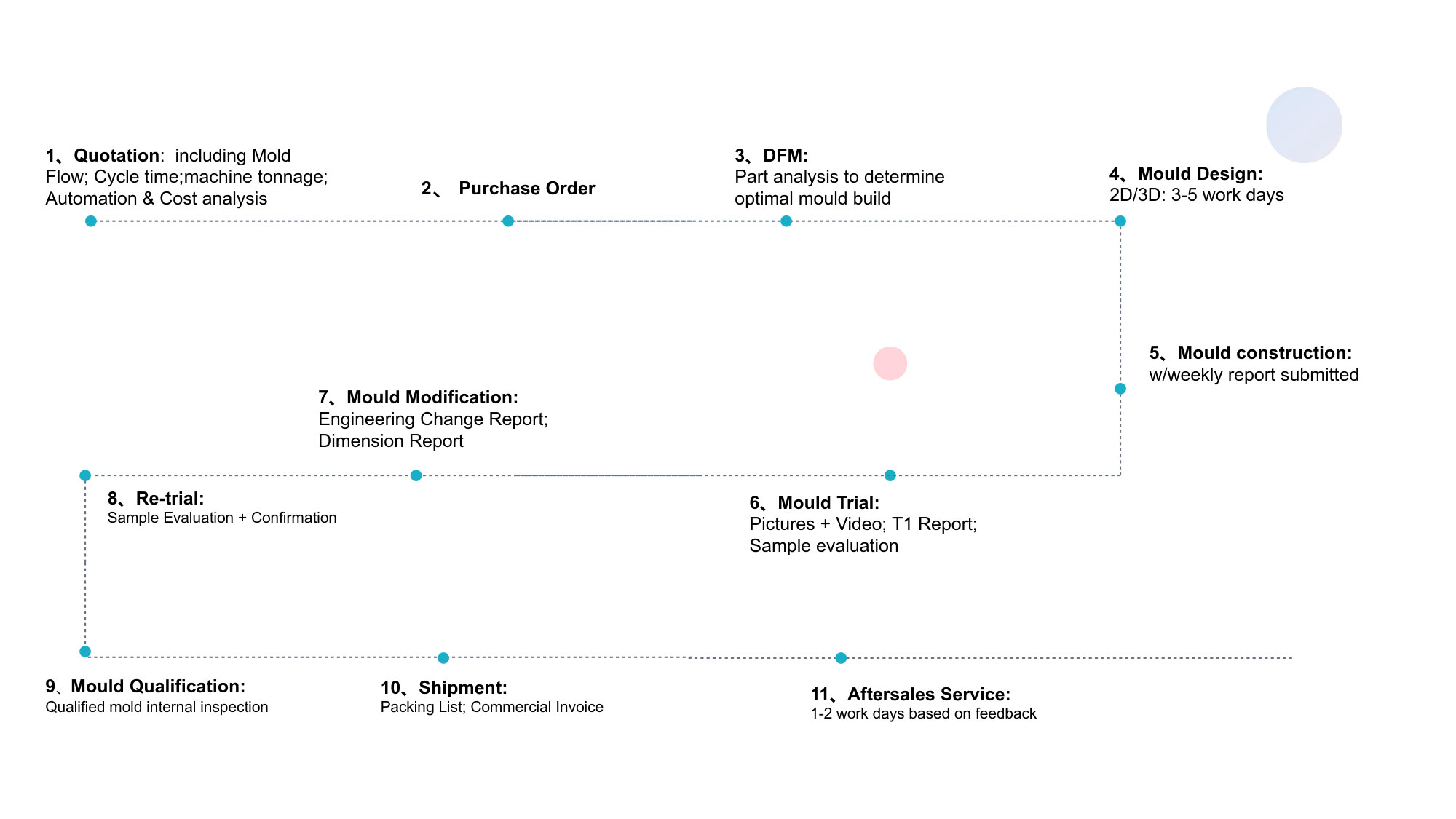
Early Engineering Engagement – DFM Reports That Catch Problems Before Steel is Cut
Before any purchase order is signed for steel, Ansix Tech provides a comprehensive Design for Manufacturability (DFM) report for the BMW Charcoal Canister. This report captures:
DFM Analysis Component What Gets Reviewed When Problems Are Found
Draft angle verification Recommended release angles for each vertical face Before steel cutting – minimal design adjustment
Wall thickness optimization Uniformity of wall thickness across the entire canister Before steel cutting – CAD adjustment (no cost)
Gate location optimization Optimal positions for filling balance and minimal weld line visibility Before steel cutting – runner layout finalized
Ejector pin placement Mark location proposals, placement in non-critical areas Before steel cutting – final placement agreed
Shrinkage compensation Expected shrink rate per material, compensatory offsets calculated Before steel cutting – CAD includes offsets
The DFM report essentially forecasts the future. If the as-designed canister geometry has features that will trap air, create visible weld lines, or cause thin-wall freezing before complete fill, these issues are flagged and resolved before any tooling begins. The customer avoids the most expensive form of rework – the kind that occurs after the mold has already been machined.
Trial Sampling and Iteration – T1 through T3 with Full Transparency
After the mold is fabricated, Ansix Tech performs a series of trial runs and provides sampled parts to the customer for evaluation:
T1 sampling – First parts out of the mold. Dimensions, fit, and function are assessed against the 3D model. In most cases, only minor adjustments are required.
T2 sampling – Second iteration after corrections. By this stage, the parts are typically approaching full conformance.
T3 sampling – Final trial confirming that all dimensions, appearance, and functional requirements are met.
A full improvement report is provided with each trial round, documenting which adjustments were made and why. This level of transparency builds trust and provides a clear decision record for the customer’s internal approval process.
Pilot Production Validation – Confirmation Before Full-Rate Production
Before authorizing full-scale production, Ansix Tech performs a pilot run of 100 to 500 parts. This step is critical for:
Yield validation – Actual production yields are calculated, not estimated.
Cpk verification – Statistical process capability is measured on critical-to-function dimensions.
Assembly fit check – Pilot parts are sent to the customer for assembly trials under real-world conditions.
Only after the pilot run passes these checks does the company proceed to full production release. This eliminates the risk of producing tens of thousands of non-conforming parts.
Maintenance Planning and Spare Parts Delivery – No Surprises After Mold Installation
A comprehensive maintenance schedule is provided with every mold:
Consumable spares – A complete set of spare ejector pins and core inserts is packaged with the mold at initial delivery. This means that if a pin breaks or a core insert wears, the replacement part is already on hand.
Milestone maintenance – The mold is scheduled for professional cleaning and wear assessment every 200,000 cycles. Ansix Tech’s field service team can perform this maintenance at the customer’s facility whenever needed.
Lifetime repairs – For any repair needed after the standard warranty period, work is billed at actual cost, with no markup on parts or labor above the direct expense incurred by Ansix Tech.
V. Differentiated Commitments – Direct Responses to Common Customer Complaints
Rather than simply stating that Ansix Tech is “high quality” or “reliable,” the following table provides specific, verifiable responses to the most frequent complaints that automotive manufacturers have about their plastic injection suppliers.
Common Customer Complaint Ansix Tech’s Specific Capabilities and Written Commitments
“Our molds need frequent repairs, and it disrupts our shipping schedule.” Every Ansix Tech mold undergoes a 2,000-cycle aging test before delivery, with a detailed wear trend report provided. The company offers a three-year structural warranty (excluding normal wear on ejector pins and inserts). For the BMW Charcoal Canister, this means your production line keeps running while competitors’ molds are shipped back to the factory for repair.
“Flash on our parts requires extensive manual trimming, adding labor cost and slowing down assembly.” Ansix Tech maintains parting face fitment within 0.005 mm during mold assembly and uses self-locking clamp force compensation systems on the molding machine. Production runs consistently achieve flash heights below 0.03 mm – so thin that it does not require any secondary removal operation for most applications. One less labor step means direct cost reduction on every single part.
“Part dimensions change from batch to batch, and our assembly line rejects parts unpredictably.” An ultrasound wall thickness sensor is mounted on the injection molding machine to provide real-time feedback on part wall thickness and automatically adjust holding pressure to compensate for material viscosity variations. Alternatively, in-mold temperature and pressure sensors can be installed to close the control loop.
“Mold repair takes weeks, and the supplier is slow to respond.” Ansix Tech maintains an in-house electrode machining center and EDM workshop, so molds never leave the building for repair. Standard weld repairs or core insert replacements are completed and the mold is ready to run within 24 hours. This fast-turn repair service is a direct extension of the company’s integrated manufacturing platform, which eliminates the need to outsource any critical repair operation.
“We are not sure if this design is actually manufacturable before we cut steel.” Before any purchase order is signed, Ansix Tech provides a complete DFM feasibility report. This report includes draft angle recommendations, wall thickness adjustments, gate location proposals, ejector pin imprint mapping, and shrinkage compensation calculations – all documented in writing before any tooling work begins. The customer approves the design in simulation before paying for the finished steel.
“Our supplier does not test materials or validate the mold before delivery, and we have to discover problems ourselves.” Every mold is accompanied by steel material certifications, detailed heat treatment profiles, and a complete CMM-based full-dimensional inspection report comparing all critical features to the original 3D model. Critical-to-function dimensions are validated to CPK ≥ 1.33 – statistical proof that the mold will produce good parts, not just a statement of intent.
Translation of Technical Specifications into Measurable Customer Value
Engineers at BMW and its suppliers understand technical parameters such as “0.005 mm fitment tolerance,” “0.03 mm maximum flash,” and “CPK > 1.33.” What matters even more for procurement and program managers is what these parameters mean in terms of factory throughput, scrap reduction, and long-term cost avoidance:
Lower per-part cost – Tighter dimensional control reduces assembly line rejects; minimal flash eliminates manual trimming; optimized cooling cycles reduce electricity and labor per part.
Lower total mold cost – Longer mold life spreads the initial tooling investment over more parts; preventive maintenance scheduling reduces emergency repair costs; spare parts delivered at the same time as the mold eliminate rush shipping premiums.
Lower program risk – DFM analysis identifies problems before steel is cut; pilot runs confirm yields before full production; traceable process data provides insurance against downstream quality investigations.
Higher production capacity – Every minute saved in cycle time translates directly into more parts per shift; conformal cooling reduces the cooling segment of the cycle by 20–30%; sequential valve gating enables larger, more complex parts to be molded on smaller machines by reducing peak cavity pressure.
VI. Technical Deep Dive: Ansix Tech’s Role in the BMW Charcoal Canister Project
Component Function and Operational Requirements
The activated charcoal canister in a BMW vehicle is a critical emission control device. When the vehicle is parked, fuel vapors generated by daily temperature variations in the fuel tank flow through tubing into the canister, where activated carbon absorbs the hydrocarbon molecules. When the engine starts and operating conditions are appropriate, the engine control unit opens a purge valve, drawing outside air through the canister, which desorbs the stored hydrocarbons and carries them into the intake manifold for combustion.
The plastic housing that contains the activated carbon must therefore satisfy several demanding requirements simultaneously:
Chemical compatibility – Plastic material must resist long-term exposure to gasoline hydrocarbons and their condensates without swelling, softening, or cracking.
Thermal stability – Mounted near the engine compartment, the canister experiences elevated ambient temperatures during vehicle operation, including intermittent exposure to radiant heat from the exhaust and engine block.
Sealing integrity – Gasoline vapors must not leak out of the canister housing to the atmosphere under any operating condition. The sealing rim between the two housing halves must maintain compression force and flexibility across the full temperature range from cold start to hot soak.
Structural integrity – The canister must withstand mounting bolt torque, road vibration, and incidental mechanical contact during vehicle service without cracking or deforming.
Ansix Tech’s Role in the Manufacturing Lifecycle
As an IATF 16949 certified producer with direct OEM-level experience, Ansix Tech serves as a comprehensive end-to-end provider for the BMW Charcoal Canister project:
Raw material procurement and verification – Ansix Tech maintains strategic partnerships with material suppliers and verifies every incoming resin lot against OEM specifications before use.
DFM analysis and mold design – Using SolidWorks, UG/NX, and Moldflow simulation tools, the engineering team optimizes the part design and mold configuration before any steel is cut.
Mold fabrication – The mold is machined using 5-axis CNC, EDM, wire EDM, grinding, and precision polishing stations, all within Ansix Tech’s integrated manufacturing facilities.
Mold assembly and trial – Skilled toolmakers assemble the mold, verify slide and ejector function, and perform injection trials on in-house machines to produce T1, T2, and T3 samples.
Pilot production – A pilot run of 100 to 500 parts is produced, measured, and statistically analyzed. Yield, CPK values, and assembly fits are documented.
Mass production – After successful pilot validation, Ansix Tech scales up to full production volumes. Real-time process monitoring systems track every shot, and all critical process parameters are recorded for traceability.
Secondary operations – When specified by the customer, Ansix Tech provides secondary services including pad printing, laser marking, ultrasonic welding of internal components, assembly of valves and fittings, and final packaging.
Packaging and logistics – Parts are cleaned, counted, packaged in clean bulk containers or custom trays as specified, and shipped to the customer’s designated location – often directly to the final assembly line with no incoming inspection required, based on agreement.
Process Validation and Quality Assurance Sequence
Step Activity Acceptance Criteria Customer Value
1 Material verification Material certificate matches OEM specification; resin dried to manufacturer-specified moisture content No start-up delays from improper material condition
2 T1 mold trial First parts inspected; primary function and critical dimensions checked; non-conformances logged for correction Early warning of design or process issues before mold steel is fully adjusted
3 T2 trial with corrective adjustments All critical dimensions within tolerance; visible defects minimized; sealing surface reviewed Demonstrated progress toward full conformance
4 T3 final validation Full dimensional report, visual inspection, assembly trial with mating components Mold is confirmed ready for production release
5 Pilot run (100–500 parts) Production yield ≥ 98%; CPK ≥ 1.33 on critical dimensions; final assembly fit approved Statistical confidence that large-scale production will meet quality targets
6 First mass production batch First-article inspection; MES process parameters recorded; packaging verification All systems validated for ongoing production
Material Selection Justification for BMW Charcoal Canister
The charcoal canister plastic housing is a demanding application with contradictory requirements. It must be rigid enough to resist engine compartment heat and mechanical loads, yet tough enough not to crack during assembly or under road vibration. It must seal tightly against gasoline vapors, yet be processed at high speeds and low enough cost to remain commercially viable.
The recommended material selection approach for this application balances these demands:
Baseline material: PA66 + 30% GF – This material offers the best general combination of strength, heat resistance, chemical resistance, and processability. The 30% glass fiber reinforcement provides rigidity at elevated temperature, while PA66 offers the required toughness and chemical compatibility with gasoline vapors.
Premium material: PPS + 40% GF – For applications requiring extended continuous service temperatures approaching 200°C to 220°C, PPS provides superior thermal stability and chemical resistance at a moderate cost premium compared to PEEK.
Advanced blend: PPS/PA66 alloy – Some suppliers offer glass-fiber reinforced alloys of PPS and PA66 that combine the best attributes of both polymers: the thermal and chemical resistance of PPS plus the improved toughness and flow length of PA66. This class of material provides exceptional flow in thin walls, low flash characteristics even for complex geometry, and the potential for faster cycle times.
Injection Molding Process Parameters for Glass-Filled Materials
When processing glass-fiber reinforced thermoplastics such as PA66+GF or PPS+GF, Ansix Tech’s process engineers pay close attention to several key parameters:
Drying – Nylon materials (PA66, PA6) are hygroscopic and must be dried to below 0.2% moisture content before processing. Moisture in the melt causes splay, silver streaks, and hydrolytic degradation that reduces mechanical properties.
Melt temperature – PA66+GF typically requires melt temperatures between 280°C and 300°C depending on glass content and part geometry. PPS+GF requires melt temperatures in the range of 300°C to 340°C.
Mold temperature – For glass-filled nylons, mold temperatures of 80°C to 110°C are typical. Higher mold temperatures improve surface finish and reduce molded-in stress but increase cycle time.
Injection speed – Higher injection speeds are generally preferred for glass-filled materials to keep the melt front moving and prevent premature freeze-off, but speeds that are too high can cause jetting, air entrapment, and fiber breakage. Ansix Tech uses scientific molding techniques to determine the optimum speed profile for each specific part geometry.
Packing pressure – Glass-filled materials require adequate packing pressure to maintain dimensional accuracy, but excessive packing can cause warpage and molded-in stress. The optimum packing pressure and duration are determined through design of experiments (DOE).
Quality Control Systems Throughout Production
Ansix Tech’s quality management system for the BMW Charcoal Canister encompasses:
Incoming quality control (IQC) – Raw material certifications verified; resin lots tested for melt flow index and moisture content before acceptance.
In-process quality control (IPQC) – Operators perform visual inspection and dimensional checks at defined intervals; SPC charts track key dimensions in real time.
Outgoing quality control (OQC) – Finished parts are inspected to AQL sampling standards; critical dimensions measured on CMM; appearance and part weight verified.
Traceability – Each production batch is labeled with date, shift, machine ID, material lot number, and process parameter file reference. If a quality issue is discovered downstream, the root cause can be traced back to a specific production interval in minutes.
Customer Value Proposition Summary
The combination of Ansix Tech’s over-28-year history, IATF 16949 certification, four international production facilities with 260 injection molding machines, 200+ in-house designers, 30,000+ molds delivered, and ±0.002 mm precision capability all serve a single purpose: to deliver value to the customer. That value is measured in:
Reduced part cost – Optimized mold design reduces cycle time and scrap; processed materials sourced competitively; secondary operations integrated efficiently.
Reduced capital expenditure – Ansix Tech’s 30-ton to 2,800-ton machine fleet can produce parts from the smallest clip to the largest structural enclosure without requiring the customer to invest in new machines.
Reduced administrative overhead – Single-source responsibility from material procurement through finished part delivery means the customer manages one supplier instead of five.
Reduced risk – Comprehensive DFM analysis, pilot runs with CPK validation, and full dimensional reporting provide documented evidence of capability before production begins.
The technology that Ansix Tech brings to the BMW Charcoal Canister project has been built over nearly three decades. The company’s 20+ years of design experience, advanced simulation tools, five-axis machining centers, slow wire EDM equipment, multi-zone temperature control systems, and IATF 16949 quality systems all mean one thing: BMW receives a product that meets specification, arrives on schedule, costs what it should cost, and performs reliably for the life of the vehicle. That is the core value proposition that Ansix Tech delivers every day.
*For a more detailed assessment, a sample charcoal canister component can be submitted for a complete DFM report walk-through. A full design review is typically completed within 10 business days and will show exactly how Ansix Tech’s engineering team addresses each of the potential molding risks, including weld lines, air traps, and volumetric shrinkage, before any steel is cut.
Ansix Tech Co Ltd
If you have any plans related to BMW Charcoal Canister Mold , you can contact us at any time. We will turn your ideas into reality, let you realize your dreams, and obtain large orders from the market. Our contact information is info@ansixtech.com. Or contact our CTO, mail: stephen@ansixtech.com
#www.ansixtech.com #ansixtech.com #BMW Charcoal Canister Mold #BMW Charcoal Canister Mold moulds #BMW Charcoal Canister Mold injection molding companies #BMW Charcoal Canister Mold Canopy Mold injection mold companies #Ansix #Ansix moulds #Ansix china #Ansix tech china #Ansix tech company #Ansix facotry #BMW Charcoal Canister Mold injection molding #BMW Charcoal Canister Mold injection tools #BMW Charcoal Canister Mold injection moulds #BMW Charcoal Canister Mold plastic mould #BMW Charcoal Canister Mold plastic tools #Ansix Tech #Ansix molds #Ansix injection molding #Ansix mold factory #injection molding BMW Charcoal Canister Mold #Ansix mold factory #BMW Charcoal Canister Mold china #BMW Charcoal Canister Mold molds #injection factory #BMW Charcoal Canister Mold injection molding #BMW Charcoal Canister Mold injection molding factory #injection molding company #BMW Charcoal Canister Mold injection mold companies #BMW Charcoal Canister Mold#BMW Charcoal Canister Mold mold limited #Ansix mold china #Ansix companies #Ansix company China #BMW Charcoal Canister Mold facotry #Ansix Tech #Ansix Tech mould #BMW Charcoal Canister Mold injection moulding #injection moulding company #Ansix BMW Charcoal Canister Mold parts injection mold companies #medical injection molding companieschina #BMW Charcoal Canister Mold china factory #Ansix moulding companies #Ansix molding company #BMW Charcoal Canister Mold injection moulding facotry #Ansix Tech mold #BMW Charcoal Canister Mold mould #BMW Charcoal Canister Mold plastic injection molding #ansix plastic mold #Mold manufacturing #BMW Charcoal Canister Mold parts manufacturing #BMW Charcoal Canister Mold plastic parts factory #BMW Charcoal Canister Mold injection parts mold #BMW Charcoal Canister Mold PRECISION MANUFACTURING #BMW Charcoal Canister Mold #China mold #BMW Charcoal Canister Mold injection moulding china #BMW Charcoal Canister Mold mould china #china precision mold #mold in china #BMW Charcoal Canister Mold mold china #Precision molds #High-precision molds #BMW Charcoal Canister Mold #Injection molds #BMW Charcoal Canister Mold Factory #BMW Charcoal Canister Mold Company #Super Large Injection Mold Factory #Large Tonnage Injection Molding Factory #BMW Charcoal Canister Mold Company #BMW Charcoal Canister Mold Factory #2800T Injection Molding Factory #3000 Ton Injection Molding #4500 Ton Injection Molding Factory #Large Mold Injection Molding #Large Plastic Mold Injection Molding Factory #Large Injection Mold Manufacturer #Plastic Mold Factory #Injection Mold #Plastic Mold