



Custom-made stainless steel float switch, 304 stainless steel float level switch, filling type multi-point float level switch
FEATURES
Hard Power Infrastructure – Building Customer Trust Through Equipment Excellence
Mold Processing Equipment
Ansix's mold manufacturing facility is equipped with state-of-the-art machining centers that form the backbone of precision toolmaking:
Five-Axis High-Speed Machining Centers: Ansix employs advanced five-axis high-speed CNC machining centers capable of achieving 0.002mm precision on complex curved surfaces. This capability ensures that product parting lines remain smooth and burr-free, directly translating to superior product aesthetics and functional sealing performance. For float switch applications where the housing must maintain liquid-tight integrity, this precision is non-negotiable.
Slow-Wire EDM (Electrical Discharge Machining): The company utilizes slow-wire EDM equipment capable of machining 0.03mm fine micro-holes and narrow slots. This technology is essential for creating the intricate internal passages, magnet housing cavities, and precision fit surfaces required in float switch components. The non-contact nature of EDM prevents thin-wall deformation—a critical advantage when machining stainless steel float bodies that require consistent wall thickness for buoyancy accuracy.
CNC EDM Sinker Machines: Complementing the wire EDM capability, Ansix's CNC sinker EDM machines enable the creation of complex three-dimensional cavities with exceptional surface finishes. This is particularly valuable for molding components that require high-gloss or textured surfaces.
-
Mold Description
Product Materials:
SUS304+NBR FOAM
Mold Material:
S136ESR
Number of Cavities:
16
Glue Feeding Method:
Hot runner
Cooling Method:
Water cooling
Molding Cycle
42.5s
- The mold manufacturing process and product material selection
Precision Surface Grinding and Jig Grinding: Ultra-precision grinding equipment ensures that mold base plates, cavity inserts, and core pins achieve the flatness and parallelism required for flash-free molding.Injection Molding Machine FleetAnsix operates a comprehensive range of injection molding machines with clamping forces spanning from 30 tons to 4000 tons. This extensive range enables the company to produce everything from miniature float switch components to large multi-point level switch assemblies.All-Servo Electric Drive Systems: All molding machines are equipped with all-servo electric drives, delivering stable repeatability precision of ±0.1%. This means that every single shot—whether the first or the hundred-thousandth—maintains identical dimensional characteristics. For customers, this translates to predictable assembly fit, consistent switch actuation points, and zero unexpected variations in production quality.Real-Time Process Monitoring: Each machine is networked to a central MES (Manufacturing Execution System) that locks all molding parameters—temperature, pressure, injection speed, and holding time. Only authorized engineers can adjust these parameters, ensuring that production runs remain consistent across shifts, days, and even years of production. -
Inspection and Metrology Equipment
Coordinate Measuring Machines (CMM): Ansix employs high-precision CMM equipment for full-dimensional inspection of both mold components and finished parts. Every mold undergoes complete dimensional verification before shipment, with critical dimensions documented and certified.
Optical Imaging and Vision Inspection Systems: High-resolution optical measurement systems enable rapid, non-contact inspection of complex geometries. These systems are particularly valuable for verifying the precision of fine features such as O-ring grooves, sealing surfaces, and mounting threads.
Surface Roughness Testers: Surface finish is critical for both the aesthetics and functional performance of float switches. Ansix uses precision surface roughness testers to verify that all molded surfaces meet specified Ra requirements.
Key Performance Indicator: Every mold delivered by Ansix includes a full dimensional report with critical dimensions verified to achieve CPK ≥ 1.33—demonstrating process capability that exceeds industry standards.
Part II: Mold Manufacturing Core Competencies – Speaking the Language of Customer Value
Mold Life and Durability
Customers are primarily concerned with how long a mold will last before requiring expensive repairs or replacement. Ansix addresses this concern through meticulous material selection and热处理 processes:
Mold Component Material Grade Hardness Application
Mold Base P20 (Pre-hardened) HRC 28-32 Structural support, cost-effective
Cavity/Core Inserts S136 (Stainless) HRC 48-52 Corrosion resistance, mirror finish capability
Wear-Resistant Inserts 2344 / 8407 / H13 HRC 46-52 High-wear areas, glass-filled materials
Precision Components SKD11 / DC53 HRC 58-62 Punches, ejector pins, high-wear details
High-Polish Applications NAK80 HRC 38-42 Transparent parts, aesthetic surfaces
Performance Commitments: Ansix guarantees mold life of 500,000 cycles for glass-fiber reinforced materials and 1,000,000 cycles for standard engineering plastics. Each mold is delivered with material certificates and heat treatment curves, providing full traceability and confidence in long-term performance.
Achievable Tolerances
Precision is the currency of customer confidence. Ansix's capabilities span a wide range:
Standard Structural Components: ±0.05mm
Precision Gears and Medical-Grade Components: ±0.005mm
Critical Fit Surfaces: ±0.01mm
For float switch applications, where the actuation point depends on precise float positioning, these tolerances ensure consistent switching performance across millions of cycles.
Mold Types and Configurations
Ansix's mold-making expertise encompasses a comprehensive range of mold types:
Hot Runner Systems: Reducing material waste and cycle times while improving part quality. Hot runner molds eliminate runner scrap, reducing material costs by 15-30% for high-volume production.
Stack Molds: Doubling production efficiency by molding two layers of parts simultaneously. For high-volume float switch components, stack molds can effectively double output without additional machine investment.
Two-Shot / Multi-Material Molds: Enabling the production of components with multiple materials in a single molding cycle—essential for overmolding magnetic elements or creating soft-touch sealing features.
High-Gloss Mirror-Finish Molds: Achieving surface roughness Ra < 0.05μm, essential for transparent float bodies or components requiring optical clarity.
Gate and Runner System Design
Using advanced mold flow analysis software (Moldflow), Ansix predicts weld line locations, air trap positions, and fill imbalances before steel is cut. This proactive approach enables:
Optimization of gate locations and quantities
Balanced cavity filling across multi-cavity molds
Elimination of visible weld lines on aesthetic surfaces
Prevention of short shots and incomplete fills
Customer Value: No costly mold modifications after sampling. No surprises during production ramp-up.
Standard Lead Times
Mold Complexity Standard Lead Time Expedited Option
Simple Molds 10 days —
Medium Complexity 25-45 days 20 days (with validation maintained)
High Complexity 45-60 days 35 days
Ansix maintains that expedited delivery never compromises the validation process. Every mold, regardless of timeline, undergoes full dimensional verification and sample validation before shipment.
Part III: Injection Molding Process Control – Eliminating Customer Quality Anxiety
What Customers Fear
The most common quality concerns in injection molding are:
Shrinkage and sink marks
Flash and burrs
Dimensional instability between batches
Color variation between batches
Process Standardization and Control
MES-Integrated Parameter Locking: All machine parameters—temperatures, pressures, speeds, and times—are locked within the MES system. Only authorized engineers can modify settings, and all changes are logged with full traceability. Each production batch includes first-article and last-article inspections, ensuring consistency from start to finish.
Dimensional Stability Control
Zone Temperature Control: Ansix employs mold temperature controllers with zone-specific control, maintaining core and cavity temperature differentials within 2°C. This minimizes warpage and distortion—critical for float switch components that must maintain precise buoyancy characteristics.
Real-World Performance Data: For a representative bracket component, Ansix demonstrated that across three consecutive production batches over one week, critical hole spacing variation remained ≤ 0.02mm. This level of stability enables customers to design assemblies with confidence, knowing that every part will fit perfectly.
Surface Quality Grades
Ansix achieves surface quality levels that meet the most demanding specifications:
Application Surface Requirement Ansix Capability
Transparent Components No bubbles, no flow lines Ra ≤ 0.05μm
Plating-Ready Surfaces No gas marks SPI A-1 grade
High-Gloss Finishes Mirror-like reflection Ra ≤ 0.2μm
Painting/Printing Surfaces Compensated for deformation Registration accuracy ±0.1mm
Specialty Material Capabilities
Ansix has extensive production experience with a wide range of engineering thermoplastics:
Material Key Properties Float Switch Application
PC/ABS Impact resistance, dimensional stability Housings, structural components
PC Transparency, heat resistance Transparent float bodies
PPS + 40% GF High temperature, chemical resistance Harsh environment switches
PEEK Ultra-high temperature, wear resistance Extreme service applications
PA6 + GF30 Strength, cost-effectiveness Standard float bodies
PBT Dimensional stability, electrical properties Sensor housings
PEI / PPS / LCP High performance, UL94 V-0 Fire-rated components
Liquid Silicone Rubber (LSR) Flexibility, sealing Seals and gaskets
Flame Retardancy: Ansix produces components meeting UL94 V-0 ratings for safety-critical applications.
Weathering Resistance: Materials are validated for UV exposure up to 3,000 hours without discoloration, ensuring long-term performance in outdoor installations.
Part IV: Full-Process Service – Reducing Customer Management Costs
Early Engagement – DFM (Design for Manufacturing) Reports
Before any tooling commitment, Ansix provides comprehensive DFM reports that include:
Draft angle recommendations for optimal mold release
Wall thickness optimization to prevent sink marks and shrinkage
Gate location suggestions for balanced filling
Ejector pin mark location and size limitations
Potential molding defect identification and mitigation strategies
Customer Value: Problems are identified and solved before steel is cut. No expensive redesigns after tooling completion. No production delays due to design flaws.
Trial Molding and Sampling
T0 to T3 Samples: Ansix provides samples through progressive trial stages (T0 through T3), each accompanied by detailed improvement reports. This systematic approach ensures that every issue is identified and resolved incrementally.
Quick-Change Insert Capability: Ansix can rapidly exchange inserts to validate different design variations without rebuilding entire molds. This enables customers to test multiple configurations at minimal cost and time.
Small-Batch Validation
Before committing to full production, Ansix offers 100-500 shot trial production runs. These runs provide:
Statistical yield analysis
CPK calculations for critical dimensions
Process capability verification
Assembly validation with mating components
Customer Value: Confirmation that the process is stable and capable before full-scale production investment. No surprises during mass production ramp-up.
Maintenance and Spare Parts
Spare Parts Package: Every mold is delivered with a comprehensive set of spare wear parts—ejector pins, core pins, and other consumables—ensuring that customers can maintain production without waiting for replacement components.
Scheduled Maintenance: Ansix recommends and supports maintenance at 200,000 cycle intervals, with lifetime repair services available at cost.
Warranty Commitment: Ansix provides a three-year structural warranty on all molds (excluding normal wear on consumable components).
Part V: Differentiated Value Proposition – Direct Answers to Common Pain Points
Common Customer Complaint Ansix's Professional Response
"Molds require frequent repairs, disrupting our production schedules." "We conduct 2,000-cycle aging tests before delivery and provide comprehensive wear reports. Our three-year structural warranty ensures you're protected against unexpected failures."
"Excessive flash requires costly secondary finishing operations." "We machine parting lines to 0.005mm fit precision and employ self-locking clamp force compensation. Flash is consistently maintained below 0.03mm—eliminating manual deburring."
"Dimensions vary between production batches." "Our machines are equipped with ultrasonic wall-thickness sensors providing real-time feedback with automatic compensation. In-mold temperature and pressure sensors enable closed-loop control for absolute consistency."
"Mold repairs take too long, causing extended downtime." "Our in-house electrode manufacturing and EDM workshops mean repairs never leave the facility. Standard weld repairs and insert replacements are completed within 24 hours."
Part VI: The Ansix Manufacturing Philosophy
"For our customers, a mold is not just a block of steel—it's a money-printing machine."
Ansix's design philosophy extends beyond the mold itself to encompass the entire manufacturing ecosystem:
Flow Retention: Designing runners and gates that maintain material integrity while minimizing pressure drop.
Venting Strategy: Optimizing vent placement to eliminate gas traps that cause burns and incomplete fills.
Thermal Balance: Engineering cooling systems that maintain uniform temperature distribution, preventing differential shrinkage and warpage.
Ejection System Design: Carefully positioning ejector pins to avoid cosmetic defects while ensuring reliable part release.
The result is a mold that arrives at the customer's production line ready for "plug-and-play" operation—minimal setup time, minimal flash, and maximum lifespan.
Part VII: Raw Material Selection and Characteristics for Float Switch Components
304 Stainless Steel for Float Bodies
304 stainless steel is the material of choice for float switch bodies due to its exceptional combination of properties:
Property Characteristic Customer Benefit
Corrosion Resistance Excellent resistance to oxidation and corrosion Long service life in harsh environments
Castability Superior fluidity for complex shapes Intricate geometries achievable
Weldability Excellent weld characteristics Reliable hermetic sealing
Temperature Range -54°C to 538°C Versatile application across industries
Magnetic Properties Non-magnetic (annealed condition) No interference with switch operation
Plastic Materials for Switch Housings and Components
Material Grade/Type Key Characteristics Application
Polypropylene (PP) Homopolymer/Copolymer Chemical resistance, cost-effective Standard housings
Nylon 6 PA6 + GF30 High strength, dimensional stability Structural components
PPS PPS + 40% GF High temperature, chemical resistance Harsh environment applications
PEEK Unfilled/GF reinforced Ultra-high performance Extreme service conditions
Liquid Silicone Rubber LSR Flexibility, sealing Gaskets, seals
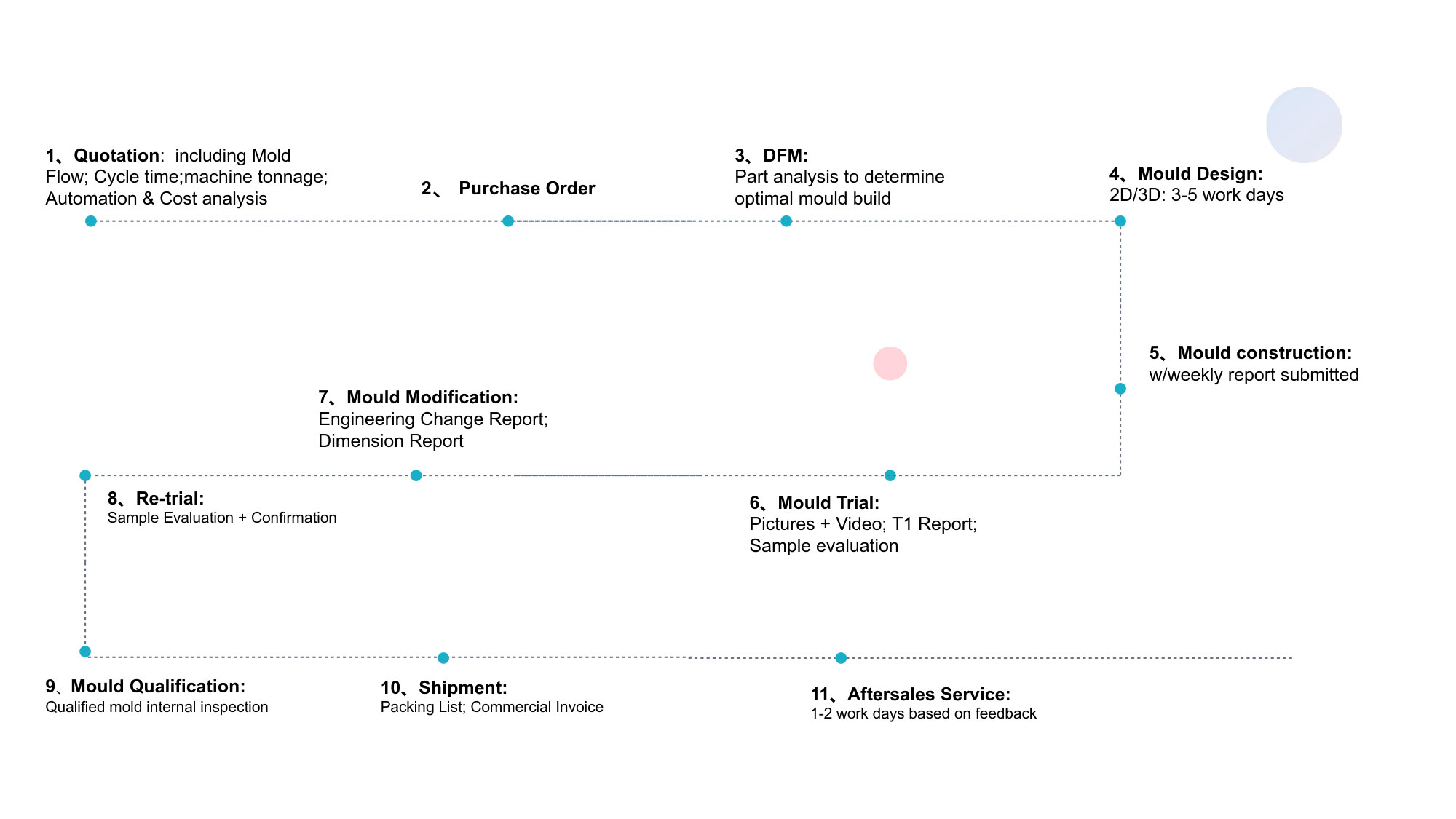
Part VIII: Manufacturing Process Flow – From Design to Delivery
Phase 1: Product Design and Development
Customer Requirement Analysis: Understanding application conditions—fluid type, temperature range, pressure, specific gravity, switching requirements
3D CAD Modeling: Creating detailed product geometry
Material Selection: Based on application conditions and cost targets
DFM Analysis: Identifying and resolving manufacturability issues
Phase 2: Mold Flow Analysis
Using Moldflow simulation software, Ansix analyzes:
Fill time and flow front progression
Pressure distribution during filling
Weld line locations
Air trap positions
Volumetric shrinkage
Cooling efficiency
Warpage prediction
Customer Value: Every potential defect is identified and addressed before tooling begins.
Phase 3: Mold Design
Key design considerations include:
Cooling System Design: Optimized cooling channels (water lines) positioned for uniform temperature distribution. Zone-specific temperature control for complex geometries.
Runner and Gate System: Balanced runner layout ensuring simultaneous cavity filling. Gate types selected based on part geometry and aesthetic requirements.
Ejection System: Strategically positioned ejector pins and sleeves ensuring reliable part release without cosmetic damage.
Venting: Precision venting to eliminate air traps and gas burns.
Phase 4: Mold Manufacturing
Step 1 – Rough Machining: CNC milling of mold base and cavity/core blanks
Step 2 – Heat Treatment: Precise heat treatment achieving specified hardness
Step 3 – Finish Machining: Precision CNC machining to final dimensions
Step 4 – EDM Processing: Wire EDM for fine features, sinker EDM for complex cavities
Step 5 – Surface Finishing: Polishing, texturing, or coating as required
Step 6 – Assembly: Fitting of all components—ejector pins, slides, inserts, hot runner systems
Step 7 – Inspection: Full dimensional verification using CMM
Phase 5: Sample Validation
T0 Trial: First sample from new mold—identifies major issues
T1 Trial: Corrected sample—verifies improvements
T2 Trial: Fine-tuned sample—optimizes process parameters
T3 Trial: Final validated sample—ready for production release
Each trial is accompanied by detailed reports documenting improvements and remaining issues.
Phase 6: Production Qualification
Small-Batch Validation: 100-500 shots to verify process capability
CPK Analysis: Statistical verification of critical dimensions
Yield Analysis: Confirmation of acceptable production yield
Assembly Verification: Validation with mating components
Phase 7: Mass Production
Automated Production: All-servo electric machines with MES integration
In-Process Inspection: Continuous monitoring with real-time feedback
Statistical Process Control: Ongoing CPK monitoring
First-Article / Last-Article Inspection: Verification at start and end of each batch
Phase 8: Quality Assurance and Packaging
Final Inspection: 100% inspection of critical dimensions where specified
Packaging: Customized packaging solutions protecting components during transit
Documentation: Full traceability documentation including material certificates, inspection reports, and CPK data
Phase 9: Delivery and After-Sales Support
On-Time Delivery: Commitment to agreed delivery schedules
Technical Support: Ongoing engineering support for production issues
Mold Maintenance: Scheduled maintenance support
Spare Parts: Ready availability of replacement wear parts
Part IX: Quality Assurance System
Certifications and Standards
Ansix operates under comprehensive quality management systems meeting international standards:
ISO 9001:2015 Quality Management
IATF 16949 (automotive-grade quality systems where applicable)
Quality Control Points
Control Point Method Frequency
Incoming Materials Material certificates, visual inspection Every batch
Mold Manufacturing In-process inspection, CMM verification Every operation
Trial Molding Dimensional inspection, functional testing Every trial
Production First-article, in-process, last-article Every batch
Final Inspection 100% critical dimensions Every part (where specified)
Key Quality Metrics
Critical Dimension CPK ≥ 1.33 – Process capability exceeding industry standards
Flash ≤ 0.03mm – Eliminating secondary deburring operations
Dimensional Variation ≤ 0.02mm – Batch-to-batch consistency
Surface Roughness Ra ≤ 0.2μm – High-gloss finish capability
Part X: Cost Control and Efficiency Optimization
How Ansix Reduces Customer Costs
1. Material Cost Optimization
Hot runner systems reducing material waste by 15-30%
Optimized part design minimizing material consumption
Bulk material purchasing leveraging economies of scale
2. Process Efficiency
Stack molds doubling output per machine cycle
Automated production reducing labor costs
MES-optimized cycle times maximizing machine utilization
3. Quality Cost Reduction
Zero-defect capability reducing scrap and rework
Consistent quality eliminating customer sorting and inspection costs
Long mold life reducing tooling amortization costs
4. Supply Chain Efficiency
Vertical integration eliminating multiple suppliers
In-house tooling reducing lead times and coordination costs
Consolidated shipping reducing logistics costs
5. Lifecycle Cost Reduction
Durable molds reducing replacement frequency
Standardized spare parts reducing inventory costs
Maintenance support extending mold life
Part XI: Industry Experience and Reliability
With over 28 years of manufacturing experience, Ansix has developed deep expertise across multiple industries:
Water Treatment: Corrosion-resistant float switches for pumps, tanks, and treatment systems
Food and Beverage: Hygienic designs meeting food-contact requirements
Medical Devices: Precision components meeting medical-grade standards
Industrial Automation: Reliable switches for machinery and process control
Marine and Offshore: Corrosion-resistant designs for harsh marine environments
HVAC and Refrigeration: Temperature and level sensing solutions
Automotive: IATF 16949-compliant production for automotive applications
Conclusion: The Ansix Advantage
Ansix Tech's position as an industry leader in custom-made stainless steel float switches and level switches is built on a foundation of:
Technical Excellence: State-of-the-art equipment, advanced process control, and deep engineering expertise
Quality Commitment: Comprehensive quality systems, statistical process control, and zero-defect capability
Customer Focus: Early engagement through DFM, transparent communication, and responsive support
Cost Leadership: Process optimization, material efficiency, and vertical integration delivering competitive pricing
Reliability: Proven performance across 28 years and countless customer applications
For customers seeking a manufacturing partner who understands that every mold is an investment in their business success, Ansix Tech delivers the capabilities, commitment, and confidence required for long-term partnership.
"A mold is not just a block of steel—it's a money-printing machine. We design every mold with production efficiency, quality consistency, and operational reliability as primary objectives. When you receive an Ansix mold, it arrives ready for plug-and-play operation—minimum setup, minimum flash, maximum lifespan."
For a deeper understanding of how Ansix can address your specific float switch manufacturing requirements, we invite you to request a comprehensive DFM report for your current project. Experience firsthand how we identify and resolve potential issues before they become problems.
Ansix Tech Co Ltd
If you have any plans related to Custom-made stainless steel float switch, 304 stainless steel float level switch, filling type multi-point float level switch , you can contact us at any time. We will turn your ideas into reality, let you realize your dreams, and obtain large orders from the market. Our contact information is info@ansixtech.com. Or contact our CTO, mail: stephen@ansixtech.com
#www.ansixtech.com #ansixtech.com #Custom-made stainless steel float switch, 304 stainless steel float level switch #Custom-made stainless steel float switch, 304 stainless steel float level switch #Custom-made stainless steel float switch, 304 stainless steel float level switch Canopy Mold injection mold companies #Ansix #Ansix moulds #Ansix china #Ansix tech china #Ansix tech company #Ansix facotry #Custom-made stainless steel float switch, 304 stainless steel float level switch injection molding #Custom-made stainless steel float switch, 304 stainless steel float level switch injection tools #Custom-made stainless steel float switch, 304 stainless steel float level switch injection moulds #Custom-made stainless steel float switch, 304 stainless steel float level switch plastic mould #Custom-made stainless steel float switch, 304 stainless steel float level switch plastic tools #Ansix Tech #Ansix molds #Ansix injection molding #Ansix mold factory #injection molding Custom-made stainless steel float switch, 304 stainless steel float level switch#Ansix mold factory #Custom-made stainless steel float switch, 304 stainless steel float level switch china #Custom-made stainless steel float switch, 304 stainless steel float level switch molds #injection factory #Custom-made stainless steel float switch, 304 stainless steel float level switch injection molding #Custom-made stainless steel float switch, 304 stainless steel float level switch injection molding factory #injection molding company #Custom-made stainless steel float switch, 304 stainless steel float level switch injection mold companies #Custom-made stainless steel float switch, 304 stainless steel float level switch Tooling #Custom-made stainless steel float switch, 304 stainless steel float level switch mold limited #Ansix mold china #Ansix companies #Ansix company China #Custom-made stainless steel float switch, 304 stainless steel float level switch facotry #Ansix Tech #Ansix Tech mould #Custom-made stainless steel float switch, 304 stainless steel float level switch injection moulding #injection moulding company #Ansix Custom-made stainless steel float switch, 304 stainless steel float level switch parts injection mold companies #medical injection molding companieschina #Custom-made stainless steel float switch, 304 stainless steel float level switch china factory #Ansix moulding companies #Ansix molding company #Custom-made stainless steel float switch, 304 stainless steel float level switch injection moulding facotry #Ansix Tech mold #Custom-made stainless steel float switch, 304 stainless steel float level switch mould #Custom-made stainless steel float switch, 304 stainless steel float level switch plastic injection molding #ansix plastic mold #Mold manufacturing #Custom-made stainless steel float switch, 304 stainless steel float level switch parts manufacturing #Custom-made stainless steel float switch, 304 stainless steel float level switch plastic parts factory #Custom-made stainless steel float switch, 304 stainless steel float level switch injection parts mold #Custom-made stainless steel float switch, 304 stainless steel float level switch PRECISION MANUFACTURING #Custom-made stainless steel float switch, 304 stainless steel float level switch #China mold #Custom-made stainless steel float switch, 304 stainless steel float level switch injection moulding china #Custom-made stainless steel float switch, 304 stainless steel float level switch mould china #china precision mold #mold in china #Custom-made stainless steel float switch, 304 stainless steel float level switch mold china #Precision molds #High-precision molds #Custom-made stainless steel float switch, 304 stainless steel float level switch #Injection molds #Custom-made stainless steel float switch, 304 stainless steel float level switch Factory #Custom-made stainless steel float switch, 304 stainless steel float level switch Company #Super Large Injection Mold Factory #Large Tonnage Injection Molding Factory #Custom-made stainless steel float switch, 304 stainless steel float level switch Company #Custom-made stainless steel float switch, 304 stainless steel float level switch Factory #2800T Injection Molding Factory #3000 Ton Injection Molding #4500 Ton Injection Molding Factory #Large Mold Injection Molding #Large Plastic Mold Injection Molding Factory #Large Injection Mold Manufacturer #Plastic Mold Factory #Injection Mold #Plastic Mold