


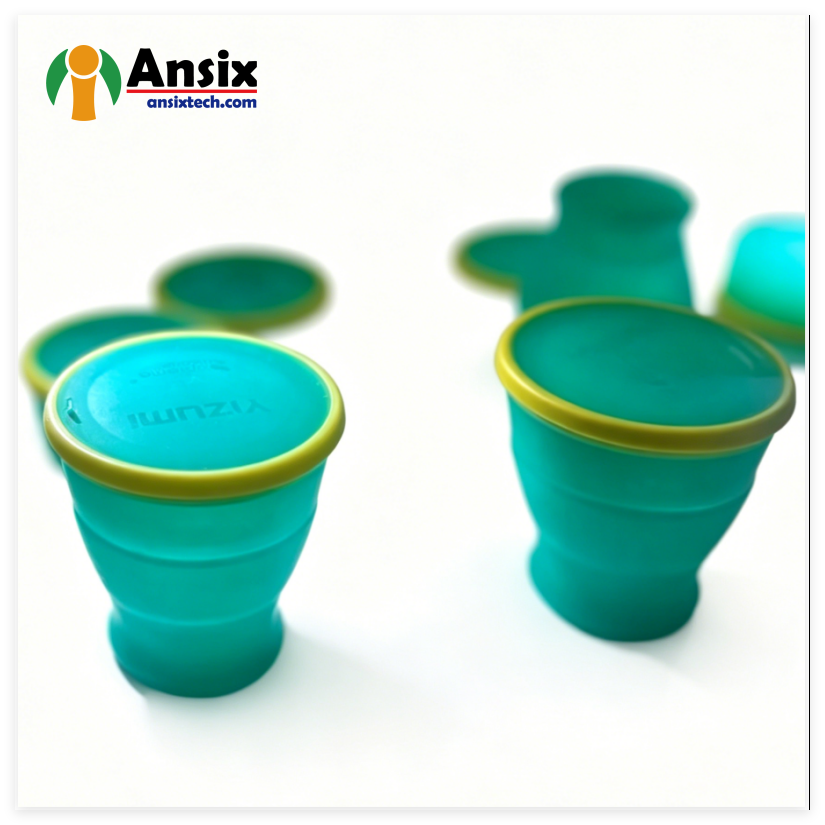


ABS high-polymer powder
ABS high-polymer powder


Ansix Tech Launches Custom ABS High-Polymer Powder Formulation Initiative, Redefining Value in Precision Injection Molding
Industry-first program integrates material science, mold engineering, and process optimization to deliver cost reductions of 15–30% for high-volume ABS components
Ansix Tech Co., Ltd., a premier manufacturer of plastic molds and injection-molded goods with over 29 years of industry experience, today announced the formal launch of its custom ABS high-polymer powder formulation and development project. This strategic initiative establishes Ansix Tech as the first full-service manufacturing partner capable of delivering end-to-end solutions—from proprietary ABS powder compounding and material validation to precision mold design, high-volume injection molding, and final assembly—all under one roof.
The program addresses a critical gap in the plastics manufacturing value chain: the disconnect between raw material suppliers who lack application-specific molding expertise and mold makers who lack control over material properties. By bridging this divide, Ansix Tech empowers customers to achieve superior part performance, predictable production outcomes, and total cost reductions of 15–30% across material, processing, and quality assurance.
Understanding ABS High-Polymer Powder: Composition, Properties, and Technical Specifications
What Is ABS High-Polymer Powder?
ABS high-polymer powder—formally known as Acrylonitrile-Butadiene-Styrene high-rubber graft copolymer powder—is a specialized engineering thermoplastic material produced through emulsion polymerization and coagulation processes. The material's chemical name (IUPAC) is Polybutadiene-graft-poly(acrylonitrile-co-styrene), with CAS Registry Number 9003-56-9 and chemical formula (C₈H₈•C₄H₆•C₃H₃N)ₙ.
The powder consists of a core-shell polymer architecture in which rubber particles (the butadiene phase, typically 40–68% by weight) serve as the dispersed phase, while the styrene-acrylonitrile (SAN) copolymer forms the continuous matrix. This unique morphology—a hallmark of high-impact ABS systems—enables the material to absorb and dissipate impact energy through rubber particle cavitation and shear banding, delivering exceptional toughness without sacrificing stiffness or processability.
Common commercial grades include Kumho HR-181, BASF VLK, INEOS Styrolution Luran® HH-120, Shandong Yigong EB-168, and various domestic Chinese formulations such as JHS-4 and WD-132. The rubber content typically ranges from 55% to 70%, with high-rubber variants enabling compounders to achieve target mechanical properties with lower overall loading levels—typically 23–28% high-rubber powder versus 28–33% for standard low-rubber grades.
Comprehensive Technical Data Sheet (TDS) for ABS High-Polymer Powder


The following technical specifications represent typical values for premium-grade ABS high-polymer powder, compiled from industry-standard data sheets including Shandong Yigong EB-168, Kumho HR-181, and INEOS Styrolution Luran® HH-120.
Physical Properties:
Appearance: White or slightly yellow free-flowing powder
Particle Size: 100–200 mesh (typical); bulk density 0.30–0.60 g/cm³
Density (solid): Approximately 1.03–1.05 g/cm³
Volatility (moisture content): ≤1.0%
Ash Content: ≤1.0%
Mechanical Properties (ASTM D638/ISO 527):
Tensile Strength: 44.43–79.0 MPa
Elongation at Break: 21.25–67%
Flexural (Bending) Modulus: 1,958–2,385 MPa
Flexural Strength: 65.67–135 MPa
Rockwell Hardness (R-Scale): 106–124
Impact Properties:
Izod Notched Impact Strength: 1.2–12 kg·cm/cm (ASTM D256/ISO 179)
Charpy Unnotched Impact Strength: 20–21 kJ/m² (ISO 179)
Thermal Properties:
Vicat Softening Temperature: 97.5–120°C (ASTM D1525/ISO R306)
Heat Deflection Temperature (HDT): 98–110°C at 0.45MPa (ISO 75-2/B)
Melt Flow Index (MFI): 1–15.25 g/10 min at 220°C/10kg
Melt Volume Flow Rate (MVR): 7.00 cm³/10min at 220°C/10kg
Processing Temperature Range: 170–230°C
Mold Temperature Range: 60–80°C
Drying Conditions: 80°C for 2–4 hours
Coefficient of Linear Thermal Expansion: 7×10⁻⁵ cm/cm/°C
Electrical Properties:
Surface Resistivity: >1.0×10¹⁵ ohms
Volume Resistivity: 1×10¹⁶ ohms·cm
Dielectric Constant (100Hz): 3.00
Dissipation Factor (100Hz): 5×10⁻³
Optical Properties (for transparent grades):
Refractive Index: 1.567
Transmissivity (550nm): >89.0%
Turbidity: <1.0%
Mold Shrinkage: 0.30–0.70% (ISO 294-4)
Shelf Life: 12 months when stored in cool, dry, well-ventilated conditions away from direct sunlight and ignition sources
Application Landscape: Where ABS High-Polymer Powder Delivers Value
ABS high-polymer powder serves as a critical performance-enhancing additive and base resin across diverse industries. Its combination of high impact resistance, excellent surface gloss, heat resistance, chemical resistance, and ease of processing makes it indispensable for:
Automotive Components: Interior trim panels, instrument clusters, door handles, pillar covers, and painted assemblies where dimensional stability and paint adhesion are paramount.
Consumer Electronics and 3C Products: Housings for laptops, monitors, printers, and handheld devices requiring high-gloss finishes, EMI shielding compatibility, and thin-wall molding capability.
Home Appliances: Refrigerator liners, washing machine components, air conditioner panels, and small appliance housings where chemical resistance to detergents and thermal cycling performance are required.
Medical Devices: Equipment housings, sensor covers, and diagnostic tool components demanding biocompatibility, sterilization resistance, and precision dimensional control.
Industrial and Construction Applications: Pipe fittings, valve components, power tool housings, and heavy-duty equipment enclosures requiring high toughness and weather resistance.
Polymer Modification: As a toughening modifier for PC-based blends, SAN copolymers, SMA resins, and PVC compounds; as a binding agent in masterbatch production; and as a processing aid in extrusion and thermoforming applications.
Ansix Tech's Custom Formulation Initiative: Project Overview and Strategic Rationale
From Material Sourcing to Proprietary Compounding
Historically, manufacturers of ABS components faced a fundamental constraint: they could either select from commercially available ABS grades with fixed property profiles or engage large-scale compounders for custom formulations—a process that typically required minimum order quantities of 100+ metric tons and carried lead times of 12–16 weeks.
Ansix Tech's new initiative fundamentally changes this paradigm. The company has established an in-house ABS high-polymer powder compounding and formulation development laboratory staffed by polymer scientists with expertise in emulsion polymerization, graft copolymerization, and melt compounding. This capability enables Ansix Tech to:
Develop proprietary formulations tailored to specific application requirements—whether the priority is impact resistance, heat deflection temperature, flowability for thin-wall molding, or aesthetic surface quality.
Optimize rubber particle size distribution to balance toughness and processability—a critical variable that directly influences melt flow and molded part performance.
Incorporate functional additives including UV stabilizers, antioxidants, flame retardants, flow control agents, and colorants during the compounding stage, eliminating secondary processing steps.
Reduce material costs by formulating with optimal rubber content levels—typically 23–28% high-rubber powder versus 28–33% for standard grades—achieving target properties with lower overall material consumption.
The Customer Value Proposition
For Ansix Tech's customers—ranging from automotive OEMs and medical device manufacturers to consumer electronics brands and industrial equipment producers—the custom formulation program delivers seven distinct value streams:
- Application-Specific Material Optimization: Rather than forcing a design to accommodate a standard material, Ansix Tech tailors the material to the design. This approach yields parts with superior mechanical properties, better surface aesthetics, and longer service life.
- Elimination of Supply Chain Fragmentation: Customers previously managed separate relationships with material suppliers, mold makers, and injection molders—each with their own quality standards, lead times, and cost structures. Ansix Tech consolidates all three disciplines into a single, accountable partnership.
- Predictable Production Outcomes: By controlling material properties from the powder stage through final molding, Ansix Tech eliminates variability introduced by inconsistent raw material batches—a leading cause of scrap, rework, and production delays.
- Accelerated Time-to-Market: Custom formulation development runs in parallel with mold design and process development, compressing the typical 16–20 week development cycle to 8–10 weeks.
- Total Cost Reduction: The integration of material science, mold engineering, and process optimization enables cost savings that cannot be achieved through isolated optimizations—typically 15–30% reduction in total landed cost per part.
- Risk Mitigation: Full material traceability from raw powder receipt through final part shipment, combined with rigorous in-process quality controls, ensures consistent quality across million-cycle production runs.
- Sustainability: Optimized formulations reduce material consumption per part, while improved process efficiency lowers energy consumption and scrap generation.
Material Validation and Quality Assurance: Ansix Tech's Rigorous Verification Protocol
Quality validation for ABS high-polymer powder formulations at Ansix Tech follows a comprehensive, multi-stage protocol that exceeds industry standards:
Stage 1: Raw Material Incoming Inspection
Every shipment of ABS high-polymer powder—whether standard commercial grade or custom-formulated—undergoes incoming inspection including:
Moisture content analysis (Karl Fischer titration, target ≤0.1%)
Particle size distribution (laser diffraction, 100–200 mesh specification)
Melt flow index verification (ASTM D1238/ISO 1133)
Color and appearance inspection (visual and spectrophotometric)
Ash content determination (target ≤1.0%)
Chemical composition verification (FTIR spectroscopy)
Stage 2: Formulation Development and Laboratory Testing
For custom formulations, the development process includes:
Design of Experiments (DoE) to optimize rubber content, additive package, and processing parameters
Mechanical property testing including tensile strength, flexural modulus, impact resistance, and hardness
Thermal property characterization including Vicat softening temperature, HDT, and melt flow behavior
Mold shrinkage measurement to ensure dimensional predictability
Accelerated aging studies to validate long-term performance
Stage 3: Pilot-Scale Validation
Before committing to full-scale production, Ansix Tech conducts pilot-scale trials on production-equivalent injection molding machines to validate:
Melt temperature stability (target 210–240°C)
Mold filling behavior (flow length, weld line integrity, venting)
Cycle time optimization (injection, packing, cooling, ejection)
Part quality attributes (dimensions, surface finish, mechanical properties)
Process capability (CpK ≥1.33 for critical dimensions)
Stage 4: Production Validation
Full-scale production validation includes:
First Article Inspection (FAI) per AS9102 or customer-specific requirements
Process Failure Mode and Effects Analysis (PFMEA)
Control Plan development covering every process parameter
Statistical Process Control (SPC) implementation for real-time quality monitoring
Material certification with full traceability from raw material receipt through final assembly
Stage 5: Ongoing Quality Surveillance
Ansix Tech maintains ISO9001, IATF16949, ISO13485, and ISO14001 certifications, with an ISO 8 Cleanroom compliant with US FDA 510K medical-grade standards. Every production lot undergoes:
In-process inspection at defined intervals
Final inspection per customer-approved acceptance criteria
Retained sample storage for audit and failure analysis purposes
Continuous improvement through data-driven process optimization
Cost Reduction: How Ansix Tech Delivers 15–30% Total Cost Savings
Ansix Tech's cost reduction strategy operates across four interconnected dimensions:
- Material Cost Optimization
Through custom formulation, Ansix Tech reduces material costs by:
Optimizing rubber content to achieve target properties with minimum material usage—typically 5–10% less than standard grades
Eliminating over-specification by matching material properties precisely to application requirements
Consolidating multiple material grades into a single custom formulation for family-of-parts applications
Reducing additive costs by incorporating functional additives during compounding rather than as post-processing steps
- Process Efficiency Optimization
Ansix Tech's 260 injection molding machines—including Fanuc, Sumitomo, Toshiba, Nissei, Engel, and Arburg brands with clamping forces from 30 to 4,000 tons—enable process optimization through:
Cycle time reduction through optimized cooling system design and process parameter tuning
Scrap reduction through statistical process control and automated defect detection
Energy efficiency through all-electric machine technology and optimized thermal profiles
Labor productivity through automated material handling, part removal, and packaging systems
- Tooling and Mold Design Optimization
Ansix Tech's in-house mold manufacturing capability—including five-axis high-speed machining centers achieving ±0.002 mm accuracy—delivers cost savings through:
Optimized cooling system design reducing cycle times by 15–25%
Multi-cavity mold configurations increasing throughput per machine hour
Hot runner systems eliminating sprue and runner waste (material savings of 5–15%)
Durable mold materials (Ansix 102-grade steel) extending tool life to 1+ million shots
Design for Manufacturability (DFM) reviews identifying cost reduction opportunities before tool steel is cut
- Supply Chain and Logistics Optimization
With four production bases in Shenzhen, Dongguan, Hunan, and Vietnam—covering over 200,000 square meters with 1,200+ employees—Ansix Tech achieves cost savings through:
Geographic proximity to customer manufacturing operations, reducing logistics costs
Vertical integration eliminating supplier margins and coordination costs
Economies of scale across high-volume production runs
Just-in-Time (JIT) delivery reducing customer inventory carrying costs
Capacity Expansion and Delivery Assurance: Meeting High-Volume Demands
Production Capacity
Ansix Tech's manufacturing infrastructure is designed for scalability and reliability:
260 injection molding machines with clamping forces from 30 to 4,000 tons
Four production bases across China and Vietnam
Over 200,000 square meters of manufacturing floor space
1,200+ employees including 200+ engineers and technicians
Annual turnover exceeding one billion RMB
Delivery Assurance
Ansix Tech guarantees on-time delivery through:
Advanced production planning systems with real-time capacity visibility
Safety stock programs for critical raw materials and finished goods
Dedicated project management teams for each customer program
Flexible production scheduling accommodating urgent orders and design changes
Multiple shipping options including air freight, ocean freight, and express delivery
From Concept to Production: The Complete Manufacturing Workflow
Phase 1: Material Selection and Custom Formulation Development
The journey begins with Ansix Tech's materials science team collaborating with the customer to define:
Mechanical property requirements (tensile, flexural, impact, hardness)
Thermal requirements (heat deflection temperature, Vicat softening point)
Aesthetic requirements (color, gloss, surface texture)
Regulatory requirements (UL94, FDA, REACH, RoHS)
Processing requirements (melt flow, mold shrinkage, drying conditions)
Based on these inputs, the team selects or develops the optimal ABS high-polymer powder formulation, specifying the exact grade and additive package.
Phase 2: Mold Flow Analysis and Design for Manufacturability (DFM)
Ansix Tech conducts comprehensive mold flow analysis using advanced simulation software (Moldex3D Flow) to:
Predict melt flow behavior throughout the cavity
Optimize gate location and runner design for balanced filling
Identify potential defects including weld lines, air traps, and sink marks
Validate cooling system effectiveness for cycle time optimization
Simulate part shrinkage and warpage for dimensional accuracy
The DFM review covers:
Parting line selection for optimal mold construction and part ejection
Draft angle optimization for reliable part release
Wall thickness analysis for uniform cooling and reduced cycle times
Rib and boss design for structural integrity without sink marks
Tolerance analysis ensuring capability to meet customer specifications
Phase 3: Mold Design and Engineering
Ansix Tech's mold design team—with 29 years of precision injection mold experience—focuses on:
Mold Base and Cavity/ Core Steel Selection:
Cavity steel: Premium tool steels (e.g., S136, 420SS, or Ansix 102-grade) for wear resistance and corrosion protection
Core steel: Tough, through-hardened steels for durability under high clamping forces
Heat treatment: Precise hardening and tempering with full documentation
Cooling System Design:
Conformal cooling channels following part contours for uniform temperature distribution
Baffled and bubbler cooling for deep cores and hard-to-reach areas
Coolant temperature control (60–80°C mold temperature)
Flow rate optimization ensuring turbulent flow for efficient heat transfer
Runner and Gate System Design:
Hot runner systems for material savings and cycle time reduction
Cold runner optimization for minimum material waste
Gate type selection (pin, submarine, edge, or fan gates) based on part geometry and aesthetic requirements
Gate location for balanced filling and minimal flow-induced stress
Ejection System Design:
Ejector pin placement for uniform part ejection without distortion
Stripper plate or sleeve ejection for thin-walled or deep-drawn parts
Air ejection for delicate or complex geometries
Robot-friendly design for automated part removal
Phase 4: Mold Manufacturing and Machining
Ansix Tech's mold workshop features state-of-the-art equipment including five-axis high-speed machining centers capable of ±0.002 mm contour accuracy. The manufacturing process follows a disciplined workflow:
CNC machining of mold base, cavities, cores, and inserts
EDM (Electrical Discharge Machining) for complex geometries, sharp corners, and deep ribs
Wire EDM for precision shut-off surfaces and intricate details
Surface grinding for flatness and parallelism
Polishing and texturing for specified surface finishes (SPI grades A1–D3)
Assembly of all mold components including slides, lifters, and actuation mechanisms
Bench fitting and validation of all moving components
Heat treatment (where specified) with full documentation
Final inspection and dimensional verification
Phase 5: Mold Tryout and Process Development
Before production release, every mold undergoes rigorous tryout:
Dry cycling to validate mechanical function
Short-shot studies to observe fill patterns and identify flow issues
Process window development to establish robust operating parameters
Dimensional verification of first-shot parts against CAD models
Cosmetic inspection for surface defects, flow lines, and gate vestiges
Corrective action for any identified issues
Phase 6: ABS High-Polymer Powder Injection Molding—Process Optimization
ABS high-polymer powder injection molding presents unique challenges due to the material's rubber content, which affects melt flow, thermal stability, and mold filling behavior. Ansix Tech's process engineers optimize:
Drying:
Temperature: 80°C
Time: 2–4 hours
Equipment: Dehumidifying dryer to achieve moisture content ≤0.01%
Injection Unit:
Melt temperature: 210–240°C
Back pressure: Optimized for melt homogeneity without thermal degradation
Screw speed: Controlled to prevent shear-induced material degradation
Clamping Unit:
Clamp force: Sufficient to prevent flash (typically 3–5 tons per square inch of projected area)
Mold temperature: 60–80°C for optimal surface finish and dimensional stability
Injection Parameters:
Injection pressure: 100–150 kgf/cm²
Injection speed: Optimized for balanced filling without flow-induced stress
Packing pressure and time: Critical for dimensional accuracy and sink mark prevention
Cooling time: Largest variable in cycle time; optimized through cooling system design
Holding Pressure and Time:
Research demonstrates that holding pressure and melt temperature are the most influential parameters affecting part mass and quality
Ansix Tech's process engineers use Design of Experiments (DoE) to identify optimal settings for each unique part geometry and material formulation
Phase 7: Quality Control and Assurance
Throughout production, Ansix Tech maintains rigorous quality controls:
In-Process Inspection:
First-off inspection at shift start and after any process interruption
Routine dimensional checks (every 1–2 hours)
Visual inspection for surface defects, flow lines, and color consistency
Process parameter monitoring with alarms for out-of-spec conditions
Final Inspection:
100% critical dimension inspection (where specified)
Sampling per ANSI/ASQ Z1.4 (or customer-specified AQL levels)
Mechanical property testing on representative samples
Function and assembly testing (where applicable)
Documentation and Traceability:
Material certifications for every batch of ABS high-polymer powder
Process parameter logs for every production run
Inspection records with full traceability to production date and shift
Non-conformance reports and corrective action documentation
Phase 8: Packaging, Logistics, and Rapid Delivery
Ansix Tech's packaging and logistics operation ensures product integrity and timely delivery:
Packaging:
Standard packaging: 25 kg multi-layer paper bags with inner plastic lining for moisture protection
Custom packaging: Designed to customer specifications (totes, gaylords, drums)
Protective packaging: Corner protectors, stretch wrap, and palletization for damage prevention
Labeling: Full traceability with lot numbers, material grades, and production dates
Shipping:
Container loading: 20′ FCL typically loaded with 16–18 metric tons
Climate-controlled shipping for moisture-sensitive materials
Real-time tracking and proactive notification to customers
Multiple logistics partners ensuring competitive rates and reliable service
Delivery:
Standard lead times: 4–6 weeks from order confirmation (molded parts)
Expedited options: 2–3 weeks for urgent requirements
Just-in-Time (JIT) delivery programs for high-volume, recurring orders
Safety stock programs to buffer against supply chain disruptions
Industry Experience and Proven Reliability
Ansix Tech brings nearly three decades of precision injection molding and mold manufacturing expertise to every customer engagement. The company's track record includes:
Thousands of successful mold projects across automotive, medical, consumer electronics, industrial, and appliance sectors
Million-cycle production runs demonstrating tool durability and process stability
Global customer base spanning North America, Europe, and Asia
Industry certifications including ISO9001, IATF16949, ISO13485, ISO14001, and BSCI
The company's philosophy is straightforward: every technical capability must translate into measurable customer value. Whether the requirement is a complex multi-cavity mold, a high-precision medical component, or a high-volume consumer product, Ansix Tech delivers solutions that reduce total system cost, eliminate assembly failures, compress supply chain complexity, and deliver repeatable, auditable quality over million-cycle production runs.
Conclusion: A New Standard in ABS Component Manufacturing
Ansix Tech's custom ABS high-polymer powder formulation initiative represents a significant advancement in the plastics manufacturing industry. By integrating material science, mold engineering, and injection molding process optimization under one roof, the company delivers value that no fragmented supply chain can match:
Superior part performance through application-specific material formulation
Predictable production outcomes through complete material and process control
Total cost reduction of 15–30% through material, process, and supply chain optimization
Accelerated time-to-market through parallel development of material, mold, and process
Uncompromising quality through rigorous validation and quality assurance protocols
For manufacturers seeking to elevate their ABS component quality while reducing costs and compressing lead times, Ansix Tech offers a complete, integrated solution—from powder to part, from concept to production.
About Ansix Tech Co., Ltd.
Ansix Tech is a professional toolmaker and manufacturer specializing in the R&D, design, manufacturing, sales, and service of plastic molds and injection-molded goods. Founded in Hong Kong in 1998, the company operates four production bases in Shenzhen, Dongguan, Hunan, and Vietnam, with over 200,000 square meters of manufacturing space, 260 injection molding machines, and 1,200+ employees. Ansix Tech holds ISO9001, IATF16949, ISO13485, ISO14001, and BSCI certifications and operates an ISO 8 Cleanroom compliant with US FDA 510K standards. The company serves customers across automotive, medical, consumer electronics, industrial, and appliance sectors worldwide.
Media Contact:
Ansix Tech Co., Ltd.
Email: info@ansixtech.com
Website: www.ansixtech.com
Ansix Tech Co Ltd
If you have any plans related to ABS high-polymer powder , you can contact us at any time. We will turn your ideas into reality, let you realize your dreams, and obtain large orders from the market. Our contact information is info@ansixtech.com. Or contact our CTO, mail: stephen@ansixtech.com
#www.ansixtech.com #ansixtech.com #ABS high-polymer powder #ABS high-polymer powder #ABS high-polymer powder Canopy Mold injection mold companies #Ansix #Ansix moulds #Ansix china #Ansix tech china #Ansix tech company #Ansix facotry #ABS high-polymer powderinjection molding #ABS high-polymer powderinjection tools #ABS high-polymer powderinjection moulds #ABS high-polymer powderplastic mould #ABS high-polymer powderplastic tools #Ansix Tech #Ansix molds #Ansix injection molding #Ansix mold factory #injection molding Customized stainless steel float switch for water level, oil level, high liquid level alarm#Ansix mold factory #ABS high-polymer powderchina #ABS high-polymer powdermolds #injection factory #ABS high-polymer powderinjection molding #ABS high-polymer powderinjection molding factory #injection molding company #ABS high-polymer powderinjection mold companies #ABS high-polymer powderTooling #ABS high-polymer powdermold limited #Ansix mold china #Ansix companies #Ansix company China #ABS high-polymer powderfacotry #Ansix Tech #Ansix Tech mould #ABS high-polymer powderinjection moulding #injection moulding company #Ansix ABS high-polymer powderparts injection mold companies #medical injection molding companieschina #ABS high-polymer powderchina factory #Ansix moulding companies #Ansix molding company #ABS high-polymer powderinjection moulding facotry #Ansix Tech mold #ABS high-polymer powdermould #ABS high-polymer powderplastic injection molding #ansix plastic mold #Mold manufacturing #ABS high-polymer powderparts manufacturing #ABS high-polymer powderplastic parts factory #ABS high-polymer powderinjection parts mold #ABS high-polymer powderPRECISION MANUFACTURING #ABS high-polymer powder#China mold #ABS high-polymer powderinjection moulding china #ABS high-polymer powdermould china #china precision mold #mold in china #ABS high-polymer powdermold china #Precision molds #High-precision molds #ABS high-polymer powder#Injection molds #ABS high-polymer powderFactory #ABS high-polymer powderCompany #Super Large Injection Mold Factory #Large Tonnage Injection Molding Factory #ABS high-polymer powderCompany #ABS high-polymer powderFactory #2800T Injection Molding Factory #3000 Ton Injection Molding #4500 Ton Injection Molding Factory #Large Mold Injection Molding #Large Plastic Mold Injection Molding Factory #Large Injection Mold Manufacturer #Plastic Mold Factory #Injection Mold #Plastic Mold