


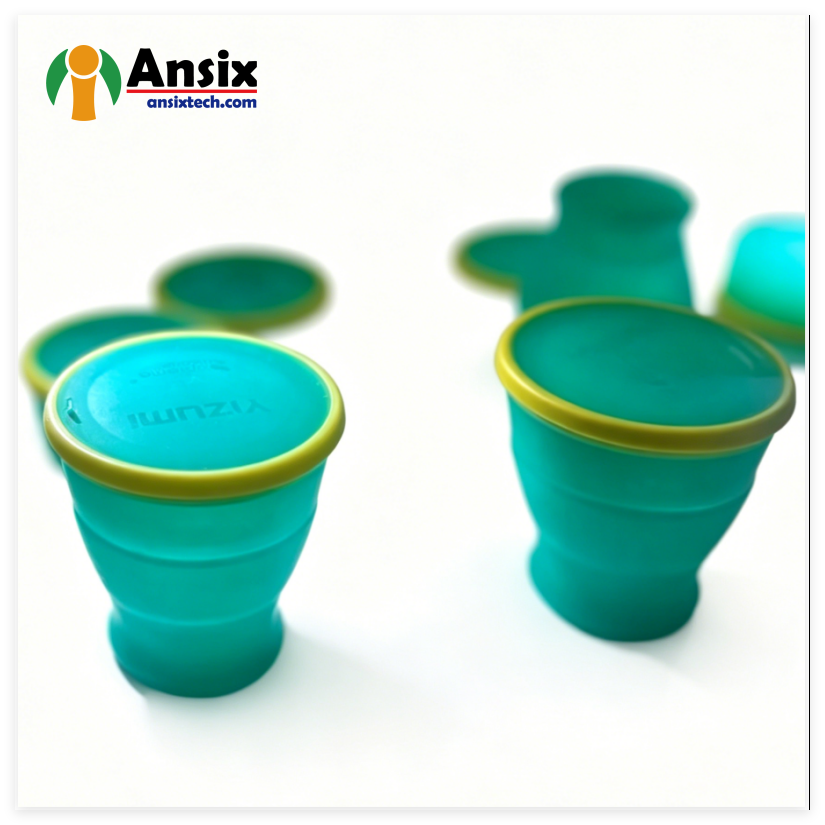


CAB
CAB


Ansix Tech Launches Specialized CAB Custom Formulation Project: Redefining Cellulose Acetate Butyrate Injection Molding Through Integrated Engineering Excellence
SHENZHEN, GUANGDONG, CHINA – In a strategic move that signals a new era for cellulose-based thermoplastic manufacturing, Ansix Tech, a precision injection molding specialist with over 29 years of industry heritage, has formally announced the launch of its Cellulose Acetate Butyrate (CAB) Custom Formulation Project. This comprehensive initiative represents a significant milestone in the company's commitment to delivering end-to-end solutions for clients demanding high-performance CAB components across automotive, medical device, consumer electronics, and specialty plastics markets.
With four production bases spanning China and Vietnam, a fleet of 260 injection molding machines ranging from 30 tons to 2,800 tons clamping force, over 1,200 employees including more than 200 dedicated design engineers, and a cumulative track record of building more than 30,000 mold sets since its founding in Hong Kong in 1998, Ansix Tech brings unparalleled depth of experience to this ambitious undertaking. The company holds ISO9001, ISO14001, IATF16949, and ISO13485 certifications, with an automated machining ratio of 70% and an average of just two mold trials before production readiness.
This report provides a comprehensive examination of Ansix Tech's CAB Custom Formulation Project—from material science fundamentals and technical data sheet (TDS) specifications through mold design, manufacturing validation, production optimization, and the systematic delivery of customer value across the entire manufacturing lifecycle.
Part One: Cellulose Acetate Butyrate (CAB) — Material Fundamentals and Technical Specifications
1.1 What is CAB? Full Name and Chemical Identity
Cellulose Acetate Butyrate, universally abbreviated as CAB, is a semi-synthetic thermoplastic polymer derived from cellulose—one of the most abundant natural renewable resources on Earth. Chemically, CAB is a mixed ester produced by treating fibrous cellulose with butyric acid, acetic acid, and their respective anhydrides in the presence of a sulfuric acid catalyst. The process involves partially substituting the hydroxyl groups of the cellulose polymer chain with acetate and butyrate groups, creating a material that retains the natural backbone of cellulose while acquiring enhanced thermoplastic processability and performance characteristics.
The molecular structure of CAB is defined by three key functional group parameters: acetyl content, butyryl content, and hydroxyl content. These variables are meticulously controlled during the esterification process to produce a wide spectrum of grades tailored to specific application requirements. The butyryl content is particularly significant, as it governs the material's solubility, compatibility with other resins and plasticizers, and overall flexibility profile. High butyryl content grades offer reduced dry-to-touch time and enhanced flexibility, while low butyryl content grades deliver superior toughness and heat resistance.
CAB became a commercial product in 1938 and has since evolved into one of the most versatile cellulose esters available to industry. Its chemical identity is registered under CAS Number 9004-36-8, and it is known by numerous trade names including Tenite Butyrate, Eastman CAB, Cellidor, and Uvex. The material is typically supplied in the form of pellets or free-flowing powder, prepared by mixing the molten ester with plasticizers, then extruding and pelletizing.
One of the most compelling attributes of CAB in the context of modern sustainable manufacturing is its bio-based content. Eastman's CAB grades, for example, demonstrate bio-content values ranging from 37% to 46%, calculated using six bio-based carbon atoms per anhydroglucose unit divided by the total number of carbons per anhydroglucose unit. This positions CAB as an environmentally conscious material choice in an era of increasing regulatory pressure and consumer demand for sustainable alternatives to petroleum-based plastics.
1.2 CAB Technical Data Sheet (TDS) — Comprehensive Material Properties


The technical data sheet for Cellulose Acetate Butyrate reveals a material with an exceptional balance of physical, mechanical, thermal, and optical properties that make it uniquely suited for demanding injection molding applications.
Physical Properties:
CAB exhibits a density ranging from 1.15 to 1.25 g/cm³, with specific gravity typically reported at 1.18 to 1.20. The material presents as a white to off-white granular crystalline powder or pelletized form. Its refractive index is approximately 1.475, contributing to its outstanding optical clarity. Bulk density varies by grade, with poured densities ranging from 336 to 400 kg/m³ and tapped densities from 432 to 512 kg/m³.
Mechanical Properties:
CAB is recognized as one of the toughest of the cellulosic plastics. Typical mechanical property values include a tensile strength of approximately 35 MPa, a flexural modulus of 1.3 GPa, and a notched Izod impact strength of 0.26 kJ/m. The material demonstrates excellent dimensional stability, low-temperature impact strength, and superior scratch resistance compared to other cellulose-based polymers. Surface hardness, as measured by the Tukon method, ranges from 14 to 18 Knoops depending on the specific grade and formulation.
Thermal Properties:
The glass transition temperature (Tg) of CAB varies significantly with butyryl content, ranging from approximately 96°C for high-butyryl grades (such as CAB-500-5 with 51% butyryl content) to 128°C for lower-butyryl grades (such as CAB-381-20BP with 35.5% butyryl content). The melting point is typically in the range of 130-150°C. Heat stability testing at 160°C for eight hours typically results in a tan melt, indicating the material's ability to withstand elevated processing temperatures without significant degradation.
Electrical Properties:
CAB exhibits excellent dielectric properties, with a dielectric strength of 787-984 kV/cm (2-2.5 kV/mil), making it suitable for electrical and electronic applications where insulation performance is critical.
Chemical Resistance and Environmental Stability:
CAB demonstrates good resistance to inorganic chemicals, excellent weatherability, and superior UV stability. It is soluble in acetone, methylene chloride, and mixtures of methanol and methylene chloride, with solubility characteristics dependent on butyryl content. The material has a limiting oxygen index (LOI) of approximately 17% and exhibits HB flammability rating. Its moisture resistance is notably improved compared to cellulose acetate, making it suitable for outdoor applications.
1.3 CAB Grade Classification and Selection Criteria
The ASTM D707-15(2023) standard provides a classification system for plasticized cellulose acetate butyrate thermoplastic compounds suitable for injection molding and extrusion. These compounds typically have a butyryl content of less than 38% and an acetyl content of less than 15%, and may contain dyes, pigments, and plasticizers.
Leading CAB grades available in the market include:
CAB-381-20BP: Features 15.5% acetyl content, 35.5% butyryl content, 0.8% hydroxyl content, and a viscosity of 16 poises. This grade exhibits a Tg of 128°C and is designed primarily for coatings applications, producing clear, colorless solutions when dissolved in appropriate solvents.
CAB-500-5: Characterized by high butyryl content (51%), low acetyl content (3%), low hydroxyl content (1%), and medium ASTM(A) viscosity. This grade produces relatively soft, flexible films requiring little or no plasticizer and offers a wide range of solubility and compatibility with nonpolar aliphatic and aromatic hydrocarbons.
CAB-551-0.01: A low-viscosity grade that gives clear films, reduces surface tack and mottling, minimizes cratering, improves flow and thermal reflow, and provides intercoat adhesion with good UV stability.
CAB-171-15: The lowest butyryl content grade in the Eastman cellulose ester product line, featuring 16.5-19% butyryl content and 0.8-1.4% hydroxyl content.
The selection of the appropriate CAB grade must be based on application requirements, solvent compatibility, desired film characteristics (flexibility, hardness, gloss), and processability considerations including viscosity and drying speed.
Part Two: CAB Application Landscape — Where Ansix Tech's Expertise Delivers Value
Cellulose Acetate Butyrate's unique combination of properties has established it as a material of choice across a remarkably diverse range of industries and applications.
2.1 Automotive Applications
In the automotive sector, CAB is widely employed for both interior and exterior applications. The material's exceptional clarity, scratch resistance, toughness, and UV stability make it ideal for automotive trim components, instrument housing, skylights, and protective coatings. In coatings applications, CAB serves as a key binder or additive that modifies rheology, reduces surface tension, and rapidly builds viscosity upon curing. Automotive clear coats formulated with CAB demonstrate enhanced durability, gloss retention, and resistance to abrasion and environmental exposure. The material's dimensional stability and low-temperature impact strength are particularly valued in automotive interior applications where components must maintain their integrity across wide temperature ranges.
2.2 Medical Devices and Healthcare
The medical device industry has increasingly turned to CAB for applications requiring transparency, chemical resistance, and biocompatibility. CAB is utilized in surgical instruments, medical housings, connectors, and closures. Its ability to be processed into clear, dimensionally stable components with excellent chemical resistance makes it suitable for fluid handling applications, diagnostic equipment, and pharmaceutical packaging. Ansix Tech's ISO13485 certification and ISO 8 cleanroom production environment position the company as a qualified partner for medical device OEMs seeking CAB-based solutions.
2.3 Consumer Goods and Optical Applications
CAB's exceptional clarity surpasses that of closely related cellulose esters, making it ideal for applications demanding pristine visuals. This includes precision optical components such as lenses, displays, and high-clarity packaging. Consumer goods manufactured from CAB include tool handles, spectacle frames, combs, pens, ski goggles, and toys. The material's toughness, rigidity, and good thermal stability make it suitable for durable consumer products that must withstand regular use.
2.4 Coatings, Inks, and Films
CAB serves as a versatile component in coatings, inks, and film applications. In industrial and automotive coatings, it enhances durability and gloss retention. In printing inks, CAB provides fast-drying and scratch-resistant formulations. The material is used in lacquers for glass, plastic, wire, and release coatings. Its film-forming properties and chemical stability make it valuable for protective coatings, packaging films, and high-performance membranes for filtration systems.
2.5 Specialty Plastics and Molding
CAB is processed through multiple manufacturing methods including extrusion, injection molding, blow molding, rotational molding, and thermoforming. Applications in this category include pipe, tool handles, instrument housing, lighting, packaging film, marine hardware, and decorative parts requiring toughness and paint adhesion.
Part Three: Ansix Tech's CAB Custom Formulation Project — A New Paradigm in Material Development
3.1 Project Initiation: Understanding the Market Need
The launch of Ansix Tech's CAB Custom Formulation Project responds to a growing industry challenge: the gap between off-the-shelf CAB grades and the specific performance requirements of demanding applications. Standard CAB grades, while versatile, may not deliver the optimal balance of flow characteristics, mechanical properties, thermal stability, and cost-effectiveness required for high-volume, precision injection molding applications.
Ansix Tech's approach begins with a comprehensive understanding of each customer's application requirements. The company's team of more than 200 design engineers collaborates closely with clients to define the precise material specifications needed—including specific acetyl/butyryl ratios, plasticizer content, viscosity targets, and additive packages. This collaborative approach ensures that the custom-formulated CAB compound is engineered for success from the very first shot.
3.2 What Value Does Ansix Tech Deliver to Customers?
Ansix Tech's CAB Custom Formulation Project delivers multi-dimensional value that extends far beyond simple material supply:
Performance Optimization: By formulating CAB compounds tailored to specific applications, Ansix Tech ensures that the material's properties are precisely aligned with functional requirements. This eliminates the compromises inherent in using generic grades and enables customers to achieve superior part performance, longer service life, and enhanced reliability.
Design Freedom: Custom formulation expands the design space available to product engineers. When the material can be tuned to meet specific flow, mechanical, and thermal requirements, designers gain the freedom to optimize part geometry without being constrained by the limitations of standard grades.
Risk Reduction: Ansix Tech's rigorous Design for Manufacturing (DFM) analysis, conducted before any tooling is committed, identifies potential manufacturing challenges and material-related risks early in the development process. This proactive approach prevents costly design errors and production delays.
Single-Source Accountability: As an integrated provider spanning material formulation, mold design, mold manufacturing, injection molding, and assembly, Ansix Tech offers customers a single point of accountability. This eliminates the communication gaps, coordination challenges, and finger-pointing that often plague fragmented supply chains.
3.3 What Problems Does Ansix Tech Solve?
The CAB Custom Formulation Project addresses several critical industry pain points:
Material-Process Mismatch: Many CAB-related manufacturing failures stem from mismatches between material properties and processing conditions. Ansix Tech solves this through integrated material and process development, ensuring that the custom-formulated compound is optimized for the specific injection molding parameters—melt temperature, mold temperature, injection pressure, and cycle time—that will be used in production.
Quality Inconsistency: Batch-to-batch variability in raw materials can wreak havoc on production consistency. Ansix Tech's rigorous material validation protocols and closed-loop manufacturing execution system (MES) control ensure that every batch of custom-formulated CAB meets the same stringent specifications.
Long Development Cycles: Traditional approaches to material qualification can stretch development timelines by months or even years. Ansix Tech's integrated capabilities compress this timeline dramatically, enabling customers to move from concept to production in a fraction of the time.
Hidden Costs: The true cost of a material extends beyond its purchase price to include processing costs, scrap rates, cycle times, and downstream assembly expenses. Ansix Tech's holistic approach optimizes the total cost of ownership, not just material cost.
Part Four: Material Selection and Raw Material Validation
4.1 Scientific Material Selection Methodology
Ansix Tech's material selection process for CAB projects follows a systematic, data-driven methodology. The process begins with a thorough analysis of the application requirements, including mechanical loading, environmental exposure, optical requirements, regulatory compliance needs, and aesthetic specifications.
Based on these requirements, Ansix Tech engineers evaluate the full spectrum of available CAB grades and formulate options. Key selection criteria include:
Butyryl-to-Acetyl Ratio: Determines the balance of flexibility, hardness, solubility, and weatherability
Viscosity: Influences flow behavior during injection molding and the ability to fill complex cavities
Hydroxyl Content: Affects compatibility with other polymers and additives
Plasticizer Content and Type: Governs flexibility, impact resistance, and processing temperature requirements
Additive Package: May include UV stabilizers, antioxidants, colorants, and processing aids
4.2 Raw Material Validation Protocol
Before any custom-formulated CAB compound is approved for production, Ansix Tech subjects it to a comprehensive validation protocol:
Chemical Characterization: Each batch is analyzed for acetyl content, butyryl content, hydroxyl content, moisture content, acidity, and ash content using ASTM standard test methods.
Thermal Analysis: Differential scanning calorimetry (DSC) confirms the glass transition temperature and thermal stability profile. Thermogravimetric analysis (TGA) verifies decomposition temperatures and moisture content.
Rheological Testing: Melt flow index (MFI) and capillary rheometry characterize the material's flow behavior under processing conditions, ensuring consistent fill and packing performance.
Mechanical Testing: Tensile, flexural, and impact testing confirm that the custom formulation meets or exceeds the required mechanical property targets.
Mold Trial Validation: The ultimate validation occurs in the production environment. Ansix Tech conducts systematic mold trials, optimizing processing parameters and verifying that the custom-formulated CAB delivers the required part quality, cycle time, and dimensional stability.
Part Five: Mold Design and Manufacturing Excellence for CAB
5.1 Design for Manufacturing (DFM) and Mold Flow Analysis
Ansix Tech's approach to CAB mold design begins with a comprehensive DFM analysis, conducted before any tooling steel is cut. This rigorous process, which the company can complete within 24 hours of order confirmation, scrutinizes every aspect of part geometry to eliminate unnecessary complexity that drives up tooling and production costs.
The DFM analysis for CAB components addresses several material-specific considerations:
Wall Thickness Optimization: CAB, like other cellulosics, requires careful attention to wall thickness distribution to ensure uniform cooling and prevent warpage or sink marks. Engineers work to achieve uniform wall thickness throughout the part, minimizing stress concentrations and ensuring dimensional stability.
Draft Angle Requirements: Proper draft angles are essential for successful ejection of CAB parts. The DFM analysis determines the optimal draft angles based on the specific CAB grade, part geometry, and surface finish requirements.
Gate Location Planning: Gate placement significantly influences fill patterns, weld line locations, and part aesthetics. Mold flow analysis software simulates the injection molding process virtually, allowing engineers to optimize gate locations before any physical tooling is manufactured.
Ejector Pin Mark Management: The location and design of ejector pins must be carefully planned to minimize visible marks on finished parts, particularly for aesthetic applications.
5.2 Mold Design Critical Elements for CAB
The unique properties of CAB impose specific requirements on mold design:
Cooling System Design: CAB's relatively low thermal conductivity requires efficient cooling to achieve acceptable cycle times. Ansix Tech engineers design conformal cooling channels that follow the contour of the part, ensuring uniform heat extraction and minimizing cycle time. The cooling system design is critical for preventing warpage, sink marks, and dimensional variability.
Runner and Gate System: The runner and gate system must be designed to deliver molten CAB to the cavity with minimal pressure drop and controlled shear. Hot runner systems are frequently employed to reduce material waste and improve process consistency. The gate design must account for CAB's rheological characteristics to achieve balanced filling in multi-cavity molds.
Ejection System: CAB parts, particularly those with thin walls or complex geometries, require carefully designed ejection systems to prevent part deformation during ejection. The ejection system must provide uniform force distribution and accommodate the material's relatively low modulus at elevated temperatures.
Venting: Proper venting is essential to prevent gas traps and burn marks in CAB components. The venting system must be designed to allow rapid evacuation of air from the cavity without creating flash.
5.3 Mold Manufacturing Capabilities
Ansix Tech operates a state-of-the-art mold manufacturing facility equipped with five-axis high-speed CNC machining centers capable of achieving ±0.002 mm precision on complex contoured surfaces. This precision is essential for CAB components, where tight dimensional tolerances are often required for assembly fit and functional performance.
The mold manufacturing process for CAB projects follows a rigorous workflow:
Mold Design and DFM Analysis: Comprehensive design review and process simulation
Steel Selection: Appropriate mold steel (such as S136ESR) selected based on production volume, part geometry, and CAB material properties
Rough Machining: High-speed roughing to remove bulk material
Heat Treatment: Precision heat treatment to achieve required hardness and wear resistance
Finish Machining: Five-axis high-speed machining to achieve final dimensions and surface finish
Wire EDM: Electrical discharge machining for ultra-fine features, capable of producing features as fine as 0.03 mm
Surface Finishing: Polishing, texturing, or coating as required
Assembly and Fitting: Precision assembly of mold components
Mold Trial and Validation: Systematic testing and optimization
5.4 Hot Runner Systems and Multi-Cavity Molding
For high-volume CAB production, Ansix Tech employs advanced hot runner systems that minimize material waste, reduce cycle times, and improve part quality. The integration of valve gate systems enables precise control of fill patterns and gate vestige quality.
Multi-cavity molds, capable of producing 64 or even 128 parts per cycle, are frequently employed for high-volume CAB applications. These complex tools require exceptional precision in cavity-to-cavity consistency, cooling balance, and fill balance—capabilities that Ansix Tech has developed through decades of experience.
Part Six: CAB Injection Molding — Process Development and Optimization
6.1 Raw Material Preparation: Drying and Handling
CAB, like many cellulosic polymers, is hygroscopic and requires careful drying before processing to prevent hydrolytic degradation and surface defects. Ansix Tech's standard drying protocol for CAB involves circulating air drying at 50-70°C for 2-4 hours, or desiccant drying at higher temperatures depending on the specific grade. Proper drying reduces moisture content to acceptable levels (typically below 0.3%), ensuring consistent melt viscosity and eliminating splay marks, bubbles, and other moisture-related defects.
6.2 Injection Molding Process Parameters
The injection molding of CAB requires careful control of several key parameters:
Melt Temperature: Recommended melt temperatures for CAB injection molding typically range from 180°C to 235°C, depending on the specific grade and formulation. Lower melt temperatures may result in incomplete filling and high internal stresses, while excessive temperatures can cause thermal degradation, discoloration, and loss of mechanical properties.
Mold Temperature: Mold temperatures of 40-80°C are typically recommended for CAB. Higher mold temperatures improve surface finish and reduce internal stresses but increase cycle time. Lower mold temperatures accelerate cooling but may compromise surface quality and dimensional stability.
Injection Pressure and Speed: Injection pressure and speed must be optimized to achieve complete cavity filling without excessive shear or flash. The optimal parameters depend on part geometry, gate design, and the specific CAB grade's rheological characteristics.
Cooling Time: CAB's relatively low thermal conductivity requires adequate cooling time to achieve dimensional stability and minimize post-molding shrinkage. Cooling system design and mold temperature control are critical factors in optimizing cooling time without compromising part quality.
Back Pressure: Appropriate back pressure ensures consistent melt homogeneity and prevents trapped air in the melt, which can cause surface defects and reduce part strength.
6.3 Process Optimization for Efficiency and Cost Control
Ansix Tech's systematic approach to process optimization delivers substantial efficiency gains and cost reductions:
Cycle Time Reduction: Through scientific mold design, optimized cooling systems, and precisely controlled processing parameters, Ansix Tech consistently reduces cycle times for CAB components. The integration of servo-driven injection molding machines delivers repeatable process accuracy of ±0.1%, enabling aggressive cycle time optimization without compromising quality.
Scrap Rate Minimization: Rigorous process control and closed-loop monitoring systems reduce scrap rates to industry-leading levels. By maintaining process parameters within tight control limits, Ansix Tech ensures that virtually every shot produces acceptable parts.
Energy Efficiency: The company's investment in high-efficiency servo drive systems and energy-optimized process parameters significantly reduces energy consumption per part, contributing to both cost savings and environmental sustainability.
Material Yield Optimization: Hot runner systems, optimized sprue and runner designs, and careful gate placement minimize material waste. For high-volume production, these optimizations can yield substantial material savings over the life of the project.
Part Seven: Quality Control and Assurance
7.1 Comprehensive Quality Management System
Ansix Tech's quality management system is built on a foundation of international certifications including ISO9001, ISO14001, IATF16949, and ISO13485. The company's quality laboratory is equipped with coordinate measuring machines (CMMs) and optical imaging systems capable of sub-micron resolution.
7.2 In-Process Quality Control
For CAB injection molding projects, Ansix Tech implements rigorous in-process quality controls:
First Article Inspection (FAI): Complete dimensional and functional verification of the first production run
Statistical Process Control (SPC): Continuous monitoring of critical process parameters and part dimensions
Automated Optical Inspection: Vision systems for real-time defect detection
Dimensional Verification: CMM and optical measurement of critical dimensions at prescribed intervals
Functional Testing: Application-specific functional tests to verify performance
7.3 Material Traceability and Batch Control
Ansix Tech maintains full material traceability from raw material receipt through finished part shipment. Each batch of custom-formulated CAB is assigned a unique lot number, and all production parameters, inspection results, and quality records are linked to this identifier. This traceability enables rapid response to any quality issues and provides customers with complete visibility into the production history of their components.
7.4 Validation Protocol for CAB Components
For regulated industries such as medical devices, Ansix Tech implements comprehensive validation protocols including:
IQ (Installation Qualification): Verification that equipment is installed correctly
OQ (Operational Qualification): Verification that equipment operates within specified parameters
PQ (Performance Qualification): Verification that the process consistently produces parts meeting specifications
The company's closed-loop MES control ensures batch-to-batch consistency, allowing customers' quality assurance teams to approve the first batch and trust all subsequent batches without repeated destructive testing.
Part Eight: Cost Reduction Strategies
8.1 Material Cost Optimization
Ansix Tech's approach to material cost reduction is multifaceted:
Custom Formulation: By formulating CAB compounds specifically for each application, Ansix Tech eliminates the cost of over-specification—the common practice of using a higher-performance (and higher-cost) grade than actually required.
Bulk Procurement: The company's substantial volume across multiple customers and projects enables advantageous bulk purchasing terms for raw materials.
Material Yield Improvement: Through optimized runner and gate design, hot runner systems, and process control, Ansix Tech maximizes material utilization and minimizes waste.
Regrind Utilization: Where application requirements permit, Ansix Tech incorporates regrind (reprocessed scrap material) into the feed stream, reducing virgin material consumption and lowering costs.
8.2 Process Efficiency
Process optimization delivers substantial cost reductions:
Cycle Time Reduction: Each second shaved from the cycle time translates directly to increased output and lower per-part costs. Ansix Tech's systematic approach to cycle time optimization has delivered reductions of 40-60% on many projects.
Energy Cost Reduction: High-efficiency servo drives and optimized process parameters lower energy consumption per part.
Labor Efficiency: Automation and streamlined workflows reduce direct labor requirements per part.
Scrap Reduction: Lower scrap rates mean more saleable parts from each pound of material.
8.3 Tooling Cost Optimization
Ansix Tech's mold design and manufacturing expertise delivers tooling cost advantages:
Design for Manufacturability: DFM analysis identifies opportunities to simplify mold design, reduce complexity, and lower tooling costs without compromising part quality or performance.
Shared Mold Base Systems: For appropriate projects, Ansix Tech employs shared mold base systems that reduce tooling costs compared to traditional custom manufacturing.
Family Molds: Where product families share common features, family molds can produce multiple part numbers in a single cycle, reducing tooling investment per part.
In-House Mold Maintenance: In-house mold repair and maintenance capabilities eliminate outsourcing expenses and reduce downtime.
8.4 Total Cost of Ownership Perspective
Ansix Tech's value proposition extends beyond piece-part price to encompass total cost of ownership. By integrating material formulation, mold design, mold manufacturing, injection molding, and assembly, the company eliminates coordination costs, reduces project timelines, and minimizes the risk of costly delays or quality issues.
Part Nine: Capacity and Delivery Assurance
9.1 Production Capacity
Ansix Tech's production capacity is unmatched in the CAB injection molding space:
260 Injection Molding Machines: Clamping forces range from 30 tons to 2,800 tons, covering everything from small prototyping runs to high-volume production.
Four Production Bases: Strategically located in China and Vietnam, providing geographic diversification and supply chain resilience.
200,000 Square Meters: Total building area across all facilities.
Over 1,200 Employees: Including more than 200 dedicated design engineers.
30,000+ Mold Sets: Cumulative track record since 1998, demonstrating the depth of experience and reliability.
9.2 Delivery Assurance
Ansix Tech's commitment to on-time delivery is backed by systematic capabilities:
Integrated Production Planning: End-to-end visibility from material procurement through final shipment enables accurate production scheduling and delivery commitment.
Rapid Prototyping: Small, single-cavity molds for prototyping run on 30- to 90-ton machines, enabling rapid design validation and accelerated time-to-market.
Scalable Production: The breadth of the machine fleet enables seamless scale-up from prototyping to low-volume production to high-volume mass production.
Supply Chain Resilience: Multiple production bases and robust supplier relationships ensure continuity of supply even in the face of disruptions.
Closed-Loop MES Control: Manufacturing execution system provides real-time production monitoring, enabling rapid response to any deviations and ensuring delivery commitments are met.
9.3 Rapid Time-to-Market
In today's competitive environment, speed to market is a critical competitive advantage. Ansix Tech's integrated capabilities compress development timelines:
24-Hour DFM Analysis: Comprehensive manufacturability assessment within 24 hours of order confirmation
Rapid Tooling: Shared mold base systems and efficient manufacturing processes enable rapid tooling delivery
Two Mold Trials Average: The company's expertise and rigorous simulation work result in an average of just two mold trials before production readiness
Parallel Processing: Material development, mold design, and process development occur in parallel, not sequence
Part Ten: Industry Experience and Proven Reliability
Ansix Tech's 29 years of injection molding experience, spanning more than 30,000 mold sets delivered since 1998, provides an unrivalled foundation of expertise. The company has successfully served industries including medical devices, automotive, consumer electronics, and specialty plastics.
10.1 Medical Device Expertise
With ISO13485 certification and ISO 8 cleanroom production environments, Ansix Tech has established itself as a trusted partner for medical device OEMs. The company's experience with medical-grade materials and regulatory requirements translates directly to CAB projects requiring biocompatibility, traceability, and validation.
10.2 Automotive Industry Credentials
IATF16949 certification and extensive experience with automotive components position Ansix Tech as a qualified supplier for automotive CAB applications. The company understands the demanding quality, reliability, and cost requirements of the automotive industry.
10.3 Consumer Products and Specialty Plastics
Ansix Tech's broad experience across consumer products and specialty plastics applications provides the versatility needed to address the diverse requirements of CAB projects—from high-gloss aesthetic components to rugged industrial parts.
Conclusion: A New Standard for CAB Manufacturing
Ansix Tech's CAB Custom Formulation Project represents a significant advancement in the field of cellulose acetate butyrate injection molding. By integrating material science, mold engineering, and manufacturing excellence under one roof, the company delivers a comprehensive solution that addresses the full spectrum of customer needs:
Value Creation: Custom-formulated materials optimized for specific applications, delivering superior performance and reliability
Problem Solving: Elimination of material-process mismatches, quality inconsistencies, and development delays
Quality Validation: Rigorous material characterization, process validation, and in-process quality control ensuring batch-to-batch consistency
Cost Reduction: Material optimization, process efficiency, and tooling innovation reducing total cost of ownership
Capacity and Delivery: Unmatched production capacity, supply chain resilience, and rapid time-to-market
As the demand for high-performance cellulose-based thermoplastics continues to grow across automotive, medical, consumer, and industrial markets, Ansix Tech's integrated approach to CAB custom formulation and injection molding positions the company as the partner of choice for customers seeking excellence in every dimension of the manufacturing lifecycle.
The company's philosophy—that a mold is not just a block of steel but a revenue-generating asset for every customer—captures the essence of its value proposition. In the CAB Custom Formulation Project, this philosophy finds its fullest expression, delivering not just components but competitive advantage.
For more information about Ansix Tech's CAB Custom Formulation Project or to discuss specific application requirements, please contact the company directly through its website at www.ansixtech.com.
Ansix Tech Co Ltd
If you have any plans related to CAB , you can contact us at any time. We will turn your ideas into reality, let you realize your dreams, and obtain large orders from the market. Our contact information is info@ansixtech.com. Or contact our CTO, mail: stephen@ansixtech.com
#www.ansixtech.com #ansixtech.com #CAB #CAB Material #CAB Canopy Mold injection mold companies #Ansix #Ansix moulds #Ansix china #Ansix tech china #Ansix tech company #Ansix facotry #CABinjection molding #CABinjection tools #CABinjection moulds #CABplastic mould #CABplastic tools #Ansix Tech #Ansix molds #Ansix injection molding #Ansix mold factory #injection molding Customized stainless steel float switch for water level, oil level, high liquid level alarm#Ansix mold factory #CABchina #CABmolds #injection factory #CABinjection molding #CABinjection molding factory #injection molding company #CABinjection mold companies #CABTooling #CABmold limited #Ansix mold china #Ansix companies #Ansix company China #CABfacotry #Ansix Tech #Ansix Tech mould #CABinjection moulding #injection moulding company #Ansix CABparts injection mold companies #medical injection molding companieschina #CABchina factory #Ansix moulding companies #Ansix molding company #CABinjection moulding facotry #Ansix Tech mold #CABmould #CABplastic injection molding #ansix plastic mold #Mold manufacturing #CABparts manufacturing #CABplastic parts factory #CABinjection parts mold #CABPRECISION MANUFACTURING #CAB#China mold #CABinjection moulding china #CABmould china #china precision mold #mold in china #CABmold china #Precision molds #High-precision molds #CAB#Injection molds #CABFactory #CABCompany #Super Large Injection Mold Factory #Large Tonnage Injection Molding Factory #CABCompany #CABFactory #2800T Injection Molding Factory #3000 Ton Injection Molding #4500 Ton Injection Molding Factory #Large Mold Injection Molding #Large Plastic Mold Injection Molding Factory #Large Injection Mold Manufacturer #Plastic Mold Factory #Injection Mold #Plastic Mold