


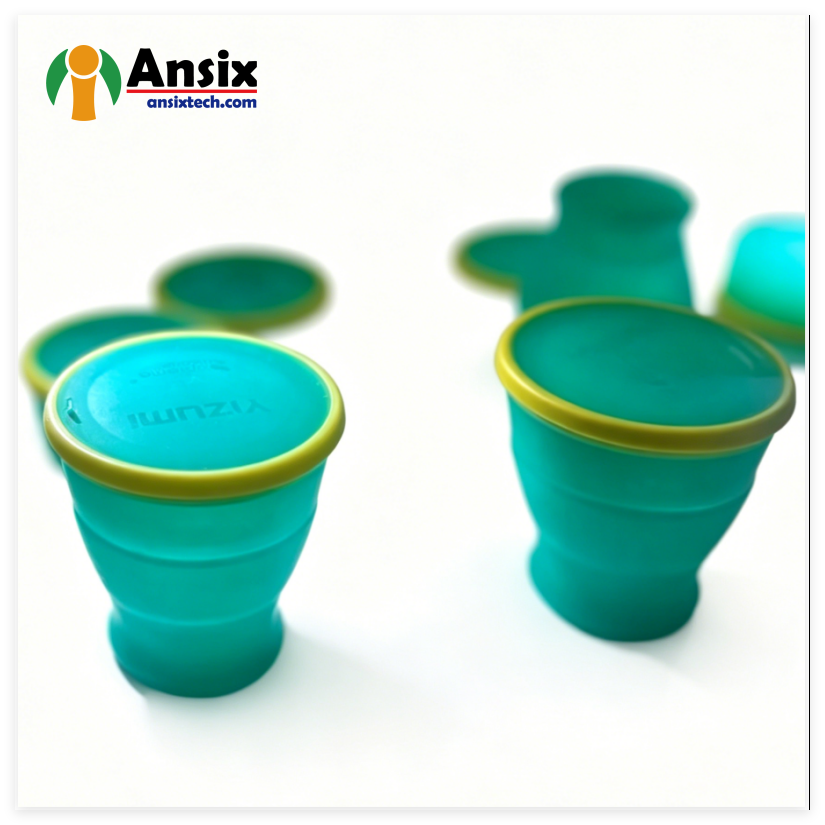


HIPS
HIPS


Ansix Tech Launches Custom HIPS Formulation Project: Delivering Value Through Material Science and Manufacturing Excellence
Executive Summary
Ansix Tech Co., Ltd., a premier plastic injection molding manufacturer with over 29 years of industry experience, has officially launched a strategic initiative to develop custom High Impact Polystyrene (HIPS) raw material formulations. This project represents a significant milestone in the company's commitment to providing end-to-end solutions—from custom material development through high-volume production and assembly verification. With four production bases across China and Vietnam, 260 injection molding machines ranging from 30 to 2,800 tons, and certifications including ISO9001, IATF16949, ISO13485, ISO14001, and BSCI, Ansix Tech is uniquely positioned to transform how manufacturers approach HIPS-based product development.
Part I: Understanding High Impact Polystyrene (HIPS) — A Comprehensive Overview
1.1 Definition and Full Name
HIPS stands for High Impact Polystyrene. It is a versatile amorphous thermoplastic material engineered by modifying general-purpose polystyrene (GPPS) through the incorporation of an elastomeric phase—typically polybutadiene rubber. This modification transforms brittle polystyrene into a tough, impact-resistant material while retaining most of the desirable properties of its parent polymer.
1.2 Chemical Composition and Manufacturing Process
HIPS is produced through the polymerization of styrene monomer in the presence of dissolved polybutadiene rubber. The rubber content typically ranges from 5% to 15% by weight. During polymerization, the styrene forms a continuous thermoplastic matrix while the rubber phase disperses as discrete micro-domains throughout the PS matrix. This unique biphasic structure is what gives HIPS its exceptional impact resistance—the rubber particles act as stress absorbers, dissipating energy from impacts and preventing crack propagation.
The manufacturing process involves bulk block copolymerization of styrene and butadiene rubber. The rubber is first dissolved in styrene monomer, and the mixture undergoes polymerization. As the polystyrene chains grow, the rubber phase phase-separates, forming the characteristic "salami" structure of rubber particles encapsulated by a thin shell of grafted polystyrene. This morphology is critical to achieving the optimal balance of impact resistance, stiffness, and processability.
1.3 Key Characteristics and Properties
HIPS offers a compelling combination of properties that make it one of the most widely used thermoplastics in the world:
Mechanical Properties:
Impact Strength: HIPS delivers impact resistance up to 7 times greater than GPPS. Notched Izod impact values typically range from 1.08 J/cm to over 100 J/m depending on grade.
Tensile Strength: Yield strength typically ranges from 21.5 to 22.8 MPa.
Flexural Modulus: Approximately 2.28 GPa, providing excellent stiffness for structural applications.
Flexural Yield Strength: Around 44.1 MPa.
Elongation at Break: Typically 35% or higher.
Physical Properties:
Density: 1.04 to 1.06 g/cm³, making HIPS a lightweight material ideal for weight-sensitive applications.
Melt Flow Index (MFI): Varies by grade from 3.0 to 13.0 g/10 min (200°C/5 kg), allowing manufacturers to select the appropriate flow characteristics for their specific molding needs.
Shrinkage Rate: Typically 0.3% to 0.6%, enabling predictable dimensional control.
Thermal Properties:
Deflection Temperature: Approximately 90°C at 1.8 MPa (264 psi).
Vicat Softening Point: Around 96°C.
Service Temperature Range: HIPS retains its mechanical properties, impact resistance, and dimensional stability even when exposed to temperatures down to -60°C.
Other Notable Properties:
Dimensional Stability: Excellent, making HIPS suitable for precision components.
Processability: Easy to mold, machine, fabricate, and decorate.
FDA Compliance: Natural (translucent white) HIPS is FDA compliant for food contact applications.
Recyclability: Fully recyclable with minimal loss of properties.
Flame Retardancy: Available in UL94 V-0 rated grades for applications requiring fire safety.
1.4 HIPS vs. Alternative Materials
Compared to ABS (Acrylonitrile Butadiene Styrene), HIPS offers a significant cost advantage—typically 15% to 20% lower than ABS, with comparable molding shrinkage rates and similar appearance. While ABS delivers superior toughness for high-stress environments, HIPS remains the material of choice for cost-sensitive applications where the performance requirements are moderate. With ABS priced at approximately $1.97 per kg versus HIPS at approximately $1.30 per kg, the cost differential becomes substantial at high production volumes.
Part II: HIPS Technical Data Sheet (TDS) — Material Specification

2.1 Standard Properties Summary
Property Value Test Method
Mechanical Properties
Tensile Strength, Yield 21.5 - 22.8 MPa ASTM D638 / ISO 527
Flexural Modulus 2.28 GPa ASTM D790
Flexural Yield Strength 44.1 MPa ASTM D790
Izod Impact, Notched 1.08 J/cm (6.35mm) ASTM D256
Rockwell Hardness 80 (Scale M) ASTM D785
Elongation at Break 35% ISO 527
Physical Properties
Density 1,040 - 1,050 kg/m³ ISO 1183 / ASTM D792
Melt Flow Index (200°C/5kg) 3.0 - 13.0 g/10 min ASTM D1238
Mold Shrinkage 0.3 - 0.6% ASTM D955
Thermal Properties
Deflection Temperature (1.8 MPa) 90.0°C ASTM D648
Vicat Softening Point 96.1°C ASTM D1525
Flammability (UL94) V-0 (1.6mm) / HB (3.2mm) UL 94
Other Properties
Humidity Absorption 0.17% Sim. to ISO 62
Data compiled from multiple HIPS grade specifications.
2.2 Grade Selection Guide
Different HIPS grades are available to meet specific application requirements:
High Flow Grades: MFI 8.0+ g/10 min — ideal for thin-wall molding and complex geometries.
High Impact Grades: Enhanced rubber content for maximum toughness.
Flame Retardant Grades: UL94 V-0 rated for electronics and appliance applications.
Thermoforming Grades: MFI 3.0 g/10 min — optimized for sheet extrusion and thermoforming.
Recycled Content Grades: Environmentally friendly options with PCR resin content.
Part III: HIPS Applications — Industries and End Uses
3.1 Consumer Goods and Household Products
HIPS is extensively employed in producing consumer goods including toys, household appliances, and office supplies. Its excellent impact strength and rigidity make it a fitting choice for applications demanding durability and dimensional stability. Common products include bathroom cabinets, toilet seats and tanks, instrument control knobs, and closures.
3.2 Electronics and Electrical Applications
HIPS is widely used in electronic device housings, TV bezels, printer components, and monitor frames. The material's excellent surface finish makes it suitable for painted, printed, or vacuum-metalized parts. Flame retardant grades are particularly valued in this sector.
3.3 Automotive Industry
HIPS finds application in automotive instrument panels, interior trim, dashboard parts, and exterior body components. Its lightweight nature contributes to vehicle weight reduction initiatives.
3.4 Packaging
From disposable food containers to clamshell packaging, blister packs, and trays, HIPS dominates the packaging sector. In the food industry, HIPS is widely used in yogurt cups and other food containers due to its durability, safety, and ease of molding.
3.5 Medical and Laboratory Applications
HIPS is utilized in diagnostic trays, sample cups, and medical packaging materials. Its chemical stability and low toxicity make it essential for medical and food sector applications.
3.6 Signage and Displays
HIPS is ideal for producing signs and displays, being one of the lower-cost materials available with properties desired by lithographic, screen, and digital printers.
Part IV: Ansix Tech's Custom HIPS Formulation Project — Project Initiation and Strategic Vision
4.1 Project Background
Ansix Tech has officially initiated a Custom HIPS Raw Material Formulation Project designed to address the growing market demand for application-specific HIPS solutions. With over 29 years of manufacturing experience, Ansix Tech has identified that off-the-shelf HIPS grades often fail to meet the precise requirements of sophisticated product designs. The project aims to bridge this gap by developing tailor-made HIPS formulations that optimize performance, cost, and manufacturability for specific customer applications.
4.2 Project Objectives
The custom formulation project focuses on:
Material Customization: Developing HIPS formulations with precisely tuned properties—impact resistance, flow characteristics, heat deflection temperature, flame retardancy, and surface finish—to match specific product requirements.
Cost Optimization: Reducing overall product costs through strategic material selection and formulation adjustments.
Process Compatibility: Ensuring formulations are optimized for Ansix Tech's extensive injection molding capabilities.
Sustainability: Incorporating recycled content and environmentally friendly additives where feasible.
Part V: Customer Value Proposition — What Ansix Tech Delivers
5.1 Solving Critical Customer Problems
Problem 1: Material Performance Gaps
Standard HIPS grades often provide a compromise—adequate but not optimal performance. Ansix Tech's custom formulation capability eliminates this compromise by tailoring material properties to the exact demands of each application.
Problem 2: Cost-Pressure in High-Volume Production
With HIPS priced approximately 15-20% lower than ABS, the material itself offers cost advantages. However, Ansix Tech goes further by optimizing formulations to reduce cycle times, minimize scrap, and extend tool life.
Problem 3: Inconsistent Material Quality
Ansix Tech maintains long-term partnerships with reliable suppliers and implements rigorous incoming material inspection protocols, ensuring batch-to-batch consistency.
Problem 4: Time-to-Market Pressure
By integrating material development with mold design and production capabilities under one roof, Ansix Tech dramatically reduces development timelines.
5.2 Comprehensive Service Offering
Ansix Tech provides a complete ecosystem of services:
From Prototype to Production:
Prototype design and manufacturing confirmation
Pilot production runs
High-volume production
Assembly verification
Material Selection and Development:
Application-specific material grade recommendation
Custom formulation development
Material characterization and validation
Component material selection guidance
Part VI: Quality Validation — Ensuring Material and Product Excellence
6.1 Material Validation Protocol
Ansix Tech implements a comprehensive material validation process:
Stage 1: Raw Material Qualification
Supplier audit and approval
Incoming material inspection (MFI, density, impact strength, tensile properties)
Batch-to-batch consistency verification
Stage 2: Formulation Development
Laboratory-scale compounding
Mechanical property testing (tensile, flexural, impact)
Thermal property characterization (HDT, Vicat)
Flammability testing (UL94)
Processability assessment (spiral flow, rheology)
Stage 3: Production Validation
Pilot molding trials
Dimensional verification
Cosmetic inspection
Functional testing
Environmental testing (temperature, humidity cycling)
6.2 Quality Management Systems
Ansix Tech maintains a complete quality control system with certifications including:
ISO9001 — Quality Management
IATF16949 — Automotive Quality Management
ISO13485 — Medical Device Quality Management
ISO14001 — Environmental Management
BSCI — Social Compliance
Additionally, Ansix Tech has obtained an ISO 8 Cleanroom and GMP certification, complying with US medical grade FDA510K standards.
6.3 Inspection and Testing Capabilities
Ansix Tech employs advanced testing equipment and methods to ensure product quality meets customer requirements and standards. Quality control spans from raw material procurement through the entire production process.
Part VII: Mold Design and Manufacturing — Engineering for High-Volume Production
7.1 Design for Manufacturability (DFM) Analysis
Ansix Tech's engineering team conducts comprehensive DFM analysis for every HIPS project:
Mold Flow Analysis:
Simulating melt flow behavior to optimize gate location and runner design
Identifying potential fill issues, weld lines, and air traps
Predicting warpage and shrinkage
Part Design Optimization:
Ensuring uniform wall thickness (variation ≤25%)
Incorporating proper draft angles and fillets
Balanced gate and runner layouts
7.2 Mold Design Priorities for HIPS
Cooling System Design:
Efficient cooling is essential for maintaining consistent mold temperatures and minimizing cycle times. For HIPS, typical mold temperatures range from 40°C to 60°C. Ansix Tech employs conformal cooling channels where applicable to reduce cooling time by 10% to 15%.
Runner and Gate Systems:
Balanced runner design ensures equal fill and minimized pressure variation across multi-cavity layouts. Engineering focus is placed on runner balance, gate layout, and thin-wall fill behavior to reduce short shots, flash, and visible variation.
Ejection System:
Designed to prevent part deformation during ejection, particularly important for thin-wall HIPS components.
7.3 Mold Manufacturing Process
Mold Material Selection:
For HIPS applications, Ansix Tech typically employs tool steels such as 2344H, selected for wear resistance and thermal conductivity.
Manufacturing Process Flow:
CAD/CAM design and 3D modeling
CNC machining (milling, turning, drilling)
Wire EDM for precision features
Electrical discharge machining (EDM) for complex geometries
Heat treatment for optimal hardness
Precision grinding and polishing
Assembly and fitting
Mold trial and debugging
Key Manufacturing Challenges:
Maintaining tight tolerances for multi-cavity molds
Achieving optimal surface finish for cosmetic parts
Ensuring proper venting to prevent burn marks
Part VIII: HIPS Injection Molding — Process Optimization and Quality Control
8.1 Key Process Parameters
HIPS injection molding requires precise control of several critical parameters:
Parameter Recommended Range Impact of Deviation
Melt Temperature 200°C – 240°C Below 190°C: short shots. Above 260°C: rubber degradation
Injection Speed 40 – 80 mm/s Too slow: weak weld lines. Too fast: reduced impact strength
Holding Pressure 60-70% of injection pressure (600-1000 bar) Too low: sink marks. Too high: stress, warpage
Holding Time 2 – 5 seconds Insufficient: voids. Excessive: overpacking
Cooling Time 15 – 40 seconds Too short: deformation. Too long: reduced productivity
Mold Temperature 40°C – 60°C Affects surface finish and dimensional stability
Screw L/D Ratio 20:1 – 24:1 Lower ratios cause poor mixing, unmelted particles
8.2 HIPS Injection Molding Challenges
Challenge 1: Weld Lines
The rubber content that gives HIPS its impact strength also creates challenges at weld lines where melt fronts meet. Moderate injection speeds (40-80 mm/s) help minimize this issue.
Challenge 2: Warpage
HIPS cools slower than GPPS due to its rubber content. Proper cooling system design and holding pressure control are essential to prevent warpage.
Challenge 3: Balancing Impact and Processability
The rubber phase can degrade if melt temperatures exceed 260°C, significantly reducing impact strength.
Challenge 4: Shrinkage Control
Shrinkage is influenced by melt temperature, injection speed, holding pressure, mold temperature, and cooling time. Increasing packing pressure reduces shrinkage and improves dimensional consistency.
8.3 Process Optimization for Efficiency and Cost Control
Ansix Tech employs several strategies to optimize HIPS injection molding:
Cycle Time Reduction:
Optimized cooling system design
Conformal cooling channels where applicable
Automated part handling
Multi-cavity mold designs
Scrap Reduction:
Process monitoring and statistical process control
Automated inspection systems
Balanced runner design to minimize pressure variation
Energy Efficiency:
High-efficiency injection molding machines (Fanuc, Sumitomo, Toshiba, Engel)
Optimized process parameters to minimize energy consumption
Part IX: Cost Reduction — Ansix Tech's Value-Added Approach
9.1 Material Cost Optimization
Strategic Material Selection:
HIPS already offers a 15-20% cost advantage over ABS. Ansix Tech helps customers leverage this advantage while ensuring performance requirements are met.
Custom Formulation Development:
By developing application-specific formulations, Ansix Tech eliminates the cost of over-engineering—using precisely the material properties needed, not more.
Recycled Content Integration:
Ansix Tech incorporates post-consumer recycled (PCR) content where feasible, reducing material costs and supporting sustainability initiatives.
9.2 Process Efficiency Improvements
Cycle Time Optimization:
HIPS's high flowability reduces cycle times, improving production efficiency and lowering overall manufacturing costs.
Multi-Cavity Molding:
Ansix Tech's 1×32 cavity designs dramatically increase output per cycle, reducing per-part costs.
Automation:
Advanced automation functions on Ansix Tech's injection molding machines enable simple and fast manufacturing.
9.3 Tooling Cost Reduction
Extended Tool Life:
HIPS requires lower injection pressure and temperature, reducing wear on molds and extending tool life.
Optimized Mold Design:
DFM analysis ensures molds are designed for efficient production, minimizing maintenance requirements and downtime.
9.4 Total Cost of Ownership Reduction
Cost Category Savings Mechanism Estimated Impact
Material Cost HIPS vs. ABS differential + custom formulation 15-25%
Cycle Time Optimized processing parameters 10-20%
Scrap Rate Process control and automation 5-15%
Tooling Maintenance Lower processing pressures Extended tool life
Assembly Multi-functional part design Reduced assembly operations
Part X: Production Capacity and Delivery Assurance
10.1 Manufacturing Infrastructure
Ansix Tech operates an extensive manufacturing infrastructure:
Production Facilities:
Four production bases in China and Vietnam
Total plant area exceeding 200,000 square meters
More than 1,200 employees
Injection Molding Equipment:
260 injection molding machines
Tonnage range: 30 tons to 2,800 tons
Leading brands: Fanuc, Sumitomo, Toshiba, Nissei, Engel (Japan); Arburg (Germany); Haitian, Victor Taichung (China)
Annual Capacity:
Annual turnover exceeding 1 billion RMB
10.2 Rapid Prototyping and Time-to-Market
Ansix Tech's integrated capabilities enable rapid product development:
Prototype Development: Quick-turn prototyping for design validation
Pilot Production: Small-batch runs for market testing
Scale-Up: Seamless transition to high-volume production
10.3 Supply Chain and Delivery Assurance
Reliable Supply Chain:
Long-term partnerships with reliable suppliers
Raw material quality assurance and supply stability
Strategic inventory management
On-Time Delivery:
Efficient production lines and processes
Quick response to customer orders
Partnership with logistics companies for efficient delivery
Part XI: Industry Experience and Reliability
11.1 29 Years of Manufacturing Excellence
With nearly three decades of experience, Ansix Tech has accumulated deep expertise across multiple industries:
Medical devices
Automotive components
Consumer electronics
Industrial equipment
Packaging
11.2 Technical Expertise
Ansix Tech's technical team includes engineers, technicians, and quality control personnel with rich experience and professional knowledge. The team provides technical support and solutions throughout the production process.
Core Competencies:
Material science and formulation development
Mold design and manufacturing
Injection molding process optimization
Quality control and validation
Assembly and secondary operations
11.3 Innovation Capability
Ansix Tech focuses on innovation and technological progress, continuously researching and developing new materials, processes, and technologies. The company actively participates in industry seminars and exhibitions, communicating with industry experts to continuously improve innovation capabilities and competitiveness.
Part XII: Conclusion — The Ansix Tech Advantage
Ansix Tech's Custom HIPS Formulation Project represents a paradigm shift in how manufacturers approach material selection and product development. By integrating material science expertise with world-class mold design, manufacturing capabilities, and quality systems, Ansix Tech delivers:
Performance Optimization: Custom HIPS formulations precisely tuned to application requirements
Cost Reduction: 15-25% total cost savings through material optimization, process efficiency, and scale
Quality Assurance: Comprehensive validation from material qualification through production
Rapid Delivery: Integrated capabilities enabling fast prototyping and seamless scale-up
Reliability: 29 years of experience, 260 molding machines, and internationally recognized quality certifications
For manufacturers seeking to leverage the cost and performance advantages of HIPS while avoiding the compromises of off-the-shelf materials, Ansix Tech offers a complete, turnkey solution—from custom formulation through high-volume production and assembly verification.
The future of HIPS manufacturing lies not in accepting standard grades but in engineering materials for specific applications. Ansix Tech is leading this transformation, empowering customers to achieve superior product performance at lower total cost.
For more information about Ansix Tech's Custom HIPS Formulation Project or to discuss your specific application requirements, please contact Ansix Tech's technical sales team.
About Ansix Tech Co., Ltd.
Ansix Tech is a professional plastic injection molding manufacturer specializing in R&D, design, manufacturing, sales, and service of plastic molds and products. With over 29 years of experience, four production bases, 260 injection molding machines, and comprehensive quality certifications, Ansix Tech delivers high-quality, highly technical, and competitive products to customers worldwide. The company is committed to working with customers to jointly promote the development and progress of the industry.
Ansix Tech Co Ltd
If you have any plans related to HIPS
, you can contact us at any time. We will turn your ideas into reality, let you realize your dreams, and obtain large orders from the market. Our contact information is info@ansixtech.com. Or contact our CTO, mail: stephen@ansixtech.com
#www.ansixtech.com #ansixtech.com #HIPS #HIPS Material #HIPS Canopy Mold injection mold companies #Ansix #Ansix moulds #Ansix china #Ansix tech china #Ansix tech company #Ansix facotry #HIPSinjection molding #HIPSinjection tools #HIPSinjection moulds #HIPSplastic mould #HIPSplastic tools #Ansix Tech #Ansix molds #Ansix injection molding #Ansix mold factory #injection molding Customized stainless steel float switch for water level, oil level, high liquid level alarm#Ansix mold factory #HIPSchina #HIPSmolds #injection factory #HIPSinjection molding #HIPSinjection molding factory #injection molding company #HIPSinjection mold companies #HIPSTooling #HIPSmold limited #Ansix mold china #Ansix companies #Ansix company China #HIPSfacotry #Ansix Tech #Ansix Tech mould #HIPSinjection moulding #injection moulding company #Ansix HIPSparts injection mold companies #medical injection molding companieschina #HIPSchina factory #Ansix moulding companies #Ansix molding company #HIPSinjection moulding facotry #Ansix Tech mold #HIPSmould #HIPSplastic injection molding #ansix plastic mold #Mold manufacturing #HIPSparts manufacturing #HIPSplastic parts factory #HIPSinjection parts mold #HIPSPRECISION MANUFACTURING #HIPS#China mold #HIPSinjection moulding china #HIPSmould china #china precision mold #mold in china #HIPSmold china #Precision molds #High-precision molds #HIPS#Injection molds #HIPSFactory #HIPSCompany #Super Large Injection Mold Factory #Large Tonnage Injection Molding Factory #HIPSCompany #HIPSFactory #2800T Injection Molding Factory #3000 Ton Injection Molding #4500 Ton Injection Molding Factory #Large Mold Injection Molding #Large Plastic Mold Injection Molding Factory #Large Injection Mold Manufacturer #Plastic Mold Factory #Injection Mold #Plastic Mold