


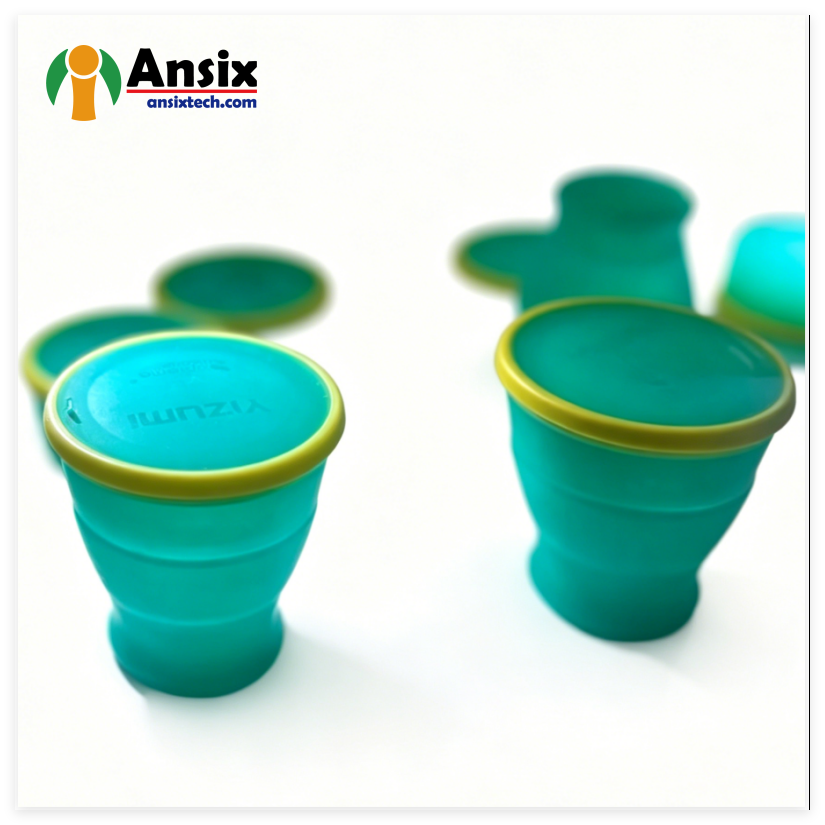


K(Q) Rubber
K(Q) Rubber


Ansix Tech Launches Major K(Q) Rubber Custom Compounding Initiative, Targeting Cost Reduction and Supply Chain Efficiency
SHENZHEN, CHINA – July 27, 2026 – Ansix Tech Co., Ltd., a leading manufacturer with over 29 years of experience in precision rubber and plastic injection molding, today announced the formal launch of a major project dedicated to the custom development and formulation of K(Q) Rubber materials. This strategic initiative marks a significant expansion of Ansix Tech’s vertically integrated manufacturing capabilities, enabling the company to offer end-to-end solutions that span from raw material customization and precision mold engineering to high-volume production, stringent quality validation, and rapid delivery.
With a global footprint that includes four manufacturing bases in China and Vietnam, a workforce of over 1,200 employees, and a fleet of 260 injection molding machines ranging from 30 tons to 2,800 tons, Ansix Tech is uniquely positioned to address the most demanding requirements of industries such as medical devices, automotive, consumer electronics, food packaging, and industrial equipment. The new K(Q) Rubber custom compounding project is the latest embodiment of the company’s commitment to providing unparalleled value through material science expertise, process optimization, and manufacturing excellence.
Understanding K(Q) Rubber: A Comprehensive Overview
K(Q) Rubber, commonly referred to in the industry as K-Resin or K胶, is a high-performance synthetic polymer that belongs to the family of styrene-butadiene copolymers (SBC). It is an amorphous, transparent thermoplastic elastomer that is often described as an artificial or synthetic rubber due to its unique combination of plastic-like processability and rubber-like resilience.
Chemically, K(Q) Rubber is produced through the copolymerization of styrene and butadiene monomers. The precise ratio of these two components can be adjusted during synthesis to tailor the material’s hardness, flexibility, and impact resistance, making it a highly versatile platform for a wide range of applications. The material is intrinsically transparent, with light transmission typically ranging from 80% to 90%, and is characterized by a density of approximately 1.01 g/cm³, which is notably lower than that of general-purpose polystyrene (PS) or styrene-acrylonitrile (AS) resins. This low density translates directly into higher yield per unit weight—typically 20% to 30% more parts per kilogram compared to other transparent polymers—offering a compelling economic advantage for high-volume production.
K(Q) Rubber is available in a wide variety of commercial grades from leading global manufacturers, each formulated to meet specific performance criteria. Notable examples include BASF’s Styrolux series (e.g., 684D), which offers high transparency, UV resistance, and food-contact compliance; INEOS Styrolution’s K-Resin series (e.g., KR03, KR99), known for high clarity and toughness; Asahi Kasei’s Asaflex series (e.g., 840, 845), which are toughened grades suitable for housings and appliances; and CHIMEI’s Kibiton series (e.g., PB-5925, PB-5910), which offer high rigidity and strength for applications such as fitness equipment. The breadth of available grades underscores the material’s adaptability and the importance of precise material selection in product design.
Comprehensive Material Properties (K(Q) Rubber TDS)


The technical data sheets (TDS) for K(Q) Rubber reveal a material with a well-balanced profile of physical, mechanical, and thermal properties that make it suitable for a diverse array of demanding applications.
Physical Properties: The density of K(Q) Rubber is consistently reported at approximately 1.01 to 1.02 g/cm³, contributing to its light weight and cost-effectiveness. The material exhibits very low water absorption, typically in the range of 0.07% to 0.09% under standard conditions (23°C, 50% humidity or 24-hour immersion), which ensures excellent dimensional stability in humid environments. The melt flow rate (MFR) varies by grade, with values such as 7.0 g/10min (Asaflex 845) and 8.0 g/10min (K-Resin KR03) indicating good flowability for injection molding.
Mechanical Properties: K(Q) Rubber demonstrates a strong combination of stiffness and toughness. Tensile strength at yield is typically around 26 to 28 MPa, with a Young's modulus of approximately 1,550 MPa. The material exhibits high impact resistance, with Charpy notched impact strength values of 4 kJ/m² at 23°C, and significantly higher unnotched impact strength exceeding 100 kJ/m², indicating excellent resistance to brittle fracture. The Shore hardness typically ranges from D58 to D71, providing a balance between rigidity and flexibility. Elongation at break is notably high, exceeding 50% and often reaching 160% to 200%, which demonstrates the material's ability to deform significantly before failure.
Thermal Properties: The material exhibits a heat deflection temperature (HDT) of approximately 75°C at 0.455 MPa and 55°C at 1.8 MPa. The Vicat softening temperature is around 85°C (A/120 method). The recommended injection molding melt temperature ranges from 180°C to 250°C, with mold temperatures typically maintained between 30°C and 60°C. It is critical to note that K(Q) Rubber is susceptible to thermal degradation at temperatures exceeding 260°C, particularly if residence time in the barrel exceeds 20 minutes, which can lead to discoloration, embrittlement, and loss of transparency.
Chemical and Electrical Properties: While K(Q) Rubber exhibits good chemical resistance to many substances, it has limited resistance to oils, acids, bases, and aggressive organic solvents. The material demonstrates excellent electrical insulation properties, with volume resistivity exceeding 10¹⁵ Ω·cm and dielectric strength of 140 kV/mm.
Diverse Application Landscape
The unique combination of transparency, toughness, low density, and processability makes K(Q) Rubber an ideal material for a wide spectrum of applications across multiple industries.
In the consumer goods sector, K(Q) Rubber is extensively used in the production of transparent containers, lids, bottles, hinged boxes, hangers, toys, and high-end daily products. Its excellent clarity and gloss make it a popular choice for cosmetic packaging and display items. The material's compliance with food-contact regulations (e.g., FDA, EU) enables its use in food packaging, including clamshell containers, blister packs, and beverage cups.
In the medical and healthcare industry, K(Q) Rubber's biocompatibility and transparency make it suitable for a range of devices and components, including respiratory masks, feeding tubes, and medical device housings. Its ability to be sterilized using various methods (e.g., ethylene oxide, gamma radiation) further expands its utility in this regulated sector.
In the electronics and appliances sector, K(Q) Rubber is used for instrument panels, electrical housings, and internal components that require a combination of impact resistance and aesthetic transparency. It is also employed in the production of refrigerator components and other white goods.
Furthermore, K(Q) Rubber serves as an excellent blending modifier when combined with other polymers such as GPPS, HIPS, SAN, ABS, PP, and PC. This capability allows compounders to fine-tune the properties of base resins, enhancing impact resistance, improving processability, or achieving specific optical effects.
Ansix Tech's Custom Compounding Project: Delivering Unmatched Value
The launch of Ansix Tech's K(Q) Rubber custom compounding project represents a paradigm shift in how manufacturers approach material selection and supply chain management for rubber and plastic components. By bringing material formulation expertise in-house, Ansix Tech is now able to offer a truly integrated service that addresses the most pressing challenges faced by product designers and procurement professionals.
Solving Critical Material Challenges
One of the most significant challenges in working with K(Q) Rubber is the material's inherent sensitivity to thermal degradation and its susceptibility to certain chemicals. Ansix Tech's custom compounding capabilities allow the company to formulate tailored grades that address these limitations while enhancing specific performance attributes. For example, Ansix Tech can develop compounds with improved heat stability, enhanced chemical resistance, or optimized flow characteristics for complex geometries. This capability is particularly valuable for applications that require long-term reliability in harsh environments, such as automotive under-the-hood components or medical devices exposed to sterilization cycles.
Furthermore, the thermal degradation behavior of K(Q) Rubber presents specific challenges during injection molding, including the risk of discoloration, loss of mechanical properties, and surface defects. Ansix Tech's expertise in material science enables the development of formulations that are more robust to processing conditions, thereby expanding the processing window and reducing the risk of defects. This directly translates into higher production yields and lower scrap rates for customers.
The Value of Custom Formulation
The project enables Ansix Tech to deliver a value proposition that extends far beyond simple material supply:
Performance Optimization: By customizing the styrene-to-butadiene ratio and incorporating specific additives, Ansix Tech can tailor the hardness, flexibility, impact resistance, and transparency of the final compound to precisely match the functional requirements of each application.
Regulatory Compliance: Ansix Tech can formulate materials that meet stringent industry-specific regulations, including USP Class VI for medical devices, FDA food-contact standards, and UL flammability ratings.
Application-Specific Solutions: Whether the requirement is for high-flow grades for thin-wall molding, UV-stable grades for outdoor applications, or toughened grades for impact-prone components, Ansix Tech can develop a solution that delivers optimal performance.
Rigorous Quality Validation and Material Verification
Ansix Tech has implemented a comprehensive quality validation protocol for all custom K(Q) Rubber compounds, ensuring that every batch meets the highest standards of consistency and performance.
Incoming Material Qualification: Every shipment of raw materials undergoes rigorous incoming inspection, including verification of density, melt flow rate, and moisture content. Ansix Tech maintains strict specifications for all base polymers and additives, ensuring that only materials from approved, qualified suppliers are used in production.
Compound Verification: For each custom formulation, Ansix Tech conducts extensive testing to confirm that the final compound meets all specified performance criteria. This includes mechanical testing (tensile strength, elongation, impact resistance, hardness), thermal analysis (DSC, TGA), and rheological characterization (melt flow, spiral flow). The company also performs accelerated aging studies and chemical resistance testing to validate long-term performance.
In-Process Quality Control: During production, Ansix Tech employs statistical process control (SPC) to monitor key process parameters, ensuring that each molded part is produced within tight tolerances. Real-time monitoring of injection pressure, temperature, and cycle time allows for immediate corrective action if any deviation is detected.
Final Product Inspection: Every production lot undergoes final inspection, including dimensional verification using coordinate measuring machines (CMM), visual inspection for surface defects, and functional testing as required by the customer's specifications. Ansix Tech's commitment to quality is reflected in its rigorous documentation and traceability systems, which enable complete material and process traceability from raw material to finished part.
Cost Reduction through Material and Process Innovation
Ansix Tech's custom compounding project is fundamentally designed to reduce total cost of ownership for customers through a multi-pronged strategy that addresses material costs, processing efficiency, and supply chain optimization.
Material Cost Optimization: The low density of K(Q) Rubber (approximately 1.01 g/cm³) already provides a yield advantage of 20-30% compared to other transparent polymers. Ansix Tech's custom compounding capabilities further enhance this advantage by optimizing formulations to achieve the required performance with minimal use of expensive additives. Additionally, by developing proprietary compounds that can utilize alternative, cost-effective raw materials without compromising quality, Ansix Tech can offer significant material cost savings compared to standard commercial grades.
Processing Efficiency Improvements: K(Q) Rubber is known for its good flowability and broad processing temperature range (170-250°C). However, its sensitivity to thermal degradation requires careful process control. Ansix Tech's expertise in injection molding process optimization enables significant efficiency gains:
Reduced Cycle Times: Through precise control of mold temperature, injection pressure, and cooling system design, Ansix Tech can achieve cycle time reductions of 10-20% compared to industry averages, directly increasing throughput and reducing per-part costs.
Higher Yield: By optimizing process parameters to minimize defects such as flow marks, weld lines, and voids, Ansix Tech consistently achieves yield rates exceeding 98%, significantly reducing scrap and rework costs.
Energy Efficiency: The use of advanced servo-hydraulic and electric injection molding machines, combined with optimized process settings, results in lower energy consumption per part.
Elimination of Pre-Drying: One of the notable advantages of K(Q) Rubber is its low moisture absorption, which in many cases eliminates the need for pre-drying before processing. This saves both time and energy, further reducing production costs. However, for material that has been stored in humid conditions, drying at temperatures below 65°C is recommended.
Capacity Expansion and Delivery Assurance
Ansix Tech's substantial manufacturing infrastructure ensures that customers can scale production rapidly without compromising quality or delivery timelines.
Massive Production Capacity: With 260 injection molding machines ranging from 30 to 2,800 tons, Ansix Tech has the capacity to handle projects of any scale, from low-volume prototyping to million-part production runs. The company's four manufacturing facilities in China and Vietnam provide geographic diversification and redundancy, ensuring uninterrupted supply.
Advanced Equipment: Ansix Tech's machine park includes leading brands such as FANUC, Sumitomo, Toshiba, Nissei, Engel, and Arburg (primarily for liquid silicone rubber), as well as domestic Haitian machines. This diverse equipment base allows Ansix Tech to select the optimal machine for each project, balancing precision, efficiency, and cost.
Rapid Tooling and Prototyping: Ansix Tech's in-house toolmaking capabilities enable rapid prototyping and tool development. From design for manufacturability (DFM) analysis and mold flow simulation to precision mold fabrication and trial runs, Ansix Tech can compress development timelines by weeks or even months compared to outsourcing these activities to separate suppliers.
Just-in-Time Delivery: Ansix Tech's integrated manufacturing model, combined with robust supply chain management and logistics capabilities, enables reliable just-in-time delivery. The company maintains strategic inventory of key raw materials and finished goods to buffer against supply chain disruptions, ensuring that customers receive their orders on time, every time.
Precision Mold Engineering for High-Volume Production
The success of any injection molding project depends critically on the quality of the mold. Ansix Tech's mold engineering capabilities are central to its ability to deliver high-quality K(Q) Rubber components efficiently and cost-effectively.
Design for Manufacturability (DFM) and Mold Flow Analysis: Before any steel is cut, Ansix Tech performs comprehensive mold flow analysis to predict melt flow behavior, identify weld line positions, and detect potential air trap locations. This simulation-driven approach enables optimization of gate placement and runner geometry before production begins, ensuring balanced cavity filling without premature solidification or incomplete fill.
Mold Design Considerations for K(Q) Rubber: The design of molds for K(Q) Rubber must account for the material's specific characteristics, including its relatively low shrinkage (0.4-0.7%) and its sensitivity to thermal degradation. Key design elements include:
Cooling System Design: Efficient cooling is critical for achieving uniform part cooling, minimizing cycle times, and preventing warpage or sink marks. Ansix Tech employs conformal cooling designs using advanced manufacturing techniques such as additive manufacturing and five-axis machining to achieve optimal cooling performance.
Runner and Gate Systems: The low viscosity of K(Q) Rubber allows for the use of smaller runners and gates, reducing material waste and cycle times. However, gate design must be carefully optimized to avoid flow-induced stresses and aesthetic defects. Ansix Tech utilizes hot runner systems and valve gates to achieve precise control over melt delivery and to minimize material degradation.
Ejection System Design: The relatively low stiffness of K(Q) Rubber at elevated temperatures requires careful design of the ejection system to avoid part deformation or damage during demolding. Ansix Tech employs large-diameter ejector pins, stripper plates, and air ejection systems as appropriate to ensure smooth, damage-free part removal.
Mold Manufacturing Challenges and Solutions: The fabrication of high-precision molds for K(Q) Rubber presents several challenges, including the need for tight dimensional tolerances, excellent surface finish, and long tool life. Ansix Tech addresses these challenges through:
Material Selection: Use of high-quality tool steels such as P20, H13, and S136, with appropriate heat treatment to achieve optimal hardness and wear resistance.
Precision Machining: Employment of high-speed CNC machining, EDM (electrical discharge machining), and wire EDM to achieve tight tolerances and complex geometries.
Surface Finish: Application of appropriate surface treatments, including polishing, texturing, and coatings, to achieve the desired part surface quality and to facilitate part release.
Injection Molding Process Optimization for K(Q) Rubber
The injection molding of K(Q) Rubber requires careful attention to process parameters to achieve consistent quality and maximum efficiency.
Processing Window: The recommended melt temperature range for K(Q) Rubber is 180-250°C, with mold temperatures typically maintained between 30°C and 60°C. Processing above 260°C or with excessive residence time can lead to thermal degradation.
Optimization Strategies:
Low Pressure, Medium Speed, Medium Temperature: Ansix Tech typically employs a "low pressure, medium speed, medium temperature" processing strategy for K(Q) Rubber. This approach minimizes shear-induced degradation while ensuring complete cavity filling.
Screw Design: Use of barrier screws and specialized screw designs to ensure homogeneous melt and to minimize residence time.
Back Pressure Control: Precise control of back pressure to achieve consistent melt density and to minimize trapped air.
Defect Prevention: Common defects in K(Q) Rubber molding include flow marks, weld lines, voids, and discoloration due to thermal degradation. Ansix Tech addresses these through:
Optimized Gate Design: Ensuring proper gate location and size to promote balanced filling and to minimize weld lines.
Controlled Cooling: Designing cooling systems that provide uniform cooling to prevent sink marks and warpage.
Process Monitoring: Continuous monitoring of injection pressure, melt temperature, and cycle time to detect and correct deviations in real-time.
Conclusion: A New Standard in K(Q) Rubber Manufacturing
Ansix Tech's K(Q) Rubber custom compounding project represents a significant advancement in the company's capabilities and a major benefit for its customers. By integrating material science expertise with world-class injection molding and mold engineering capabilities, Ansix Tech offers a truly comprehensive solution that addresses the entire value chain—from material selection and formulation through precision molding and rapid delivery.
The project delivers tangible value through performance optimization, rigorous quality validation, significant cost reduction, and assured supply chain reliability. For customers seeking to develop high-quality K(Q) Rubber components that meet the most demanding performance, regulatory, and cost requirements, Ansix Tech now offers an unmatched combination of technical expertise, manufacturing scale, and customer focus.
As the global demand for transparent, high-performance elastomeric materials continues to grow across industries, Ansix Tech is well-positioned to lead the market with innovative solutions that drive efficiency, quality, and value. The company's 29-year legacy of excellence, combined with its forward-looking investment in custom material compounding, ensures that Ansix Tech will remain at the forefront of the industry for decades to come.
For more information about Ansix Tech's K(Q) Rubber custom compounding and injection molding capabilities, please visit www.ansixtech.com.
Ansix Tech Co Ltd
If you have any plans related to K(Q) Rubber , you can contact us at any time. We will turn your ideas into reality, let you realize your dreams, and obtain large orders from the market. Our contact information is info@ansixtech.com. Or contact our CTO, mail: stephen@ansixtech.com
#www.ansixtech.com #ansixtech.com #K(Q) Rubber #K(Q) Rubber Material #K(Q) Rubber Canopy Mold injection mold companies #Ansix #Ansix moulds #Ansix china #Ansix tech china #Ansix tech company #Ansix facotry #K(Q) Rubberinjection molding #K(Q) Rubberinjection tools #K(Q) Rubberinjection moulds #K(Q) Rubberplastic mould #K(Q) Rubberplastic tools #Ansix Tech #Ansix molds #Ansix injection molding #Ansix mold factory #injection molding Customized stainless steel float switch for water level, oil level, high liquid level alarm#Ansix mold factory #K(Q) Rubberchina #K(Q) Rubbermolds #injection factory #K(Q) Rubberinjection molding #K(Q) Rubberinjection molding factory #injection molding company #K(Q) Rubberinjection mold companies #K(Q) RubberTooling #K(Q) Rubbermold limited #Ansix mold china #Ansix companies #Ansix company China #K(Q) Rubberfacotry #Ansix Tech #Ansix Tech mould #K(Q) Rubberinjection moulding #injection moulding company #Ansix K(Q) Rubberparts injection mold companies #medical injection molding companieschina #K(Q) Rubberchina factory #Ansix moulding companies #Ansix molding company #K(Q) Rubberinjection moulding facotry #Ansix Tech mold #K(Q) Rubbermould #K(Q) Rubberplastic injection molding #ansix plastic mold #Mold manufacturing #K(Q) Rubberparts manufacturing #K(Q) Rubberplastic parts factory #K(Q) Rubberinjection parts mold #K(Q) RubberPRECISION MANUFACTURING #K(Q) Rubber#China mold #K(Q) Rubberinjection moulding china #K(Q) Rubbermould china #china precision mold #mold in china #K(Q) Rubbermold china #Precision molds #High-precision molds #K(Q) Rubber#Injection molds #K(Q) RubberFactory #K(Q) RubberCompany #Super Large Injection Mold Factory #Large Tonnage Injection Molding Factory #K(Q) RubberCompany #K(Q) RubberFactory #2800T Injection Molding Factory #3000 Ton Injection Molding #4500 Ton Injection Molding Factory #Large Mold Injection Molding #Large Plastic Mold Injection Molding Factory #Large Injection Mold Manufacturer #Plastic Mold Factory #Injection Mold #Plastic Mold