


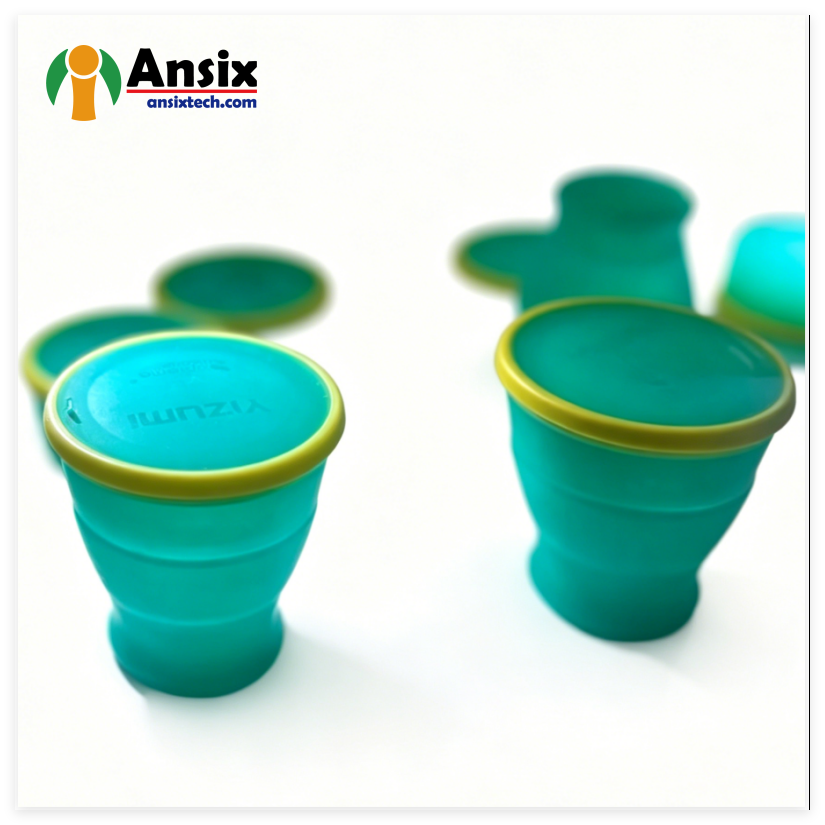


LLDPE
LLDPE


Ansix Tech Launches Specialized LLDPE Custom Compounding Project: Redefining Value in Injection Molding Manufacturing
Executive Summary
Ansix Tech Co., Ltd., a premier plastic injection molding manufacturer with over 29 years of industry experience, has officially launched a specialized engineering project focused on custom Linear Low-Density Polyethylene (LLDPE) raw material compounding and formulation development. This strategic initiative represents a significant milestone in the company's commitment to delivering end-to-end solutions—from material selection and mold design through to high-volume production and assembly verification. With four production bases across China and Vietnam, 260 injection molding machines ranging from 30 to 2,800 tons, and ISO9001/ISO13485/IATF16949 certifications, Ansix Tech is uniquely positioned to revolutionize how LLDPE-based products are developed, manufactured, and delivered to market.
Part I: Understanding LLDPE – A Comprehensive Introduction
What is LLDPE?
LLDPE, or Linear Low-Density Polyethylene, is a substantially linear polymer of ethylene, characterized by significant numbers of short branches. Unlike conventional low-density polyethylene (LDPE), which is produced via high-pressure polymerization and features long-chain branching, LLDPE is manufactured through copolymerization of ethylene with longer-chain olefins such as butene, hexene, or octene. This fundamental structural difference—the presence of short, controlled branches along the main polymer backbone—imparts LLDPE with a unique combination of properties that distinguish it from other polyethylene grades.
The development of LLDPE in the late 1970s represented a paradigm shift in the polyolefin industry. By utilizing advanced catalytic technologies, including Ziegler-Natta and metallocene catalysts, producers could precisely control molecular architecture, enabling the creation of materials with superior mechanical properties while maintaining the flexibility and processability associated with traditional polyethylenes. Today, LLDPE stands as one of the most widely consumed engineering thermoplastics globally, with a market valued at approximately USD 67 billion in 2023 and projected to grow at a compound annual growth rate of 5.23% through 2032.
The Chemistry Behind LLDPE
The molecular structure of LLDPE is defined by its linear backbone with short-chain branches. These branches are typically 2 to 6 carbon atoms in length, depending on the comonomer used—butene (C4), hexene (C6), or octene (C8). The density of LLDPE typically ranges from 0.915 to 0.940 g/cm³, placing it between LDPE (0.910-0.925 g/cm³) and HDPE (0.941-0.965 g/cm³). This intermediate density is a direct consequence of the controlled branching that reduces crystallinity compared to HDPE while providing greater structural integrity than LDPE.
The polymerization process for LLDPE can be carried out through three primary methods: gas phase, solution phase, and slurry phase. Each method offers distinct advantages in terms of product characteristics, production efficiency, and cost structure. Gas phase polymerization, for instance, enables the production of LLDPE with excellent optical properties and is widely used for film applications. Solution phase polymerization, conversely, allows for precise control over molecular weight distribution and is often employed for high-performance injection molding grades.
Key Grades and Comonomer Systems
LLDPE is commercially available in numerous grades, each tailored to specific processing methods and end-use applications. Common comonomer systems include:
Butene Copolymers: Offering good balance of properties and cost-effectiveness, butene-based LLDPE grades are widely used in general-purpose film applications.
Hexene Copolymers: Providing enhanced mechanical properties and better environmental stress crack resistance, hexene grades are preferred for demanding applications such as heavy-duty packaging.
Octene Copolymers: Delivering superior toughness, impact resistance, and optical clarity, octene-based LLDPE represents the premium segment of the market and is often specified for high-performance films and molded parts.
Specific commercial grades illustrate the diversity of available materials. For example, SIDPEC LL0209AA is a high-density polyethylene grade with broad molecular weight distribution, developed specifically for very thin film production with high tensile strength and stiffness. This grade exhibits a melt flow index of 0.9 g/10 min, density of 920 kg/m³, and tensile strength at break of 41 MPa in the machine direction. Similarly, EQUATE EFDA-7047 is an LLDPE resin designed for tubular blown film extrusion, offering good toughness, high tensile strength, and puncture resistance, with a melt index of 1.0 g/10 min and density of 0.918 g/cm³.
For injection molding applications, grades such as Braskem IJ33D—a narrow molecular weight butene-1 copolymer—offer high fluidity, excellent flexibility, and low warpage, making them ideal for fast-cycle molding of lids and closures.
Part II: LLDPE Material Characteristics – Technical Data Sheet Overview
Physical and Mechanical Properties
The technical data sheet (TDS) for LLDPE reveals a material of exceptional versatility. Key properties include:

Density: Typically ranging from 0.915 to 0.940 g/cm³, with injection molding grades often falling in the 0.918-0.930 g/cm³ range.
Melt Flow Index (MFI): This critical parameter, measured at 190°C under a 2.16 kg load, varies significantly by application. Film extrusion grades typically exhibit MFI values of 0.9-2.0 g/10 min, while injection molding grades can range from 7 to 45 g/10 min, enabling faster filling of complex mold cavities.
Tensile Properties: LLDPE demonstrates excellent tensile strength, with values ranging from 10-18 MPa at yield and 19-41 MPa at break, depending on grade and orientation. The material exhibits significant anisotropy, with machine direction properties often exceeding transverse direction values—a characteristic that must be carefully considered during part design and mold flow analysis.
Elongation at Break: One of LLDPE's most remarkable attributes is its exceptional elongation, often exceeding 500-840%. This high ductility enables the material to withstand significant deformation without fracture, making it ideal for applications requiring impact resistance and toughness.
Impact Resistance: LLDPE offers outstanding dart impact strength, with values such as 150 grams for thin film grades. This property is directly attributable to the material's unique molecular structure, which efficiently dissipates impact energy through molecular chain movement.
Thermal Properties: The Vicat softening temperature of LLDPE typically ranges from 100°C to 117°C, while the melting point falls around 124°C. These thermal characteristics define the material's upper service temperature limit and influence processing parameters.
Processing Characteristics
LLDPE exhibits shear-thinning behavior—viscosity decreases with increasing shear rate—which is advantageous for injection molding as it allows for easier filling of thin-walled sections at high injection speeds. The typical processing temperature range for injection molding is 180-240°C, with mold temperatures maintained at 20-75°C.
The material's crystallization behavior is another critical processing consideration. LLDPE crystallizes more slowly than HDPE but faster than LDPE, with the crystallization rate influenced by comonomer type and molecular weight distribution. This affects cycle times, part shrinkage, and final dimensional stability.
Chemical Resistance and Environmental Performance
LLDPE demonstrates excellent resistance to a wide range of chemicals, including acids, bases, and many organic solvents. This chemical inertness, combined with its low moisture absorption, makes it suitable for applications in aggressive environments. Furthermore, LLDPE is fully recyclable, contributing to its growing adoption in sustainable manufacturing initiatives. The material's environmental stress crack resistance (ESCR) is particularly noteworthy, with some grades achieving F50 values exceeding 150 hours.
Part III: LLDPE Applications Across Industries
Packaging and Films
The packaging sector represents the largest application area for LLDPE, accounting for the majority of global consumption. LLDPE films are used extensively in food packaging, industrial liners, agricultural films, and stretch wrap. The material's combination of toughness, puncture resistance, and optical clarity makes it ideal for demanding packaging applications where product protection and presentation are paramount.
Injection Molded Components
Injection molding represents a significant and growing application for LLDPE, contributing approximately 2,500 kilotons annually. Key injection molded products include automotive components (dashboards, interior trim, and fuel tanks), appliance parts, industrial components, screw closures, bottle caps, and housewares. The material's low warpage, high fluidity, and excellent dimensional stability make it particularly suitable for complex, thin-walled geometries.
Automotive Applications
The automotive industry has increasingly embraced LLDPE for both interior and exterior components. The material's lightweight nature—critical for fuel efficiency—combined with its impact resistance and durability, addresses the modern need for lightweight yet durable materials. Applications include bus interiors, automotive parts, and fuel tanks.
Medical and Healthcare
LLDPE's biocompatibility and chemical resistance make it suitable for medical applications, including blood bags, IV fluid bags, and medical tubing. The material can be sterilized using various methods, including ethylene oxide and gamma radiation, without significant degradation of properties.
Agricultural and Construction
In agriculture, LLDPE finds application in irrigation tubing, greenhouse films, and silage bags. The material's UV resistance (when properly stabilized) and durability in outdoor environments make it a preferred choice for these demanding applications.
Part IV: Ansix Tech's LLDPE Custom Compounding Project – A New Paradigm in Material Development
Project Overview and Strategic Rationale
Ansix Tech's decision to launch a specialized LLDPE custom compounding project stems from a deep understanding of industry pain points. For decades, manufacturers have been constrained by off-the-shelf material offerings that rarely align perfectly with specific application requirements. Standard LLDPE grades, while versatile, often force designers to compromise on performance, cost, or manufacturability. Ansix Tech's project directly addresses this challenge by developing tailored LLDPE formulations that optimize the interplay between material properties, part design, and manufacturing processes.
The project leverages Ansix Tech's 29 years of manufacturing experience, encompassing everything from prototype design and validation through to high-volume production and assembly verification. This holistic approach ensures that material development is not conducted in isolation but rather as an integral component of the entire product realization process.
Value Proposition: What Ansix Tech Delivers to Customers
- Application-Specific Material Solutions
Ansix Tech's custom compounding capability enables the development of LLDPE formulations precisely matched to end-use requirements. Whether the application demands enhanced impact resistance, improved flow characteristics for thin-wall molding, or specific regulatory compliance (e.g., FDA food contact approval), Ansix Tech's material scientists can engineer the optimal formulation. This eliminates the compromises inherent in using generic grades and ensures that the final product delivers peak performance.
- Seamless Integration from Material to Finished Part
Unlike traditional supply chains where material suppliers, mold makers, and manufacturers operate in silos, Ansix Tech provides unified responsibility. The company's capabilities span material selection, mold flow analysis (DFM), mold design and manufacturing, injection molding, quality control, and final assembly. This integration eliminates coordination delays, reduces miscommunication, and accelerates time-to-market.
- Cost Reduction Through Optimization
Ansix Tech's approach to cost reduction is systematic and multi-faceted:
Material Cost Optimization: By precisely matching material properties to application requirements, Ansix Tech avoids the cost premiums associated with over-specified materials. The company can also identify opportunities to use lower-cost comonomer systems or incorporate recycled content where performance allows.
Process Efficiency: Through detailed mold flow analysis and process optimization, Ansix Tech minimizes cycle times, reduces scrap rates, and maximizes machine utilization. The company's 260 injection molding machines, including high-precision units from Fanuc, Sumitomo, Toshiba, and Arburg, provide the flexibility to match the optimal machine to each project.
Design for Manufacturability (DFM): Ansix Tech's engineering team collaborates with customers during the design phase to ensure that part geometries are optimized for injection molding. This proactive approach eliminates costly design iterations and reduces tooling complexity.
Solving Critical Industry Challenges
Challenge 1: Material Selection Uncertainty
Many manufacturers struggle with material selection, lacking the expertise to evaluate the trade-offs between different LLDPE grades. Ansix Tech addresses this through systematic material characterization and testing. The company's technical team evaluates candidates based on mechanical properties, thermal characteristics, flow behavior, and environmental resistance, providing data-driven recommendations.
Challenge 2: Quality Consistency
Inconsistent raw material quality can derail production, leading to rejects, rework, and customer dissatisfaction. Ansix Tech's custom compounding capability ensures lot-to-lot consistency through rigorous quality control at every stage—from raw material receiving through to finished pellet production. The company's ISO9001/ISO13485/IATF16949 certifications provide third-party validation of quality management systems.
Challenge 3: Production Bottlenecks
Capacity constraints often force manufacturers to choose between accepting longer lead times or investing in additional equipment. Ansix Tech's four production bases and 260 injection molding machines provide substantial capacity headroom, enabling rapid scale-up from prototype to high-volume production.
Part V: Comprehensive Quality Validation – Ansix Tech's Systematic Approach
Material Verification and Testing
Ansix Tech's quality validation begins with raw material verification. Incoming LLDPE resins undergo comprehensive testing, including:
Melt Flow Index measurement to confirm molecular weight and flow characteristics
Density determination to verify polymer composition
Mechanical property testing (tensile, impact, flexural)
Thermal analysis (DSC, TGA) to confirm melting behavior and thermal stability
Spectroscopic analysis (FTIR) for chemical composition verification
Mold Flow Analysis and DFM
Before any tool steel is cut, Ansix Tech conducts comprehensive mold flow analysis using advanced simulation software. This digital simulation serves multiple purposes:
Gate Placement Optimization: Identifying optimal gate locations to ensure balanced filling, minimize weld lines, and reduce stress concentrations
Knit Line Prediction: Locating areas where flow fronts meet, enabling design modifications to position these potential weak points in non-critical areas
Gas Trapping Identification: Detecting regions where air entrapment could cause defects, allowing for appropriate venting design
Warpage Prediction: Simulating part shrinkage and distortion to optimize cooling system design and minimize dimensional variation
Prototype and Pilot Production
Following design validation, Ansix Tech proceeds to prototype tooling and pilot production. This phase serves as the critical bridge between design and mass production:
Trial Molding: Prototype parts are produced under controlled conditions to evaluate fill patterns, dimensional accuracy, and surface quality
Process Window Development: Systematic experimentation identifies the optimal combination of injection pressure, temperature, and cycle time
Dimensional Verification: Parts are measured against CAD models to confirm accuracy and identify any necessary design adjustments
Functional Testing: Prototypes undergo application-specific testing to validate performance under actual service conditions
Production Validation and Ongoing Quality Control
Once the process is qualified, Ansix Tech implements rigorous in-process quality controls:
First Article Inspection (FAI): Comprehensive dimensional and functional verification of the first production run
Statistical Process Control (SPC): Real-time monitoring of critical process parameters to detect and correct deviations
In-Process Inspection: Regular sampling and testing throughout production runs
Final Quality Audit: Complete verification of finished parts before packaging and shipment
Part VI: Mold Design and Manufacturing Excellence
Design for Mass Production
Ansix Tech's mold design philosophy is rooted in the principle that tooling must be engineered for the rigors of high-volume production. Key design considerations include:
Cooling System Design: Efficient cooling is essential for minimizing cycle times and ensuring dimensional stability. Ansix Tech's engineers design conformal cooling channels that follow part contours, maximizing heat transfer and reducing hot spots. The cooling system design includes:
Strategic placement of cooling lines to achieve uniform temperature distribution
Baffles and bubblers for complex geometries
Optimized water flow rates and temperatures
Runner and Gate Systems: The runner and gate design significantly influences fill patterns, pressure requirements, and part quality. Ansix Tech considers:
Balanced runner layouts to ensure simultaneous cavity filling
Gate types (edge, submarine, hot tip) selected based on part geometry and aesthetic requirements
Runner cross-sections optimized for minimal pressure drop and material waste
Ejection Systems: Reliable part ejection is critical for automated production. Ansix Tech designs ejection systems that:
Distribute ejection forces evenly to prevent part deformation
Accommodate complex geometries with undercuts and internal features
Enable fully automated operation with minimal operator intervention
Mold Manufacturing Processes
Ansix Tech's mold manufacturing capabilities encompass the full spectrum of precision machining:
CNC Machining: High-speed, multi-axis machining for complex cavity and core geometries
EDM (Electrical Discharge Machining): Precision machining of intricate details and features inaccessible to conventional cutting tools
Wire EDM: Accurate cutting of shut-offs, inserts, and other critical features
Surface Finishing: Polishing, texturing, and coating to achieve required surface quality and release properties
Mold Material Selection
The choice of mold steel directly impacts tool life, part quality, and production economics. Ansix Tech selects materials based on:
Production Volume: High-volume tools require premium steels with superior wear resistance
Part Complexity: Complex geometries may demand materials with better machinability
Corrosion Resistance: Applications involving aggressive materials may require stainless or coated steels
Thermal Conductivity: Materials with high thermal conductivity improve cooling efficiency
Common mold materials include P20, H13, S136, and NAK80, selected based on the specific requirements of each project.
Part VII: Injection Molding Process Optimization
Processing Challenges and Solutions
LLDPE injection molding presents unique challenges that Ansix Tech has mastered through decades of experience:
Challenge 1: Shrinkage and Warpage
LLDPE exhibits significant shrinkage (typically 1.5-3.0%) that varies with crystallinity, part geometry, and processing conditions. Ansix Tech addresses this through:
Precise control of mold temperature to promote uniform crystallization
Optimized packing pressure and time to compensate for volumetric shrinkage
Design modifications (ribs, gussets) to enhance dimensional stability
Challenge 2: Flow Length Limitations
While LLDPE offers good flow characteristics, thin-walled or complex parts may present filling difficulties. Ansix Tech's solutions include:
Selection of high-MFI grades for demanding geometries
Optimized injection speed profiles to maintain melt front temperature
Strategic gate placement to minimize flow distances
Challenge 3: Surface Quality
Achieving aesthetic surface finishes can be challenging with LLDPE, particularly for pigmented parts. Ansix Tech addresses this through:
Optimized mold surface finish and texture
Controlled injection and packing parameters to minimize flow marks
Selection of appropriate additives (slip agents, anti-blocking agents)
Process Efficiency and Cost Control
Ansix Tech's commitment to continuous improvement drives ongoing process optimization:
Cycle Time Reduction: Every second of cycle time translates directly to production cost. Ansix Tech optimizes:
Cooling time through efficient mold cooling design
Injection and hold times through process simulation and validation
Mold opening/closing and ejection through automation
Scrap Reduction: Defect prevention is more cost-effective than defect detection. Ansix Tech implements:
Robust process controls to minimize variability
Real-time monitoring for early defect detection
Systematic root cause analysis for any quality issues
Energy Efficiency: Ansix Tech's facilities employ energy-efficient equipment and practices, reducing both costs and environmental impact.
Part VIII: Production Capacity and Delivery Assurance
Manufacturing Footprint
Ansix Tech's four production bases in China and Vietnam provide substantial manufacturing capacity. The company operates 260 injection molding machines with clamping forces ranging from 30 to 2,800 tons, enabling production of everything from micro-components to large industrial parts. This diverse machine park includes:
High-precision machines from Fanuc, Sumitomo, and Toshiba for demanding applications
Engel and Arburg machines for specialized processes including liquid silicone and two-component molding
Haitian and Victor Taichung machines for cost-effective high-volume production
Supply Chain Management
Ansix Tech has established long-term relationships with reliable suppliers to ensure raw material quality and supply stability. This supply chain resilience is particularly valuable in today's volatile market environment, where material availability can fluctuate significantly.
Logistics and Delivery
Ansix Tech works closely with logistics partners to ensure timely delivery and efficient logistics. The company's quality management system extends through the entire supply chain, from raw material receiving through to finished product delivery.
Part IX: Ansix Tech's Industry Experience and Reliability
Proven Track Record
With over 29 years in the plastic injection molding industry, Ansix Tech has accumulated deep expertise across multiple sectors, including automotive, electronics, medical, and consumer goods. The company's certifications—ISO9001, IATF16949, ISO13485, ISO14001, and BSCI—demonstrate commitment to quality, environmental responsibility, and social accountability.
Technical Expertise
Ansix Tech's technical team includes experienced engineers, technicians, and quality control personnel with rich experience and professional knowledge. The company continuously invests in research and development of new materials, processes, and technologies.
Customer-Centric Approach
Ansix Tech works closely with clients to understand specific requirements and deliver products that exceed expectations. The company's commitment to providing cost-effective solutions without compromising quality and durability has earned it a reputation as a trusted manufacturing partner.
Conclusion: A New Standard in LLDPE Manufacturing
Ansix Tech's LLDPE custom compounding project represents a significant advancement in the plastic injection molding industry. By integrating material development with design, tooling, and manufacturing expertise, the company delivers comprehensive solutions that address the full spectrum of customer needs—from material selection through to finished product delivery.
The project's focus on customization, quality validation, cost optimization, and production efficiency establishes a new standard for LLDPE-based manufacturing. Ansix Tech's 29 years of experience, combined with its substantial manufacturing capacity and technical capabilities, positions the company as a preferred partner for organizations seeking reliable, high-quality, and cost-effective LLDPE injection molding solutions.
As the global LLDPE market continues its robust growth trajectory—driven by demand from packaging, automotive, and industrial applications—Ansix Tech's integrated approach ensures that customers can capitalize on these opportunities with confidence. The company's commitment to innovation, quality, and customer satisfaction will undoubtedly drive continued success in serving the evolving needs of the global manufacturing community.
Ansix Tech Co Ltd
If you have any plans related to LLDPE , you can contact us at any time. We will turn your ideas into reality, let you realize your dreams, and obtain large orders from the market. Our contact information is info@ansixtech.com. Or contact our CTO, mail: stephen@ansixtech.com
#www.ansixtech.com #ansixtech.com #LLDPE #LLDPE Material #LLDPE Canopy Mold injection mold companies #Ansix #Ansix moulds #Ansix china #Ansix tech china #Ansix tech company #Ansix facotry #LLDPEinjection molding #LLDPEinjection tools #LLDPEinjection moulds #LLDPEplastic mould #LLDPEplastic tools #Ansix Tech #Ansix molds #Ansix injection molding #Ansix mold factory #injection molding Customized stainless steel float switch for water level, oil level, high liquid level alarm#Ansix mold factory #LLDPEchina #LLDPEmolds #injection factory #LLDPEinjection molding #LLDPEinjection molding factory #injection molding company #LLDPEinjection mold companies #LLDPETooling #LLDPEmold limited #Ansix mold china #Ansix companies #Ansix company China #LLDPEfacotry #Ansix Tech #Ansix Tech mould #LLDPEinjection moulding #injection moulding company #Ansix LLDPEparts injection mold companies #medical injection molding companieschina #LLDPEchina factory #Ansix moulding companies #Ansix molding company #LLDPEinjection moulding facotry #Ansix Tech mold #LLDPEmould #LLDPEplastic injection molding #ansix plastic mold #Mold manufacturing #LLDPEparts manufacturing #LLDPEplastic parts factory #LLDPEinjection parts mold #LLDPEPRECISION MANUFACTURING #LLDPE#China mold #LLDPEinjection moulding china #LLDPEmould china #china precision mold #mold in china #LLDPEmold china #Precision molds #High-precision molds #LLDPE#Injection molds #LLDPEFactory #LLDPECompany #Super Large Injection Mold Factory #Large Tonnage Injection Molding Factory #LLDPECompany #LLDPEFactory #2800T Injection Molding Factory #3000 Ton Injection Molding #4500 Ton Injection Molding Factory #Large Mold Injection Molding #Large Plastic Mold Injection Molding Factory #Large Injection Mold Manufacturer #Plastic Mold Factory #Injection Mold #Plastic Mold