


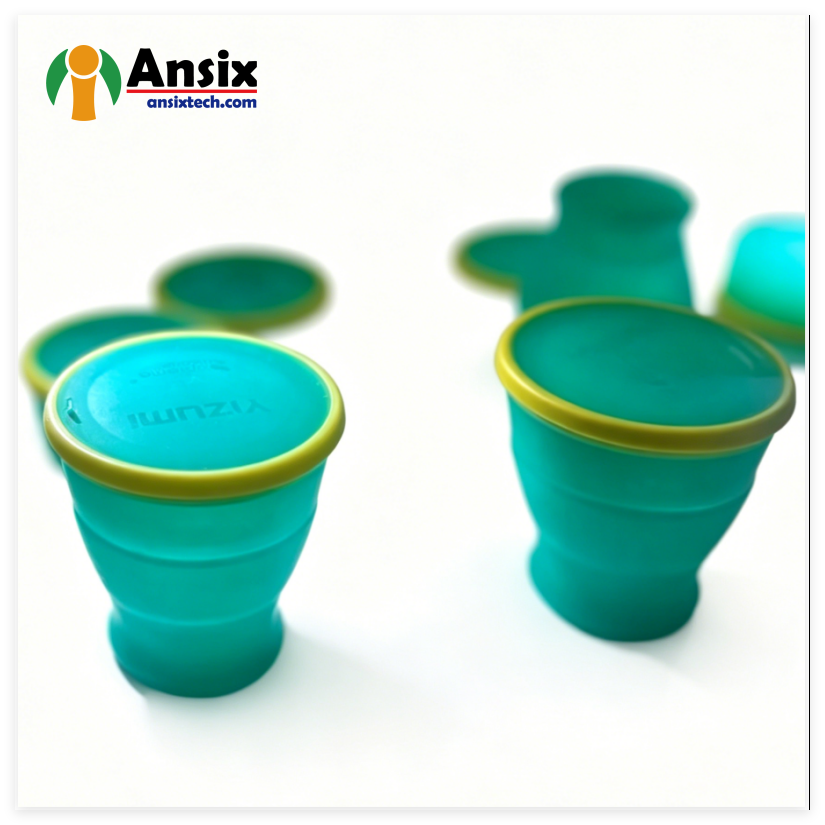


PVC
PVC


Ansix Tech Launches Custom PVC Compound Development Initiative, Redefining Cost-Effective Precision Molding for Global Manufacturers
Industry leader leverages 29 years of manufacturing expertise to deliver end-to-end PVC solutions from custom material formulation to high-volume production
SHENZHEN, China – In a strategic move that signals a new era for PVC component manufacturing, Ansix Tech, the precision injection molding powerhouse with over 29 years of industry experience, has officially launched its Custom PVC Compound Development and Formulation Project. The initiative represents a comprehensive vertical integration strategy that positions Ansix Tech as more than a contract manufacturer—it establishes the company as a full-spectrum partner capable of customizing PVC material formulations, engineering precision molds, optimizing injection molding processes, and delivering validated, cost-effective components at scale.
PVC TDS:

Understanding PVC: The Versatile Thermoplastic Foundation
Polyvinyl chloride (PVC) – abbreviated from its IUPAC designation Poly(chloroethanediyl) – is a thermoplastic polymer constructed of repeating vinyl groups (ethenyls) with one hydrogen replaced by a chloride group. Produced through the polymerization of vinyl chloride monomer (VCM) using free-radical initiators, PVC ranks among the most widely used plastics in commercial history.
The essential raw materials for PVC are derived from two abundant natural resources: salt and oil. The electrolysis of salt water produces chlorine, which is combined with ethylene (obtained from oil) to form vinyl chloride monomer (VCM). Approximately 57% of PVC's composition comes from salt, with the remaining 43% derived from oil derivatives. A typical PVC polymer chain consists, on average, of 750 to 1,500 monomer molecules, giving the material its distinctive balance of strength and processability.
PVC's molecular structure—characterized by the presence of chlorine atoms along the carbon backbone—imparts exceptional chemical resistance, flame retardancy, and weatherability. These inherent properties, combined with the material's ability to be formulated with plasticizers, stabilizers, and modifiers, make PVC uniquely adaptable across an extraordinary range of applications. The global PVC market, valued at approximately $90.29 billion in 2024, is projected to reach $98.5 billion in 2025, reflecting a compound annual growth rate of 9.1%. Roughly half of the world's annual PVC resin production is dedicated to pipe manufacturing for municipal and infrastructure applications.
PVC Material Characteristics: Technical Data Sheet Overview
PVC exhibits a distinctive profile of physical and mechanical properties that demand careful consideration in material selection and processing. The material's versatility stems from its ability to be formulated in both rigid and flexible configurations, each serving distinct application requirements.
Physical Properties: Rigid PVC typically exhibits a specific gravity ranging from 1.35 to 1.46 g/cm³, depending on formulation. The material demonstrates high hardness—with Shore D hardness values and Rockwell R-scale ratings reflecting its structural integrity. PVC's polar nature contributes to excellent chemical resistance but results in electrical insulating properties that are inferior to non-polar polymers such as polyethylene and polypropylene.
Mechanical Properties: PVC demonstrates tensile strength at yield of approximately 42.0 MPa for rigid formulations, with elongation at break characteristics that vary significantly between rigid and flexible grades. Flexible PVC compounds can achieve elongation at break exceeding 400%, with Shore A hardness values tailored to specific application requirements. Tear strength and tensile strength values are formulation-dependent, with specialized compounds achieving tensile strengths up to 2,750 psi.
Thermal and Chemical Properties: PVC's thermal stability presents a primary processing challenge. The material is inherently heat-sensitive, with decomposition occurring when melt temperatures are excessive or residence times are prolonged. The processing window is narrow, requiring precise temperature control throughout the injection molding cycle. PVC exhibits excellent resistance to acids, alkalis, and many organic solvents, contributing to its widespread use in chemical handling and infrastructure applications. However, the material's corrosion resistance is accompanied by processing challenges—PVC releases acidic gases when heated, necessitating corrosion-resistant screw and barrel materials.
Rheological Behavior: PVC melts exhibit high viscosity and low thermal conductivity, making mold filling challenging. The material is shear-sensitive, with excessive shear friction generating localized overheating that can trigger decomposition. These rheological characteristics demand careful optimization of injection parameters, including melt temperature, injection pressure (typically 80–120 MPa), and flow rates.
PVC Applications: A Material for Every Industry
PVC's remarkable versatility enables its deployment across virtually every sector of the global economy. The construction industry represents the largest consumption segment, accounting for approximately 60% of PVC utilization. Within construction, PVC finds application in pipes, fittings, profiles, window frames, cables, roofing membranes, and flooring systems.
Infrastructure and Construction: PVC pipes dominate municipal water distribution, drainage, and sewer systems worldwide. The material's corrosion resistance, ease of joining, and longevity make it the preferred choice for buried infrastructure. Window profiles and building cladding leverage PVC's weatherability and low maintenance requirements.
Electrical and Electronics: PVC's excellent insulation properties, flame retardancy, and flexibility make it indispensable for wire and cable insulation, conduit systems, and electronic component housings.
Medical and Healthcare: PVC's biocompatibility and sterilizability enable its use in blood bags, medical tubing, IV containers, and surgical equipment.
Transportation: Automotive applications include interior trim, cable harnesses, underbody coatings, and seating components.
Consumer and Industrial Goods: From toys and footwear to packaging films, hoses, and industrial fabrics, PVC's adaptability supports countless everyday products.
Ansix Tech's Custom PVC Compound Initiative: Engineering Value from the Molecule Up
Ansix Tech's newly launched Custom PVC Compound Development Project represents a paradigm shift in how PVC components are engineered and manufactured. With over 29 years of manufacturing expertise, four production bases across China and Vietnam, 260 injection molding machines ranging from 30 to 2,800 tons, and more than 1,200 employees, Ansix Tech has built the infrastructure and expertise to deliver comprehensive PVC solutions that address the industry's most persistent challenges.
Material Selection and Custom Formulation: The Foundation of Performance
The initiative begins with a deep understanding that material selection determines component performance. Ansix Tech's engineering team works collaboratively with clients during the project initiation phase—not merely responding to design specifications but integrating into the client's development cycle to anticipate challenges before they reach production.
For PVC projects, material selection encompasses multiple critical parameters:
PVC Resin Selection: The choice of PVC resin grade—characterized by K-value (molecular weight)—directly influences melt flow, mechanical properties, and processing behavior. Ansix Tech's material scientists evaluate resin options against application requirements, balancing performance against cost.
Additive Systems: PVC's performance is largely determined by its additive package. Stabilizers (organotin, calcium-zinc, or lead-based) prevent thermal degradation during processing. Plasticizers control flexibility—from rigid unplasticized PVC (PVC-U) for pipes and profiles to highly flexible compounds for hoses and cables. Impact modifiers, processing aids, lubricants, and fillers are precisely formulated to achieve target properties.
Custom Compound Development: For applications requiring specific performance characteristics—UV resistance, enhanced impact strength, flame retardancy, or weatherability—Ansix Tech develops custom PVC compounds tailored to exact specifications. The company's material formulation capabilities extend to specialty compounds for medical, automotive, and electrical applications.
Quality Verification: Ensuring Material Integrity
Material validation is a cornerstone of Ansix Tech's value proposition. The company operates under a comprehensive quality management system certified to ISO9001, IATF16949, ISO13485, and ISO14001.
Raw Material Verification: Incoming PVC resins and additives undergo rigorous incoming inspection, including melt flow index testing, thermal stability analysis, and mechanical property verification. This ensures batch-to-batch consistency and prevents material-related defects from entering production.
Compound Validation: Custom formulations are subjected to comprehensive testing—tensile strength, elongation, hardness, thermal stability, and chemical resistance—to confirm that the compound meets design specifications before production tooling commences.
Process Qualification: Injection molding parameters are validated through systematic Design of Experiments (DOE) approaches, establishing robust processing windows that deliver consistent part quality across production runs.
Mold Engineering: Precision Tools for High-Volume Production
Ansix Tech's mold engineering capabilities represent decades of accumulated expertise in PVC-specific tool design. The company's integrated approach—encompassing Design for Manufacturability (DFM) analysis, mold flow simulation, precision machining, and validation—eliminates the common industry pain point of delays and translation errors between separate design and manufacturing entities.
DFM and Mold Flow Analysis: Before steel is cut, Ansix Tech performs comprehensive mold flow CAE simulations using advanced software including Moldex3D. These simulations analyze filling patterns, weld line locations, gas traps, cooling efficiency, and post-molding shrinkage and warpage. For PVC specifically, simulation addresses the material's unique rheological challenges—high viscosity, shear sensitivity, and narrow processing window. The DFM process optimizes wall thickness for uniform cooling (a critical factor affecting cycle time), incorporates appropriate draft angles for part ejection, and simplifies geometry to eliminate costly undercuts.
Mold Material Selection: PVC's corrosive nature—the material releases acidic gases during processing that attack standard tool steels—demands careful mold material selection. Ansix Tech fabricates mold cores and cavities from high-quality stainless steel or hardened alloy steel, with common materials including DIN 1.2316, S136, 4Cr13, 2738, H13, and P20, hardened to approximately HRC50 for optimal wear resistance. Mold bases typically utilize S50C, S45C, or LKM materials with optional HASCO or DME standard configurations.
Cooling System Design: Efficient cooling is essential for cycle time reduction and dimensional stability. Ansix Tech's mold designs feature strategically placed cooling channels with unique circular core cooling designs that ensure uniform heat dissipation. This approach reduces cycle times while minimizing residual stress and warpage in molded parts. Proper venting grooves prevent gas traps that could otherwise cause burns or incomplete filling.
Gating and Runner Systems: The design of the feed system—including sprue, runners, and gates—is critical for PVC molding. Ansix Tech optimizes runner geometry to minimize pressure drop and shear heating, with automatic degating systems eliminating manual runner removal and reducing labor requirements. Sprue and runner optimization reduces plastic waste by up to 30%.
Ejection Systems: Reliable part ejection is essential for automated, high-volume production. Ansix Tech's mold designs incorporate robust ejection systems that accommodate PVC's tendency to stick and its relatively high coefficient of friction.
Injection Molding Process Optimization: Efficiency and Cost Control
PVC injection molding presents unique challenges that Ansix Tech has mastered through decades of experience. The material's thermal instability demands precise temperature control—excessive melt temperature or prolonged residence time triggers decomposition. Melt viscosity is high, requiring injection pressures of 80–120 MPa and careful gate design. PVC is shear-sensitive, with excessive shear generating localized overheating. The material's corrosive nature demands specialized screw and barrel materials resistant to acidic degradation products.
Ansix Tech addresses these challenges through comprehensive process optimization:
Machine Selection and Configuration: With 260 injection molding machines spanning 30 to 2,800 tons, including leading brands such as Fanuc, Sumitomo, Toshiba, Nissei, Engel, and Arburg, Ansix Tech selects the optimal machine for each project. PVC-specific screws with corrosion-resistant coatings and appropriate compression ratios ensure consistent melt quality.
Process Parameter Optimization: Ansix Tech's process engineers fine-tune temperature profiles, injection speeds, pressures, and holding parameters to achieve optimal filling, packing, and cooling. Zone-controlled mold temperature controllers maintain core and cavity temperature differentials within 2°C, minimizing warpage and deformation.
Cycle Time Reduction: Through optimized cooling channel design, multi-cavity configurations (producing four, eight, or more parts per cycle), and automated degating, Ansix Tech significantly reduces cycle times. The company's precision mold design and process optimization have enabled clients to slash production cycles by 28% and increase daily output by over 350 units.
Quality Assurance: Eliminating Production Risks
Ansix Tech's quality assurance framework addresses the full spectrum of potential defects that can compromise PVC component performance.
In-Process Quality Control: All injection parameters—temperature, pressure, speed, and time—are locked within MES systems, with changes permitted only by authorized engineers. This prevents unauthorized adjustments that could compromise quality.
First-Article and Last-Article Inspection: Every production batch undergoes first-article and last-article comparisons, ensuring consistency throughout the production run.
Dimensional Verification: Full dimensional inspection using CMM (Coordinate Measuring Machine) and optical measurement equipment verifies that critical dimensions achieve CPK ≥1.33 before shipment.
Surface Quality: For transparent or high-gloss components, Ansix Tech achieves surface roughness Ra ≤0.2μm, free from bubbles or flow marks.
Cost Reduction: A Systematic Approach
Ansix Tech's cost reduction strategy is built on intelligent optimization at every stage, not cost-cutting that compromises quality. The company attacks cost from multiple directions:
Material Cost Optimization: By recommending optimal material grades for specific applications—balancing performance requirements against cost—Ansix Tech minimizes raw material expenses without compromising quality. Standard materials are specified wherever possible to reduce procurement costs.
Process Efficiency: Lean manufacturing approaches reduce machining time and eliminate waste. Automation and process standardization lower per-unit production costs, particularly for high-volume orders.
Tooling Optimization: Precision mold design with multi-cavity configurations and optimized cooling channel layout maximizes output per machine-hour. Automatic degating eliminates manual labor requirements. Sprue and runner optimization reduces plastic waste by up to 30%.
Vertical Integration: Ansix Tech's integrated in-house mold manufacturing and injection molding operations eliminate the common industry pain point of mold transfer delays between separate workshops. This consolidation also eliminates "translation errors" that commonly plague outsourced projects.
Geographic Advantage: With four production facilities in China and Vietnam, Ansix Tech's strategic footprint enables competitive labor costs, shorter shipping distances to key markets, and rapid response to customer demands.
Capacity and Delivery: Meeting Global Demand
Ansix Tech's production capacity is unmatched in the PVC molding sector. The company's 260 injection molding machines, four production bases, and 1,200+ employees deliver the scalability required for high-volume production. The company's efficient production lines and processes enable rapid response to customer orders and on-time delivery.
From prototype design and manufacturing validation through CNC machining and 3D printing for initial form and fit verification, to high-volume production and assembly validation, Ansix Tech provides a seamless continuum that accelerates time-to-market. The company's ISO-certified quality systems and robust supply chain management ensure consistent quality across production volumes.
Industry Experience: Proven Reliability Across Applications
Ansix Tech's PVC expertise spans diverse industries and applications. The company has delivered precision PVC components for plumbing fixtures, achieving 30% to 50% part cost savings compared to traditional metal alternatives. The company has engineered complex PVC conduit elbows with specialized geometries for infrastructure projects. Ansix Tech's medical device manufacturing capabilities include PVC tubing for biopharmaceutical and single-use applications.
The company's automotive experience encompasses precision components requiring dimensional stability and weatherability. Consumer product applications include durable goods requiring impact resistance and aesthetic surface quality.
Conclusion: A New Standard for PVC Manufacturing
Ansix Tech's Custom PVC Compound Development and Formulation Project establishes a new benchmark for the PVC manufacturing industry. By integrating material science, precision mold engineering, process optimization, and rigorous quality assurance under one roof, Ansix Tech delivers comprehensive solutions that address the industry's most pressing challenges: material performance, production efficiency, quality consistency, and cost control.
For manufacturers seeking reliable, cost-effective PVC components, Ansix Tech offers a single point of accountability from material formulation to final delivery. With 29 years of manufacturing expertise, ISO-certified quality systems, and a strategic global footprint, Ansix Tech is uniquely positioned to serve as a strategic partner for PVC component manufacturing in an increasingly competitive global market.
For more information about Ansix Tech's Custom PVC Compound Development and Formulation Project, contact info@ansixtech.com or visit www.ansixtech.com.
Ansix Tech Co Ltd
If you have any plans related to PVC , you can contact us at any time. We will turn your ideas into reality, let you realize your dreams, and obtain large orders from the market. Our contact information is info@ansixtech.com. Or contact our CTO, mail: stephen@ansixtech.com
#www.ansixtech.com #ansixtech.com #PVC #PVC #PVC Canopy Mold injection mold companies #Ansix #Ansix moulds #Ansix china #Ansix tech china #Ansix tech company #Ansix facotry #PVCinjection molding #PVCinjection tools #PVCinjection moulds #PVCplastic mould #PVCplastic tools #Ansix Tech #Ansix molds #Ansix injection molding #Ansix mold factory #injection molding Customized stainless steel float switch for water level, oil level, high liquid level alarm#Ansix mold factory #PVCchina #PVCmolds #injection factory #PVCinjection molding #PVCinjection molding factory #injection molding company #PVCinjection mold companies #PVCTooling #PVCmold limited #Ansix mold china #Ansix companies #Ansix company China #PVCfacotry #Ansix Tech #Ansix Tech mould #PVCinjection moulding #injection moulding company #Ansix PVCparts injection mold companies #medical injection molding companieschina #PVCchina factory #Ansix moulding companies #Ansix molding company #PVCinjection moulding facotry #Ansix Tech mold #PVCmould #PVCplastic injection molding #ansix plastic mold #Mold manufacturing #PVCparts manufacturing #PVCplastic parts factory #PVCinjection parts mold #PVCPRECISION MANUFACTURING #PVC#China mold #PVCinjection moulding china #PVCmould china #china precision mold #mold in china #PVCmold china #Precision molds #High-precision molds #PVC#Injection molds #PVCFactory #PVCCompany #Super Large Injection Mold Factory #Large Tonnage Injection Molding Factory #PVCCompany #PVCFactory #2800T Injection Molding Factory #3000 Ton Injection Molding #4500 Ton Injection Molding Factory #Large Mold Injection Molding #Large Plastic Mold Injection Molding Factory #Large Injection Mold Manufacturer #Plastic Mold Factory #Injection Mold #Plastic Mold