



NBR foam float; NBR float for low-level switch
FEATURES
NBR Foam Float – Product Introduction and Technical Overview
1.1 What is an NBR Foam Float?
An NBR foam float is a closed-cell foam device composed of nitrile butadiene rubber (NBR), designed to detect and measure liquid levels in various industrial and automotive applications. NBR is a synthetic rubber derived from the copolymerization of acrylonitrile and butadiene monomers. The material is processed through high-pressure, two-stage foaming where vulcanization and foaming occur in primary and secondary stages, creating a structure of independently sealed microscopic cells.
This closed-cell structure is the key to the float's functionality: each cell is a self-contained, sealed space that completely blocks liquid penetration. Even if the outer surface is damaged, the float maintains its buoyancy because liquid cannot migrate between cells. Under 1000x electron microscope observation, the independent spatial arrangement of these small holes demonstrates the material's uniform pore structure, which directly correlates to product reliability and prevents the sinking accidents that plague inferior floats.
-
Mold Description
Product Materials:
NBR FOAM
Mold Material:
S136ESR
Number of Cavities:
16
Glue Feeding Method:
Hot runner
Cooling Method:
Water cooling
Molding Cycle
42.5s
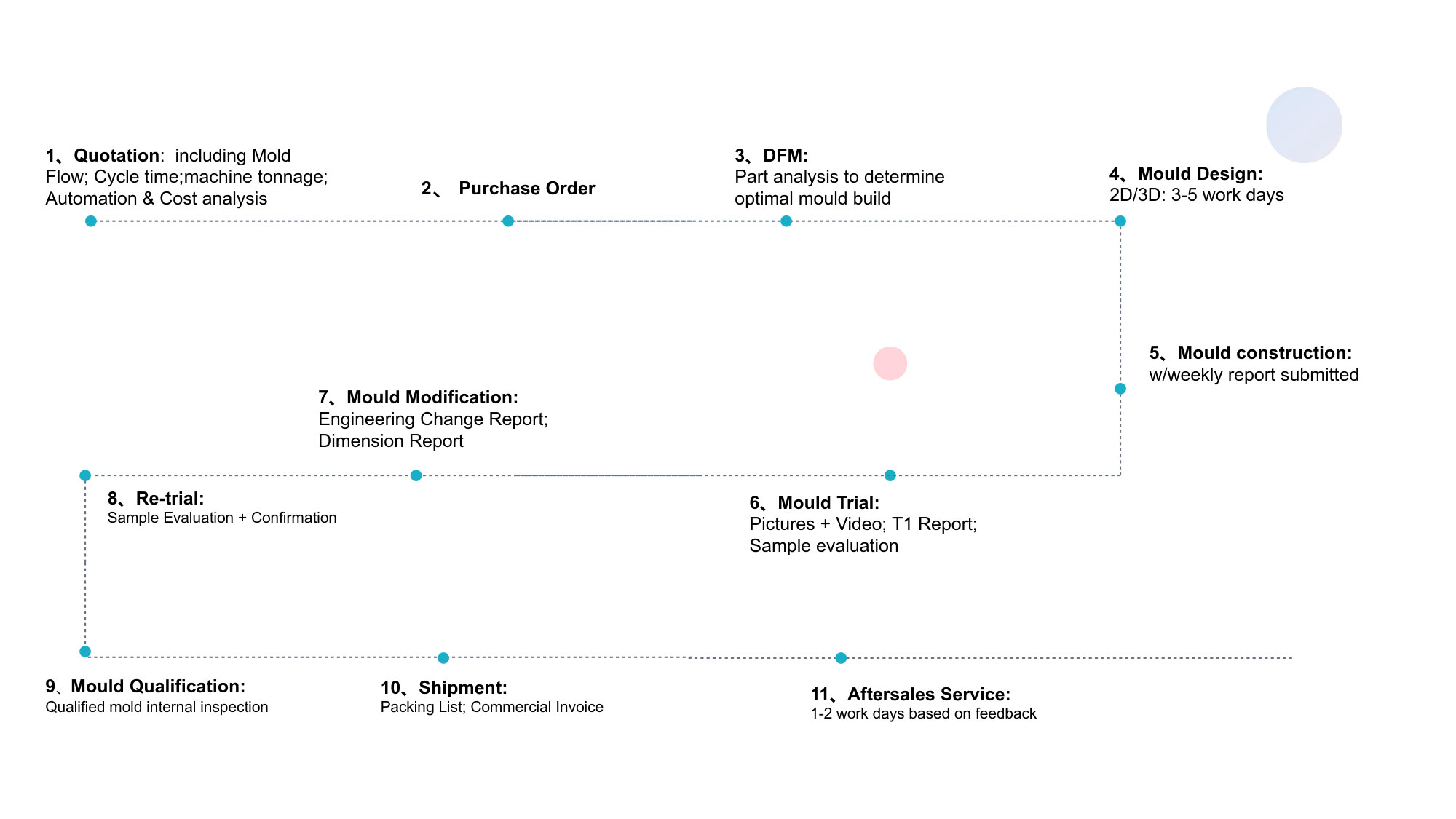
- The mold manufacturing process and product material selection
Key Material Properties and Specifications
NBR foam exhibits the following critical characteristics that make it the material of choice for liquid level sensing applications:
Property Value/Rating Test Method
Cell Structure Fine – Semi Closed Cell –
Density 75–90 kg/m³ (±10%) ASTM D/1667
Tensile Strength 2.8 kgf/cm² ASTM D/412
Elongation 180% ASTM D/412
Compression Set 1.5% ASTM D/1056
Tear Strength 1.2 kgf/cm ASTM D/624
Temperature Range -40°C to +150°C –
Ozone Resistance Excellent ASTM D1171
Fire Resistance Self-Extinguishing, V-0, 5VA UL94
Weather & UV Resistance Good –
Water Absorption ≤5.0% ASTM D1056
Customer Value Translation: These material properties translate directly into real-world benefits. The -40°C to +150°C operating range means the float performs reliably in extreme environments – from Arctic conditions to engine compartments. The UL94 V-0 fire rating provides safety assurance for applications where fire risk is a concern. The closed-cell structure with ≤5% water absorption ensures the float will never sink due to liquid ingress, protecting your equipment from failure. Oil resistance means the float maintains its integrity when exposed to gasoline, diesel, light oil, and kerosene.
-
Applications and Market Positioning
NBR floats are critical components in:
Automotive fuel tank level gauges – cars, motorcycles, trucks
Carburetors – motorcycles, agricultural machinery engines
Engine oil level gauges
Transformer oil level indicators
Industrial liquid level sensors
Water treatment and tank monitoring systems
Marine and offshore equipment
Ansix serves customers across these diverse industries with customized solutions that meet specific application requirements, including different buoyancy specifications, dimensional tolerances, and environmental resistance needs.
Part Two: Hard Power Infrastructure – The Foundation of Customer Trust
2.1 Mold Manufacturing Equipment
Ansix's mold manufacturing capabilities are built on a foundation of precision equipment that directly translates into product quality for customers:
Five-Axis High-Speed Machining Centers
Capable of machining complex curved surfaces with 0.002mm precision
Ensures smooth, burr-free parting lines on every float
Eliminates post-processing costs for customers
Slow-Wire EDM (Electrical Discharge Machining)
Enables machining of 0.03mm fine micro-holes and narrow slots
Prevents thin-wall deformation during processing
Critical for floats requiring precision through-holes or complex internal geometries
Customer Value: When we say we can machine to 0.002mm precision, what that means for you is: no secondary deburring operations, no rejected parts due to rough surfaces, and floats that seal perfectly every time. The slow-wire EDM capability means we can produce floats with complex internal features that competitors simply cannot manufacture – features that may be critical to your product's performance.
2.2 Injection Molding Machine Fleet
Ansix operates a comprehensive range of injection molding machines with clamping forces from 30 tons to 4,000 tons, covering the full spectrum of NBR float sizes from miniature sensors to large industrial floats.
All-Servo Electric Drive Systems
Stable repeatability accuracy of ±0.1%
Every shot is consistent – part-to-part variation is virtually eliminated
Energy-efficient operation reduces manufacturing costs passed on to customers
Customer Value: The ±0.1% repeatability means when you order 100,000 floats, the first one is identical to the last one. No dimensional drift, no unexpected assembly issues, no field failures due to inconsistent parts. The wide clamping force range means we have the right machine for every product size – we don't force your part onto a machine that's too big (wasting energy) or too small (compromising quality).
2.3 Inspection and Metrology Equipment
Coordinate Measuring Machines (CMM)
Full dimensional inspection on every mold before delivery
Comprehensive full-dimension report provided with each mold
Optical Imaging Measurement Systems
High-speed, non-contact measurement for complex geometries
Ideal for foam materials where contact measurement could deform the part
Customer Value: Every mold we ship comes with a complete dimensional report. You don't have to guess if the mold will produce parts to your specifications – we prove it before shipping. Key dimensions are held to CPK ≥1.33, meaning your production runs will be statistically capable and defect-free.
Part Three: Mold Manufacturing Core Competencies
3.1 Mold Life and Steel Selection
Mold Component Material Selection Performance Commitment
Mold Base P20 Structural integrity
Core/Cavity S136, 2344, 2343, 8407, SKD11/61, DC53, M340, 4Cr13, 9Cr18, NAK80, H13 Wear resistance, corrosion resistance
Life Guarantee – 500,000 shots for glass-fiber reinforced materials
– 1,000,000 shots for standard plastics
Customer Value: We don't just tell you what steel we use – we tell you how many parts you'll get from the mold. For glass-fiber reinforced materials (common in high-strength float applications), we guarantee 500,000 shots. For standard materials, 1,000,000 shots. This isn't a guess – it's based on 28 years of real production data. You can budget your tooling amortization with confidence.
Material Certifications: Every mold is delivered with complete material certificates and heat treatment curves – full traceability from raw material to finished mold.
3.2 Dimensional Tolerances
Part Type Achievable Tolerance
Standard Structural Components ±0.05mm
Precision Gears / Medical Components ±0.005mm
Customer Value: For NBR floats, the ±0.05mm standard tolerance means your float will fit perfectly in your switch housing every time. For applications requiring ultra-precision (such as miniature floats for compact sensors), we can hold ±0.005mm – tolerances that most mold shops can't even measure, let alone achieve consistently.
3.3 Mold Types and Capabilities
Ansix manufactures a diverse range of mold types to match customer production requirements:
Hot Runner Molds – Eliminate runner waste, reduce material costs by up to 30%
Stack Molds – Double production output from a single machine
Two-Shot / Multi-Material Molds – Enable overmolding of magnets or metal inserts
High-Gloss / Mirror-Finish Molds – Surface roughness Ra < 0.05μm for transparent or cosmetic applications
Customer Value: A hot runner mold might cost more upfront, but it eliminates runner waste – for high-volume production, this can save tens of thousands of dollars in material costs annually. Stack molds effectively double your production capacity without buying a second injection molding machine. We help you choose the right mold type for your volume and quality requirements – we don't just sell you the most expensive option.
3.4 Gate and Runner System Design
Through Moldflow analysis, Ansix pre-identifies potential issues before steel is cut:
Weld line prediction – identifying where material fronts meet
Gas trap identification – preventing burn marks and voids
Fill balance optimization – ensuring all cavities fill uniformly
Customer Value: We run Moldflow analysis on every project before we start machining. This isn't a cost – it's an investment that saves you from discovering problems during trial shots. By predicting weld lines and gas traps upfront, we optimize gate locations and numbers to ensure perfect fill balance. The result: no unexpected defects, no costly mold modifications, and faster time-to-market.
3.5 Mold Delivery Standards
Mold Complexity Standard Lead Time Expedited Lead Time
Simple Molds 10 days –
Medium Complexity 25–45 days As low as 20 days
Complex Molds 45–60 days Negotiable
Customer Value: We understand that speed matters. Our standard lead times are competitive, and our expedited service can compress schedules by up to 50%. Crucially, we never skip validation steps – even under expedited timelines. Every mold still receives full inspection, trial shots, and dimensional verification before shipping.
Part Four: Injection Molding Process Control – Eliminating Quality Anxiety
4.1 Process Standardization and MES Integration
All machines are networked – every molding parameter (temperature, pressure, speed, timing) is locked into the MES (Manufacturing Execution System). Only authorized engineers can adjust parameters, and all changes are logged with timestamps and approvals.
First-Article and Last-Article Inspection: Every production batch begins with a first-article inspection and ends with a last-article inspection. Parts are measured against the approved sample, and any deviation triggers immediate corrective action.
Customer Value: When you place a reorder six months later, the parts will be identical to the first batch. No "batch-to-batch variation," no surprises during assembly, no field failures due to inconsistent parts. The MES system ensures complete process traceability – if there's ever a quality issue, we can trace it back to the exact machine, operator, and material lot.
4.2 Dimensional Stability Control
Mold Temperature Controllers (Water Circulators):
Zone-specific temperature control
Core and cavity temperature differential maintained within 2°C
Minimizes warpage and distortion
Real-World Performance Data: For a typical bracket/product, three consecutive production batches over one week showed key hole spacing variation ≤ 0.02mm.
Customer Value: Temperature differential is the enemy of dimensional stability. By maintaining core and cavity temperatures within 2°C of each other, we eliminate the warpage that plagues less controlled processes. The 0.02mm variation over three batches means you can assemble these parts without forcing, shimming, or scrapping. Your assembly line runs smoothly, and your field failure rate drops.
4.3 Surface Finish and Appearance Grades
Requirement Achievable Specification
Transparent Parts No bubbles, no flow marks
Plated Parts No gas marks, no splay
High-Gloss Parts Surface roughness Ra ≤ 0.2μm
Printed/Coated Parts Compensation for deformation预留, print registration ±0.1mm
Customer Value: Whether your float needs to be cosmetically perfect for a consumer application or functionally sound for an industrial sensor, we have the capability. For parts requiring printing or coating, we design deformation compensation into the mold – so when the part comes out of the mold, it's already shaped to account for post-molding shrinkage. Print registration accuracy of ±0.1mm means your logos, markings, or sensor graduations will be perfectly aligned.
4.4 Special Material Processing Capabilities
Ansix has extensive production experience with a wide range of engineering materials:
PC/ABS blends
Polycarbonate (PC)
PPS + 40% Glass Fiber
PEEK (high-temperature, high-performance)
PTFE / PFA (fluoropolymers)
PA6 + GF30 (nylon with glass reinforcement)
PBT
PEI / PPS / LCP (high-performance engineering plastics)
Liquid Silicone Rubber (LSR)
Flame Retardancy: UL94 V-0 rated housings and components
Weathering: UV testing up to 3,000 hours with no discoloration
Customer Value: We don't just mold NBR – we have decades of experience across the full spectrum of engineering materials. If your float requires a PPS+40%GF body for high-temperature resistance, or an LSR seal for chemical compatibility, we've done it. The UL94 V-0 rating means your product meets safety standards for electrical and automotive applications. The 3,000-hour UV test means your float won't degrade, discolor, or fail when exposed to sunlight – critical for outdoor tank monitoring applications.
Part Five: Full-Service Process – Reducing Customer Management Costs
5.1 Early Design Intervention (DFM Reports)
Before any contract is signed, Ansix provides a comprehensive Design for Manufacturability (DFM) report that includes:
Draft angle recommendations
Wall thickness optimization
Gate location suggestions
Ejector pin mark location allowances (where marks are acceptable, where they're not)
Customer Value: Most mold shops wait until you've committed to a design before telling you it can't be manufactured. We tell you upfront – before you've invested in tooling, before you've committed to a design that can't be produced. This saves you from the nightmare of discovering post-design that your part can't be molded, or that it requires expensive modifications. The DFM report is free, and it protects your investment.
5.2 Trial Molding and Sample Submission
Ansix provides T0 through T3 trial samples, each accompanied by a detailed improvement report:
T0: First shots from the new mold – identifies major issues
T1: Corrected samples – addresses T0 findings
T2: Refined samples – fine-tunes dimensions and appearance
T3: Production-ready samples – fully validated
Quick-Change Insert Capability: Ansix can rapidly swap inserts to test different design variations without rebuilding the entire mold.
Customer Value: The T0–T3 process means you're never surprised by a mold that doesn't work. Each trial stage gives you visibility into the mold's performance, and each improvement report shows you exactly what we changed and why. The quick-change insert capability means we can test multiple design options at minimal cost – instead of building three separate molds, we build one mold with interchangeable inserts. This saves you 50-70% on design validation costs.
5.3 Low-Volume Pilot Production
Before full production ramp-up, Ansix offers 100–500 shot pilot runs that include:
Yield rate statistics
CPK (process capability) analysis
Confirmation of process stability before mass production
Customer Value: We don't go straight from trial samples to million-part production runs. We validate the process at small scale first – so if there are any issues, they're caught when only 500 parts are affected, not 500,000. The CPK analysis gives you statistical proof that the process is capable of meeting your specifications before we commit to full production.
5.4 Maintenance and Spare Parts
Spare Parts Kit: Every mold is delivered with a complete set of wear parts (ejector pins, core pins, etc.).
Scheduled Maintenance: Ansix provides maintenance service every 200,000 shots.
Lifetime Repair: Mold repairs are available at cost for the life of the mold.
Customer Value: We don't just deliver a mold and walk away. We deliver a complete production solution – including the spare parts you'll need, the maintenance schedule you should follow, and the repair support you can count on. The lifetime repair-at-cost policy means you're never held hostage by expensive, unexpected repair bills. You can budget for maintenance, and you know exactly what it will cost.
Part Six: Competitive Differentiation – Direct Answers to Common Pain Points
6.1 Addressing Common Customer Complaints
Customer Complaint Ansix's Professional Response Customer Value
"My molds need constant repair and disrupt my orders." 2,000-shot aging test before delivery with full wear report; 3-year mold structure warranty (excluding normal wear parts) You know exactly how the mold will perform before it reaches your factory. The 3-year warranty means no surprise repair costs for structural issues.
"Excessive flash means high secondary finishing costs." 0.005mm fit precision on parting lines; self-locking clamp force compensation; flash controlled to ≤0.03mm per batch Eliminates manual deburring – parts come off the machine ready to use. Saves hours of labor per batch.
"Dimensions change from batch to batch." Ultrasonic wall thickness sensors providing real-time feedback; automatic compensation of packing pressure; in-mold temperature and pressure sensors for closed-loop control Every batch is identical to the last. No assembly issues, no field failures, no scrap.
"Mold repairs take too long." In-house electrode machining and EDM workshops; mold repairs never leave the factory; standard weld repair/insert replacement completed within 24 hours When something does need repair, you're back in production within a day – not weeks.
6.2 The Ansix Philosophy
"For us, a mold is not just a piece of steel – it's a money-printing machine. When we design a mold, we simultaneously plan for the injection molding process: the steel's rigidity, the排气路径, the temperature balance. Our goal is that when the mold arrives at your production line, it's ready to run – no调试, minimal flash, maximum life. "
Customer Value: This philosophy means we don't design molds in isolation. We design them with the entire production process in mind – from material selection to injection parameters to post-molding operations. The result is a mold that works the first time, every time – not a mold that requires weeks of调试 and modification.
Part Seven: The NBR Float Manufacturing Process – End-to-End Excellence
7.1 Material Selection and Compound Formulation
The foundation of every high-quality NBR float is the raw material compound. Ansix works with proprietary NBR formulations optimized for specific applications:
Base Polymer: Nitrile Butadiene Rubber (NBR) – copolymer of acrylonitrile and butadiene
Key Additives:
Crosslinking agents (sulfur-based) – enable vulcanization and foam structure formation
Foaming agents – generate the closed-cell structure during processing
Phenolic resins – provide dimensional stability and structural rigidity
Plasticizers – optimize flexibility and low-temperature performance
Antioxidants – enhance aging resistance and service life
Customer Value: We don't just buy generic NBR compound off the shelf. We formulate our own compounds – tailored to your specific application requirements. Need higher oil resistance? We adjust the acrylonitrile content. Need better low-temperature performance? We modify the plasticizer package. You get a material that's optimized for your application, not a one-size-fits-all compromise.
7.2 Two-Stage High-Pressure Foaming Process
The production of NBR foam floats utilizes a two-stage high-pressure foaming process:
Stage 1 – Primary Vulcanization:
The NBR compound, containing foaming agents and crosslinking agents, is injected into the mold cavity
Heat and pressure initiate the vulcanization (crosslinking) reaction
The material begins to cure while maintaining its shape
Stage 2 – Secondary Vulcanization and Foaming:
The partially cured material is subjected to controlled temperature and pressure
Foaming agents decompose, releasing gases that expand the material
The expansion creates the characteristic closed-cell foam structure
Final vulcanization locks in the foam structure and mechanical properties
Key Advantages of Two-Stage Foaming:
Nearly perfect closed pores – every cell is independently sealed
Maintains buoyancy even with surface damage – liquid cannot migrate between cells
Enables high foaming ratios – minimum specific gravity of approximately 0.15
Excellent post-processing characteristics – cutting, drilling, and bonding are straightforward
Customer Value: The two-stage process is what separates Ansix floats from inferior products. Perfect closed cells mean your float will never sink – even if the surface is scratched or damaged during installation. The ability to achieve specific gravity as low as 0.15 means we can tailor buoyancy to your exact requirements – whether you need a float that sits high in the liquid or one that's nearly neutrally buoyant.
7.3 Injection Molding Process Optimization
Process Parameter Control:
Injection temperature: precisely controlled to prevent premature vulcanization
Mold temperature: uniform distribution ensures consistent curing
Injection speed: optimized to prevent air traps and incomplete filling
Curing time: the primary determinant of cycle time, optimized without compromising quality
Quality Control During Production:
Real-time process monitoring – all parameters tracked and recorded
Statistical Process Control (SPC) – continuous monitoring of关键 dimensions
Automated defect detection – vision systems inspect every part
Customer Value: Optimizing the injection molding process isn't just about making parts faster – it's about making every part right, every time. Our process controls mean scrap rates under 1% – compared to industry averages of 3-5%. That's 4% more good parts from every batch – and those savings are passed on to you.
7.4 Quality Assurance and Testing
Incoming Material Inspection:
Raw material certificates verified
Batch-to-batch consistency tested
In-Process Inspection:
First-article inspection for every batch
Patrol inspection at regular intervals
Real-time SPC monitoring
Final Inspection:
100% dimensional inspection for critical dimensions
Buoyancy testing (specific gravity verification)
Visual inspection for surface defects
Functional testing (where applicable)
Customer Value: Quality isn't inspected in – it's built in. Our in-process controls mean defects are caught and corrected immediately – not discovered after 10,000 parts have been produced. The result is consistent quality, minimal scrap, and on-time delivery.
7.5 Packaging and Logistics
Packaging:
Custom packaging solutions available
Protection against damage during transit
Clear labeling and traceability
Delivery:
On-time delivery track record
Flexible shipping options (air, sea, land)
Real-time order tracking available
Customer Value: We understand that your production line can't wait. On-time delivery isn't a goal – it's a requirement. Our logistics team works to ensure your parts arrive when you need them, in the condition you expect.
Part Eight: Cost Reduction – How Ansix Lowers Your Total Cost of Ownership
8.1 Material Cost Optimization
Bulk purchasing power – we buy raw materials in volume, passing savings to customers
Compound formulation expertise – we can sometimes substitute lower-cost materials without compromising performance
Waste reduction – our process controls minimize scrap, reducing material consumption
Customer Value: Material costs typically account for 40-60% of total part cost. Our bulk purchasing and waste reduction efforts can reduce your material costs by 10-20% compared to smaller manufacturers.
8.2 Process Efficiency Optimization
Cycle time reduction – optimized processes mean faster production
Energy efficiency – servo-electric machines consume less energy
Automation – reduces labor costs and human error
Customer Value: Faster cycle times mean more parts per hour – and lower cost per part. Energy-efficient machines mean lower operating costs – savings we pass on to you. Automation means consistent quality with lower labor costs.
8.3 Tooling Cost Optimization
Mold life extension – our molds last longer, reducing tooling amortization costs
Quick-change inserts – enables design validation without building multiple molds
Maintenance support – prevents costly emergency repairs
Customer Value: A mold that lasts 1,000,000 shots instead of 500,000 shots cuts your tooling amortization cost per part in half. Quick-change inserts mean you can validate design changes for a fraction of the cost of a new mold. Preventive maintenance means no unexpected, costly production stoppages.
8.4 Quality Cost Reduction
Lower scrap rates – fewer parts rejected, more good parts per batch
Fewer customer returns – consistent quality means fewer field failures
Reduced inspection burden – our quality systems reduce your need for incoming inspection
Customer Value: Every rejected part is wasted material, wasted labor, and wasted time. Our scrap rates under 1% mean you're paying for parts you can use – not parts you have to throw away. Consistent quality means you can reduce or eliminate incoming inspection – saving your team time and money.
Part Nine: Summary – The Ansix Advantage
Ansix Tech has built its reputation over 28 years by delivering NBR foam floats that customers trust – floats that work reliably, consistently, and cost-effectively. Our competitive advantages are built on:
Hard Power: State-of-the-art equipment including five-axis machining centers, slow-wire EDM, and all-servo injection molding machines with clamping forces from 30 to 4,000 tons
Technical Excellence: Proprietary NBR compound formulations, two-stage high-pressure foaming, and precision mold manufacturing that delivers 500,000–1,000,000 shot mold life
Process Control: MES-integrated process monitoring, closed-loop temperature control, and real-time SPC that ensures batch-to-batch consistency
Quality Assurance: Full dimensional inspection, CPK ≥1.33 capability, and comprehensive testing from raw material to finished part
Full-Service Support: DFM reports before commitment, T0–T3 trial samples, pilot production validation, and lifetime maintenance support
Cost Leadership: Material optimization, process efficiency, extended mold life, and reduced scrap that lower your total cost of ownership
The Bottom Line for Customers
When you choose Ansix for your NBR foam float needs, you get:
Reliability – floats that work the first time, every time
Consistency – batch-to-batch variation virtually eliminated
Speed – fast mold delivery and responsive service
Support – full-service support from design to production to maintenance
Value – lower total cost of ownership through material, process, and quality optimization
We don't just make floats – we make your business more successful. Our floats keep your sensors working, your tanks monitored, and your customers satisfied. And we do it at a cost that makes sense for your bottom line.
For a detailed DFM review of your specific NBR float application, contact Ansix Tech's engineering team. We'll show you, step by step, how we can solve your production challenges, reduce your costs, and deliver floats you can count on.
Ansix Tech Co Ltd
If you have any plans related to NBR foam float; NBR float for low-level switch , you can contact us at any time. We will turn your ideas into reality, let you realize your dreams, and obtain large orders from the market. Our contact information is info@ansixtech.com. Or contact our CTO, mail: stephen@ansixtech.com
#www.ansixtech.com #ansixtech.com #NBR foam float; NBR float for low-level switch #NBR foam float; NBR float for low-level switch #NBR foam float; NBR float for low-level switch Canopy Mold injection mold companies #Ansix #Ansix moulds #Ansix china #Ansix tech china #Ansix tech company #Ansix facotry #NBR foam float; NBR float for low-level switch injection molding #NBR foam float; NBR float for low-level switch injection tools #NBR foam float; NBR float for low-level switch injection moulds #NBR foam float; NBR float for low-level switch plastic mould #NBR foam float; NBR float for low-level switch plastic tools #Ansix Tech #Ansix molds #Ansix injection molding #Ansix mold factory #injection molding NBR foam float; NBR float for low-level switch#Ansix mold factory #NBR foam float; NBR float for low-level switch china #NBR foam float; NBR float for low-level switch molds #injection factory #NBR foam float; NBR float for low-level switch injection molding #NBR foam float; NBR float for low-level switch injection molding factory #injection molding company #NBR foam float; NBR float for low-level switch injection mold companies #NBR foam float; NBR float for low-level switch Tooling #NBR foam float; NBR float for low-level switch mold limited #Ansix mold china #Ansix companies #Ansix company China #NBR foam float; NBR float for low-level switch facotry #Ansix Tech #Ansix Tech mould #NBR foam float; NBR float for low-level switch injection moulding #injection moulding company #Ansix NBR foam float; NBR float for low-level switch parts injection mold companies #medical injection molding companieschina #NBR foam float; NBR float for low-level switch china factory #Ansix moulding companies #Ansix molding company #NBR foam float; NBR float for low-level switch injection moulding facotry #Ansix Tech mold #NBR foam float; NBR float for low-level switch mould #NBR foam float; NBR float for low-level switch plastic injection molding #ansix plastic mold #Mold manufacturing #NBR foam float; NBR float for low-level switch parts manufacturing #NBR foam float; NBR float for low-level switch plastic parts factory #NBR foam float; NBR float for low-level switch injection parts mold #NBR foam float; NBR float for low-level switch PRECISION MANUFACTURING #NBR foam float; NBR float for low-level switch #China mold #NBR foam float; NBR float for low-level switch injection moulding china #NBR foam float; NBR float for low-level switch mould china #china precision mold #mold in china #NBR foam float; NBR float for low-level switch mold china #Precision molds #High-precision molds #NBR foam float; NBR float for low-level switch #Injection molds #NBR foam float; NBR float for low-level switch Factory #NBR foam float; NBR float for low-level switch Company #Super Large Injection Mold Factory #Large Tonnage Injection Molding Factory #NBR foam float; NBR float for low-level switch Company #NBR foam float; NBR float for low-level switch Factory #2800T Injection Molding Factory #3000 Ton Injection Molding #4500 Ton Injection Molding Factory #Large Mold Injection Molding #Large Plastic Mold Injection Molding Factory #Large Injection Mold Manufacturer #Plastic Mold Factory #Injection Mold #Plastic Mold