



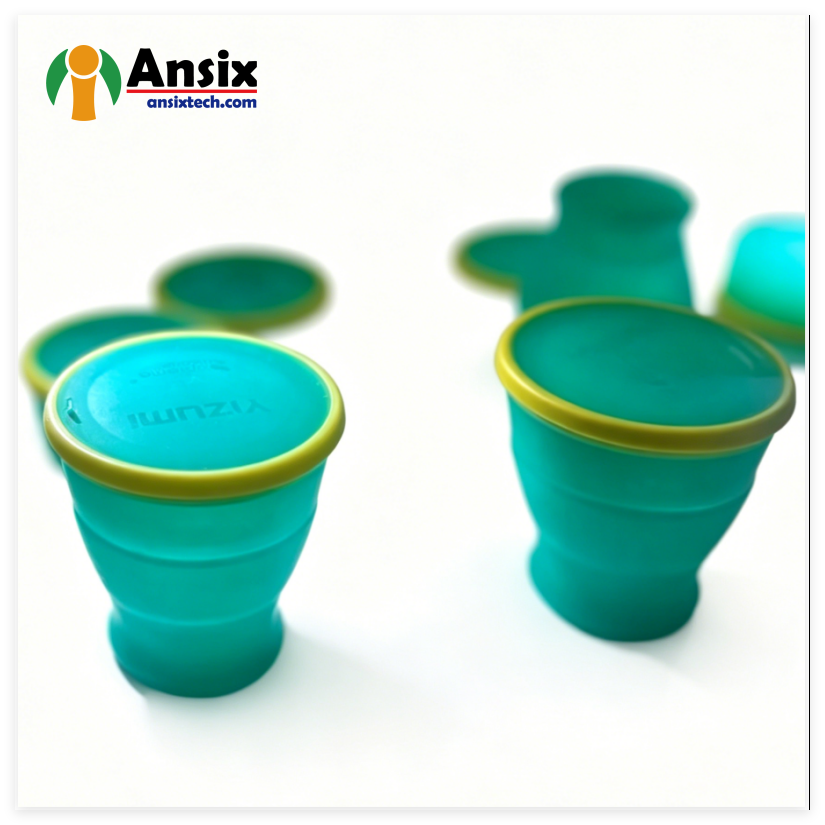


cup nest kit injection molding
cup nest kit injection molding


Ansix Tech Reinvents the Nesting Cup: A Symphony of Design, Precision Molding, and Cost Optimization
In the high-stakes world of consumer goods and industrial components, the humble nesting cup set represents a deceptively complex manufacturing challenge. Achieving perfect stackability, consistent wall thickness, pleasing aesthetics, and, above all, a competitive price point demands a holistic approach to injection molding. Ansix Tech, a leader in precision plastic injection molding solutions, recently concluded a landmark project for a next-generation cup-shaped nesting kit, demonstrating how integrated design, advanced simulation, and process intelligence can dramatically drive down unit costs while elevating quality. This project serves as a masterclass in modern manufacturing.
From Blueprint to Virtual Provenance: The DfM and Prototyping Phase
The journey began not with steel, but with software. Ansix Tech’s engineers, leveraging decades of industry experience, initiated the project with a rigorous Design for Manufacturing (DfM) review. The primary goal was to design a part that met all functional requirements—stacking force, dimensional stability, and ergonomic feel—while being inherently cost-effective to produce in high volumes. This philosophy echoes established research that emphasizes the simultaneous consideration of mechanical requirements, manufacturing costs, and material selection during the design phase to optimize the final system cost.
Initial concepts were translated into precise 3D CAD models. Before any physical mold was cut, Ansix Tech employed rapid prototyping techniques, including stereolithography (SLA) and selective laser sintering (SLS), to produce functional prototypes. These prototypes were critical for ergonomic testing, fit checks with other components in the customer's ecosystem, and initial marketing evaluations. This "soft tooling" approach for validation, similar to methodologies used for complex micro-featured parts, allows for rapid iteration without the expense of hard tooling, de-risking the project early on. Each prototype iteration was measured with laser scanning digital microscopy to ensure critical dimensions were achievable before moving to production tooling.
The Alchemy of Material Selection: Balancing Performance and Economics
Selecting the right polymer was a pivotal decision with far-reaching cost implications. Ansix Tech moved beyond simple per-kilogram material pricing and adopted a system cost perspective. For the nesting cups, which required food-contact compliance, good impact resistance, and a glossy finish, several polypropylene (PP) and thermoplastic elastomer (TPE) blends were evaluated.
The engineering team analyzed how material choice influenced the entire manufacturing equation. A slightly more expensive high-flow grade of PP, for instance, could allow for a thinner wall section while maintaining strength, directly reducing part weight and material cost per unit. More significantly, its superior flow characteristics could lower required Injection Pressure and reduce fill time, potentially shortening the overall cycle time—the single largest driver of production costs. This systematic approach, where material properties are evaluated for their impact on part geometry, cycle time, and ultimately total manufactured cost, was central to the project's success. The final selected material was a proprietary nucleated PP copolymer that offered an optimal balance of stiffness, clarity, and processability.
Simulation-Driven Mold Design: Predicting Perfection
With the design and material finalized, Ansix Tech deployed state-of-the-art Moldflow analysis to virtually test the molding process. This phase is where potential failures are caught and efficiencies are born. The team simulated fill patterns, pressure requirements, cooling effectiveness, and predicted warpage.
A key challenge was ensuring uniform filling of the cup's thin, deep walls to prevent visible weld lines or air traps. The simulation allowed engineers to optimize the gate location—the entry point of molten plastic into the cavity. Through iterative virtual testing, they identified a single, subtly placed submarine gate that provided balanced flow, eliminating the need for a more expensive multi-gate system that would leave multiple witness marks. Furthermore, the analysis predicted potential sink marks and warpage due to differential cooling. By adjusting rib designs and wall thickness transitions within the simulation, these defects were designed out before tool manufacturing began, saving costly mold rework later. The integration of simulation for flow balancing and deformation analysis proved invaluable, mirroring award-winning industry practices that have successfully reduced warpage by over 90% in complex thin-walled parts.
Forging the Heart of Production: Advanced Mold Manufacturing
The mold itself is the cornerstone of quality and efficiency. Ansix Tech designed a high-precision, multi-cavity mold using premium P20 pre-hardened mold steel for its core and cavity, chosen for its excellent polishability, good wear resistance, and balanced cost for the projected production volume. For critical, high-wear components like the gates and ejection pins, hardened H13 steel was employed to ensure longevity over millions of cycles.
The most innovative aspect of the mold design was the cooling system. Traditional drilled cooling channels often cannot follow the contoured shape of a cup, leading to uneven cooling, longer cycle times, and part distortion. Ansix Tech embraced additive manufacturing (3D printing) to create conformal cooling channels within the mold blocks. These snake-like channels hug the geometry of the cup cavity at a constant distance, ensuring homogenous and rapid heat extraction. As industry case studies show, such 3D-printed conformal cooling solutions can reduce cycle times by over 25% by drastically cutting cooling time, which is the largest segment of the injection cycle. This directly translated to higher output (more parts per hour) for the customer, a profound cost-saving lever.
The mold also featured a sophisticated, yet reliable, ejection system. A combination of ejector pins and a stripper plate was designed to gently but firmly push the deep-cup part off the core without causing stress marks or deformation, ensuring consistent demolding every cycle.
Mastering the Process: Optimization and Challenge Mitigation
Bringing the mold into production presented its own set of challenges. A primary concern was "core shift"—the deflection of the slender core pin that forms the cup's interior under asymmetric injection pressure. This can lead to inconsistent wall thickness, affecting stacking precision and part strength. To combat this, Ansix Tech utilized a data-driven optimization approach.
Instead of relying solely on technician intuition, the team designed a Design of Experiments (DOE) to analyze the effects of key process parameters: mold temperature, melt temperature, injection speed, packing pressure, and cooling time. Simulation data was combined with initial molding trials to build a predictive model. Inspired by cutting-edge research, they employed advanced algorithms to find the optimal process window that minimized core deflection while ensuring complete filling and dimensional stability. The final optimized process reduced viscosity variation and balanced pressures, effectively minimizing core shift and ensuring wall thickness uniformity.
Another challenge was managing the aesthetic quality of the deep-gloss surface. Any imperfection in the mold polish, or a slight hesitation in the melt flow, would be glaringly visible. The combination of the superior mold finish, the high-flow material, and the perfectly tuned injection profile—validated through upfront simulation—resulted in a flawless, blemish-free surface straight out of the mold.
A Culture of Quality and Reliable Delivery
Quality control at Ansix Tech is not an afterthought; it is embedded throughout the process. First-Article Inspection (FAI) reports, using coordinate measuring machines (CMM), verified that every critical dimension of the initial production parts was within the tight tolerances specified. During mass production, statistical process control (SPC) charts monitor key parameters like shot weight, cycle time, and cavity pressure in real-time, allowing for proactive intervention before non-conforming parts are produced.
Post-molding, the nesting cups undergo automated optical inspection for surface defects before being packaged. Ansix Tech collaborated with the client to design custom, recyclable cardboard sleeves that hold each cup set securely, preventing scuffs during transit while aligning with sustainability goals. The entire supply chain, from resin silo to shipped pallet, is managed with precision, ensuring just-in-time delivery that integrates seamlessly into the client's assembly lines.
The Ansix Tech Advantage: Experience Translating to Tangible Savings
This cup-shaped nesting kit project encapsulates Ansix Tech's core value proposition: leveraging deep industry expertise to deliver reliable, cost-optimized solutions. The company's experience across diverse sectors—from medical devices to automotive components—informs every decision.
The cost savings for the customer were substantial and multi-faceted:
Material Savings: The system-cost-based material selection led to an optimal grade that minimized part weight without compromising performance.
Process Efficiency: The 3D-printed conformal cooling channels slashed cycle time, boosting production capacity by over 20% without additional capital investment. This is a direct translation of efficiency into profit.
Yield Maximization: Advanced simulation and process optimization virtually eliminated defects like short shots, warpage, and dimensional inconsistencies, ensuring a near-100% yield from the production line. This reduces waste in both material and machine time.
Tool Longevity: The strategic use of hardened steels and optimized processing conditions extends mold life, amortizing the tooling investment over a greater number of parts.
In conclusion, Ansix Tech's project is more than just the successful manufacture of a plastic cup. It is a testament to how a synergistic approach—merging thoughtful design, predictive simulation, additive manufacturing, and data-driven process control—can redefine what is possible in injection molding. In a competitive market, Ansix Tech doesn't just make parts; they engineer value, delivering reliability and significant cost advantages that empower their clients to thrive. The nesting cups, stacking perfectly every time, stand as a simple yet powerful symbol of this complex, intelligent manufacturing achievement.
Ansix Tech Co Ltd
If you have any plans related to cup nest kit injection molding, you can contact us at any time. We will turn your ideas into reality, let you realize your dreams, and obtain large orders from the market. Our contact information is info@ansixtech.com. Or contact our CTO, mail: stephen@ansixtech.com
#www.ansixtech.com #ansixtech.com #cup nest kit #Ansix cup nest kit factory #cup nest kit injection mold #Ansix mold factory #Ansix injection molding #Ansix injection molding cup nest kit #cup nest kit injection molding factory #Ansix injection mould #cup nest kit injection molding factory #cup nest kit injection molding company #cup nest kit injection mold companies #Ansix #Ansix mould #Ansix china #cup nest kit injection molding companies #Ansix company #Ansix facotry #Ansix Tech #Ansix mould #Ansix injection molding #Ansix Ansix injection molding cup nest kit injection molding #Ansix mold factory #injection molding cup nest kit injection molding injection mold # Ansix mold factory #cup nest kit injection molding mold #cup nest kit precision molds #injection factory #cup nest kit precision injection molding #cup nest kit injection molding factory #injection molding company #cup nest kit injection mold companies #cup nest kit mould factory #cup nest kit mold limited #Ansix china #Ansix companies #Ansix company China #cup nest kit facotry #Ansix Tech #Ansix Tech mould #cup nest kit injection moulding #injection molding company #Ansix cup nest kit parts injection mold companies #cup nest kit mould #cup nest kit mold #cup nest kit china #Ansix moulding companies #Ansix molding company #cup nest kit injection moulding facotry #Ansix Tech mold #cup nest kit precision mould #cup nest kit plastic injection molding #ansix plastic mold #Mold manufacturing #cup nest kit parts manufacturing #cup nest kit plastic parts factory #cup nest kit injection parts mold #cup nest kit PRECISION MANUFACTURING #cup nest kit mold precision #China mold #cup nest kit injection moulding china #cup nest kit mould china #china precision mold #mold in china #cup nest kit precision mold china #Precision molds #High-precision molds #Household appliance molds #Injection molds #Large Injection Molding Factory #Large Injection Molding Company #Super Large Injection Mold Factory #Large Tonnage Injection Molding Factory #Large Injection Molding Company #Super Large Injection Molding Factory #2800T Injection Molding Factory #3000 Ton Injection Molding #4500 Ton Injection Molding Factory #Large Mold Injection Molding #Large Plastic Mold Injection Molding Factory #Large Injection Mold Manufacturer #Plastic Mold Factory #Injection Mold #Plastic Mold