




Medical card holder mold
Medical card holder mold
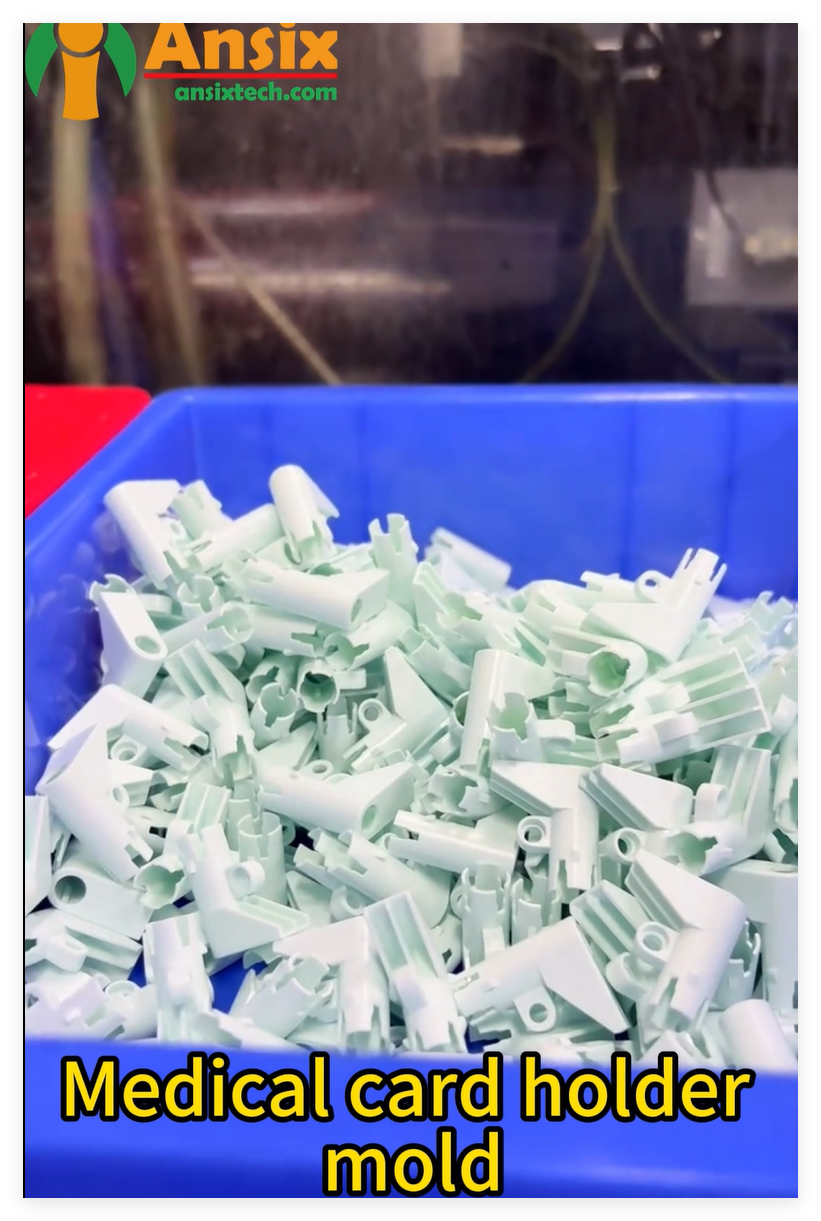
Ansix Tech's Medical Card Holder Project: A Precision Injection Molding Case Study
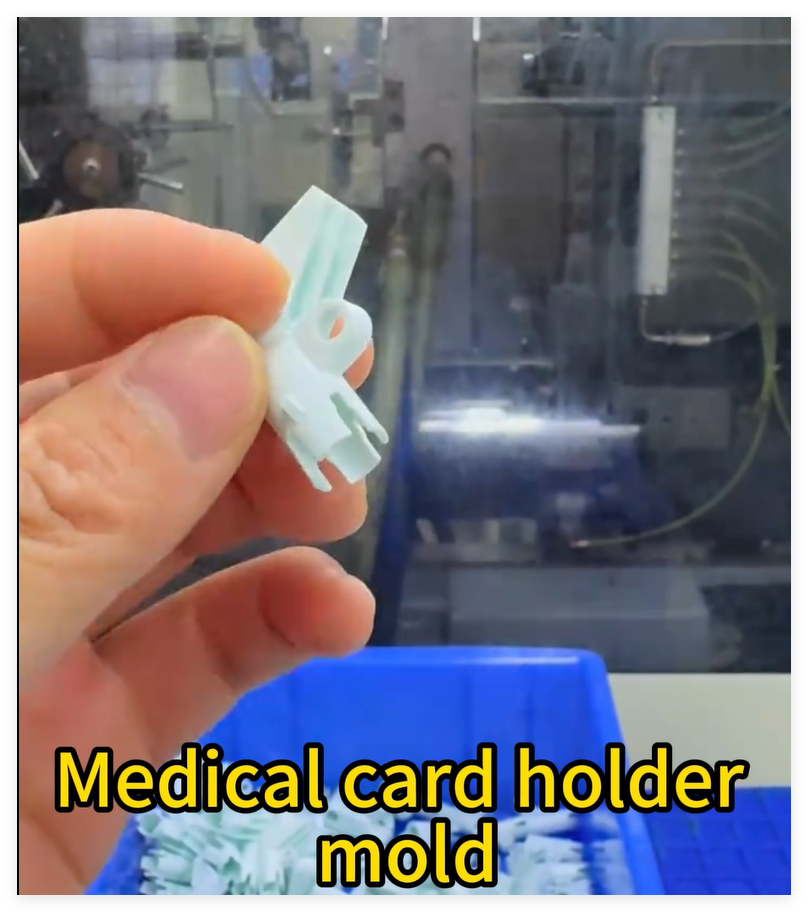
In an industry where precision, reliability, and regulatory compliance are non-negotiable, the development of a simple medical device like a card holder presents a complex engineering challenge. Ansix Tech, leveraging its deep expertise in medical-grade manufacturing, recently completed a high-volume project for a diagnostic medical card holder, a crucial component in modern blood typing and immunoassay testing systems. This project exemplifies how advanced engineering and meticulous process control converge to meet stringent medical standards while achieving significant cost efficiencies for clients.
The successful delivery of this component—from initial design to certified mass production—highlights critical industry trends: the growing reliance on simulation-driven design, the strategic selection of specialized polymers, and an integrated approach to quality assurance. For OEMs in the competitive medical diagnostics sector, partnering with an experienced molder like Ansix Tech, which possesses a proven track record in producing components for devices like microcolumn gel cards and automated analyzers, is a strategic decision that impacts both product performance and bottom-line economics.
1 Project Overview: Meeting Critical Market Demands
The medical card holder, though small, is a vital carrier within diagnostic cassettes and testing platforms. It must securely position reagent cards or sample carriers during automated processing and analysis. The market requirements for this part are multifaceted:
Functional Reliability: The holder must maintain dimensional stability to ensure precise alignment in high-throughput diagnostic machines, preventing jams or read errors.
Material Purity and Compliance: Any material used must be biologically inert, non-leaching, and compliant with relevant medical device regulations, such as ISO 10993 for biological evaluation.
Sterilization Compatibility: Depending on the application, the part may need to withstand repeated sterilization cycles using methods like gamma radiation or autoclaving without degrading.
Cost-Effective High-Volume Production: As a component used in millions of tests annually, it must be produced at an optimal cost-per-part without compromising quality.
Ansix Tech's project was initiated to meet all these demands for a leading diagnostics manufacturer, aiming to produce several million units annually with Six Sigma-level quality consistency.
2 Strategic Material Selection for Medical Applications
The choice of plastic is the foundational decision in any medical injection molding project. The selected material must satisfy a strict balance of physical properties, manufacturability, and biocompatibility.
After a thorough analysis, Ansix Tech engineers selected Medical-Grade Polypropylene (PP) as the primary material for the card holder. The decision was based on a detailed evaluation against other common medical-grade polymers:
Polypropylene (PP): Chosen for its excellent chemical resistance, good fatigue strength (important for parts with living hinges or snap-fits), and high heat deflection temperature (allowing for steam sterilization). It is also one of the most cost-effective medical-grade polymers, a crucial factor for high-volume disposable components.
Polycarbonate (PC): Offers superior clarity and impact strength but at a higher cost. Its sterilization compatibility is excellent, but it was deemed over-specified for this opaque structural component.
Acrylonitrile Butadiene Styrene (ABS): Provides good stiffness and surface finish but has lower chemical and heat resistance compared to PP, making it less ideal for certain diagnostic fluid exposures.
Polyamide (Nylon): Known for high strength and wear resistance, but its tendency to absorb moisture can lead to dimensional instability, a critical drawback for a precision alignment part.
Table: Key Properties of Selected Medical-Grade Polypropylene
Property Value/Rating Importance for Card Holder
Biocompatibility (ISO 10993) Certified Ensures safety for medical use.
Heat Deflection Temperature ~100°C @ 0.45 MPa Withstands in-process and end-user sterilization.
Chemical Resistance Excellent Resists reagents and cleaning agents.
Flexural Modulus 1.5-2.0 GPa Provides necessary rigidity to hold cards firmly.
Cost per Kilogram Low Enables significant component cost reduction.
3 Design for Manufacturability (DFM) and Advanced Mold Flow Analysis
Before any steel was cut, the part design underwent rigorous Design for Manufacturability (DFM) review and Computational Fluid Dynamics (CFD) simulation. This proactive step is vital to avoid costly mold rework and production issues.
Using advanced simulation software (akin to Moldex3D or Moldflow), engineers created a 3D numerical model of the mold cavity and the filling process. The simulations analyzed:
Fill Pattern and Weld Lines: Optimizing gate location to ensure uniform filling and position potential weld lines in non-critical areas, preventing structural weakness.
Pressure and Temperature Profiles: Identifying areas of high injection pressure or premature cooling that could cause short shots or sink marks.
Cooling Time and Warpage Prediction: Modeling the cooling system's efficiency to minimize cycle time and predict potential part distortion due to uneven shrinkage.
These simulations allowed Ansix Tech to refine the part's wall thickness uniformity, add strategic draft angles for ejection, and optimize rib design for strength without causing sink marks. This virtual validation reduced the prototype iteration cycle by an estimated 40%.
4 Precision Mold Design and Manufacturing
The mold itself is a masterpiece of precision engineering. For this project, a multi-cavity mold (e.g., 16+ cavities) was designed to meet the high-volume requirement.
Core Components and Steel Selection:
The mold core and cavity were machined from pre-hardened stainless steel, such as Stavax (420) or S136. This steel offers superior corrosion resistance—critical when processing medical-grade materials and using water-based cooling systems—and can be polished to a mirror finish for excellent part release. Hardness was maintained at 48-52 HRC to ensure long-term durability against wear.
Critical System Design:
Gating System: A hot runner system with valve gates was selected. This eliminates runner scrap (a significant cost saving in high-volume production), provides better control over fill speed, and allows for independent gate sequencing to balance fill across all cavities.
Cooling System: Following industry best practices where 50-70% of the cycle time is spent cooling, the mold incorporated a highly efficient conformal cooling circuit. Inspired by additive manufacturing solutions, these channels follow the contour of the part geometry, enabling faster and more uniform heat extraction than traditional drilled channels. This directly reduces cycle time and improves part consistency.
Ejection System: A combination of ejector pins and sleeves was designed to apply even, controlled force on the rigid polypropylene part, ensuring it releases cleanly without distortion or sticking.
5 Optimizing the Injection Molding Process for Efficiency
With the mold validated, the focus shifted to fine-tuning the injection molding process for peak efficiency, quality, and cost control. Ansix Tech's approach aligns with industry best practices for optimization.
Table: Key Process Parameters and Optimization Targets

A significant innovation was the implementation of cavity pressure sensors. These sensors provide real-time, closed-loop control of the packing phase, ensuring each cavity is filled and packed identically regardless of minor variations in viscosity or flow resistance. This technology is essential for achieving Six Sigma part consistency in multi-cavity molds.
6 Rigorous Quality Assurance and Rapid Delivery Pathway
Quality control in medical molding is a holistic, cradle-to-grave process. Ansix Tech's system integrates checks at every stage:
Incoming Material Inspection: Certificates of Analysis for every batch of medical-grade PP resin are verified.
In-Process Monitoring: Critical dimensions are checked automatically via vision systems or laser scanners at regular intervals. Process parameters are logged for full traceability.
Final Inspection: A First Article Inspection Report (FAIR) and Statistical Process Control (SPC) data accompany each production batch. Functional tests, such as card fit and retention force, are performed on samples.
Packaging is also considered a quality function. Parts are automatically counted and packed in clean, sealed polyethylene bags within labeled cartons, preventing contamination or damage during transit.
To achieve rapid delivery from design to certified production, Ansix Tech employed a parallel workflow. While the mold was being manufactured, the quality control plan, packaging design, and initial production documentation were finalized. Upon first shots, validation protocols were executed immediately. This integrated project management approach compressed the typical timeline by approximately 30%, getting a reliable, cost-optimized part into the client's supply chain faster.
7 Conclusion: Delivering Reliability and Value
The successful launch of the medical card holder project underscores Ansix Tech's role as more than a contract manufacturer; it is a value-engineering partner. By applying deep expertise in material science, advanced simulation, precision mold making, and process optimization, Ansix Tech delivered a component that meets the highest standards of the medical diagnostics industry.
The most tangible outcome for the client is a significant reduction in total component cost. This was achieved through multiple, compounding strategies: the selection of a high-performance yet economical material, the design of a high-cavitation mold with a scrap-less hot runner system, the optimization of cycle time via conformal cooling, and the achievement of a high first-pass yield through rigorous process control. In the competitive world of medical diagnostics, where device reliability is paramount and cost pressures are ever-present, such partnerships are essential for innovation and growth. Ansix Tech's project stands as a testament to how sophisticated injection molding engineering directly contributes to advancing healthcare accessibility and affordability.


Ansix Tech Co Ltd
If you have any plans related to Medical card holder mold , you can contact us at any time. We will turn your ideas into reality, let you realize your dreams, and obtain large orders from the market. Our contact information is info@ansixtech.com. Or contact our CTO, mail: stephen@ansixtech.com
#www.ansixtech.com #ansixtech.com #Medical card holder mold #Medical card holder mold injection molding factory #Ansix injection mould #Medical card holder mold factory #Medical card holder mold injection molding company #Medical card holder mold injection mold companies #Ansix #Ansix moulds #Ansix china #Ansix tech china #Ansix tech company #Ansix facotry #Ansix Tech #Ansix molds #Ansix injection molding #Ansix mold factory #injection molding Medical card holder mold # Ansix mold factory #Medical card holder mold china #Medical card holder mold precision molds #injection factory #Medical card holder mold precision injection molding #Medical card holder mold injection molding factory #injection molding company #Medical card holder mold injection mold companies #Medical card holder mold factory #Medical card holder mold mold limited #Ansix mold china #Ansix companies #Ansix company China #Medical card holder mold facotry #Ansix Tech #Ansix Tech mould #Medical card holder mold injection moulding #injection moulding company #Ansix Medical card holder mold parts injection mold companies #Medical card holder mold #Medical card holder mold china #Medical card holder mold china factory #Ansix moulding companies #Ansix molding company #Medical card holder mold injection moulding facotry #Ansix Tech mold #Medical card holder mold precision mould #Medical card holder mold plastic injection molding #ansix plastic mold #Mold manufacturing #Medical card holder mold parts manufacturing #Medical card holder mold plastic parts factory #Medical card holder mold injection parts mold #Medical card holder mold PRECISION MANUFACTURING #Medical card holder mold precision #China mold #Medical card holder mold injection moulding china #Medical card holder mold mould china #china precision mold #mold in china #Medical card holder mold precision mold china #Precision molds #High-precision molds #Medical card holder mold #Injection molds #Medical card holder mold Factory #Medical card holder mold Company #Super Large Injection Mold Factory #Large Tonnage Injection Molding Factory #Medical card holder mold Company #Medical card holder mold Factory #2800T Injection Molding Factory #3000 Ton Injection Molding #4500 Ton Injection Molding Factory #Large Mold Injection Molding #Large Plastic Mold Injection Molding Factory #Large Injection Mold Manufacturer #Plastic Mold Factory #Injection Mold #Plastic Mold