


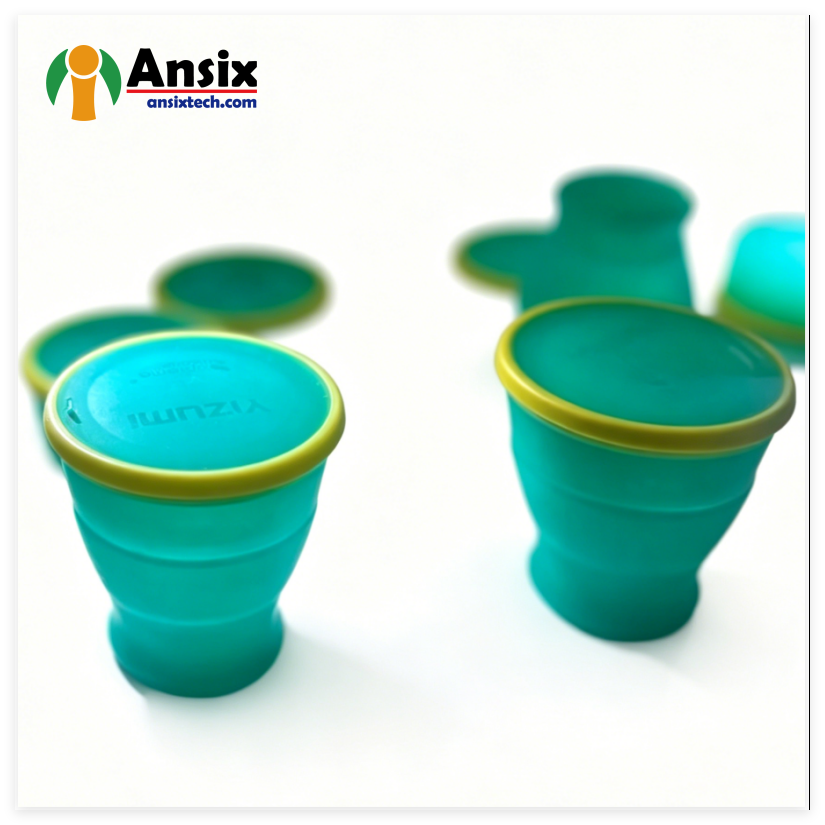


Milk tea cup 1-cavity 8-piece mold
Milk tea cup 1-cavity 8-piece mold

Milk Tea Revolution: How Ansix Tech's Precision Engineering Redefines Single-Serv Packaging
In the hyper-competitive world of consumer packaging, the humble disposable milk tea cup is a battlefield. Its design is a complex equation balancing cost, durability, aesthetics, and production speed. For years, the industry standard for producing 500ml and 700ml cups relied on 6-Cavity Molds, but this approach often led to production bottlenecks and quality inconsistencies like bottom shrinkage and wall thickness variation.
Now, a paradigm shift is underway, led by innovative manufacturers like Ansix Tech. By applying deep engineering expertise to the entire injection molding process—from material science to factory-floor optimization—Ansix Tech is setting new benchmarks for efficiency and reliability. Through its groundbreaking work on an 8-cavity mold system, the company is not just making more cups; it is engineering value, reducing total component cost for customers, and proving that in advanced manufacturing, precision is the ultimate form of economy.
This deep dive explores Ansix Tech's comprehensive approach, detailing every step of their process that turns raw polymer pellets into high-performance, cost-effective milk tea cups.
The Blueprint for Efficiency: DFM and Virtual Prototyping
Before a single piece of steel is cut, the battle for quality and cost-efficiency is won in the digital realm. Ansix Tech's process begins with an exhaustive Design for Manufacturability (DFM) analysis, a philosophy that ensures a product is designed for optimal production from the outset. For their 8-cavity milk tea cUp Mold, this involves a sophisticated Mold Flow Analysis (MFA).
Using advanced software like Moldex3D, engineers simulate the entire injection process in a virtual environment. They feed the 3D model of the cup and mold into the system, which then predicts how the molten plastic will fill the cavities.
Balancing the Flow: A key challenge in multi-cavity molds is ensuring each cup fills at precisely the same rate and pressure. MFA software uses 3D non-isothermal theory (Navier-Stokes equations) to model this behavior, allowing engineers to design runner systems that achieve perfect flow balance. This eliminates variations in fill time that can cause defects and ensures consistent quality across all eight cavities.
Predicting and Preventing Defects: The analysis pre-emptively identifies potential flaws. It predicts the location and strength of weld lines (where molten plastic fronts meet, creating a potential weak spot) and air traps (pockets of trapped gas that cause surface blemishes or "burn" marks). Engineers can then adjust gate locations or venting to minimize these issues before manufacturing begins.
Optimizing the Process: The software also simulates required injection pressure, clamp force, and cooling efficiency. This allows Ansix Tech to specify the exact machine tonnage needed, preventing over-investment in excessive capacity, and to design a cooling system that minimizes cycle time—the single biggest driver of per-part cost.
This virtual prototyping phase is a cornerstone of Ansix Tech's value proposition, transforming guesswork into predictable science and preventing costly revisions during physical mold trials.
Strategic Selection: The Foundation of Performance and Cost
The choice of material is a critical economic and functional decision. For milk tea cups, requirements are stringent: the material must be food-safe, have excellent clarity, possess sufficient stiffness and impact resistance for handling, and be cost-effective for a single-use item.
Ansix Tech selected Polypropylene (PP) for this application. PP is a polyolefin known for its favorable balance of properties: it offers higher quality and better coloration opportunities than basic polyethylene, is strong and tough, and is excellent for food storage due to its non-toxic nature and resistance to many acids and alkalis. Its relatively low cost and excellent processability make it an industry staple.
The selection process, however, goes beyond the generic polymer type. Ansix Tech evaluates specific PP resin grades based on:
Melt Flow Index (MFI): Affects how easily the plastic flows into thin-walled sections.
Clarity and Color: Essential for product appeal.
Impact Modifiers: To prevent brittleness, especially in colder serving environments.
This careful, science-driven selection ensures the material performs perfectly within the optimized process window, reducing waste and rejection rates—a direct contributor to lower overall component costs for the customer.
Engineering the Mold: A Symphony of Steel and Systems
The mold itself is a masterpiece of mechanical engineering, where every component is designed for longevity, precision, and speed. Ansix Tech's 8-cavity mold is a significant evolution from the older 6-cavity standard, addressing its predecessor's shortcomings head-on.
Key Mold System Design Highlights:
Runner and Gating System: Ansix Tech employs a hot runner system to deliver molten plastic to the cavities. This system keeps the plastic in the runners molten, eliminating the waste associated with cooling and regrinding solid plastic sprues from cold runner systems. The gates—the entry points into each cup—are carefully sized and positioned to ensure balanced filling and easy separation without leaving visible marks.
Cooling System (Water Channels): Cooling typically consumes over half of the total cycle time. Ansix Tech designs highly efficient conformal cooling channels that follow the precise contours of the cup geometry. As noted in industry trends, such conformal cooling can be optimized with 3D CFD analysis to ensure turbulent flow, maximizing heat extraction. This uniform cooling minimizes residual stresses and warpage, directly improving quality and shortening the cycle.
Ejection System: Once cooled, the eight cups must be gently and reliably ejected. The system uses multiple ejector pins distributed around the cup's rim and body to apply even force, preventing distortion or damage to the thin walls during this critical phase.
Mold Steel Selection: The mold is constructed from premium, hardened tool steels. The cavities and cores, which form the cup's shape, are made from steels like H-13 or S-7, chosen for their exceptional polishability (for a glossy cup finish), wear resistance (to withstand millions of cycles), and thermal conductivity (to aid cooling).
A critical advancement in Ansix Tech's 8-cavity design is its direct attack on the legacy problems of 6-cavity molds.
*Table: Addressing Legacy Challenges with Advanced 8-Cavity Design

Precision in Production: The Optimized Injection Molding Cycle
With the mold mounted in a high-tonnage injection molding machine, Ansix Tech's meticulously developed process parameters come to life. This is where theoretical optimization meets physical reality. The process follows a tightly controlled sequence:
Heating: The machine's barrel heats the PP resin to a melt temperature of 270-280°C, while the mold's hot runner system is maintained at 230-250°C.
Injection: The mold closes. Just before full closure, the machine nozzle establishes contact pressure. Then, in a rapid 0.22-second burst, molten plastic is injected at a speed of 400mm/s under 189 MPa of pressure.
Packing & Holding: This is where Ansix Tech's expertise shines in preventing shrinkage. The process uses a two-stage hold pressure profile: an initial high pressure (1350 bar) to pack material into the cavity, followed by a decreasing pressure (1370 bar linearly down to 500 bar) to compensate for material shrinkage as it cools, all within half a second.
Cooling: The plastic solidifies in the efficiently cooled mold.
Ejection & Automation: The mold opens. At a specific point (510mm open), a robot arm enters. In a single, fluid motion, it uses suction cups to remove the eight finished cups and simultaneously places pre-cut paper labels onto pins in the stationary mold half, ready for the next shot where they will be bonded into the cup wall. This automated in-mold labeling (IML) is another efficiency gain, integrating decoration into the molding cycle.
To fine-tune this process, Ansix Tech employs methodologies like Response Surface Methodology (RSM), a statistical technique that models the relationship between multiple process variables (like temperature, pressure, and speed) and key quality outputs (like warpage or weight). This allows them to find the optimal "sweet spot" in the process window that maximizes quality and yield while minimizing energy use and cycle time.
Quality and Delivery: The Final Pillars of Value
Quality control at Ansix Tech is not an afterthought; it is an integrated layer throughout production. From the first shots of the Engineering Verification Test (EVT) phase—where the core function and mold performance are validated—through the Design Verification Test (DVT)—where the design is frozen and tested against all specifications—and finally to the Production Verification Test (PVT), where the full production process is proven.
During mass production, statistical process control (SPC) charts monitor critical dimensions like cup weight, wall thickness, and rim diameter in real-time. This ensures any drift in the process is caught and corrected immediately, guaranteeing consistency across millions of units.
Finally, the streamlined production enables rapid delivery. The efficiency of the 8-cavity mold means more cups are produced per hour, and the robustness of the design minimizes downtime for maintenance. Ansix Tech's integrated approach from digital design to automated production allows them to offer not just a mold or a part, but a guaranteed supply of high-quality components.
Conclusion: Engineering Confidence into Every Cup
The journey of Ansix Tech's milk tea cup from a 3D model to a stack of finished products is a testament to modern, value-driven manufacturing. By leveraging advanced mold flow analysis, making strategic material choices, innovating in mold design (particularly with the high-efficiency 8-cavity system), and rigorously optimizing the injection process, Ansix Tech achieves a powerful result: a significantly lower total cost per component for their customers.
This cost reduction does not come from cutting corners. It is engineered through enhanced efficiency (faster cycles, higher yield), superior quality (fewer rejects, consistent performance), and long-term reliability (durable molds with less downtime). In an industry where margins are thin and competition is fierce, Ansix Tech provides its clients with the ultimate advantage: the confidence that comes from a partner who masters the entire science of making things, delivering not just products, but predictable, scalable, and sustainable value.


Ansix Tech Co Ltd
If you have any plans related to Milk tea cup 1-cavity 8-piece mold , you can contact us at any time. We will turn your ideas into reality, let you realize your dreams, and obtain large orders from the market. Our contact information is info@ansixtech.com. Or contact our CTO, mail: stephen@ansixtech.com
#www.ansixtech.com #ansixtech.com #Milk tea cup 1-cavity 8-piece mold #Ansix mold factory #Ansix injection molding #Ansix moud Ltd #Milk tea cup 1-cavity 8-piece moldinjection molding factory #Ansix injection mould #Milk tea cup 1-cavity 8-piece moldfactory #Milk tea cup 1-cavity 8-piece moldinjection molding company #Milk tea cup 1-cavity 8-piece moldinjection mold companies #Ansix #Ansix moulds #Ansix china #Ansix tech china #Ansix tech company #Ansix facotry #Ansix Tech #Ansix molds #Ansix injection molding #Ansix mold factory #injection molding Milk tea cup 1-cavity 8-piece mold # Ansix mold factory #Milk tea cup 1-cavity 8-piece moldchina #Milk tea cup 1-cavity 8-piece moldprecision molds #injection factory #Milk tea cup 1-cavity 8-piece mold precision injection molding #Milk tea cup 1-cavity 8-piece mold injection molding factory #injection molding company #Milk tea cup 1-cavity 8-piece moldinjection mold companies #Milk tea cup 1-cavity 8-piece moldmould factory #Milk tea cup 1-cavity 8-piece moldmold limited #Ansix mold china #Ansix companies #Ansix company China #Milk tea cup 1-cavity 8-piece moldfacotry #Ansix Tech #Ansix Tech mould #Milk tea cup 1-cavity 8-piece moldinjection moulding #injection moulding company #Ansix Milk tea cup 1-cavity 8-piece moldparts injection mold companies #Milk tea cup 1-cavity 8-piece mold#Milk tea cup 1-cavity 8-piece moldchina #Milk tea cup 1-cavity 8-piece moldchina factory #Ansix moulding companies #Ansix molding company #Milk tea cup 1-cavity 8-piece moldinjection moulding facotry #Ansix Tech mold #Milk tea cup 1-cavity 8-piece moldprecision mould #Milk tea cup 1-cavity 8-piece mold plastic injection molding #ansix plastic mold #Mold manufacturing #Milk tea cup 1-cavity 8-piece mold parts manufacturing #Milk tea cup 1-cavity 8-piece moldplastic parts factory #Milk tea cup 1-cavity 8-piece moldinjection parts mold #Milk tea cup 1-cavity 8-piece moldPRECISION MANUFACTURING #Milk tea cup 1-cavity 8-piece moldprecision #China mold #Milk tea cup 1-cavity 8-piece mold injection moulding china #Milk tea cup 1-cavity 8-piece mold mould china #china precision mold #mold in china #Milk tea cup 1-cavity 8-piece moldprecision mold china #Precision molds #High-precision molds #Household appliance molds #Injection molds #Milk tea cup 1-cavity 8-piece moldFactory #Milk tea cup 1-cavity 8-piece moldCompany #Super Large Injection Mold Factory #Large Tonnage Injection Molding Factory #Milk tea cup 1-cavity 8-piece moldCompany #Super Milk tea cup 1-cavity 8-piece moldFactory #2800T Injection Molding Factory #3000 Ton Injection Molding #4500 Ton Injection Molding Factory #Large Mold Injection Molding #Large Plastic Mold Injection Molding Factory #Large Injection Mold Manufacturer #Plastic Mold Factory #Injection Mold #Plastic Mold