




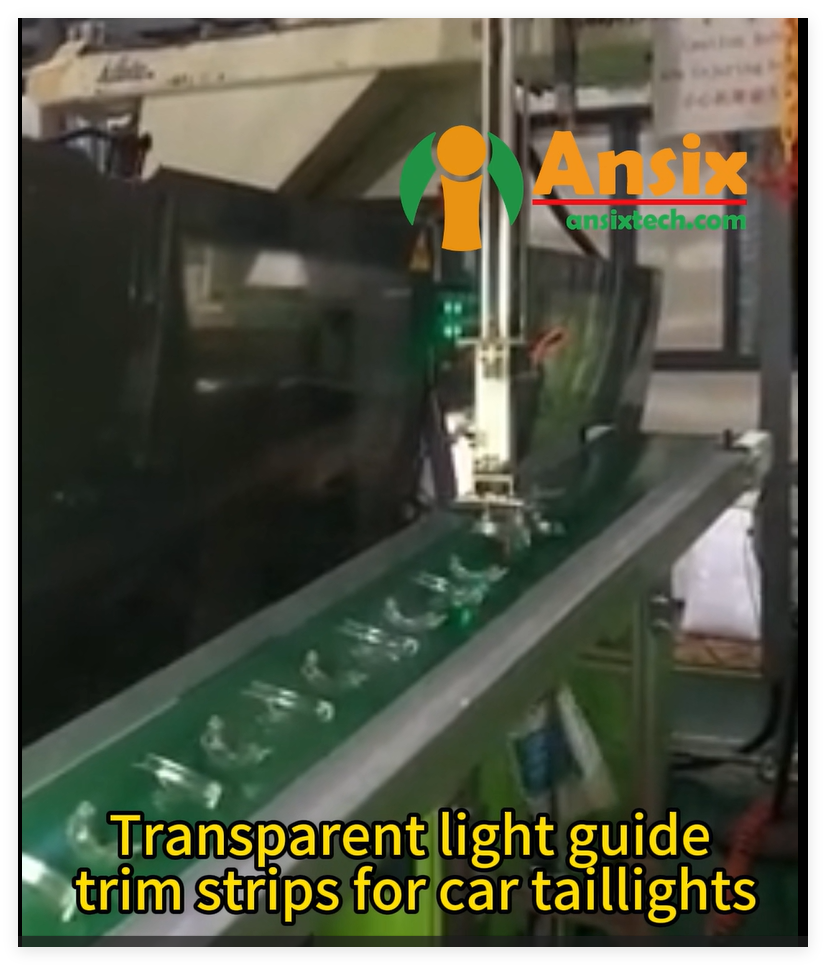
Transparent light guide trim strips for car taillights
Transparent light guide trim strips for car taillights

Ansix Tech Illuminates the Road Ahead: Engineering Excellence in Automotive Light Guide Manufacturing
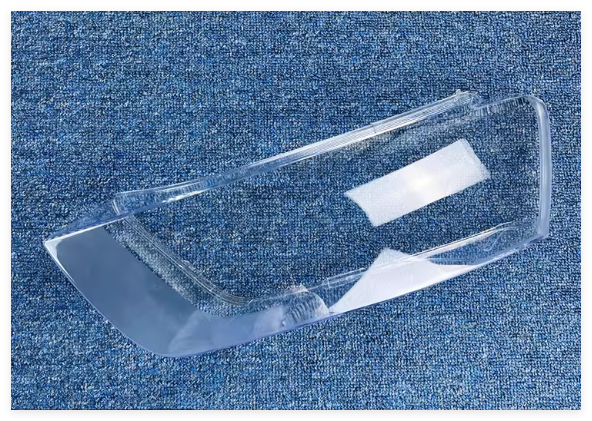
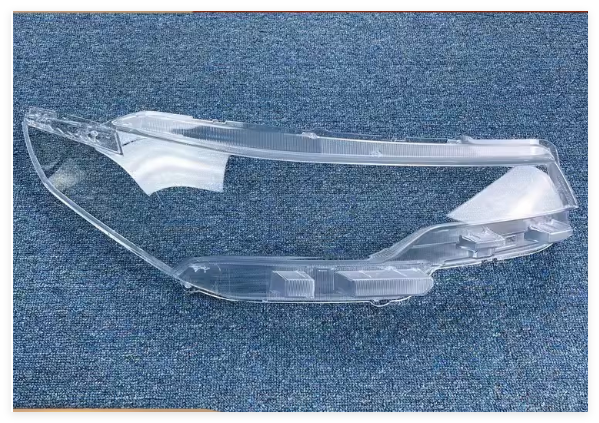
Ansix Tech engineers inspect a transparent light guide component for automotive lighting applications. The company's expertise in injection molding transforms specialized polymers into precision optical parts that meet stringent automotive standards. (Image source: Ansix Tech)
In the highly competitive automotive sector, where aesthetic appeal merges with critical safety function, the illuminated signature of a vehicle has become a key brand differentiator. At the heart of this signature are transparent light guide trim strips for taillights—complex optical components that demand perfection in clarity, dimensional stability, and durability. For over 28 years, Ansix Tech has specialized in transforming this challenge into opportunity, offering a comprehensive value proposition that spans from initial concept to on-time mass delivery. By mastering every variable in the design, development, and manufacturing process, the company delivers not just parts, but engineered reliability and significant cost savings to its global automotive partners.
The Foundational Science: Light Guide Physics and Material Intelligence
The primary function of a light guide is to capture light from discreet LEDs and distribute it evenly along its length, creating a uniform, unbroken band of illumination. This relies on the principle of Total Internal Reflection (TIR), where light traveling through a material reflects completely off its internal surfaces, provided it strikes at an angle greater than a critical threshold. To create a visible glowing trim, engineers must induce controlled light leakage, meticulously designing surface textures and geometric variations to scatter light uniformly without creating dark or bright spots.
Material selection is the cornerstone of this process. Ansix Tech leverages its deep materials science expertise to select and tailor optical-grade polymers that meet a demanding set of criteria:
Optical Clarity & Light Transmission: The material must offer exceptionally high light transmittance, typically around 89% or higher, to maximize luminous efficiency.
Thermal & UV Stability: Components must withstand the high temperatures near lighting sources (often above 120°C) and resist yellowing or degradation from prolonged UV exposure.
Mechanical Strength: Automotive parts must endure vibration, impact, and environmental stress across a vehicle's lifespan.
For taillight trim strips, Polycarbonate (PC) and Polymethyl Methacrylate (PMMA or Acrylic) are the dominant materials. Ansix Tech often opts for specialized, high-flow PC grades for their superior impact strength and heat resistance, which is crucial for rear lighting assemblies. The selection process goes beyond datasheets; Ansix collaborates with polymer suppliers to develop custom formulations that balance flow characteristics for thin sections with the structural integrity needed for thicker mounting features.
Table: Key Material Options for Transparent Light Guide Trim Strips

The Digital Blueprint: DFM, Prototyping, and Advanced Mold Flow Analysis
Ansix Tech's process begins in the virtual realm, adhering to the principle that up to 70% of a product's ultimate manufacturing cost is determined during the design phase. Through Concurrent Engineering, manufacturing experts collaborate with client designers from the outset to optimize the part for production.
Design for Manufacturability (DFM) analysis scrutinizes the 3D model for potential issues: ensuring uniform wall thickness to prevent sink marks and warpage, applying adequate draft angles for ejection, and identifying undercuts that may require complex mold actions. For light guides, particular attention is paid to the geometry of light-extraction features—whether they are micro-prisms, surface textures, or geometric variations—to ensure they are moldable and will perform optically as intended.
The core of digital validation is Mold Flow Analysis (MFA). Using advanced simulation software like Autodesk Moldflow, engineers perform a virtual "computer-aided tryout". This analysis predicts:
Filling Patterns: Visualizing how molten plastic will travel through the cavity to ensure complete filling without air traps.
Weld/Meld Lines: Identifying where flow fronts meet, which can create weak points or visible defects, and repositioning gates to move these lines to non-critical areas.
Cooling Efficiency & Warpage: Modeling heat transfer to predict shrinkage and part distortion, enabling pre-emptive corrections.
Gate Optimization: Scientifically determining the optimal location, type, and size of gates to ensure balanced filling with minimal aesthetic impact.
This digital prototyping de-risks projects, saving weeks of costly physical trial and error and ensuring the design is flawless before committing to steel.
Precision Tooling: The Art and Science of Mold Design
The mold is the heart of the process—a high-performance "pressure vessel and heat exchanger" that must be engineered for longevity, speed, and precision. Ansix Tech's mold design integrates several critical, interdependent systems.
- Mold Steel Selection: The choice balances performance, polishability, and cost. For high-volume production of optical components, pre-hardened stainless steels (e.g., AISI 420/Stavax) are typically selected for their excellent corrosion resistance and ability to hold a high-polish, mirror finish essential for light transmission. For the most demanding applications, hardened tool steels provide extended life against abrasive wear.
- The Cooling System – The Engine of Efficiency: Cooling typically consumes over 70% of the injection cycle time. Traditional straight-drilled channels are ineffective for complex light guide geometries, leading to uneven cooling, residual stresses, and warpage. Ansix Tech employs conformal cooling technology, where channels are 3D-printed to follow the exact contour of the part surface at a uniform distance. This innovation, validated through thermal simulation, extracts heat uniformly and dramatically, reducing cycle times by up to 30% and ensuring dimensional stability. Maintaining turbulent coolant flow (Reynolds number between 4,000-8,000) within these channels is key to maximizing heat extraction efficiency.
- Runner and Gating System: To eliminate material waste and reduce cycle time, a hot runner system is standard. It keeps plastic molten in the delivery channels between shots. Gate design is critical for aesthetics; gates are often positioned in hidden areas (like mounting tabs) and meticulously sized to allow smooth filling without jetting or visible vestiges.
- Ejection and Venting Systems: A precisely calculated array of ejector pins, sleeves, or blades applies uniform force to release the delicate part without distortion or damage. Micro-vents are strategically placed at the end of flow paths and along parting lines to allow trapped air to escape, preventing burns and short shots.
Mastering the Process: Overcoming Challenges and Driving Efficiency
Translating a perfect mold into perfect parts requires mastering the injection molding process. For transparent light guides, the foremost challenge is eliminating visual defects—sink marks, voids, weld lines, and internal stresses—that scatter light and ruin optical performance.
Ansix Tech's process engineers employ Scientific Molding principles, using data—not intuition—to establish a robust, repeatable process window. Key strategies include:
Controlled Filling & Packing: Utilizing moderate to high melt temperatures (e.g., 255-265°C for PC) with precise injection speed profiles to fill the cavity smoothly. An extended packing phase at sustained high pressure forces additional material into the cavity to compensate for shrinkage as the plastic cools.
Differential Mold Temperature Control: Implementing a dual-zone system where the cavity side is kept hotter (e.g., 125-135°C) than the core. This encourages directional solidification from the inside out, minimizing internal stresses that lead to warpage and optical distortion.
Process Monitoring & Closed-Loop Control: Using cavity pressure sensors to monitor the process in real-time. This provides a "digital fingerprint" for every shot, allowing for micro-adjustments and ensuring a part is good before the mold even opens.
Efficiency gains are directly targeted. The optimized conformal cooling system is the primary lever for cycle time reduction. Furthermore, by optimizing the mold layout to minimize flow length and implementing full automation for part removal, handling, and packaging, Ansix Tech drives down the cost per part without compromising quality.
Table: Ansix Tech's Framework for Cost Optimization & Efficiency

Embedded Quality and Reliable Delivery: The Final Pillars of Value
For Ansix Tech, quality assurance is not a final inspection but a philosophy woven throughout the entire process. The system is built on prevention and verification:
Incoming Material Certification: Full traceability and batch-specific testing for every resin shipment.
First-Article Inspection: Comprehensive measurement of initial samples using Coordinate Measuring Machines (CMM) to validate every dimension against the CAD model.
Statistical Process Control (SPC): Continuous monitoring of critical dimensions during production to detect and correct any process drift.
Specialized Optical Testing: For light guides, this includes luminance uniformity checks and light transmission testing to ensure consistent optical performance.
This rigorous approach is underpinned by an ISO 9001:2015 certified quality management system, providing automotive clients with the assurance of consistent process quality and full traceability.
The value chain concludes with secure packaging and rapid delivery. Recognizing that a perfect component can be compromised in transit, Ansix Tech designs packaging solutions with static-dissipative materials, individual compartmentalization, and reinforced support to prevent scratches, deformation, or contamination. Their integrated lean manufacturing flow and efficient supply chain relationships enable reliable, just-in-time delivery, compressing lead times to meet the automotive industry's relentless pace.
Conclusion: A Partnership Engineered for Success
Ansix Tech's 28-year journey in injection molding has crystallized into a proven partnership model for automotive lighting suppliers and OEMs. The company’s work on complex optical components like taillight trim strips demonstrates that substantial cost reduction and premium quality are not mutually exclusive goals. Through material intelligence, precision tooling engineered with conformal cooling, data-driven process mastery, and an embedded quality culture, Ansix Tech systematically lowers the total cost of ownership for its clients.
In an industry where lighting defines brand identity and ensures safety, partnering with a manufacturer that controls every variable from polymer pellet to packaged part is a strategic advantage. Ansix Tech delivers more than components; it delivers engineered reliability, accelerated innovation, and tangible value, illuminating the path forward for automotive brands worldwide.




Ansix Tech Co Ltd
If you have any plans related to Transparent light guide trim strips for car taillights , you can contact us at any time. We will turn your ideas into reality, let you realize your dreams, and obtain large orders from the market. Our contact information is info@ansixtech.com. Or contact our CTO, mail: stephen@ansixtech.com
#www.ansixtech.com #ansixtech.com #Transparent light guide trim strips for car taillights #Transparent light guide trim strips for car taillights factory #Transparent light guide trim strips for car taillights injection molding company #Transparent light guide trim strips for car taillights injection mold companies #Ansix #Ansix moulds #Ansix china #Ansix tech china #Ansix tech company #Ansix facotry #Ansix Tech #Ansix molds #Ansix injection molding #Ansix mold factory #injection molding Transparent light guide trim strips for car taillights #Ansix mold factory #Transparent light guide trim strips for car taillights china #Transparent light guide trim strips for car taillights molds #injection factory #Transparent light guide trim strips for car taillights injection molding #Transparent light guide trim strips for car taillights injection molding factory #injection molding company #Transparent light guide trim strips for car taillights injection mold companies #Transparent light guide trim strips for car taillights factory #Transparent light guide trim strips for car taillights mold limited #Ansix mold china #Ansix companies #Ansix company China #Transparent light guide trim strips for car taillights facotry #Ansix Tech #Ansix Tech mould #Transparent light guide trim strips for car taillights injection moulding #injection moulding company #Ansix Transparent light guide trim strips for car taillights parts injection mold companies #Transparent light guide trim strips for car taillights #Transparent light guide trim strips for car taillights china #Transparent light guide trim strips for car taillights china factory #Ansix moulding companies #Ansix molding company #Transparent light guide trim strips for car taillights injection moulding facotry #Ansix Tech mold #Transparent light guide trim strips for car taillights mould #Transparent light guide trim strips for car taillights plastic injection molding #ansix plastic mold #Mold manufacturing #Transparent light guide trim strips for car taillights parts manufacturing #Transparent light guide trim strips for car taillights plastic parts factory #Transparent light guide trim strips for car taillights injection parts mold #Transparent light guide trim strips for car taillights PRECISION MANUFACTURING #Transparent light guide trim strips for car taillights #China mold #Transparent light guide trim strips for car taillights injection moulding china #Transparent light guide trim strips for car taillights mould china #china precision mold #mold in china #Transparent light guide trim strips for car taillights mold china #Precision molds #High-precision molds #Transparent light guide trim strips for car taillights #Injection molds #Transparent light guide trim strips for car taillights Factory #Transparent light guide trim strips for car taillights Company #Super Large Injection Mold Factory #Large Tonnage Injection Molding Factory #Transparent light guide trim strips for car taillights Company #Transparent light guide trim strips for car taillights Factory #2800T Injection Molding Factory #3000 Ton Injection Molding #4500 Ton Injection Molding Factory #Large Mold Injection Molding #Large Plastic Mold Injection Molding Factory #Large Injection Mold Manufacturer #Plastic Mold Factory #Injection Mold #Plastic Mold