




Washing machine detergent dispenser
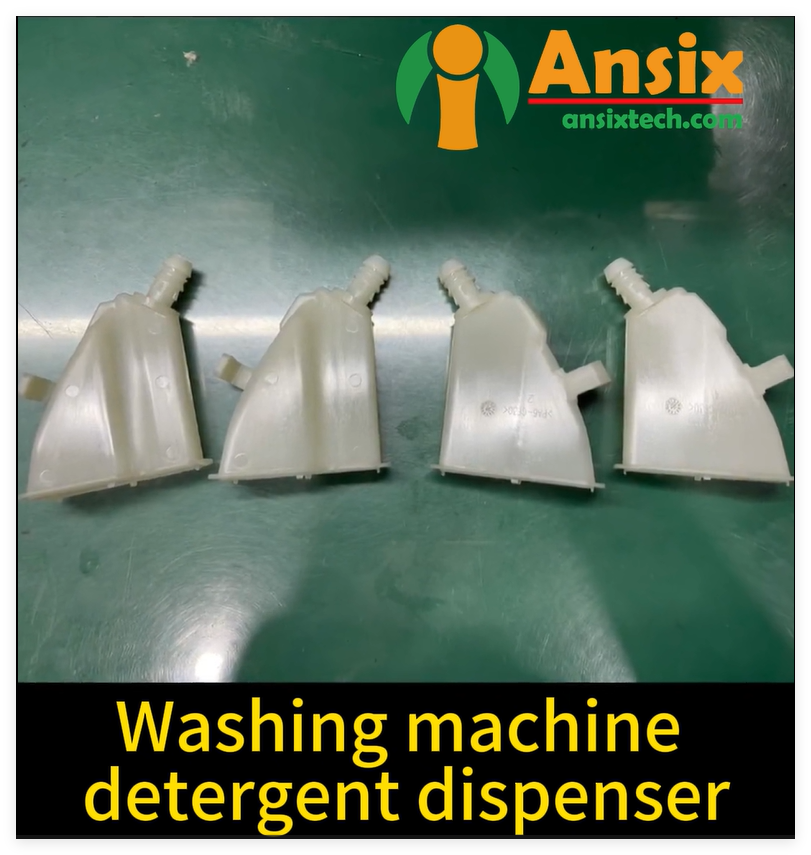
Washing machine detergent dispenser
Forging Precision, Delivering Value: How Ansix Tech Masters the Art of Detergent Dispenser Injection Molding
In the humming heart of modern appliance manufacturing, where efficiency, durability, and cost converge, the humble washing machine detergent dispenser stands as a critical, yet often understated, component. More than a simple drawer, it is a precision-engineered system that must withstand a punishing regime of corrosive chemicals, variable water pressures and temperatures, repeated mechanical actuation, and the aesthetic demands of the modern consumer. For OEMs, the challenge is multifaceted: achieving impeccable quality and flawless function while relentlessly driving down costs and accelerating time-to-market. It is within this high-stakes arena that Ansix Tech has carved a 28-year legacy of excellence, transforming the injection molding of detergent dispensers from a commodity process into a strategic partnership that delivers unparalleled client value.
This deep-dive exploration charts the journey of a detergent dispenser project at Ansix Tech, from concept to delivery, illuminating how decades of specialized experience are leveraged to solve core client challenges: guaranteeing bulletproof quality, reducing total cost, scaling production capacity, and ensuring ironclad on-time delivery.
The Foundation: Material Science as a Strategic Tool
The selection of plastic material is the first and perhaps most decisive factor in the performance, cost, and manufacturability of a detergent dispenser. Ansix Tech approaches this not as a simple procurement step, but as a value-engineering opportunity.
A typical dispenser is a multi-part assembly, often comprising a drawer body, lid, siphon cup, and various levers or flaps. Each part faces distinct stresses:
Chemical Resistance: Paramount. Materials must resist attack from alkaline powders, acidic liquids, oxygen-based bleaches, and enzymatic cleaners. Ansix Tech typically specifies engineering plastics like Polypropylene (PP), often in copolymer forms (PP-CO) for enhanced toughness, and Acrylonitrile Butadiene Styrene (ABS). For components requiring higher thermal or chemical resistance, Polyphenylene Ether (PPE/PS blends) or even Polyamide (PA, Nylon) may be evaluated.
Hydro-Stability & Warp Resistance: The component undergoes constant wet-dry cycles. Materials must exhibit minimal water absorption to prevent dimensional change, warping, or loss of mechanical strength. PP’s very low water absorption makes it a perennial favorite for core structures.
Mechanical Strength & Fatigue Resistance: Drawers are opened and closed thousands of times. Hinges, latches, and moving parts require excellent flexural modulus and fatigue endurance. Glass-filled polypropylene (PP-GF) may be used selectively to add stiffness without prohibitively increasing cost.
Aesthetics & Feel: Surface finish, color consistency, and a premium tactile feel are market differentiators. ABS offers excellent surface gloss and is easily painted or metallized if required, while advanced PP compounds can provide a superior matte finish.
Ansix Tech’s value lies in its encyclopedic knowledge of material grades from global suppliers (e.g., Sabic, Borealis, LG Chem, BASF). For instance, recommending a specific high-flow, nucleated PP copolymer can reduce injection pressure and cycle time versus a standard grade, directly lowering processing costs. Their engineers perform rigorous testing—including chemical immersion, UV aging, and cyclic fatigue—to validate material performance against client and international standards (IEC, UL), ensuring the selected resin delivers the optimal balance of cost, performance, and processability.
The Blueprint for Success: DFM & Advanced Mold Engineering
Before a single tool steel block is cut, Ansix Tech employs a comprehensive Design for Manufacturability (DFM) and mold flow analysis protocol. This phase is where potential failures are designed out, and efficiency is built in.
Mold Flow Analysis (DFM): Using advanced simulation software, engineers simulate the injection of molten plastic into the proposed mold cavity. This virtual prototyping identifies and rectifies:
Weld Lines: Predicting and repositioning weak points where molten flow fronts meet, critical for the structural integrity of siphon chambers.
Air Traps: Locating areas where trapped air could cause voids or burns, ensuring proper venting is designed.
Sink Marks & Warpage: Analyzing cooling patterns and shrinkage to prevent cosmetic defects and dimensional instability, crucial for the drawer’s fit and function.
Filling Pressure & Clamp Force: Optimizing the design to use the minimum required pressure and a smaller-tonnage machine, reducing energy consumption and machine wear.
Mold Design Mastery: The mold itself is a masterpiece of mechanical engineering. Ansix Tech’s design focuses on several key systems:
Cooling System/Water Channels: Up to 80% of the injection molding cycle is cooling. A highly efficient, conformal cooling system that follows the contours of the part (especially thick sections like hinge points) is designed to extract heat uniformly and rapidly. This is the single biggest lever for reducing cycle time and improving output.
Runner & Gate System: For multi-cavity family molds producing different dispenser components, a balanced hot runner system is often employed. This eliminates material waste from cold runners, ensures consistent filling to all cavities, and allows for independent temperature control of each gate—vital for controlling fill patterns on complex parts.
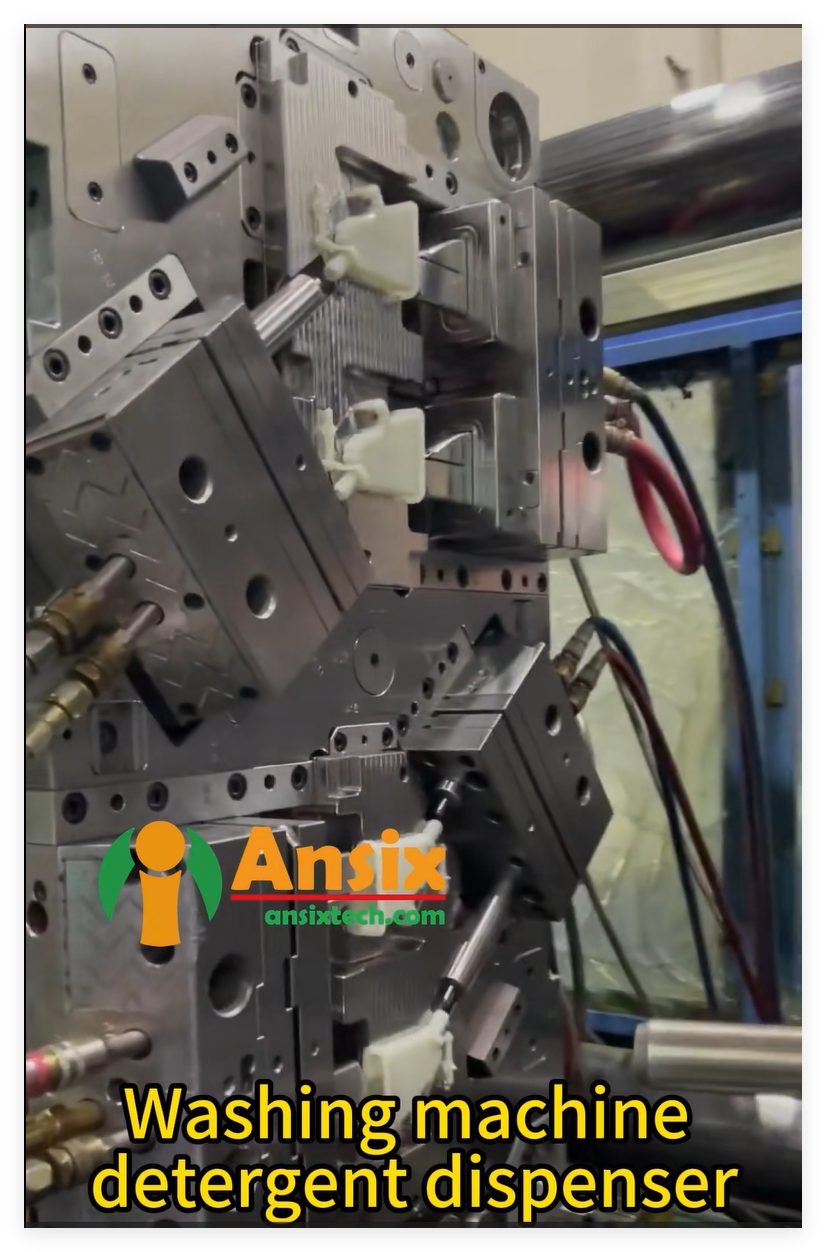
Ejection System: Given the deep draws and undercuts common in dispenser designs, a sophisticated ejection system using stripper plates, angled lifters, and internal core-pulls is meticulously engineered to demold the part without damage or distortion. Ejector pins are placed in non-cosmetic areas to preserve aesthetics.
Manufacturing & Validation: Molds are machined from premium hardened steels (e.g., H13, S136) using CNC, EDM, and high-speed machining centers. After assembly, a rigorous Trial Run (T1) is conducted. The initial samples undergo a First Article Inspection (FAI) with full dimensional reporting against the CAD model. But validation goes deeper: functional tests for water flow, siphon action, fit-checks in client-provided machine door assemblies, and repeated mechanical cycle testing. This iterative process continues through T2, T3 until the mold produces parts that are not just to print, but to perfect function.
The Production Crucible: Process Optimization & Quality Fortress
With a validated mold, the focus shifts to high-volume production, where Ansix Tech’s operational excellence translates into direct client savings and reliability.
Overcoming Injection Molding Challenges & Process Optimization:
Consistency is King: Detergent dispensers are large, thin-walled parts. Maintaining consistent fill, pack, and cooling across hundreds of thousands of cycles requires precise control of melt temperature, injection speed profiles, and holding pressure. Ansix Tech uses servo-electric or hybrid machines for superior repeatability and energy efficiency.
Efficiency Improvement & Cost Control: Every second saved in the cycle time multiplies into massive capacity gains. Ansix Tech’s process engineers constantly fine-tune: optimizing cooling time via the mold’s thermal system, reducing packing time through scientific molding techniques, and automating the pick-and-place of parts and runners. They implement Scientific Molding principles, establishing a robust process window (a set of parameters that guarantee good parts) that is documented and locked, making the process immune to operator variability.
Automation & Capacity: For high-volume orders, fully automated cells are deployed. Robots extract parts, perform rudimentary inspections, and place them on conveyors to downstream assembly or packaging stations. This not only boosts output and reduces labor costs but also minimizes handling damage and contamination.
Quality Control & Assurance: A Multi-Layered Defense
Quality is not inspected in; it is built into the process. Ansix Tech’s QC regime is multi-tiered:
In-Process Checks: Machine operators perform frequent visual and dimensional checks using go/no-go gauges and digital calipers.
IPQC (In-Process Quality Control): Dedicated QC technicians audit production lines at scheduled intervals, performing more detailed measurements and functional tests (e.g., pouring water through siphon assemblies on a sampling basis).
Laboratory Testing: Periodic samples are subjected to rigorous lab tests: chemical resistance tests, drop tests, hinge fatigue tests, and color measurement with spectrophotometers to ensure batch-to-batch consistency.
Traceability: From raw material lot number to production shift, full traceability is maintained, enabling rapid root-cause analysis should any issue arise.
Packaging & Rapid Delivery: The final link in the chain is protective, efficient packaging. Custom-designed foam or corrugated dividers prevent transit damage to delicate components. Ansix Tech’s integrated manufacturing model—controlling mold-making, injection molding, secondary operations (ultrasonic welding, assembly), and packaging under one roof—drastically compresses lead times. Their supply chain agility, backed by strategic raw material inventories, allows them to respond to urgent client requests and maintain Just-In-Time (JIT) delivery schedules with remarkable reliability.
The Ansix Tech Advantage: Experience Forged into Client Value
With over 28 years and hundreds of successful dispenser projects completed, Ansix Tech’s experience is its most valuable offering. This repository of knowledge means:
Foresight: They anticipate pitfalls in design, material behavior, and tooling that less experienced vendors would encounter painfully.
Innovation: They proactively suggest value-engineering changes—a slight draft angle modification for easier ejection, a rib redesign for equal strength with less material, a alternative gate location for better cosmetics—that directly reduce client part cost.
Partnership: They function as an extension of the client’s engineering team, committed not just to making a part, but to ensuring the success of the final product in the marketplace.
Commitment to Cost Reduction: Crucially, Ansix Tech’s entire philosophy is geared toward lowering the total cost of ownership for the client. This is achieved through the synergistic application of smart material selection (cost-performance optimization), aggressive process optimization (faster cycles, less waste, lower energy), and efficiency improvements (automation, lean manufacturing). By driving down the cost per part while elevating quality and ensuring on-time delivery, they provide a compelling, value-driven partnership.
In conclusion, in the demanding world of appliance manufacturing, the detergent dispenser project encapsulates a microcosm of modern industrial challenges. Ansix Tech rises to meet these challenges not with mere machinery, but with profound expertise, strategic engineering, and an unwavering commitment to client success. From the molecular science of polymers to the rhythmic pulse of an automated production line, they orchestrate a symphony of precision, ensuring that every dispenser that leaves their facility is a testament to reliability, value, and 28 years of mastered craft.


Ansix Tech Co Ltd
If you have any plans related to Washing machine detergent dispenser , you can contact us at any time. We will turn your ideas into reality, let you realize your dreams, and obtain large orders from the market. Our contact information is info@ansixtech.com. Or contact our CTO, mail: stephen@ansixtech.com
#www.ansixtech.com #ansixtech.com #Washing machine detergent dispenser #BMW footrest mold factory #BMW footrest mold injection molding company #BMW footrest mold injection mold companies #Ansix #Ansix moulds #Ansix china #Ansix tech china #Ansix tech company #Ansix facotry #Ansix Tech #Ansix molds #Ansix injection molding #Ansix mold factory #injection molding BMW footrest mold #Ansix mold factory #BMW footrest mold china #BMW footrest mold molds #injection factory #BMW footrest mold injection molding #BMW footrest mold injection molding factory #injection molding company #BMW footrest mold injection mold companies #BMW footrest mold factory #BMW footrest mold mold limited #Ansix mold china #Ansix companies #Ansix company China #BMW footrest mold facotry #Ansix Tech #Ansix Tech mould #BMW footrest mold injection moulding #injection moulding company #Ansix BMW footrest mold parts injection mold companies #BMW footrest mold #BMW footrest mold china #BMW footrest mold china factory #Ansix moulding companies #Ansix molding company #BMW footrest mold injection moulding facotry #Ansix Tech mold #BMW footrest mold mould #BMW footrest mold plastic injection molding #ansix plastic mold #Mold manufacturing #BMW footrest mold parts manufacturing #BMW footrest mold plastic parts factory #BMW footrest mold injection parts mold #BMW footrest mold PRECISION MANUFACTURING #BMW footrest mold #China mold #BMW footrest mold injection moulding china #BMW footrest mold mould china #china precision mold #mold in china #BMW footrest mold mold china #Precision molds #High-precision molds #BMW footrest mold #Injection molds #BMW footrest mold Factory #BMW footrest mold Company #Super Large Injection Mold Factory #Large Tonnage Injection Molding Factory #BMW footrest mold Company #BMW footrest mold Factory #2800T Injection Molding Factory #3000 Ton Injection Molding #4500 Ton Injection Molding Factory #Large Mold Injection Molding #Large Plastic Mold Injection Molding Factory #Large Injection Mold Manufacturer #Plastic Mold Factory #Injection Mold #Plastic Mold