


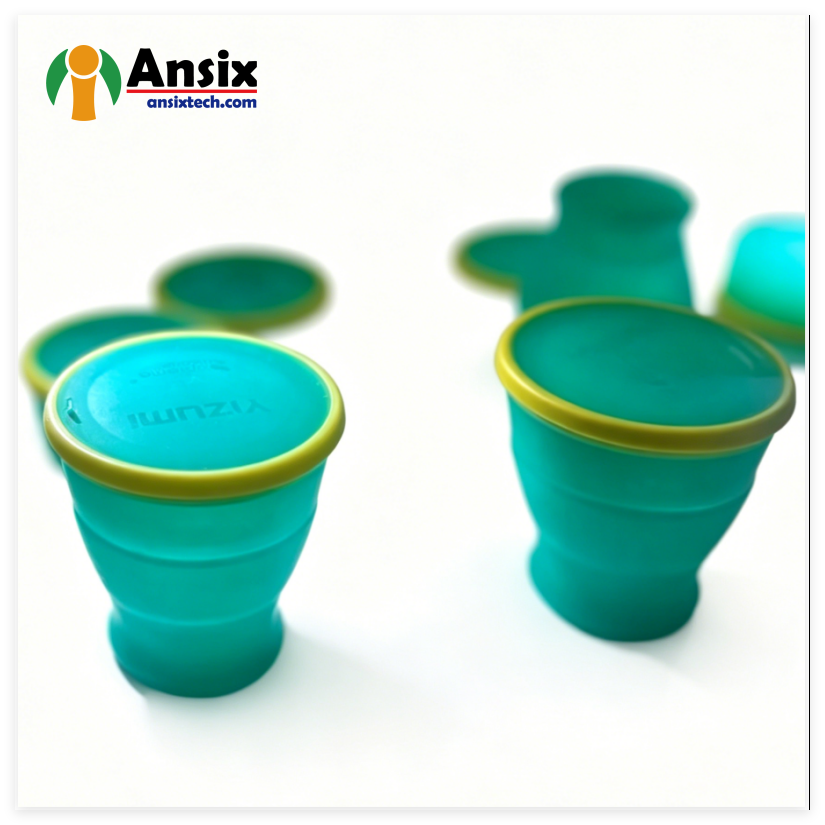


Water level sensor housing mold
Water level sensor housing mold

Engineering Efficiency: How Ansix Tech Redefines Value in Water Level Sensor Manufacturing
In the intricate world of modern sensing technology, the humble water level sensor housing is far more than a simple plastic shell. It is a critical barrier, protecting sensitive electronics from moisture, chemicals, and mechanical stress in applications ranging from automotive reservoirs and industrial tanks to smart home appliances. The precision and reliability of this component are non-negotiable. Yet, in a competitive global market, achieving this reliability at a commercially viable cost presents a formidable engineering challenge.
Ansix Tech, with over 28 years of deep-rooted manufacturing expertise, has positioned itself as a pivotal force in overcoming this challenge. The company has developed a systematic, holistic approach to the design, development, and mass production of water level sensor housing molds that fundamentally redefines value for its customers. By integrating advanced material science, predictive digital engineering, and intelligent process optimization, Ansix Tech delivers more than just parts—it engineers significant cost reduction, enhanced reliability, and guaranteed on-time delivery into every project.
The Precision Imperative: Where Reliability Meets Cost
Water level sensors are deployed in some of the most demanding environments. An automotive coolant level sensor, for instance, must withstand continuous exposure to ethylene-glycol mixtures and temperature swings from sub-zero cold starts to engine bay heat. In industrial settings, sensors may face corrosive chemicals or high-pressure washdowns. Failure is not an option, as it can lead to system shutdowns, equipment damage, or safety hazards.
Traditionally, meeting these rigorous standards came at a premium. Ansix Tech’s philosophy disrupts this trade-off. "Our value proposition is clear," states David Chen, Vice President of Engineering at Ansix Tech. "We sell efficiency and reliability. By integrating material science, cutting-edge mold design, and intelligent process optimization, we systematically lower the total cost of ownership for our clients". This is achieved not by cutting corners, but through a mastery of the entire value chain—from the initial molecular composition of the plastic to the final packaged part ready for installation.
Phase 1: The Digital Foundry – Predictive Design and Virtual Validation
The journey to a cost-optimized, high-quality sensor housing begins not on the factory floor, but within sophisticated computer simulations. Ansix Tech’s ANSIX Mold Workshop initiative exemplifies a digital-first philosophy that de-risks projects and uncovers early savings.
Design for Manufacturability (DFM) & Strategic Material Selection: Engineers conduct a thorough DFM analysis concurrent with material selection. For water level sensor housings, common materials include Polypropylene (PP) for its excellent chemical resistance and low cost, Polyamide (Nylon/PA) for its toughness and temperature resistance, and specialized Polycarbonate (PC) grades for applications requiring high clarity, dimensional stability, or signal transparency for embedded electrodes. Ansix Tech maintains an extensive material database, often collaborating with suppliers like Covestro or SABIC to select or tailor the most cost-effective grade that meets all functional requirements, preventing over-engineering and unnecessary expense.
Advanced Mold Flow Analysis (MFA): Using software like Moldflow or Moldex3D, engineers simulate the injection molding process with the selected material. This virtual prototyping predicts potential defects—weld lines in critical sealing areas, air traps causing burns, or sink marks over ribs—long before metal is cut. The simulation optimizes every aspect of the mold architecture:
Gate Location & Runner System: Ensures balanced filling to minimize stress and warpage.
Cooling Channel Layout: Models heat extraction to design for uniform cooling.
Shrinkage & Warpage Prediction: Anticipates dimensional changes to ensure the final part meets tight tolerances.
This upfront investment in simulation is a primary driver of cost reduction. It virtually eliminates costly, time-consuming cycles of physical mold trials and rework, ensuring first-pass success and accelerating time-to-market.
Phase 2: The Engine of Efficiency – Precision Mold Design and Engineering
The mold is the heart of the operation, and its design directly dictates part quality, production speed, and per-unit cost. Ansix Tech’s mold engineering focuses on several critical, interdependent systems.
Table: Core Mold Systems for Water Level Sensor Housings

For the mold steel itself, Ansix Tech makes strategic selections based on production volume and material. High-volume sensor housing projects may use premium H13 tool steel for its toughness and resistance to thermal fatigue, while projects requiring exceptional polish or corrosion resistance might use stainless steels like 420SS or S136. This balances initial tooling investment with longevity and consistent performance over millions of cycles.
Phase 3: Mastering the Process – Scientific Molding and Optimization
With the precision mold mounted in a high-performance injection machine, Ansix Tech’s focus shifts to process mastery. The company employs scientific molding principles and Decoupled Molding® techniques to establish a robust, repeatable process window.
Key Process Optimization Levers:
Material Handling: Engineering plastics like PA or PC are highly hygroscopic. Ansix Tech enforces strict drying protocols using dehumidifying dryers to bring moisture content below 0.02%, preventing surface splay and hydrolysis that weakens the part.
Cycle Time Reduction: The optimized conformal cooling system directly attacks the biggest time component. Furthermore, techniques like optimizing injection speed profiles and utilizing automated robotics for consistent part removal minimize cycle time variance and labor cost.
Defect Elimination: The process is continuously monitored against potential defects. For instance, packing pressure and time are tuned to eliminate sink marks; uniform cooling is maintained to prevent warpage; and melt temperature is controlled to avoid material degradation.
The results are quantifiable. In documented case studies for complex components, Ansix Tech has achieved cycle time reductions of over 28%, translating to a direct increase in daily production output and a lower cost per part.
Phase 4: Assuring Reliability – A Culture of Quality and Rapid Delivery
Quality at Ansix Tech is not a final inspection checkpoint but a discipline woven into every stage. The company operates under stringent IATF 16949 (automotive) and ISO 13485 (medical) quality management systems, with cleanroom facilities available for sensitive applications.
In-Process Monitoring: Real-time sensors track cavity pressure, temperature, and injection velocity, creating a digital fingerprint for every shot. Any deviation triggers immediate intervention.
Statistical Process Control (SPC): Critical dimensions are measured and charted during production runs to ensure consistency and predict trends before they exceed tolerance limits.
Comprehensive Validation: From first-article inspection using Coordinate Measuring Machines (CMM) to functional testing under simulated conditions, parts are validated against all design and performance criteria.
This systematic approach yields first-pass yield rates above 99%, virtually eliminating the massive hidden costs of scrap, rework, and field failures.
Understanding that speed-to-market is itself a critical cost factor, Ansix Tech has streamlined its logistics. Automated packaging systems prepare certified parts for rapid dispatch. Whether shipping precision molds or bulk quantities of sensor housings, the company’s integrated supply chain management ensures on-time delivery to customer production lines worldwide.
Conclusion: A Partnership Engineered for Value
The manufacture of a water level sensor housing encapsulates the modern manufacturing challenge: achieving impeccable reliability under demanding conditions while relentlessly driving down cost. Ansix Tech’s 28 years of experience have been codified into a repeatable, science-driven methodology that meets this challenge head-on.
By controlling and optimizing the entire continuum—from material molecule to shipped product—Ansix Tech delivers measurable, bottom-line value. Clients gain more than a supplier; they gain a partner that provides significant product cost reduction through material efficiency, double-digit percentage gains in production capacity, and the unwavering reliability that comes from total process mastery. In an industry where incremental advantages define leadership, Ansix Tech’s holistic approach offers a decisive edge, proving that the highest quality can indeed be engineered to be the most cost-effective choice.
Written by: Industry Analyst
For media inquiries or to learn more about Ansix Tech’s capabilities in sensor housing manufacturing, please contact: info@ansixtech.com


Ansix Tech Co Ltd
If you have any plans related to Water level sensor housing mold , you can contact us at any time. We will turn your ideas into reality, let you realize your dreams, and obtain large orders from the market. Our contact information is info@ansixtech.com. Or contact our CTO, mail: stephen@ansixtech.com
#www.ansixtech.com #ansixtech.com #Water level sensor housing mold #Water level sensor housing mold factory #Water level sensor housing mold injection molding company #Water level sensor housing mold injection mold companies #Ansix #Ansix moulds #Ansix china #Ansix tech china #Ansix tech company #Ansix facotry #Ansix Tech #Ansix molds #Ansix injection molding #Ansix mold factory #injection molding Water level sensor housing mold #Ansix mold factory #Water level sensor housing mold china #Water level sensor housing mold molds #injection factory #Water level sensor housing mold injection molding #Water level sensor housing mold injection molding factory #injection molding company #Water level sensor housing mold injection mold companies #Water level sensor housing mold factory #Water level sensor housing mold mold limited #Ansix mold china #Ansix companies #Ansix company China #Water level sensor housing mold facotry #Ansix Tech #Ansix Tech mould #Water level sensor housing mold injection moulding #injection moulding company #Ansix Water level sensor housing mold parts injection mold companies #Water level sensor housing mold #Water level sensor housing mold china #Water level sensor housing mold china factory #Ansix moulding companies #Ansix molding company #Water level sensor housing mold injection moulding facotry #Ansix Tech mold #Water level sensor housing mold mould #Water level sensor housing mold plastic injection molding #ansix plastic mold #Mold manufacturing #Water level sensor housing mold parts manufacturing #Water level sensor housing mold plastic parts factory #Water level sensor housing mold injection parts mold #Water level sensor housing mold PRECISION MANUFACTURING #Water level sensor housing mold #China mold #Water level sensor housing mold injection moulding china #Water level sensor housing mold mould china #china precision mold #mold in china #Water level sensor housing mold mold china #Precision molds #High-precision molds #Water level sensor housing mold #Injection molds #Water level sensor housing mold Factory #Water level sensor housing mold Company #Super Large Injection Mold Factory #Large Tonnage Injection Molding Factory #Water level sensor housing mold Company #Water level sensor housing mold Factory #2800T Injection Molding Factory #3000 Ton Injection Molding #4500 Ton Injection Molding Factory #Large Mold Injection Molding #Large Plastic Mold Injection Molding Factory #Large Injection Mold Manufacturer #Plastic Mold Factory #Injection Mold #Plastic Mold