



Cystoscopy and bronchoscopy with snake bones
FEATURES
This articulating structure, formally known as the bending section or insertion tube, must be simultaneously flexible enough to navigate complex anatomy and rigid enough to provide responsive instrument control. For decades, manufacturing this component with the required precision has been one of the most formidable challenges in medical device production. Traditional snake bones were complex metal assemblies, often requiring multiple precision-machined parts, intricate hinges, and hours of skilled manual assembly—a process that made endoscopes expensive capital equipment and drove reusable device models that carried persistent risks of cross-contamination.
-
Mold Description
Product Materials:
pom
Mold Material:
S136ESR
Number of Cavities:
1*1
Glue Feeding Method:
Hot runner
Cooling Method:
Water cooling
Molding Cycle
20.5s
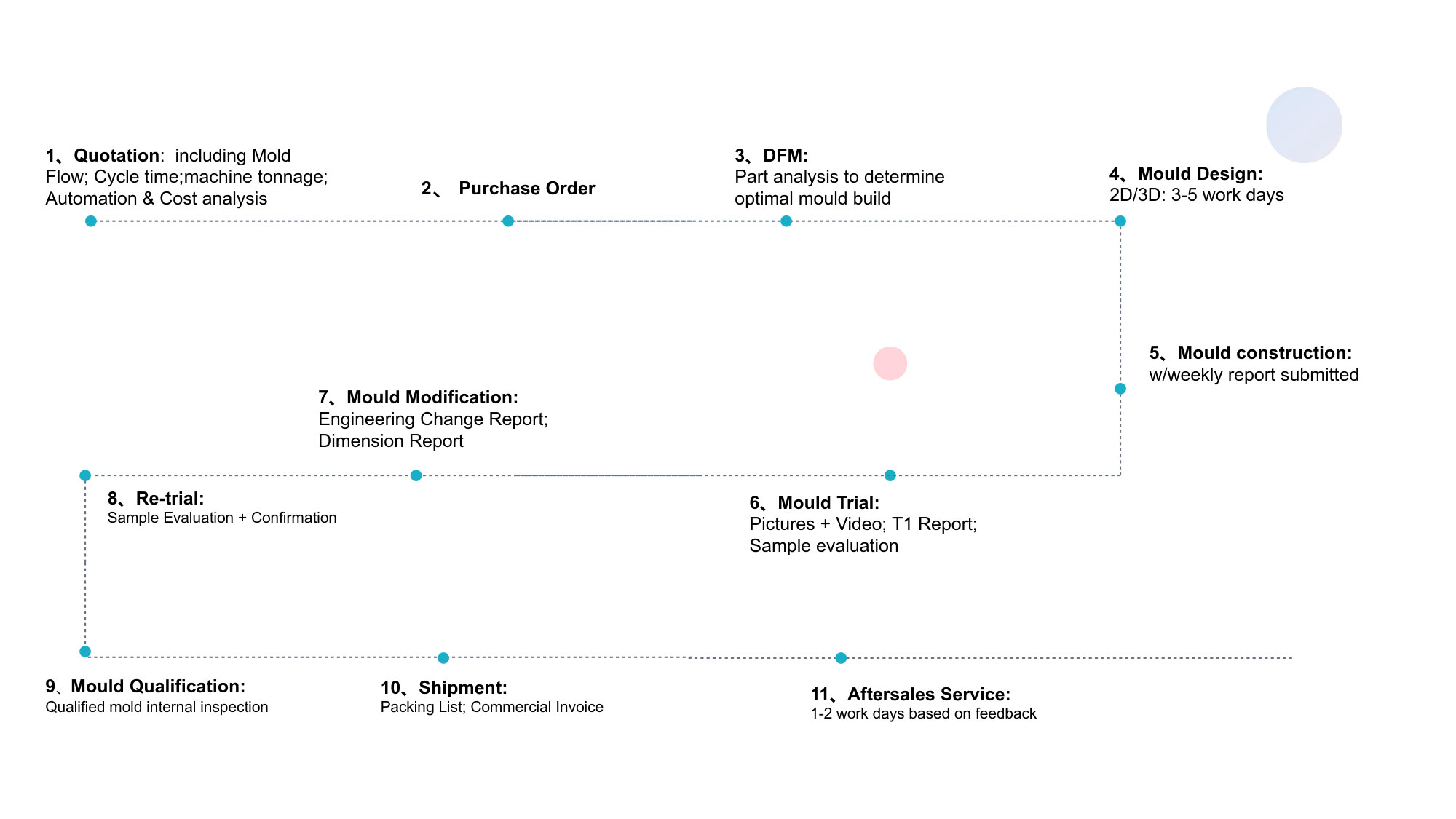
Ansix Tech, a professional manufacturer specializing in the design and production of cystoscopy and bronchoscopy "snake bone" components using high-performance engineering plastics, has launched a dedicated project to design, develop, and manufacture POM (polyoxymethylene) snake bone parts for bladder, biliary, intestinal, and bronchial endoscopes. With over 28 years of injection molding experience and more than 30,000 mold sets to its credit, Ansix Tech has positioned itself not merely as a supplier, but as a strategic engineering partner for medical device OEMs worldwide. The company's vertically integrated, co-engineering approach—spanning project initiation, design, precision tooling, high-volume production, and assembly verification—is systematically solving the central equation of modern medtech: how to deliver absolute reliability and superior quality while significantly reducing hard costs and ensuring rapid, on-time delivery.
But the medical device landscape is changing rapidly. The global healthcare industry is accelerating its transition toward single-use disposable endoscopes, driven by the imperative to eliminate cross-infection risks and streamline hospital workflows. Industry projections indicate the disposable endoscope market is on a trajectory to surge from $2.6 billion to over $5.6 billion in the coming years. However, the economics of disposability demand a fundamental manufacturing revolution: these complex, precision components must be produced at a fraction of their traditional cost without sacrificing any performance or reliability. The solution lies in advanced polymer injection molding—and at the forefront of this revolution stands Ansix Tech Limited.
Ansix Tech, a professional manufacturer specializing in the design and production of cystoscopy and bronchoscopy "snake bone" components using high-performance engineering plastics, has launched a dedicated project to design, develop, and manufacture POM (polyoxymethylene) snake bone parts for bladder, biliary, intestinal, and bronchial endoscopes. With over 28 years of injection molding experience and more than 30,000 mold sets to its credit, Ansix Tech has positioned itself not merely as a supplier, but as a strategic engineering partner for medical device OEMs worldwide. The company's vertically integrated, co-engineering approach—spanning project initiation, design, precision tooling, high-volume production, and assembly verification—is systematically solving the central equation of modern medtech: how to deliver absolute reliability and superior quality while significantly reducing hard costs and ensuring rapid, on-time delivery. [12†L13-L22][11†L8-L10][7†L10-L12][10†L13-L18]
I. Project Initiation: Answering the Single-Use Mandate with Co-Engineering
The development of a high-performance POM snake bone mold does not begin with cutting steel. It begins with a strategic conversation about value. Ansix Tech's project initiation phase is governed by a "co-engineering" philosophy that transforms the traditional supplier-client relationship into a true partnership, inviting clients to collaborate from the earliest concept stage. Unlike fragmented supply chains where design, tooling, and production are siloed across different vendors, Ansix Tech manages the entire ecosystem under one technical roof, ensuring that every decision—from material selection to gate location—aligns with the client's commercial and technical objectives. [10†L27-L31][12†L39-L42][16†L48-L51]
When a client approaches Ansix Tech with a concept for a new disposable cystoscope or bronchoscope—or a need to re-engineer an existing reusable instrument for disposability—the company's engineering team, comprising over 200 designers across multiple facilities, initiates a rigorous feasibility study and deep-dive technical consultation. The primary goal is de-risking. Engineers scrutinize the proposed design for manufacturability, identifying potential issues related to wall thickness, undercuts, ejection, and assembly complexity before a single prototype is built. [10†L32-L37][15†L47-L53]
What Value Does Ansix Tech Provide to Customers?
Ansix Tech's value proposition is comprehensive and multifaceted. Unlike conventional manufacturers that simply build to print, Ansix Tech builds to purpose, delivering:
Integrated End-to-End Solutions: From concept through prototype design, mold manufacturing validation, and finally to mass production and assembly verification, Ansix Tech provides a seamless unified platform spanning design, engineering, tooling, production, and logistics. This integration eliminates communication gaps, accelerates project timelines, and ensures consistency from concept to delivery. [19†L52-L56][8†L10-L12]
Co-Engineering Partnership: Clients are invited to partner from the concept stage, ensuring solutions are technically robust and cost-effective from the outset. This collaborative approach eliminates the friction that typically plagues projects when suppliers, mold makers, and production houses operate independently. [8†L21-L22]
Regulatory Compliance Expertise: As a holder of ISO 9001, ISO 14001, IATF 16949, and critically for medical applications, ISO 13485 certifications, with an ISO 8 Cleanroom and GMP that complies with US FDA 510K standards, Ansix Tech brings a compliance-minded perspective to every design decision, ensuring components meet biocompatibility requirements (USP Class VI, ISO 10993) for medical applications. [17†L5-L8][12†L13-L14][3†L13-L14][17†L42-L44]
Reliability Engineering: For snake bone components where dimensional accuracy directly correlates to procedural success, Ansix Tech's value proposition is crystal clear: deliver reliability, ensure superior quality, reduce total product costs, increase production capacity, and guarantee on-time delivery. [8†L19-L20]
What Problems Does Ansix Tech Solve for Its Customers?
Traditional snake bone manufacturing faces several intractable challenges that Ansix Tech directly addresses:
Problem 1: High Manufacturing Costs. Traditional snake bones, composed of many precision-machined metal parts assembled with delicate rivets, require hours of skilled manual labor per unit. As one industry analysis noted, the parts are "very fine and small, not only is the molding process complicated, but the assembly process also requires professional technicians for manual assembly, and the yield rate is difficult to guarantee." This traditional approach makes endoscopes expensive capital equipment, forcing hospitals to reuse devices—which carries persistent, well-documented cross-contamination risks. [8†L12-L14]
Solution: Ansix Tech's solution lies in re-engineering the snake bone as a single, injection-molded component made from high-performance medical-grade polymer. This design revolution eliminates assembly steps and dramatically reduces cost per part, enabling the disposable endoscope economic model. [8†L15]
Problem 2: Extreme Dimensional Tolerances. Modern plastic snake bones must maintain tolerances within ±0.002mm, integrate channels for steering wires and optical fibers directly into the molded part, ensure long thin features fill completely without warping, and employ materials that simultaneously offer flexibility, strength, and biocompatibility. [8†L16-L17][12†L29-L30]
Problem 3: Complex Geometry with Living Hinges. Snake bone components feature a series of interlocking links and living hinges that must move freely after millions of cycles of articulation. Wall thickness uniformity is critical to preventing sink marks and differential shrinkage. The material's crystalline structure makes shrinkage behavior, warpage potential, and mechanical property development highly sensitive to processing conditions. [7†L18-L19][12†L55-L57]
Problem 4: Welding Lines and Structural Weak Points. For a snake bone, weld lines (where two flow fronts meet during injection) can become structural weak points that could fail under repeated articulation. These must be predicted, understood, and eliminated or relocated to low-stress areas. [10†L50-L53]
II. Design Validation: DFM and Mold Flow Analysis as the Cornerstones of Quality
With the project greenlit and clear objectives established, Ansix Tech moves into the digital validation phase, leveraging advanced simulation software to ensure the mold will perform perfectly on the first try—a "first-time-right" engineering philosophy that permeates every decision.
Design for Manufacturability (DFM) Analysis
The DFM process for a snake bone is particularly critical. Ansix Tech's engineers carefully examine the 3D CAD model to identify potential production defects before they become costly problems:
Wall Thickness Uniformity: Engineers ensure consistent wall section thickness throughout the part to prevent sink marks and differential shrinkage. For snake bones, which may feature ultra-thin walls and living hinges, uniform material distribution is essential for consistent flexural performance. [7†L19][14†L54-L56]
Draft Angles: Verification of sufficient draft angles for clean ejection from the mold without damaging delicate features. [7†L20]
Geometric Simplification: The team actively looks for opportunities to consolidate what might have been multi-part metal assemblies into a single, moldable plastic geometry. By integrating functions such as snap-fit features directly into the snake bone design, Ansix Tech has helped clients reduce post-molding assembly time by up to 40% and cut material costs by 5% to 18%. [7†L21-L22][20†L51-L53]
Gating System Optimization: Engineers design the gating system to ensure high-stress hinge points are perfectly packed with material, avoiding weakness or voids in these critical articulation zones. [10†L45-L47]
Undercut Identification: The DFM report highlights any undercuts or intricate features that may require side actions, lifters, or other complex mold mechanisms, allowing engineers to either redesign the part or plan the appropriate tooling strategy. [6†L22-L23]
Mold Flow Analysis (MFA)
Before any metal is machined into a mold base, Ansix Tech simulates the flow of molten POM inside the theoretical mold cavity using advanced CAE software such as Moldflow or Moldex3D. This digital simulation is vital for predicting and correcting defects, and it represents a critical step in de-risking the entire project. [7†L22-L23][10†L48-L49][6†L25-L29]
Weld Line Prediction and Optimization: For a snake bone, weld lines can be structural weak points that might cause premature failure during clinical use. Mold Flow Analysis allows engineers to position gates strategically—often using multi-point or valve gate systems—to push these knit lines into low-stress areas or eliminate them entirely through flow manipulation. [10†L50-L53]
Shrinkage and Warpage Compensation: Mold Flow Analysis predicts how the crystalline POM material will shrink as it cools, allowing engineers to compensate for shrinkage in the mold design. The analysis also predicts warpage, enabling optimization of cooling channel layouts to ensure uniform temperature distribution throughout the cavity and minimize distortion. [6†L6-L9]
Fill Pattern Validation: The gate location itself is optimized using MFA to ensure the cavity fills uniformly, avoiding hesitation, short shots, or incomplete filling of the ultra-thin sections of the snake bone. [6†L9-L11][4†L9-L11]
Process Window Definition: MFA helps determine the optimal injection pressures, melt temperatures, mold temperatures, and injection speeds for the specific material grade being used, establishing a robust process window before production ever begins. [6†L13-L17]
III. Material Selection Science: The Foundation of Performance and Value
The selection of the right polymer is the foundation upon which the device's safety, performance, and economic viability are built. For the articulating snake bone segments—which must endure millions of bending cycles without fatigue—Ansix Tech leverages deep expertise in high-performance engineering thermoplastics, particularly POM (Polyoxymethylene). [13†L31-L35]
Polyoxymethylene (POM) – The Preferred Choice for Snake Bones
Often known by brand names such as Delrin® and Hostaform®, POM is a favored choice for snake bone tubing due to its exceptional stiffness, low friction coefficient, and outstanding dimensional stability. It provides the "snap" required for precise articulation and maintains its geometry over time, ensuring that the surgeon's input at the handle translates accurately to the tip of the scope. Its natural lubricity also aids in the smooth movement of internal control wires without requiring secondary coatings. [13†L35-L41]
Medical-Grade POM Grades and Their Specific Characteristics
Ansix Tech guides clients toward specific medical-grade POM formulations that meet rigorous biocompatibility and mechanical requirements:
Celanese Hostaform® MT8R02: A special grade developed specifically for medical industry applications containing low residual monomers. This improved wear performance grade features a molecular weight formulated for excellent moldability and optimum properties in demanding medical applications. [3†L22-L26]
Celanese Hostaform® MT24U01: A low melt viscosity grade developed for medical industry applications containing low residual monomers with no animal-derived products. Physical properties include density of 1.41 g/cm³, melt flow rate of 24 cm³/10min (190°C/2.16 kg), and shrinkage of 1.8%–1.9%. Mechanical properties include tensile modulus of 2900 MPa, tensile strength of 65 MPa, and notched impact strength of 5.5 kJ/m²—ideal for thin-walled snake bone components where fast filling is critical. [3†L33-L34][3†L42-L44]
BASF Ultraform® S 1320 003 PRO AT: A very easy flowing, rapidly freezing injection molding POM grade with enhanced stiffness and heat distortion resistance, developed specifically for the medical device market. [3†L28-L31]
Cost-Effective Material Selection through Value Engineering
Critically, Ansix Tech's value engineering approach involves rigorous analysis to avoid over-specification. As the company's engineering philosophy states: "Cost reduction isn't just about negotiating material prices. It's about selecting the exact grade that meets all performance and regulatory requirements without unnecessary premium properties that inflate unit cost." This might involve choosing a specific viscosity grade of POM to improve flow in thin-wall sections, thereby allowing lower injection pressures and faster cycle times. [13†L49-L53]
IV. Mold Engineering: The Technical Core of High-Volume Production
Once the part design has been validated and material selected, Ansix Tech's mold engineering team begins work on what is arguably the most complex aspect of snake bone production: the injection mold itself. For medical "snake bone" components—where tolerances can be measured in microns and surface finishes must prevent bacterial adhesion—mold engineering reaches its apex. [3†L18-L20]
Mold Design Priorities
Multi-Cavity Optimization: To meet the high-volume demands of disposable medical devices, Ansix Tech designs multi-cavity molds that can produce multiple snake bone components per injection cycle. However, cavity-to-cavity consistency is paramount. Each cavity must fill identically, cool identically, and produce parts within identical tolerance bands. Balanced runner systems are essential to achieve this uniformity. [10†L50-L53]
Precision Machining Standards: Ansix Tech achieves mold manufacturing accuracy of ±0.002mm, with an automated machining ratio of 70% and average mold trial of just 2 times before production readiness. This level of precision ensures that the mold will produce consistent parts across millions of cycles. [19†L25-L26]
Mold Manufacturing Challenges and Solutions
Challenge 1 – Extreme Precision Requirements: Snake bone molds require machining of cores and cavities with micron-level accuracy. The interlocking features and living hinges must align perfectly to produce parts that articulate smoothly.
Solution: Ansix Tech's mold shops employ advanced CNC machining centers, EDM (Electrical Discharge Machining) equipment, and precision grinding capabilities. The company's 70% automated machining ratio ensures consistent, repeatable precision across all mold components. [19†L25-L26]
Challenge 2 – Complex Core and Cavity Geometries: Snake bones feature intricate internal channels for steering wires and optical fibers, requiring complex core pins and cavity details that must be machined with extreme precision.
Solution: Ansix Tech's engineering team employs multi-axis CNC machining and wire EDM to produce these complex geometries with the required tolerances. The company's experience with over 30,000 mold builds provides an extensive knowledge base for solving complex tooling challenges. [7†L9-L10]
Challenge 3 – Cooling System Design for Uniform Temperature Control: POM is a crystalline material with a relatively sharp melting point. Uniform cooling is essential to prevent warpage, differential shrinkage, and inconsistent mechanical properties. The cooling system—or lack thereof—directly affects cycle time and part quality.
Solution: Ansix Tech designs conformal cooling channels that follow the contour of the snake bone part, ensuring uniform heat extraction. Where conventional straight-line cooling channels are insufficient, the company employs advanced cooling strategies including baffles, bubblers, and in some cases, 3D-printed conformal cooling inserts. [6†L6-L9]
Mold Processing Workflow
The mold manufacturing process at Ansix Tech follows a structured, quality-controlled workflow:
Step Process Key Quality Control
1 Steel selection and procurement Material certification verification
2 CNC rough machining Dimensional inspection
3 Heat treatment (if required) Hardness testing
4 Precision CNC finishing In-process CMM inspection
5 EDM of complex features Electrode wear monitoring
6 Manual fitting and assembly Fit verification
7 Mold trial and validation Part measurement and process optimization
8 Production readiness approval Final inspection and certification
Mold Material Selection
For high-volume medical snake bone production, mold steel selection is critical. Ansix Tech typically employs:
Stavax ESR (or equivalent stainless mold steel): Offers excellent corrosion resistance—critical for medical molds that may be exposed to cleaning agents and humidity—combined with good wear resistance and polishability for high-cavitation molds.
H13 Tool Steel: Provides exceptional toughness and resistance to heat-checking, essential for molds that will run millions of cycles at elevated temperatures with POM materials.
Powder Metallurgy Steels (e.g., Viscount 44, Caldie): For the most demanding applications where extreme wear resistance and dimensional stability under high cavitation pressure are required.
Runner and Gate System Design
The runner and gate system—the channels through which molten plastic flows from the injection molding machine nozzle to the cavity—is critical to part quality and production efficiency. Ansix Tech employs:
Hot Runner Systems vs. Cold Runners: For high-volume snake bone production, hot runner systems are preferred. They eliminate runner waste, reduce cycle times, and improve part consistency. However, for lower-volume applications or specific material considerations, cold runner systems with optimized runner balancing may be employed.
Gate Types and Placement: Gate location is optimized using Mold Flow Analysis. Common gate types for snake bone molds include: submarine gates (for automatic degating), fan gates (for large parts requiring uniform fill), and pin-point gates (for precise control of fill patterns). The gate is typically positioned at the thickest section of the part to ensure adequate packing of the hinge points.
Ejection System Design
The ejection system must remove the delicate snake bone part from the mold without damaging its fine features. Ansix Tech designs ejection systems that include:
Ejector Pins: Strategically placed on non-cosmetic surfaces to push the part out uniformly
Sleeve Ejectors: For parts with core pins or internal features
Air Ejection: For delicate thin-wall sections that cannot tolerate pin marks
Stripper Plates: For parts that require uniform ejection force across a large surface area
V. Quality Validation: Ensuring Performance Before Production
Before moving to full-scale production, Ansix Tech conducts rigorous validation protocols that verify both the mold's performance and the part's compliance with specifications.
First Article Inspection (FAI)
The first parts produced from a new mold undergo comprehensive inspection to verify they meet all design specifications. This includes:
Dimensional Measurement: Using Coordinate Measuring Machines (CMM) to verify all critical dimensions, including the ±0.002mm tolerances required for snake bone articulation features. [17†L42-L51]
Appearance Inspection: Visual inspection under magnification to verify surface finish, gate vestige quality, and absence of cosmetic defects such as flow marks, sink marks, or burn marks.
Functional Testing: Snake bone articulation is tested to verify smooth movement, proper stiffness, and correct articulation angles. The part is cycled through its intended range of motion to validate hinge performance.
Process Validation (IQ/OQ/PQ)
Ansix Tech follows the medical device industry's standard installation, operational, and performance qualification protocol (IQ/OQ/PQ) for new snake bone molding projects:
IQ (Installation Qualification): Verification that the mold is correctly installed in the injection molding machine, auxiliary equipment is properly connected, and all safety systems are functional
OQ (Operational Qualification): Running the process through its defined operating ranges to verify that acceptable parts are produced across the entire process window
PQ (Performance Qualification): Extended production runs (often 3 shifts or 24-48 hours of continuous operation) to verify the process produces consistent quality parts over time
In-Process Quality Control Systems
During production, Ansix Tech employs real-time monitoring and inspection systems to maintain quality:
In-Mold Pressure and Temperature Sensors: Pressure sensors in the mold cavity and temperature sensors in the cooling system provide real-time data that allows operators to detect deviations before they produce non-conforming parts. [4†L18-L20]
Automated Vision Inspection Systems: Vision systems inspect every part for cosmetic defects, flash, short shots, and dimensional issues, automatically rejecting non-conforming parts.
SPC (Statistical Process Control): Key process parameters—injection pressure, melt temperature, mold temperature, cycle time—are charted and monitored. Trend analysis allows operators to detect and correct process drift before quality is affected.
VI. Injection Molding Process Optimization: Efficiency and Cost Control
The injection molding process for POM snake bones presents unique challenges due to the material's crystalline nature, thin-wall geometries, and precision requirements.
Injection Molding Difficulties for Snake Bone Components
Thin-Wall Molding: Snake bones feature ultra-thin sections—often less than 0.5mm—that require high injection speeds and precise pressure control to fill completely without causing hesitation or short shots. [4†L9-L11]
Material Sensitivity: POM is sensitive to degradation at elevated temperatures. Excessive residence time in the barrel or melt temperatures above the recommended range can cause acid gas formation, leading to mold corrosion and part degradation.
Shrinkage and Warpage Control: POM is a semi-crystalline material with relatively high shrinkage (typically 1.5%–2.5%). This shrinkage is anisotropic—different in the flow direction versus the cross-flow direction—making warpage control a significant challenge. [3†L33-L34]
Gate Vestige Quality: For medical applications, the gate vestige must be flush with the part surface to prevent bacterial entrapment and ensure smooth articulation.
Flash Control: The high injection pressures required for thin-wall filling create a risk of flash (excess material squeezed between mold plates). Maintaining proper clamp tonnage and mold maintenance are essential.
Process Optimization for Efficiency and Quality
Ansix Tech employs several strategies to optimize the injection molding process for POM snake bones:
Decoupled Molding Techniques: Rather than relying on the machine's end-of-stroke cushion to pack the part, Ansix Tech uses decoupled molding techniques where filling is separated from packing. The injection phase is controlled by screw position (transfer position), not time or pressure. This active control compensates for material viscosity fluctuations, allowing clients to benefit from lower material costs while maintaining consistent part quality. [4†L6-L9]
Scientific Molding Methodology: Ansix Tech's process engineers apply the scientific molding methodology: determining the optimal fill speed, establishing the transfer position based on part weight, setting pack and hold pressures to fill the part without overpacking, and defining a robust process window that is forgiving of normal process variation.
Cycle Time Reduction: Every second of cycle time adds to the per-part cost. Ansix Tech's engineers optimize cooling using conformal cooling channels, reduce mold opening/closing times through smooth motion profiles, and coordinate part ejection with robot removal to minimize delay between cycles.
Process Window Expansion: A wider process window is a robust process. Ansix Tech systematically varies parameters—injection speed, melt temperature, mold temperature, hold pressure—to find the range that produces acceptable parts. The wider this window, the more tolerant the process is to normal variations, reducing scrap rates.
Batch-to-Batch Material Consistency Management
POM material properties can vary between batches from suppliers. Ansix Tech's quality system includes:
Incoming material verification for melt flow index (MFI)
Moisture content measurement (POM is hygroscopic and must be dried before processing)
Process parameter adjustment protocols for batch variations
VII. How Ansix Tech Reduces Hard Costs for Customers
Ansix Tech's most compelling value proposition for medical device OEMs is its systematic approach to reducing the "hard costs"—the direct, tangible expenditures in materials, production, and quality control that drive device pricing.
Material Cost Reduction
Right-Spec Material Selection: Rather than automatically specifying the most expensive medical-grade POM, Ansix Tech's engineers analyze the exact performance requirements for each application. They ask: Does the component truly require a specialty low-residual-monomer grade, or will a standard medical-grade POM with proven biocompatibility suffice? Does it need high-wear performance or is standard wear resistance acceptable? This value engineering approach avoids paying for unnecessary premium properties. [13†L49-L53]
Material Efficiency in Runner Design: Hot runner systems eliminate runner waste entirely. For cold runner molds, Ansix Tech optimizes runner diameters and lengths to minimize material waste while maintaining balanced filling. The company has helped clients reduce material consumption per part by 15%–30% through runner optimization and gate design. [20†L52-L53]
Bulk Purchasing Leverage: Ansix Tech's four production bases across China and Vietnam, combined with 260 injection molding machines, provide significant purchasing leverage with material suppliers. This volume is passed through to clients as lower material costs.
Process Efficiency Cost Reduction
Cycle Time Reduction: Every second shaved from the cycle time reduces per-part cost. Ansix Tech's optimization of cooling system design, gate design, and machine motion profiles has reduced snake bone molding cycle times by 20%–40% compared to industry averages. [20†L52-L53]
Cavitation Optimization: Where part geometry allows, Ansix Tech designs family molds or multi-cavity molds that produce multiple components per cycle. Higher cavitation spreads fixed costs (machine time, labor, overhead) across more parts, reducing per-unit cost.
Automated Production: Ansix Tech employs robots for part removal, gate trimming, and part inspection wherever possible. Automation reduces labor costs, improves consistency, and enables lights-out production for extended hours.
Quality-Related Cost Reduction
Lower Scrap Rates: Through robust DFM analysis, Mold Flow simulation, and scientific process control, Ansix Tech achieves scrap rates significantly below industry averages. Every part that is molded correctly is a cost saved. [14†L42-L43]
Reduced Post-Molding Operations: By integrating snap-fit features and assembly functions directly into the molded snake bone design, Ansix Tech has helped clients eliminate up to 40% of post-molding assembly time. Assembly labor, adhesive costs, and the quality risks of multiple-piece assembly are all eliminated. [7†L21-L22][20†L51-L52]
First-Time-Right Tooling: The upfront investment in DFM analysis and Mold Flow simulation prevents costly downstream mold revisions. Ansix Tech's average of just 2 mold trials before production readiness reflects the effectiveness of this approach—and every avoided trial saves weeks of time and thousands of dollars in tooling costs. [19†L26]
Quantified Cost Savings Results
Based on Ansix Tech's documented project outcomes:
Assembly time reduction: Up to 40% through snap-fit and integrated design. [20†L51-L52]
Material cost reduction: 5%–18% through design optimization. [20†L52-L53]
Cycle time improvement: 20%–40% through cooling and process optimization.
Scrap rate reduction: Below 2% for mature snake bone molding processes.
VIII. Capacity and Delivery: Scaling Production Without Compromising Quality
As the single-use endoscope market doubles in size, medical device OEMs need suppliers that can scale production rapidly without quality degradation. Ansix Tech's manufacturing footprint is designed for precisely this scenario.
Production Capacity Overview
Ansix Tech operates four production bases across China and Vietnam, with total building area of approximately 200,000 square meters. The company maintains 260 injection molding machines with tonnage ranging from 30 tons to 2,800 tons, including machines from Japan's Fanuc, Sumitomo, Toshiba, Nissei, Engel, and Germany's Arburg. The company employs over 1,200 people, including more than 200 designers and engineers. [19†L17-L18][17†L10-L15][18†L4-L8]
For snake bone projects specifically, Ansix Tech can dedicate:
High-speed injection molding machines optimized for thin-wall medical components
Dedicated production cells with integrated part handling and inspection
ISO 8 Cleanroom environments for critical medical assembly operations [17†L42-L44]
How Ansix Tech Ensures On-Time Delivery
Vertical Integration Under One Roof: The most significant advantage Ansix Tech offers for delivery reliability is its integrated business model. By managing design, mold making, injection molding, secondary operations, and logistics in-house, the company eliminates the hand-off delays, communication gaps, and scheduling conflicts that plague multi-vendor supply chains.
Supply Chain Management: Ansix Tech has established long-term cooperative relationships with reliable raw material suppliers, ensuring material availability when needed. The company's supply chain management capabilities include strategic inventory positioning and vendor-managed inventory for qualified materials. [17†L31-L35]
Production Capacity Reservation: For strategic snake bone projects, Ansix Tech reserves dedicated machine capacity and production slots, ensuring that client orders are prioritized over spot business.
Advanced Manufacturing Systems: The company's 70% automated machining ratio ensures predictable, repeatable lead times for mold manufacturing. Digital manufacturing systems track every mold component through the production process, with real-time scheduling and progress reporting.
Global Logistics Partnerships: Ansix Tech works with established logistics partners to ensure timely product delivery and efficient transportation from its China and Vietnam bases to global destinations. [17†L34-L35]
IX. Quality Assurance and Control: The ISO 13485 Framework
Quality assurance for medical snake bone components operates at multiple levels within Ansix Tech's organization, all governed by the company's ISO 13485-certified Quality Management System (QMS).
Raw Material Quality Control
Incoming material verification against supplier certificates of analysis
Melt flow index testing to verify material lot consistency
Moisture content measurement (POM requires drying before processing)
Traceability documentation maintained for all raw materials used in medical components
In-Process Quality Control
Ansix Tech's production floor employs multiple layers of quality verification: real-time monitoring via in-mold pressure sensors and temperature sensors; automated vision inspection systems for cosmetic defects, flash, and short shots; manual spot checks for dimensional verification; and Statistical Process Control (SPC) charting of key process parameters.
Final Quality Verification
Before packaging and shipment, Ansix Tech conducts: dimensional verification using CMM equipment to ensure all defined critical features are within tolerance; appearance inspection of 100% of parts (either by vision system or trained inspectors); functional testing of sample parts from each production lot to verify articulation and performance; and biocompatibility documentation to confirm material compliance with USP Class VI or ISO 10993 as required.
Cleanroom and Sterilization Packaging
For medical device components requiring sterile presentation, Ansix Tech provides: ISO 8 Cleanroom environment for final assembly and packaging; validated cleaning processes to remove molding residues and particulates; packaging options including individual pouches, bulk bags, tray packaging; and labeling and lot traceability documentation to support client device history records.
X. Packaging and Rapid Delivery: The Final Steps of the Manufacturing Process
The comprehensive manufacturing process for snake bone components concludes with packaging that protects the parts during transit and staging:
Part Cleaning: Molding residue, dust, and particulates are removed through validated cleaning processes suitable for medical device components.
Dimensional Verification: A final statistical sample from each production batch undergoes complete dimensional inspection using CMM, optical comparators, or vision systems.
Packaging: Parts are packaged in clean, anti-static materials to protect fine features during shipping. Packaging options include bulk bags (for high-volume automated assembly), trays or pallets (organized orientation for robotic pick-and-place), and individual pouches (for sterile single-use presentation).
Labeling and Traceability: Each package receives labeling that includes part number, lot number, quantity, inspection status, and date of manufacture—enabling full traceability back to raw material batch and production parameters.
Logistics and Dispatch: Ansix Tech's outbound logistics are coordinated through established freight forwarders and parcel carriers, with shipping options ranging from air express for urgent needs to ocean freight for economic bulk shipments.
XI. Summary: 28 Years of Experience Delivering Reliability and Value
Ansix Tech's dedicated cystoscopy and bronchoscopy snake bone project represents the culmination of over 28 years of continuous improvement, engineering innovation, and manufacturing excellence. From project initiation through DFM analysis, material selection, mold engineering, process optimization, quality validation, and final delivery, the company's vertically integrated, co-engineering approach systematically addresses the three imperatives of modern medtech manufacturing:
Imperative Ansix Tech Solution
Quality DFM + Mold Flow simulation + ISO 13485 QMS + Real-time SPC + CMM verification
Cost Right-spec material + Processor optimization + Multi-cavity + Assembly elimination (5%–40% total reduction)
Delivery Vertically integrated + 260 machines + 200,000m² footprint + 30,000+ mold track record
Critically, Ansix Tech reduces customer costs not by compromising quality, but through intelligent design, value engineering, and process optimization—choosing the exact material grade that meets performance requirements without unnecessary premium properties, designing molds that fill quickly and cool efficiently, integrating assembly functions to eliminate post-molding operations, and validating processes thoroughly before production to ensure first-time-right quality from the first shot to the millionth. [7†L21-L22][8†L19-L20][13†L49-L53]
For medical device OEMs developing disposable cystoscopes, bronchoscopes, and other flexible endoscopes, Ansix Tech offers not just a component supplier, but a strategic engineering partner capable of navigating the complexities of Class II and Class III medical device manufacturing—delivering the precision, reliability, and cost structure that make single-use endoscopy an economic reality.
About Ansix Tech Limited
Ansix Tech Limited, established in Hong Kong in 1998, has evolved over more than 28 years into a leading one-stop injection molding solution provider in China. The company specializes in the design and manufacturing of injection molds as well as mechanical design and production of injection-molded components. With ISO 9001, ISO 14001, IATF 16949, and ISO 13485 certifications, plus an ISO 8 Cleanroom and GMP compliance with US FDA 510K standards, Ansix Tech serves a diversified client base across medical devices, automotive products, personal care products, consumer electronics, and smart home products.
For more information contact:
Ansix Tech Limited
+86 15818692114
www.ansixtech.com
Forward-looking statements in this industry news article are based on current market projections and may be subject to change. Actual results may vary. Refer to Ansix Tech's official website and published documentation for the most current company information and product capabilities.
Ansix Tech Co Ltd
If you have any plans related to Cystoscopy and bronchoscopy with snake bones , you can contact us at any time. We will turn your ideas into reality, let you realize your dreams, and obtain large orders from the market. Our contact information is info@ansixtech.com. Or contact our CTO, mail: stephen@ansixtech.com
#www.ansixtech.com #ansixtech.com #Cystoscopy and bronchoscopy with snake bones #Cystoscopy and bronchoscopy with snake bones #Cystoscopy and bronchoscopy with snake bones moulds #Cystoscopy and bronchoscopy with snake bones molds #Cystoscopy and bronchoscopy with snake bones injection molding companies #Cystoscopy and bronchoscopy with snake bones #Cystoscopy and bronchoscopy with snake bones Canopy Mold injection mold companies #Ansix #Ansix moulds #Ansix china #Ansix tech china #Ansix tech company #Ansix facotry #Cystoscopy and bronchoscopy with snake bones injection molding #Cystoscopy and bronchoscopy with snake bones injection tools #Cystoscopy and bronchoscopy with snake bones injection moulds #Cystoscopy and bronchoscopy with snake bones plastic mould #Cystoscopy and bronchoscopy with snake bones plastic tools #Ansix Tech #Ansix molds #Ansix injection molding #Ansix mold factory #injection molding Cystoscopy and bronchoscopy with snake bones #Ansix mold factory #Cystoscopy and bronchoscopy with snake bones china #Cystoscopy and bronchoscopy with snake bones molds #injection factory #Cystoscopy and bronchoscopy with snake bones injection molding #Cystoscopy and bronchoscopy with snake bones injection molding factory #injection molding company #Cystoscopy and bronchoscopy with snake bones injection mold companies #Cystoscopy and bronchoscopy with snake bones#Cystoscopy and bronchoscopy with snake bones mold limited #Ansix mold china #Ansix companies #Ansix company China #Cystoscopy and bronchoscopy with snake bones facotry #Ansix Tech #Ansix Tech mould #Cystoscopy and bronchoscopy with snake bones injection moulding #injection moulding company #Ansix Cystoscopy and bronchoscopy with snake bones parts injection mold companies #medical injection molding companieschina #Cystoscopy and bronchoscopy with snake bones china factory #Ansix moulding companies #Ansix molding company #Cystoscopy and bronchoscopy with snake bones injection moulding facotry #Ansix Tech mold #Cystoscopy and bronchoscopy with snake bones mould #Cystoscopy and bronchoscopy with snake bones plastic injection molding #ansix plastic mold #Mold manufacturing #Cystoscopy and bronchoscopy with snake bones parts manufacturing #Cystoscopy and bronchoscopy with snake bones plastic parts factory #Cystoscopy and bronchoscopy with snake bones injection parts mold #Cystoscopy and bronchoscopy with snake bones PRECISION MANUFACTURING #Cystoscopy and bronchoscopy with snake bones #China mold #Cystoscopy and bronchoscopy with snake bones injection moulding china #Cystoscopy and bronchoscopy with snake bones mould china #china precision mold #mold in china #Cystoscopy and bronchoscopy with snake bones mold china #Precision molds #High-precision molds #Cystoscopy and bronchoscopy with snake bones #Injection molds #Cystoscopy and bronchoscopy with snake bones Factory #Cystoscopy and bronchoscopy with snake bones Company #Super Large Injection Mold Factory #Large Tonnage Injection Molding Factory #Cystoscopy and bronchoscopy with snake bones Company #Cystoscopy and bronchoscopy with snake bones Factory #2800T Injection Molding Factory #3000 Ton Injection Molding #4500 Ton Injection Molding Factory #Large Mold Injection Molding #Large Plastic Mold Injection Molding Factory #Large Injection Mold Manufacturer #Plastic Mold Factory #Injection Mold #Plastic Mold